Livazo
Poland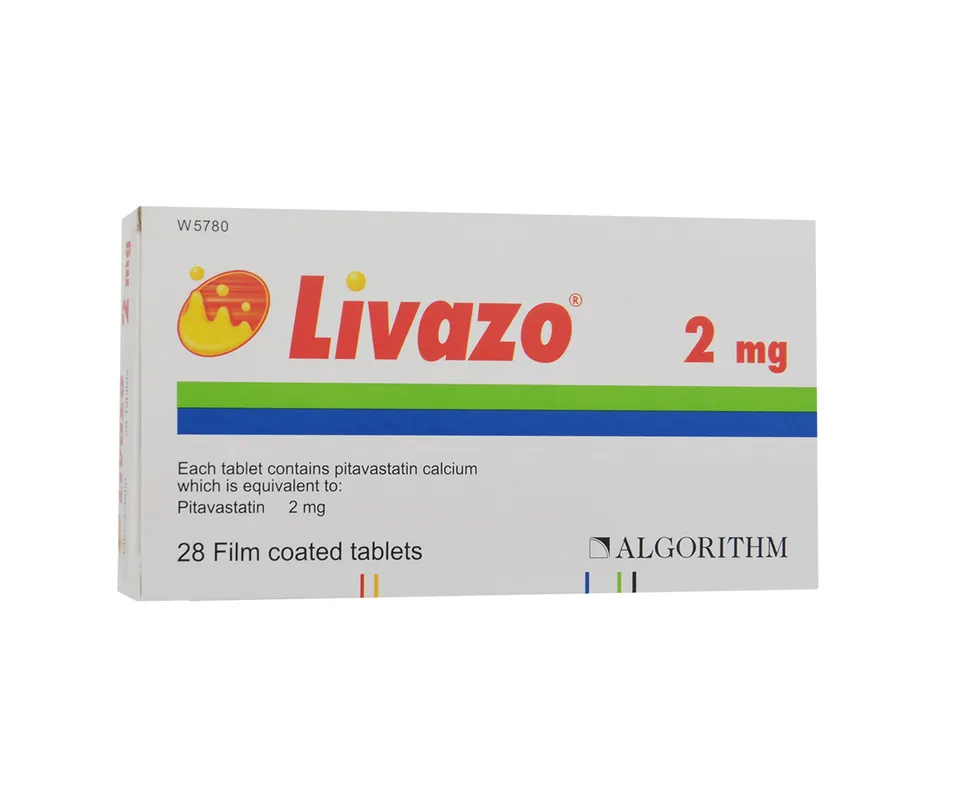
Table of Contents
PT/H/2350/001-003/DC
PT/H/2350/001-003/DC
Package leaflet: Information for the user
Livazo, 1mg, film-coated tablets
Livazo, 2mg, film-coated tablets
Livazo, 4mg, film-coated tablets
Pitavastatin
Please read all of this leaflet carefully before taking this medicine, because it contains
important information for the patient.
- Keep this leaflet, as you may need to read it again.
- If you have any further questions, please ask your doctor or pharmacist.
- This medicine has been prescribed for a specific individual. Do not pass it on to others. It may harm someone else, even if their symptoms are the same.
- If the patient experiences any adverse reactions, including any not listed in this leaflet, inform the doctor or pharmacist. See section 4.
Table of contents of the leaflet:
- What Livazo is and what it is used for
- Important information before taking Livazo
- How to take Livazo
- Possible side effects
- How to store Livazo
- Contents of the pack and other information
1. What Livazo is and what it is used for
Livazo contains an active substance called pitavastatin. It belongs to a group of medicines known as "statins". Livazo is used to correct blood lipid (fat) levels and can be used in both children aged 6 years and older and adults.
Abnormal levels of fats, particularly cholesterol, may sometimes lead to heart attack or stroke.
Livazo has been prescribed for the patient due to lipid imbalance, where dietary and lifestyle changes have not provided sufficient improvement. While taking Livazo, the patient should continue to follow a cholesterol-lowering diet and maintain lifestyle modifications.
2. Important information before taking Livazo
When not to take Livazo:
- if the patient is allergic (hypersensitive) to pitavastatin, any other statin, or any of the other ingredients of this medicine (listed in section 6);
- if the patient is pregnant or breastfeeding;
- if the patient is of childbearing age and is not using effective contraception methods (see "Pregnancy and breastfeeding");
- if the patient has liver problems;
- if the patient is taking cyclosporine – used after organ transplantation;
- if the patient has recurrent or unexplained muscle pain.
PT/H/2350/001-003/DC
Warnings and precautions
Before starting to take Livazo, discuss with your doctor or pharmacist if:
- the patient has respiratory failure (serious breathing problems);
- the patient has ever had kidney problems;
- the patient has liver problems. In some people, statins may affect the liver. Your doctor will usually perform blood tests (liver function tests) before and during treatment with Livazo;
- the patient has ever had thyroid problems;
- the patient or members of their family have had muscle problems;
- the patient has experienced muscle problems while taking other cholesterol-lowering medicines (e.g. statins or fibrates);
- the patient consumes excessive amounts of alcohol;
- if the patient is taking or has taken within the last 7 days a medicine called fusidic acid (used for bacterial infections), orally or by injection. Concomitant use of fusidic acid and Livazo may cause serious muscle problems (rhabdomyolysis);
- the patient has or has had myasthenia (a disease causing general muscle weakness, including in some cases muscles involved in breathing) or ocular myasthenia (a disease causing weakness of eye muscles), as statins may sometimes worsen symptoms of the disease or lead to the development of myasthenia (see section 4).
If any of the above statements apply to the patient (or the patient is unsure), they should
contact their doctor or pharmacist before taking Livazo. The doctor or pharmacist should also be
informed if muscle weakness persists. Additional tests and treatment with other medicines may be
necessary to diagnose and treat this condition.
Patients with diabetes or those at risk of developing diabetes will remain under close medical
supervision while taking this medicine. Patients with high levels of sugar and fats in the blood,
overweight, and high blood pressure may be at increased risk of developing diabetes.
Children and adolescents
Livazo must not be given to children under 6 years of age.
Adolescent girls should receive advice on contraception before starting treatment with Livazo.
Livazo and other medicines
Tell your doctor or pharmacist about all medicines the patient is currently taking or has recently
taken, including those obtained without a prescription, as well as herbal preparations. Some
medicines may interfere with each other's action. In particular, inform your doctor or pharmacist if the patient is taking:
- other medicines called "fibrates" – such as gemfibrozil and fenofibrate;
- erythromycin, fusidic acid, or rifampicin – types of antibiotics used for infections;
- warfarin or other medicines used to thin the blood;
- antiviral medicines for HIV, called "protease inhibitors" (e.g. ritonavir, lopinavir, darunavir, atazanavir) and "non-nucleoside reverse transcriptase inhibitors" (e.g. efavirenz);
- niacin (vitamin B3);
PT/H/2350/001-003/DC
- if the patient needs to take fusidic acid orally due to a bacterial infection, treatment with Livazo must be temporarily discontinued. The doctor will inform the patient when it is safe to resume taking Livazo. Concomitant use of Livazo and fusidic acid may, in rare cases, cause muscle weakness, tenderness, or muscle pain (rhabdomyolysis). For more information about rhabdomyolysis, see section 4.
- if the patient is taking medicines containing glecaprevir and pibrentasvir (medicines used to treat hepatitis C virus infection). The doctor may consider it necessary to adjust the dose of Livazo.
If the patient is taking any of the above medicines (or is unsure), they should
contact their doctor or pharmacist before taking Livazo.
Livazo with food and drink
Livazo can be taken with or without food.
Pregnancy, breastfeeding, and fertility
Livazo is contraindicated during pregnancy and breastfeeding.
If the patient is planning to become pregnant, she should consult her doctor before starting
Livazo. Women of childbearing age must use an effective method of contraception during treatment with Livazo. If the patient becomes pregnant while taking Livazo, she should stop taking the medicine immediately and contact her doctor without delay. If the patient is pregnant or breastfeeding, she should contact her doctor or pharmacist before taking any medicine.
Driving and using machines
Livazo is not expected to affect the ability to drive or operate machinery. However, if dizziness or drowsiness occurs while taking Livazo, the patient should not drive, operate machinery, or use tools.
Livazo contains lactose
Livazo contains lactose (a type of sugar). If the patient has been previously diagnosed with an intolerance to certain sugars, they should consult their doctor before taking this medicine.
3. How to take Livazo
This medicine should always be taken exactly as prescribed by your doctor. If in doubt, consult your doctor or pharmacist.
Taking the medicine
Swallow the tablet whole with water, during or independently of meals.
Livazo can be taken at any time of day. However, it is recommended to take the tablet at approximately the same time each day.
Dosage
- The usual starting dose is 1 mg once daily. After several weeks, your doctor may decide to increase the dose. The maximum dose for adults and children over 10 years of age is 4 mg per day.
- If the patient has liver problems, the dose should not exceed 2 mg per day.
PT/H/2350/001-003/DC
Use in children and adolescents
- The maximum dose for children under 10 years of age is 2 mg per day.
- If necessary, the tablet may be dispersed in a glass of water immediately before administration. The glass should then be rinsed with the same amount of water, which should also be drunk immediately. Do not disperse the tablets in fruit juices or milk.
- Livazo is not recommended for use in children under 6 years of age.
Other important information while taking Livazo
- If hospitalization or treatment for another condition becomes necessary, inform medical staff that you are taking Livazo.
- Your doctor may perform regular checks of your cholesterol levels.
- Do not stop taking Livazo without first consulting your doctor, as cholesterol levels may increase.
Taking more Livazo than prescribed
If you take more Livazo than prescribed, contact your doctor immediately or go to the nearest hospital. Bring the medicine package with you.
Missed dose of Livazo
Do not be concerned. Take the next dose at the usual time. Do not take a double dose to make up for a missed dose.
4. Possible adverse reactions
Like all medicines, this medicine can cause adverse reactions, although not everybody gets them.
The following adverse effects may occur while taking this medicine:
If any of the following adverse symptoms occur, stop taking Livazo and contact your doctor immediately – immediate medical intervention may be necessary:
- allergic reaction – may include: difficulty breathing, swelling of the face, tongue or throat, difficulty swallowing, severe itching of the skin (with raised lumps);
- unexplained muscle pain or weakness, particularly if accompanied by general malaise, fever or red-brown coloured urine. Livazo may in rare cases (in less than 1 in 1000 people) cause unpleasant symptoms affecting the muscular system. If these symptoms are ignored, they may lead to serious conditions such as muscle breakdown (rhabdomyolysis), which may result in kidney problems;
- breathing problems, including persistent cough and/or shortness of breath or fever;
- liver problems, which may cause yellowing of the skin and eyes (jaundice);
- pancreatitis (severe abdominal and back pain).
Other adverse reactions include:
Common (affects less than 1 in 10 people)
- joint pain, muscle pain;
- constipation, diarrhoea, indigestion, nausea;
- headache.
PT/H/2350/001-003/DC
Uncommon (affects less than 1 in 100 people)
- muscle cramps;
- feeling of weakness, fatigue, general malaise;
- swelling of ankles, feet or fingers;
- abdominal pain, dry mouth, nausea, loss of appetite, altered taste;
- pale skin, weakness or shortness of breath (anaemia);
- itching or rash;
- ringing in the ears;
- dizziness or drowsiness, insomnia (other sleep disorders, including nightmares);
- need to urinate more often (frequent urination);
- sensation of numbness and reduced sensation in fingers, toes, legs and face.
Rare (affects less than 1 in 1000 people)
- skin redness, inflamed, red, itchy skin;
- worsening of vision;
- tongue pain;
- unpleasant feeling or discomfort in the stomach;
- breast enlargement in men (gynaecomastia).
Frequency not known (frequency cannot be estimated from available data)
- persistent muscle weakness;
- lupus-like syndrome (including rash, joint disorders and effects on blood cell counts);
- myasthenia (a disease causing general muscle weakness, in some cases including muscles involved in breathing);
- ocular myasthenia (a disease causing weakness of the eye muscles).
If the patient experiences weakness in the arms or legs that worsens with activity, double vision or drooping eyelids, difficulty swallowing or shortness of breath, speak to your doctor.
Other possible adverse reactions
- memory loss;
- sexual dysfunction;
- diabetes: in people who have high levels of sugar and fats in the blood, are overweight and have high blood pressure, there is an increased risk of developing diabetes. Your doctor may monitor your condition while you are taking this medicine.
Reporting of adverse reactions
If any adverse reactions occur, including any not listed in this leaflet, tell your doctor or pharmacist. Adverse reactions can be reported directly to the Department of Monitoring Adverse Drug Reactions, Office for Registration of Medicinal Products, Medical Devices and Biocidal Products
Al. Jerozolimskie 181C
PL-02 222 Warszawa
Tel.: + 48 22 49 21 301
Faks: + 48 22 49 21 309
e-mail: [email protected]
Reporting adverse reactions helps provide more information on the safety of this medicine.
PT/H/2350/001-003/DC
5. How to store Livazo
Keep this medicine out of the sight and reach of children.
Do not use this medicine after the expiry date stated on the blisters and on the outer carton. The expiry date refers to the last day of the stated month.
Do not store above 25°C. Store the blisters in the original outer packaging to protect from light.
Medicines should not be disposed of via wastewater or household waste. Ask your pharmacist how to dispose of medicines no longer required. These measures will help protect the environment.
6. Contents of the pack and other information
What Livazo contains
- The active substance is pitavastatin as calcium salt, in an amount equivalent to 1 mg, 2 mg, or 4 mg of pitavastatin.
- The other ingredients are monohydrate lactose, low-substituted hydroxypropylcellulose, hypromellose 6 cP, magnesium aluminum metasilicate type IB, magnesium stearate, hypromellose 6 cP, titanium dioxide (E171), triethyl citrate (E1505), and colloidal anhydrous silica.
What Livazo looks like and contents of the pack
Livazo film-coated tablets are supplied in packs containing 7, 28, 30, 90, or 100 tablets. Not all pack sizes may be marketed.
The tablets are round, white, and marked on one side with the letters "KC". To help distinguish tablet strengths, they have different shapes and are marked with the numbers "1", "2", or "4" on the other side.
Marketing Authorisation Holder in the EU:
Kowa Pharmaceutical Europe GmbH.,
Görreshof 151, 53347 Alfter, Germany
Manufacturer:
Pierre Fabre Médicament Production,
Rue du Lycée, 45502 Gien, France
or
Recordati Industria Chimica e Farmaceutica SpA,
Via M. Civitali 1, 20148 Milan, Italy
Further information
Detailed information about this medicine is available on the website www.urpl.gov.pl