Lacosamide teva
Poland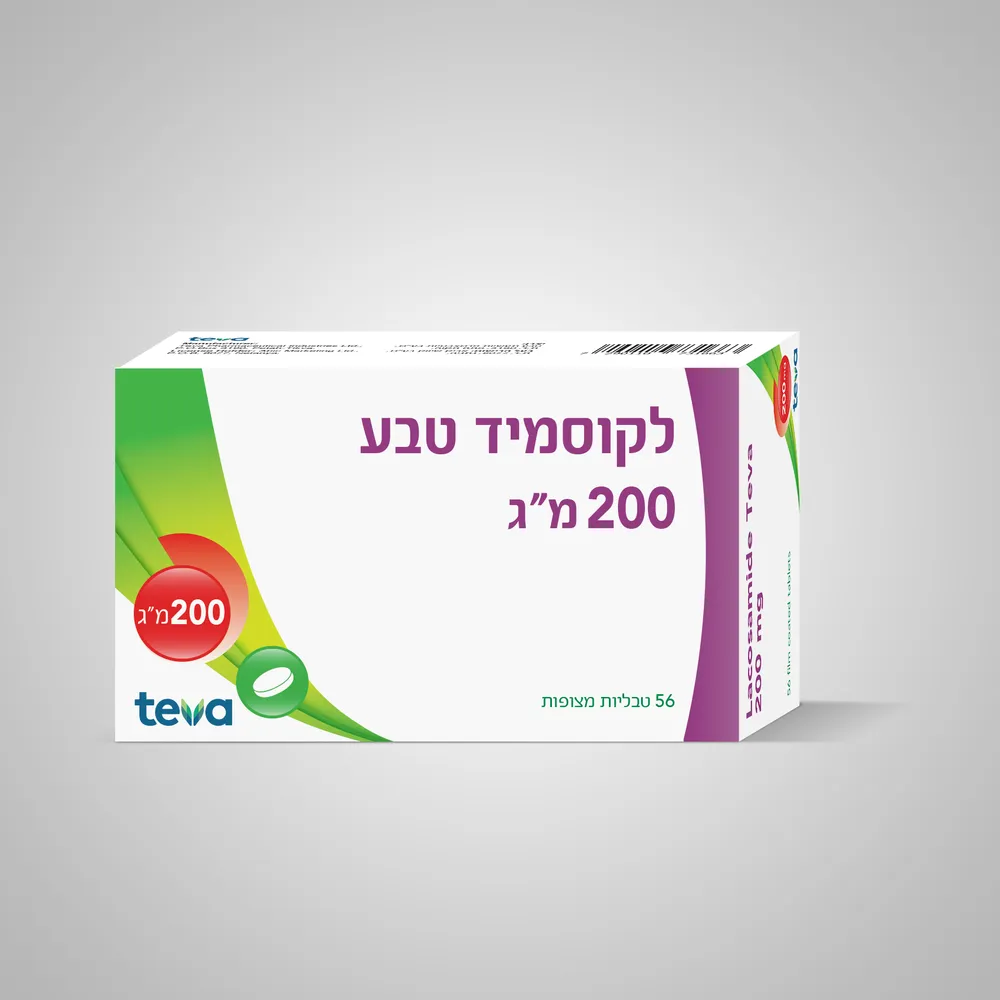
Table of Contents
Package leaflet: Information for the patient
Lacosamide Teva, 50 mg, film-coated tablets
Lacosamide Teva, 100 mg, film-coated tablets
Lacosamide Teva, 150 mg, film-coated tablets
Lacosamide Teva, 200 mg, film-coated tablets
Lacosamidum
Please read all of this leaflet carefully before taking this medicine, because it contains
important information for the patient.
- Keep this leaflet, as you may need to read it again.
- If you have any doubts, please consult your doctor or pharmacist.
- This medicine has been prescribed for a specific individual. Do not pass it on to others. This medicine may harm another person, even if their symptoms are the same.
- If you experience any adverse reactions, including any not listed in this leaflet, tell your doctor or pharmacist. See section 4.
Contents of the leaflet
- What Lacosamide Teva is and what it is used for
- What you need to know before taking Lacosamide Teva
- How to take Lacosamide Teva
- Possible side effects
- How to store Lacosamide Teva
- Contents of the pack and other information
1. What Lacosamide Teva is and what it is used for
What Lacosamide Teva is
Lacosamide Teva contains the active substance lacosamide. It belongs to a group of medicines called antiepileptic drugs, which are used in the treatment of epilepsy.
- This medicine has been prescribed by your doctor to reduce the number of seizures.
What Lacosamide Teva is used for
- Lacosamide Teva is used:
- as monotherapy and in combination with other antiepileptic medicines in adults, adolescents, and children from 2 years of age for the treatment of partial-onset seizures with or without secondary generalisation. In this type of epilepsy, seizures initially affect only one side of the brain but may subsequently spread to both sides;
- in combination with other antiepileptic medicines in adults, adolescents, and children from 4 years of age for the treatment of primary generalised tonic-clonic seizures (generalised seizures involving loss of consciousness) in patients with idiopathic generalised epilepsy (a type of epilepsy considered to have a genetic basis).
2. Information before using Lacosamide Teva
When NOT to use Lacosamide Teva
- if the patient is allergic to lacosamide or any of the other ingredients of this medicine (listed in section 6). If in doubt about an allergy, consult a doctor
- if the patient has a certain type of heart conduction disorder called second- or third-degree atrioventricular block.
If any of the above situations apply, the patient should not take Lacosamide Teva. If in doubt, consult a doctor or pharmacist before using this medicine.
Warnings and precautions
Before starting treatment with Lacosamide Teva, consult a doctor if:
- the patient has thoughts of self-harm or suicide. Some patients treated with antiepileptic medicines such as lacosamide have experienced suicidal thoughts or thoughts of self-harm. If such thoughts occur, contact a doctor immediately.
- the patient has a heart condition affecting heart rhythm – the heart rate is often slow, fast, or irregular (e.g. atrioventricular block, atrial fibrillation or atrial flutter).
- the patient has severe heart disease, such as heart failure, or has had a heart attack.
- the patient frequently experiences dizziness or falls. Lacosamide Teva may cause dizziness, which could increase the risk of accidental injury or falls. Therefore, caution is advised until the body becomes accustomed to the medicine.
If any of the above situations apply (or if there is any uncertainty), contact a doctor or pharmacist before starting treatment with Lacosamide Teva.
While taking Lacosamide Teva, report to the doctor any occurrence of new types of seizures or worsening of existing seizures.
If the patient is taking Lacosamide Teva and experiences symptoms of abnormal heart function (such as slow, fast, or irregular heartbeat, palpitations, shortness of breath, dizziness, or fainting), seek immediate medical advice (see section 4).
Children
Lacosamide Teva is not recommended for children under 2 years of age with partial-onset seizures, nor is it recommended for children under 4 years of age with primary generalized tonic-clonic seizures. The efficacy of the medicine in children of this age has not yet been established, and it is not known whether it is safe for them.
Lacosamide Teva and other medicines
Inform the doctor or pharmacist about all medicines currently used, recently used, or planned for use.
Especially inform the doctor or pharmacist if taking any of the following medicines that affect heart function. This is because Lacosamide Teva may also affect heart function:
- medicines used for heart diseases;
- medicines that may prolong the PR interval (seen on the electrocardiogram, ECG), such as medicines used to treat epilepsy or pain, e.g. carbamazepine, lamotrigine, or pregabalin;
- medicines used to treat certain types of cardiac arrhythmias or heart failure.
If any of the above situations apply (or if there is any uncertainty), contact a doctor or pharmacist before starting treatment with Lacosamide Teva.
Also inform the doctor or pharmacist if taking any of the following medicines, as they may reduce or increase the effectiveness of Lacosamide Teva:
- antifungal medicines such as fluconazole, itraconazole, or ketoconazole;
- medicines used to treat HIV infection, such as ritonavir;
- medicines used to treat bacterial infections, such as clarithromycin or rifampicin;
- the herbal remedy St. John's wort (Hypericum perforatum) used to treat mild anxiety and depression.
If any of the above situations apply (or if there is any uncertainty), contact a doctor or pharmacist before starting treatment with Lacosamide Teva.
Lacosamide Teva and alcohol
For safety reasons, drinking alcohol is NOT recommended during treatment with Lacosamide Teva.
Pregnancy and breastfeeding
Women of childbearing age should discuss contraception with their doctor.
If the patient is pregnant, breastfeeding, suspects she may be pregnant, or is planning to become pregnant, she should consult a doctor or pharmacist before using this medicine.
Lacosamide Teva is not recommended during pregnancy, as the effect of this medicine on pregnancy and the unborn child is unknown. Breastfeeding is not recommended during treatment with Lacosamide Teva, as lacosamide passes into breast milk. Seek urgent medical advice if the patient becomes pregnant or is planning a pregnancy. The doctor will help decide whether to continue treatment with Lacosamide Teva.
Do not stop treatment without consulting a doctor, as this may lead to an increase in seizure frequency. Worsening of the mother's condition may also harm the unborn child.
Driving and operating machinery
Do not drive, ride a bicycle, or operate tools or machinery until it is clear how the medicine affects the patient. This is because Lacosamide Teva may cause dizziness or blurred vision.
Lacosamide Teva 100 mg and 150 mg contain sunset yellow (E 110)
May cause allergic reactions.
Lacosamide Teva 200 mg contains carmine red
May cause allergic reactions.
3. How to take Lacosamide Teva
This medicine should always be taken exactly as your doctor or pharmacist has told you.
If you are unsure, you should consult your doctor or pharmacist.
Taking Lacosamide Teva
- Take Lacosamide Teva twice daily, approximately every 12 hours.
- Take the medicine at approximately the same time each day.
- Swallow the Lacosamide Teva tablet with a glass of water.
- Lacosamide Teva may be taken with or without food.
Treatment is usually started at a low daily dose, which your doctor will gradually increase over several weeks. After reaching the dose effective for the individual patient, known as the maintenance dose, this dose will be continued daily. Lacosamide Teva is used for long-term treatment. You should continue taking Lacosamide Teva until your doctor advises you to stop.
What dose to take
Below are the typical recommended doses of Lacosamide Teva for patients in different age groups and body weights.
Your doctor may prescribe a different dose if you have impaired kidney or liver function.
Adults, adolescents and children with body weight at least 50 kg
Monotherapy with Lacosamide Teva alone
The usual starting dose of Lacosamide Teva is 50 mg twice daily.
Your doctor may also start treatment at a dose of 100 mg twice daily.
Your doctor may increase the dose (given twice daily) by 50 mg weekly until reaching a maintenance dose between 100 mg and 300 mg daily, given in two divided doses.
Adjunctive therapy with Lacosamide Teva together with other antiepileptic medicines
The usual starting dose of Lacosamide Teva is 50 mg twice daily.
Your doctor may increase the dose (given twice daily) by 50 mg weekly until reaching a maintenance dose between 100 mg and 200 mg twice daily.
If you weigh at least 50 kg, your doctor may decide to start treatment with a single 200 mg loading dose. After 12 hours, you will start taking the regular maintenance dose.
Children and adolescents with body weight below 50 kg
- Treatment of partial-onset seizures: note that Lacosamide Teva is not recommended for children below 2 years of age.
- Treatment of primary generalized tonic-clonic seizures: note that Lacosamide Teva is not recommended for children below 4 years of age.
The dose depends on the child's body weight. Treatment usually starts with the syrup formulation, switching to tablets only when the child is able to swallow them and the appropriate dose can be achieved using available tablet strengths. Your doctor will prescribe the formulation most suitable for the child.
Taking more Lacosamide Teva than prescribed
If you take more Lacosamide Teva than prescribed, you should contact your doctor immediately.
DO NOT attempt to drive.
You may experience:
- dizziness;
- nausea or vomiting;
- seizures, heart rhythm disturbances such as slow, fast or irregular heartbeat, coma, or low blood pressure with rapid heartbeat and sweating.
Missing a dose of Lacosamide Teva
- If you are less than 6 hours late taking your dose, take the missed dose as soon as possible.
- If you are more than 6 hours late, DO NOT take the missed dose. Instead, take the next dose of Lacosamide Teva at the usual time.
- DO NOT take a double dose to make up for a missed dose.
Stopping Lacosamide Teva
- DO NOT stop taking Lacosamide Teva without consulting your doctor, as seizures may return or worsen.
- If your doctor decides to discontinue Lacosamide Teva, they will advise you on how to gradually reduce the dose. If you have any doubts about using this medicine, consult your doctor or pharmacist.
4. Possible adverse effects
Like all medicines, this medicine can cause adverse effects, although not everyone will experience them.
Nervous system-related adverse effects, such as dizziness, may be stronger after
administration of a single loading dose.
You should inform your doctor or pharmacist if any of the following symptoms occur:
Very common: may affect more than 1 in 10 patients
- Headache;
- Dizziness or nausea;
- Double vision.
Common: may affect up to 1 in 10 patients
- Brief muscle jerks of a muscle or group of muscles (myoclonic jerks);
- Difficulty with coordination or walking;
- Loss of balance, tremor, tingling and numbness (paraesthesia) or muscle spasms, tendency to fall or bruise easily;
- Memory impairment, thinking disorders or difficulty finding words, confusion;
- Rapid and uncontrolled eye movements (nystagmus), blurred vision;
- Sensation of spinning, feeling drunk;
- Vomiting, dry mouth, constipation, indigestion, excess gas in the stomach or intestines (flatulence), diarrhoea;
- Sensory disturbances (reduced sensation), speech disorders (dysarthria), attention disturbances;
- Tinnitus (such as buzzing, ringing or hissing sounds);
- Irritability, difficulty falling asleep, depression;
- Drowsiness, fatigue or weakness (asthenia);
- Itching, rash.
Uncommon: may affect up to 1 in 100 patients
- Slowed heart rate, palpitations, irregular heartbeat or other changes in the heart's electrical activity (conduction disorders);
- Euphoria, seeing and/or hearing things that are not real;
- Allergic reaction after taking the medicine, urticaria;
- Abnormal blood test results related to the liver (abnormal liver function, liver damage);
- Thoughts about self-harm or suicide, or attempted suicide: inform your doctor immediately;
- Feeling angry or agitated;
- Thinking disturbances or loss of contact with reality;
- Severe hypersensitivity reactions causing swelling of the face, throat, hands, feet, ankles or lower legs;
- Fainting;
- Abnormal involuntary movements (dyskinesia).
Frequency unknown: cannot be estimated from the available data
-
Abnormal rapid heartbeat (ventricular tachyarrhythmia);
-
Sore throat, high temperature and frequent infections. Blood tests may
show a significant decrease in the number of a specific type of white blood cells (agranulocytosis); -
Severe skin reaction which may be accompanied by high temperature and flu-like symptoms, facial rash, widespread rash, swollen lymph nodes (enlarged lymph nodes). Blood tests may show increased levels of liver enzymes and an increase in one type of white blood cells (eosinophilia);
-
Widespread rash with blisters and peeling skin, occurring mainly around the mouth, eyes, nose and genital organs (Stevens-Johnson syndrome) and a more severe form of rash causing skin peeling from over 30% of the body surface (toxic epidermal necrolysis);
-
Seizures.
Additional adverse effects in children
Additional adverse effects observed in children included: fever, cold (nasopharyngitis),
sore throat (pharyngitis), decreased appetite, behavioural changes, child not behaving as usual (unusual behaviour) and lack of energy (lethargy). Drowsiness is a very common adverse effect in children and may occur in more than 1 in 10 children.
Reporting of adverse effects
If any adverse effects occur, including any not listed in this leaflet, tell your doctor or pharmacist. Adverse effects can be reported
directly to the Department of Monitoring Adverse Drug Reactions at the Office for Registration of Medicinal Products, Medical Devices and Biocidal Products
Al. Jerozolimskie 181C, 02-222 Warsaw
Tel.: + 48 22 49 21 301
Fax: + 48 22 49 21 309
Website: https://smz.ezdrowie.gov.pl
Reporting adverse effects helps to provide more information on the safety of the medicine.
Adverse effects can also be reported to the marketing authorisation holder.
5. How to store Lacosamide Teva
Keep the medicine out of the sight and reach of children.
Do not use this medicine after the expiry date stated on the carton,
blister or container of tablets after “Expiry date” (“EXP”). The expiry date refers to the last day of the stated month. The batch number is indicated after the abbreviation “Lot”.
This medicine does not require any special storage temperature conditions. Store in the
original packaging to protect from light.
Medicines must not be disposed of via wastewater or household waste. Ask your
pharmacist how to dispose of medicines no longer required. Such measures will help
protect the environment.
6. Contents of the pack and other information
What Lacosamide Teva contains
- The active substance is lacosamide. One tablet of Lacosamide Teva 50 mg contains 50 mg of lacosamide. One tablet of Lacosamide Teva 100 mg contains 100 mg of lacosamide. One tablet of Lacosamide Teva 150 mg contains 150 mg of lacosamide. One tablet of Lacosamide Teva 200 mg contains 200 mg of lacosamide.
- Other ingredients are: Tablet core: microcrystalline cellulose, low-substituted hydroxypropyl cellulose, hydroxypropyl cellulose, colloidal anhydrous silica, crospovidone (type A), magnesium stearate. Coating: polyvinyl alcohol, titanium dioxide (E171), polyethylene glycol, talc. Lacosamide Teva 50 mg tablets also contain iron oxide red (E172), iron oxide black (E172), iron oxide yellow (E172). Lacosamide Teva 100 mg tablets also contain iron oxide yellow (E172), quinoline yellow (E104), orange yellow (E110). Lacosamide Teva 150 mg tablets also contain iron oxide yellow (E172), orange yellow (E110). Lacosamide Teva 200 mg tablets also contain brilliant blue FCF (E133), carmine red.
What Lacosamide Teva looks like and contents of the pack
Lacosamide Teva 50 mg are pink, oval, biconvex film-coated tablets with the number "50" embossed on one side and smooth on the other side.
Lacosamide Teva 100 mg are yellow, oval, biconvex film-coated tablets with the number "100" embossed on one side and smooth on the other side.
Lacosamide Teva 150 mg are orange, oval, biconvex film-coated tablets with the number "150" embossed on one side and smooth on the other side.
Lacosamide Teva 200 mg are blue, oval, biconvex film-coated tablets with the number "200" embossed on one side and smooth on the other side.
Lacosamide Teva is available in blister packs containing 14, 56, 98, 112, 168, 200 or 210 tablets, in unit dose blisters containing 14x1, 56x1, 60x1 or 168x1 tablets, and in bottles containing 60, 100 or 200 tablets.
Not all pack sizes may be marketed.
Marketing Authorisation Holder and Manufacturer
Marketing Authorisation Holder:
Teva B.V.
Swensweg 5
2031 GA Haarlem
The Netherlands
Manufacturer:
TEVA Gyógyszergyár Zrt.
Pallagi út 13
4042 Debrecen, Hungary
Teva Operations Poland Sp. z o.o
ul. Mogilska 80
31-546 Kraków, Poland
Merckle GmbH
Ludwig-Merckle-Strasse 3
89143 Blaubeuren, Germany
For further information about this medicinal product and its names in the Member States of the European Economic Area, please contact the representative of the Marketing Authorisation Holder:
Teva Pharmaceuticals Polska Sp. z o.o.
ul. Emilii Plater 53
00-113 Warsaw, Poland
tel.: (22) 345 93 00