Hypoten
Poland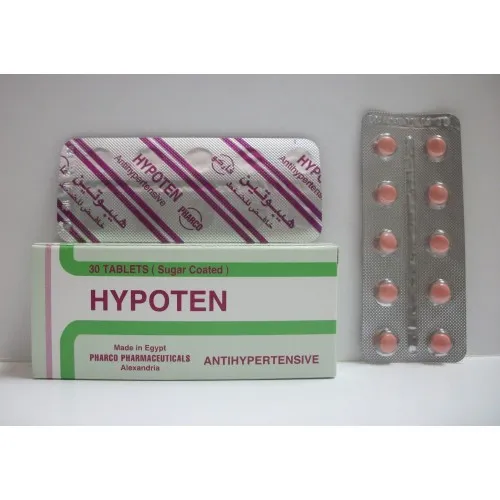
Instructions for Use
Package leaflet: Information for the user
Hypoten 6.25 mg, 12.5 mg, 25 mg coated tablets
Carvedilolum
Please read this leaflet carefully before taking this medicine because it contains
important information for you.
- Keep this leaflet. You may need to read it again.
- If you have any further questions, please ask your doctor or pharmacist.
- This medicine has been prescribed for you personally. Do not pass it on to others. It may harm them even if their symptoms are the same as yours.
- If you experience any side effects, including any not listed in this leaflet, please inform your doctor or pharmacist. See section 4.
Contents of the leaflet:
- What Hypoten is and what it is used for
- What you need to know before taking Hypoten
- How to take Hypoten
- Possible side effects
- How to store Hypoten
- Contents of the pack and other information
1. What Hypoten is and what it is used for
Hypoten belongs to a group of medicines called alpha and beta blockers. The active substance, carvedilol,
dilates blood vessels, lowers blood pressure, and reduces the resistance the heart must overcome when
pumping blood. Carvedilol also has a stabilizing effect on heart rhythm. By reducing the heart's oxygen demand, carvedilol helps relieve angina symptoms.
Hypoten is used in the treatment of arterial hypertension and angina pectoris (chest pain). Hypoten is also used as supportive treatment in heart failure, where it improves heart function.
Note: Your doctor may prescribe this medicine for another indication and/or at a different dose than the one stated
in this patient leaflet. Always follow your doctor's instructions and the information provided in this patient leaflet.
2. Important information before using Hypoten
When not to use Hypoten
- If the patient is allergic to carvedilol or any of the other ingredients of this medicine (listed in section 6).
- If the patient has asthma or bronchospasm.
- If the patient has untreated or unstable chronic heart failure or certain types of cardiac conduction disorders (so-called second- or third-degree atrioventricular block unless the patient has a pacemaker implanted, or sick sinus syndrome).
- If the patient has severe impairment of heart function (cardiogenic shock).
- If the patient has very low heart rate or very low blood pressure.
- If the patient has severe acid-base imbalance (metabolic acidosis, acidaemia).
- If the patient has adrenal hyperfunction (pheochromocytoma) not treated with medication.
- If the patient has severe liver disease.
- If the patient is currently receiving intravenous treatment with medicines used to treat hypertension or heart disease (verapamil or diltiazem).
- If the patient has severe skin reactions, such as skin and mucous membrane lesions or severe, widespread skin damage (skin peeling).
Warnings and precautions
Before starting treatment with Hypoten, discuss with your doctor if:
- the patient has chronic heart failure associated
- with low blood pressure,
- with reduced blood and oxygen supply to the heart (ischaemic heart disease) and arterial stiffness (atherosclerosis),
- and/or with kidney disease. In such cases, kidney function should be monitored; dose reduction may be necessary.
- the patient has diabetes. Treatment with Hypoten may mask symptoms of low blood sugar. Therefore, blood glucose levels should be monitored regularly.
- the patient has serious breathing difficulties that are not being treated. Hypoten may worsen such breathing problems.
- the patient wears contact lenses. Hypoten may reduce tear production.
- the patient has Raynaud's syndrome (characterised by sequential bluish discoloration, pallor, and then redness of fingers and toes, accompanied by pain) or other peripheral vascular disease. Hypoten may worsen these symptoms.
- the patient has hyperthyroidism with increased production of thyroid hormones. Hypoten may mask these symptoms.
- the patient is taking Hypoten and is scheduled for surgery under anaesthesia. This should be discussed with the anaesthetist well in advance.
- the patient has a very low heart rate (less than 55 beats per minute).
- the patient has ever experienced a severe allergic reaction (e.g. from an insect sting or food) or is undergoing or scheduled to undergo desensitisation therapy, as Hypoten may reduce the effectiveness of medicines used to treat such allergic reactions.
- the patient has psoriasis.
- the patient has adrenal hyperfunction (pheochromocytoma).
- the patient has an atypical form of angina, called Prinzmetal's angina, caused by spasm of the coronary arteries.
- the patient has unstable or secondary hypertension (when blood pressure changes abruptly or high blood pressure is caused by another underlying condition).
- the patient has orthostatic hypotension, a sudden drop in blood pressure upon standing.
- the patient has acute myocarditis.
- the patient has valvular obstruction.
Children
There is insufficient data on the efficacy and safety of carvedilol in children.
Hypoten with other medicines
Concurrent use of other medicines may affect the action of Hypoten, or Hypoten may affect the action of other medicines.
Tell your doctor or pharmacist about all medicines you are currently taking or have recently taken, including those available without a prescription. Remember to inform your doctor that you are taking Hypoten when they are prescribing another medicine.
It is particularly important to inform your doctor if you are currently taking any of the following medicines:
- Digoxin (used to treat heart failure).
- Carbamazepine (a medicine used to treat epilepsy).
- Paroxetine, Fluoxetine, Bupropion (medicines used to treat depression).
- Cinacalcet (a medicine used to treat hyperparathyroidism).
- Fluconazole (a medicine used to treat fungal infections).
- Rifampicin (an antibiotic used to treat tuberculosis).
- Cimetidine (a medicine used to treat stomach ulcers, heartburn, and gastroesophageal reflux).
- Cyclosporine (an immunosuppressive medicine used to prevent organ transplant rejection, and also used in treating certain rheumatic or dermatological conditions).
- Clonidine (a medicine to lower blood pressure or used in migraine).
- Verapamil, diltiazem, amiodarone (medicines used to treat cardiac arrhythmias).
- Quinidine, disopyramide, mexiletine, propafenone, flecainide (so-called Class I antiarrhythmic drugs).
- Other medicines that lower blood pressure. When used concomitantly, carvedilol may enhance the blood pressure-lowering effect of these medicines (e.g. alpha-receptor antagonists), as well as medicines that cause blood pressure reduction as a side effect, such as barbiturates (used to treat epilepsy), phenothiazine derivatives (used to treat psychosis), tricyclic antidepressants (used to treat depression), vasodilators, and alcohol.
- Insulin or oral antidiabetic medicines (which lower blood sugar), as their blood sugar-lowering effect may be enhanced and symptoms of low blood sugar masked.
- Sympathomimetics (medicines that stimulate the sympathetic nervous system).
- Dihydropyridine derivatives – calcium channel blockers (medicines used to treat hypertension and coronary artery disease, such as amlodipine and felodipine).
- Neuromuscular blocking agents (medicines that reduce muscle tension).
- Ergotamine derivatives (a medicine used to treat migraine).
- Certain painkillers (NSAIDs – non-steroidal anti-inflammatory drugs), oestrogens (hormones), and corticosteroids (adrenal hormones), as under certain circumstances they may reduce the antihypertensive effect of carvedilol.
- Medicines containing reserpine and monoamine oxidase inhibitors (MAOIs), as they may further reduce heart rate.
- Bronchodilators, e.g. fenoterol, formoterol, salbutamol, terbutaline, salmeterol (inhaled medicines that dilate the airways).
Hypoten with food, drink and alcohol
Hypoten may enhance the effects of alcohol.
Pregnancy and breastfeeding
If the patient is pregnant, breastfeeding, suspects she may be pregnant, or is planning to become pregnant, she should consult her doctor or pharmacist before using this medicine.
There is a risk of harm to the unborn child. Therefore, carvedilol may be used during pregnancy only if the doctor considers it necessary.
It is not known whether carvedilol passes into human breast milk; therefore, it should not be taken during breastfeeding.
Driving and using machines
At the beginning of treatment, after dose increase, when switching medicines, or when combined with alcohol, dizziness and fatigue may occur. It is not known whether carvedilol, when used at recommended doses, impairs the ability to drive or operate machinery. If the patient experiences dizziness or weakness while taking the medicine, driving and other activities requiring heightened alertness should be avoided.
The patient must personally decide whether they are able to drive a motor vehicle or perform other activities requiring heightened alertness. Due to the effects of medicines or their adverse effects, taking medicines is one of the factors that may impair the ability to perform such activities safely. A description of these effects can be found in another section of this leaflet.
Please read the entire leaflet carefully.
Hypoten contains lactose
This medicine contains lactose. If the patient has been diagnosed with an intolerance to certain sugars, they should consult their doctor before taking this medicine.
3. How to use Hypoten
This medicine should always be taken exactly as prescribed by your doctor. If in doubt, consult your
doctor or pharmacist. If the patient feels that the medicine is too weak or too strong, they should
contact their doctor or pharmacist. The tablets should be swallowed with at least half a glass of
water.
The coated tablet should be swallowed with at least half a glass of water. The coated tablets may be
taken with or without food. Patients with heart failure should always take the coated tablets with
food to reduce the risk of dizziness upon sudden standing.
Hypoten is available in the following strengths:
6.25 mg, 12.5 mg and 25 mg.
Hypertension:
The usual dose is 1 tablet of Hypoten 12.5 mg (equivalent to 12.5 mg of carvedilol) once daily for the
first two days, followed by 2 tablets of Hypoten 12.5 mg (equivalent to 25 mg of carvedilol) once
daily. Other strengths of Hypoten are available to achieve this dosing regimen.
Angina pectoris:
The usual dose is 1 tablet of Hypoten 12.5 mg (equivalent to 12.5 mg of carvedilol) twice daily for
two days, followed by 2 tablets of Hypoten 12.5 mg (equivalent to 25 mg of carvedilol) twice daily.
Other strengths of Hypoten are available to achieve this dosing regimen.
Heart failure:
The usual initial dose is half a tablet of Hypoten 6.25 mg (equivalent to 3.125 mg of carvedilol) twice
daily for two weeks. The dose may be gradually increased, usually at two-week intervals.
However, there may be a need to increase or decrease the dose. Your doctor will advise on the
appropriate adjustment depending on the circumstances.
Taking more Hypoten than recommended
If more Hypoten has been taken than recommended, or if the medicine has been accidentally
taken by a child, contact the treating doctor or hospital, or call emergency services for an assessment
of risk and advice on actions to take.
Symptoms of overdose may include a feeling of weakness due to excessive drop in blood pressure,
slow heart rate, and in severe cases, sometimes absence of individual heart contractions. Shortness
of breath, bronchospasm, malaise, reduced level of consciousness, and seizures may also occur.
Missing a dose of Hypoten
If the patient forgets to take a dose (or several doses) of the medicine, the next dose should be taken
at the usual time.
Do not take a double dose (or higher) to make up for a missed dose (or missed doses).
4. Possible adverse effects
Like all medicines, this medicine can cause adverse effects, although not everyone will experience them.
Most adverse effects are dose-dependent and resolve after dose reduction or discontinuation of treatment.
Some adverse effects may occur at the beginning of treatment and resolve spontaneously during continued treatment.
You should stop taking the medicine and contact your doctor immediately if any of the following adverse effects occur:
- slow or irregular heartbeat, dizziness, weakness, or difficulty breathing (occurring in more than 1 in 10 patients),
- difficulty breathing, asthma (in predisposed patients), pulmonary edema (fluid in the lungs) (occurring in up to 1 in 10 patients),
- chest pain (angina pectoris) (occurring in up to 1 in 100 patients),
- allergic reactions (occurring in up to 1 in 10,000 patients),
- severe skin reactions, including skin and mucous membrane lesions or severe damage involving large areas of skin (skin peeling) (occurring in up to 1 in 10,000 patients).
Other adverse effects:
Very common (occurring in more than 1 in 10 patients):
- dizziness (e.g., upon standing up quickly), headache,
- hypotension,
- fatigue.
Common (occurring in up to 1 in 10 patients):
- bronchitis, pneumonia, upper respiratory tract infections, urinary tract infections,
- anemia,
- weight gain, increased cholesterol levels, increased or decreased blood glucose levels in diabetic patients, fluid overload, fluid retention in the body,
- depression, depressive states,
- visual disturbances, dry eyes, eye irritation,
- orthostatic hypotension (sudden drop in blood pressure upon standing), peripheral circulatory disturbances e.g. cold hands and feet, peripheral vascular disease,
- nausea, diarrhea, vomiting, indigestion, abdominal pain,
- limb pain,
- renal failure, kidney function disorders in patients with arteriosclerosis and/or impaired kidney function, urinary disorders,
- swelling (edema), pain.
Uncommon (occurring in up to 1 in 100 patients):
- sleep disorders,
- dizziness, fainting, unusual feelings,
- skin reactions, hair loss,
- impotence.
Rare (occurring in up to 1 in 1,000 patients):
- low platelet count,
- nasal congestion,
- constipation.
Very rare (occurring in up to 1 in 10,000 patients):
- low white blood cell count,
- dry mouth,
- elevated liver enzyme levels,
- urinary incontinence in women.
Dizziness, fainting, headache, and fatigue usually occur mildly and typically at the beginning of treatment.
Reporting of adverse effects
If any adverse effects occur, including any not listed in this leaflet, inform your doctor, pharmacist, or nurse. Adverse effects can be reported directly to the Department of Monitoring Adverse Drug Reactions of the Office for Registration of Medicinal Products, Medical Devices and Biocidal Products, Al. Jerozolimskie 181 C, 02-222 Warsaw, Tel.: +48 22 49 21 301, Fax: +48 22 49 21 309, e-mail: [email protected]
Adverse effects can also be reported to the marketing authorization holder.
Reporting adverse effects helps to provide more information on the safety of the medicine.
5. How to store Hypoten
Keep this medicine out of sight and reach of children.
Do not store above 30°C.
Store in the original packaging, protected from light.
Do not use this medicine after the expiry date stated on the container.
Medicines should not be disposed of via wastewater or household waste. Ask your pharmacist how to dispose of medicines no longer required. This will help protect the environment.
6. Contents of the pack and other information
What Hypoten contains
- The active substance is carvedilol.
- The other ingredients are: microcrystalline cellulose, lactose monohydrate, crospovidone, povidone K-30, colloidal anhydrous silica, magnesium stearate, hypromellose 3cP, hypromellose 6cP, hypromellose 50cP, titanium dioxide (E 171), triethyl citrate, polyethylene glycol 8000, polidextrose.
What Hypoten looks like and contents of the pack
Coated tablets 6.25 mg: white, oval, marked "6.25" on one side, with a break line on both sides.
Coated tablets 12.5 mg: white, oval, with a break line on both sides, marked "12.5" on one side.
Coated tablets 25 mg: white, oval, with a break line on both sides, marked "25" on one side.
Tablets of 6.25 mg, 12.5 mg and 25 mg can be divided into halves.
Pack sizes for tablets 6.25 mg, 12.5 mg and 25 mg: 30 and 100 tablets.
Not all pack sizes may be marketed.
Marketing Authorisation Holder
Orion Corporation
Orionintie 1
02200 Espoo
Finland
Manufacturer
Orion Corporation, Orion Pharma
Orionintie 1
02200 Espoo
Finland
Dragenopharm Apotheker Püschl GmbH
Göllstraße 1
84529 Tittmoning
Germany
Similar Medications
-
Avedol
Form: tablets, film-coated
Active substance Dosage Carvedilol 6.25 mg Manufacturer: Polpharma Pharmaceutical Works S.A.
-
Avedol
Form: tablets, film-coated
Active substance Dosage Carvedilol 12.5 mg Manufacturer: Polpharma Pharmaceutical Works S.A.
-
Avedol
Form: tablets, film-coated
Active substance Dosage Carvedilol 25 mg Manufacturer: Polpharma Pharmaceutical Works S.A.
-
Carvedilol orion
Form: tablets, film-coated
Active substance Dosage Carvedilol 25 mg Manufacturer: APL Swift Services (Malta) Ltd. Orion Corporation
-
Hypoten
Form: tablets, film-coated
Active substance Dosage carvedilol 25 mg Manufacturer: Dragenopharm Apotheker Pueschl GmbH Orion Corporation
-
Symtrend
Form: tablets, film-coated
Active substance Dosage Carvedilol 25 mg Manufacturer: Dragenopharm Apotheker Pueschl GmbH
-
Symtrend
Form: tablets, film-coated
Active substance Dosage Carvedilol 12.5 mg Manufacturer: Dragenopharm Apotheker Pueschl GmbH
-
Symtrend
Form: tablets, film-coated
Active substance Dosage Carvedilol 6.25 mg Manufacturer: Dragenopharm Apotheker Pueschl GmbH
This page has been machine-translated and may contain inaccuracies. The original data is available in the manufacturing country's language.
Last data check: June 04, 2026 · Data source: Rejestr Produktów Leczniczych (URPL)