Hydrochlorothiazide polpharma
Poland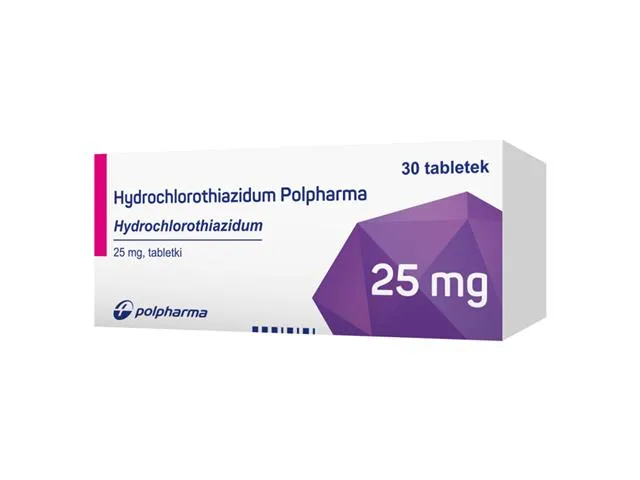
Table of Contents
- Package leaflet: Information for the patient
- 1. What Hydrochlorothiazidum Polpharma is and what it is used for
- 2. Important information before using Hydrochlorothiazidum Polpharma
- 3. How to use Hydrochlorothiazidum Polpharma
- 4. Possible adverse reactions
- 5. How to store Hydrochlorothiazidum Polpharma
- 6. Contents of the package and other information
Package leaflet: Information for the patient
Hydrochlorothiazidum Polpharma, 12.5 mg, tablets
Hydrochlorothiazidum Polpharma, 25 mg, tablets
Hydrochlorothiazidum
Please read the entire leaflet carefully before using the medicine, as it contains
important information for the patient.
- Keep this leaflet, so that you can read it again if necessary.
- If you have any doubts, please consult your doctor or pharmacist.
- This medicine has been prescribed for a specific individual. Do not pass it on to others. The medicine may harm another person, even if their symptoms are the same.
- If you experience any adverse reactions, including any adverse reactions not listed in this leaflet, inform your doctor or pharmacist. See section 4.
Table of contents
- What Hydrochlorothiazidum Polpharma is and what it is used for
- Important information before taking Hydrochlorothiazidum Polpharma
- How to take Hydrochlorothiazidum Polpharma
- Possible side effects
- How to store Hydrochlorothiazidum Polpharma
- Contents of the pack and other information
1. What Hydrochlorothiazidum Polpharma is and what it is used for
Hydrochlorothiazidum Polpharma is a moderately acting diuretic.
It increases urine volume and the excretion of sodium, potassium, magnesium, phosphates, and chlorides in urine,
while decreasing calcium excretion in urine.
The medicine lowers arterial blood pressure in patients with hypertension.
The diuretic effect begins 2 hours after administration, and maximum effect occurs
between 3 and 6 hours. The duration of diuretic action after a single dose lasts
6 to 12 hours.
Hydrochlorothiazidum Polpharma is indicated:
- For edema:
- in congestive heart failure
- in liver cirrhosis
- in kidney function disorders (e.g. nephrotic syndrome, acute glomerulonephritis).
- For hypertension: Hydrochlorothiazidum Polpharma is used in combination with potassium-sparing diuretics or with other antihypertensive medicines.
2. Important information before using Hydrochlorothiazidum Polpharma
When not to use Hydrochlorothiazidum Polpharma:
- if the patient is allergic to hydrochlorothiazide, other sulfonamides, or any of the other ingredients of this medicine (listed in section 6);
- if the patient has anuria;
- if the patient has severe renal or hepatic impairment;
- if the patient has Addison's disease;
- if the patient has hypercalcemia;
- if the patient is pregnant;
- if the patient is concurrently taking lithium salts.
Warnings and precautions
Before starting treatment with Hydrochlorothiazidum Polpharma, discuss this with your doctor.
- Hydrochlorothiazide may disturb water and electrolyte balance. Therefore, during prolonged treatment, regular monitoring of electrolyte levels (sodium, potassium, magnesium, chloride) is recommended. A potassium-rich diet is also advised to prevent hypokalemia (low serum potassium levels). Patients with liver cirrhosis are particularly at risk of hypokalemia. Hypokalemia in patients taking cardiac glycosides increases the toxicity of these drugs. Symptoms indicating disturbances in water and electrolyte balance include: dry mouth, thirst, weakness, lethargy, drowsiness, restlessness, muscle cramps, muscle pain, muscle fatigue, hypotension, oliguria, rapid heartbeat, nausea, and vomiting.
- Hydrochlorothiazide may accelerate the onset or exacerbate symptoms of uremia in patients with impaired renal function. In such cases, the drug should be discontinued.
- Hydrochlorothiazide may reduce the effectiveness of oral antidiabetic drugs and insulin, and may increase cholesterol levels.
- In patients with latent diabetes, treatment with hydrochlorothiazide may unmask diabetes.
- Patients with impaired liver function should use the drug cautiously, as even minor electrolyte disturbances may trigger hepatic encephalopathy.
- Hydrochlorothiazide may increase serum uric acid levels and provoke gout attacks.
- Hydrochlorothiazide may exacerbate symptoms of systemic lupus erythematosus.
- If the patient has previously had skin cancer or develops any unusual skin changes during treatment. Treatment with hydrochlorothiazide, especially in high doses over a prolonged period, may increase the risk of certain non-melanoma skin cancers and lip cancers. While taking Hydrochlorothiazidum Polpharma, the skin should be protected from sunlight and UV radiation.
- If the patient experiences visual disturbances or eye pain. These may be symptoms of fluid accumulation in the uvea (excessive fluid accumulation between the choroid and sclera) or increased intraocular pressure, which may occur from several hours to weeks after taking Hydrochlorothiazidum Polpharma. If untreated, these conditions may lead to permanent vision loss. Patients who previously had an allergic reaction to penicillin or sulfonamides may be at increased risk of developing these symptoms.
- If the patient has previously experienced breathing problems or lung-related issues (including pneumonia or pulmonary edema) after taking hydrochlorothiazide. If severe shortness of breath or difficulty breathing occurs after taking Hydrochlorothiazidum Polpharma, seek immediate medical help.
Children
Use of this medicine is not recommended in infants and children.
Hydrochlorothiazidum Polpharma and other medicines
Inform your doctor or pharmacist about all medicines currently or recently taken, as well as any medicines you plan to take.
- Concomitant use of hydrochlorothiazide with corticosteroids, corticotropin, or amphotericin B may intensify hypokalemia.
- In diabetic patients, treatment with hydrochlorothiazide may increase the requirement for insulin and oral antidiabetic drugs.
- In patients treated with cardiac glycosides, hydrochlorothiazide increases the toxicity of these drugs.
- Hydrochlorothiazide increases the toxicity of lithium salts.
- Concomitant use of hydrochlorothiazide with non-steroidal anti-inflammatory drugs (NSAIDs) increases the risk of renal impairment. These drugs may also reduce the diuretic, natriuretic, and antihypertensive effects of hydrochlorothiazide.
- When used concomitantly with certain antihypertensive drugs, such as guanethidine, methyldopa, or ganglion-blocking agents, hydrochlorothiazide may cause severe orthostatic hypotension.
- Cholestyramine and colestipol may bind hydrochlorothiazide and reduce its gastrointestinal absorption (hydrochlorothiazide should be taken at least 2 hours before these agents).
- Hydrochlorothiazide potentiates the muscle-relaxing effect of tubocurarine.
- During laboratory testing while on hydrochlorothiazide treatment, false-negative results may occur in assays for tyramine and phentolamine, as well as in the histamine test for pheochromocytoma.
- Hydrochlorothiazide should be discontinued before performing parathyroid function tests, as the drug affects calcium metabolism.
Hydrochlorothiazidum Polpharma, food, drink, and alcohol
Hydrochlorothiazidum Polpharma may be taken with or without food.
Alcohol should not be consumed during treatment, especially if the patient is also taking barbiturates (e.g., phenobarbital) or opioids, as this may exacerbate orthostatic hypotension.
Pregnancy and breastfeeding
If the patient is pregnant, breastfeeding, suspects she may be pregnant, or is planning to become pregnant, she should consult her doctor or pharmacist before using this medicine.
Pregnancy
This medicine should not be used during pregnancy.
Women must inform their doctor if they are or suspect they may be pregnant. The doctor will recommend an alternative medicine instead of Hydrochlorothiazidum Polpharma. Hydrochlorothiazide crosses the placental barrier, and its use after the third month of pregnancy may cause fetal and neonatal injury.
Breastfeeding
Hydrochlorothiazide passes into breast milk in small amounts. Thiazides, when used in high doses, have a diuretic effect and may suppress milk production. Use of hydrochlorothiazide during breastfeeding is not recommended; if necessary, the lowest effective dose should be used.
Use in elderly patients (aged over 65 years)
In elderly patients with congestive heart failure or liver disease, hyponatremia may occur during hot weather. Elderly patients, women, individuals with low body weight, those on a low-sodium diet, and those consuming low oral fluid intake are particularly at risk. In such cases, the doctor may recommend limiting fluid intake to 500 ml per day and discontinuing the diuretic.
Driving and operating machinery
This medicine may cause central nervous system adverse effects (such as dizziness and visual disturbances); therefore, there is a risk associated with driving vehicles or operating machinery.
Hydrochlorothiazidum Polpharma contains lactose
Hydrochlorothiazidum Polpharma 12.5 mg tablets: Each tablet contains 65.2 mg of monohydrate lactose.
Hydrochlorothiazidum Polpharma 25 mg tablets: Each tablet contains 130.4 mg of monohydrate lactose.
If the patient has previously been diagnosed with intolerance to certain sugars, the patient should consult a doctor before taking this medicine.
3. How to use Hydrochlorothiazidum Polpharma
This medicine should always be taken as prescribed by your doctor. If in doubt, consult your
doctor or pharmacist.
Recommended dose
Infants and children
Use of this medicine is not recommended in infants and children.
Adults
- For oedema: Initially, 25 mg to 75 mg once daily or in two smaller doses. After improvement has been achieved, your doctor will recommend gradually reducing the dose to a maintenance dose, which is administered every other day. The recommended maximum daily dose is 100 mg.
- For hypertension: 12.5 mg to 25 mg once daily or in two divided doses (as monotherapy or in combination with another antihypertensive medicine). Do not exceed a daily dose of 50 mg.
Dosage in elderly patients (aged over 65 years)
The dose in these patients should be adjusted according to renal function and the patient's response to the medicine.
Taking more than the recommended dose of Hydrochlorothiazidum Polpharma
If you take more than the recommended dose, consult your doctor immediately or go to the nearest hospital.
The most common symptoms of overdose may include:
- loss of water and electrolytes, decreased potassium and sodium levels, alkalosis (metabolic alkalosis), increased blood urea nitrogen, especially in patients with renal impairment;
- rapid heartbeat, hypotension;
- shock, weakness, fatigue;
- confusion, dizziness, loss of consciousness;
- calf muscle cramps, paresthesia (pricking, burning, and tingling sensations in the limbs);
- polyuria, oliguria, or anuria;
- nausea, vomiting, thirst.
Management in case of overdose
There is no specific antidote for hydrochlorothiazide poisoning.
In case of poisoning, induce vomiting or perform gastric lavage with activated charcoal. Symptomatic treatment should be administered. If necessary, administer oxygen or assisted respiration.
Patients with hypotension or in shock should be placed in an appropriate position (legs elevated in relation to the trunk) and given fluids and electrolytes, especially potassium and sodium. The patient should remain under close medical supervision until disturbances in water and electrolyte balance have resolved.
Missed dose of Hydrochlorothiazidum Polpharma
If you miss a dose, take it as soon as possible. If it is almost time for your next dose, do not take the missed dose. Do not take a double dose to make up for a missed dose.
Stopping treatment with Hydrochlorothiazidum Polpharma
Do not stop treatment or change the dosage without consulting your doctor.
If you have any further questions about the use of this medicine, consult your doctor or pharmacist.
4. Possible adverse reactions
Like all medicines, this medicine can cause adverse reactions, although not everyone will experience them.
Prolonged use of the medicine may lead to electrolyte disturbances such as:
decreased serum concentrations of potassium, sodium and magnesium, and metabolic alkalosis.
Hydrochlorothiazidum Polpharma may cause the following adverse reactions:
- acute respiratory failure (symptoms include severe shortness of breath, fever, weakness and confusion) (very rare – occurs in less than 1 in 10,000 patients);
- loss of appetite, gastric mucosal irritation, nausea, vomiting, cramps, diarrhoea or constipation;
- jaundice, pancreatitis and sialadenitis;
- dizziness and headache, paraesthesia (tingling, burning and numbness in the limbs);
- photosensitivity, rash, urticaria, exfoliative dermatitis, fever, purpura, polyarteritis nodosa, allergic pneumonitis and pulmonary oedema, anaphylactic reactions and toxic epidermal necrolysis;
- renal function disorders and interstitial nephritis;
- decreased number of white blood cells, platelets, as well as anaemia;
- cardiac disorders resulting from potassium deficiency, manifested by ECG abnormalities and rhythm disturbances. These disorders may be life-threatening in patients taking digitalis glycosides.
- orthostatic hypotension (related to change in body position to upright);
- hyperglycaemia (elevated blood glucose levels), glycosuria (presence of glucose in urine), hyperuricaemia (elevated serum uric acid levels), electrolyte imbalance;
- muscle cramps;
- weakness, restlessness;
- impotence;
- visual disturbances (yellow vision), blurred vision (transient);
- malignant skin and lip tumours (non-melanoma skin cancer) (frequency not known – frequency cannot be estimated from the available data);
- visual impairment or eye pain due to elevated pressure (possible symptoms of fluid accumulation in the vascular layer surrounding the eye – excessive fluid accumulation between choroid and sclera – or acute angle-closure glaucoma) (frequency not known).
Reporting of adverse reactions
If any adverse reactions occur, including any adverse reactions not listed in this leaflet, inform your doctor or pharmacist. Adverse reactions can be reported directly to the Department of Monitoring of Adverse Drug Reactions at the Office for Registration of Medicinal Products, Medical Devices and Biocidal Products
Al. Jerozolimskie 181C
02-222 Warsaw
Tel.: + 48 22 49 21 301
Fax: + 48 22 49 21 309
Website: https://smz.ezdrowie.gov.pl
Adverse reactions can also be reported to the marketing authorisation holder.
Reporting adverse reactions allows further information on the safety of the medicine to be collected.
5. How to store Hydrochlorothiazidum Polpharma
Store in the original packaging to protect from light and moisture.
Keep the medicine out of sight and reach of children.
Do not use this medicine after the expiry date stated on the packaging. The expiry date refers to the last day of the stated month.
The marking on the packaging following EXP indicates the expiry date, and following Lot/LOT indicates the batch number.
Medicines must not be disposed of via wastewater or household waste. Ask your pharmacist how to dispose of medicines no longer required. This will help protect the environment.
6. Contents of the package and other information
What Hydrochlorothiazidum Polpharma contains
- The active substance is hydrochlorothiazide. Each tablet contains either 12.5 mg or 25 mg of hydrochlorothiazide.
- The other ingredients are: monohydrate lactose, modified corn starch, talc, colloidal anhydrous silica, magnesium stearate.
What Hydrochlorothiazidum Polpharma looks like and contents of the pack
12.5 mg tablets are white, round, biconvex tablets.
25 mg tablets are white, round, flat tablets with a score line. The tablet can be divided into equal doses.
The pack contains 30 tablets.
Marketing Authorisation Holder and Manufacturer
Zakłady Farmaceutyczne POLPHARMA S.A.
ul. Pelplińska 19, 83-200 Starogard Gdański
tel. +48 22 364 61 01