Gemcitabine accord
Poland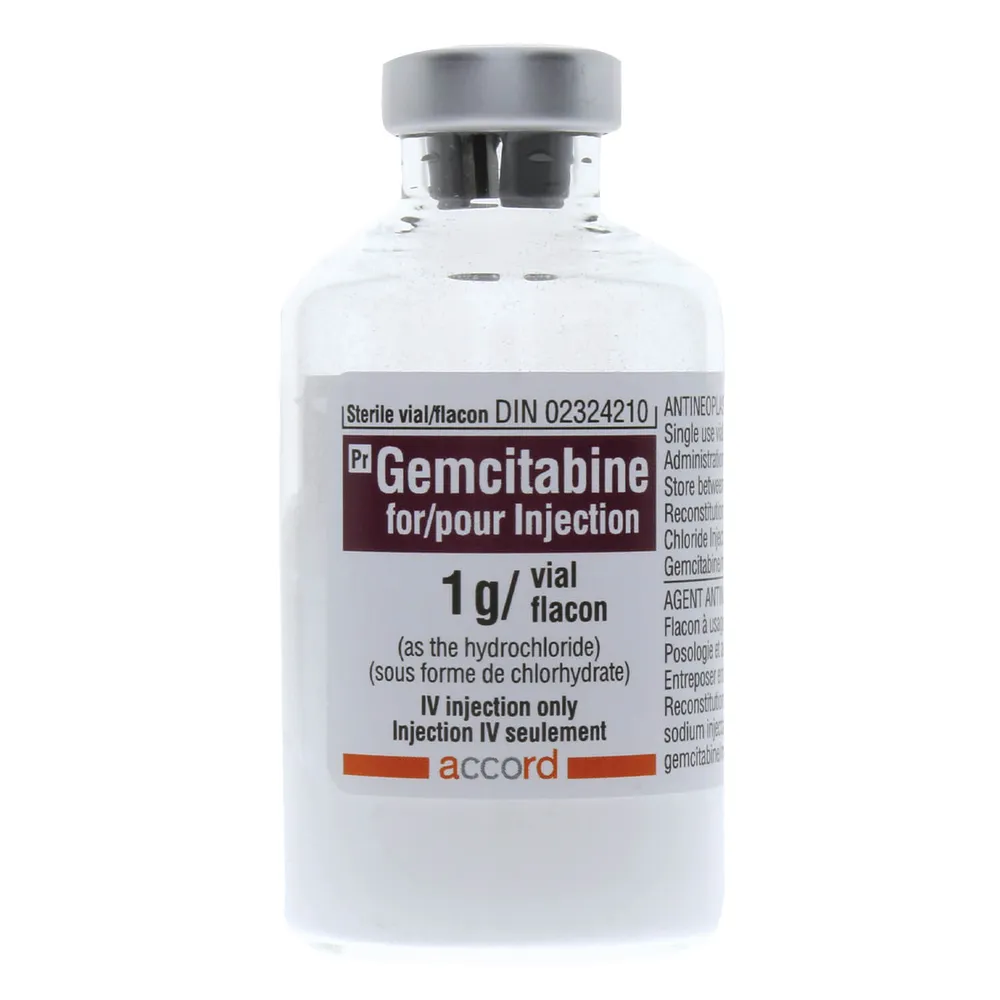
Table of Contents
- Package leaflet: Information for the user
- 2. What you need to know before receiving Gemcitabine Accord
- 3. How to use Gemcitabine Accord
- 4. Possible adverse reactions
- 5. How to store Gemcitabine Accord
- 6. Contents of the pack and other information
- The following information is intended exclusively for medical or healthcare personnel:
Package leaflet: Information for the user
Gemcitabine Accord, 200 mg, powder for solution for infusion
Gemcitabine Accord, 1 g, powder for solution for infusion
Gemcitabine Accord, 2 g, powder for solution for infusion
Gemcitabinum
Please read all of this leaflet carefully before use, as it contains important information
for the patient.
- Keep this leaflet, as you may need to read it again.
- Consult your doctor, pharmacist, or nurse if you have any further questions.
- This medicine has been prescribed for a specific individual. Do not pass it on to others. The medicine may harm other people, even if their symptoms are the same.
- If any side effects worsen or if any side effects occur, including those not listed in this leaflet, inform your doctor, pharmacist, or nurse. See section 4.
Contents of the leaflet:
- What Gemcitabine Accord is and what it is used for
- What you need to know before receiving Gemcitabine Accord
- How to use Gemcitabine Accord
- Possible side effects
- How to store Gemcitabine Accord
- Contents of the pack and other information
1. What Gemcitabine Accord is and what it is used for
Gemcitabine Accord belongs to a group of cytotoxic medicines that work by destroying dividing cells, including cancer cells.
Gemcitabine Accord may be used alone or in combination with other anticancer medicines, depending on the type of cancer.
Gemcitabine Accord is used in the treatment of the following types of cancer:
- non-small cell lung cancer (NSCLC), either as monotherapy or in combination with cisplatin,
- pancreatic cancer,
- breast cancer, in combination with paclitaxel,
- ovarian cancer, in combination with carboplatin,
- bladder cancer, in combination with cisplatin.
2. What you need to know before receiving Gemcitabine Accord
When not to use Gemcitabine Accord
- if you are allergic to gemcitabine or any of the other ingredients of this medicine (listed in section 6),
- if you are breastfeeding.
Warnings and precautions
Before the first infusion, medical staff will take blood samples from you to assess whether your kidney and liver function are sufficient. Before each infusion, medical staff will take blood samples to assess whether your blood cell counts are adequate for administration of Gemcitabine Accord. Depending on your general condition and in case of excessive reduction in blood cell counts, your doctor may adjust the dose or delay administration of the medicine. Blood samples will be taken periodically to monitor kidney and liver function.
You should inform your doctor:
- if you have ever experienced severe skin rash, skin peeling, blistering, and/or mouth ulcers after receiving gemcitabine,
- if you have or have had liver, heart, blood vessel, or kidney disease, as gemcitabine may be contraindicated,
- if you have undergone or will undergo radiotherapy (ionizing radiation), as early or delayed radiation reactions may sometimes occur with gemcitabine,
- if you have recently been vaccinated, as this may interfere with the action of gemcitabine,
- if you experience difficulty breathing or skin pallor and weakness (which may be symptoms of kidney failure or lung disease),
- if you develop generalized swelling, shortness of breath, or weight gain, as these may be symptoms of fluid leakage from small blood vessels into tissues, a serious condition known as capillary leak syndrome,
- if you develop headache, confusion, seizures, visual disturbances, or changes in vision during treatment, contact your doctor immediately. These may be symptoms of a very rare neurological side effect called reversible posterior encephalopathy syndrome (RPLS).
Serious skin reactions, including Stevens-Johnson syndrome, toxic epidermal necrolysis, and acute generalized exanthematous pustulosis (AGEP), have occurred during treatment with gemcitabine. If you experience any of the symptoms related to these serious skin reactions described in section 4, contact your doctor immediately.
Children and adolescents
This medicine should not be used in children and adolescents under 18 years of age, as there is insufficient data on safety and efficacy in this age group.
Gemcitabine Accord and other medicines
Tell your doctor or hospital pharmacist about all medicines you are currently taking, have recently taken, or plan to take, including vaccines and over-the-counter medicines.
Pregnancy
If you are pregnant, breastfeeding, think you may be pregnant, or are planning to become pregnant, consult your doctor or pharmacist before receiving this medicine. Use of Gemcitabine Accord during pregnancy should be avoided. Your doctor will inform you of the risks associated with using Gemcitabine Accord during pregnancy. Women of childbearing potential must use effective contraception during treatment with Gemcitabine Accord and for 6 months after the last dose.
Fertility
Men are advised not to attempt to father a child during treatment with Gemcitabine Accord and for up to 3 months after treatment ends. Men should use effective contraception during treatment and for 3 months after treatment ends. Men should consult their doctor or pharmacist if they wish to father a child during treatment or within 3 months after treatment ends. Patients may seek advice from a sperm bank before starting treatment.
Breastfeeding
Women who are breastfeeding should inform their doctor.
Breastfeeding must be discontinued during treatment with Gemcitabine Accord.
Driving and using machines
Gemcitabine Accord may cause drowsiness, especially if alcohol is consumed. Patients should not drive or operate machinery until they know whether Gemcitabine Accord causes drowsiness in them.
Gemcitabine Accord contains
3.5 mg (<1 mmol) of sodium in the 200 mg vial, 17.5 mg (<1 mmol) of sodium in the 1 g vial, and 35 mg (1.52 mmol) of sodium in the 2 g vial. This should be taken into account for patients on a sodium-controlled diet.
3. How to use Gemcitabine Accord
The usual dose of gemcitabine is from 1000 mg to 1250 mg per square meter of the patient's body surface area. Body surface area is calculated based on the patient's height and weight measurements. The dose is determined according to the body surface area calculated in this way. The dose may be adjusted or treatment may be delayed depending on blood test results and the patient's overall condition.
The frequency of Gemcitabine Accord infusion depends on the type of tumour for which the patient is being treated.
Before administration, hospital pharmacist or doctor will reconstitute the powder.
Gemcitabine Accord is always administered as an intravenous infusion. The infusion lasts approximately 30 minutes.
If you have any further doubts regarding the use of this medicine, consult your doctor or pharmacist.
4. Possible adverse reactions
Like all medicines, this medicine can cause adverse reactions, although not everyone will experience them.
If any of the following symptoms occur, you must inform your doctor immediately:
- Temperature of 38°C or higher, sweats or other signs of infection (due to possible excessive decrease in white blood cell count associated with fever, known as neutropenic fever, which occurs frequently).
- Irregular heartbeat (arrhythmia) (not common).
- Pain, redness, swelling or ulceration in the mouth (stomatitis) (common).
- Allergic reactions: mild to moderate skin rash (very common) and/or itching (common), or fever (very common).
- Feeling of fatigue, weakness, rapid onset of breathlessness or paleness of the skin (due to possible excessive decrease in hemoglobin concentration, which occurs very frequently).
- Bleeding from gums, nose or mouth, or other bleeding that cannot be stopped, red or pink discoloration of urine, unexpected bruising of the skin (due to possible excessive decrease in platelet count, which occurs very frequently).
- Difficulty breathing (very frequently, mild breathing disorders may occur shortly after administration of Gemcitabine Accord, which soon resolve. More serious pulmonary complications may occur less frequently or rarely).
- Generalized swelling, shortness of breath or weight gain, as these may be symptoms of fluid leakage from blood vessels into tissues (capillary leak syndrome) (very rare).
- Headache with visual disturbances, confusion, seizures or convulsions (reversible posterior encephalopathy syndrome) (very rare).
- Severe chest pain (myocardial infarction) (rare).
- Severe hypersensitivity/allergic reaction with severe skin rash, including redness and itching of the skin, swelling of hands, feet, ankles, face, lips, mouth or throat (which may cause difficulty swallowing or breathing), wheezing, rapid heartbeat and feeling faint (anaphylactic reaction) (very rare).
- Severe skin rash with itching, blistering or peeling of the skin (Stevens-Johnson syndrome, toxic epidermal necrolysis) (very rare).
- Extreme fatigue and weakness, petechiae or small areas of bleeding under the skin (bruising), acute kidney failure (low urine output or absence of urine) and signs of infection. These may be symptoms indicating thrombotic microangiopathy (formation of blood clots in small blood vessels) and hemolytic-uremic syndrome, which may lead to death (not common).
- Red, scaly, widespread rash with blisters under swollen skin (including skin folds, trunk and upper limbs) and blisters accompanied by fever – acute generalized exanthematous pustulosis (AGEP – frequency unknown).
Other possible adverse reactions after administration of Gemcitabine Accord:
Very common adverse reactions (may affect more than 1 in 10 patients):
- Low white blood cell count
- Difficulty breathing
- Vomiting
- Nausea
- Hair loss
- Liver function disorders, indicated by abnormal blood test results
- Presence of blood in urine
- Abnormal urine test results: presence of protein in urine
- Flu-like symptoms, including fever
- Swelling (in ankles, fingers, feet and face)
Common adverse reactions (may affect 1 in 10 people):
- Loss of appetite
- Headache
- Insomnia
- Drowsiness
- Cough
- Nasal congestion
- Constipation
- Diarrhea
- Itching
- Excessive sweating
- Muscle pain
- Back pain
- Fever
- Weakness
- Chills
- Infections
Uncommon adverse reactions (may affect 1 in 100 people):
- Interstitial lung disease (scarring of lung alveoli)
- Bronchoconstriction (wheezing)
- Abnormal chest X-ray findings (lung fibrosis)
- Heart failure
- Kidney failure
- Severe liver damage, including liver failure
- Stroke
Rare adverse reactions (may affect 1 in 1,000 people):
- Low blood pressure
- Skin peeling, blistering or ulceration
- Formation of large blisters and oozing from the skin
- Reactions at the injection site
- Severe pneumonia leading to respiratory failure (adult respiratory distress syndrome)
- Skin rash resembling severe sunburn, which may occur on skin previously treated with radiotherapy
- Fluid in the lungs
- Radiation-induced lung alveolar damage (radiation-associated toxicity)
- Gangrene in fingers and toes
- Inflammation of blood vessels (peripheral vasculitis)
Very rare adverse reactions (may affect 1 in 10,000 people):
- Increased platelet count
- Ischemic colitis (inflammation of the large intestine wall due to reduced blood flow)
- Low hemoglobin level (anemia) as well as low white blood cell and platelet counts detected in blood tests
- Thrombotic microangiopathy: formation of clots in small blood vessels
Adverse reactions for which frequency is not known:
- Sepsis: when bacteria and their toxins circulate in the blood and begin to damage organs
- Pseudoscleroderma: redness of the skin with swelling
If any of the above adverse reactions occur, you must immediately inform your doctor.
Reporting of adverse reactions
If any adverse symptoms occur, including any adverse reactions not listed in this leaflet, you should inform your doctor or pharmacist. Adverse reactions can be reported directly to the Department of Monitoring Adverse Drug Reactions of the Office for Registration of Medicinal Products, Medical Devices and Biocidal Products
Al. Jerozolimskie 181C
02-222 Warsaw
Phone: +48 22 49 21 301
Fax: +48 22 49 21 309
Website: https://smz.ezdrowie.gov.pl
Adverse reactions can also be reported to the marketing authorization holder.
Reporting of adverse reactions helps to provide more information on the safety of the medicine.
5. How to store Gemcitabine Accord
Keep this medicine out of the sight and reach of children.
Do not use this medicine after the expiry date stated on the carton and vial following EXP. The expiry date refers to the last day of the stated month.
Unopened vial: This medicinal product does not require any special storage conditions.
Reconstituted solution: The medicine should be used immediately after preparation. Physical and chemical stability of gemcitabine solution prepared according to instructions has been demonstrated for 21 days at 25°C. Medical personnel may perform further dilution of the solution.
The prepared solution should not be stored in a refrigerator, as the medicine may crystallize.
This medicine is for single use only. Any unused portion of the prepared solution should be discarded in accordance with applicable regulations.
6. Contents of the pack and other information
What Gemcitabine Accord contains
The active substance is gemcitabine. Each vial contains 200 mg, 1 g or 2 g of gemcitabine
(as gemcitabine hydrochloride).
The other ingredients are: mannitol (E421), sodium acetate trihydrate, hydrochloric acid and sodium hydroxide.
What Gemcitabine Accord looks like and contents of the pack
Gemcitabine Accord is a white or almost white powder for solution for infusion in a vial. Each vial contains 200 mg, 1 g or 2 g of gemcitabine. Each pack contains one vial of Gemcitabine Accord.
Vials of 200 mg, 1 g and 2 g are available in individual packaging.
Marketing Authorisation Holder and Manufacturer:
Marketing Authorisation Holder
Accord Healthcare Polska Sp. z o.o.
ul. Taśmowa 7
02-677 Warsaw
Tel: +48 22 577 28 00
Manufacturer and Importer
Accord Healthcare Polska Sp. z o.o.
ul. Lutomierska 50
95-200 Pabianice
Accord Healthcare B.V.
Winthontlaan 200
3526 KV Utrecht
The Netherlands
This medicinal product is authorised in the European Economic Area and the United Kingdom (Northern Ireland) under the following names:
| Member State | Trade name |
| Greece | Gemcitabine Accord 200 mg /1 g Powder for solution for infusion |
| Spain | Gemcitabine Accord 200 mg/ 1g/2 g Powder for solution for infusion EFG |
| Finland | Gemcitabine Accord 200 mg/ 1g/2 g infuusiokuiva-aine liuosta varten |
| Hungary | Gemcitabine Accord 200 mg/ 1g/2 g por oldatos infúzióhoz |
| Ireland | Gemcitabine 200 mg/ 1g/2g Powder for Solution for Infusion |
| Poland | Gemcitabine Accord |
| Portugal | Gemcitabina Accord |
| United | Gemcitabine 200 mg/ 1g/2g Powder for Solution for Infusion |
| Kingdom (Northern Ireland) | |
| Cyprus | Gemcitabine Accord 200mg / 1 g Powder for Solution for Infusion |
The following information is intended exclusively for medical or healthcare personnel:
Instructions for preparation, administration and disposal of drug residues
- The preparation of gemcitabine solution and further dilution for intravenous infusion must be carried out under aseptic conditions.
- Calculate the required dose and the number of Gemcitabine Accord vials needed.
- For reconstitution, add 5 mL to the 200 mg vial, 25 mL to the 1000 mg vial, and 50 mL to the 2000 mg vial of sterile 9 mg/mL (0.9%) sodium chloride injection solution without preservatives. Shake to dissolve. The total volume after reconstitution will be 5.26 mL (200 mg vial), 26.3 mL (1000 mg vial), or 52.6 mL (2000 mg vial). Dissolution will yield a solution with a gemcitabine concentration of 38 mg/mL, accounting for the residual volume associated with the transfer of the lyophilized powder. The solution may be further diluted by adding sterile 9 mg/mL (0.9%) sodium chloride injection solution without preservatives. The prepared solution should be clear, colorless or pale yellow.
- Prior to parenteral administration, visually inspect the medicinal product solution for particulate matter and discoloration. Do not administer the solution if visible particles are present.
- Do not store reconstituted gemcitabine solution in the refrigerator, as crystallization may occur. Chemical and physical stability of the solution has been demonstrated for 21 days at 25°C. From a microbiological standpoint, the product should be used immediately after preparation. If not used immediately, the responsibility for storage conditions and duration prior to use lies with the user. In such cases, the solution should not be stored for longer than 24 hours at room temperature, except when reconstitution and/or dilution has been performed under controlled and validated aseptic conditions.
- Gemcitabine solutions are intended for single use only. Any unused product or waste material must be disposed of in accordance with local regulations.
Precautions during preparation and administration of the drug:
Standard safety procedures for handling cytotoxic drugs must be observed during preparation and disposal of the infusion solution. The solution should be prepared in a safety cabinet using protective clothing and gloves. If a safety cabinet is not available, a protective mask and safety goggles should also be used.
In case of contact with the eyes, the solution may cause severe irritation. Immediately flush eyes thoroughly with water. If irritation persists, seek medical advice. In case of spillage and skin contact, wash the skin thoroughly with water.
Disposal of drug residues
Any unused product or waste material must be disposed of in accordance with local regulations.