Fragmin
Poland
Table of Contents
Package leaflet: Information for the patient
FRAGMIN 2,500 IU anti-Xa/0.2 ml, solution for injection
FRAGMIN 5,000 IU anti-Xa/0.2 ml, solution for injection
FRAGMIN 7,500 IU anti-Xa/0.3 ml, solution for injection
FRAGMIN 10,000 IU anti-Xa/0.4 ml, solution for injection
FRAGMIN 2,500 IU anti-Xa/ml, solution for injection
Dalteparinum natricum
Please read all of this leaflet carefully before using this medicine, because it contains
important information for you.
- Keep this leaflet. You may need to read it again.
- If you have any further questions, ask your doctor or pharmacist.
- This medicine has been prescribed for a specific individual. Do not pass it on to others. It may harm them, even if their symptoms are the same as yours.
- If you experience any side effects, including any not listed in this leaflet, tell your doctor or pharmacist. See section 4.
Contents of the leaflet
- What Fragmin is and what it is used for
- Important information before using Fragmin
- How to use Fragmin
- Possible side effects
- How to store Fragmin
- Contents of the pack and other information
1. What Fragmin is and what it is used for
Fragmin is an anticoagulant medicine containing dalteparin sodium. Dalteparin sodium is a low-molecular-weight heparin. The anticoagulant effect of dalteparin is related to its ability to enhance inhibition of factor Xa and thrombin.
Fragmin is indicated for use in adult patients over 18 years of age for:
- Treatment of acute deep vein thrombosis.
- Unstable angina and non-Q-wave myocardial infarction.
- Long-term treatment of symptomatic venous thromboembolic disease (proximal deep vein thrombosis and pulmonary embolism) to reduce recurrence of thromboembolic events in patients with cancer.
- Prevention of blood clotting during extracorporeal circulation, e.g. during hemodialysis and hemofiltration in acute or chronic renal failure.
- Prophylaxis of thromboembolic complications associated with surgical procedures.
- Thromboprophylaxis in medically ill, immobilized patients: with congestive heart failure (NYHA class III or IV) or acute respiratory insufficiency, acute infection, acute rheumatic disease or acute inflammatory bowel disease, and at least one additional risk factor for deep vein thrombosis, e.g. age over 75 years, obesity, cancer, history of deep vein thrombosis.
Fragmin is indicated for use in children and adolescents for:
- Treatment of blood clots in veins (venous thromboembolic disease (VTE)) in children and adolescents aged 1 month and older.
2. Important information before using Fragmin
When not to use Fragmin
- if the patient is allergic to dalteparin sodium or to another low-molecular-weight heparin, or unfractionated heparin, or to any of the other ingredients of this medicine (listed in section 6);
- confirmed or suspected immune-mediated heparin-induced thrombocytopenia;
- active bleeding, e.g. from the gastrointestinal tract or cerebral vessels;
- severe coagulation disorders;
- acute or subacute bacterial endocarditis;
- recent trauma or surgical procedures involving the central nervous system, eyes and/or ears. Due to the increased risk of bleeding, high doses of dalteparin sodium (used, for example, in the treatment of acute deep vein thrombosis, pulmonary embolism, and unstable angina) must not be used in patients undergoing spinal or epidural anaesthesia or other procedures requiring lumbar puncture.
Warnings and precautions
Before starting treatment with Fragmin, discuss the following with your doctor or pharmacist.
- In patients prior to spinal (epidural or intrathecal) anaesthesia or lumbar puncture. Patients receiving antithrombotic medicines such as low-molecular-weight heparins or heparinoids for prevention of thromboembolic complications are at risk of developing epidural or subdural haematoma, which may result in long-term or permanent paralysis. The risk of such complications is increased with the placement of a permanent epidural catheter for administration of anaesthetic agents and when concomitant use of drugs affecting haemostasis, such as non-steroidal anti-inflammatory drugs (NSAIDs), platelet inhibitors, and other antithrombotic agents. Traumatic or repeated epidural or lumbar puncture also appears to increase this risk. Such patients should be closely monitored, with frequent assessment of both objective and subjective neurological signs and symptoms.
- In patients with: thrombocytopenia, platelet function disorders, severe hepatic or renal insufficiency, untreated or uncontrolled hypertension, or hypertensive or diabetic retinopathy. High doses of dalteparin sodium, such as those required for treatment of deep vein thrombosis, pulmonary embolism, or unstable angina, should be used cautiously in patients who have recently undergone surgery or have other conditions that may increase the risk of bleeding.
- For thromboprophylaxis, insertion or removal of an epidural catheter or spinal catheter should be performed 10–12 hours after the last dose of dalteparin. In patients receiving higher doses of Fragmin (e.g. 100–120 IU/kg body weight every 12 hours or 200 IU/kg body weight once daily), the interval should be at least 24 hours.
- In patients who have received epidural or intrathecal anaesthesia, neurological monitoring should be ensured for signs of neurological impairment, such as back pain, numbness or weakness of the lower limbs, and disturbances in bowel or bladder function. If these symptoms occur, the nurse or doctor should be notified immediately.
- In patients suspected of having epidural or subdural haematoma, treatment may require surgical decompression of the spinal cord.
- In patients with heart valve prostheses. Prophylactic doses of Fragmin are not sufficient to prevent thrombosis on the valves in these patients.
- In patients with pulmonary embolism who also have circulatory disturbances, hypotension, or are in shock, due to lack of clinical experience with Fragmin in such cases.
- In patients with rapidly progressing or severe thrombocytopenia (platelet count less than 100,000/µl or mm³) during treatment. The doctor should order platelet count testing before starting Fragmin and regular monitoring during treatment. It is recommended to perform an in vitro test for platelet antibodies in the presence of unfractionated heparin or low-molecular-weight heparins. If the test result is positive or inconclusive, or if such testing is not performed, the doctor should discontinue Fragmin treatment.
- In children and adolescents, patients with renal impairment, patients with severe underweight or obesity, pregnant women, or patients at increased risk of bleeding or recurrent thrombosis, the doctor should consider monitoring the antithrombotic effect of dalteparin sodium. The doctor will recommend appropriate tests.
- In patients undergoing long-term dialysis, the doctor will recommend appropriate dose adjustment based on anti-Xa activity testing. In patients undergoing emergency haemodialysis, frequent monitoring of anti-Xa activity is required.
- In patients with unstable angina or non-Q-wave myocardial infarction (unstable coronary artery disease) who have experienced a transmural myocardial infarction. In such patients, the doctor may recommend thrombolytic therapy (to restore blood flow in a blocked or narrowed blood vessel). Concomitant use of Fragmin and thrombolytic agents increases the risk of bleeding, but this does not mean that Fragmin should be discontinued.
- In patients with unstable coronary artery disease treated long-term with Fragmin and with impaired renal function (creatinine concentration >150 µmol/l). In such patients, the doctor may consider reducing the dose.
- In patients with allergy or suspected allergy to latex (natural rubber), or in individuals who may come into contact with the needle shield of the Fragmin pre-filled syringe. The needle shield of the Fragmin pre-filled syringe may contain latex (natural rubber). In individuals with latex hypersensitivity, severe allergic reactions may occur.
- Due to the risk of haematoma formation, intramuscular injections should be avoided in patients treated with Fragmin at daily doses exceeding 5,000 IU.
- In patients (particularly those with chronic renal failure and diabetes), heparin may reduce aldosterone secretion, leading to increased blood potassium levels (hyperkalemia). The risk of hyperkalemia appears to increase with duration of treatment but is usually reversible. The doctor will recommend testing potassium levels before starting treatment and regular monitoring during treatment in at-risk patients, especially if treatment lasts longer than 7 days.
Interchangeability with other antithrombotic medicines
Dalteparin must not be used interchangeably (unit for unit) with unfractionated heparin, other low-molecular-weight heparins, or synthetic polysaccharides. Each of these medicines differs in terms of raw materials, manufacturing process, and physicochemical, biological, and clinical properties, leading to differences in dosing and possibly also in clinical efficacy and safety. Each of these medicines is unique and requires adherence to individual medical recommendations for use.
Children
Fragmin must not be used in neonates under 1 month of age.
Fragmin and other medicines
Inform your doctor or pharmacist about all medicines you are currently taking, have recently taken, or plan to take.
Some medicines may affect the action of Fragmin, and Fragmin may reduce the effectiveness of other medicines taken at the same time.
Thrombolytic therapy (clot-dissolving) or certain medicines affecting blood coagulation may increase the risk of bleeding when used concomitantly with Fragmin:
- aspirin (acetylsalicylic acid);
- platelet aggregation inhibitors (used to reduce platelet aggregation and the risk of blood clot formation);
- thrombolytic agents (used to dissolve blood clots);
- non-steroidal anti-inflammatory drugs (NSAIDs) (used in the treatment of inflammatory conditions);
- GP IIb/IIIa receptor antagonists (agents affecting platelet aggregation, used in the treatment of heart disease);
- vitamin K antagonists and other types of anticoagulants;
- dextran (used in certain artificial tears).
Medicines that increase the effect of Fragmin:
- medicines used to thin the blood (dipyridamole);
- certain medicines used in the treatment of gout (e.g. sulfinpyrazone, probenecid);
- certain diuretics (e.g. ethacrynic acid);
- solutions administered to increase blood volume;
- cytostatic agents (used in cancer treatment).
Medicines that may reduce the effect of Fragmin:
- medicines used to treat allergies and hay fever (e.g. antihistamines);
- medicines used to treat heart failure and cardiovascular diseases (e.g. cardiac glycosides such as digoxin, digitoxin);
- tetracycline antibiotics used to treat bacterial infections;
- vitamin C (e.g. in vitamin preparations);
- andexanet alfa (a medicine used to reverse the effects of certain anticoagulants such as apixaban or rivaroxaban).
Other medicines that may affect the action of Fragmin:
- medicines used to treat angina pectoris (e.g. intravenous nitroglycerin);
- antibiotics such as high-dose penicillins used to treat bacterial infections;
- medicines used in the prevention and treatment of malaria (e.g. quinine);
- nicotine from tobacco smoking or smoking cessation products.
Particular caution is required in patients with renal impairment when Fragmin is used concomitantly with NSAIDs and high-dose acetylsalicylic acid (aspirin). In patients with unstable coronary artery disease, aspirin should be used only in low doses.
Pregnancy, breastfeeding, and fertility
If you are pregnant, breastfeeding, think you may be pregnant, or are planning to have a child, you should consult your doctor or pharmacist before using this medicine.
Pregnancy
Fragmin should be used during pregnancy only if absolutely necessary.
Breastfeeding
Small amounts of dalteparin sodium pass into human milk. A risk to breastfed infants cannot be excluded. Fragmin should be used during breastfeeding, taking into account the benefits of breastfeeding for the infant and the benefits of therapy for the mother.
Fertility
There is no data indicating an effect of Fragmin on fertility.
Driving and using machines
Fragmin has no influence on the ability to drive or operate machinery.
Fragmin contains sodium
Fragmin 2,500 IU anti-Xa/0.2 ml, Fragmin 5,000 IU anti-Xa/0.2 ml, Fragmin 7,500 IU anti-Xa/0.3 ml, and Fragmin 10,000 IU anti-Xa/0.4 ml contain less than 1 mmol (23 mg) of sodium per pre-filled syringe, meaning these medicines are considered "sodium-free".
Fragmin 2,500 IU anti-Xa/ml (4 ml vial) contains 24.2 mg of sodium (main component of table salt) per vial, equivalent to 1.21% of the recommended maximum daily dietary sodium intake for adults.
This medicine may be diluted with solutions containing sodium. Inform your doctor if you or your child are on a low-sodium diet.
3. How to use Fragmin
This medicine should always be used as directed by a doctor or pharmacist. If in doubt,
consult a doctor or pharmacist.
Fragmin is administered subcutaneously, intravenously, or extracorporeally (in the dialysis circuit).
Fragmin must not be administered intramuscularly.
For the treatment of blood clots, Fragmin is given subcutaneously.
If the patient is undergoing hemodialysis or hemofiltration (procedures used to clean the blood),
Fragmin is administered intravenously or into the dialysis tubing.
Dalteparin may be mixed with isotonic infusion solutions of sodium chloride (9 mg/ml) or glucose
(50 mg/ml) in glass bottles and plastic containers.
Dosage and method of administration
If the dose prescribed for the patient cannot be achieved with Fragmin, alternative medicines should be used.
Treatment of acute deep vein thrombosis
Fragmin may be administered subcutaneously once or twice daily.
During Fragmin therapy, concomitant administration of vitamin K antagonists may be initiated.
Fragmin should be continued until the levels of prothrombin complex factors (factors II, VII, IX, X)
decrease to therapeutic levels. This usually occurs after approximately 5 days of combined treatment.
Outpatient treatment is possible using the same doses as those used in hospital.
Once-daily administration
Dose: 200 IU/kg body weight, administered subcutaneously once daily. Monitoring of anticoagulant
effect is not required. A single daily dose exceeding 18,000 IU should not be used.
Dosing from single-use pre-filled syringes can be determined according to the table below.
| Body weight (kg) | Dosage |
| 46 – 56 | 10,000 IU |
| 57 – 68 | 12,500 IU |
| 69 – 82 | 15,000 IU |
| 83 and above | 18,000 IU |
Administration twice daily
Alternatively, a dose of 100 IU/kg body weight may be administered subcutaneously twice daily. Routine monitoring of anticoagulant effect is generally not necessary; however, it should be considered in selected patients (see section 2: Warnings and precautions for use). Blood samples should be taken at the time of peak plasma concentration (3 to 4 hours after subcutaneous injection). Recommended peak plasma concentrations range from 0.5 to 1.0 IU anti-Xa/mL.
Prevention of blood coagulation in extracorporeal circulation, e.g., during hemodialysis and hemofiltration in acute or chronic renal failure
Fragmin should be administered into the arterial line of the dialysis device or intravenously, selecting the most appropriate of the dosing regimens described below.
-
Patients with chronic renal failure and without documented increased risk of bleeding
These patients usually require only minor dose adjustments; therefore, frequent monitoring of anti-Xa activity is generally not required in most patients. -
Hemodialysis and hemofiltration lasting no longer than 4 hours
At the beginning of the procedure, a single intravenous bolus injection may be given either intravenously or into the arterial line of the extracorporeal circuit. The recommended initial dose is 5,000 IU; alternatively, a lower initial dose may be used when clinically indicated. The initial dose of 5,000 IU for the single bolus regimen may be adjusted from session to session based on the outcome of the previous dialysis; the dose may be gradually increased or decreased by 500 or 1,000 IU until a satisfactory effect is achieved. Alternatively, an intravenous bolus injection of 30 to 40 IU/kg total body weight may be given, followed by a continuous intravenous infusion of 10 to 15 IU/kg body weight per hour. -
Hemodialysis and hemofiltration lasting longer than 4 hours
A single intravenous bolus injection of 30 to 40 IU/kg body weight, followed by a continuous intravenous infusion at a rate of 10 to 15 IU/kg body weight per hour. -
Patients with acute renal failure or increased risk of bleeding
Intravenous bolus injection of 5 to 10 IU/kg body weight, followed by continuous intravenous infusion of 4 to 5 IU/kg body weight per hour. These patients may be more unstable and may require monitoring of anti-Xa levels. Plasma anti-Xa concentration should be maintained within the range of 0.2 – 0.4 IU/mL.
Prophylaxis of thromboembolic complications associated with surgical procedures
Fragmin should be administered subcutaneously. Routine monitoring of anticoagulant effect is generally not necessary. If monitoring is performed, blood should be sampled at the time of peak drug concentration in plasma (3 to 4 hours after subcutaneous injection). The recommended doses generally result in peak plasma activity ranging from 0.1 to 0.4 IU anti-Xa/mL.
General surgical procedures
Select the appropriate dosing regimen from those listed below.
-
Patients at risk of thromboembolic complications
2,500 IU subcutaneously 2 hours before surgery and 2,500 IU subcutaneously each morning after surgery until patient mobilization (usually treatment lasts 5 to 7 days or longer). -
Patients with additional risk factors for thromboembolic complications (e.g., with malignancy)
Administer Fragmin until patient mobilization (usually for 5 to 7 days or longer).- Start treatment the day before surgery: 5,000 IU subcutaneously in the evening before surgery. After surgery, administer 5,000 IU subcutaneously each evening.
- Start treatment on the day of surgery: 2,500 IU subcutaneously within 2 hours before surgery and 2,500 IU subcutaneously 8 to 12 hours later, but not earlier than 4 hours after completion of surgery. From the next day after surgery, administer 5,000 IU subcutaneously each morning.
Orthopedic surgery (e.g., hip replacement surgery)
Administer Fragmin for up to 5 weeks after surgery, selecting one of the treatment regimens below:
- Start treatment before surgery – evening before surgery: 5,000 IU subcutaneously in the evening before surgery. After surgery, 5,000 IU subcutaneously each evening.
- Start treatment on the day of surgery: 2,500 IU subcutaneously within 2 hours before surgery and 2,500 IU subcutaneously 8 to 12 hours later, but not earlier than 4 hours after completion of surgery. From the day after surgery, administer 5,000 IU subcutaneously daily.
- Start treatment after surgery: 2,500 IU subcutaneously 4 to 8 hours after surgery, but not earlier than 4 hours after completion of surgery. From the day after surgery, administer 5,000 IU subcutaneously daily.
Prophylaxis of acute deep vein thrombosis in medically immobilized patients
The recommended dose of Fragmin is 5,000 IU once daily. Treatment with dalteparin sodium should continue until the end of the immobilization period, for up to 14 days or longer. Routine monitoring of anticoagulant effect is generally not necessary.
Duration of administration
Antithrombotic prophylaxis in patients with significantly increased risk of thromboembolic complications who are temporarily immobilized due to severe illness such as heart failure, respiratory failure, or severe infection should continue until full patient mobilization. The duration of treatment depends on the patient's condition and is usually 14 days.
Method of administration
The drop at the tip of the needle should be removed before injection, as the presence of dalteparin sodium in the injection pathway may lead to a harmless superficial hematoma or, rarely, local irritation.
For detailed injection instructions, see section below: How to inject Fragmin.
Unstable angina and non-Q-wave myocardial infarction
Routine monitoring of anticoagulant effect is generally not necessary, but should be considered in selected patients (see section 2: Warnings and precautions for use). Blood samples should be taken at the time of peak plasma concentration (3 to 4 hours after subcutaneous injection). Recommended peak plasma anti-Xa activity ranges from 0.5 to 1.0 IU/mL. Concomitant administration of acetylsalicylic acid (in a dose of 75 to 325 mg daily) is recommended. Administer Fragmin at a dose of 120 IU/kg body weight subcutaneously every 12 hours, up to a maximum dose of 10,000 IU every 12 hours. Continue treatment until clinical stabilization of the patient (usually for at least 6 days) or longer if deemed beneficial by the physician. Thereafter, prolonged treatment with a fixed dose of Fragmin is recommended until revascularization procedure (such as percutaneous intervention or coronary artery bypass grafting). The drug should not be used for longer than 45 days. The dose of Fragmin is determined according to the patient's sex and body weight:
- For women with body weight less than 80 kg and men with body weight less than 70 kg, administer 5,000 IU subcutaneously every 12 hours.
- For women with body weight at least 80 kg and men with body weight at least 70 kg, administer 7,500 IU subcutaneously every 12 hours.
Long-term treatment of symptomatic venous thromboembolic disease (proximal deep vein thrombosis and pulmonary embolism) to reduce recurrence of thromboembolic events in cancer patients
Month 1
During the first 30 days of treatment, Fragmin should be administered once daily subcutaneously (s.c.) at a dose of 200 IU/kg body weight. The total daily dose should not exceed 18,000 IU.
Months 2–6
Fragmin should be administered once daily subcutaneously at a dose of approximately 150 IU/kg body weight. The dose of medication delivered from a single-dose prefilled syringe should be selected according to the table below.
| Body weight (kg) | Fragmin dose (IU) |
| ≤ 56 | 7,500 |
| 57 - 68 | 10,000 |
| 69 - 82 | 12,500 |
| 83 - 98 | 15,000 |
| ≥ 99 | 18,000 |
Reduction of dose in the case of thrombocytopenia during chemotherapy
The following dosing guidelines were used in clinical studies:
In the case of chemotherapy-induced thrombocytopenia with platelet count <50,000/mm³,
administration of Fragmin should be withheld until the platelet count returns to above
50,000/mm³. If the platelet count is in the range of 50,000 to 100,000/mm³,
the dose of Fragmin should be reduced by 17% to 33% of the initial dose (depending on the
patient's body weight). Once the platelet count returns to ≥100,000/mm³,
the full dose of Fragmin should be resumed.
Table 1. Dose reduction of Fragmin in case of thrombocytopenia in the range of
50,000 – 100,000/mm³, dosing using single-dose pre-filled syringes
| Body weight (kg) | Planned Fragmin dose (IU) | Reduced Fragmin dose (IU) | Mean dose reduction (%) |
| ≤ 56 | 7,500 | 5,000 | 33 |
| 57 - 68 | 10,000 | 7,500 | 25 |
| 69 - 82 | 12,500 | 10,000 | 20 |
| 83 - 98 | 15,000 | 12,500 | 17 |
| ≥ 99 | 18,000 | 15,000 | 17 |
Renal impairment
In cases of significant renal impairment defined as creatinine concentration exceeding
3 times the upper limit of normal, the dose of Fragmin should be adjusted to maintain
anti-Xa levels within the therapeutic range of 1 IU/ml (range 0.5–1.5 IU/ml), measured 4–6 hours after
injection. If anti-Xa levels are below or above the therapeutic range, the Fragmin dose should be
appropriately increased or decreased. Anti-Xa level determination should be repeated after
administration of 3–4 injections at the newly adjusted dose. This dose adjustment procedure
should be repeated until anti-Xa levels reach the therapeutic range.
Use in children and adolescents
Treatment of venous blood clots (venous thromboembolic disease (VTE))
Recommended doses depend on the child's body weight and age group and will be calculated by
the physician. The physician will inform you about the individualized Fragmin dose according to
these criteria. Do not change the dosing regimen or treatment schedule without consulting your
doctor.
The recommended initial dose for children and adolescents according to their age is as follows:
Infants from 1 month to below 2 years of age: 150 IU/kg body weight twice daily.
Children from 2 to below 8 years of age: 125 IU/kg body weight twice daily.
Children from 8 years and adolescents up to 18 years of age: 100 IU/kg body weight twice daily.
The effect of Fragmin is monitored after the initial dose, and the dose will then be adjusted based
on blood test results.
How to inject Fragmin
Fragmin is administered subcutaneously. This section of the leaflet explains how to administer
Fragmin to yourself or your child. Follow these instructions only after proper training by a
physician. If you are unsure what to do, contact your doctor immediately. Inject (administer) the
Fragmin dose at the times of day recommended by your doctor.
If dilution of Fragmin is required before administration to children, it should be performed by
qualified medical personnel. Follow your doctor's instructions regarding the method and timing
of administration of the diluted medication.
Perform the following steps
Step 1: Preparing the pre-filled syringe for Fragmin injection
Remove the cap from the pre-filled syringe. An air bubble will appear in the pre-filled syringe.
This air bubble should remain near the plunger and should not be expelled before injection. The
pre-filled syringe is ready for injection. Proceed to step 2.
The Needle-Trap needle safety device has been specifically designed to prevent accidental needle
sticks after proper administration of Fragmin. It consists of a plastic safety mechanism attached to
the label on the syringe. It serves to prevent accidental needle sticks after proper injection of
Fragmin. The Needle-Trap safety mechanism consists of a plastic clip (catch) positioned parallel
along the needle, firmly attached to the label on the syringe barrel.
To activate the safety mechanism, perform the following steps: Lift the syringe, grasp the end of
the plastic needle clip, and bend it away from the sheath (see Fig. 1).
Fig. 1

Remove the grey rubber needle sheath by pulling it straight off (see Fig. 2).
Fig. 2

An air bubble may be visible in the pre-filled syringe. This is normal and should be ignored. Do
not press the plunger yet, as some of the medication may be lost. Air bubbles in single-use pre-
filled syringes should not be expelled before injection, as this may lead to loss of medication and
thus reduce the administered dose. The pre-filled syringe is ready for injection. Proceed to step 2.
Step 2: Choosing and preparing the subcutaneous injection site
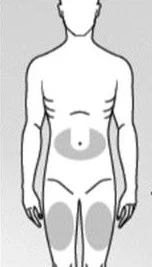
Select one of the recommended injection sites shown below (see shaded areas in Fig. 3):
The "U"-shaped area around the navel.
The middle side of the thigh.
Fig. 3
- Each time a dose is administered, inject it into a different site.
- Do not inject into areas where the skin is tender, bruised, red, or hard. Avoid scarred areas.
- If the adult or child has psoriasis, do not inject directly into any raised, thick, red, or scaly skin patches ("psoriatic skin lesions").
- Wash and dry your hands.
- Clean the injection site with a new alcohol swab using circular motions. Allow the skin to dry completely. Do not touch this area again before injection.
Step 3: Adopting the correct position
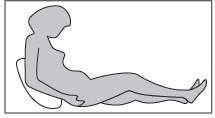
The adult or child should sit or lie down for deep subcutaneous injection. If the patient is
administering the injection to themselves, they should sit in a comfortable seated position so
they can clearly see their abdomen (see Fig. 4).
Fig. 4
Step 4:
Using the thumb and index finger of one hand, pinch a skin fold. Hold the syringe in the other hand like a pencil. This will be the injection site.
Step 5:
When injecting Fragmin to an adult or to yourself, hold the pre-filled syringe over the skin fold at a right angle (i.e., vertically, as shown in the diagram, not at an angle). Insert the needle into the skin until it is fully inserted (see Fig. 5).
Fig. 5
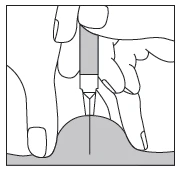
When injecting Fragmin to a child, insert the needle into the skin with a quick, short motion at an angle between 45° and 90° (see Fig. 6).
Fig. 6
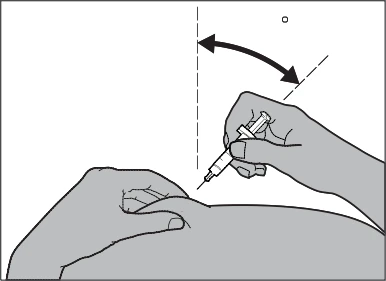
Step 6:
Press the plunger slowly and steadily to the end to administer the correct dose. Continue holding the skin fold during injection, then release it and withdraw the needle.
If bleeding occurs at the injection site, apply gentle pressure. Do not rub the injection site, as this may cause bruising.
Apply a swab to the injection site for 10 seconds. Minor bleeding may occur. Do not rub the injection site. The injection site may be covered with a dressing.
Step 6: If the syringe has a Needle-Trap needle safety device, activate the needle safety mechanism
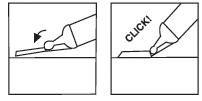
Place the plastic clip onto a hard, stable surface and, with one hand, rotate the syringe barrel upward toward the needle, pushing the needle into the cap where it will lock securely in place (see Fig. 7).
Continue bending the needle until the syringe exceeds a 45-degree angle with the flat surface, rendering it permanently unusable (see Fig. 8).
Fig. 7 Fig. 8
Step 7:
Dispose of the pre-filled syringe and needle into a sharps container. Keep the sharps container in a place inaccessible to others. When the sharps container is nearly full, dispose of it according to instructions or contact your doctor or nurse.
The dose will be adjusted according to the child's age and body weight. Younger children may require a slightly higher dose of Fragmin per kg body weight than adults. The physician will adjust the appropriate dose for the patient. To monitor the effect of Fragmin, medical personnel may take blood samples during treatment.
Use of Fragmin in patients with renal and hepatic impairment
Fragmin requires cautious use in patients with renal and hepatic impairment (see section 2: Warnings and precautions).
Administration of a higher than recommended dose of Fragmin
Depending on the symptoms present, the physician will administer appropriate treatment. The anticoagulant effect of Fragmin can be reversed by administration of protamine. However, protamine inhibits primary hemostasis; therefore, it should be used only in cases of actual risk.
A dose of 1 mg of protamine partially neutralizes the effect of 100 IU (anti-Xa) of Fragmin (although the prolonged clotting time is fully neutralized, 25%–50% of dalteparin sodium anti-Xa activity remains).
4. Possible adverse reactions
Like all medicines, this medicine can cause adverse reactions, although they do not occur in everyone.
Allergic reaction (hypersensitivity) is an uncommon adverse reaction (may occur in up to 1 in 100 people), but it may be a very severe anaphylactic reaction, leading to death. If the patient notices symptoms of an allergic reaction after using the medicine, they should contact a doctor immediately.
The risk of bleeding is common. The risk depends on the dose, and most bleeding events are mild to moderate in severity. However, since the medicine was introduced to the market, cases of very severe, sometimes fatal, bleeding (haemorrhages) have been observed. Haemorrhages may occur at any site, including intracranial or retroperitoneal (stomach area). The frequency of occurrence is unknown. In case of significant bleeding, immediate medical advice must be sought.
Adverse reactions are listed below according to their frequency of occurrence.
Common (may occur in up to 1 in 10 people):
- decreased platelet count (cells responsible for blood clotting) [mild, reversible thrombocytopenia (type I)]
- increased potassium levels in blood (hyperkalaemia)
- haemorrhage (bleeding)
- transient increase in aminotransferase activity (liver enzymes: AspAT, AlAT)
- subcutaneous bruising at the injection site
- pain at the injection site
Uncommon (may occur in up to 1 in 100 people):
- hypersensitivity
Rare (may occur in up to 1 in 1000 people):
- skin necrosis
- transient alopecia
Frequency not known (frequency cannot be estimated from available data):
- heparin-induced immune-mediated thrombocytopenia (type II, with or without associated thrombotic complications)
- anaphylactic reactions
- intracranial haemorrhage (some fatal)
- retroperitoneal haemorrhage (some fatal)
- rash
- subarachnoid or subdural haemorrhage
Heparin products may cause hypoaldosteronism (reduced secretion of aldosterone—a hormone of the adrenal cortex), which may lead to increased potassium concentration in blood plasma (hyperkalaemia). Clinically significant hyperkalaemia may occur particularly in patients with chronic renal failure and diabetes (see section 2: Warnings and precautions).
With long-term use of Fragmin, there is a risk of osteoporosis.
It is expected that adverse reactions in children will be the same as in adults; however, data on possible adverse reactions during long-term treatment in children are limited.
Reporting of adverse reactions
If any adverse reactions occur, including any possible adverse reactions not listed in this leaflet, inform a doctor or pharmacist. Adverse reactions can be reported directly to the Department of Monitoring Adverse Drug Reactions of the Office for Registration of Medicinal Products, Medical Devices and Biocidal Products
Al. Jerozolimskie 181C
02-222 Warsaw
Tel.: +48 22 49 21 301
Fax: +48 22 49 21 309
Website: https://smz.ezdrowie.gov.pl
Adverse reactions can also be reported to the representative of the marketing authorization holder or to the marketing authorization holder itself.
Reporting adverse reactions helps to provide more information on the safety of the medicine.
5. How to store Fragmin
Keep this medicine out of sight and reach of children.
Store pre-filled syringes and vials at a temperature not exceeding 25°C.
Fragmin 2 500 IU anti-Xa/ml, solution for injection: Do not store in the refrigerator or freeze.
Do not use this medicine after the expiry date stated on the packaging. The expiry date refers to the last day of the stated month.
From a microbiological standpoint, the medicine should be used immediately. If it is not used immediately, the user is responsible for the storage conditions and duration of use.
Medicines must not be disposed of via wastewater or household waste. Ask your pharmacist how to dispose of medicines no longer required. This will help protect the environment.
6. Contents of the pack and other information
What Fragmin contains
- The active substance is dalteparin sodium. The potency is expressed in international units (IU) anti-Xa according to the First International Standard for Low Molecular Weight Heparins.
| No. | Volume | Dalteparin sodium (Dalteparinum natricum) |
| 1. | 0.2 ml | 2,500 IU anti-Xa |
| 2. | 0.2 ml | 5,000 IU anti-Xa |
| 3. | 0.3 ml | 7,500 IU anti-Xa |
| 4. | 0.4 ml | 10,000 IU anti-Xa |
| 5. | 4 ml | 10,000 IU anti-Xa |
- The other ingredients are:
| Nr | Dose/Volume | Excipients |
|---|---|---|
| 1. | 2,500 IU anti-Xa/0.2 ml | sodium chloride sodium hydroxide or hydrochloric acid (pH adjustment to 5–7.5) water for injections |
| 2. | 5,000 IU anti-Xa/0.2 ml | sodium hydroxide or hydrochloric acid (pH adjustment to 5–7.5) water for injections |
| 3. | 7,500 IU anti-Xa/0.3 ml | sodium hydroxide or hydrochloric acid (pH adjustment to 5–7.5) water for injections |
| 4. | 10,000 IU anti-Xa/0.4 ml | sodium hydroxide or hydrochloric acid (pH adjustment to 5–7.5) water for injections |
| 5. | 2,500 IU anti-Xa/ml | sodium chloride sodium hydroxide or hydrochloric acid (pH adjustment to 5–7.5) water for injections |
What Fragmin looks like and contents of the pack
The injection solution is available in a prefilled syringe with a needle containing a single dose
of the medicinal product (Type I glass) with a needle shield (rubber), a plunger stopper (chlorobutyl rubber), a plunger
(polypropylene or polystyrene) with (or without) a Needle-Trap device as a safety feature. The needle shield
may contain latex.
The injection solution 2,500 IU anti-Xa/ml is available in a 4 ml vial made of colourless Type I glass,
fitted with a siliconized bromobutyl rubber stopper, an aluminium seal, and a flip-off cap made of polypropylene, packed in a cardboard box.
| No. | Dose/Volume | Pack size and composition |
| 1. | 2,500 IU anti-Xa/0.2 ml | 10 pre-filled syringes with needle, 0.2 ml 20 pre-filled syringes with needle, 0.2 ml |
| 2. | 5,000 IU anti-Xa/0.2 ml | 10 pre-filled syringes with needle, 0.2 ml 20 pre-filled syringes with needle, 0.2 ml |
| 3. | 7,500 IU anti-Xa/0.3 ml | 10 pre-filled syringes with needle, 0.3 ml 20 pre-filled syringes with needle, 0.3 ml |
| 4. | 10,000 IU anti-Xa/0.4 ml | 5 pre-filled syringes with needle, 0.4 ml |
| 5. | 2,500 IU anti-Xa/ml | 10 vials of 4 ml |
Not all pack sizes may be marketed.
Marketing Authorisation Holder
Pfizer Europe MA EEIG
Boulevard de la Plaine 17
1050 Bruxelles
Belgium
Manufacturer
2,500 IU anti-Xa/0.2 ml; 5,000 IU anti-Xa/0.2 ml; 7,500 IU anti-Xa/0.3 ml
Pfizer Manufacturing Belgium NV
Rijksweg 12, 2870 Puurs-Sint-Amands
Belgium
Catalent France Limoges S.A.S.
Z.I. Nord, 53 rue de Dion Bouton
87280 Limoges
France
10,000 IU anti-Xa/0.4 ml, 2,500 IU anti-Xa/ml
Pfizer Manufacturing Belgium NV
Rijksweg 12, 2870 Puurs-Sint-Amands
Belgium
For further information on this medicinal product, contact the local representative of the Marketing Authorisation Holder:
Pfizer Polska Sp. z o.o.
tel. 22 335 61 00
Detailed and up-to-date information about this product can be obtained by scanning the QR code
located on the outer packaging using a mobile device. The same information is also available at the URL: https://pfi.sr/ulotka-fragmin and on the website of the Office for Registration of Medicinal Products, Medical Devices and Biocidal Products
http://www.urpl.gov.pl.