Escipram
Poland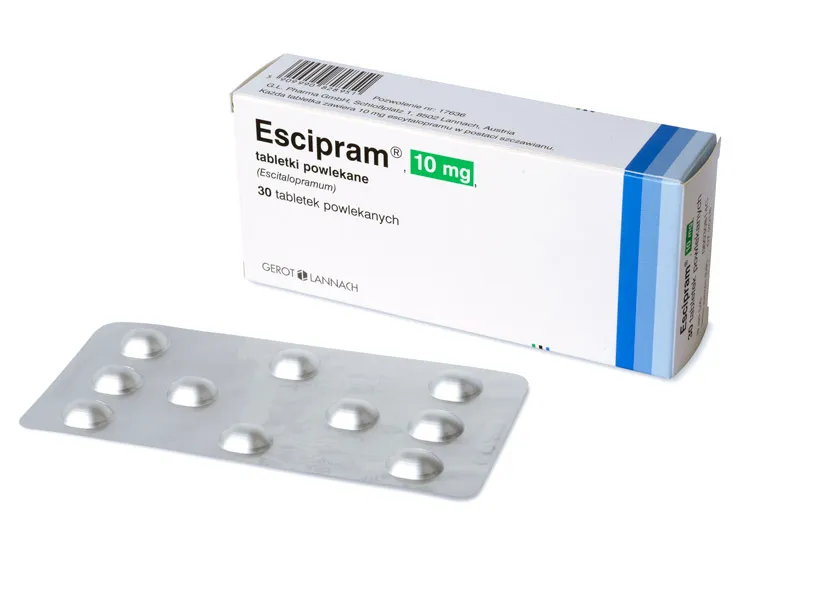
Table of Contents
Patient Information Leaflet
Escipram, 5 mg, film-coated tablets
Escipram, 10 mg, film-coated tablets
Escipram, 15 mg, film-coated tablets
Escipram, 20 mg, film-coated tablets
(Escitalopramum)
Please read the entire leaflet carefully before taking this medicine, as it contains important information for you.
- Keep this leaflet for future reference.
- If you have any doubts or questions, consult your doctor or pharmacist.
- This medicine has been prescribed for a specific individual. Do not give it to others. It may harm someone else, even if their symptoms are similar.
- If you experience any side effects, including those not listed in this leaflet, inform your doctor or pharmacist. See section 4.
Table of Contents:
- What Escipram is and what it is used for
- Important information before taking Escipram
- How to take Escipram
- Possible side effects
- How to store Escipram
- Contents of the pack and other information
1. What Escipram is and what it is used for
Escipram contains the active substance escitalopram, which is used to treat depression (major depressive episodes) and anxiety disorders, such as panic disorder with or without agoraphobia (fear of open spaces), social anxiety disorder (fear of social interactions), generalized anxiety disorder, and obsessive-compulsive disorder.
Escitalopram belongs to a group of antidepressants known as selective serotonin reuptake inhibitors (SSRIs). These medicines act on the serotonin system in the brain by increasing serotonin levels. Disturbances in the serotonin system are considered a significant factor in the development of depression and related conditions.
You may not feel better until several weeks after starting treatment. Continue taking Escipram even if you do not notice improvement for some time.
Contact your doctor if there is no improvement or if you feel worse.
2. Information before using Escipram
When not to use Escipram:
Do not take Escipram if:
- You are allergic to escitalopram or any of the ingredients of this medicine (listed in section 6).
- You are taking other medicines belonging to the group of MAO inhibitors, including selegiline (used in the treatment of Parkinson’s disease), moclobemide (used in the treatment of depression), or linezolid (an antibiotic).
- You have congenital or acquired heart rhythm disorders (detected in an EKG – a test used to assess heart function).
- You are taking medicines used for heart rhythm disorders or medicines that may affect heart rhythm (see section “Escipram with other medicines”).
Warnings and precautions
Before starting treatment with Escipram, you should discuss this with your doctor or pharmacist. Inform your doctor about any other medical conditions or risk factors that may be relevant. In particular, inform your doctor if:
- You experience a seizure for the first time, or if seizures worsen; treatment with Escipram should be discontinued (see also section 4 “Possible side effects”).
- You have impaired liver or kidney function; your doctor may need to adjust the dose.
- You have diabetes; treatment with Escipram may affect blood sugar levels; adjustment of insulin and/or oral antidiabetic drugs may be necessary.
- You have low sodium levels in the blood.
- You have a tendency to bleeding or subcutaneous hemorrhages, or if you are pregnant (see section “Pregnancy, breastfeeding and fertility”).
- You are undergoing electroconvulsive therapy.
- You have ischemic heart disease.
- You have heart function disorders or have recently had a heart attack.
- You have low resting heart rate and/or sodium deficiency due to prolonged diarrhea and vomiting or use of diuretics.
- You experience rapid or irregular heartbeat, fainting, collapse, or dizziness upon standing, which may indicate heart rhythm disturbances.
- You have current or past eye disorders, such as glaucoma (increased pressure in the eye).
Note
As with other medicines used in the treatment of depression or related disorders, improvement in health does not occur immediately after starting treatment, but only after several weeks. In the treatment of anxiety disorders, improvement usually occurs after 2–4 weeks. At the beginning of treatment, some patients may experience increased anxiety, which subsides during treatment. Therefore, it is very important to follow your doctor’s instructions exactly and not discontinue treatment without consulting your doctor.
Suicidal thoughts and worsening of depression or anxiety disorders
Depression and/or anxiety disorders may be associated with thoughts of self-harm or suicidal thoughts.
These symptoms may worsen during the initial phase of treatment with antidepressant medicines, as such medicines usually start working only after about two weeks, and sometimes even longer.
Patients more at risk of experiencing such symptoms include:
- Patients who have previously experienced suicidal thoughts or thoughts related to self-harm.
- Young adult patients. Clinical trial data indicate an increased risk of suicidal behaviour in adult patients under 25 years of age with psychiatric disorders treated with antidepressants.
If you experience thoughts of self-harm or suicidal thoughts, contact your treating doctor immediately or go to the nearest hospital.
It may be helpful to inform family members or friends about your depression or anxiety disorder and ask them to read this leaflet. You may ask them to inform you if they notice that your depression or anxiety has worsened or if there are disturbing changes in your behaviour.
In some patients with bipolar affective disorder, a manic phase may occur. This is characterized by unusual and rapidly changing ideas, unjustified feelings of happiness, and excessive physical activity. If such symptoms occur, consult your doctor.
During the first weeks of treatment, symptoms such as restlessness or difficulty sitting or standing still may also occur. If these symptoms appear, inform your doctor immediately.
Medicines such as Escipram (so-called SSRIs or SNRIs) may cause sexual dysfunction (see section 4). In some cases, these symptoms persisted after discontinuation of treatment.
Sometimes patients may not be aware of the occurrence of the symptoms described above, so it may be advisable to ask someone close or a family member to watch for any changes in the patient’s behaviour.
If you have disturbing thoughts or feelings, or if any of the symptoms described above occur during treatment, you should contact your doctor or the nearest hospital immediately.
Children and adolescents
Escipram should not be used in children and adolescents under 18 years of age. It should also be emphasized that when medicines of this class are used, patients under 18 years of age are at increased risk of adverse reactions such as suicide attempts, suicidal thoughts, and hostility (particularly aggression, defiant behaviour, and anger). Nevertheless, your doctor may prescribe Escipram to patients under 18 years of age if they determine it is in their best interest.
If your doctor has prescribed Escipram for a patient under 18 years of age and you have any concerns, you should contact your doctor again. If the mentioned symptoms develop or worsen in patients under 18 years of age taking Escipram, inform your doctor immediately.
Furthermore, there is currently no long-term safety data available regarding the use of Escipram in this age group concerning growth, maturation, cognitive development, and behavioural development.
Escipram with other medicines
Tell your doctor or pharmacist about all medicines you are currently taking or have recently taken, as well as any medicines you plan to take.
DO NOT TAKE ESCIPRAM if you are taking medicines for heart rhythm disorders or medicines that may affect heart function, such as class IA and III antiarrhythmics, antipsychotics (e.g. phenothiazine derivatives, pimozide, haloperidol), tricyclic antidepressants, certain antibacterial agents (e.g. sparfloxacin, moxifloxacin, erythromycin IV, pentamidine, antimalarial drugs, particularly halofantrine), or certain antihistamines (astemizole, mizolastine). If in doubt, consult your doctor.
Inform your doctor if you are taking any of the following medicines:
- Non-selective monoamine oxidase inhibitors (MAO) containing active substances such as phenelzine, iproniazid, isocarboxazid, nialamide, and tranylcypromine. If you have taken any of these medicines, you should wait 14 days before starting Escipram. After stopping Escipram, you should wait 7 days before taking any of these medicines.
- Reversible, selective monoamine oxidase A (MAO-A) inhibitors containing moclobemide (used in the treatment of depression).
- Irreversible monoamine oxidase B (MAO-B) inhibitors containing selegiline (used in the treatment of Parkinson’s disease). These medicines increase the risk of adverse effects.
- Linezolid (an antibiotic).
- Lithium (used in the treatment of bipolar affective disorder) and tryptophan.
- Imipramine and desipramine (used in the treatment of depression).
- Sumatriptan and similar medicines (used in the treatment of migraine) and tramadol (used for severe pain). These may increase the risk of adverse effects.
- Buprenorphine (used in the treatment of moderate to severe chronic pain), as it increases the risk of serotonin syndrome, a potentially life-threatening condition.
- Cimetidine, lansoprazole, and omeprazole (used in the treatment of stomach ulcers), fluconazole (used in the treatment of fungal infections), fluvoxamine (an antidepressant), and ticlopidine (used to reduce the risk of stroke). These medicines may increase escitalopram blood levels.
- St. John’s wort (Hypericum perforatum) – a herbal medicine used for depression.
- Acetylsalicylic acid and nonsteroidal anti-inflammatory drugs (medicines used for pain relief or blood thinning, known as anticoagulants) – may increase the tendency to bleed.
- Warfarin, dipyridamole, and phenprocoumon (medicines used for blood thinning, known as anticoagulants). Your doctor may order blood clotting tests at the beginning and after stopping Escipram to ensure the anticoagulant dose remains appropriate.
- Mefloquine (used in the treatment of malaria), bupropion (used in the treatment of depression), and tramadol (used for severe pain) due to possible risk of lowering the seizure threshold.
- Neuroleptics (medicines used in the treatment of schizophrenia, psychosis) due to possible risk of lowering the seizure threshold, and antidepressants.
- Flecainide, propafenone, and metoprolol (used in cardiovascular disorders), desipramine,
- Clomipramine and nortriptyline (antidepressants), and risperidone, thioridazine, and haloperidol (antipsychotics). Dose adjustment of Escipram may be required.
- Medicines that lower blood potassium or magnesium levels, as this may lead to life-threatening heart rhythm disturbances.
Taking Escipram with food, drink, and alcohol
Escipram may be taken with or without food (see section 3 “How to take Escipram”).
As with other medicines, it is not recommended to take Escipram together with alcohol, although no interaction (effect) between Escipram and alcohol has been demonstrated.
Pregnancy, breastfeeding, and fertility
If you are pregnant, breastfeeding, think you may be pregnant, or are planning to have a baby, you should consult your doctor or pharmacist before using this medicine.
If you take Escipram during the last 3 months of pregnancy, you should be aware that the newborn may experience the following symptoms: breathing difficulties, bluish skin, seizures, temperature fluctuations, feeding difficulties, vomiting, low blood glucose, muscle stiffness or floppiness, exaggerated reflexes, tremors, twitching, irritability, lethargy, constant crying, sleepiness, and difficulty sleeping. If any of these symptoms occur in the newborn, contact a doctor immediately.
Ensure that your midwife and/or doctor are aware that you are taking Escipram. If you have taken medicines such as Escipram during the last 3 months of pregnancy, there may be an increased risk of the baby developing a serious condition called persistent pulmonary hypertension of the newborn (PPHN), causing rapid breathing and bluish skin. These symptoms usually occur within the first day of life. If this happens, contact your midwife and/or doctor immediately.
Taking Escipram towards the end of pregnancy may increase the risk of serious vaginal bleeding shortly after delivery, especially if you have a history of bleeding disorders. If you are taking Escipram, inform your doctor or midwife so they can provide appropriate advice.
Do not stop taking Escipram suddenly during pregnancy.
Escipram is excreted in human milk. If you are breastfeeding, do not take Escipram without first discussing the risks and benefits of treatment with your doctor.
Animal studies have shown that citalopram, a medicine with effects similar to escitalopram, affects sperm quality. This could theoretically affect fertility, but no effect on human fertility has been observed to date.
Consult your doctor or pharmacist before taking any medicine.
Driving and operating machinery
Do not drive or operate machinery until you know how Escipram affects you.
Escipram contains sodium
This medicine contains less than 1 mmol of sodium (23 mg) per tablet, i.e. it is essentially “sodium-free”.
3. How to take Escipram
Escipram should always be taken exactly as prescribed by your doctor. If in doubt, consult your doctor or pharmacist again.
Adults
Depression
The usual recommended dose of Escipram is 10 mg taken once daily. Your doctor may increase the dose up to a maximum of 20 mg per day.
Panic disorder
The initial dose of Escipram is 5 mg once daily during the first week of treatment, then the dose is increased to 10 mg once daily. The dose may then be further increased by your doctor, up to a maximum of 20 mg per day.
Social phobia
The usual recommended dose of Escipram is 10 mg taken once daily. The dose may then be reduced by your doctor to 5 mg per day or increased up to a maximum of 20 mg per day, depending on the patient's response to the medication.
Generalized anxiety disorder
The usual recommended dose is 10 mg of Escipram once daily. The dose may be increased by your doctor up to a maximum of 20 mg per day.
Obsessive-compulsive disorder
The usual recommended dose of Escipram is 10 mg taken once daily. The dose may be increased by your doctor up to a maximum of 20 mg per day.
Children and adolescents
Escipram should generally not be used in children and adolescents. Additional information is provided in section 2, "Important information before taking Escipram".
Escipram may be taken with or without food. Swallow the tablets with water. Do not chew the tablets, as they are bitter in taste.
If necessary, the tablets may be divided into two equal parts. To do this, place the tablet on a flat surface with the score side facing up. The tablet can then be split in half by pressing down with the index fingers on each end.
Elderly patients (over 65 years of age)
The recommended starting dose of Escipram is 5 mg taken once daily. Your doctor may increase the dose to 10 mg per day.
Duration of treatment
Improvement may not occur until several weeks after starting treatment. Continue taking Escipram even if it takes some time before you feel better.
Do not change the dose without first consulting your doctor.
Escipram should be taken for as long as your doctor recommends. If treatment is stopped too early, symptoms may return. Therefore, treatment should be continued for at least 6 months after regaining well-being.
If you take more Escipram than recommended
If you take more Escipram than prescribed, contact your doctor or go to the nearest hospital emergency department immediately. This should be done even if you do not feel any discomfort. Symptoms of overdose may include dizziness, tremors, agitation, seizures, somnolence, nausea, vomiting, cardiac arrhythmias, low blood pressure, and disturbances in water and electrolyte balance. Bring the medication package with you when visiting the doctor or hospital.
If you forget to take Escipram
Do not take a double dose to make up for a missed dose. If you forget to take a dose and remember before going to bed, take the missed dose immediately and take the next dose at the usual time the following day. If you remember about the missed dose during the night or the next day, skip the missed dose and take the next dose at the usual time.
Stopping treatment with Escipram
Do not stop taking Escipram unless your doctor advises you to do so. When discontinuing treatment, your doctor will usually recommend gradually reducing the dose of Escipram over several weeks.
After stopping Escipram, especially if stopped abruptly, you may experience withdrawal symptoms. These symptoms are common, and the risk is greater if Escipram has been taken for a long time, at high doses, or if the dose was reduced too quickly. In most patients, symptoms are mild and resolve spontaneously within two weeks. However, in some patients, symptoms may be more severe or last longer (2–3 months or more). If you experience severe withdrawal symptoms after stopping Escipram, contact your doctor. Your doctor may recommend restarting the medication and tapering it more slowly.
Withdrawal symptoms may include dizziness (unsteadiness, impaired balance), tingling sensations, burning sensations, and (less commonly) electric shock-like sensations, including in the head; sleep disturbances (vivid dreams, nightmares, insomnia); feelings of anxiety; headache; nausea; sweating (including night sweats); psychomotor agitation or restlessness; tremors; feelings of disorientation; emotional instability or irritability; diarrhea; visual disturbances; palpitations or rapid heartbeat.
If you have any further questions about the use of this medicine, consult your doctor or pharmacist.
4. Possible adverse reactions
Like any medicine, Escipram may cause adverse reactions, although not everyone experiences them.
Adverse reactions usually subside after a few weeks of treatment. It is important to remember that some of these
symptoms may also be manifestations of the underlying illness and may resolve as your general well-being improves.
If any of the following symptoms occur during treatment, you should immediately contact your doctor or go to hospital:
Uncommon (may affect up to 1 in 100 patients):
- unusual bleeding, including gastrointestinal bleeding.
Rare (may affect up to 1 in 1000 patients):
- swelling of the skin, tongue, lips or face, or difficulty breathing or swallowing (allergic reaction)
- high fever, agitation, confusion (disorientation), tremor and sudden muscle contractions, which may be symptoms of a rare condition called serotonin syndrome (see section 2).
Frequency unknown (cannot be estimated from available data):
- difficulty passing urine
- seizures, see also section "When to take special care with Escipram"
- yellowing of the skin and whites of the eyes, indicating liver dysfunction/hepatitis
- rapid or irregular heartbeat, fainting, which may be symptoms of a life-threatening condition called torsade de pointes
- thoughts of self-harm or suicidal thoughts (cases of suicidal thoughts or behaviour have been reported during escitalopram treatment or shortly after discontinuation)
- severe vaginal bleeding occurring shortly after childbirth (postpartum haemorrhage), (see section "Pregnancy, breastfeeding and fertility")
Additionally, the following adverse reactions have been reported:
Very common (affecting more than 1 in 10 people):
- nausea
- headache
Common (affecting 1 in 10 people):
- nasal congestion or cold-like symptoms (sinusitis)
- decreased or increased appetite
- anxiety, psychomotor agitation, unusual dreams, difficulty falling asleep, drowsiness, dizziness, yawning, tremor, skin tingling sensations
- diarrhoea, constipation, vomiting, dry mouth
- excessive sweating
- muscle and joint pain
- sexual dysfunction (delayed ejaculation, erectile dysfunction, decreased libido, and difficulty achieving orgasm in women)
- feeling of fatigue, hot flushes
- weight gain
Uncommon (affecting 1 in 100 people):
- urticaria, rash, itching
- teeth grinding, agitation, nervousness, panic attacks, confusion (disorientation)
- sleep disturbances, taste disturbances, fainting
- dilated pupils, visual disturbances, ringing in the ears (tinnitus)
- hair loss
- vaginal bleeding
- weight loss
- rapid heartbeat
- swelling of the upper or lower limbs
- nosebleeds
Rare (affecting 1 in 1000 people):
- aggression, depersonalization (feeling of detachment from oneself), hallucinations
- slow heartbeat
Frequency unknown (frequency cannot be estimated from available data):
- decreased sodium levels in the blood (manifesting as nausea, malaise, muscle weakness or confusion)
- dizziness upon standing due to low blood pressure (orthostatic hypotension)
- abnormal liver function tests (increased liver enzyme activity in blood)
- movement disorders (involuntary muscle movements)
- painful penile erection (priapism)
- bleeding, including skin and mucosal petechiae, and reduced platelet count (thrombocytopenia)
- sudden swelling of the skin or mucous membranes (angioedema)
- increased urine output (inappropriate antidiuretic hormone secretion – vasopressin)
- galactorrhoea in women not breastfeeding
- mania
- in patients taking medicines of this class, an increased risk of bone fractures has been observed
- cardiac arrhythmias (so-called "QT interval prolongation" observed in ECG)
Additionally, adverse reactions associated with medicines having a similar mechanism of action to escitalopram
(active substance in Escipram) are known. These include:
- psychomotor agitation (akathisia)
- loss of appetite (anorexia)
Reporting of adverse reactions
If you experience any adverse effects, including any not listed in this leaflet, you should inform your doctor or pharmacist. Adverse reactions can also be reported directly to the Department for Monitoring Adverse Drug Reactions, Office for Registration of Medicinal Products, Medical Devices and Biocidal Products
Al. Jerozolimskie 181 C
02-222 Warsaw
Tel.: +48 22 4921 301
Fax: +48 22 4921 309
e-mail: [email protected]
By reporting adverse reactions, more information can be gathered about the safety of the medicine.
5. How to store Escipram
This medicine should be stored in a place inaccessible and out of sight of children.
This medicine should not be used after the expiry date stated on the packaging. The expiry date refers to the last day of the stated month.
No special storage instructions apply.
Medicines should not be disposed of via wastewater or household waste. Ask your pharmacist how to dispose of medicines no longer in use. Such practices help protect the environment.
6. Contents of the packaging and other information
What the medicine Escipram contains
-
The active substance is escitalopram.
Escipram 5 mg: Each tablet contains 5 mg of escitalopram (Escitalopramum) as oxalate.
Escipram 10 mg: Each tablet contains 10 mg of escitalopram (Escitalopramum) as oxalate.
Escipram 15 mg: Each tablet contains 15 mg of escitalopram (Escitalopramum) as oxalate.
Escipram 20 mg: Each tablet contains 20 mg of escitalopram (Escitalopramum) as oxalate. -
Excipients:
The tablets contain:
Microcrystalline cellulose
Sodium croscarmellose
Anhydrous colloidal silica
Magnesium stearate
Coating:
Opadry White Y-1-7000
Hypromellose 6 cP
Titanium dioxide (E171)
Polyethylene glycol 400
What Escipram looks like and what the packaging contains:
Escipram 5 mg
White or almost white, round (diameter approximately 5.1 mm), biconvex coated tablets.
Escipram 10 mg
White or almost white, oval (8.1 x 5.6 mm), coated tablets with a score line on one side.
Escipram 15 mg
White or almost white, oval (10.4 x 5.6 mm), coated tablets with a score line on one side.
Escipram 20 mg
White or almost white, oval (11.6 x 7.1 mm), coated tablets with a score line on one side.
The coated tablets are packed in OPA/Aluminium/PVC/Aluminium blisters.
Pack sizes: 7, 10, 14, 15, 20, 28, 30, 49, 50, 56, 60, 84, 90, 98, 100, 500 tablets.
Not all pack sizes may be marketed.
Marketing Authorisation Holder
G.L. Pharma GmbH
Schloßplatz 1
8502 Lannach
Austria
Manufacturers
G.L. Pharma GmbH
Schloßplatz 1
8502 Lannach
Austria
HBM Pharma s.r.o.
Sklabinská 30
036 80 Martin
Slovakia
Delorbis Pharmaceuticals LTD.
17 Athinon Street, Ergates Industrial Area
2643 Lefkosia
Cyprus
For further information, please contact the local representative of the Marketing Authorisation Holder:
G.L. PHARMA POLAND Sp. z o.o.
Al. Jana Pawła II 61/313
01-031 Warsaw, Poland
Tel: 022/ 636 52 23; 636 53 02
Email: [email protected]
This medicinal product is registered in the European Union Member States under the following names:
Austria: Escitalopram G.L. 5 /10/15/20 mg-Filmtabletten
Bulgaria: Escipram 10/20 mg
Czech Republic: Depresinal 10 mg potahované tablety
Poland: Escipram (5/10/15/20 coated tablets)