Enalapril
Poland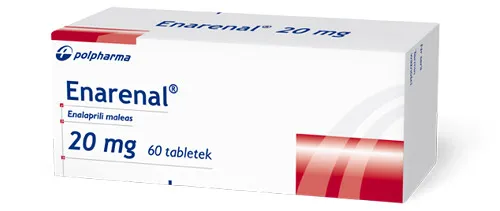
Table of Contents
Package leaflet: Information for the patient
Enarenal, 5 mg, tablets
Enarenal, 10 mg, tablets
Enarenal, 20 mg, tablets
Enalapril maleate
Please read this leaflet carefully before taking this medicine, as it contains important information for you.
- Keep this leaflet so that you can read it again if necessary.
- If you have any questions, please consult your doctor or pharmacist.
- This medicine has been prescribed for a specific individual. Do not give it to others. This medicine may harm others, even if their symptoms are the same.
- If you experience any adverse reactions, including any adverse reactions not listed in this leaflet, inform your doctor or pharmacist. See section 4.
Contents of the leaflet
- What Enarenal is and what it is used for
- Important information before taking Enarenal
- How to take Enarenal
- Possible side effects
- How to store Enarenal
- Contents of the pack and other information
1. What Enarenal is and what it is used for
Enarenal is a medicine belonging to the group of angiotensin-converting enzyme inhibitors (ACE inhibitors), used for the treatment of hypertension, symptomatic heart failure, and for prevention of symptomatic heart failure in patients with asymptomatic left ventricular dysfunction (ejection fraction ≤ 35%).
2. Important information before using Enarenal
When not to use Enarenal:
- if the patient is allergic to enalapril maleate, any other medicine in the angiotensin-converting enzyme (ACE) inhibitor class, or any of the other ingredients of this medicine (listed in section 6);
- if the patient has diabetes or kidney problems and is being treated with a blood pressure-lowering medicine containing aliskiren;
- if the patient has ever experienced angioedema (a type of swelling) after taking other ACE inhibitors;
- if the patient or a family member has ever had angioedema for any reason (hereditary or idiopathic angioedema);
- after the third month of pregnancy (use of Enarenal should be avoided during early pregnancy – see section on pregnancy);
- if the patient is currently taking or has recently taken sacubitril with valsartan, a medicine used to treat certain types of chronic (long-term) heart failure in adults, because the risk of angioedema (rapid swelling of tissues beneath the skin, such as in the throat) increases.
Warnings and precautions
Before starting Enarenal, consult a doctor or pharmacist if:
- the patient is taking any of the following medicines used to treat high blood pressure:
- angiotensin II receptor antagonists (known as ARBs – Angiotensin Receptor Blockers) (also known as sartans – e.g. valsartan, telmisartan, irbesartan), especially if the patient has kidney problems related to diabetes
- aliskiren
- the patient experiences dizziness or a "blank" feeling in the head, particularly at the beginning of treatment or after increasing the dose, or when changing position from sitting or lying down to standing
- the patient has heart failure (inadequate pumping strength of the heart), as excessive lowering of blood pressure may occur. The risk is higher in patients with severe heart failure who are taking high doses of loop diuretics, those with low sodium levels in the blood, or those with impaired kidney function
- the patient has heart disease caused by ischemia or cerebrovascular disease. Treating such patients requires special caution, as a very large drop in blood pressure may lead to heart attack or stroke
- the patient is on a low-salt diet, has recently experienced severe vomiting or diarrhea, or is taking diuretic medicines
- the patient has conditions such as: aortic stenosis (narrowing of the aorta), hypertrophic cardiomyopathy, or obstruction of blood outflow from the left ventricle
- the patient has kidney disease, has undergone kidney transplantation, or is undergoing dialysis (using highly permeable dialysis membranes together with enalapril may cause severe allergic reactions), or has high blood pressure due to renal artery stenosis (renovascular hypertension)
- the patient has liver function disorders
- the patient has collagen diseases, is taking immunosuppressive medicines (used to treat autoimmune diseases such as rheumatoid arthritis or post-transplant conditions), allopurinol (used to treat gout), or procainamide (used to treat heart rhythm disorders). In these patients, the doctor may recommend more frequent monitoring of white blood cell count. If signs of infection (such as high fever, chills) occur, the treating physician should be contacted immediately
- the patient has previously experienced angioedema (symptoms such as itching, hives, wheezing, or swelling of hands, throat, lips, or eyelids) while taking other medicines
- the patient is taking antidiabetic medicines or insulin; during the first month of enalapril treatment, blood glucose levels should be closely monitored
- the patient is taking potassium-sparing diuretics, potassium-containing medicines, potassium-containing salt substitutes, or medicines that increase potassium levels in the blood
- the patient is taking a medicine containing lithium salts (used to treat certain psychiatric disorders).
The risk of angioedema may increase if the patient is taking any of the following medicines:
- racecadotril (used to treat diarrhea);
- sirolimus, everolimus, temsirolimus, and other medicines belonging to the class known as mTOR inhibitors (used to prevent rejection of transplanted organs and in cancer treatment);
- vildagliptin (used to treat diabetes).
The treating physician may monitor kidney function, blood pressure, and blood electrolyte levels (e.g. potassium) at regular intervals.
See also the section “When not to use Enarenal”.
Contact a doctor immediately if any of the following symptoms occur during treatment:
- jaundice (yellowing of the skin and whites of the eyes)
- persistent dry cough.
Inform the doctor about taking Enarenal if undergoing any of the following procedures:
- LDL apheresis, a procedure to remove cholesterol from the blood
- desensitization therapy to reduce allergic reactions to bee or wasp venom
- any surgery or administration of anesthetic medicines.
If the patient is pregnant or suspects pregnancy, consult a doctor. Enarenal is not recommended during early pregnancy and must not be taken after the third month of pregnancy, as it may cause serious harm to the unborn child (see section on pregnancy).
At the beginning of treatment, the doctor will frequently monitor blood pressure to ensure the patient is receiving the appropriate dose. Additionally, in some patients, the doctor may recommend blood tests to assess potassium and creatinine levels or liver enzyme activity.
Children and adolescents
Enalapril is used in children and adolescents only for the treatment of high blood pressure. The doctor will determine the dose based on the patient's condition and blood pressure values.
Enarenal with other medicines
Tell your doctor or pharmacist about all medicines currently or recently taken, as well as any medicines planned for future use.
Some medicines should not be used together.
In other cases, the doctor may adjust the dosage if Enarenal is used together with other medicines. This is particularly important when Enarenal is used concomitantly with:
-
potassium-sparing diuretics such as spironolactone, triamterene, or amiloride; potassium-containing medicines or potassium-containing salt substitutes. Enalapril may increase blood potassium levels, leading to hyperkalemia. Mild hyperkalemia may cause few or no symptoms and is usually detected by blood tests or electrocardiogram.
-
diuretics such as furosemide, other antihypertensive medicines, glyceryl trinitrate (nitroglycerin), or other nitrates, and other vasodilating medicines. Taking these together with enalapril may cause hypotension.
-
sacubitril with valsartan, a medicine used to treat certain types of chronic (long-term) heart failure in adults (see also information under the heading “When not to use Enarenal”),
-
potassium supplements (including salt substitutes), potassium-sparing diuretics, and other medicines that increase blood potassium levels (e.g. trimethoprim and co-trimoxazole, used for bacterial infections; cyclosporine, an immunosuppressive medicine used to prevent organ transplant rejection; and heparin, a medicine used to thin the blood to prevent clots),
-
lithium salts, used to treat certain psychiatric disorders. Enarenal should not be taken with lithium salts.
-
tricyclic antidepressants such as amitriptyline (used to treat depression),
-
antipsychotic medicines such as phenothiazine derivatives (used to relieve marked agitation),
-
opioids such as morphine (used to treat moderate to severe pain), and anesthetics. Taking these together with Enarenal may enhance the blood pressure-lowering effect.
-
non-steroidal anti-inflammatory drugs (NSAIDs), such as diflunisal or diclofenac, used to relieve pain and inflammation. These medicines reduce the blood pressure-lowering effect of enalapril and may worsen hyperkalemia.
-
gold salts (used to treat arthritis).
-
sympathomimetic agents such as ephedrine, noradrenaline, and adrenaline, used to treat hypotension, shock, circulatory failure, asthma, or allergies. Taking these together with enalapril may lead to sustained high blood pressure.
-
medicines used in diabetes (e.g. insulin, glibenclamide, or metformin). When taken together with enalapril, blood glucose levels may decrease excessively.
The treating doctor may need to adjust the dose and/or take additional precautions:
- if the patient is taking an angiotensin II receptor antagonist (ARB) or aliskiren (see also sections “When not to use Enarenal” and “Warnings and precautions”).
Enarenal with food and alcohol
Enarenal may be taken independently of meals.
Consuming alcohol together with Enarenal may enhance the blood pressure-lowering effect, leading to dizziness, a "blank" feeling in the head, or fainting. Alcohol intake should be kept to a minimum.
Pregnancy and breastfeeding
If the patient is pregnant or breastfeeding, suspects she may be pregnant, or is planning a pregnancy, she should consult a doctor or pharmacist before using this medicine.
Pregnancy
If the patient is pregnant or suspects pregnancy, she should consult a doctor. The doctor should advise stopping Enarenal before becoming pregnant or as soon as pregnancy is suspected and may recommend using an alternative medicine instead of Enarenal.
Enarenal is not recommended during early pregnancy and must not be taken after the third month of pregnancy, as it may cause serious harm to the unborn child.
Breastfeeding
Consult a doctor before breastfeeding or before starting Enarenal during breastfeeding. Breastfeeding is not recommended for newborns (first weeks after birth), especially premature infants, while taking Enarenal.
For older infants, the doctor should inform the patient about the benefits and risks of taking Enarenal during breastfeeding compared to other medicines.
Driving and operating machinery
Individual response to the medicine may vary. Some adverse effects of enalapril, such as dizziness or fatigue, may affect the ability to drive or operate machinery in some patients.
Enarenal contains lactose and sodium
If the patient has previously been diagnosed with intolerance to certain sugars, the patient should consult a doctor before taking this medicine.
The medicine contains less than 1 mmol (23 mg) of sodium per dose, meaning it is considered "sodium-free".
3. How to use Enarenal
This medicine should always be taken as instructed by your doctor or pharmacist. If you have any doubts,
you should consult your doctor or pharmacist.
The doctor will determine the dose individually, depending on the patient's condition and the effect of the medicine on blood pressure.
Do not change the dose of the medicine on your own or stop taking the medicine without medical advice.
The usual recommended dosage is as follows:
Adults
Hypertension
The initial dose ranges from 5 mg to a maximum of 20 mg, depending on the degree of hypertension
and the patient's condition. The medicine is taken once daily. In mild hypertension, the recommended dose
is 5 to 10 mg. In patients with increased activity of the renin-angiotensin-aldosterone system (e.g. renovascular hypertension, excessive salt and/or water loss, cardiac decompensation, or severe hypertension), a pronounced drop in blood pressure may occur after the initial dose. In such patients, an initial dose of 5 mg or lower is recommended, and treatment should be initiated under medical supervision.
Particular caution should be exercised when starting treatment with Enarenal in patients taking high doses of diuretics,
as symptomatic hypotension due to reduced blood volume may occur after the first dose. In these patients, an initial dose of 5 mg or lower is recommended. If possible, diuretic treatment should be discontinued 2–3 days before starting Enarenal. Renal function and serum potassium levels should be monitored.
The usual maintenance dose is 20 mg once daily. The maximum maintenance dose is 40 mg per day.
Heart failure and/or asymptomatic left ventricular dysfunction
In the treatment of heart failure symptoms, enalapril is used in combination with diuretics and, if necessary, with digitalis glycosides or β-blockers.
The initial dose of Enarenal in patients with heart failure or asymptomatic left ventricular dysfunction is 2.5 mg and should be administered under strict medical supervision to monitor its effect on blood pressure at the beginning of treatment. If symptomatic hypotension does not occur after starting treatment for heart failure, or if it has been corrected, the enalapril dose should be gradually increased to the usual maintenance dose of 20 mg, taken as a single dose or in two divided doses, depending on patient tolerance. Dose adjustment should be carried out over a period of 2 to 4 weeks.
The maximum dose is 40 mg per day, given in two divided doses.
Use in patients with renal impairment
In patients with renal impairment, the dose of enalapril must be adjusted according to the degree of renal function.
Renal function is reflected by creatinine levels (a metabolic product) in urine and blood tests.
In dialysed patients, the dose will be adjusted daily, as directed by the treating physician.
Use in elderly patients
The treating physician will determine the dose according to the patient's renal function.
Use in children and adolescents
Experience with enalapril use in children with hypertension is limited. If a child is able to swallow tablets, the dose will be determined according to the child's body weight and blood pressure. The recommended initial dose is 2.5 mg for children weighing 20 kg to <50 kg and 5 mg for children weighing 50 kg or more. Enarenal is administered once daily. Dosing should be adjusted according to the child's needs, up to a maximum of 20 mg per day for children weighing 20 kg to <50 kg and 40 mg per day for children weighing 50 kg or more.
Enarenal is not recommended for use in neonates and children with impaired renal function.
Taking more Enarenal than recommended
If you take more medicine than prescribed, contact your doctor immediately. The doctor will initiate appropriate treatment.
The most common symptoms of overdose are low blood pressure and stupor (a state of near-complete loss of consciousness). Other symptoms may include dizziness or a feeling of "emptiness" in the head due to reduced blood pressure, strong or rapid heartbeat, tachycardia, anxiety, cough, renal failure, and rapid breathing.
If you miss a dose of Enarenal
If you miss a dose, take it as soon as possible. If it is already time for your next dose, do not take the missed dose. Do not take a double dose to make up for a missed dose.
Stopping Enarenal treatment
Do not stop taking this medicine without first consulting your doctor.
If you have any further questions about the use of this medicine, consult your doctor or pharmacist.
4. Possible adverse effects
Like all other medicinal products, this medicine can cause adverse effects, although not everyone will experience them.
You should stop taking Enarenal immediately and consult your doctor if any of the following symptoms occur:
- hypotension (too low blood pressure), dizziness, feeling of "emptiness" in the head, especially at the beginning of treatment, after an increase in dose, or during changes in body position from sitting or lying to standing
- itching, shortness of breath, or wheezing
- sore throat, fever, swollen lymph nodes
- symptoms of angioedema (swelling of hands, tongue, lips, throat, face or eyes)
- severe skin reactions, such as sudden rash, burning sensation in the skin, or skin peeling
- jaundice (yellowing of the skin and whites of the eyes)
Below is a list of adverse effects reported in patients taking enalapril, categorized by frequency of occurrence:
Very common (occur in more than 1 in 10 patients)
- dizziness, blurred vision, fatigue
- cough
- nausea
Common (occur in less than 1 in 10 patients)
- headache, depression, fainting, hypotension, feeling of tiredness
- shortness of breath, chest pain, heart rhythm disturbances, angina pectoris, rapid heartbeat
- diarrhoea, abdominal pain, taste disturbances
- rash, allergic reactions, angioedema
- elevated potassium levels in blood
- increased creatinine levels in blood
Uncommon (occur in less than 1 in 100 patients)
- disorientation, drowsiness, nervousness, insomnia
- paraesthesia (tingling, numbness, burning sensation)
- palpitations, myocardial infarction or stroke
- anaemia
- sore throat and hoarseness, nasal discharge, breathing difficulties or asthma
- bloating or abdominal pain (may be due to intestinal obstruction), severe abdominal pain (may be due to pancreatitis), vomiting, indigestion, constipation, loss of appetite, stomach irritation, dry mouth, gastric ulcer (stabbing pain and hunger sensation, particularly when the stomach is empty)
- excessive sweating, itching, urticaria, hair loss
- renal function disorders, kidney failure, presence of protein in urine
- impotence (sexual dysfunction)
- muscle cramps, facial flushing, tinnitus, malaise, fever
- low sodium levels in blood
- elevated urea levels in blood
- decreased blood glucose (sugar) levels
Rare (occur in less than 1 in 1,000 patients)
- vivid dreams, sleep disturbances
- poor circulation in fingers and toes causing redness and pain (Raynaud's phenomenon)
- fluid accumulation in the lungs, nasal catarrh or nasal pain, eosinophilic pneumonia (a lung hypersensitivity disease)
- blood disorders (with symptoms such as: fatigue, weakness, shortness of breath, feeling of exhaustion, frequent or recurrent infections, prolonged bleeding, unexplained bruising), swollen lymph nodes, autoimmune diseases (conditions in which the immune system treats the body's own cells as foreign and produces antibodies against them)
- pain, swelling or ulceration (aphthae) in the mouth, inflammation or pain and swelling of the tongue
- liver failure, hepatitis, cholestasis (including jaundice)
- severe skin reactions (Stevens-Johnson syndrome, toxic epidermal necrolysis, pemphigus, erythroderma), with symptoms such as skin redness, blisters, inflammation, skin peeling
- breast enlargement in men
- oliguria
Frequency not known (frequency cannot be estimated from available data):
- syndrome of inappropriate antidiuretic hormone secretion; symptoms include headache, fatigue, nausea, vomiting, disorientation and seizures
During treatment with enalapril, other symptoms have also been reported, such as fever, vasculitis (inflammation of blood vessels), muscle and joint pain and inflammation, blood abnormalities, rash, photosensitivity or other skin symptoms.
Enarenal may cause:
- increased levels of creatinine and urea in blood (indicating kidney function)
- increased activity of liver enzymes and increased bilirubin concentration in serum (indicating liver function)
- decreased platelet count, which may affect blood clotting. If unexplained bruising or red or purple spots appear on the skin, inform your doctor immediately.
- decreased number of red and white blood cells
- decreased blood glucose (sugar) levels in patients with diabetes. Blood glucose levels should be closely monitored at the beginning of treatment.
Reporting of adverse effects
If any adverse effects occur, including those not listed in this leaflet, inform your doctor or pharmacist. Adverse effects can be reported directly to the Department of Monitoring of Adverse Drug Reactions, Office for Registration of Medicinal Products, Medical Devices and Biocidal Products
Al. Jerozolimskie 181C
02-222 Warsaw
Phone: +48 22 49 21 301
Fax: +48 22 49 21 309
Website: https://smz.ezdrowie.gov.pl
Adverse effects can also be reported to the marketing authorization holder.
Reporting adverse effects helps to provide more information on the safety of the medicine.
5. How to store Enarenal
Keep this medicine out of the sight and reach of children.
Store at a temperature not exceeding 25°C.
Store in the original packaging to protect from light.
Do not use this medicine after the expiry date stated on the carton and blister pack following EXP.
The expiry date refers to the last day of the specified month.
The marking on the packaging following EXP indicates the expiry date, and following Lot/LOT indicates the batch number.
Medicines must not be disposed of via wastewater or household waste. Ask your pharmacist how to dispose of medicines no longer required. Such measures help protect the environment.
6. Contents of the pack and other information
What Enarenal contains
- The active substance is enalapril maleate. Each tablet contains 5 mg, 10 mg or 20 mg of enalapril maleate, respectively.
- The other ingredients are: monohydrate lactose, modified maize starch, croscarmellose sodium, sodium hydrogen carbonate and magnesium stearate.
What Enarenal looks like and contents of the pack
Enarenal 5 mg are elongated, biconvex, white tablets with score lines. The tablets can be divided into halves.
Enarenal 10 mg and 20 mg are round, flat, white tablets.
Each pack contains 30 or 60 tablets.
Not all pack sizes may be marketed.
Marketing Authorisation Holder and Manufacturer
POLPHARMA S.A. Pharmaceutical Works
ul. Pelplińska 19, 83-200 Starogard Gdański
tel. +48 22 364 61 01