Elvanse
Poland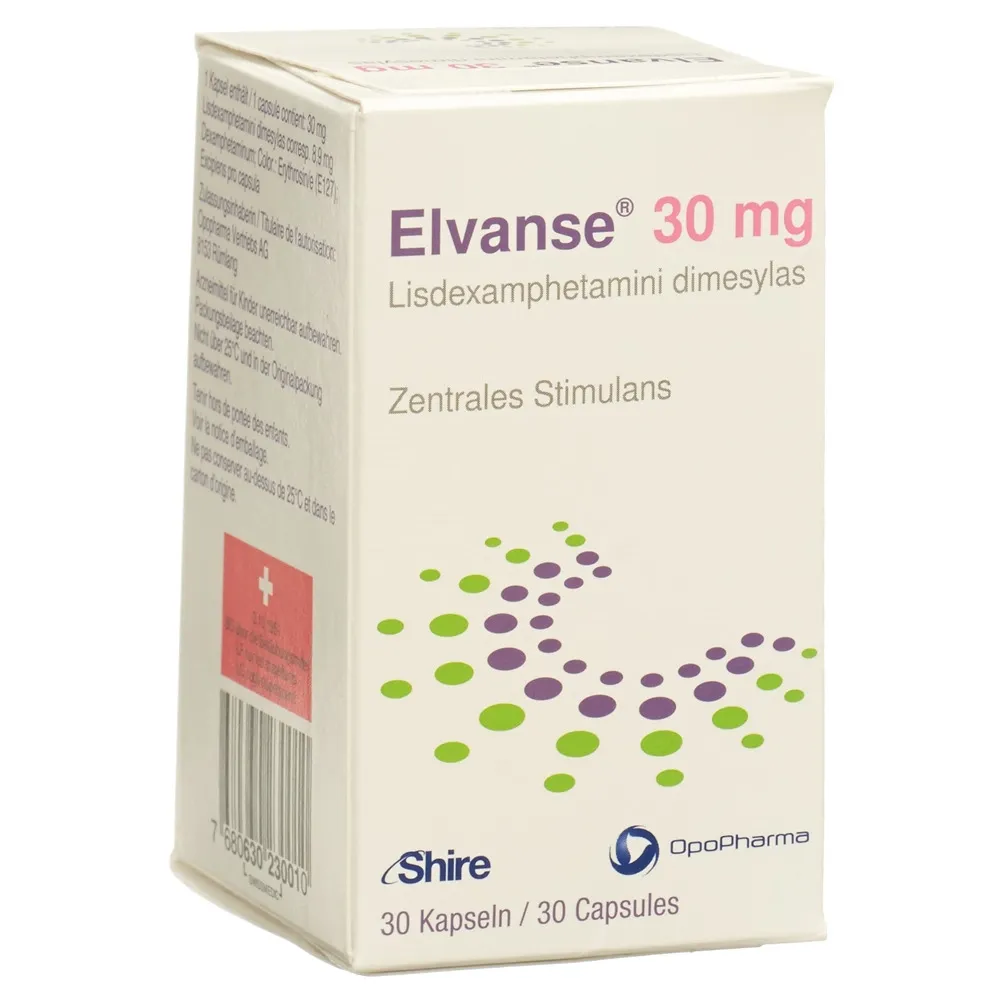
Table of Contents
Package leaflet: Information for the patient
Elvanse, 20 mg, hard capsules
Elvanse, 30 mg, hard capsules
Elvanse, 40 mg, hard capsules
Elvanse, 50 mg, hard capsules
Elvanse, 60 mg, hard capsules
Elvanse, 70 mg, hard capsules
lisdexamfetamine dimesylate
Please read this leaflet carefully before taking this medicine because it contains important information for you.
- Keep this leaflet. You may need to read it again.
- If you have any further questions, ask your doctor or pharmacist.
- This medicine has been prescribed for you personally. Do not give it to others. It may harm them, even if their symptoms are the same as yours.
- If you experience any side effects, including any not listed in this leaflet, tell your doctor or pharmacist. See section 4.
Leaflet contents
- What Elvanse is and what it is used for
- What you need to know before taking Elvanse
- How to take Elvanse
- Possible side effects
- How to store Elvanse
- Contents of the pack and other information
- Information for children and adolescents
1. What Elvanse is and what it is used for
What Elvanse is
Elvanse contains lisdexamfetamine dimesylate. It is a substance that helps regulate brain function. It improves concentration and reduces hyperactivity. Elvanse works gradually and has a long duration of action – up to 13 hours.
Why Elvanse is used
Elvanse is used as part of a comprehensive treatment programme for "Attention Deficit Hyperactivity Disorder" (ADHD):
- in children and adolescents aged 6 to 18 years, when previous treatment with methylphenidate has not reduced ADHD symptoms;
- in adults whose ADHD began in childhood. Before prescribing Elvanse to a person who has not previously been treated for ADHD, the doctor will determine whether the condition has been present since childhood.
If there is no improvement, or if the patient feels worse after one month of treatment, consult your doctor.
Elvanse is not recommended for all patients with ADHD. The decision to use it is based on a thorough medical assessment.
Elvanse should not be given to children with ADHD under 6 years of age, as it is not known whether it is safe and effective in such young individuals.
How Elvanse works
Elvanse improves the function of certain brain areas with reduced activity. This may help improve focus, attention, and reduce hyperactivity.
Elvanse should be used together with other treatment approaches:
- psychotherapy
- educational programmes
- social skills training
- behavioural therapy
- occupational therapy
Elvanse should only be prescribed by physicians experienced in treating behavioural disorders.
ADHD
Patients with ADHD have difficulties with:
- staying still
- maintaining attention
ADHD is not the patient's fault, but it may cause problems in daily life. Children and adolescents with ADHD may have difficulties in learning and completing homework. They may find it hard to behave appropriately at home, at school, or in other settings.
ADHD does not affect intelligence.
2. Important information before taking Elvanse
When NOT to take Elvanse
- if the patient is allergic to lisdexamfetamine, other amphetamine compounds, or any of the other ingredients of this medicine (listed in section 6)
- if the patient is taking or has taken within the last 14 days medicines for depression called monoamine oxidase inhibitors (MAOIs)
- if the patient has been diagnosed with a thyroid disorder
- if the patient experiences agitation, excessive activity, or lack of inhibition
- if the patient has ever had heart problems, such as heart attack, irregular heartbeat, chest pain or discomfort, heart failure, other heart diseases, or congenital heart defects
- if the patient has high blood pressure or blood vessel narrowing
- if the patient has been diagnosed with glaucoma (increased pressure in the eye)
- if the patient has been diagnosed with a pheochromocytoma (a rare tumour usually developing in the adrenal glands – glands located above the kidneys)
Elvanse must not be taken in the above-mentioned cases. If the patient has
any doubts, they should speak to a doctor or pharmacist before starting treatment with Elvanse.
This should be done because treatment may worsen the symptoms listed above.
Warnings and precautions
Before starting treatment with Elvanse, discuss with a doctor or pharmacist if:
- the patient has ever misused drugs or addictive substances
- the patient has kidney function disorders
- the patient has had seizures (epilepsy) or abnormal EEG test results
- the patient has experienced uncontrolled body movements or involuntarily repeated sounds or words
- the patient has been diagnosed with high blood pressure
- the patient or a family member has previously had heart rhythm disorders (seen on electrocardiogram), heart conditions treated with medicines affecting heart rhythm, or an electrolyte imbalance
- the patient has other heart problems not listed above under "When NOT to take Elvanse"
- the patient has previously had a stroke
- the patient has psychiatric disorders such as:
- severe mood swings (bipolar affective disorder, where mood fluctuates between mania and depression)
- feelings of aggression or hostility, or worsening of existing aggression
- seeing, hearing, or sensing things that are not there (hallucinations)
- belief in false ideas (delusions)
- extreme suspicion (paranoia)
- agitation, anxiety, or increased mental tension
- depression or feelings of guilt
This also applies to women who are able to become pregnant, planning pregnancy, or who are pregnant
(more information is provided in the section "Pregnancy and breastfeeding").
The patient should inform the doctor or pharmacist before treatment if any of these symptoms have occurred. This should be done because treatment may worsen the symptoms listed above. The doctor will monitor the effects of the medicine on the patient.
Misuse of Elvanse may lead to behavioural disorders, and the patient taking the medicine may become dependent on it. If the patient misuses alcohol, prescription medicines, or illegal psychoactive substances, or is dependent on them, they should inform their doctor. The medicine must not be shared with other people – even if they have similar symptoms.
In some patients, Elvanse may cause heart rhythm disturbances. If palpitations or irregular heartbeat occur during treatment, the patient should inform the doctor immediately. The risk of heart problems may increase with dose. Therefore, the recommended dose should be used.
Before starting treatment, the doctor will examine the patient
The doctor will perform the examinations listed below and decide whether treatment with Elvanse is appropriate. The doctor will ask:
- Is the patient taking other medicines?
- Has anyone in the patient's family died suddenly for unknown reasons?
- Does the patient or anyone in their family have other health problems (e.g. heart conditions)?
- How does the patient feel: are they happy or sad, do they currently have or have they previously had unusual thoughts?
- Does any of the patient's relatives have "nervous tics", meaning difficult-to-control involuntary repetition of words or body movements?
- Has the patient or any of their relatives ever had a mental illness or behavioural disorders? The doctor will conduct a psychiatric interview and may ask whether there have been suicide attempts, bipolar affective disorder (severe mood swings from depression to mania), or depression in the patient's family.
It is important that the patient answers the doctor's questions fully and honestly. This will allow the doctor to determine whether treatment with Elvanse is appropriate for the patient. Before treatment, the doctor may order additional tests.
Changes in body weight
- In some patients, Elvanse may cause weight loss.
- Children and adolescents may not gain weight as expected.
- In children and adolescents, the doctor will closely monitor growth, body weight, and appetite.
- If growth rate is not as expected or if weight loss occurs, the doctor may discontinue treatment with Elvanse.
- In adult patients, the doctor will monitor growth as well as appetite.
Elvanse and other medicines
The patient should tell their doctor or pharmacist about all medicines they are currently taking, have recently taken, or plan to take in the future.
When NOT to take Elvanse:
- If the patient is taking or has taken within the last 14 days medicines for depression called monoamine oxidase inhibitors (MAOIs). Taking Elvanse together with monoamine oxidase inhibitors may cause a sudden increase in blood pressure. The doctor or pharmacist can inform the patient which medicines belong to the group of MAOIs.
Elvanse and certain other medicines may interact with each other. Before starting treatment with Elvanse, consult a doctor or pharmacist if the patient is taking any of the following medicines:
- medicines used for severe mental disorders
- medicines that increase or decrease blood pressure
- medicines used during surgical procedures, for example painkillers
- medicines for colds and cough suppressants. Some of these medicines may increase blood pressure, so the patient should consult a pharmacist before purchasing them
- medicines that alter urine acidity, e.g. vitamin C (ascorbic acid) or sodium bicarbonate (e.g. in medicines for indigestion).
If in doubt, or if a medicine is not listed above, consult a doctor or pharmacist before starting treatment with Elvanse.
Drug screening tests for illegal substances
This medicine may cause a positive result in drug tests for illegal substances.
Pregnancy and breastfeeding
If the patient is pregnant, suspects she may be pregnant, or is planning to have a child, she should consult her doctor before using this medicine.
The body breaks down Elvanse into substances that may pass through the placenta and into breast milk. Available data on the use of Elvanse during the first three months of pregnancy do not indicate an increased risk of congenital developmental abnormalities in the child, but may increase the risk of pre-eclampsia (a condition usually occurring after the 20th week of pregnancy, characterised by high blood pressure and protein in the urine) and premature birth. Newborns exposed to amphetamines during pregnancy may experience withdrawal symptoms (tremors, irritability, increased muscle tone). This medicine should not be used during pregnancy unless clearly prescribed by a doctor; breastfeeding should not be undertaken during treatment.
Driving and operating machinery
During treatment with Elvanse, patients may experience blurred vision or dizziness.
In such cases, driving vehicles, operating machinery, or activities such as horse riding, cycling, or climbing trees may be dangerous.
Elvanse contains sodium
The medicine contains less than 1 mmol (23 mg) of sodium per capsule, i.e. the medicine is considered "sodium-free".
3. How to take Elvanse
This medicine should always be taken as directed by the doctor. In case of doubt, consult
your doctor or pharmacist.
Elvanse has been prescribed for a specific patient and should not be given to others, even if they
have similar symptoms.
How to take Elvanse
- Elvanse should be taken in the morning before breakfast. It may be taken with or without food.
- Elvanse can be taken in two ways:
o swallow the entire capsule with water, or
o open the capsule and mix the contents with:
§ yoghurt or another soft food, or
§ a glass of water or orange juice
Mix the contents of Elvanse thoroughly with a spoon in yoghurt, water, or orange juice. The mixture should be consumed immediately after mixing. Do not delay taking the medicine. A white residue may remain on the container or glass after drinking the medicine. This is not a cause for concern, as it does not contain the active substance.
Dosage
- Your doctor will inform you of the dose to be taken daily.
- The recommended starting dose is 30 mg, although the doctor may decide to start treatment at 20 mg. The doctor may later increase the dose. The maximum daily dose is 70 mg.
- If the patient has kidney disease, the doctor may reduce the dose.
- If the patient is elderly, the doctor will monitor blood pressure and cardiovascular function before and during treatment (see section 2, "When NOT to take Elvanse" and "Warnings and precautions"). The doctor may also consider it necessary to reduce the dose.
- Do not reduce the dose or take only part of a capsule on your own. Always take the entire contents of the capsule. Do not take less than one capsule per day.
If the patient does not feel better after 1 month of treatment
If the patient does not feel better, inform the doctor. The doctor may then change the treatment.
If Elvanse is taken incorrectly
If Elvanse is taken incorrectly, the patient may experience behavioural disturbances or become dependent on the medicine. For this reason, inform the doctor if the patient has ever had problems with abuse or dependence on alcohol, prescription medicines, or illegal substances.
Taking more than the recommended dose of Elvanse
If too much medicine is taken, seek medical help immediately by contacting a doctor or calling an ambulance. The patient should inform medical staff of the dose taken.
Symptoms of overdose may include:
- Motor restlessness, tremor, increased uncontrolled movements, fine muscle twitches, rapid breathing, confusion, aggressive or quarrelsome behaviour, seeing, hearing, or feeling things that are not there (hallucinations), panic attacks, high fever, or muscle damage (rhabdomyolysis). Later, fatigue and depression may occur.
- Patients may experience nausea, vomiting, diarrhoea, or crampy abdominal pain.
- Changes in heart function (fast, slow, or irregular heartbeat), abnormally low or high blood pressure, circulatory collapse, seizures, and coma may sometimes occur.
- Headache, confusion, seizures, and visual disturbances may also occur.
Missed dose of Elvanse
Do not take a double dose to make up for a missed dose. If a dose is missed, wait and take the next dose the following day. Do not take the medicine in the afternoon, as this may cause insomnia or disturb sleep.
Stopping Elvanse treatment
If the patient stops taking Elvanse, ADHD symptoms may return.
Do not stop treatment without consulting the doctor. Do not stop taking the medicine suddenly on your own.
Monitoring during Elvanse treatment
The doctor will perform certain tests during Elvanse treatment
- Before starting treatment, the doctor will check whether treatment will be safe and beneficial for the patient.
- During treatment, the doctor will order regular check-ups every 6 months or more frequently, and after any dose change. Monitoring may include:
- assessment of the patient's appetite
- measurement of the patient's height and body weight
- measurement of the patient's blood pressure and pulse
- monitoring for mood, thought, or perception disturbances, and checking whether these have worsened during Elvanse treatment
Long-term treatment
Long-term treatment with Elvanse may not be necessary for life. If treatment is needed for longer than one year, the doctor may recommend a short break in treatment (for example, during holidays) to assess whether the medicine is still needed.
If you have any further questions about the use of this medicine, consult your doctor or pharmacist.
4. Possible side effects
Like all medicines, this medicine can cause side effects, although not everyone will experience them.
Your doctor will discuss the possible side effects with you.
Serious side effects may sometimes occur. If any of the following symptoms occur,
contact your doctor as soon as possible:
Common (may affect up to 1 in 10 people)
- Irregular heartbeat (palpitations)
- Chest pain (may be a sign of heart disease)
Uncommon (may affect up to 1 in 100 people)
- Excessive excitement, hyperactivity, lack of inhibition (mania)
- Allergic reactions (hypersensitivity)
Unknown frequency: frequency cannot be estimated from available data
- Severe allergic reactions with sudden drop in blood pressure, shortness of breath, and itching/hives (anaphylactic reaction)
- Seeing, feeling, or hearing things that are not real*, paranoia, and delusions (psychotic symptoms)
- Worsening of Tourette’s syndrome, characterized by uncontrollable, recurring twitching of various body parts or repeating sounds or words (tics)
- Seizures (convulsive seizures)
- Heart rhythm disorders, life-threatening irregular heartbeat (observed on electrocardiogram). See section 2 "Warnings and precautions"
- Allergic liver damage, which may be accompanied by yellowing of the eyes and/or skin (eosinophilic hepatitis)
- Skin swelling (angioedema) or severe rash with blisters on the skin and mucous membranes (Stevens-Johnson syndrome)
- Shortness of breath or swelling of the legs (symptoms of heart disease)*
* The frequency of the following serious side effects differs in children and/or adolescents compared to adults.
- Seeing, feeling, or hearing things that are not real occur uncommonly in children and/or adolescents
- Shortness of breath or swelling of the legs (symptoms of heart disease) occur uncommonly in adolescents
If any of these symptoms occur, contact your doctor as soon as possible.
Other side effects may also occur. If they become severe, inform your doctor or pharmacist.
Very common (may affect more than 1 in 10 people)
- Decreased appetite
- Difficulty sleeping
- Dry mouth
- Headache
Common (may affect up to 1 in 10 people)
- Restlessness, nervousness, anxiety, depression, irritability, or mood swings
- Feeling of fatigue* or motor restlessness
- Difficulty achieving or maintaining erection or changes in sex drive
- Dizziness
- Uncontrolled muscle spasms, involuntary movements, or tremors, shaking, or unusual activity
- Uncontrolled, repetitive contractions of body parts or involuntary repetition of sounds or words (nervous tics)
- Irregular or rapid heartbeat (tachycardia)
- High blood pressure*
- Shortness of breath
- Nausea, vomiting, or diarrhoea
- Constipation
- Weight loss*
- Excessive sweating
- Abdominal pain
- Teeth grinding
Uncommon (may affect up to 1 in 100 people)
- Fever*
- Loquacity
- Feelings of depression, anxiety, low mood, or uneasiness (dysphoria)
- Feelings of happiness and excitement (euphoria)
- Frequent "skin picking"
- Uncontrolled muscle contractions or sudden body movements
- Severe drowsiness
- Itching, rash*, or red, itchy skin lesions (urticaria)
- Blurred vision
- Metallic taste or changes in taste perception (taste disturbances)
- Fainting
- Nosebleeds
Unknown frequency: frequency cannot be estimated from available data
- Pupil dilation*
- Aggression
- Poor blood circulation causing numbness and whitening of fingers and toes (Raynaud’s phenomenon)*
* The frequency of the following side effects differs in children and/or adolescents compared to adults.
- Weight loss is common in children and adolescents
- Abdominal pain is very common in children
- Fever is common in children and adolescents
- Severe drowsiness is common in children and adolescents
- Rash is common in children
- High blood pressure is uncommon in children and adolescents
- Poor blood circulation causing numbness and whitening of fingers and toes (Raynaud’s phenomenon) is uncommon in children
- Pupil dilation is uncommon in children and adolescents
Reporting of side effects
If any side effects occur, including any side effects not listed in this leaflet, inform your doctor or pharmacist. Side effects can be reported directly to the Department of Monitoring Adverse Drug Reactions of the Office for Registration of Medicinal Products, Medical Devices and Biocidal Products
Al. Jerozolimskie 181C
02-222 Warsaw
Tel.: + 48 22 49 21 301
Fax: + 48 22 49 21 309
Website: https://smz.ezdrowie.gov.pl
Side effects can also be reported to the marketing authorization holder.
Reporting side effects helps provide more information on the safety of this medicine.
5. How to store Elvanse
Do not store above 25°C.
Keep the medicine in a place out of sight and reach of children.
Keep the medicine in a secure place inaccessible to other people.
Taking this medicine by someone for whom it has not been prescribed may have serious
health consequences.
Do not use this medicine after the expiry date stated on the carton after EXP, on the bottle after EXP. The expiry date refers to the last day of the stated month.
Do not use this medicine if you notice that the capsules are damaged.
Medicines must not be disposed of via wastewater or household waste. Ask your pharmacist how to dispose of medicines no longer required. This will help protect the environment.
6. Contents of the pack and other information
What Elvanse contains
- The active substance is lisdexamfetamine dimesylate.
Each 20 mg capsule contains 20 mg of lisdexamfetamine dimesylate, equivalent to 5.9 mg
of dexamfetamine.
Each 30 mg capsule contains 30 mg of lisdexamfetamine dimesylate, equivalent to 8.9 mg
of dexamfetamine.
Each 40 mg capsule contains 40 mg of lisdexamfetamine dimesylate, equivalent to 11.9 mg
of dexamfetamine.
Each 50 mg capsule contains 50 mg of lisdexamfetamine dimesylate, equivalent to 14.8 mg
of dexamfetamine.
Each 60 mg capsule contains 60 mg of lisdexamfetamine dimesylate, equivalent to 17.8 mg
of dexamfetamine.
Each 70 mg capsule contains 70 mg of lisdexamfetamine dimesylate, equivalent to 20.8 mg
of dexamfetamine.
- Other ingredients are:
- Capsule contents: microcrystalline cellulose (E 460), sodium croscarmellose (E 468) and magnesium stearate (E 572)
- Capsule shell: gelatin, titanium dioxide (E 171)
- The 20 mg capsule also contains yellow iron oxide (E 172)
- The 30 mg capsule also contains erythrosine (E 127)
- The 40 mg capsule also contains brilliant blue FCF (E 133), black iron oxide (E 172) and yellow iron oxide (E 172)
- The 50 mg capsule also contains brilliant blue FCF (E 133)
- The 60 mg capsule also contains brilliant blue FCF (E 133)
- The 70 mg capsule also contains brilliant blue FCF (E 133) and erythrosine (E 127)
- Printing ink: shellac (E 904); potassium hydroxide (E 525); black iron oxide (E 172); propylene glycol (E 1520); concentrated ammonium hydroxide (E 527)
What Elvanse looks like and contents of the pack
Hard capsules.
The 20 mg capsules have an opaque ivory-coloured body and an opaque cap of the same colour, with the markings “S489” and “20 mg” printed in black ink.
The 30 mg capsules have a white opaque body and a pink opaque cap, with the markings “S489” and “30 mg” printed in black ink.
The 40 mg capsules have a white opaque body and a turquoise-green opaque cap, with the markings “S489” and “40 mg” printed in black ink.
The 50 mg capsules have a white opaque body and a blue opaque cap, with the markings “S489” and “50 mg” printed in black ink.
The 60 mg capsules have a turquoise opaque body and a turquoise opaque cap, with the markings “S489” and “60 mg” printed in black ink.
The 70 mg capsules have a blue opaque body and a pink opaque cap, with the markings “S489” and “70 mg” printed in black ink.
Pack sizes: 28, 30 or 90 capsules in a cardboard box. Not all pack sizes may be marketed.
Marketing Authorisation Holder and Manufacturer
Marketing Authorisation Holder
Takeda Pharmaceuticals International AG Ireland Branch
Block 2 Miesian Plaza
50 – 58 Baggot Street Lower
Dublin 2, D02 HW68
Ireland
e-mail: [email protected]
Manufacturer
Shire Pharmaceuticals Ireland Limited
Block 2 & 3 Miesian Plaza
50 – 58 Baggot Street Lower
Dublin 2
Ireland
Takeda Pharmaceuticals International AG Ireland Branch
Block 2 Miesian Plaza
50 – 58 Baggot Street Lower
Dublin 2, D02 HW68
Ireland
Takeda GmbH
Lehnitzstrasse 70-98
Oranienburg
Brandenburg
Germany
This medicinal product is authorised in the Member States of the European Economic Area and in the United Kingdom (Northern Ireland) under the following names:
Austria Elvanse
Belgium Elvanse
Denmark Elvanse
Estonia Elvanse
Finland Elvanse
Spain Elvanse
Ireland Tyvense
Luxembourg Elvanse
Netherlands Elvanse
Germany Elvanse
Norway Elvanse
Poland Elvanse
Portugal Elvanse
Sweden Elvanse
United Kingdom (Northern Ireland) Elvanse
7. Information for children and young people
This leaflet will help you understand the most important information about the medicine Elvanse.
If you cannot read the leaflet yourself, please ask your parents, grandparents or another caregiver to read it to you and explain its contents.
Reading short sections at a time may help you understand the text better.
Why has the doctor prescribed this medicine?
This medicine is used to treat "ADHD", a condition diagnosed in you.
Children and young people with ADHD may:
- be too restless
- have trouble paying attention
- act very quickly without thinking (be impulsive).
ADHD can affect your schoolwork, making new friends, and how you feel about yourself. It is not your fault that you have ADHD.
Treatment
- The doctor will prescribe the medicine and advise you on how to manage ADHD, for example, by talking to people who can help and teach you how to cope with the symptoms.
- The medicine should reduce the ADHD symptoms you have.
- You will have regular check-up visits with your doctor. The doctor will check whether the medicine is working and whether you are growing and developing well.
- If treatment is needed for more than one year, the doctor may temporarily stop the medicine to check whether you still need it. This may be done during holidays.
- Girls who think they might be pregnant or who are planning to have a baby should talk to their doctor before taking this medicine.
Some children should not take this medicine
You must not take this medicine if:
- you have heart problems
- you have problems with severe hyperactivity or very high activity levels
Sometimes you should talk to the doctor before starting treatment
Tell your doctor if:
- you have seizures
- you are pregnant or breastfeeding
- you are taking other medicines – you must tell your doctor about all other medicines you are taking
- you have kidney problems
How to take the medicine (capsules)?
- You can swallow the whole capsule with water. Alternatively, you can open the capsule and mix the powder with a glass of water or orange juice. The powder can also be mixed with yoghurt or another soft food.
- After mixing Elvanse medicine, you should eat the yoghurt or drink the water or juice immediately.
- Take one capsule every morning. The medicine can be taken with or without food.
- If you want to stop treatment, talk to your doctor first.
- If you forget to take your medicine, tell an adult. If you forget a dose, you must NOT take two capsules at once (a double dose).
Possible side effects
Side effects are unwanted symptoms that sometimes occur during treatment. If you notice any of the symptoms listed below, tell an adult immediately. The adult can then talk to the doctor. The most important side effects are:
- fast or irregular heartbeat
- seeing, feeling or hearing things that are not there
- excessive unusual excitement or very high activity
- severe allergic reaction; you may feel dizzy, have difficulty breathing and itching
- seizures
- yellowing of the eyes and/or skin
- swollen skin or severe rash with blisters on the skin or in other places
If you feel unwell during treatment, tell an adult immediately.
Other important things
- Keep the medicine in a safe place. No one else should take this medicine.
- This medicine is for you. DO NOT let anyone else take it. The medicine may help you but could harm others.
- If you forget to take a capsule, do not take two capsules later. Just take one capsule the next day.
- Do not take more capsules than prescribed, as it may harm you.
- If you take too much medicine, tell your mother, father or caregiver as soon as possible.
- Do not stop taking the medicine unless your doctor tells you to.
Who can I ask if I do not understand something?
Ask your mother, father, caregiver, doctor, nurse or pharmacist at the pharmacy for help.