Egzysta
Poland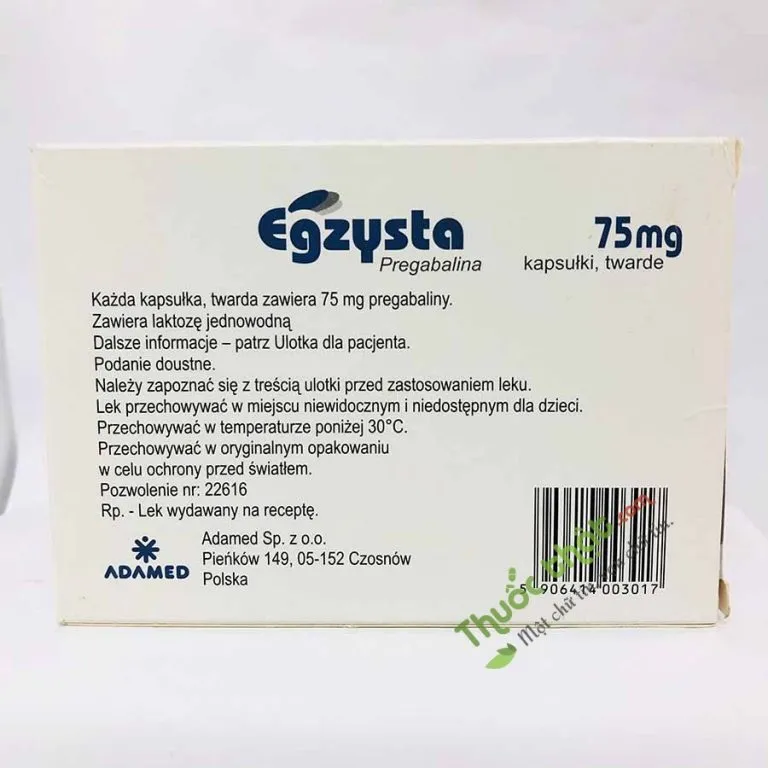
Table of Contents
Package leaflet: Information for the patient
Egzysta, 25 mg, hard capsules
Egzysta, 50 mg, hard capsules
Egzysta, 75 mg, hard capsules
Egzysta, 100 mg, hard capsules
Egzysta, 150 mg, hard capsules
Egzysta, 200 mg, hard capsules
Egzysta, 225 mg, hard capsules
Egzysta, 300 mg, hard capsules
pregabalin
Please read carefully the entire leaflet before using the medicine, as it contains
important information for the patient.
- Keep this leaflet, so that you can read it again if necessary.
- If you have any doubts, please consult your doctor or pharmacist.
- This medicine has been prescribed strictly for a specific individual. Do not pass it on to others. The medicine may harm another person, even if their symptoms are the same.
- If you experience any adverse reactions, including any adverse reactions not listed in this leaflet, inform your doctor or pharmacist. See section 4.
Table of contents
- What Egysta is and what it is used for
- Important information before taking Egysta
- How to take Egysta
- Possible side effects
- How to store Egysta
- Contents of the pack and other information
1. What Egysta is and what it is used for
Egysta belongs to a group of medicines used in the treatment of epilepsy, neuropathic pain, and generalized anxiety disorders in adults.
Peripheral and central neuropathic pain: Egysta is used to treat long-term pain caused by nerve damage. Various conditions such as diabetes or shingles may cause peripheral neuropathic pain.
Pain sensations may be described as burning, tingling, pulsing, shooting, stabbing, sharp pain, cramps, aching, pins and needles, or numbness. Peripheral and central neuropathic pain may also be associated with mood changes, sleep disturbances, and fatigue, which may affect the patient's physical and social functioning and overall quality of life.
Epilepsy: Egysta is used in the treatment of certain types of epilepsy (partial seizures, with or without secondary generalization) in adults. Your doctor may prescribe Egysta if current treatment does not fully control the disease. Egysta should always be used as an add-on to ongoing therapy. Egysta should not be used as monotherapy, but always in combination with other antiepileptic drugs.
Generalized anxiety disorder: Egysta is used in the treatment of generalized anxiety disorder (GAD). Symptoms of GAD include prolonged, excessive anxiety and worry that are difficult to control. GAD may also cause motor restlessness, feeling tense or on edge, easy fatigability, difficulty concentrating or a feeling of "mind going blank", irritability, increased muscle tension, or sleep disturbances. These symptoms are distinct from the everyday stresses and strains of normal life.
2. Important information before using Egzysta
When not to use Egzysta
If the patient is allergic to pregabalin or any of the other ingredients of this medicine
(listed in section 6).
Warnings and precautions
Before starting treatment with Egzysta, discuss this with your doctor.
- Some patients taking Egzysta have experienced symptoms suggesting an allergic reaction. These symptoms include swelling of the face, lips, tongue and throat, as well as widespread skin rash. If any of these symptoms occur, contact your doctor immediately.
- Use of Egzysta has been associated with dizziness and somnolence: this may lead to an increased risk of accidental injury (falls) in elderly patients. Therefore, caution should be exercised until the effects of the medicine are known.
- Treatment with Egzysta may cause blurred vision, loss of vision or other visual disturbances, most of which are transient. If any changes in vision occur, inform your doctor immediately.
- In diabetic patients who gain weight during pregabalin treatment, adjustment of antidiabetic therapy may be necessary.
- Some adverse effects, such as somnolence, may occur more frequently because patients with spinal cord injury may also be taking other medications, e.g. analgesics or muscle relaxants, which have similar adverse effects to Egzysta, and the severity of these effects may increase when such drugs are taken concomitantly.
- Cases of heart failure have been reported in some patients taking Egzysta; these were mainly elderly patients with cardiovascular disorders. Before using this medicine, inform your doctor if you have ever had heart disease.
- Cases of renal failure have been reported in some patients taking Egzysta. If the patient notices a decrease in frequency of urination while taking Egzysta, inform the doctor, as discontinuation of the drug may lead to resolution of this symptom.
- A small number of patients taking antiepileptic medicines such as Egzysta have had thoughts of self-harm or suicide, or exhibited suicidal behaviour. If such thoughts or behaviours occur at any time, contact your doctor immediately.
- If Egzysta is used concomitantly with other medicines that may cause constipation (such as some analgesics), gastrointestinal problems (e.g. constipation, intestinal obstruction or paralytic ileus) may occur. Inform the doctor if the patient experiences constipation, especially if there is a predisposition to it.
- Before starting treatment with this medicine, inform your doctor if the patient has ever abused or been dependent on alcohol, prescription medicines or any illegal psychoactive substances; this may indicate an increased risk of dependence on Egzysta.
- Seizures have been reported during treatment with Egzysta or shortly after discontinuation. If seizures occur, contact your doctor immediately.
- Cases of worsening brain function (encephalopathy) have been reported in some patients with other underlying diseases who were taking Egzysta. Inform your doctor about all previous serious illnesses, including liver or kidney disease.
- Cases of breathing difficulties have been reported. If the patient has neurological disorders, respiratory disorders, kidney dysfunction or is over 65 years of age, the doctor may recommend an alternative dosing regimen. If the patient develops breathing difficulties or shallow breathing, contact the doctor.
- Serious skin reactions, including Stevens-Johnson syndrome and toxic epidermal necrolysis, have been reported with pregabalin. If the patient develops any of the symptoms of serious skin reactions listed in section 4, stop taking pregabalin and seek immediate medical attention.
Dependence
Some individuals may become dependent on Egzysta (need to continue taking the medicine). Withdrawal symptoms may occur after stopping Egzysta (see section 3 "How to take Egzysta" and "Stopping treatment with Egzysta"). If the patient is concerned about possibly becoming dependent on Egzysta, they should discuss this with their doctor.
If the patient notices any of the following symptoms while taking Egzysta, this may indicate dependence:
- Need to take the medicine for longer than prescribed by the doctor
- Feeling the need to take a higher dose than recommended
- Taking the medicine for reasons other than those for which it was prescribed
- Repeated unsuccessful attempts to stop or control taking the medicine
- Feeling unwell after stopping the medicine and feeling better after restarting it
If the patient notices any of these symptoms, they should speak with their doctor to discuss the best treatment approach, including when and how to stop taking the medicine safely.
Children and adolescents
The safety and efficacy of pregabalin have not been established in children and adolescents (under 18 years of age), therefore Egzysta should not be used in this age group.
Egzysta and other medicines
Tell your doctor or pharmacist about all medicines the patient is currently taking or has recently taken, as well as any medicines they plan to take.
Egzysta and certain medicines may interact with each other. Taking Egzysta together with other sedative medicines (including opioids) may increase the adverse effects observed during treatment with these drugs and may lead to respiratory failure, coma and death. The severity of dizziness, somnolence and reduced concentration may increase if Egzysta is taken together with medicines containing:
- oxycodone – (an analgesic)
- lorazepam – (a medicine used for anxiety)
- alcohol
Egzysta may be taken together with oral contraceptives.
Egzysta with food, drink and alcohol
Egzysta capsules may be taken with or without food.
Alcohol should not be consumed during treatment with Egzysta.
Pregnancy and breastfeeding
Egzysta should not be used during pregnancy or breastfeeding unless otherwise decided by a doctor. Use of pregabalin during the first three months of pregnancy may cause congenital malformations in the unborn child requiring treatment. In a Scandinavian country study analyzing data from women who took pregabalin during the first three months of pregnancy, congenital malformations were observed in 6 out of every 100 live births, compared to 4 out of every 100 live births in women not treated with pregabalin. Reported congenital malformations involved the face (cleft lip and palate), eyes, nervous system (including the brain), kidneys and genital organs.
Women of childbearing potential should use an effective method of contraception.
If the patient is pregnant or breastfeeding, suspects she may be pregnant, or is planning to have a baby, she should consult her doctor or pharmacist before using this medicine.
Driving and operating machinery
Egzysta may cause dizziness, somnolence and reduced concentration. Do not drive, operate complex machinery or perform potentially hazardous activities until the effect of this medicine on the ability to perform such activities has been determined.
Egzysta contains monohydrate lactose
If the patient has previously been diagnosed with intolerance to certain sugars, they should consult their doctor before taking this medicine.
3. How to take Egzysta
This medicine should always be taken as directed by the doctor. If in doubt, consult a
doctor or pharmacist. Do not take a higher dose than prescribed.
The doctor will determine the dose most suitable for the individual patient.
Egzysta is intended for oral use only.
Peripheral and central neuropathic pain, epilepsy, or generalized anxiety disorders:
- Take the number of capsules recommended by the doctor.
- The recommended dose will range from 150 mg to 600 mg per day.
- The treating doctor will inform the patient whether Egzysta should be taken twice or three times daily. If taken twice daily, Egzysta should be administered in the morning and evening at the same time each day. If taken three times daily, Egzysta should be taken in the morning, at midday, and in the evening at the same time each day.
If the patient feels that Egzysta is too strong or not strong enough, they should inform the
doctor or pharmacist.
Patients over 65 years of age should take Egzysta according to the recommended regimen,
unless they have kidney disease.
In patients with impaired renal function, the doctor may decide on a different dosing schedule and/or
adjust the dose.
The capsule should be swallowed whole with water.
Egzysta should be taken for as long as directed by the doctor; treatment should only be discontinued on the
doctor's advice.
Taking more Egzysta than recommended
Inform a doctor immediately or go to the nearest hospital emergency department. Bring the
packaging or bottle of Egzysta with you. After taking more than the recommended dose of Egzysta,
the patient may feel drowsy, confused, agitated, or restless. Seizures and loss of consciousness (coma) have also been reported.
Missing a dose of Egzysta
It is important to take Egzysta regularly at the same times each day. If a dose is missed,
take it as soon as possible, unless it is almost time for the next dose. In that case, continue
treatment according to the prescribed schedule. Do not take a double dose to make up for a
missed dose.
Stopping Egzysta
Do not stop taking Egzysta suddenly. If the patient wishes to discontinue Egzysta, they should first
discuss this with their doctor. The doctor will advise on how to do this. If treatment needs to be stopped,
it should be done gradually over at least one week.
It should be known that after short- or long-term treatment with Egzysta, certain adverse effects may occur, known as withdrawal symptoms. These symptoms include sleep disturbances, headache, nausea, feelings of anxiety, diarrhoea, flu-like symptoms, seizures, restlessness, depression, thoughts of self-harm or suicide, pain, excessive sweating, and dizziness. These symptoms may be more frequent or severe if the patient has been taking Egzysta for a prolonged period. If withdrawal symptoms occur, contact a doctor.
If there are any further doubts about using this medicine, consult a
doctor or pharmacist.
4. Possible side effects
Like all medicines, this medicine can cause side effects, although not everybody will experience them.
Very common – may affect more than 1 in 10 people:
Dizziness, somnolence (sleepiness), headache
Common – may affect up to 1 in 10 people:
- Increased appetite
- Euphoria, confusion, disorientation, decreased sexual interest, irritability
- Difficulty concentrating, clumsiness, memory disturbances, memory loss, tremor, speech difficulties, tingling sensation, numbness, sedation, lethargy, insomnia, feeling of fatigue, unusual feeling
- Blurred vision, double vision
- Dizziness, balance disorders, falls
- Dry mouth, constipation, vomiting, bloating, diarrhoea, nausea, feeling of abdominal distension
- Difficulty achieving erection
- Swelling of the body, including limbs
- Feeling of alcohol intoxication, abnormal gait
- Increase in body weight
- Muscle cramps, joint pain, back pain, limb pain
- Sore throat
Uncommon – may affect up to 1 in 100 people:
- Loss of appetite, weight loss, low blood sugar, high blood sugar
- Changes in self-perception, psychomotor agitation, depression, excitement, mood changes, difficulty finding words, hallucinations, unusual dreams, panic attacks, apathy, aggression, elevated mood, psychiatric disorders, difficulty thinking, increased sexual interest, sexual problems including inability to achieve orgasm, delayed ejaculation
- Vision changes, abnormal eye movements, visual disturbances including tunnel vision, perception of flashes, jerky movements, reduced reflexes, increased activity, dizziness in upright position, skin hypersensitivity, loss of taste, burning sensation, tremor during movement, disturbances of consciousness, loss of consciousness, fainting, increased sensitivity to noise, malaise
- Dry eyes, eye swelling, eye pain, weakness of eye movements, tearing, eye irritation
- Heart rhythm disorders, increased heart rate, low blood pressure, high blood pressure, changes in heart rhythm, heart failure
- Sudden reddening of the facial skin, sudden hot flushes
- Breathing difficulties, dryness in the nose, blocked nose sensation
- Increased salivation, heartburn, numbness around the mouth
- Sweating, rash, chills, fever
- Muscle twitching, joint swelling, muscle stiffness, pain including muscle pain, neck pain
- Breast pain
- Difficulty urinating or painful urge to urinate, urinary incontinence
- Weakness, thirst, chest tightness
- Changes in blood test results and liver function (increased creatine kinase, alanine aminotransferase and aspartate aminotransferase activity, decreased platelet count, neutropenia, increased blood creatinine concentration, decreased blood potassium concentration)
- Hypersensitivity, facial swelling, itching, urticaria (hives), catarrh, nosebleed, cough, snoring
- Painful menstruation
- Cold hands and feet
Rare – may affect up to 1 in 1,000 people:
- Altered sense of smell, sensation of image oscillation, altered depth perception, vivid vision, loss of vision
- Dilated pupils, strabismus (squint)
- Cold sweats, throat tightness, tongue swelling
- Pancreatitis
- Difficulty swallowing
- Slowed or limited movements
- Difficulty with writing
- Ascites (fluid accumulation in the abdomen)
- Fluid in the lungs
- Seizures
- Changes in ECG recording corresponding to heart rhythm disturbances
- Muscle damage
- Galactorrhea (milk discharge from nipple), gynaecomastia (breast enlargement), breast enlargement in males
- Absence of menstruation
- Kidney failure, reduced volume of urine output, urinary retention
- Decreased white blood cell count
- Inappropriate behaviour, suicidal behaviour, suicidal thoughts
- Allergic reactions which may include breathing difficulties, eye inflammation (keratitis), and severe skin reaction characterised by red, flat, disc-shaped or round spots on the trunk, often with blisters in the centre, skin peeling, mucosal ulcers in the mouth, throat, nose, genital organs and around the eyes. Such serious skin rashes may be preceded by fever and flu-like symptoms (Stevens-Johnson syndrome, toxic epidermal necrolysis).
- Jaundice (yellowing of the skin and whites of the eyes)
- Parkinsonism, i.e. symptoms resembling Parkinson's disease, such as tremor, bradykinesia (slowness of movement), and rigidity (muscle stiffness)
Very rare – may affect up to 1 in 10,000 people:
- Liver failure
- Hepatitis
Frequency not known: frequency cannot be estimated from the available data
- Dependence on medicine Egzysta ("drug dependence")
It should be noted that after discontinuation of short- or long-term treatment with Egzysta medicine, certain side effects may occur, known as withdrawal symptoms (see section "Stopping treatment with Egzysta").
If facial or tongue swelling occurs, or if skin reddening appears accompanied by blisters or skin peeling, medical advice should be sought immediately.
Some side effects, such as drowsiness, may occur more frequently because patients with spinal cord injury may be taking other medicines, e.g. painkillers or muscle relaxants, which have similar side effects to Egzysta, and the severity of these effects may be greater when such medicines are taken concomitantly.
After the medicine was placed on the market, the following additional side effect has been reported: breathing difficulties, shallow breathing.
Reporting of side effects
If any side effects occur, including any not listed in this leaflet, tell your doctor, pharmacist, or nurse. Side effects can also be reported directly to the Department of Monitoring Adverse Drug Reactions at the Office for Registration of Medicinal Products, Medical Devices and Biocidal Products:
Al. Jerozolimskie 181C
02-222 Warsaw
Phone: +48 22 49-21-301
Fax: +48 22 49-21-309
Website: https://smz.ezdrowie.gov.pl
Side effects can also be reported to the marketing authorisation holder.
By reporting side effects, you help provide more information on the safety of this medicine.
5. How to store the medicine Egzysta
Keep the medicine out of the sight and reach of children.
Do not use this medicine after the expiry date stated on the cardboard packaging after: EXP.
The expiry date refers to the last day of the stated month.
Store below 30°C. Keep in the original packaging to protect from light.
Medicines must not be disposed of via wastewater or household waste. Ask your pharmacist how to dispose of medicines no longer in use. This will help protect the environment.
6. Contents of the pack and other information
What Egzysta contains
The active substance is pregabalin. Each hard capsule contains 25 mg, 50 mg, 75 mg, 100 mg, 150 mg, 200 mg, 225 mg or 300 mg of pregabalin.
The other ingredients are: monohydrate lactose, maize starch, talc, gelatin, titanium dioxide (E171),
- iron oxide black (E172) for 25 mg capsules
- iron oxide yellow (E172) for 50 mg, 200 mg, 225 mg capsules
- iron oxide red (E172) for 75 mg, 100 mg, 200 mg, 225 mg, 300 mg capsules
- black ink (containing: shellac, iron oxide black (E172), propylene glycol, ammonia solution 28% concentration) for 75 mg, 100 mg, 225 mg capsules.
What Egzysta looks like and contents of the pack
Egzysta 25 mg, hard capsules
Hard gelatin capsules, size no. 4, cap and body: opaque, grey colour. Contents of the capsules: white or almost white powder.
Egzysta 50 mg, hard capsules
Hard gelatin capsules, size no. 3, cap and body: opaque, light beige colour. Contents of the capsules: white or almost white powder.
Egzysta 75 mg, hard capsules
Hard gelatin capsules, size no. 4, cap: opaque, reddish-brown colour; body: opaque, white with black print "75 mg". Contents of the capsules: white or almost white powder.
Egzysta 100 mg, hard capsules
Hard gelatin capsules, size no. 3, cap: opaque, reddish-brown colour; body: opaque, reddish-brown with black print "100 mg". Contents of the capsules: white or almost white powder.
Egzysta 150 mg, hard capsules
Hard gelatin capsules, size no. 2, cap and body: opaque, white colour. Contents of the capsules: white or almost white powder.
Egzysta 200 mg, hard capsules
Hard gelatin capsules, size no. 1, cap and body: opaque, caramel colour. Contents of the capsules: white or almost white powder.
Egzysta 225 mg, hard capsules
Hard gelatin capsules, size no. 0, cap: opaque, caramel colour; body: opaque, caramel with black print "225 mg". Contents of the capsules: white or almost white powder.
Egzysta 300 mg, hard capsules
Hard gelatin capsules, size no. 0, cap: opaque, reddish-brown colour; body: opaque, white colour. Contents of the capsules: white or almost white powder.
Egzysta 25 mg, 50 mg, 100 mg, 200 mg, 225 mg is available in packs containing 14, 20, 28, 50, 56, 98 hard capsules. Egzysta 75 mg, 150 mg, 300 mg is available in packs containing 14, 20, 28, 50, 56, 70, 98 hard capsules.
Not all pack sizes may be marketed.
Marketing Authorisation Holder and Manufacturer
Marketing Authorisation Holder
Adamed Pharma S.A.
Pieńków, ul. M. Adamkiewicza 6A
05-152 Czosnów
Manufacturer/Importer
Adamed Pharma S.A.
ul. Marszałka Józefa Piłsudskiego 5
95-200 Pabianice
For further information about this medicinal product, please contact the local representative of the Marketing Authorisation Holder:
Adamed Pharma S.A.
Pieńków, ul. M. Adamkiewicza 6A
05-152 Czosnów