Doxepin teva
Poland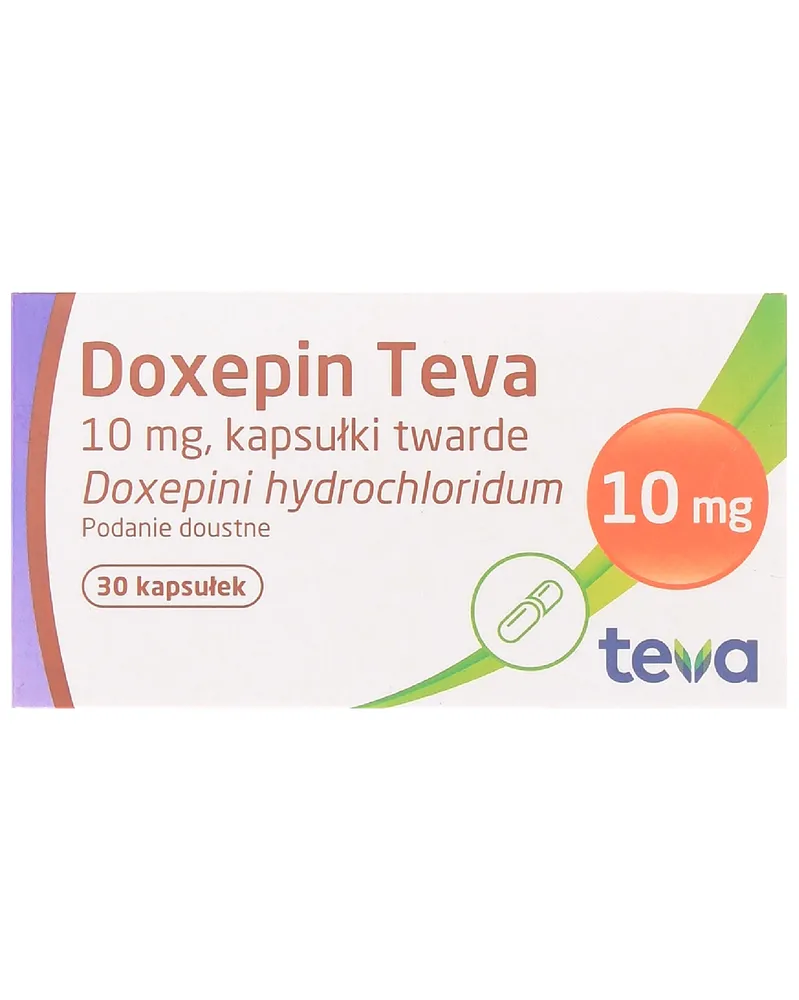
Table of Contents
Patient Information Leaflet
Doxepin Teva 10 mg, hard capsules
Doxepin Teva 25 mg, hard capsules
Doxepini hydrochloridum
Please read all of this leaflet carefully before taking this medicine, because it contains
important information for you.
- Keep this leaflet. You may need to read it again.
- If you have any further questions, ask your doctor or pharmacist.
- This medicine has been prescribed for you personally. Do not share it with others. It may harm them, even if their symptoms are the same as yours.
- If you experience any side effects, including any not listed in this leaflet, tell your doctor or pharmacist. See section 4.
Leaflet Contents
- What Doxepin Teva is and what it is used for
- What you need to know before taking Doxepin Teva
- How to take Doxepin Teva
- Possible side effects
- How to store Doxepin Teva
- Contents of the pack and other information
1. What Doxepin Teva is and what it is used for
Doxepin belongs to a class of antidepressant drugs with a tricyclic structure. It exerts
antidepressant and anxiolytic effects. The mechanism of action is not fully understood.
It is believed to act by inhibiting the reuptake of biogenic amines (e.g. noradrenaline)
in synaptic clefts.
The drug is readily absorbed from the gastrointestinal tract and reaches maximum blood concentration approximately 2–4 hours after administration.
It is metabolized in the liver (producing, among others, the active metabolite demethyl-doxepin).
Doxepin is excreted mainly in the urine as metabolites.
Indications:
- Depressive states with anxiety and agitation occurring in psychoses, including involutional depression and the depressive phase of bipolar affective disorder;
- Depressions and anxiety states associated with somatic disorders and organic diseases;
- Depressive-anxiety syndromes in alcohol-related disorders;
- Neurotic disorders with symptoms of depression or anxiety.
2. Important information before using Doxepin Teva
When not to use Doxepin Teva
If the patient has:
- hypersensitivity to doxepin, tricyclic antidepressants, or any of the other ingredients of this medicine (listed in section 6);
- mania;
- severe liver disease;
- breastfeeding;
- glaucoma;
- predisposition to urinary retention;
- concurrent use of MAO inhibitors, or within the last 2 weeks after discontinuation.
Warnings and precautions
Before starting treatment with Doxepin Teva, discuss this with your doctor or pharmacist.
Concurrent use of Doxepin Teva with buprenorphine (an opioid pain medication) may lead to serotonin syndrome, a potentially life-threatening condition (see section "Doxepin Teva and other medicines").
The doctor will use a once-daily dosing regimen cautiously in patients with concomitant diseases, including those taking other medications. This is particularly important when using drugs with anticholinergic effects.
This regimen will also be carefully adjusted in elderly patients, depending on clinical status. Such patients are particularly susceptible to adverse effects such as: agitation, confusion (disorientation), orthostatic hypotension (occurring upon sudden change from lying or sitting to standing). The initial dose will be carefully determined by the doctor under close monitoring of the patient's response. Half of the maintenance dose may be sufficient to achieve the appropriate clinical response.
During treatment with Doxepin Teva, drowsiness may occur and the effects of alcohol may be enhanced.
If symptoms of psychosis worsen or manic symptoms appear, contact your doctor immediately, who may decide to reduce the dose of Doxepin Teva or prescribe an additional medication.
Although doxepine is associated with a lower risk of cardiovascular effects compared to other tricyclic antidepressants, caution is required in patients with severe cardiovascular disorders (heart block, arrhythmia, recent myocardial infarction).
Doxepin Teva should be used cautiously in patients with impaired liver and/or kidney function.
Caution is necessary in patients with a history of epileptic seizures.
In patients with benign prostatic hyperplasia, predisposition to urinary retention may increase.
Doxepin Teva and other medicines
Inform your doctor about all medicines currently or recently taken, as well as any medicines the patient plans to take.
Doxepine, like other tricyclic antidepressants, is metabolized in the liver by the cytochrome P-450 system (isoenzyme CYP2D6). Inhibitors or substrates of CYP2D6 (e.g., quinidine, selective serotonin reuptake inhibitors) given concomitantly may increase blood concentrations of tricyclic antidepressants.
When used concurrently with other antidepressants, alcohol, or anxiolytics, the possibility of enhanced pharmacological effects should be considered.
It is known that monoamine oxidase inhibitors (MAOIs) can potentiate the effects of other drugs and increase their adverse reactions; therefore, doxepine must not be administered concurrently or within 2 weeks of discontinuing MAO inhibitors.
Some medicines may intensify the adverse effects of Doxepin Teva and sometimes cause very severe reactions. During treatment with Doxepin Teva, do not take other medicines without prior consultation with your doctor, especially buprenorphine. This medicine may interact with Doxepin Teva and cause symptoms such as involuntary, rhythmic muscle contractions, including those affecting eye movements, agitation, hallucinations, coma, excessive sweating, tremor, hyperreflexia, increased muscle tone, body temperature above 38°C. If such symptoms occur, contact your doctor immediately.
Cimetidine causes significant fluctuations in the steady-state concentration of doxepine in the blood.
Doxepine should not be administered concomitantly with sympathomimetic drugs such as ephedrine, isoprenaline, noradrenaline, phenylephrine, or phenylpropanolamine.
General and local anesthetics (containing sympathomimetics) administered during therapy with tricyclic antidepressants increase the risk of arrhythmia and hypotension or hypertension. If surgery is necessary, the anesthesiologist must be informed that the patient is currently undergoing antidepressant treatment.
Doxepine may reduce the effectiveness of antihypertensive drugs such as debrisoquine, betanidine, guanethidine, and probably clonidine. To prevent interference with guanethidine's action, the daily dose of doxepine should not exceed 150 mg. Patients should be monitored when any antihypertensive drugs are used concomitantly.
Barbiturates may accelerate the metabolism of doxepine.
Doxepine may reduce the effect of sublingually administered nitrates.
When thyroid hormones are used concomitantly with doxepine, the doctor may recommend reducing their dose.
Doxepin Teva with food and drink
To avoid gastric irritation, it is recommended to take the medicine with food, even if it is administered once daily in the evening.
Special precautions in certain patient groups
Use of Doxepin Teva in children
Use of Doxepin Teva is not recommended in children under 12 years of age, as safety has not been established in this age group.
Use of Doxepin Teva in patients with impaired kidney and/or liver function
Caution is required in patients with impaired liver and/or kidney function, and dose reduction may be necessary.
Use of Doxepin Teva in elderly patients
Lower doses of Doxepin Teva are usually used in elderly patients.
In cases of mild symptoms, the doctor may recommend starting treatment at a dose of 10 mg to 50 mg per day. In a significant number of patients, satisfactory response was achieved with doxepine doses of 30 mg to 50 mg per day. The doctor will adjust the dose according to the individual patient's response.
Pregnancy and breastfeeding
If the patient is pregnant or breastfeeding, suspects she may be pregnant, or plans to become pregnant, she should consult her doctor or pharmacist before using this medicine.
Pregnancy
There are no data on the safety of use in pregnant women.
Breastfeeding
Doxepine and its active metabolite demethyl-doxepine pass into breast milk. Cases of apnea and drowsiness have been reported in breastfed infants whose mothers were taking doxepine; therefore, this medicine is contraindicated during breastfeeding.
Driving and operating machinery
Doxepine may cause drowsiness and prolong reaction time. Patients experiencing such effects should not drive or operate machinery.
Doxepin Teva contains lactose
If the patient has previously been diagnosed with intolerance to certain sugars, the patient should consult their doctor before taking this medicine.
Doxepin Teva contains sodium
This medicine contains less than 1 mmol (23 mg) of sodium per capsule, meaning the medicine is considered "sodium-free".
3. How to use Doxepin Teva
This medicine should always be used exactly as directed by your doctor. If you have any doubts, consult your doctor or pharmacist.
The dosage depends on the severity of the illness, the patient's clinical condition, and individual response to the medicine.
The dose of doxepin ranges from 30 mg to 300 mg per day. Doses up to 100 mg per day may be taken as a single dose or divided into several doses. Doses exceeding 100 mg per day should be administered in three divided doses. The maximum single dose is 100 mg, usually taken before bedtime.
For moderate to severe conditions, the doctor will usually recommend starting treatment with a dose of 75 mg per day. Most patients respond satisfactorily to this dose. If the response is inadequate, the doctor will adjust the dose individually; in more severe cases, the dose may be increased up to a maximum of 300 mg per day, taken in divided doses.
Once the desired clinical effect has been achieved, the dosage will be appropriately reduced.
Optimal antidepressant effect may not become apparent until after 2 to 3 weeks of treatment.
If you feel that the effect of the medicine is too strong or too weak, consult your doctor.
Taking more Doxepin Teva than prescribed
Symptoms of overdose
Mild clinical condition: drowsiness, mental dullness, blurred vision, excessive dryness of the oral mucosa.
If such symptoms occur, discontinue the medicine and monitor the patient. Supportive treatment may be necessary if required.
Severe clinical condition: drowsiness, respiratory depression, hypotension, coma, seizures, cardiac arrhythmias (tachycardia), urinary retention (urinary bladder atony), reduced gastrointestinal motility (paralytic ileus), elevated or lowered body temperature, exaggerated tendon reflexes.
Management in case of poisoning: the doctor will perform gastric lavage (if the patient is conscious) and administer symptomatic and supportive treatment (treatment of cardiac arrhythmias, anticonvulsant therapy, respiratory support). Dialysis and forced diuresis are not recommended.
If you have taken more Doxepin Teva than prescribed, seek immediate medical advice from your doctor or pharmacist.
Missed dose of Doxepin Teva
Do not take a double dose to make up for a missed dose.
If a dose is missed and the medicine is taken once daily in the evening, do not take the missed dose in the morning, as the medicine may impair normal daytime functioning. If another dosing schedule is used, take the missed dose as soon as possible. If it is almost time for the next dose, wait and take the next dose at the scheduled time.
Stopping Doxepin Teva
If you have any further doubts about using this medicine, consult your doctor or pharmacist.
After abrupt discontinuation of tricyclic antidepressants, withdrawal symptoms may occur, including: insomnia, irritability, excessive sweating. Withdrawal symptoms in newborns whose mothers took antidepressants during the third trimester of pregnancy may include: respiratory disturbances, seizures, and hyperreflexia.
4. Possible adverse effects
Like all medicines, this medicine can cause adverse effects, although not everyone will experience them.
Doxepine is well tolerated. Most adverse effects are mild, usually occur at the beginning of treatment, and resolve during continued use of the medicine or after dose reduction, if necessary. Some of the adverse effects listed below have not been specifically reported with doxepine, but due to the close pharmacological similarities between tricyclic drugs, their occurrence should be considered possible.
The frequency of adverse effects observed in clinical trials in adults is defined as follows:
Very common (may affect more than 1 in 10 people)
Common (may affect up to 1 in 10 people)
Uncommon (may affect up to 1 in 100 people)
Rare (may affect up to 1 in 1,000 people)
Very rare (may affect up to 1 in 10,000 people)
Frequency not known (frequency cannot be estimated from available data).
Very common: drowsiness, dryness of the oral mucosa, constipation.
Uncommon: headache and dizziness, insomnia, nightmares, confusion (disturbance of consciousness), disorientation, restlessness, numbness or paraesthesia (pricking, tingling sensations), tremor (usually mild). When high doses are used (especially in elderly patients), other extrapyramidal symptoms may occur, including tardive dyskinesia (involuntary movements of the facial muscles and/or tongue), allergic reactions including skin rash, facial swelling, photosensitivity, itching, urticaria. When treating with tricyclic antidepressants, symptoms of asthma may worsen.
Rare: hallucinations, ataxia (lack of coordination, especially when several medicines acting on the central nervous system are taken), seizures (in patients with predispositions due to brain damage or alcohol or drug dependence). During treatment with tricyclic antidepressants, psychotic symptoms may worsen, including mania and paranoid delusions. Tinnitus has rarely been reported; orthostatic hypotension, facial flushing, increased sweating, the above-mentioned skin allergic reactions; increased number of eosinophils (a type of white blood cells) in blood and bone marrow dysfunction with symptoms such as: absence of granulocytes in blood, decreased number of white blood cells in blood, decreased number of platelets in blood, purpura, haemolytic anaemia; nausea, vomiting, dyspepsia, taste disturbances, diarrhoea, loss of appetite, aphthous stomatitis; syndrome of inappropriate antidiuretic hormone secretion, breast enlargement in males, breast enlargement and galactorrhoea in females; urinary retention (in males with predispositions due to benign prostatic hyperplasia, symptoms may worsen); jaundice.
Very rare: visual disturbances (blurred vision), increased heart rate, changes in electrocardiogram (ECG); hair loss; fatigue, weakness, weight gain, chills, elevated body temperature (in patients taking chlorpromazine concomitantly).
Single cases: decreased or increased libido, testicular swelling, increased or decreased blood glucose concentration.
An increased risk of bone fractures has been observed in patients taking this type of medicine.
Suicidal thoughts, worsening of depression or anxiety disorders
Patients with depression or anxiety disorders may sometimes experience thoughts of self-harm or suicide. These symptoms or behaviours may worsen at the beginning of antidepressant treatment, as these medicines usually take about 2 weeks, or sometimes longer, to start working.
The occurrence of suicidal thoughts, thoughts of self-harm or suicide is more likely if:
- the patient has previously experienced suicidal thoughts or self-harm;
- the patient is a young adult; clinical data indicate an increased risk of suicidal behaviour in individuals under 25 years of age with psychiatric disorders who are treated with antidepressants.
If a patient experiences suicidal thoughts or thoughts of self-harm, immediate contact with a doctor or admission to hospital is necessary.
It may be helpful to inform family members or friends about the depression or anxiety disorder and ask them to read this leaflet. The patient may ask family members or friends for help and request them to inform the patient if they notice worsening of depression or anxiety or any concerning changes in behaviour.
In some individuals, other adverse effects not listed above may occur during treatment with Doxepin Teva.
Reporting of adverse effects
If any adverse effects occur, including any not listed in this leaflet, inform your doctor or pharmacist. Adverse effects can be reported directly to the Department of Monitoring Adverse Drug Reactions, Office for Registration of Medicinal Products, Medical Devices and Biocidal Products, Al. Jerozolimskie 181C, 02-222 Warsaw,
Tel.: +48 22 49 21 301
Fax: +48 22 49 21 309
Website: https://smz.ezdrowie.gov.pl
Adverse effects can also be reported to the responsible entity.
Reporting adverse effects helps to provide more information on the safety of the medicine.
5. How to store Doxepin Teva
Keep this medicine out of the sight and reach of children.
Store below 25°C. Keep in the original packaging to protect from light.
Do not use this medicine after the expiry date stated on the blister and carton after:
EXP. The expiry date refers to the last day of the stated month.
Medicines must not be disposed of via wastewater or household waste. Ask your pharmacist how to dispose of medicines no longer required. These measures will help protect the environment.
6. Contents of the pack and other information
What Doxepin Teva contains
- The active substance is doxepin hydrochloride, corresponding to 10 mg or 25 mg of doxepin.
- Other ingredients are: maize starch, lactose monohydrate (see section 2: Doxepin Teva contains lactose), magnesium stearate, sodium lauryl sulphate (see section 2: Doxepin Teva contains sodium).
Composition of the 10 mg hard capsule: indigo carmine (E132), titanium dioxide (E171), gelatin, erythrosine (E127), patent blue (E131).
Composition of the 25 mg hard capsule: indigo carmine (E132), titanium dioxide (E171), gelatin, erythrosine (E127).
What Doxepin Teva looks like and contents of the pack
Doxepin Teva 10 mg – hard gelatin capsules, size 4, two-coloured, with a blue body and a cherry-red cap.
Doxepin Teva 25 mg – hard gelatin capsules, size 4, two-coloured, with a pink body and a cherry-red cap.
The capsule filling is a white powder.
Pack contains 30 hard capsules in 3 aluminium/PVC blisters with 10 capsules each, packed in a cardboard box.
Marketing Authorisation Holder and Manufacturer
Marketing Authorisation Holder:
Teva Pharmaceuticals Polska Sp. z o.o.
ul. Emilii Plater 53, 00-113 Warsaw
tel.: (22) 345 93 00
Manufacturer:
Teva Operations Poland Sp. z o.o.
ul. Mogilska 80
31-546 Kraków