Donepez
Poland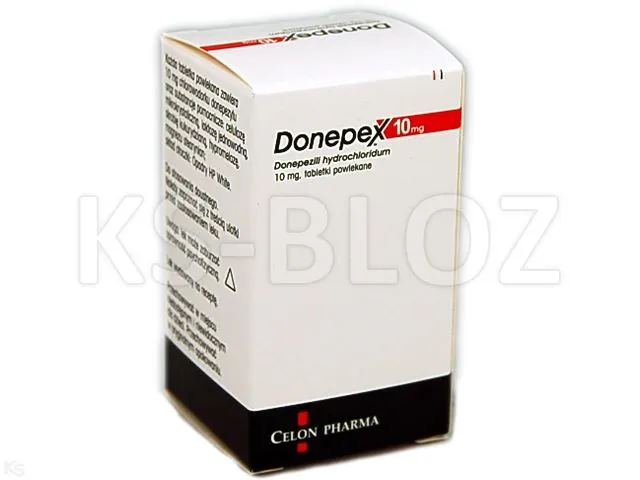
Table of Contents
- Package leaflet: Information for the patient
- 1. What Donepex is and what it is used for
- 2. Important information before using Donepex
- 3. How to use Donepex
- 4. Possible side effects
- 5. How to store Donepex
- 6. Contents of the pack and other information
- What Donepex contains
- What Donepex looks like and contents of the pack
- Marketing Authorisation Holder and Manufacturer:
Package leaflet: Information for the patient
Donepex, 5 mg, film-coated tablets
Donepex, 10 mg, film-coated tablets
Donepezil hydrochloride
Please read all of this leaflet carefully before taking this medicine because it contains
important information for you.
- Keep this leaflet as you may need to read it again.
- If you have any questions, ask your doctor or pharmacist.
- This medicine has been prescribed for a specific individual. Do not pass it on to others. It may harm them even if their symptoms are the same as yours.
- If you experience any adverse effects, including any not listed in this leaflet, tell your doctor or pharmacist. See section 4.
Contents of the leaflet
- What Donepex is and what it is used for
- What you need to know before taking Donepex
- How to take Donepex
- Possible side effects
- How to store Donepex
- Contents of the pack and other information
1. What Donepex is and what it is used for
Donepex contains donepezil hydrochloride as the active substance, which is a reversible
inhibitor of acetylcholinesterase, the main enzyme responsible for breaking down acetylcholine in the brain.
Donepex is indicated for the symptomatic treatment of mild to moderate dementia in
Alzheimer's disease.
2. Important information before using Donepex
When not to use Donepex
- If the patient is allergic to the active substance, piperidine derivatives, or any of the other ingredients of this medicine (listed in section 6).
- If the patient is pregnant.
Warnings and precautions
Special caution is required:
- in patients with heart diseases: sick sinus syndrome or supraventricular conduction disorders (sinoatrial block, atrioventricular block);
- in patients with urinary tract or genital system disorders (difficulties in passing urine);
- in patients with peptic ulcer of the stomach or duodenum;
- in patients with seizures;
- in patients with asthma or other chronic lung diseases;
- in patients with liver disease or history of hepatitis;
- in patients scheduled for surgery or dental procedures. The patient should inform the doctor that they are taking Donepex;
- in patients taking antipsychotic medicines. Consult a doctor, even if the above warnings refer to conditions that occurred in the past.
Before starting treatment with Donepex, discuss with a doctor or pharmacist if the patient:
- has current or past heart disorders (such as irregular or very slow heartbeat, heart failure, myocardial infarction);
- has current or past heart conduction disorder known as "prolonged QT interval", or has previously been diagnosed with a certain type of arrhythmia called torsade de pointes, or has a family history of "prolonged QT interval";
- has current or past low blood levels of magnesium or potassium.
Donepex with other medicines
Tell your doctor or pharmacist about all medicines the patient is currently taking, has recently taken, or plans to take.
It is particularly important to inform the doctor if the patient is taking any of the following medicines:
- medicines used to treat heart rhythm disorders, e.g. amiodarone, sotalol;
- medicines used to treat depression, e.g. citalopram, escitalopram, amitriptyline, fluoxetine;
- antipsychotic medicines, e.g. pimozide, sertindole, ziprasidone;
- medicines used to treat bacterial infections, e.g. clarithromycin, erythromycin, levofloxacin, moxifloxacin, rifampicin;
- antifungal medicines, e.g. ketoconazole, itraconazole;
- other medicines used in Alzheimer's disease, e.g. galantamine;
- painkillers or medicines used to treat joint inflammation, e.g. acetylsalicylic acid, non-steroidal anti-inflammatory drugs (NSAIDs) such as ibuprofen or sodium diclofenac;
- anticholinergic medicines, e.g. tolterodine;
- antiepileptic medicines, e.g. phenytoin, carbamazepine;
- medicines used for heart conditions, e.g. quinidine, beta-blockers (propranolol and atenolol);
- muscle relaxants, e.g. diazepam, succinylcholine;
- general anaesthetics;
- over-the-counter medicines, e.g. herbal preparations.
Patients scheduled for anaesthesia should inform the doctor that they are taking Donepex.
Donepex with food, drink and alcohol
Food does not affect absorption of the medicine.
Alcohol should not be consumed during treatment with Donepex.
Pregnancy and breastfeeding
During pregnancy, breastfeeding, if pregnancy is suspected, or when planning a pregnancy, consult a doctor or pharmacist before using this medicine.
Use of Donepex during pregnancy is contraindicated. Women taking Donepex should not breastfeed.
Driving and operating machinery
Donepex has a minor or moderate effect on the ability to drive or operate machinery.
Dementia in Alzheimer's disease may impair the ability to drive or operate machinery. In addition, Donepex may cause fatigue, dizziness, and muscle cramps, especially at the beginning of treatment or after dose increase. The doctor will assess whether patients with Alzheimer's disease taking Donepex may continue to drive or operate machinery.
Donepex contains monohydrate lactose
If the patient has previously been diagnosed with intolerance to certain sugars, they should consult a doctor before taking this medicine.
3. How to use Donepex
This medicine should always be used as prescribed by the doctor. If in doubt, consult the doctor or pharmacist.
Use in adults, including elderly patients
The initial dose is 5 mg once daily. The 5 mg daily dose should be continued for at least one month to allow the doctor to assess the treatment's effectiveness. After clinical evaluation following one month of therapy with 5 mg daily, the doctor may increase the dose to 10 mg once daily. The maximum recommended daily dose is 10 mg.
The tablets should be taken orally, in the evening, just before bedtime.
If the patient experiences unusual dreams, nightmares or difficulty sleeping (see section 4), the doctor may advise taking Donepex in the morning.
If the patient feels that the effect of Donepex is too strong or too weak, medical advice should be sought.
Use in children
Donepex is not recommended for use in children.
Use in patients with renal impairment
Patients with impaired kidney function may follow a similar dosing regimen as patients with normal kidney function.
Use in patients with hepatic impairment
In patients with mild to moderate hepatic impairment, dose escalation should be based on individual patient tolerance.
There is no data available on the use of Donepex in patients with severe hepatic impairment.
Taking more Donepex than recommended
If more Donepex has been taken than recommended, contact a doctor immediately or go to the nearest hospital. Symptoms suggesting overdose may include: severe nausea, vomiting, salivation, excessive sweating, bradycardia (slowing of the heart rate), hypotension, respiratory depression, collapse and convulsions. Progressive muscle weakness may also occur, which could lead to death if respiratory muscles are affected. Depending on the symptoms present, the doctor will initiate appropriate treatment.
Missed dose of Donepex
Take the missed dose as soon as possible, unless it is almost time for the next scheduled dose. In that case, skip the missed dose and take the next dose at the regular time. Do not take a double dose to make up for a missed dose.
4. Possible side effects
Like all medicines, this medicine can cause side effects, although not everyone will experience them.
Serious side effects:
If you experience any of the serious side effects listed below, you should immediately contact a doctor, as immediate medical intervention may be necessary:
- Liver function disorders, including hepatitis. Symptoms of hepatitis include nausea or vomiting, loss of appetite, general malaise, fever, itching, yellowing of the skin and eyes, and dark-coloured urine (Frequency: rare, may occur in up to 1 in 1,000 patients);
- Stomach or duodenal ulcer disease. Symptoms of ulcers include abdominal pain and discomfort in the upper abdomen (Frequency: uncommon, may occur in up to 1 in 100 patients);
- Bleeding from the stomach or intestines. This may cause passage of black, tarry stools or the appearance of blood from the rectum (Frequency: uncommon, may occur in up to 1 in 100 patients);
- Seizures or convulsions (Frequency: uncommon, may occur in up to 1 in 100 patients);
- Fever with muscle stiffness, sweating, or reduced level of consciousness (a condition known as neuroleptic malignant syndrome) (Frequency: very rare, may occur in less than 1 in 10,000 patients);
- Weakness, tenderness, or muscle pain, especially when accompanied by malaise, high fever, or dark urine. These symptoms may be caused by abnormal breakdown of muscle cells, which can be life-threatening and lead to kidney dysfunction (a condition called rhabdomyolysis) (Frequency: very rare, may occur in less than 1 in 10,000 patients);
- Rapid, irregular heartbeat, fainting – these may be symptoms of a life-threatening condition called torsade de pointes (Frequency unknown: cannot be estimated from available data).
Other side effects include:
Very common side effects (may affect more than 1 in 10 patients):
- Diarrhoea
- Nausea
- Headache
Common side effects (may affect up to 1 in 10 patients):
- Common cold
- Loss of appetite
- Hallucinations, unusual dreams including nightmares, restlessness, aggressive behaviour
- Fainting, dizziness, insomnia
- Vomiting, gastric disturbances
- Rash, itching
- Muscle cramps
- Urinary incontinence
- Fatigue, pain
- Accidents
Uncommon side effects (may affect up to 1 in 100 patients):
- Bradycardia (slowing of the heart rate)
- Slight increase in blood levels of creatine kinase (an enzyme found in muscle)
Rare side effects (may affect up to 1 in 1,000 patients):
- Extrapyramidal symptoms (movement disorders of the nervous system such as: muscle rigidity, reduced facial expression, motor retardation, motor restlessness, involuntary muscle contractions, and involuntary movements)
- Sinoatrial block, atrioventricular block
Frequency not known (cannot be estimated from available data):
- Changes in heart function seen on ECG known as "prolongation of the QT interval"
- Increased libido, hypersexuality
- "Leaning Tower of Pisa" sign (involuntary muscle contraction causing abnormal twisting of the body and head to one side).
Reporting of side effects
If any side effects occur, including any not listed in this leaflet, inform your doctor or pharmacist. Side effects can be reported directly to the Department for Monitoring Adverse Drug Reactions at the Office for Registration of Medicinal Products, Medical Devices and Biocidal Products, Al. Jerozolimskie 181C, 02-222 Warsaw, Tel: +48 22 49 21 301, Fax: +48 22 49 21 309, website: https://smz.ezdrowie.gov.pl
Side effects can also be reported to the marketing authorization holder.
Reporting side effects helps provide more information on the safety of this medicine.
5. How to store Donepex
Keep the medicine out of the sight and reach of children.
Do not use this medicine after the expiry date stated on the packaging.
The expiry date refers to the last day of the stated month.
Store in the original packaging.
Do not use this medicine if you notice any damage to the packaging or signs of tampering.
Medicines should not be disposed of via wastewater or household waste. Ask your pharmacist how to dispose of medicines no longer in use. This will help protect the environment.
6. Contents of the pack and other information
What Donepex contains
- The active substance is donepezil hydrochloride. Each Donepex 5 mg coated tablet contains 5 mg of donepezil hydrochloride.
- Other ingredients are:
Core composition: microcrystalline cellulose, lactose monohydrate, maize starch, hypromellose, magnesium stearate.
Coating composition: Opadry HP White (polyethylene glycol, titanium dioxide (E171), talc, polyvinyl alcohol), quinoline yellow lake (E104).
Each Donepex 10 mg coated tablet contains 10 mg of donepezil hydrochloride.
- Other ingredients are:
Core composition: microcrystalline cellulose, lactose monohydrate, maize starch, hypromellose, magnesium stearate.
Coating composition: Opadry HP White (polyethylene glycol, titanium dioxide (E171), talc, polyvinyl alcohol).
What Donepex looks like and contents of the pack
Donepex 5 mg are yellow, round, biconvex coated tablets.
Donepex 10 mg are white, round, biconvex coated tablets.
Available pack sizes: 28 tablets of 5 mg or 10 mg in a polyethylene container with a polypropylene screw cap, featuring a tamper-evident ring and a desiccant, or in PVC/PVDC/Aluminium blisters, packed in a cardboard box.
Marketing Authorisation Holder and Manufacturer:
Marketing Authorisation Holder:
Celon Pharma S.A.
ul. Ogrodowa 2A
05-092 Łomianki/Kiełpin
Tel.: (22) 75-15-933
Email: [email protected]
Manufacturer:
Celon Pharma S.A.
ul. Marymoncka 15
05-152 Kazuń Nowy
For further information about this medicine, please contact the Marketing Authorisation Holder:
Celon Pharma S.A.
ul. Ogrodowa 2A, Kiełpin
05-092 Łomianki
Tel.: (22) 75-15-933
Email: [email protected]
To protect the medicine from unauthorized access and from children, the container cap is equipped with a tamper-evident ring and a child-resistant closure mechanism.
Please follow the instructions in the diagram below to correctly open the container:
PUSH DOWN FIRMLY WHILE PUSHING, TURN THE CAP HALF A TURN

OBROTU