Dilatrend
Poland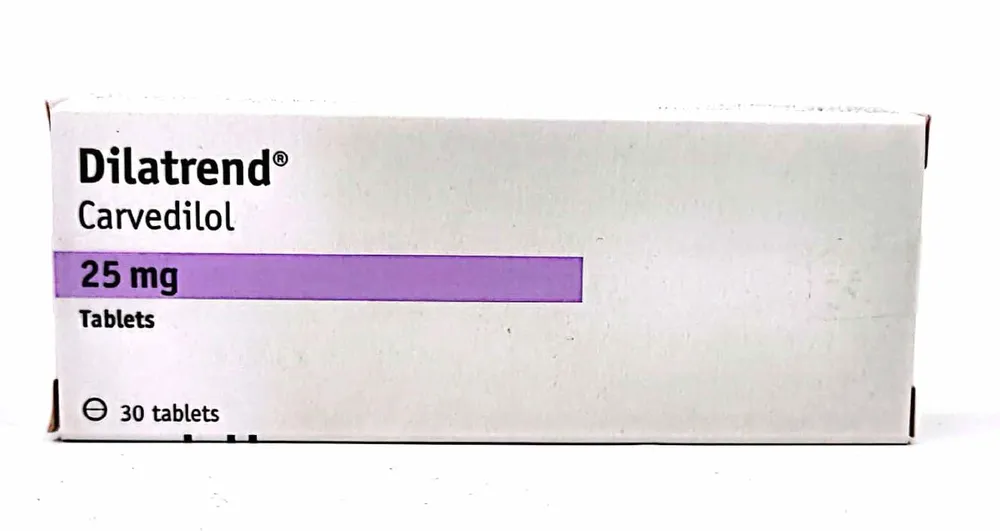
Table of Contents
Patient Information Leaflet
Dilatrend, 6.25 mg, tablets
Dilatrend, 12.5 mg, tablets
Dilatrend, 25 mg, tablets
Carvedilolum
Please read all of this leaflet carefully before taking this medicine, because it contains
important information for you.
- Keep this leaflet, as you may need to read it again.
- If you have any further questions, please ask your doctor or pharmacist.
- This medicine has been prescribed for you personally. Do not share it with others. This medicine may harm other people, even if their symptoms are the same as yours.
- If you experience any side effects, including any that are not listed in this leaflet, tell your doctor or pharmacist. See section 4.
Contents of the leaflet
- What Dilatrend is and what it is used for
- What you need to know before taking Dilatrend
- How to take Dilatrend
- Possible side effects
- How to store Dilatrend
- Contents of the pack and other information
1. What Dilatrend is and what it is used for
Dilatrend tablets (6.25 mg, 12.5 mg or 25 mg) contain the active substance carvedilol.
Carvedilol is a beta-blocker and a vasodilator that lowers high blood pressure and reduces the resistance the heart must overcome when pumping blood.
Dilatrend is indicated for the treatment of:
- chronic heart failure (stable chronic heart failure of mild, moderate, or severe severity), as an addition to standard background therapy usually used in such cases,
- arterial hypertension,
- stable angina pectoris,
- patients after myocardial infarction with documented left ventricular dysfunction (left ventricular ejection fraction (LVEF) ≤ 40%).
2. Important information before taking Dilatrend
When not to take Dilatrend
- if the patient is allergic to carvedilol or any of the other ingredients of this medicine (listed in section 6).
- if the patient has unstable or decompensated heart failure
- if the patient has clinically manifest liver dysfunction
- if the patient has second- or third-degree atrioventricular block (except in patients with a permanently implanted cardiac pacemaker)
- if the patient has marked bradycardia (heart rate < 50 beats per minute)
- if the patient has sick sinus syndrome (including sinoatrial block)
- if the patient has severe hypotension (systolic blood pressure <85 mmHg)
- if the patient has severe cardiac dysfunction (cardiogenic shock)
- if the patient has bronchospastic respiratory disorders or asthma
- if the patient has significant fluid retention (fluid accumulation) or cardiac overload requiring intravenous administration of inotropic agents
- if the patient has metabolic acidosis
- if the patient has a pheochromocytoma (except in patients whose symptoms are effectively controlled with alpha-blocking agents)
Warnings and precautions
Before starting treatment with Dilatrend, discuss this with your doctor or pharmacist. Exercise particular caution when using Dilatrend:
- in patients with chronic heart failure, as symptoms of heart failure or fluid retention may worsen
- in patients with hypertension and chronic heart failure treated with cardiac glycosides (digitalis), Dilatrend should be used cautiously, as both digitalis and Dilatrend slow atrioventricular conduction.
- in patients with chronic obstructive pulmonary disease (COPD) who are not treated with oral or inhaled medications
- in patients with diabetes, as Dilatrend may mask or reduce early symptoms of acute hypoglycaemia (low blood glucose). During initiation of treatment with Dilatrend and dose escalation, regular monitoring of blood glucose levels and appropriate adjustment of antidiabetic medication is recommended, as treatment with Dilatrend may impair glycaemic control.
- in patients with chronic heart failure and low blood pressure (systolic blood pressure < 100 mmHg), ischaemic heart disease, peripheral vascular disease, and/or concomitant renal impairment. During dose escalation in these patients, the doctor will monitor renal function and may discontinue or reduce the dose if renal function deteriorates.
- in patients who wear contact lenses. They should be aware of the possibility of reduced tear production.
- in patients with peripheral vascular disease or Raynaud's phenomenon, as there is a risk of occurrence or worsening of symptoms of arterial insufficiency during treatment with beta-blocking agents. However, additional alpha-receptor blockade by Dilatrend largely counteracts these effects.
- in patients with severe skin reactions. During treatment with carvedilol, very rare cases of severe skin reactions such as erythema multiforme, toxic epidermal necrolysis, or Stevens-Johnson syndrome have been reported (see section 4 Possible side effects). Treatment with carvedilol must be discontinued immediately if severe skin reactions occur that may be related to carvedilol use.
- in patients with psoriasis associated with beta-blocking agents. The doctor should weigh the potential benefits against the risks of using Dilatrend.
- in patients with hyperthyroidism, as Dilatrend may mask symptoms of hyperthyroidism.
- in patients with a history of severe hypersensitivity reactions, as well as in patients undergoing desensitisation therapy (Dilatrend, like other drugs in this class, may enhance sensitivity to allergens and increase the severity of allergic reactions).
- in patients with pheochromocytoma. Strict adherence to medical advice is required. Before starting Dilatrend, the doctor will prescribe alpha-blocking agents.
- in patients with suspected Prinzmetal's angina, as there is a risk of chest pain during treatment with beta-blocking agents alone; however, additional alpha-receptor blockade by Dilatrend may prevent these symptoms.
- in patients prone to bronchospasm. Inform your doctor if any bronchospasm symptoms occur during treatment with Dilatrend.
- in patients with left ventricular dysfunction after acute myocardial infarction. Before starting carvedilol treatment, the patient must be clinically stable and have received an ACE inhibitor for at least 48 hours, with a stable dose during the last 24 hours.
- in patients taking other medicines such as digoxin, cyclosporine, rifampicin, anaesthetics, or antiarrhythmics.
- if during treatment with Dilatrend the heart rate slows to below 55 beats per minute, contact your doctor, who may recommend reducing the dose. As with all beta-blocking agents, carvedilol should not be discontinued abruptly, especially in patients with ischaemic heart disease. Carvedilol should be withdrawn gradually (over two weeks).
Children and adolescents
The safety and efficacy of carvedilol have not been established in children and adolescents under 18 years of age; therefore, it should not be used in this age group.
Dilatrend and other medicines
Tell your doctor or pharmacist about all medicines you are currently taking, have recently taken, or plan to take. It is especially important to inform your doctor if you are taking any of the following medicines:
- medicines containing digoxin (used in the treatment of heart failure), as the doctor may decide to adjust the dose during treatment with Dilatrend
- oral cyclosporine and tacrolimus (immunosuppressive agents used to prevent organ transplant rejection), as Dilatrend enhances the effects of cyclosporine and tacrolimus
- rifampicin (an antibiotic used in the treatment of tuberculosis), as it reduces the effectiveness of Dilatrend
- fluoxetine and paroxetine (medicines used to treat depression)
- insulin and oral antidiabetic medicines, as Dilatrend may enhance their effects. The doctor may recommend monitoring blood glucose levels
- reserpine (affects blood pressure) and monoamine oxidase inhibitors (a type of antidepressant), as they may further slow heart rate and/or lower blood pressure
- non-dihydropyridine calcium antagonists, amiodarone, or other antiarrhythmics. The doctor will monitor ECG and blood pressure
- clonidine (a medicine used to lower blood pressure or treat migraine)
- other medicines that lower blood pressure. Dilatrend may enhance the effect of antihypertensive medicines (e.g. alpha-adrenergic receptor blockers) and medicines whose side effect is blood pressure reduction (e.g. barbiturates – used in epilepsy treatment, phenothiazines – used in psychosis treatment, tricyclic antidepressants – used in depression treatment, vasodilators, and alcohol)
- anaesthetic medicines
- non-steroidal anti-inflammatory drugs (NSAIDs), which may reduce the effect of Dilatrend
- bronchodilators
- adrenaline/epinephrine (medicines used in the treatment of severe allergic reactions)
Taking Dilatrend with food, drink, and alcohol
Avoid drinking grapefruit juice at the same time or immediately after taking Dilatrend. Grapefruit or its juice may increase the blood concentration of the active substance carvedilol and cause unexpected side effects. Alcohol should not be consumed during treatment, as it affects the action of Dilatrend.
Pregnancy and breastfeeding
During pregnancy, breastfeeding, or if pregnancy is suspected or planned, consult your doctor or pharmacist before using this medicine. Animal studies have shown reproductive toxicity. The potential risk in humans is unknown. Dilatrend should not be used during pregnancy unless the expected benefits outweigh the potential risks. Dilatrend should not be used during breastfeeding.
Driving and operating machinery
As with other medicines that lower blood pressure, be aware that if dizziness or similar symptoms occur, driving vehicles or operating machinery should be avoided. This is especially important at the beginning of or changes in treatment, as well as when alcohol is consumed concurrently.
Dilatrend contains lactose and sucrose.
Dilatrend contains lactose and suczone. One tablet contains respectively: for Dilatrend 6.25 mg: 51.80 mg lactose and 21.25 mg sucrose; for Dilatrend 12.5 mg: 59.10 mg lactose and 12.50 mg sucrose; for Dilatrend 25 mg: 10.00 mg lactose and 25.00 mg sucrose. If the patient has previously been diagnosed with intolerance to certain sugars, they should consult their doctor before taking this medicine.
3. How to take Dilatrend
This medicine should always be taken as prescribed by your doctor. If in doubt, consult your doctor or pharmacist.
Dilatrend tablets should be taken with sufficient liquid. Patients with chronic heart failure should take the medicine during meals.
Chronic heart failure
The dose is individually determined by the doctor for each patient.
Treatment with Dilatrend will be initiated under the supervision of a doctor experienced in managing heart failure and after clinical assessment of the patient. Depending on the clinical assessment, the medicine may be administered in an outpatient or hospital setting.
Adults
The recommended initial dose is 3.125 mg twice daily for two weeks. If the medicine is well tolerated, the doctor will gradually increase the dose at intervals of no less than two weeks according to the following scheme: 6.25 mg twice daily, then 12.5 mg twice daily, up to a dose of 25 mg twice daily. The aim is to reach the highest dose tolerated by the patient.
The recommended maximum dose for all patients with severe heart failure, and for patients with mild to moderate heart failure weighing less than 85 kg, is 25 mg twice daily. For patients with mild to moderate heart failure weighing more than 85 kg, the recommended maximum dose is 50 mg twice daily.
In patients with systolic blood pressure < 100 mmHg, dose escalation of Dilatrend may lead to worsening renal function and/or worsening heart failure. Therefore, before each dose increase, the doctor will monitor parameters of renal function and assess the severity of heart failure symptoms or vasodilatory symptoms.
If treatment with Dilatrend is interrupted for more than two weeks, treatment should be restarted at a dose of 3.125 mg twice daily, and the dose should then be increased according to the recommendations above.
Elderly patients
Dosage as in adults.
Use in children and adolescents
Safety and efficacy have not been evaluated in children (under 18 years of age).
Hypertension
Adults
The recommended initial dose is 12.5 mg once daily for the first two days. Then the dose should be increased to 25 mg once daily. This dose is sufficient for most patients, but if necessary, the doctor may increase the dose to the maximum recommended dose of 50 mg once daily or in two divided doses.
The dose should be increased at intervals of no less than two weeks.
Elderly patients
The recommended initial dose is 12.5 mg daily. This dose provides adequate blood pressure control in many cases. If blood pressure is not adequately reduced, the doctor may gradually increase the dose to the recommended maximum daily dose of 50 mg, administered once daily or in divided doses.
Use in children and adolescents
Safety and efficacy have not been evaluated in children (under 18 years of age).
Coronary artery disease
Adults
The recommended initial dose is 12.5 mg twice daily for the first two days. Then the dose should be increased to 25 mg twice daily.
Elderly patients
The recommended maximum daily dose is 50 mg, administered in divided doses.
Use in children and adolescents
Safety and efficacy have not been evaluated in children and adolescents (under 18 years of age).
Patients with concomitant liver disease
Dilatrend is contraindicated in patients with concomitant liver dysfunction.
Patients with concomitant renal impairment
Dose adjustment is not necessary in patients with systolic blood pressure > 100 mmHg.
Left ventricular dysfunction after acute myocardial infarction
In patients with left ventricular dysfunction after myocardial infarction, the recommended initial dose is 6.25 mg twice daily. After the first dose, the patient will be observed for 3 hours.
The doctor will increase the dose every 3–10 days to 12.5 mg twice daily, then to 25 mg twice daily. In patients who do not tolerate the initial dose of 6.25 mg twice daily, the doctor will reduce the dose to 3.125 mg twice daily and maintain this dose for 3–10 days. If this dose is well tolerated, it will be increased to 6.25 mg twice daily, then gradually to 25 mg twice daily. The aim is to reach the highest dose tolerated by the patient.
Taking more than the recommended dose of Dilatrend
If more than the recommended dose is taken, seek medical advice immediately or go to hospital.
After a significant overdose, hypotension (low blood pressure), bradycardia (excessively slow heart rate), heart failure, sinus arrest, cardiogenic shock (tissue and organ ischaemia due to heart failure), and circulatory arrest may occur. Respiratory depression, bronchospasm, vomiting, disturbances of consciousness, and generalized seizures have also been observed.
Missed dose of Dilatrend
Do not take a double dose to make up for a missed dose. If a dose is missed, do not increase the next dose. Take the next dose as prescribed by your doctor.
If you have any further questions about the use of this medicine, consult your doctor or pharmacist.
4. Possible adverse reactions
Like all medicines, this medicine can cause adverse reactions, although they do not occur in everyone.
Frequency of adverse reactions:
Very common: occurring in more than 1 in 10 people,
- dizziness and headache, usually mild and occurring mainly at the beginning of treatment,
- fatigue,
- hypotension,
- asthenia (feeling of tiredness),
- heart failure,
Common: occurring in more than 1 in 100 but less than 1 in 10 people,
- weight gain,
- hypercholesterolemia (increased blood cholesterol levels),
- in patients with diabetes, hyperglycemia (increased blood glucose levels), hypoglycemia (decreased blood glucose levels), and worsening glucose tolerance are often observed,
- bradycardia (slowing of heart rate),
- orthostatic hypotension (decrease in blood pressure upon changing body position),
- edema (including generalized, peripheral, orthostatic, and localized in the genital area, lower limb edema, hypervolemia (fluid overload, increased circulating blood volume),
- renal failure and worsening of kidney function in patients with diffuse vascular changes and/or coexisting kidney function disorders,
- pain,
- bronchitis, pneumonia, upper respiratory tract infections,
- urinary tract infections,
- disturbances in urination,
- anemia,
- depression, low mood,
- peripheral circulatory disorders (cold extremities, peripheral vascular disease, worsening of intermittent claudication (calf muscle pain during walking), Raynaud's syndrome - pallor followed by cyanosis of fingers, toes, nose or ears caused by vasoconstriction),
- dyspnea, pulmonary edema and asthma in susceptible patients,
- gastrointestinal disorders (such as: nausea, dyspepsia, abdominal pain, diarrhea and vomiting),
- limb pain,
- visual disturbances,
- decreased tear production (dry eye syndrome), eye irritation,
- fainting, pre-syncope.
Uncommon: occurring in more than 1 in 1,000 but less than 1 in 100 people,
- atrioventricular block (disturbances in conduction of impulses within the heart muscle),
- sleep disorders,
- paresthesia (tingling and numbness of limbs),
- arterial hypotension,
- angina pectoris (including chest pain),
- constipation,
- skin reactions (e.g. allergic rash, dermatitis, urticaria, pruritus, psoriasiform or lichenoid skin changes),
- alopecia,
- erectile dysfunction, impotence,
- skin inflammation,
- increased sweating.
Rare: occurring in more than 1 in 10,000 but less than 1 in 1,000 people,
- decreased platelet count in peripheral blood (thrombocytopenia),
- nasal mucosal congestion,
- dryness of the oral mucosa.
Very rare: occurring in less than 1 in 10,000 people,
- hypersensitivity (allergic reaction),
- abnormal liver function test results (increased alanine aminotransferase (AlAT), aspartate aminotransferase (AspAT), and gamma-glutamyl transferase activity),
- decreased white blood cell count in peripheral blood (leukopenia),
- urinary incontinence in women,
- severe skin reactions (e.g. erythema multiforme, Stevens-Johnson syndrome, toxic epidermal necrolysis).
In patients with congestive heart failure, increasing the dose of carvedilol may lead to worsening of heart failure and fluid retention. In patients with chronic heart failure and low arterial pressure, ischemic heart disease, diffuse vascular changes and/or coexisting renal failure, transient worsening of kidney function has been observed during carvedilol therapy.
The frequency of adverse reactions, except for dizziness, visual disturbances, and bradycardia, is not dependent on the dose of the medicine used.
Due to the beta-blocking properties of Dilatrend, latent diabetes may be unmasked, blood glucose control may worsen, and mechanisms regulating blood glucose levels may be inhibited. In addition, hallucinations may occur during treatment with Dilatrend. Excessive sweating (hyperhidrosis) may occur. Sinus inhibition may occur, meaning the heart may beat very slowly or stop. Patients may experience dizziness, unusual fatigue, and shortness of breath. These symptoms may particularly affect patients over 65 years of age or patients with other heart-related problems.
In some individuals, other adverse reactions not listed above may occur during treatment with Dilatrend.
Reporting of adverse reactions
If any adverse effects occur, including any not listed in this leaflet, inform your doctor or pharmacist. Adverse reactions can be reported directly to the Department of Monitoring Adverse Drug Reactions, Office for Registration of Medicinal Products, Medical Devices and Biocidal Products, Al. Jerozolimskie 181C, PL-02 222 Warsaw, Tel.: +48 22 49 21 301, Fax: +48 22 49 21 309, Website: https://smz.ezdrowie.gov.pl. Adverse reactions can also be reported to the marketing authorization holder. Reporting adverse reactions helps to provide more information on the safety of the medicine.
5. How to store Dilatrend
Keep this medicine out of sight and reach of children.
Store at a temperature not exceeding 30°C, in the original tightly closed packaging. Protect from light and moisture.
Do not use this medicine after the expiry date stated on the carton after: EXP. The expiry date refers to the last day of the month indicated.
Medicines must not be disposed of via wastewater or household waste. Ask your pharmacist how to dispose of medicines no longer required. This will help protect the environment.
6. Contents of the packaging and other information
What Dilatrend contains
- The active substance is carvedilol. Each tablet contains 6.25 mg, 12.5 mg or 25 mg of carvedilol.
- The other ingredients are: monohydrate lactose, sucrose, povidone K 25, crospovidone type A, colloidal anhydrous silica, magnesium stearate; additionally, tablets of 6.25 mg strength contain yellow iron oxide, tablets of 12.5 mg strength contain yellow iron oxide, red iron oxide.
What Dilatrend looks like and contents of the pack
Dilatrend is packed in blisters within a cardboard box. The packaging contains: 30, 50 or 100 tablets.
Marketing Authorisation Holder and Manufacturer:
Marketing Authorisation Holder:
CHEPLAPHARM Arzneimittel GmbH
Ziegelhof 24
17489 Greifswald
Germany
Manufacturer:
CHEPLAPHARM Arzneimittel GmbH
Bahnhofstr. 1a
17498 Mesekenhagen
Germany
CHEPLAPHARM Arzneimittel GmbH
Ziegelhof 23-24
17489 Greifswald
Germany