Diaflix
Poland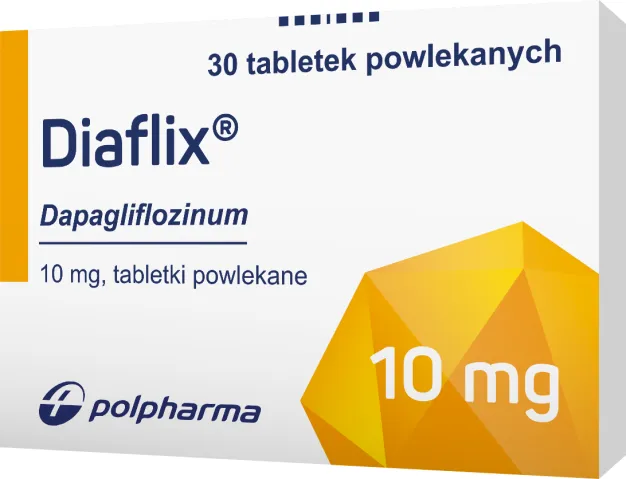
Table of Contents
Patient Information Leaflet
Diaflix, 5 mg, film-coated tablets
Diaflix, 10 mg, film-coated tablets
Dapagliflozin
Please read all of this leaflet carefully before taking this medicine, as it contains important information for you.
- Keep this leaflet, as you may need to read it again.
- If you have any further questions, please ask your doctor, pharmacist, or nurse.
- This medicine has been prescribed for you personally. Do not pass it on to others. It may harm them, even if their symptoms are the same as yours.
- If you experience any side effects, including any not listed in this leaflet, tell your doctor or pharmacist. See section 4.
Contents of the leaflet
- What Diaflix is and what it is used for
- What you need to know before taking Diaflix
- How to take Diaflix
- Possible side effects
- How to store Diaflix
- Contents of the pack and other information
1. What Diaflix is and what it is used for
What Diaflix is
Diaflix contains the active substance dapagliflozin. It belongs to a group of medicines called "sodium-glucose cotransporter 2 (SGLT2) inhibitors". These medicines work by blocking a protein called SGLT2 in the kidneys. By blocking this protein, sugar (glucose), salt (sodium), and water are removed from the body through urine.
What Diaflix is used for
Diaflix is used to treat:
-
Type 2 diabetes
-
in adults and children aged 10 years and older.
-
when adequate control of type 2 diabetes cannot be achieved with diet and physical exercise alone.
-
Diaflix may be used alone or together with other antidiabetic medicines.
-
It is important to continue the diet and physical exercise recommended by your doctor, pharmacist, or nurse.
-
Heart failure
-
in adults (aged 18 years and older), when the heart does not pump blood as well as it should.
What is type 2 diabetes and how does Diaflix help in its treatment?
-
In type 2 diabetes, the body either does not produce enough insulin or cannot properly use the insulin it produces. This may lead to serious complications such as heart or kidney disease, blindness, and poor blood circulation in the arms and legs.
-
Diaflix works by removing excess sugar from the body. Diaflix may also help prevent heart disease.
What is heart failure and how does Diaflix help in its treatment?
- This type of heart failure occurs when the heart does not pump blood to the lungs and the rest of the body as effectively as it should. This may lead to serious medical consequences and the need for hospital treatment.
- The most common symptoms of heart failure are breathlessness, feeling tired or very tired all the time, and swelling around the ankles.
- Diaflix helps protect the heart from worsening and relieves symptoms. It may reduce the need for hospitalisation and may help some patients live longer.
2. Important information before taking Diaflix
When not to take Diaflix
- if the patient is allergic to dapagliflozin or any of the other ingredients of this medicine (listed in section 6).
Warnings and precautions
Seek immediate medical attention from a doctor or the nearest hospital
Diabetic ketoacidosis:
- If the patient with diabetes experiences nausea or vomiting, abdominal pain, excessive thirst, rapid and deep breathing, confusion, unusual drowsiness or fatigue, sweet-smelling breath, sweet or metallic taste in the mouth, change in the smell of urine or sweat, or rapid weight loss.
- The above symptoms may indicate "diabetic ketoacidosis" — a rare but serious, sometimes life-threatening complication of diabetes caused by increased levels of "ketone bodies" in the blood or urine, which can be confirmed by laboratory tests.
- The risk of diabetic ketoacidosis may increase during prolonged fasting, excessive alcohol consumption, dehydration, sudden reduction in insulin dose, or increased insulin requirement due to major surgery or severe illness.
- Diabetic ketoacidosis may occur during treatment with Diaflix even when blood sugar levels are within the normal range.
If the patient suspects they may have diabetic ketoacidosis, they should immediately
contact a doctor or go to the nearest hospital and must not take this medicine.
Necrotizing fasciitis of the perineum:
- If the patient develops a combination of symptoms such as pain, tenderness, redness or swelling of the external genital organs or the area between the genitals and anus, accompanied by fever or general malaise, they should seek immediate medical attention. These may be symptoms of a rare but serious or even life-threatening infection called necrotizing fasciitis of the perineum or Fournier’s gangrene, which leads to damage of subcutaneous tissue. Immediate treatment for Fournier’s gangrene is essential.
Before starting to take Diaflix, discuss this with your doctor, pharmacist, or
nurse:
- if the patient has "type 1 diabetes" — a type of diabetes that usually begins in young people whose bodies produce no insulin. Diaflix should not be used to treat this condition.
- if the patient has kidney disease — the doctor may recommend using an additional or different medicine to control blood sugar levels.
- if the patient has liver disease — the doctor may start treatment with a lower dose.
- if the patient is taking medicines that lower blood pressure (antihypertensives) and has a history of low blood pressure (hypotension). More information is provided below in the section "Diaflix with other medicines".
- if the patient has very high blood sugar levels leading to dehydration (excessive fluid loss). Possible symptoms of excessive fluid loss are listed in section 4. The patient should inform the doctor if any of these symptoms occur before starting this medicine.
- if the patient has nausea, vomiting, or fever, or is unable to eat or drink. This may lead to dehydration. The doctor may advise temporarily stopping Diaflix until the patient's condition improves, to prevent dehydration.
- if the patient frequently experiences urinary tract infections.
If any of the above warnings apply to the patient (or if the patient is unsure), they should
consult their doctor, pharmacist, or nurse before taking Diaflix.
Diabetes and foot care
For patients with diabetes, it is important to regularly check the condition of the feet and follow all
foot care advice provided by the doctor.
Glucose in urine
Due to the mechanism of action of Diaflix, laboratory tests may detect the presence of sugar
(glucose) in urine.
Children and adolescents
Diaflix may be used in children aged 10 years and older for the treatment of type 2 diabetes. There is
no data on use in children under 10 years of age.
Diaflix is not recommended for use in children and adolescents under 18 years of age for the treatment
of heart failure, as studies have not been conducted in this age group.
Diaflix with other medicines
Tell your doctor, pharmacist, or nurse about all medicines the patient is currently taking or has recently taken, including those obtained without a prescription.
In particular, inform the doctor:
- if the patient is taking medicines that help remove water from the body (diuretics).
- if the patient is taking other medicines that reduce blood sugar levels, such as insulin or sulfonylureas. The doctor may recommend reducing the doses of these other medicines to prevent low blood sugar (hypoglycemia).
- if the patient is taking lithium, as Diaflix may reduce lithium levels in the blood.
Pregnancy and breastfeeding
If the patient is pregnant, breastfeeding, suspects she may be pregnant, or is planning to have a
child, she should consult her doctor or pharmacist before taking this medicine. If the patient
becomes pregnant, she should stop taking this medicine, as it is not recommended during the second and third trimesters of pregnancy. Consult the doctor to determine the best way to control blood sugar during pregnancy.
If the patient is breastfeeding or intends to breastfeed, she should inform her doctor before starting
this medicine. Diaflix should not be used during breastfeeding. It is not known whether the medicine passes into human milk.
Driving and operating machinery
Diaflix has no effect or a negligible effect on the ability to drive and operate machinery.
However, using this medicine together with other medicines such as sulfonylureas or insulin may
cause excessively low blood sugar levels (hypoglycemia), which may manifest as muscle tremors, excessive sweating, and visual disturbances, potentially affecting the ability to drive
and operate machinery.
Patients should not drive or operate machinery if they feel dizzy or experience dizziness after taking Diaflix.
3. How to take Diaflix
Diaflix should always be taken exactly as directed by the doctor. If in doubt, consult the doctor, pharmacist, or nurse.
What dose to take
- The recommended dose is one 10 mg tablet once daily.
- The doctor may recommend starting treatment with a 5 mg dose if the patient has liver disease.
- The doctor will prescribe the appropriate dose for the patient.
How to take this medicine
- Swallow the tablet whole with half a glass of water.
- Tablets can be taken during or between meals.
- The tablet can be taken at any time of day. However, it is advisable to take it at the same time each day to help remember the dose.
The doctor may recommend taking Diaflix together with other medicines. It is important to take these medicines exactly as directed by the doctor to achieve the best treatment results.
Diet and physical exercise may help the patient's body use blood sugar more effectively. For patients with diabetes, it is important to follow any diet and exercise program recommended by the treating doctor while taking Diaflix.
Taking more Diaflix than prescribed
If more Diaflix has been taken than prescribed, contact a doctor immediately or go to the hospital. Take the medicine packaging along.
Missing a dose of Diaflix
What to do if a dose is missed depends on the time remaining until the next dose.
- If 12 hours or more remain before the next dose is due, take Diaflix as soon as remembered. Take the next dose at the usual time.
- If less than 12 hours remain before the next dose, skip the missed dose. Take the next dose at the usual time.
- Do not take a double dose to make up for a missed dose.
Stopping Diaflix
Do not stop taking Diaflix without consulting the doctor. If the patient has diabetes, blood sugar levels may increase after stopping the medicine.
If there are any further questions about the use of this medicine, consult the doctor, pharmacist, or nurse.
4. Possible adverse reactions
Like all medicines, this medicine can cause adverse reactions, although not everyone experiences them.
You should consult a doctor or the nearest hospital immediately if the patient experiences
any of the following adverse reactions:
- Angioedema, observed very rarely (may occur in less than 1 in 10,000 people). Symptoms of angioedema:
- swelling of the face, tongue or throat
- difficulty swallowing
- urticaria and breathing difficulties
- Diabetic ketoacidosis, observed rarely in patients with type 2 diabetes (may occur in less than 1 in 1,000 people). Symptoms of ketoacidosis (see also section 2 Warnings and precautions):
- increased concentration of "ketone bodies" in urine or blood
- nausea or vomiting
- abdominal pain
- excessive thirst
- rapid and deep breathing
- confusion
- unusual drowsiness or fatigue
- sweet breath odour, sweet or metallic taste in the mouth, or change in the smell of urine or sweat
- rapid weight loss. This may occur regardless of blood glucose levels. The doctor may decide to interrupt or discontinue treatment with Diaflix.
- Necrotizing fasciitis of the perineum, also known as Fournier's gangrene, a serious infection of the soft tissues of the external genital organs or the area between the genitals and the anus, observed very rarely.
You should stop using Diaflix and consult a doctor immediately if the patient
experiences any of the following serious adverse reactions:
- Urinary tract infections, which occur frequently (may affect up to less than 1 in 10 people). Symptoms of acute urinary tract infection:
- fever and/or chills
- burning sensation during urination
- back or flank pain. Blood in the urine may also appear not infrequently; in such case, immediate consultation with a doctor is required.
You should contact a doctor immediately if the patient experiences any of the following
adverse reactions:
- Low blood sugar (hypoglycaemia), which occurs very frequently (may affect more than 1 in 10 people) – in diabetic patients taking this medicine with a sulfonylurea derivative or insulin. Symptoms of low blood sugar:
- trembling, sweating, feeling anxious, rapid heartbeat
- feeling hungry, headache, visual disturbances
- mood changes or feeling confused. The doctor will advise on how to treat low blood sugar and what to do if any of the above adverse reactions occur.
Other adverse reactions during treatment with Diaflix:
Frequent (may affect up to not more than 1 in 10 people)
- infections (fungal) of the penis or vagina (e.g. irritation, itching, unusual discharge or unpleasant odour)
- back pain
- excessive urination or increased need to urinate
- changes in blood cholesterol or fat levels (detected in laboratory tests)
- increased number of red blood cells (detected in laboratory tests)
- decreased renal creatinine clearance (detected in laboratory tests) at the beginning of treatment
- dizziness
- rash.
Uncommon (may affect up to not more than 1 in 100 people)
- excessive loss of body fluids (dehydration, symptoms of which may include extreme dryness or stickiness in the mouth, passing small amounts of urine or no urine, or rapid heartbeat)
- thirst
- constipation
- getting up at night to urinate
- dry mouth
- weight loss
- increased creatinine levels (detected in blood laboratory tests) at the beginning of treatment
- increased urea levels (detected in blood laboratory tests).
Very rare (may affect less than 1 in 10,000 people)
- kidney inflammation (tubulointerstitial nephritis).
Reporting of adverse reactions
If any adverse reactions occur, including any not listed
in this leaflet, you should inform your doctor, pharmacist or nurse. Adverse reactions
can be reported directly to the Department of Monitoring of Adverse Drug Reactions of the Office for Registration of Medicinal Products, Medical Devices and Biocidal Products
Al. Jerozolimskie 181C
02-222 Warsaw
Tel.: + 48 22 49 21 301
Fax: + 48 22 49 21 309
Website: https://smz.ezdrowie.gov.pl
Adverse reactions can also be reported to the marketing authorization holder.
Reporting adverse reactions helps provide more information on the safety of the medicine.
5. How to store Diaflix
Keep this medicine out of sight and reach of children.
There are no special storage instructions for this medicine.
Do not use this medicine after the expiry date stated on the packaging after EXP. The expiry date refers to the last day of the stated month.
The marking on the packaging following the abbreviation EXP indicates the expiry date, and following the abbreviation Lot/LOT indicates the batch number.
Medicines must not be disposed of via wastewater or household waste. Ask your pharmacist how to dispose of medicines no longer in use. This will help protect the environment.
6. Contents of the pack and other information
What Diaflix contains
- The active substance is dapagliflozin. Each Diaflix 5 mg film-coated tablet contains 5 mg of dapagliflozin. Each Diaflix 10 mg film-coated tablet contains 10 mg of dapagliflozin.
- Other components are:
- Tablet core: microcrystalline cellulose (PH 101), mannitol, colloidal anhydrous silica, magnesium stearate
- Tablet coating: polyvinyl alcohol, titanium dioxide (E 171), macrogol 3350, talc, iron oxide yellow (E 172)
What Diaflix looks like and contents of the pack
Diaflix 5 mg film-coated tablets are yellow, round, biconvex, with the number "5" embossed on one side,
6.1 mm in diameter.
Diaflix 10 mg film-coated tablets are yellow, oval, biconvex, with the number "10" embossed on one side;
dimensions: 11.1 mm x 6.4 mm.
The medicine is available in blister packs made of Aluminium/PVC/PCTFE or Aluminium/PVC/PVDC,
in cardboard boxes containing 30, 60 or 90 film-coated tablets in non-perforated blisters, 28, 56 or 98
film-coated tablets with days of the week marked in non-perforated blisters, and 30x1 or 90x1 film-coated
tablets in single-dose perforated blisters.
The medicine is available in HDPE bottles with PP screw cap, security ring and PE sealing plug, in
cardboard boxes containing 30, 60, 90 or 98 film-coated tablets.
The medicine is available in HDPE containers with LDPE cap, in cardboard boxes containing 30, 60, 90 or
98 film-coated tablets.
Not all pack sizes may be marketed.
Marketing Authorisation Holder
Zakłady Farmaceutyczne POLPHARMA S.A.
ul. Pelplińska 19, 83-200 Starogard Gdański
tel. +48 22 364 61 01
Manufacturer
Zakłady Farmaceutyczne POLPHARMA S.A.
Production Site in Nowa Dęba
ul. Metalowca 2, 39-460 Nowa Dęba