Ceurolex sr
Poland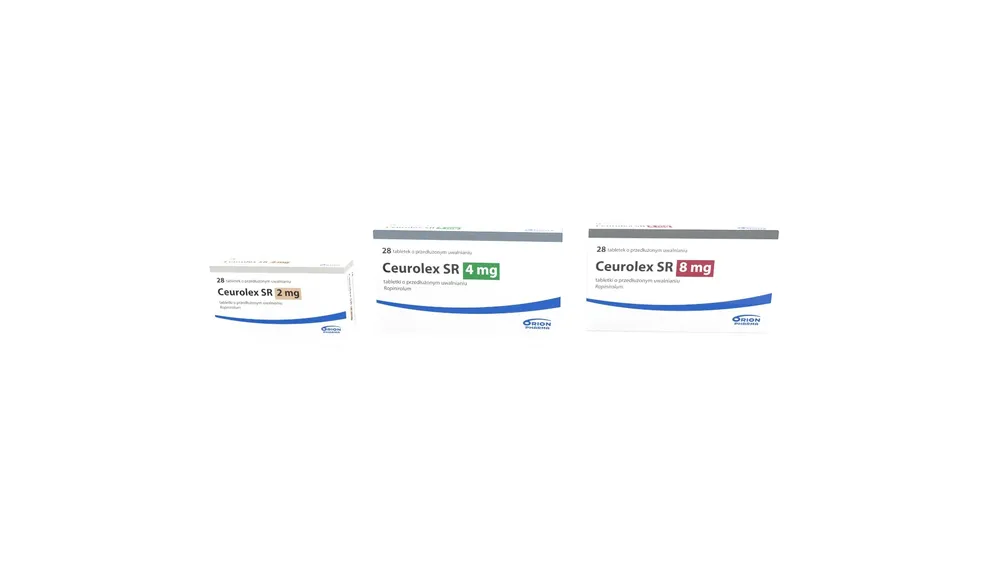
Table of Contents
Ceurolex SR, 2 mg, prolonged-release tablets
Ceurolex SR, 4 mg, prolonged-release tablets
Ceurolex SR, 8 mg, prolonged-release tablets
(Ropinirole)
Please read the entire leaflet carefully before using this medicine, as it contains
important information for the patient.
- Keep this leaflet for future reference.
- If you have any questions, consult your doctor or pharmacist.
- This medicine has been prescribed for a specific individual. Do not give it to others. It may harm them, even if their symptoms are the same.
- If you experience any adverse effects, including any not listed in this leaflet, inform your doctor or pharmacist. See section 4.
Table of contents:
- What Ceurolex SR is and what it is used for
- Important information before taking Ceurolex SR
- How to take Ceurolex SR
- Possible side effects
- How to store Ceurolex SR
- Contents of the pack and other information
1. What Ceurolex SR is and what it is used for
Ceurolex SR, prolonged-release tablets, is used in the treatment of Parkinson's disease.
The active substance in Ceurolex SR is ropinirole, which belongs to a group of medicines called dopamine agonists. Dopamine agonists act in the brain similarly to a naturally occurring substance called dopamine.
In patients with Parkinson's disease, certain areas of the brain have low levels of dopamine. Ropinirole acts similarly to naturally occurring dopamine in the brain and thereby helps to relieve the symptoms of Parkinson's disease.
2. Important information before using Ceurolex SR
When not to use Ceurolex SR
- if the patient is allergic to ropinirole or any of the other ingredients of this medicine (listed in section 6)
- if the patient has severe kidney disease
- if the patient has liver disease.
You should inform your doctor if any of these situations apply.
Warnings and precautions
Before starting treatment with Ceurolex SR, discuss with your doctor or pharmacist:
- if the patient is pregnant or suspects she might be pregnant
- if the patient is breastfeeding
- if the patient is under 18 years of age
- if the patient has severe heart disease
- if the patient has severe psychiatric disorders
- if the patient has specific urges and/or behaviours (see section 4)
- if the patient has intolerance to certain sugars (such as lactose).
You should inform your doctor if any of these situations apply. The doctor may
decide that Ceurolex SR is not suitable for the patient or may recommend
additional monitoring tests during treatment.
Inform your doctor if you or a family member notice sudden or
unusual behaviours in the patient, and the patient cannot resist an impulse or
urge or desire to perform certain actions, which may endanger the patient or others.
This type of behaviour is called impulse control disorder and may include
behaviours such as: gambling addiction, compulsive eating, excessive spending,
excessive sexual activity or increased preoccupation with sex or intensity of feelings.
The doctor may change the dose or discontinue the medicine.
Inform your doctor if you or the patient's family/carer notice episodes of
hyperactivity, euphoria or irritability (symptoms of mania). These may occur with or
without symptoms of impulse control disorders (see above). The doctor may need to
adjust or reduce the dose.
If the patient experiences symptoms such as depression, apathy, anxiety, fatigue, sweating or pain (referred to as dopamine agonist withdrawal syndrome or DAWS) after stopping or reducing the dose of ropinirole, inform the doctor. If symptoms persist for longer than a few weeks, the doctor may decide to modify the dose of the medicine.
While taking Ceurolex SR
Inform your doctor if you or the patient's family notice unusual behaviours in the patient
(such as uncontrollable urge to gamble or excessive sexual drive and/or excessive sexual activity) while taking Ceurolex SR. The doctor may change the dose or discontinue the medicine.
Ceurolex SR and other medicines
Tell your doctor or pharmacist about all medicines the patient is currently taking or has recently taken,
as well as any medicines the patient plans to take, including herbal remedies or other medicines obtained without a prescription.
Remember to inform your doctor or pharmacist if starting any other medicine while taking Ceurolex SR.
Some medicines may affect the action of Ceurolex SR or increase the risk of adverse effects. Ceurolex SR may also affect the action of other medicines.
These include:
- fluvoxamine, an antidepressant
- medicines used for other psychiatric disorders, e.g. sulpiride
- HRT (hormone replacement therapy)
- metoclopramide, used to treat nausea and heartburn
- antibiotics: ciprofloxacin and enoxacin
- any other medicines used in Parkinson’s disease.
For patients taking Ceurolex SR together with the following medicines, additional blood tests may be required:
- vitamin K antagonists (used to reduce blood clotting), such as warfarin (coumadin).
Inform your doctor if the patient is taking or has recently taken any of these medicines.
Ceurolex SR, food, drink and alcohol
Swallow the tablets whole with a glass of water. Ceurolex SR may be taken with or without food.
Alcohol
Consumption of alcohol while taking Ceurolex SR is not recommended.
Tell your doctor if the patient has started or stopped smoking during treatment with Ceurolex SR. The doctor or nurse may need to adjust the dose.
Pregnancy, breastfeeding and fertility
If the patient is pregnant or breastfeeding, suspects she might be pregnant, or is planning to have a baby, she should consult her doctor or pharmacist before using this medicine. The doctor may recommend discontinuing Ceurolex SR.
Ceurolex SR is not recommended during pregnancy, unless the doctor determines that the benefit to the patient outweighs the risk to the unborn child.
Ceurolex SR is not recommended during breastfeeding, as it may affect milk production in the patient.
Driving and operating machinery
Ceurolex SR may cause drowsiness. Sudden and uncontrollable drowsiness may occur, and sometimes also sudden and unexpected sleep attacks without prior warning of sleepiness.
If such symptoms occur, do not drive or operate machinery or perform any activities in which drowsiness or falling asleep could put the patient (or others) at risk of serious injury or death. Do not perform such activities until symptoms have resolved.
Hallucinations (seeing, hearing or feeling things that are not actually present) may occur during treatment with ropinirole. If the patient experiences hallucinations, he or she should not drive or operate machinery.
Talk to your doctor if this applies to the patient.
Ceurolex SR 2 mg prolonged-release tablets contain lactose
Ceurolex SR 2 mg prolonged-release tablets contain 1.71 mg of lactose (as lactose monohydrate). If the patient has previously been diagnosed with intolerance to certain sugars, the patient should consult a doctor before taking this medicine.
Ceurolex SR 4 mg prolonged-release tablets contain sunset yellow
Ceurolex SR 4 mg prolonged-release tablets contain 0.81 mg of sunset yellow dye, which may cause an allergic reaction in the patient.
Other excipients
Ceurolex SR 2 mg, 4 mg, 8 mg contains less than 1 mmol (23 mg) of sodium per tablet; therefore, this medicine is considered "sodium-free".
3. How to take Ceurolex SR
This medicine should always be taken exactly as instructed by your doctor or pharmacist.
If you have any doubts, contact your doctor or pharmacist.
This medicine comes in the form of prolonged-release tablets and should not be used if the tablet is
broken or damaged.
Ceurolex SR may be used in the treatment of Parkinson’s disease symptoms either as monotherapy
or in combination with another medicine called L-dopa (also known as levodopa). If the patient is
taking L-dopa, involuntary movements (dyskinesias) may occur when starting Ceurolex SR. If such
symptoms occur, inform your doctor, who may adjust the doses of medicines the patient is taking.
How much Ceurolex SR should be taken
Finding the right dose of Ceurolex SR for the patient may take some time.
The recommended starting dose of Ceurolex SR prolonged-release tablets is 2 mg once daily
for the first week. Your doctor may increase the dose of Ceurolex SR prolonged-release tablets to
4 mg once daily starting from the second week of treatment. If the patient is elderly, the doctor may
increase the dose more slowly.
The doctor may then adjust the dose until the optimal dose for the patient is reached. Some patients
may take up to 24 mg of Ceurolex SR prolonged-release tablets.
If the patient experiences intolerable side effects at the beginning of treatment, inform the doctor.
The doctor may recommend switching therapy to a lower dose of ropinirole in the form of coated
(immediate-release) tablets, taken three times daily.
Do not take more Ceurolex SR than prescribed by your doctor.
It may take several weeks before the beneficial effect of the medicine becomes apparent.
How to take Ceurolex SR
Ceurolex SR should be taken once daily, at the same time each day.
The prolonged-release tablet(s) of Ceurolex SR should be swallowed whole with a glass of water.
Do not break, chew or crush the prolonged-release tablet(s) – doing so may result in overdose due
to rapid release of the medicine into the body.
Ceurolex SR tablets are designed to gradually release the medicine over a period exceeding
24 hours. If, due to the patient’s condition (e.g. during diarrhoea), the medicine passes through the
body too quickly, the tablets may not dissolve completely and may not work as intended. It is possible
that undissolved tablets may be visible in the stool. In such a case, contact your doctor as soon as
possible.
Switching from ropinirole immediate-release tablets to Ceurolex SR prolonged-release tablets
Your doctor will determine the dose of Ceurolex SR prolonged-release tablets based on the
previously used dose of ropinirole immediate-release tablets.
Take your usual dose of ropinirole immediate-release tablets as normal on the day before switching
treatment. The next day, take Ceurolex SR prolonged-release tablets and discontinue further use of
ropinirole immediate-release tablets.
Use in children and adolescents
Ceurolex SR should not be used in children. Ceurolex SR is not intended for use in patients under
18 years of age.
Taking more Ceurolex SR than prescribed
Seek immediate advice from your doctor or pharmacist. If possible, show the Ceurolex SR
packaging.
In a person who has taken more than the recommended dose of Ceurolex SR, symptoms such as
nausea, vomiting, dizziness, drowsiness, mental or physical fatigue, fainting, or hallucinations may
occur.
If you miss a dose of Ceurolex SR
Do not take an extra prolonged-release tablet or double the dose to make up for a missed dose.
If you miss a dose of Ceurolex SR for one day or longer, consult your doctor about restarting
treatment with Ceurolex SR.
Stopping Ceurolex SR
Do not stop taking Ceurolex SR suddenly without consulting your doctor.
Take Ceurolex SR for as long as your doctor recommends. Do not discontinue treatment unless
instructed by your doctor.
If Ceurolex SR is stopped abruptly, Parkinson’s disease symptoms may rapidly worsen. Sudden
discontinuation may also lead to a condition called neuroleptic malignant syndrome, which may
be life-threatening. Symptoms include: akinesia (loss of muscle movement), muscle rigidity, fever,
unstable blood pressure, tachycardia (rapid heartbeat), confusion, and disturbances of consciousness
(e.g. coma).
If it becomes necessary to discontinue Ceurolex SR, your doctor will gradually reduce the dose.
If you have any further questions about the use of this medicine, consult your doctor or pharmacist.
4. Possible adverse reactions
Like all medicines, this medicine can cause adverse reactions, although not everyone experiences them.
Adverse reactions with Ceurolex SR may occur most frequently when starting treatment
or shortly after increasing the dose. Adverse reactions are usually mild and become less
troublesome after a short period of treatment.
If you have any concerns about adverse reactions, consult your doctor.
Very common adverse reactions ( may occur in more than 1 in 10 patients )
- fainting
- feeling sleepy
- nausea
Common adverse reactions ( may occur in up to 1 in 10 patients )
- sudden onset of sleep without prior warning of sleepiness (sudden sleep attacks)
- hallucinations (seeing things that do not exist in reality)
- vomiting
- dizziness (sensation of spinning)
- heartburn
- abdominal pain
- constipation
- swelling of the legs, feet, or hands
Uncommon adverse reactions ( may occur in up to 1 in 100 patients )
- dizziness or fainting, especially upon sudden change to an upright position (related to low blood pressure)
- low blood pressure (hypotension)
- excessive daytime sleepiness (irresistible drowsiness)
- psychiatric disorders such as delirium (severe disorientation), delusions (irrational thoughts), or paranoia (unfounded suspicion)
- Hiccups
The following adverse reactions may occur in some patients (frequency cannot be determined from available data):
- allergic reactions such as red, itchy swellings on the skin (urticaria), swelling of the face, lips, mouth, tongue, or throat, which may cause difficulty in swallowing or breathing, rash, or intense itching (see section 2)
- changes in liver function observed in blood tests
- aggressive behavior
- inability to resist an impulse, drive, or temptation to perform certain actions that may be harmful to the patient or others, including:
- uncontrollable urge to gamble regardless of serious consequences for the patient or their family
- altered or increased sexual interest and behavior causing significant concern to the patient or others, e.g., increased libido
- uncontrolled excessive desire to shop or spend money
- binge eating (consuming excessive amounts of food in a short period) or compulsive eating (eating more than normal, more than needed to satisfy hunger)
- excessive intake of Ceurolex SR (excessive desire to take high doses of dopaminergic medicines, higher than necessary to control motor symptoms, known as dopamine dysregulation syndrome)
- episodes of hyperactivity, excitement, or irritability
- after stopping or reducing the dose of Ceurolex SR, symptoms such as depression, apathy, anxiety, lack of energy, sweating, or pain may occur (referred to as dopamine agonist withdrawal syndrome or DAWS)
- spontaneous erection
You should inform your doctor if any of the above symptoms occur; your doctor will discuss
possible management options and ways to reduce symptoms.
Taking Ceurolex SR together with L-dopa (used in Parkinson's disease)
In patients taking Ceurolex SR in combination with levodopa, the following adverse reactions may occur over time:
- uncontrolled movements (dyskinesias) are a very common adverse reaction. If the patient is taking L-dopa, involuntary movements (dyskinesias) may occur when starting treatment with Ceurolex SR. If these symptoms occur, inform your doctor, who may adjust the doses of medicines being taken
- feeling of disorientation is a common adverse reaction
Reporting of adverse reactions
If any adverse symptoms occur, including any adverse symptoms not listed
in this leaflet, you should inform your doctor or pharmacist. Adverse reactions can
be reported directly to the Department of Monitoring Adverse Reactions of Medicinal Products, Office for Registration of Medicinal Products, Medical Devices and Biocidal Products, Al. Jerozolimskie 181 C, 02-222 Warsaw, Tel.: +48 22 49 21 301,
Fax: +48 22 49 21 309. Website: https://smz.ezdrowie.gov.pl
Adverse reactions can also be reported to the marketing authorization holder.
Reporting adverse reactions helps to provide more information on the safety of the medicine.
5. How to store Ceurolex SR
Keep the medicine out of the reach and sight of children.
Do not use this medicine after the expiry date stated on the cardboard box,
blister pack, and bottle. The expiry date refers to the last day of the stated month.
Store below 25°C.
Do not open the bottle until the patient is ready to start taking the tablets. If any tablets remain in the bottle after 90 days, do not take them.
Medicines must not be disposed of via wastewater or household waste. Ask your pharmacist how to dispose of medicines no longer in use. This will help protect the environment.
6. Contents of the packaging and other information
What Ceurolex SR contains
The active substance is ropinirole.
Each prolonged-release tablet contains ropinirole hydrochloride equivalent to 2 mg,
4 mg or 8 mg of ropinirole.
The other ingredients are:
- tablet core: Ammonio methacrylate copolymer (type B), hydroxypropylmethylcellulose, sodium lauryl sulfate, copovidone, magnesium stearate.
- tablet coating:
| 2 mg | Hydroxypropylmethylcellulose, iron oxide red (E 172), lactose monohydrate, titanium dioxide (E 171), triacetin |
| 4 mg | Macrogol 400, hydroxypropylmethylcellulose, sunset yellow (E 110), titanium dioxide (E 171), indigo carmine (E 132) |
| 8 mg | Hydroxypropylmethylcellulose, iron oxide red (E 172), iron oxide black (E 172), iron oxide yellow (E 172), macrogol 400, titanium dioxide (E 171) |
What Ceurolex SR looks like and contents of the pack
Ceurolex SR, 2 mg, prolonged-release tablets: pink, round, biconvex tablets with a diameter of 6.8 ± 0.1 mm and thickness of 5.5 ± 0.2 mm.
Ceurolex SR, 4 mg, prolonged-release tablets: light brown, oval, biconvex tablets measuring 12.6 x 6.6 ± 0.1 mm and thickness of 5.3 ± 0.2 mm.
Ceurolex SR, 8 mg, prolonged-release tablets: red, oval, biconvex tablets measuring 19.2 x 10.2 ± 0.2 mm and thickness of 5.2 ± 0.2 mm.
All strengths of the medicine are available in blister packs made of PVC/PCTFE/Aluminum and in HDPE bottles with PP screw cap, child-resistant closure, and a desiccant.
Pack sizes:
Blister packs: 21, 28, 84 tablets.
Bottles: 84 tablets.
Not all pack sizes may be marketed.
Marketing Authorisation Holder
Orion Corporation
Orionintie 1
FI-02200 Espoo
Finland
Manufacturer
Orion Corporation Orion Pharma
Orionintie 1
FI-02200 Espoo
Finland
Orion Corporation Orion Pharma
Joensuunkatu 7
FI-24100 Salo
Finland
Pharmathen S.A
6 Dervenakion str.
15351, Pallini, Attiki
Greece
Pharmathen International S.A
Industrial Park Sapes
Rodopi Prefecture, Block No 5
Rodopi 69300
Greece
For further information about this medicinal product, please contact the local representative of the Marketing Authorisation Holder:
Orion Pharma Poland Sp. z o.o.
[email protected]
This medicinal product is authorised in the European Economic Area member states under the following names:
Lithuania, Latvia, Hungary: Ropinirole Orion
Poland: Ceurolex SR
Denmark, Finland, Norway: Ropinirol Orion