Ceclor
Poland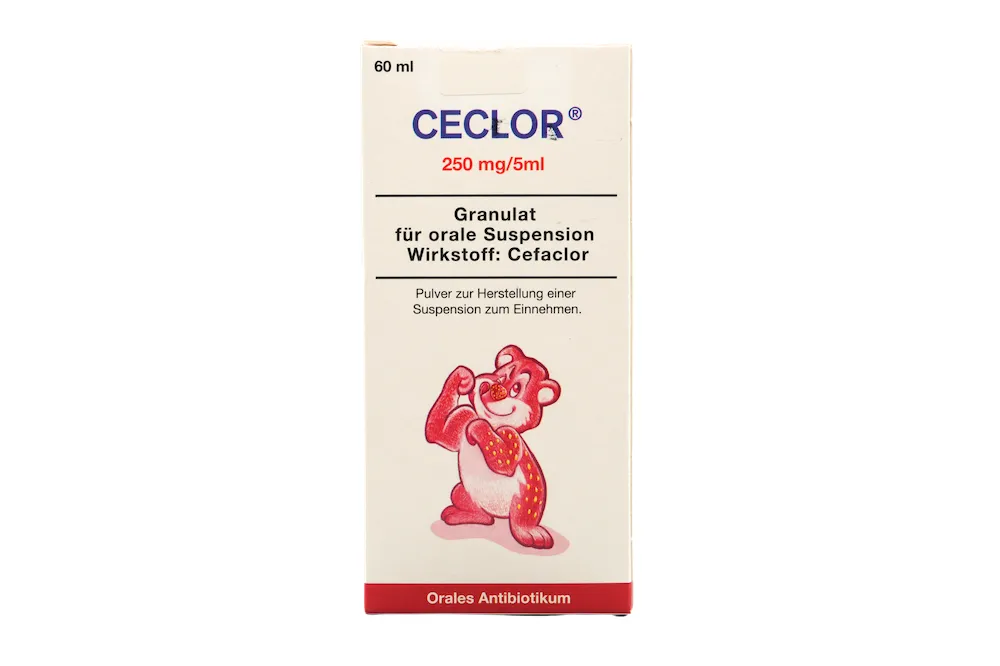
Table of Contents
Package leaflet: Information for the patient
CECLOR, 125 mg/5 ml, granules for the preparation of oral suspension
CECLOR, 250 mg/5 ml, granules for the preparation of oral suspension
CECLOR, 375 mg/5 ml, granules for the preparation of oral suspension
(Cefaclorum)
Please read this leaflet carefully before taking this medicine, as it contains important information for you.
- Keep this leaflet, as you may need to read it again.
- If you have any further questions, please consult your doctor or pharmacist.
- This medicine has been prescribed for a specific individual. Do not pass it on to others. It may harm someone else, even if their symptoms are the same.
- If you experience any adverse reactions, including any not listed in this leaflet, inform your doctor or pharmacist. See section 4.
Table of contents of the leaflet:
- What Ceclor is and what it is used for
- Important information before taking Ceclor
- How to take Ceclor
- Possible side effects
- How to store Ceclor
- Contents of the pack and other information
1. What Ceclor is and what it is used for
Ceclor contains cefaclor as the active substance, which is an oral, semi-synthetic antibiotic belonging to the cephalosporin group. Cephalosporins have a bactericidal effect, as they inhibit bacterial cell wall synthesis.
Cefaclor is indicated for the following infections caused by susceptible strains of the bacteria listed below:
Upper respiratory tract infections
including pharyngitis and tonsillitis caused by Streptococcus pyogenes (β-haemolytic streptococci of group A) and Moraxella catarrhalis.
Otitis media and sinusitis
caused by Streptococcus pneumoniae, Haemophilus influenzae, staphylococci, Streptococcus pyogenes (β-haemolytic streptococci of group A), and Moraxella catarrhalis.
Lower respiratory tract infections
including pneumonia caused by Streptococcus pneumoniae, Haemophilus influenzae, Streptococcus pyogenes (β-haemolytic streptococci of group A), and Moraxella catarrhalis.
Note
Penicillin is the drug of choice for the treatment and prophylaxis of streptococcal infections, including prevention of rheumatic fever.
Cefaclor is generally effective against streptococci in the nasopharynx, but there is insufficient data on its efficacy in preventing the sequelae of streptococcal infections, such as rheumatic disease and endocarditis.
Urinary tract infections
including pyelonephritis and cystitis caused by Escherichia coli, Proteus mirabilis, Klebsiella sp., and coagulase-negative staphylococci.
Cefaclor has been shown to be effective in both acute and chronic infections, e.g. in gonococcal urethritis.
Skin and soft tissue infections
caused by Staphylococcus aureus and Streptococcus pyogenes.
Prior to initiating treatment, appropriate tests should be performed to determine microbial susceptibility to cefaclor.
2. Important information before using Ceclor
When not to use Ceclor
- if the patient is allergic to the active substance – cefaclor (or other cephalosporins) or to any of the other ingredients of this medicine (listed in section 6).
Warnings and precautions
Before starting treatment with Ceclor, discuss this with your doctor or pharmacist.
- if the patient is allergic to antibiotics, including penicillins or cephalosporins, or to any other medicines. Symptoms of allergy may include rash, itching, swelling, and sudden difficulty in breathing
- if the patient has kidney disease or is undergoing dialysis
- in case of a history of colitis (a type of severe diarrhoea). If the patient develops diarrhoea during treatment, they should inform their doctor, as it may be a sign of pseudomembranous colitis. The doctor will decide on further management. Do not take anti-diarrhoeal medicines
- in diabetes, because Ceclor may alter the results of urine sugar tests.
Prolonged use of cefaclor may lead to overgrowth of resistant microorganisms. If additional infection occurs during treatment, inform the doctor, who will decide on further management and recommend appropriate treatment.
Before undergoing blood tests, inform the doctor about taking Ceclor, as it may affect the results of certain tests.
Consult your doctor if the above warnings apply to conditions experienced in the past.
Children and adolescents
Ceclor should not be used in children during the first month of life, as the safety and efficacy of the medicine have not been established in this age group.
Ceclor and other medicines
Tell your doctor or pharmacist about all medicines the patient is currently taking or has recently taken, as well as any medicines they plan to take.
Rarely, in patients taking cefaclor and anticoagulant medicines (e.g. warfarin or acenocoumarol) simultaneously, the effect of these medicines may be enhanced, leading to bleeding.
Renal excretion of cefaclor, as with other β-lactam antibiotics, is inhibited by probenecid.
During treatment with cephalosporins, cases of positive (sometimes falsely positive) Coombs test results have been reported.
Ceclor may cause a falsely positive result in urine glucose tests using Benedict's or Fehling's solution or copper sulfate tablets.
Use of Ceclor in patients with renal impairment
Ceclor can be used in patients with impaired kidney function. Usually, the same doses as in patients with normal kidney function are recommended.
Pregnancy and breastfeeding
Before taking any medicine, consult your doctor or pharmacist.
Pregnancy
Women who are pregnant, suspect they may be pregnant, or plan to become pregnant should inform their doctor before starting treatment with Ceclor. Ceclor may be used during pregnancy only if clearly necessary.
Breastfeeding
Women who are breastfeeding or plan to start breastfeeding should inform their doctor. Caution should be exercised when using Ceclor in breastfeeding women.
Driving and operating machinery
The effect of Ceclor on the ability to drive and operate machinery is unknown.
Ceclor contains sucrose
This medicine contains sucrose. If the patient has been previously diagnosed with intolerance to certain sugars, they should consult their doctor before taking this medicine.
3. How to use Ceclor
This medicine should always be taken exactly as directed by your doctor or pharmacist. If you have any doubts,
consult your doctor or pharmacist.
Ceclor is an oral medicine.
Recommended dose
The usual recommended dose for children is 20 mg/kg body weight per day, given in divided doses
every 8 hours. In cases of bronchitis and pneumonia, a dose of 20 mg/kg body weight per day should be given in three divided doses.
For more severe infections, otitis media, and infections caused by less sensitive bacteria, a dose of
40 mg/kg body weight per day in divided doses is recommended. The maximum daily dose is 1 g.
| Body weight | 125 mg/5 ml | 250 mg/5 ml | 375 mg/5 ml |
| 20 mg/kg body weight/day | |||
| 9 kg | 3 × 1/2 measuring spoon | ||
| 18 kg | 3 × 1 measuring spoon | 3 × 1/2 measuring spoon | 2 × 1/2 measuring spoon |
| 40 mg/kg body weight/day | |||
| 9 kg | 3 × 1 measuring spoon | 3 × 1/2 measuring spoon | 2 × 1/2 measuring spoon |
| 18 kg | 3 × 1 measuring spoon | 2 × 1 measuring spoon | |
In the treatment of otitis media and pharyngitis, the daily dose may be administered in 2 divided doses given 12 hours apart.
Treatment of infections caused by β-hemolytic streptococci should last at least 10 days.
Do not discontinue treatment with Ceclor without consulting your doctor.
Instructions for preparing the suspension
The suspension must be prepared immediately before taking the medication, according to the instructions below.
For the 75 ml bottle containing granules, add 45 ml of cooled boiled water in two portions (2 times 22.5 ml). After each addition of water, mix the suspension thoroughly.
For the 100 ml bottle containing granules, add 60 ml of cooled boiled water in two portions (2 times 30 ml). After each addition of water, mix the suspension thoroughly.
After preparation, the suspension should be stored in the refrigerator (2°C–8°C) for no longer than 14 days. After this period, the medication must be discarded.
The package containing the 75 ml bottle includes a dosing spoon for administering the suspension.
The package containing the 100 ml bottle includes a dosing spoon and an oral dosing syringe for administering the suspension.
Instructions for using the dosing syringe
Filling the syringe with medication
- Shake the prepared suspension vigorously before use.
- Press down and turn the cap counterclockwise to open.
- Immerse the tip of the syringe into the suspension and pull the plunger upward to draw the prescribed volume of suspension.
- If an air bubble forms in the syringe, expel the medication back into the bottle and repeat step 3.
Administering the medication to a child
- Position the child in a feeding position (sitting or lying down comfortably).
- Insert the tip of the syringe into the child's mouth.
- Slowly push the plunger to allow the child to gradually swallow the medication.
- After the child swallows the medication, give a small amount of fluid to drink.
Cleaning and storage
- After each use, disassemble the syringe, wash it under running water, dry it thoroughly, and store it in a clean place together with the medication.
- After administering the last dose to the child, discard both the syringe and the bottle.
Use of a higher than recommended dose of Ceclor
Do not take more oral suspension than prescribed by your doctor.
If an overdose is taken, seek immediate medical advice from a doctor or go to the nearest hospital.
Symptoms of cefaclor overdose include: nausea, vomiting, gastrointestinal disturbances, and diarrhea.
Missed dose of Ceclor
If a dose of medication is missed, take it as soon as possible.
If several doses have been missed, inform your doctor.
If in doubt about the use of this medication, consult your doctor or pharmacist.
4. Possible adverse reactions
Like all medicines, this medicine can cause adverse reactions, although not everyone will experience them.
Possible adverse reactions include: diarrhoea (sometimes with blood or mucus), nausea or vomiting,
vaginal discharge or itching, dizziness. Hyperactivity may sometimes occur in children during treatment.
If itching, redness or swelling of the skin, joint pain, headache, sudden worsening of breathing difficulties or feeling of weakness occur, treatment with the medicine should be discontinued
and medical advice should be sought immediately.
Gastrointestinal disorders
The most commonly reported adverse reaction was diarrhoea. It was rarely severe enough to require discontinuation of treatment. Cases of colitis, including occasionally pseudomembranous colitis (a condition usually occurring as a consequence of antibiotic use, resulting from overgrowth in the intestine of Clostridium difficile bacteria and the action of toxins produced by them), have been reported. Nausea and vomiting have also occurred.
Immune system disorders
Hypersensitivity reactions such as measles-like rash, pruritus and urticaria have been observed. These symptoms usually resolve after discontinuation of the medicine. Serum sickness-like symptoms (e.g. erythema multiforme, rash and other skin manifestations, sometimes with joint inflammation or pain, with or without fever) have also been observed. Rarely, lymphadenopathy and proteinuria have occurred.
Occasional symptoms may appear sporadically, but are not due to reactions resembling serum sickness. Serum sickness-like reactions are caused by hypersensitivity and usually occur during treatment with cefaclor or after re-administration. They occur more frequently in children than in adults. Symptoms typically appear several days after starting treatment and resolve within several days after discontinuation. These reactions can be managed with antihistamines and corticosteroids. No serious consequences of these reactions have been reported.
Rarely, Stevens-Johnson syndrome (erythema multiforme characterised by blisters appearing on mucous membranes, mainly in the mouth and genital organs), toxic epidermal necrolysis (toxic epidermal necrolysis), and anaphylaxis (sudden and severe allergic reaction) have been reported. Anaphylaxis may occur more frequently in patients allergic to penicillin. Anaphylactoid reactions may present as isolated symptoms, such as angioedema, weakness, swelling (including facial and extremity swelling), dyspnoea, paresthesia (tingling or numbness), syncope, or vasodilation.
Rarely, hypersensitivity symptoms may persist for several months.
Blood and lymphatic system disorders
Eosinophilia (increased number of one type of white blood cells – acidophilic granulocytes), rarely thrombocytopenia (low platelet count), transient lymphocytosis and leukopenia (low white blood cell count), rarely anaemia, agranulocytosis (lack of one type of white blood cells – granulocytes), and possibly clinically significant transient neutropenia (lack of granulocytes) have been reported.
Hepatic and biliary disorders
Rarely, transient hepatitis and cholestatic jaundice, as well as slight increases in liver enzyme activity (aspartate aminotransferase, alanine aminotransferase, and alkaline phosphatase) have been reported.
Renal and urinary disorders
Rarely, transient interstitial nephritis, slight increases in blood urea and plasma creatinine concentrations, and abnormal urine test results have occurred.
Nervous system disorders
Rarely reported adverse reactions include: transient hyperactivity, agitation, nervousness, insomnia, confusion, increased tension, dizziness, hallucinations, somnolence.
Other
Genital itching, candidiasis (yeast infection), vaginitis, positive Coombs test, measles-like rash, urticaria, serum sickness-like symptoms (erythema multiforme, rash and other skin manifestations with or without joint inflammation or pain, with or without fever), lymphadenopathy and proteinuria.
Reporting of adverse reactions
If any adverse reactions occur, including any not listed in this leaflet, inform your doctor or pharmacist. Adverse reactions can be reported directly to the Department of Monitoring Adverse Reactions of Medicinal Products at the Office for Registration of Medicinal Products, Medical Devices and Biocidal Products,
Al. Jerozolimskie 181C, 02-222 Warsaw
Tel.: + 48 22 49 21 301
Fax: + 48 22 49 21 309
Website: https://smz.ezdrowie.gov.pl
Adverse reactions can also be reported to the marketing authorisation holder.
Reporting adverse reactions helps to provide more information on the safety of the medicine.
5. How to store Ceclor medicine
Keep out of the sight and reach of children.
Store the granulate below 25°C.
Store the suspension in a refrigerator (2°C–8°C).
Do not use this medicine after the expiry date stated on the carton after "Expiry date". The expiry date refers to the last day of the month indicated.
Medicines must not be disposed of via wastewater or household waste. Ask your pharmacist how to dispose of medicines no longer in use. This will help protect the environment.
6. Contents of the packaging and other information
What Ceclor contains
- The active substance is cefaclor. Granules for oral suspension 125 mg/5 ml: 5 ml of suspension contains 125 mg of cefaclor (Cefaclorum). Granules for oral suspension 250 mg/5 ml: 5 ml of suspension contains 250 mg of cefaclor (Cefaclorum). Granules for oral suspension 375 mg/5 ml: 5 ml of suspension contains 375 mg of cefaclor (Cefaclorum).
- Other components of the medicine are: Sodium methylcellulose, Sodium lauryl sulfate, Dimethicone, Xanthan gum F, Modified starch, Artificial strawberry flavor (52.312AP05.51), Sucrose, Erythrosine (Aluminium Lake)
What Ceclor looks like and contents of the pack
Cardboard boxes containing:
- 1 bottle containing granules for the preparation of 75 ml of oral suspension, and a measuring spoon, or
- 1 bottle containing granules for the preparation of 100 ml of oral suspension, and a measuring spoon and an oral dosing syringe.
Marketing Authorisation Holder and Manufacturer
Marketing Authorisation Holder
Teva Pharmaceuticals Polska Sp. z o.o.
Emilii Plater 53 Street
00-113 Warsaw
Poland
Tel: (22) 345 93 00
Fax: (22) 345 93 01
E-mail: [email protected]
Manufacturer
ACS Dobfar S.P.A.
Via Laurentina Km 24.730
00071 Pomezia (Rome)
Italy
Teva Operations Poland Sp. z o.o.
80 Mogilska Street
31-546 Kraków
Poland
For detailed information about the medicine, please contact the representative of the Marketing Authorisation Holder.