Ceclor mr
Poland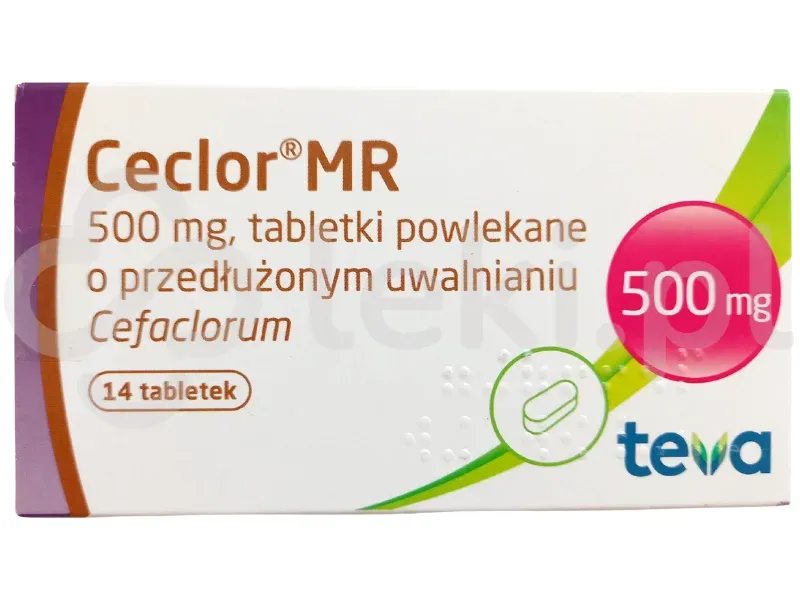
Table of Contents
CECLOR MR, 375 mg, prolonged-release coated tablets
CECLOR MR, 500 mg, prolonged-release coated tablets
CECLOR MR, 750 mg, prolonged-release coated tablets
(Cefaclorum)
Please read this leaflet carefully before taking the medicine, as it contains
important information for the patient.
- Keep this leaflet, so that you can read it again if necessary.
- If you have any questions, please consult your doctor or pharmacist.
- This medicine has been prescribed for a specific individual. Do not pass it on to others. The medicine may harm someone else, even if their symptoms are the same.
- If the patient experiences any adverse reactions, including any not listed in this leaflet, inform your doctor or pharmacist. See section 4.
Leaflet Contents:
- What Ceclor MR is and what it is used for
- Important information before taking Ceclor MR
- How to take Ceclor MR
- Possible side effects
- How to store Ceclor MR
- Contents of the pack and other information
1. What Ceclor MR is and what it is used for
Ceclor MR contains as its active substance cefaclor, an oral, semi-synthetic
antibiotic belonging to the cephalosporin group. Cephalosporins have a bactericidal effect because
they inhibit bacterial cell wall synthesis.
Cefaclor is indicated for the treatment of the following infections caused by susceptible
bacterial strains:
- Acute bronchitis and exacerbations of chronic bronchitis caused by Streptococcus pneumoniae (strains with reduced sensitivity to penicillin are resistant), Haemophilus influenzae (including β-lactamase-producing strains), Haemophilus parainfluenzae, Moraxella catarrhalis (including β-lactamase-producing strains), Staphylococcus aureus (methicillin-resistant strains are resistant).
- Pharyngitis and tonsillitis caused by Streptococcus pyogenes (Group A streptococci).
- Pneumonia caused by Streptococcus pneumoniae (strains with reduced sensitivity to penicillin are resistant), Haemophilus influenzae (including β-lactamase-producing strains), and Moraxella catarrhalis (including β-lactamase-producing strains).
- Sinusitis caused by Streptococcus pneumoniae (only penicillin-sensitive strains), Haemophilus influenzae (including β-lactamase-producing strains), Moraxella catarrhalis (including β-lactamase-producing strains).
- Uncomplicated lower urinary tract infections, including cystitis and asymptomatic bacteriuria caused by Escherichia coli, Klebsiella pneumoniae, Proteus mirabilis, and Staphylococcus saprophyticus.
- Skin and skin structure infections caused by Streptococcus pyogenes (Group A streptococci), Staphylococcus aureus (including β-lactamase-producing strains; methicillin-resistant strains are resistant), and Staphylococcus epidermidis (including β-lactamase-producing strains; methicillin-resistant strains are resistant).
Before starting treatment, appropriate tests should be performed to confirm microbial
susceptibility to cefaclor.
2. Important information before using Ceclor MR
When not to use Ceclor MR
- if the patient is allergic to the active substance - cefaclor (or other cephalosporins) or to any of the other ingredients of this medicine (listed in section 6).
Warnings and precautions
Before starting treatment with Ceclor MR, discuss this with a doctor or pharmacist:
- if the patient is allergic to antibiotics, including penicillins or cephalosporins, or to any other medicines. Symptoms of allergy may include rash, itching, swelling, and sudden difficulty in breathing
- if the patient has kidney disease and is undergoing dialysis
- if the patient has a history of colitis (a type of severe diarrhoea). If diarrhoea occurs during treatment, the patient should inform the doctor, as it may be a symptom of pseudomembranous colitis. The doctor will decide on further management. Do not take anti-diarrhoeal medicines
- in diabetes, because Ceclor MR may alter the results of urine sugar tests.
Prolonged use of cefaclor may lead to overgrowth of resistant microorganisms. If additional infection occurs during treatment, inform the doctor, who will decide on further management and prescribe appropriate treatment.
Before undergoing blood tests, inform the doctor that Ceclor MR is being taken, as it may affect the results of certain tests.
Consult a doctor if any of the above warnings apply to past medical conditions.
Ceclor MR and other medicines
Inform the doctor or pharmacist about all medicines currently used, recently used, or planned for use.
Rarely, patients taking cefaclor together with anticoagulant medicines (e.g. warfarin or acenocoumarol) may experience increased anticoagulant effect.
Renal excretion of cefaclor, as with other β-lactam antibiotics, is inhibited by probenecid.
During treatment with cephalosporins, cases of positive (sometimes falsely positive) Coombs test results have been reported.
Ceclor MR may cause a false positive result in urine glucose tests using Benedict's or Fehling's solution or copper sulfate tablets.
Children
The safety and efficacy of Ceclor MR in children have not been established. For children, an antibiotic in suspension form is available.
Pregnancy and breastfeeding
Before taking any medicine, consult a doctor or pharmacist.
Pregnancy
Women who are pregnant, suspect they may be pregnant, or plan to become pregnant should inform their doctor before starting treatment with this medicine. Ceclor MR should be used during pregnancy only if clearly necessary.
Breastfeeding
Women who are breastfeeding or planning to breastfeed should inform their doctor. Particular caution should be exercised when using Ceclor MR in breastfeeding women.
Labour and delivery
Ceclor MR should be used during labour only if clearly necessary.
Driving and operating machinery
The effect of Ceclor MR on the ability to drive or operate machinery is unknown.
3. How to use Ceclor MR
This medicine should always be taken exactly as directed by a doctor or pharmacist. If in doubt,
consult a doctor or pharmacist.
Ceclor MR is a medicine taken orally.
Recommended dose
Adults, including elderly people
- Sore throat, tonsillitis, bronchitis, skin and skin structure infections – 375 mg twice daily.
- Lower urinary tract infections – 375 mg twice daily or 500 mg once daily.
- Pneumonia – 750 mg twice daily.
- Sinusitis – 750 mg twice daily.
In elderly patients with normal kidney function, no dosage adjustment is necessary.
Use in children
The safety and efficacy of Ceclor MR in children have not been established. For children, cefaclor is available in the form of oral suspensions.
Administration method
Cefaclor is well absorbed from the gastrointestinal tract. Absorption of the active substance is improved when taken with food; therefore, Ceclor MR tablets should be taken during meals.
Do not split, chew or crush the tablets.
Taking more Ceclor MR than recommended
Do not take more prolonged-release tablets than prescribed by your doctor.
If you have taken more than the recommended dose, seek immediate medical advice from a doctor
or go to the nearest hospital.
Symptoms of cefaclor overdose include: nausea, vomiting, gastrointestinal disturbances and
diarrhea.
Missing a dose of Ceclor MR
If you forget to take a dose at the correct time, take it as soon as possible.
If you miss several doses, inform your doctor.
If you have any doubts concerning the use of this medicine, consult your doctor or pharmacist.
4. Possible adverse reactions
Like all medicines, this medicine can cause adverse reactions, although not everyone will experience them.
If itching, redness or swelling of the skin, joint pain, headache, sudden worsening of breathing difficulties or feeling of weakness occur, the use of the medicine should be discontinued and medical advice should be sought immediately.
In clinical trials with cefaclor, most of the observed adverse reactions were transient and mild in nature. Drug-related adverse reactions leading to discontinuation of treatment occurred in 1.7% of patients. The adverse reactions reported during clinical trials are listed below. The frequency of occurrence of adverse reactions was less than 1% (less than 1 in 100 patients), except as specified below:
Gastrointestinal disorders
Common: diarrhoea, nausea, vomiting and dyspepsia.
Immune system disorders
Common: rash, urticaria or pruritus.
Very rarely, a serum sickness-like reaction has been reported.
Serum sickness-like symptoms (e.g. erythema multiforme, rash and other skin manifestations, sometimes accompanied by joint inflammation or pain, with or without fever) have been observed during cefaclor treatment. Rarely, lymphadenopathy and proteinuria have occurred.
Isolated symptoms may occur sporadically, but are not considered to be manifestations of serum sickness-like reactions. Serum sickness-like reactions are due to hypersensitivity and usually occur during or after repeated administration of cefaclor. These reactions may be managed with antihistamines and corticosteroids. No serious consequences of these reactions have been reported.
Blood and lymphatic system disorders
Eosinophilia (increased number of a type of white blood cells – eosinophils).
Reproductive system and breast disorders
Common: candidiasis (yeast infection) and vaginitis.
The following symptoms have also been reported, although a causal relationship with treatment has not been established:
Nervous system disorders
Headache and dizziness, somnolence.
Hepatobiliary disorders
Transient increases in liver enzyme levels (aspartate aminotransferase, alanine aminotransferase and alkaline phosphatase).
Renal and urinary disorders
Transient increases in blood urea nitrogen and creatinine levels.
Diagnostic investigations
Transient thrombocytopenia (low platelet count), leukopenia and lymphocytosis (low white blood cell count), neutropenia (low neutrophil count), abnormal urine test results.
In addition to the adverse reactions listed above observed in patients taking Ceclor MR, the following symptoms have been observed in patients receiving cefaclor: erythema multiforme, fever, anaphylaxis (may occur more frequently in patients allergic to penicillin), Stevens-Johnson syndrome (erythema multiforme characterized by blisters appearing on mucous membranes, mainly in the oral cavity and genital organs), positive Coombs test and genital pruritus. Symptoms of pseudomembranous colitis (a condition usually occurring as a consequence of antibiotic use, resulting from overgrowth of Clostridium difficile bacteria in the intestine and the action of toxins produced by them) may occur during or after completion of antibiotic therapy. Anaphylactoid reactions may present as isolated symptoms such as angioedema, weakness, swelling (including facial and limb swelling), dyspnoea, paresthesia (tingling, numbness), syncope or vasodilation. Rarely, hypersensitivity symptoms may persist for several months.
Rare adverse reactions reported in patients receiving cefaclor include:
toxic epidermal necrolysis (Stevens-Johnson syndrome), transient interstitial nephritis, hepatic dysfunction, cholestatic jaundice, prolonged prothrombin time in patients receiving cefaclor concomitantly with warfarin, transient hyperexcitability, agitation, nervousness, insomnia, hallucinations, increased muscle tone, aplastic anaemia, agranulocytosis and haemolytic anaemia.
Adverse reactions reported with other β-lactam antibiotics:
colitis, renal function disorders and toxic nephropathy. Seizures have been associated with some β-lactam antibiotics, particularly in patients with impaired renal function receiving standard doses of cefaclor. If seizures occur during cefaclor treatment, the medicine should be discontinued immediately and medical advice should be sought. The physician may consider administration of anticonvulsant medication.
Reporting of adverse reactions
If any adverse reactions occur, including any not listed in this leaflet, inform your doctor, pharmacist or nurse. Adverse reactions can be reported directly to the Department of Monitoring Adverse Drug Reactions, Office for Registration of Medicinal Products, Medical Devices and Biocidal Products, Al. Jerozolimskie 181C, 02-222 Warsaw, Tel: +48 22 49 21 301, Fax: +48 22 49 21 309, website: https://smz.ezdrowie.gov.pl
Adverse reactions may also be reported to the marketing authorization holder.
Reporting adverse reactions helps provide more information on the safety of the medicine.
5. How to store Ceclor MR
Keep out of the sight and reach of children.
Store below 30°C.
Do not use this medicine after the expiry date stated on the carton after "Expiry date". The expiry date refers to the last day of the specified month.
Medicines should not be disposed of via wastewater or household waste. Ask your pharmacist how to dispose of medicines no longer required. These measures will help protect the environment.
6. Contents of the package and other information
What Ceclor MR contains
- The active substance is cefaclor. One prolonged-release coated tablet contains 375 mg, 500 mg, or 750 mg of cefaclor.
- Other components of the medicine are:
Tablet core:
Mannitol
Methylhydroxypropylcellulose
Hydroxypropylcellulose
Hydroxypropylcellulose EF (Extra Fine)
Methacrylic acid copolymer (type C)
Stearic acid
Magnesium stearate
Tablet coating:
"Dark Blue YS-1-4273" colour mixture
Propylene glycol
Talc
What Ceclor MR looks like and contents of the pack
Prolonged-release coated tablets.
10 tablets (10 pcs) or 14 tablets (14 pcs) in a cardboard box.
Marketing Authorisation Holder
Teva Pharmaceuticals Polska Sp. z o.o.
ul. Emilii Plater 53
00-113 Warsaw
Poland
tel: (22) 345 93 00
fax: (22) 345 93 01
e-mail: [email protected]
Manufacturer
ACS Dobfar S.P.A.
Via Laurentina Km 24.730
00071 Pomezia (Rome)
Italy
Teva Operations Poland Sp. z o.o.
ul. Mogilska 80
31-546 Kraków
Poland
For detailed information about this medicine, please contact the representative of the marketing authorisation holder.