Captopril polfarmex
Poland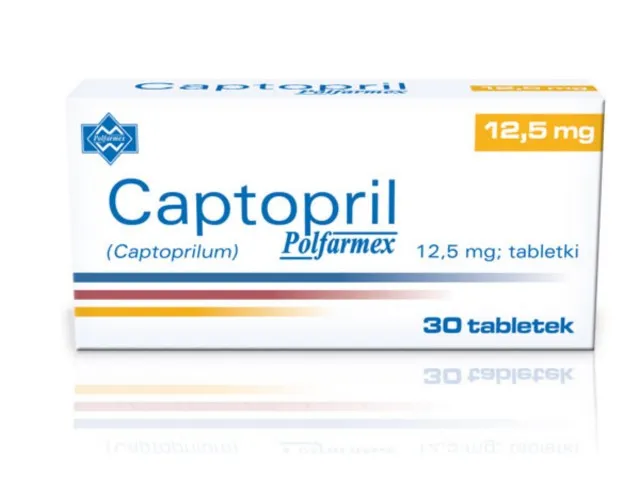
Table of Contents
Package leaflet: Information for the patient
Captopril Polfarmex 12.5 mg, tablets
Captopril Polfarmex 25 mg, tablets
Captopril Polfarmex 50 mg, tablets
(Captoprilum)
Please read this leaflet carefully before taking this medicine, as it contains important information for you.
- Keep this leaflet, as you may need to read it again.
- If you have any further questions, please ask your doctor or pharmacist.
- This medicine has been prescribed for a specific individual. Do not pass it on to others. It may harm them, even if their symptoms are the same.
- If you experience any adverse effects, including any not listed in this leaflet, tell your doctor or pharmacist. See section 4.
DO NOT USE IN PREGNANT WOMEN
Contents of the leaflet
- What Captopril Polfarmex is and what it is used for
- Important information before taking Captopril Polfarmex
- How to take Captopril Polfarmex
- Possible side effects
- How to store Captopril Polfarmex
- Contents of the pack and other information
1. What Captopril Polfarmex is and what it is used for
Captopril is an angiotensin-converting enzyme (ACE) inhibitor. It inhibits the conversion of inactive angiotensin I into active angiotensin II. In patients with hypertension, blocking the synthesis of angiotensin II leads to a reduction in blood pressure, while inhibition of tissue renin-angiotensin systems reduces left ventricular hypertrophy. In heart failure, captopril reduces cardiac workload and improves the patient's condition by decreasing peripheral resistance. In diabetic nephropathy, it reduces proteinuria.
Captopril Polfarmex is indicated for:
- arterial hypertension,
- chronic heart failure with impaired ventricular systolic function, in combination with diuretics and, if appropriate, with cardiac glycosides and beta-blockers,
- asymptomatic left ventricular dysfunction (ejection fraction ≤ 40%) following myocardial infarction in patients with stabilized clinical status,
- diabetic nephropathy.
2. Important information before taking Captopril Polfarmex
When not to take Captopril Polfarmex:
- if you are allergic (hypersensitive) to captopril or any other ACE inhibitor or to any of the other ingredients of this medicine (listed in section 6),
- angioedema associated with previous treatment with angiotensin-converting enzyme inhibitors,
- hereditary or idiopathic angioedema,
- if you have diabetes or renal impairment and are being treated with an antihypertensive medicine containing aliskiren,
- second and third trimesters of pregnancy,
- breastfeeding.
Warnings and precautions
Before starting treatment with Captopril Polfarmex, discuss this with your doctor or pharmacist.
- if you are taking any of the following medicines used to treat high blood pressure:
- angiotensin II receptor antagonists (ARBs) (also known as sartans, e.g. valsartan, telmisartan, irbesartan), especially if you have kidney problems related to diabetes,
- aliskiren,
- if you have hypotension,
- in patients with heart failure,
- in patients with bilateral renal artery stenosis or stenosis of the artery to a single functioning kidney,
- in case of impaired renal function (creatinine clearance ≤ 40 ml/min),
- if angioedema of the extremities, face, lips, mucous membranes, tongue, larynx, or glottis occurred during the first week of treatment. Swelling of the tongue, glottis, or larynx may be life-threatening,
- if you develop a cough,
- if you develop jaundice or elevated liver enzymes have been observed,
- in patients with renal impairment,
- in patients with diabetes,
- in patients taking potassium-sparing diuretics, potassium supplements, or products containing potassium salts, or other medicines that increase potassium levels,
- in patients taking lithium,
- if you have undergone desensitization therapy with Hymenoptera venom,
- in patients undergoing dialysis with high-flux dialysis membranes or during low-density lipoprotein apheresis,
- in patients undergoing surgery or anaesthesia with anaesthetics causing hypotension,
- in patients with congenital galactosaemia, glucose-galactose malabsorption, or lactase deficiency,
- if you are of Black race. Your doctor may monitor kidney function, blood pressure, and blood electrolyte levels (e.g. potassium) at regular intervals.
Captopril Polfarmex and other medicines
Tell your doctor or pharmacist about all medicines you are currently taking, have recently taken, or plan to take.
Your doctor may need to adjust the dose and/or take additional precautions:
- if you are taking an angiotensin II receptor antagonist (ARB) or aliskiren (see also information under the headings "When not to take Captopril Polfarmex" and "Warnings and precautions"). Captopril Polfarmex should be used with caution if:
- you are taking potassium-sparing diuretics (e.g. spironolactone, triamterene, or amiloride), potassium supplements, or potassium-containing salt substitutes,
- you are or have been treated with high doses of diuretics (thiazides or loop diuretics),
- you are taking nitroglycerin or other nitrates or other vasodilators,
- you are taking lithium,
- you are being treated with tricyclic antidepressants/antipsychotics,
- you are taking allopurinol, procainamide, cytostatic agents, or immunosuppressive drugs,
- non-steroidal anti-inflammatory drugs (NSAIDs) are taken concomitantly,
- you are taking sympathomimetic agents,
- you are taking antidiabetic medicines.
Captopril may be safely used with:
- common antihypertensive medicines (e.g. beta-blockers and long-acting calcium channel blockers), acetylsalicylic acid (at cardiologic doses), thrombolytics, beta-blockers, and/or nitrates in patients after myocardial infarction.
Clinical chemistry (medical laboratory analysis):
- Captopril may cause false-positive results in urine ketone tests.
Pregnancy and breastfeeding
If you are pregnant or breastfeeding, suspect you may be pregnant, or are planning to become pregnant, consult your doctor or pharmacist before taking this medicine.
Use of Captopril Polfarmex is not recommended during the first trimester of pregnancy. When pregnancy is planned or confirmed, alternative treatment should be initiated as soon as possible. The medicine must not be used during the second and third trimesters of pregnancy. Prolonged exposure to captopril during the second and third trimesters of pregnancy is toxic to the fetus (renal dysfunction, oligohydramnios, delayed ossification of skull bones) and to the newborn (renal failure, hypotension, hyperkalaemia).
Captopril Polfarmex must not be used during breastfeeding.
Driving and using machines:
The ability to drive vehicles or operate machinery may be impaired, especially at the beginning of treatment, after a dose adjustment, or when the medicine is taken with alcohol. This depends on individual patient susceptibility.
Captopril Polfarmex contains lactose and sodium
This medicine contains lactose. If you have been diagnosed with an intolerance to certain sugars, consult your doctor before taking this medicine. Captopril Polfarmex 12.5 mg contains 0.01785 g of lactose (0.008925 g glucose and 0.008925 g galactose), Captopril Polfarmex 25 mg contains 0.0357 g of lactose (0.01785 g glucose and 0.01785 g galactose), and Captopril Polfarmex 50 mg contains 0.0714 g of lactose (0.0357 g glucose and 0.0357 g galactose) per tablet.
This should be taken into account in patients with diabetes.
Captopril Polfarmex contains less than 1 mmol (23 mg) of sodium per tablet, i.e. the medicine is considered "sodium-free".
3. How to use Captopril Polfarmex
This medicine should always be taken exactly as directed by your doctor or pharmacist. If in doubt,
you should consult your doctor or pharmacist.
The recommended maximum daily dose is 150 mg per day.
The medicine can be taken before, during, or after meals.
Arterial hypertension:
The recommended initial dose is 25–50 mg, administered twice daily. The dose may be gradually
increased at intervals of at least two weeks up to 100–150 mg/day in two divided doses to achieve
the target blood pressure. Captopril may be used as the sole antihypertensive agent (monotherapy)
or in combination with other antihypertensive medicines, for example thiazides.
A once-daily dose of captopril may be used in combination therapy with antihypertensive agents
such as thiazide diuretics.
In patients with high activity of the renin-angiotensin-aldosterone system (hypovolemia, renovascular
hypertension, heart failure decompensation), treatment should be initiated with a dose of 6.25 mg or
12.5 mg once daily. Initiation of treatment should be closely monitored. Subsequently, doses are
administered twice daily. The dose may be gradually increased up to 50 mg or 100 mg per day, given
in one or two divided doses.
Heart failure:
Treatment of heart failure with captopril should be strictly supervised by a physician.
Dosage usually starts at 6.25 mg to 12.5 mg given two or three times daily. The transition from
maintenance dose to the maximum daily dose of 150 mg in divided doses should be based on the
individual patient's clinical response. The dose should be increased gradually at intervals of at least
two weeks, provided the patient tolerates it.
Myocardial infarction:
Short-term treatment: treatment with Captopril Polfarmex should begin in hospital as soon as
possible, once the patient is stable.
The initial dose is 6.25 mg, followed by 12.5 mg after 2 hours, and then 25 mg 12 hours later.
Subsequently, 100 mg of captopril should be administered in two divided doses for 4 weeks,
provided no adverse hemodynamic reactions occur.
At the end of the 4-week treatment period, before deciding on continuing outpatient treatment, the
patient's condition should be assessed.
Long-term treatment: if captopril treatment has not been initiated within 24 hours after a severe
myocardial infarction, it is recommended to start treatment between day 3 and day 16, provided
appropriate conditions are met before treatment initiation (stable hemodynamics, full diagnosis of
residual ischemia). Treatment should begin in hospital under strict medical supervision until the dose
of 75 mg is reached. The initial dose must be low, especially if the patient has normal or low blood
pressure during the initial treatment phase. Treatment should start with a dose of 6.25 mg to 12.5 mg
three times daily for 2 days, followed by 25 mg three times daily, provided no adverse hemodynamic
changes occur. To achieve a cardioprotective effect during long-term treatment, a daily dose of 75 mg
to 150 mg in two or three divided doses is recommended. In cases of symptomatic hypotension, as
occurs in heart failure, the dose of diuretic and/or other accompanying vasodilating medicine may be
reduced relative to the established fixed dose of captopril.
Captopril may be used in combination with other medicines used in heart failure, such as
thrombolytics, beta-blockers, or acetylsalicylic acid.
Type I diabetic nephropathy:
The recommended dose is 75 mg to 100 mg in divided doses.
If additional blood pressure reduction is indicated, an antihypertensive agent may be used.
Renal impairment:
Since captopril is primarily excreted by the kidneys, dosage should be reduced or dosing intervals
extended in patients with impaired renal function. If concomitant diuretic therapy is necessary in
patients with severe renal impairment, loop diuretics (e.g., furosemide) are preferred over thiazide
diuretics.
In patients with renal impairment, the daily dose may be adjusted to prevent accumulation of captopril.
| Creatinine clearance (ml/min/1.73 m²) | Initial daily dose (mg) | Maximum daily dose |
| >40 | 25–50 | 150 |
| 21–40 | 25 | 100 |
| 10–20 | 12.5 | 75 |
| <10 | 6.25 | 37.5 |
Elderly patients
As with other antihypertensive agents, therapy should be initiated at the lowest starting dose (6.25 mg twice daily) in elderly patients with possible impaired renal function and organ dysfunction.
The dose should be adjusted according to the patient's blood pressure, and the lowest effective maintenance dose should be used.
Use in children and adolescents
The efficacy and safety of captopril have not been fully established. Use of this medicinal product in children and adolescents should be under strict medical supervision. The initial dose should be 0.3 mg/kg body weight. In patients requiring special attention (children with impaired renal function, preterm infants, newborns, and infants, since their renal function differs from that in older children and adults), the initial dose should be 0.15 mg/kg body weight. Captopril is usually administered to children three times daily; however, dosage and dosing intervals should be individually adjusted according to the patient's condition.
Overdose of Captopril Polfarmex
Symptoms of overdose: severe hypotension, shock, stupor, bradycardia, electrolyte disturbances, renal failure.
In case of overdose, absorption of the medicinal product should be prevented (e.g. by gastric lavage and administration of adsorbents and sodium sulfate within 30 minutes of ingestion). Prompt measures should be taken immediately after overdose to rapidly eliminate the drug from the body.
If hypotension occurs, the patient should be placed in a shock position and treated with rapid intravenous infusion of physiological saline solution. Administration of angiotensin II should also be considered. In case of bradycardia or adverse vagal reactions, atropine should be administered. Pacemaker use may also be considered.
Captopril can be removed from the body by hemodialysis.
Missed dose of Captopril Polfarmex
Do not take a double dose to make up for a missed dose.
4. Possible adverse effects
Like all medicines, this one may cause adverse effects, although not everyone will experience them.
Adverse effects reported with captopril and (or) ACE inhibitors:
Blood and lymphatic system disorders:
Very rare: neutropenia/agranulocytosis, pancytopenia – particularly in patients with impaired renal function, anaemia (including aplastic and haemolytic anaemia), thrombocytopenia, lymphadenopathy, eosinophilia, autoimmune diseases and (or) positive ANA test results.
Metabolism and nutrition disorders:
Rare: anorexia.
Very rare: hyperkalaemia (excessively high blood potassium levels), hypoglycaemia (excessively low blood sugar levels).
Psychiatric disorders:
Common: sleep disturbances.
Very rare: disorientation, depression.
Nervous system disorders:
Common: taste disturbance, dizziness.
Uncommon: somnolence, headache, paraesthesia.
Very rare: cerebrovascular events such as stroke, fainting.
Eye disorders:
Very rare: blurred vision.
Cardiac disorders:
Uncommon: tachycardia or tachyarrhythmia, angina pectoris, palpitations.
Very rare: cardiac arrest, cardiogenic shock.
Vascular disorders:
Uncommon: hypotension, Raynaud's syndrome, flushing, pallor.
Respiratory, thoracic and mediastinal disorders:
Common: dry, irritating (non-productive) cough, dyspnoea.
Very rare: bronchospasm, nasal mucosal inflammation, allergic alveolitis/eosinophilic pneumonia.
Gastrointestinal disorders:
Common: nausea, vomiting, gastric irritation, abdominal pain, diarrhoea, constipation, dry mouth.
Rare: stomatitis/aphthous ulceration.
Very rare: glossitis, peptic ulcer, pancreatitis.
Hepatobiliary and biliary tract disorders:
Very rare: hepatic dysfunction and cholestasis (including jaundice), hepatitis including necrosis, increased liver enzyme activity and bilirubin levels.
Skin and subcutaneous tissue disorders:
Common: pruritus with or without rash, rash, and alopecia.
Uncommon: angioedema.
Very rare: urticaria, Stevens-Johnson syndrome, erythema multiforme, photosensitivity, erythroderma, pemphigoid (an autoimmune skin disease characterised by blisters and skin lesions), and exfoliative dermatitis.
Musculoskeletal, connective tissue and bone disorders:
Very rare: myalgia, arthralgia.
Renal and urinary disorders:
Rare: renal dysfunction, including renal failure, polyuria, oliguria, increased frequency of urination.
Very rare: nephrotic syndrome.
Reproductive system and breast disorders:
Very rare: impotence, gynaecomastia (breast enlargement in males).
General disorders:
Uncommon: chest pain, fatigue, malaise.
Very rare: fever.
Investigations:
Very rare: proteinuria, eosinophilia, increased serum potassium concentration, decreased serum sodium concentration, elevated BUN (blood urea nitrogen), increased serum creatinine and bilirubin levels, decreased haemoglobin, leukocyte and platelet counts, decreased haematocrit, positive ANA test (antinuclear antibody test), elevated ESR (erythrocyte sedimentation rate).
Reporting of adverse effects
If any adverse effects occur, including any not listed in this leaflet, inform your doctor or pharmacist. Adverse effects can be reported directly to the Department of Monitoring Adverse Drug Reactions of the Office for Registration of Medicinal Products, Medical Devices and Biocidal Products
Al. Jerozolimskie 181C
02-222 Warsaw,
tel: +48 22 49 21 301
fax: +48 22 49 21 309.
Website: https://smz.ezdrowie.gov.pl
Adverse effects can also be reported to the marketing authorisation holder.
Reporting adverse effects helps to provide more information on the safety of this medicine.
5. How to store Captopril Polfarmex
Keep the medicine out of sight and reach of children.
Do not use this medicine after the expiry date stated on the carton.
Store below 25°C.
Keep in the original packaging.
Medicines must not be disposed of via wastewater or household waste.
Ask your pharmacist how to dispose of medicines no longer required. Such action helps
protect the environment.
6. Contents of the pack and other information
What Captopril Polfarmex contains
- The active substance is captopril. One tablet contains 12.5 mg; 25 mg or 50 mg of captopril.
- The other components are: microcrystalline cellulose (type 102), lactose monohydrate, sodium croscarmellose, magnesium stearate, colloidal anhydrous silica.
What Captopril Polfarmex looks like and contents of the pack
Captopril Polfarmex is a tablet.
Tablets 12.5 mg – the pack contains 30 tablets.
Tablets 25 mg or 50 mg – the pack contains 30, 40 or 90 tablets.
Blisters OPA/Al/PVC//Al in a cardboard box.
Marketing Authorisation Holder and Manufacturer
Polfarmex S.A.
ul. Józefów 9
99-300 Kutno
Tel.: 24 357 44 44
Fax: 24 357 45 45
e-mail: [email protected]