Bosutinib sandoz
Poland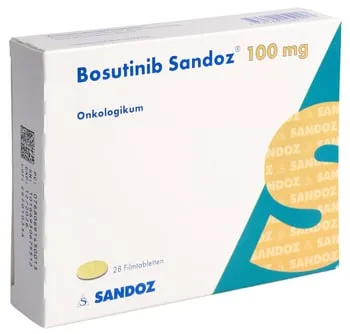
Table of Contents
Package leaflet: Information for the patient
Bosutinib Sandoz, 100 mg, film-coated tablets
Bosutinib Sandoz, 400 mg, film-coated tablets
Bosutinib Sandoz, 500 mg, film-coated tablets
Bosutinib
Please read this leaflet carefully before taking this medicine because it contains important information for you.
- Keep this leaflet. You may need to read it again.
- If you have any further questions, please ask your doctor or pharmacist.
- This medicine has been prescribed for you personally. Do not pass it on to others. It may harm them, even if their symptoms are the same as yours.
- If you experience any side effects, including any not listed in this leaflet, tell your doctor. See section 4.
Contents of the leaflet
- What Bosutinib Sandoz is and what it is used for
- What you need to know before taking Bosutinib Sandoz
- How to take Bosutinib Sandoz
- Possible side effects
- How to store Bosutinib Sandoz
- Contents of the pack and other information
1. What Bosutinib Sandoz is and what it is used for
Bosutinib Sandoz contains the active substance bosutinib. This medicine is used to treat
adult patients and children aged 6 years and older who have a type of leukaemia called
chronic myeloid leukaemia with the Philadelphia chromosome (Ph-positive), either when
the disease has just been diagnosed, or when previous treatments for chronic myeloid
leukaemia have not worked or were unsuitable. This medicine is also used to treat adult
patients with Ph-positive chronic myeloid leukaemia in the accelerated phase or in the
blast phase, when previous treatments for chronic myeloid leukaemia have not worked or
were unsuitable.
In patients with Ph-positive chronic myeloid leukaemia, a DNA change (genetic material)
triggers a signal that causes the body to produce too many of a certain type of white blood
cells called granulocytes. This medicine blocks that signal, thereby stopping the production
of these cells.
If you have any questions about how Bosutinib Sandoz works or why this medicine has
been prescribed for you, please consult your doctor.
2. Important information before taking Bosutinib Sandoz
When not to take Bosutinib Sandoz
- if the patient is allergic to bosutinib or any of the other ingredients of this medicine (listed in section 6);
- if the patient has been informed by a doctor of having impaired liver function or liver damage.
Warnings and precautions
Before starting treatment with Bosutinib Sandoz, discuss the following with your doctor, pharmacist,
or nurse:
- if the patient has or has had liver disease. Inform the doctor about any previous liver conditions, including hepatitis (infection or inflammation of the liver) of any type, as well as any prior symptoms of liver disease (see section 4, “Possible side effects”), because this medicine may affect liver function. The doctor should order blood tests to monitor liver function before starting treatment with Bosutinib Sandoz and during the first 3 months of treatment, as well as whenever clinically indicated.
- if the patient has diarrhoea or vomiting. Inform the doctor about any symptoms of gastrointestinal disorders (see section 4, “Possible side effects”). The doctor may recommend anti-diarrhoeal or anti-emetic medicines and/or fluids to help relieve symptoms. The doctor may also recommend temporarily interrupting treatment, reducing the dose, or discontinuing the medicine (see section 3, “How to take Bosutinib Sandoz”). Ask the doctor whether anti-nausea or anti-vomiting treatment used in combination with this medicine could increase the risk of heart arrhythmia.
- if the patient has bleeding. Inform the doctor about any symptoms related to blood disorders (see section 4, “Possible side effects”), as this medicine reduces the body’s ability to stop bleeding. During the first month of treatment, the doctor will order weekly complete blood counts, followed by monthly tests. The doctor may also recommend temporarily interrupting treatment, reducing the dose, or stopping the medicine (see section 3, “How to take Bosutinib Sandoz”).
- if the patient has an infection. Inform the doctor about any symptoms such as fever, problems with urination (e.g. burning sensation), new cough, or new sore throat, as this medicine reduces the body’s ability to fight infections.
- if the patient develops fluid retention. Inform the doctor if any of the following symptoms of fluid retention occur during treatment: swelling of the ankles, feet, or legs, difficulty breathing, chest pain, or cough (these may be signs of fluid accumulation in the lungs or chest cavity). The doctor will monitor the patient for fluid retention and take appropriate steps to relieve symptoms.
- if the patient has heart conditions. Inform the doctor about any heart diseases, such as heart failure or reduced blood flow to the heart, which may lead to heart attack. If shortness of breath, weight gain, chest pain, or swelling of the hands, ankles, or feet occurs, seek immediate medical help.
- if the patient has been diagnosed with irregular heartbeat. Inform the doctor if arrhythmias or abnormalities on ECG, known as “QT interval prolongation,” occur. This is important at all times, but especially during frequent or prolonged diarrhoea, as described above. If fainting (loss of consciousness) or irregular heartbeat occurs while taking this medicine, contact the doctor immediately, as this may indicate a serious heart condition (see section 2, “What to know before taking Bosutinib Sandoz”). Before starting treatment, the doctor will order an electrocardiogram (ECG). The doctor will order blood tests before and during treatment, and if blood potassium or magnesium levels are low, will initiate treatment to correct these deficiencies.
- if the patient has been diagnosed with kidney disease. Inform the doctor about increased urination and production of large amounts of pale-coloured urine, as well as decreased urination and production of small amounts of dark-coloured urine. Also inform the doctor about weight loss and swelling of the feet, ankles, legs, hands, or face. The doctor will assess kidney function before starting treatment and closely monitor kidney function during treatment with this medicine.
- if the patient has ever had or may currently have hepatitis B virus infection. This is because this medicine may reactivate hepatitis B virus infection, which in some cases may be fatal. Before starting treatment, the doctor will order a test to detect this infection. If the patient has this infection, the doctor will closely monitor for signs of reactivation during treatment and for several months after treatment ends.
- if the patient has or has had pancreas disorders. Inform the doctor about abdominal pain or discomfort in this area. If the patient experiences abdominal pain and blood tests show elevated lipase activity—an enzyme that helps the body break down dietary fats—the doctor may recommend interrupting treatment and performing tests to rule out pancreas disease.
- if the patient develops any of the following symptoms: severe skin rash. Inform the doctor if any of the following symptoms occur: painful, red, or purpuric spreading rash, blisters, and/or other changes starting on mucous membranes (e.g. inside the mouth or lips). If a severe skin reaction occurs during treatment, the doctor will recommend complete discontinuation of treatment.
- if the patient notices any of the following symptoms: flank pain, blood in the urine, or reduced urine output. In very severe disease, the body may be unable to eliminate all components from dying tumour cells. This complication, known as tumour lysis syndrome, may lead to kidney failure and heart problems within 48 hours after the first dose of Bosutinib Sandoz. The doctor is aware of this potential complication and may recommend adequate hydration and other medicines to prevent it. The doctor will order blood tests to detect high uric acid levels and initiate appropriate treatment before starting therapy to correct elevated uric acid levels.
Protection from sunlight/UV radiation
While taking bosutinib, the patient may become more sensitive to sunlight or UV radiation. It is important to cover skin areas exposed to sunlight and to use sunscreen with a high sun protection factor (SPF).
Patients of Asian origin
Patients of Asian origin may be at increased risk of adverse reactions to this medicine. The doctor will closely monitor the patient for severe adverse reactions, especially when increasing the dose.
Children and adolescents
This medicine is not recommended for use in children under 6 years of age. Use of this medicine has not been studied in children under 1 year of age.
Bosutinib Sandoz and other medicines
Inform the doctor or pharmacist about all medicines currently or recently taken, as well as any medicines planned for use, including over-the-counter medicines, vitamins, and herbal supplements. Some medicines may affect bosutinib levels in the patient’s body. Inform the doctor about taking medicines containing any of the following active substances:
The following active substances may increase the risk of adverse effects of Bosutinib Sandoz:
- ketoconazole, itraconazole, voriconazole, posaconazole, and fluconazole used to treat fungal infections,
- clarithromycin, telithromycin, erythromycin, and ciprofloxacin used to treat bacterial infections,
- nefazodone used to treat depression,
- mibefradil, diltiazem, and verapamil used to lower blood pressure in patients with hypertension,
- ritonavir, lopinavir/ritonavir, indinavir, nelfinavir, saquinavir, atazanavir, amprenavir, fosamprenavir, and darunavir used to treat human immunodeficiency virus (HIV)/AIDS infection,
- boceprevir and telaprevir used to treat hepatitis C,
- aprepitant used to prevent and control nausea and vomiting,
- imatinib used to treat a type of leukaemia,
- crizotinib used to treat a type of lung cancer called non-small cell lung cancer.
The following active substances may reduce the effectiveness of Bosutinib Sandoz:
- rifampicin used to treat tuberculosis,
- phenytoin and carbamazepine used to treat epilepsy,
- bosentan used to treat high blood pressure in the lungs (pulmonary arterial hypertension),
- nafcillin—an antibiotic used to treat bacterial infections,
- St John’s wort (an herbal medicine available without prescription) used to treat depression,
- efavirenz and etravirine used to treat HIV/AIDS infection,
- modafinil used to treat certain types of sleep disorders.
Avoid using these medicines during treatment with Bosutinib Sandoz. Inform the doctor if any of these medicines are being taken. The doctor may adjust the doses of these medicines, adjust the dose of Bosutinib Sandoz, or switch to another medicine.
The following active substances may affect heart rhythm:
- amiodarone, disopyramide, procainamide, quinidine, and sotalol used to treat heart rhythm disorders,
- chloroquine, halofantrine used to treat malaria,
- antibiotics: clarithromycin and moxifloxacin used to treat bacterial infections,
- haloperidol used to treat psychotic disorders such as schizophrenia,
- domperidone used to treat nausea and vomiting or to stimulate milk production,
- methadone used to treat pain.
Exercise caution when taking these medicines during treatment with Bosutinib Sandoz. Inform the doctor if any of these medicines are being taken.
Medicines that reduce stomach acid secretion
Proton pump inhibitors (PPIs) should be used with caution during treatment with this medicine, as they may reduce the effectiveness of Bosutinib Sandoz. The doctor may consider using short-acting acid-neutralising medicines instead of PPIs.
If possible, separate the administration times of Bosutinib Sandoz and acid-neutralising medicines (i.e. take this medicine in the morning and acid-neutralising medicines in the evening).
Other medicines not listed above may also interact with Bosutinib Sandoz. If in doubt whether the above information applies, consult the doctor.
Bosutinib Sandoz with food and drink
Do not take this medicine with grapefruit or grapefruit juice, as this may increase the risk of adverse effects.
Pregnancy, breastfeeding, and fertility
Bosutinib Sandoz may harm the unborn child; therefore, it should not be taken during pregnancy unless considered essential. If pregnant or if pregnancy is possible, consult the doctor before using this medicine.
Women taking this medicine are advised to use an effective method of contraception during treatment and for at least one month after the last dose. Vomiting and diarrhoea may reduce the effectiveness of oral contraceptives.
Due to the risk of reduced fertility in men, sperm preservation should be considered before starting treatment with this medicine.
If the patient is breastfeeding, inform the doctor. Breastfeeding should not be continued during treatment with this medicine, as it may harm the infant.
Driving and operating machinery
If the patient experiences dizziness, blurred vision, or unusual fatigue, do not drive or operate machinery until these side effects subside.
3. How to take Bosutinib Sandoz
This medicine should always be taken exactly as prescribed by your doctor. If in doubt, consult your doctor or pharmacist.
This medicine will only be prescribed by a doctor experienced in the use of drugs for the treatment of leukemia.
Dosage and administration
Adult patients
The recommended dose for patients with newly diagnosed chronic myeloid leukemia is 400 mg once daily. The recommended dose for patients who previously failed treatment or were intolerant to prior therapy for chronic myeloid leukemia is 500 mg once daily.
If the patient does not tolerate the recommended dose or has an inadequate response, the doctor may adjust the dose accordingly.
Children and adolescents (aged 6 years and older)
The recommended dose for children and adolescents with newly diagnosed disease is 300 mg/m² body surface area once daily. The recommended dose for children and adolescents who are resistant to treatment or intolerant to prior therapy is 400 mg/m² body surface area once daily.
Dosing recommendations are provided in the table below. Depending on the required dose, coated tablets containing bosutinib of different strengths may be combined.
Bosutinib dosing in pediatric and adolescent patients with newly diagnosed disease
and in those resistant to treatment or intolerant to therapy
| Body surface area | Patients with newly diagnosed disease | Treatment-refractory or treatment-intolerant patients |
| 0.55–<0.63 m2 | 200 mg | 250 mg |
| 0.63–<0.75 m2 | 200 mg | 300 mg |
| 0.75–<0.9 m2 | 250 mg | 350 mg |
| 0.9–<1.1 m2 | 300 mg | 400 mg |
| ≥ 1.1 m2 | 400 mg* | 500 mg* |
* Maximum initial dose (corresponding to the maximum initial dose indicated for adult patients)
If the patient does not tolerate the recommended dose or the response to the medicine is inadequate, the doctor may adjust the dose.
The tablet(s) should be taken once daily with a meal. Swallow the tablet(s) whole with water.
Taking more Bosutinib Sandoz than recommended
If you accidentally take too many tablets or a larger dose than required, contact your doctor immediately. If possible, show the doctor the medicine packaging or this leaflet. The patient may require medical care.
Missing a dose of Bosutinib Sandoz
If less than 12 hours have passed since the missed dose, take the recommended dose.
If more than 12 hours have passed since the missed dose, take the next dose at the usual time on the following day.
Do not take a double dose to make up for a missed tablet.
Stopping treatment with Bosutinib Sandoz
Do not stop taking this medicine unless your doctor advises you to do so. If you are unable to take the medicine as directed by your doctor or if you think you no longer need the medicine, contact your doctor immediately.
If you have any further questions about the use of this medicine, consult your doctor or pharmacist.
4. Possible adverse reactions
Like all medicines, this medicine can cause adverse reactions, although not everyone will experience them.
Serious adverse reactions
If any of the following serious adverse reactions occur, contact your doctor immediately (see also section 2 "Important information before taking Bosutinib Sandoz"):
Very common (may occur in more than 1 in 10 people):
- decrease in the number of platelets (thrombocytopenia), red blood cells (anemia), and/or neutrophils (a type of white blood cell) (neutropenia), which may lead to abnormal bleeding, fever, or easy bruising without injury (may involve disorders of the blood or lymphatic system), see section 2 "What you should know before taking this medicine".
- fluid around the lungs (pleural effusion).
Common (may occur in up to 1 in 10 people):
- low number of white blood cells (leukopenia).
- bleeding from the stomach or intestines (gastrointestinal hemorrhage), which may include vomiting blood, blood in the stool (bowel movements) or urine, or black stools (tarry-black stools) (see section 2 "What you should know before taking this medicine").
- chest pain.
- toxic liver damage (hepatotoxicity), abnormal liver function, including liver function disorders (abnormal liver function), which may be accompanied by itching, yellowing of the eyes or skin, dark urine, or pain or discomfort in the upper right part of the abdomen or fever (see section 2 "What you should know before taking this medicine").
- heart not pumping blood as well as it should (heart failure).
- reduced blood flow to the heart (cardiac ischemia).
- lung infection (pneumonia).
- heart rhythm disorders (prolongation of the QT interval on electrocardiogram) predisposing to fainting, dizziness, and palpitations.
- increased blood pressure (hypertension).
- high potassium levels in the blood (hyperkalemia).
- acute kidney failure, kidney failure, kidney function disorders.
- fluid around the heart (pericardial effusion).
- allergic reaction (hypersensitivity to the medicine).
- abnormally high blood pressure in the pulmonary arteries (pulmonary hypertension).
- acute pancreatitis.
Uncommon (may occur in up to 1 in 100 people):
- fever associated with low white blood cell count (febrile neutropenia).
- liver damage.
- life-threatening allergic reaction (anaphylactic shock).
- abnormal accumulation of fluid in the lungs (acute pulmonary edema).
- skin rashes (drug rash).
- peeling rash (exfoliative rash).
- inflammation of the sac-like membrane surrounding the heart (pericarditis).
- marked decrease in granulocytes (a type of white blood cell, granulocytopenia).
- severe skin disorders (erythema multiforme).
- nausea, shortness of breath, irregular heartbeat, muscle cramps, seizures, cloudy urine, and fatigue associated with abnormal laboratory test results (high levels of potassium, uric acid, and phosphorus, and low levels of calcium in the blood), which may lead to kidney dysfunction and acute kidney failure – tumor lysis syndrome.
- respiratory failure.
Frequency not known (frequency cannot be estimated from the available data):
- severe skin disorders (Stevens-Johnson syndrome, toxic epidermal necrolysis), including painful, red or purpuric rash spreading and blisters and/or other changes starting to appear on mucous membranes (e.g. mouth and lips) due to an allergic reaction.
- interstitial lung disease (disorders causing scarring in the lungs): symptoms include cough, difficulty breathing, painful breathing.
- reactivation of hepatitis B virus infection, if the patient had hepatitis B virus infection in the past (liver infection).
Other adverse reactions of this medicine may include:
Very common (may occur in more than 1 in 10 people):
- diarrhea, vomiting, stomach ache (abdominal pain), nausea.
- fever, swelling of hands, feet or face (edema), fatigue, weakness.
- respiratory tract infection.
- nasopharyngitis.
- changes in blood tests confirming whether the medicine affects the liver (increased alanine aminotransferase (ALT) activity, increased aspartate aminotransferase (AST) activity) and/or pancreas (increased lipase activity), kidney (increased blood creatinine concentration).
- decreased appetite.
- joint pain (arthralgia), back pain.
- headache.
- skin rash, which may be itchy and/or generalized (rash).
- cough.
- shortness of breath.
- feeling of instability (dizziness).
Common (may occur in up to 1 in 10 people):
- stomach irritation (gastritis).
- pain.
- influenza, bronchitis.
- changes in blood tests confirming whether the medicine affects the heart (increased creatine phosphokinase activity in blood), liver [increased blood bilirubin concentration, increased gamma-glutamyltransferase (GGT) activity] and/or pancreas (increased amylase activity).
- low phosphate levels in blood (hypophosphatemia), excessive loss of body fluids (dehydration).
- muscle pain (myalgia).
- taste disturbances (dysgeusia).
- ringing in the ears (tinnitus).
- urticaria, acne.
- hypersensitivity to UV rays from sunlight and other light sources (photosensitivity reaction).
- itching (pruritus).
Reporting of adverse reactions
If any adverse reactions occur, including any adverse reactions not listed in this leaflet, inform your doctor or pharmacist. Adverse reactions can be reported directly to the Department of Monitoring Adverse Reactions of Medicinal Products at the Office for Registration of Medicinal Products, Medical Devices and Biocidal Products:
Al. Jerozolimskie 181C, 02-222 Warsaw
Tel: +48 22 49 21 301, Fax: +48 22 49 21 309, Website: https://smz.ezdrowie.gov.pl
Adverse reactions can also be reported to the marketing authorization holder. Reporting adverse reactions helps provide more information on the safety of this medicine.
5. How to store Bosutinib Sandoz
Keep this medicine out of the sight and reach of children.
Do not use this medicine after the expiry date stated on the carton and blister after: Expiry
(Exp). The expiry date refers to the last day of the stated month.
No special storage conditions apply for this medicine.
Do not use this medicine if you notice damage to the packaging or signs of tampering.
Medicines should not be disposed of via wastewater or household waste. Ask your
pharmacist how to dispose of medicines no longer required. These measures will help
protect the environment.
6. Contents of the pack and other information
What Bosutinib Sandoz contains
-
The active substance is bosutinib. Bosutinib Sandoz film-coated tablets are available in different strengths.
Bosutinib Sandoz 100 mg film-coated tablets contain 100 mg of bosutinib (as bosutinib dihydrate).
Bosutinib Sandoz 400 mg film-coated tablets contain 400 mg of bosutinib (as bosutinib dihydrate).
Bosutinib Sandoz 500 mg film-coated tablets contain 500 mg of bosutinib (as bosutinib dihydrate). -
The other ingredients are: microcrystalline cellulose, crospovidone, poloxamer, magnesium stearate. The tablet coating contains: hypromellose, titanium dioxide, macrogol, yellow iron oxide (E 172) (in 100 mg and 400 mg tablets), or red iron oxide (E 172) (in 400 mg and 500 mg tablets), and talc (in 500 mg tablets).
What Bosutinib Sandoz looks like and contents of the pack
Bosutinib Sandoz 100 mg film-coated tablets are yellow, oval-shaped, approximately 5.6 mm wide and 10.7 mm long, biconvex film-coated tablets, with "100" debossed on one side and "B" on the other.
Bosutinib Sandoz 100 mg film-coated tablets are available in blisters, in cardboard boxes containing 28, 30 or 112 film-coated tablets, or in unit dose blisters, in cardboard boxes containing 28 x 1, 30 x 1 or 112 x 1 film-coated tablet.
Bosutinib Sandoz 400 mg film-coated tablets are orange, oval-shaped, approximately 8.66 mm wide and 16.17 mm long, biconvex film-coated tablets, with "400" debossed on one side and "B" on the other.
Bosutinib Sandoz 500 mg film-coated tablets are red, oval-shaped, approximately 9.37 mm wide and 18.20 mm long, biconvex film-coated tablets, with "500" debossed on one side and "B" on the other.
Bosutinib Sandoz 400 mg and 500 mg film-coated tablets are available in blisters, in cardboard boxes containing 28 or 30 film-coated tablets, or in unit dose blisters, in cardboard boxes containing 28 x 1 or 30 x 1 film-coated tablet.
Not all pack sizes may be marketed.
Marketing Authorisation Holder
Sandoz Polska Sp. z o.o.
ul. Domaniewska 50 C
02-672 Warsaw
Tel. 22 209 70 00
Manufacturer/Importer
Pharmadox Healthcare Limited
Kw20a Kordin Industrial Park
PLA 3000 Paola
Malta
Salutas Pharma GmbH
Otto-Von-Guericke-Allee 1
39179 Barleben
Germany
Lek Pharmaceuticals d.d.
Verovškova ulica 57
1526 Ljubljana
Slovenia
This medicinal product is authorised in the European Economic Area under the following names:
Austria Bosutinib Sandoz 100 mg Filmtabletten
Bosutinib Sandoz 400 mg Filmtabletten
Bosutinib Sandoz 500 mg Filmtabletten
Belgium Bosutinib Sandoz 100 mg filmomhulde tabletten
Bosutinib Sandoz 400 mg filmomhulde tabletten
Bosutinib Sandoz 500 mg filmomhulde tabletten
Croatia Bosutinib Sandoz 100 mg filmom obložene tablete
Bosutinib Sandoz 500 mg filmom obložene tablete
Denmark Bosutinib Sandoz
France BOSUTINIB SANDOZ 100 mg, comprimé pelliculé
BOSUTINIB SANDOZ 400 mg, comprimé pelliculé
BOSUTINIB SANDOZ 500 mg, comprimé pelliculé
Ireland Bosutinib Rowex 100 mg film-coated tablets
Bosutinib Rowex 400 mg film-coated tablets
Bosutinib Rowex 500 mg film-coated tablets
Norway Bosutinib Sandoz
Poland Bosutinib Sandoz
Sweden Bosutinib Sandoz
Hungary Bosutinib Sandoz 100 mg filmtabletta
Bosutinib Sandoz 400 mg filmtabletta
Bosutinib Sandoz 500 mg filmtabletta
Italy Bosutinib Sandoz