Baclofen polpharma
Poland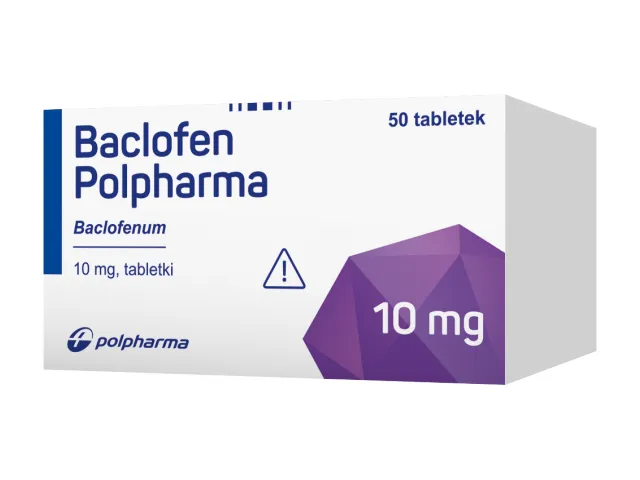
Table of Contents
Patient Information Leaflet
BACLOFEN POLPHARMA, 10 mg, tablets
BACLOFEN POLPHARMA, 25 mg, tablets
Baclofenum
Please read this leaflet carefully before taking the medicine, as it contains
important information for the patient.
- Keep this leaflet, as you may need to read it again.
- If you have any further questions, please consult your doctor or pharmacist.
- This medicine has been prescribed for a specific individual. Do not share it with others. The medicine may harm another person, even if their symptoms are the same.
- If any side effects occur, including any not listed in this leaflet, inform your doctor or pharmacist. See section 4.
Leaflet Contents
- What Baclofen Polpharma is and what it is used for
- Important information before taking Baclofen Polpharma
- How to take Baclofen Polpharma
- Possible side effects
- How to store Baclofen Polpharma
- Contents of the pack and other information
1. What Baclofen Polpharma is and what it is used for
Baclofen Polpharma is a muscle relaxant used in adults and children.
It is used to reduce and relieve excessive skeletal muscle spasticity (muscle stiffness)
occurring in various medical conditions such as: cerebral palsy, multiple sclerosis,
stroke, spinal cord injury, and other neurological disorders.
It helps reduce pain associated with muscle spasticity and facilitates rehabilitation.
2. Important information before using Baclofen Polpharma
When not to use Baclofen Polpharma:
- if the patient is allergic to baclofen or to any of the other ingredients of this medicine (listed in section 6);
- if the patient has peptic ulcer disease of the stomach or duodenum.
Warnings and precautions
Before starting treatment with Baclofen Polpharma, discuss this with your doctor.
Special caution is required when using Baclofen Polpharma:
- if the patient has impaired kidney or liver function;
- if the patient is over 65 years of age;
- if the patient has a psychiatric disorder (e.g. psychotic disorders, schizophrenia, confusion);
- if the patient has epilepsy or has had seizures in the past;
- if the patient requires increased muscle tone to maintain upright posture and balance or to increase range of motion;
- if the patient has recently suffered a stroke;
- if the patient has respiratory disorders;
- if the patient has increased bladder sphincter tone;
- if the patient has a history of alcoholism, currently consumes excessive amounts of alcohol, or has previously abused psychoactive substances or been dependent on them.
Some individuals treated with baclofen have experienced thoughts of self-harm or suicide, or have attempted suicide. Most of these patients also had depression, excessive alcohol consumption, or a history of suicidal ideation. If the patient ever experiences thoughts of self-harm or suicide, they should immediately contact a doctor or go to a hospital. The patient should also ask a family member or close friend to read this leaflet and to watch for any concerning changes in the patient's behavior.
In some patients, encephalopathy (impaired brain function) has occurred during treatment with Baclofen Polpharma at recommended doses. This condition resolves after discontinuation of the drug. Symptoms include increased or new onset drowsiness, disorientation, muscle spasms, or coma. If any of these symptoms occur, seek immediate medical help. The doctor will decide whether baclofen treatment should be discontinued.
Before undergoing planned surgery, inform the surgeon that you are taking Baclofen Polpharma.
Use in children and adolescents
The tablet form of this medicine should not be given to children weighing less than 33 kilograms.
Baclofen Polpharma and other medicines
Tell your doctor about all medicines the patient is currently taking or has recently taken, as well as any medicines the patient plans to take, especially:
- antidepressants such as clomipramine, amitriptyline;
- lithium salts (used in the treatment of certain psychiatric disorders);
- antihypertensive drugs (your doctor may recommend monitoring blood pressure when these are used concomitantly with baclofen);
- ibuprofen (used for pain and joint inflammation);
- levodopa with carbidopa (a medicine used in Parkinson's disease).
Baclofen Polpharma with food, drink and alcohol
See section 3.
Baclofen Polpharma may enhance the sedative effect of alcohol.
Pregnancy and breastfeeding
If the patient is pregnant or breastfeeding, suspects she may be pregnant, or is planning to have a child, she should consult her doctor before using this medicine.
Baclofen Polpharma may be used in pregnant women only when, in the opinion of the doctor, it is absolutely necessary.
The active substance of the medicine – baclofen – passes into breast milk; therefore, breastfeeding during treatment with this medicine is not recommended.
Driving and operating machinery
Do not drive or operate machinery if adverse effects occur that may affect psychomotor performance, such as drowsiness, sedation, or fatigue.
Baclofen Polpharma contains monohydrate lactose
If the patient has previously been diagnosed with intolerance to certain sugars, the patient should consult a doctor before taking this medicine.
3. How to use Baclofen Polpharma
This medicine should always be taken exactly as prescribed by your doctor. If in doubt, consult your doctor.
The doctor will determine the dose based on the patient's condition.
Adults
Treatment is usually initiated at a dose of 5 mg (½ of a 10 mg tablet) three times daily, with gradual dose increases every 3 days until adequate therapeutic effect is achieved.
The desired effect is usually achieved with a daily dose of 30 mg to 75 mg in most patients.
For patients requiring higher doses (75 mg to 100 mg per day), baclofen in 25 mg tablets may be used.
A daily dose exceeding 100 mg should not be used.
Children and adolescents under 18 years of age
Treatment in children should be adjusted according to body weight.
Treatment should be initiated at a very low dose (approximately 0.3 mg/kg body weight per day), divided into 2–4 doses (preferably 4 divided doses).
The dose should be gradually increased until the desired therapeutic effect is achieved in the child.
The usual daily maintenance dose usually ranges from 0.75 to 2 mg/kg body weight.
The maximum daily dose should not exceed 40 mg in children under 8 years of age. In children over 8 years of age, the maximum daily dose is 60 mg.
The medicine should be taken with meals.
Taking more Baclofen Polpharma than prescribed
In case of overdose, seek immediate medical advice from a doctor or go to the nearest hospital emergency department.
Symptoms of overdose may include: drowsiness, loss of consciousness, coma, respiratory depression.
Other possible symptoms include: confusion, hallucinations, agitation, visual disturbances, decreased muscle tone, sudden muscle spasms, weakness or absence of reflexes, seizures, peripheral vasodilation, low or high blood pressure, cardiac arrhythmias (slow, rapid or irregular heartbeat), changes in ECG, decreased body temperature, nausea, vomiting, diarrhea, excessive salivation, increased liver enzyme activity in blood tests, muscle pain, dark-colored urine (rhabdomyolysis), tinnitus.
If you forget to take Baclofen Polpharma
If a dose is missed, take it as soon as possible. However, if it is nearly time for the next dose, do not take the missed dose. Do not take a double dose to make up for a missed one.
Stopping Baclofen Polpharma
Do not stop treatment suddenly or change the dose without consulting your doctor first.
The dose of Baclofen Polpharma should be gradually reduced over a period of 1–2 weeks.
Abrupt discontinuation of Baclofen Polpharma may lead to adverse effects such as seizures, restlessness, anxiety, hallucinations, mood disturbances, psychiatric disorders, increased muscle tone, and mood changes.
If you have any further questions about the use of this medicine, consult your doctor.
4. Possible adverse reactions
Like all medicines, this medicine can cause adverse reactions, although not everyone experiences them.
You should contact your doctor immediately if you notice any of the following symptoms:
chest pain, shortness of breath, fainting, blood in the urine, depression, confusion, hallucinations, skin rash, seizures, visual disturbances, significant weakening of muscle strength, vomiting.
Listed below are adverse reactions reported in patients taking medicines containing baclofen:
Very common adverse reactions (occur in more than 1 in 10 patients): drowsiness, sedation, confusion, nausea.
Common adverse reactions (occur in less than 1 in 10 patients): weakness, fatigue, exhaustion, low body temperature, shallow and slowed breathing, feeling of emptiness in the head, headache and dizziness, ataxia (lack of muscle coordination), insomnia, disorientation, dry mouth, taste disturbances, loss of appetite, vomiting reflex, vomiting, constipation, diarrhoea, low blood pressure, muscle weakness, muscle pain, tremor, rash, excessive sweating, increased frequency of urination, involuntary or painful urination.
Rare adverse reactions (occur in less than 1 in 1,000 patients): tingling and numbness in the limbs (paraesthesia), speech impairment, euphoria, agitation, depression, hallucinations, nightmares, lowered seizure threshold and increased frequency of seizures (especially in patients with epilepsy), abdominal pain, liver function disorders, chest pain, palpitations, shortness of breath, fainting, ankle swelling, nocturnal enuresis, urinary retention, haematuria, impotence, ejaculation disorders, respiratory depression.
Frequency not known (cannot be estimated from available data): weight gain, breathing difficulties during sleep (sleep apnoea syndrome), impaired brain function (encephalopathy), nasal congestion, positive occult blood in stool test, itching.
In some patients, an increase in spasticity has been observed (paradoxical reaction to the medicine).
Reporting of adverse reactions
If any adverse reactions occur, including any not listed in this leaflet, inform your doctor or pharmacist. Adverse reactions can be reported directly to the Department of Monitoring Adverse Reactions of Medicinal Products at the Office for Registration of Medicinal Products, Medical Devices and Biocidal Products:
Al. Jerozolimskie 181C
02-222 Warsaw
Phone: +48 22 49 21 301
Fax: +48 22 49 21 309
Website: https://smz.ezdrowie.gov.pl
Adverse reactions may also be reported to the marketing authorization holder.
Reporting adverse reactions helps provide more information on the safety of this medicine.
5. How to store Baclofen Polpharma
Keep the medicine out of the sight and reach of children.
Do not store above 25°C.
Store in the original packaging to protect from light and moisture.
Do not use this medicine after the expiry date stated on the label and carton. The expiry date refers to the last day of the month indicated.
The label marking following the abbreviation EXP indicates the expiry date, and following the abbreviation Lot indicates the batch number.
Medicines must not be disposed of via wastewater or household waste. Ask your pharmacist how to dispose of medicines no longer required. Such measures help protect the environment.
6. Contents of the pack and other information
What Baclofen Polpharma contains
- The active substance is baclofen. Each tablet contains either 10 mg or 25 mg of baclofen.
- The other ingredients are: monohydrate lactose, potato starch, gelatin, talc, magnesium stearate, ethylcellulose.
What Baclofen Polpharma looks like and contents of the pack
Baclofen Polpharma 10 mg are white, round, biconvex tablets with a score line.
The tablet can be divided into equal doses.
Baclofen Polpharma 25 mg are white, round, biconvex tablets.
Pack contains 50 or 100 tablets.
Not all pack sizes may be marketed.
Marketing Authorisation Holder and Manufacturer
Marketing Authorisation Holder
POLPHARMA Pharmaceutical Works S.A.
Pelplińska Street 19
83-200 Starogard Gdański
tel. + 48 22 364 61 01
Manufacturer
POLPHARMA Pharmaceutical Works S.A.
Pelplińska Street 19
83-200 Starogard Gdański
POLPHARMA Pharmaceutical Works S.A.
Medana Branch in Sieradz
Władysława Łokietka Street 10, 98-200 Sieradz