Atram 12.5
Poland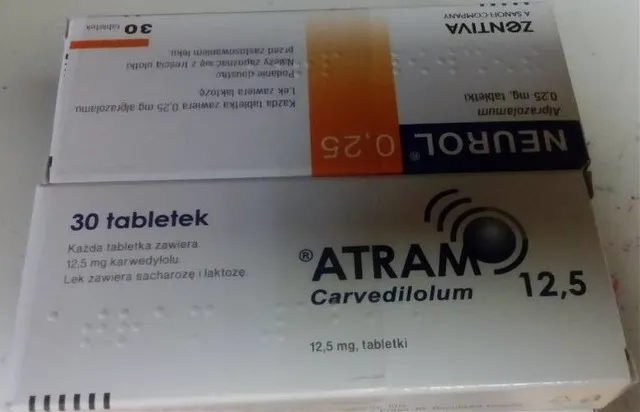
Table of Contents
Patient Information Leaflet
ATRAM 6.25; 6.25 mg, tablets
ATRAM 12.5; 12.5 mg, tablets
ATRAM 25; 25 mg, tablets
Carvedilolum
Please read all of this leaflet carefully before taking this medicine, as it contains important information for you.
- Keep this leaflet, as you may need to read it again.
- If you have any further questions, please consult your doctor or pharmacist.
- This medicine has been prescribed for a specific individual. Do not pass it on to others. It may harm other people, even if their symptoms are the same.
- If you experience any side effects, including any not listed in this leaflet, please inform your doctor or pharmacist. See section 4.
Contents of the leaflet:
- What Atram is and what it is used for
- What you need to know before taking Atram
- How to take Atram
- Possible side effects
- How to store Atram
- Contents of the pack and other information
1. What Atram is and what it is used for
Atram contains the active substance carvedilol, which belongs to a group of medicines known as beta-
blockers and to a group of medicines that act by dilating blood vessels.
This medicine is used to treat high blood pressure, chronic stable angina pectoris (chest pain on exertion), and stable chronic heart failure. Atram is used in the treatment of adults.
2. Important information before using Atram
When not to use Atram: if the patient is allergic to carvedilol or any of the other ingredients of this medicine (listed in section 6); if the patient has sudden worsening of severe heart failure or fluid retention requiring intravenous administration of drugs supporting heart function; if the patient has severe liver disease; if the patient has bronchial asthma; if the patient has certain types of heart conduction disorders (so-called second- or third-degree atrioventricular block, sick sinus syndrome, or sinoatrial block); if the patient has very slow heart rate (less than 50 beats per minute); if the patient has severe heart function disorders (cardiogenic shock); if the patient has very low blood pressure (systolic blood pressure below 85 mm Hg).
Warnings and precautions
Before starting treatment with Atram, discuss with your doctor or pharmacist if:
- the patient has heart failure and is being treated with digoxin, diuretics and/or ACE inhibitors (digoxin and carvedilol both slow down conduction in the heart);
- the patient has diabetes. Treatment with Atram may mask symptoms of low blood sugar and may worsen blood glucose control. Therefore, blood glucose levels should be monitored regularly;
- the patient has severe respiratory disorders (chronic obstructive pulmonary disease) not treated with oral or inhaled medications. Atram may worsen breathing difficulties;
- the patient has chronic heart failure with:
- low blood pressure (systolic blood pressure below 100 mm Hg),
- impaired blood and oxygen supply to the heart (ischaemic heart disease) and vascular disease (atherosclerosis),
- kidney disorders – in such cases, the doctor may recommend monitoring kidney function and may need to reduce the dose;
- the patient wears contact lenses – Atram may reduce tear production;
- the patient recently had a heart attack;
- the patient has chronic peripheral ischaemia (reduced blood and oxygen supply to the legs) or peripheral circulation disorders (such as Raynaud's syndrome) – Atram may worsen these symptoms;
- the patient has hyperthyroidism (thyrotoxicosis) with increased thyroid hormone secretion – Atram may mask symptoms;
- the patient has experienced a severe allergic reaction (e.g. due to an insect sting or food ingestion) or is undergoing or is planned for desensitisation treatment, as Atram may reduce the effectiveness of drugs used to treat such allergic reactions;
- the patient has psoriasis;
- the patient has very slow heart rate (less than 55 beats per minute);
- the patient is currently being treated with calcium channel blockers or other antiarrhythmic drugs – ECG and blood pressure monitoring are required;
- the patient has severe skin adverse reactions, such as toxic epidermal necrolysis or Stevens-Johnson syndrome;
- the patient has a pheochromocytoma;
- the patient has Prinzmetal's angina or is suspected of having this condition;
- the patient has depression or myasthenia gravis.
Do not stop treatment with this medicine abruptly, and do not use it in pregnant or breastfeeding women.
Children and adolescents
The safety and efficacy of Atram in children and adolescents under 18 years of age have not been established; therefore, it should not be used in this age group.
Atram and other medicines
Tell your doctor or pharmacist about all medicines the patient is currently taking or has recently taken, as well as any medicines the patient plans to take.
Other medicines taken concurrently may affect the action of Atram, and Atram may also affect the action of these medicines.
It is especially important to inform your doctor about taking the following medicines:
- other antihypertensive medicines (e.g. alpha-adrenergic receptor antagonists) and medicines that may cause hypotension as an adverse effect, such as barbiturates (used in the treatment of epilepsy);
- verapamil, diltiazem, amiodarone (medicines used to treat heart rhythm disorders) – concomitant use may lead to conduction disturbances and sometimes to impaired heart function;
- digoxin (a medicine used to treat heart failure) – increased blood digoxin levels may occur; therefore, blood digoxin levels should be monitored;
- clonidine (a medicine used to lower blood pressure or treat migraine) – if treatment is to be discontinued, Atram should be stopped several days before gradually reducing the dose of clonidine;
- insulin or oral antidiabetic medicines (medicines that lower blood sugar) – their blood sugar-lowering effect may be enhanced, and symptoms of low blood sugar may be masked (especially increased heart rate); therefore, blood sugar levels should be monitored in diabetic patients;
- rifampicin (an antibiotic used to treat tuberculosis) – in patients taking rifampicin concurrently, blood carvedilol levels may be reduced and its effect weakened;
- cimetidine (a medicine used to treat stomach ulcers, heartburn and reflux) – blood carvedilol levels may be increased and its effect enhanced;
- fluoxetine and paroxetine (medicines used to treat psychiatric disorders) – blood carvedilol levels may increase;
- anaesthetics (medicines used in anaesthesia) – during general anaesthesia, the doctor will exercise appropriate caution, as both carvedilol and anaesthetics may reduce heart rate and blood pressure;
- cyclosporine or tacrolimus (medicines used after transplantation, e.g. of the heart or kidney) – carvedilol increases blood cyclosporine levels; therefore, cyclosporine levels should be monitored and dosing adjusted accordingly;
- non-steroidal anti-inflammatory drugs (NSAIDs) – concomitant use may lead to increased blood pressure;
- beta-mimetics (medicines used to treat asthma and chronic obstructive pulmonary disease) – carvedilol may weaken the effect of these medicines;
- dihydropyridines (medicines used to treat high blood pressure and heart diseases);
- neuromuscular blocking agents (medicines that reduce muscle tension);
- ergotamine (a medicine used to treat migraine);
- estrogens (hormones) and corticosteroids (adrenal hormones), as in some cases they may weaken the blood pressure-lowering effect of carvedilol;
- medicines containing reserpine, guanethidine, methyldopa, guanfacine, and monoamine oxidase inhibitors (MAOIs) used to treat depression, as these medicines may further slow down heart function.
Taking Atram with food, drink and alcohol
Avoid taking carvedilol simultaneously or immediately with grapefruit or grapefruit juice. Grapefruit or grapefruit juice may increase blood carvedilol levels and cause unpredictable adverse effects. Do not drink alcohol while taking carvedilol.
Pregnancy, breastfeeding and fertility
If the patient is pregnant, breastfeeding, suspects she may be pregnant, or plans to have a child, she should consult a doctor or pharmacist before using this medicine.
Pregnancy
Atram should not be used during pregnancy unless the potential benefit outweighs the potential risk.
Breastfeeding
It is not known whether Atram passes into human milk; therefore, breastfeeding is not recommended during treatment with this medicine.
Driving and operating machinery
This medicine has a minor influence on the ability to drive and operate machinery. Dizziness and fatigue may occur at the beginning of treatment or during dose adjustments. If dizziness or weakness occurs during treatment, driving or performing tasks requiring concentration should be avoided. Avoid drinking alcohol, as it may worsen these symptoms.
Atram contains lactose, sucrose and sodium
Each Atram 6.25 tablet contains 13.285 mg of sucrose and 85.687 mg of lactose (monohydrate form).
Each Atram 12.5 tablet contains 12.500 mg of sucrose and 80.625 mg of lactose (monohydrate form).
Each Atram 25 tablet contains 25.000 mg of sucrose and 161.251 mg of lactose (monohydrate form).
Contact your doctor before taking Atram if the patient has been diagnosed with intolerance to certain sugars.
This medicine contains less than 1 mmol of sodium (23 mg) per tablet, i.e. the medicine is considered "sodium-free".
3. How to use Atram
This medicine should always be used as directed by the physician or pharmacist. In case of doubt, consult your doctor or pharmacist.
The patient must remain under continuous medical supervision during dose escalation.
Treatment of high blood pressure
It is recommended to take the medicine once daily.
Adults
The recommended dose of Atram is 12.5 mg for the first two days, followed by 25 mg once daily.
If necessary, the dose may be gradually increased at 2-week intervals up to the maximum recommended daily dose of 50 mg, taken once daily or in two divided doses.
Elderly patients
The recommended initial dose is 12.5 mg once daily, which is usually sufficient for some patients. If the therapeutic effect is unsatisfactory, the dose may be gradually increased at 2-week intervals to the maximum recommended daily dose of 50 mg, administered in divided doses.
Treatment of angina pectoris
Adults
The recommended initial dose is 12.5 mg twice daily for the first two days. Then the dose should be increased to 25 mg twice daily. If necessary, the dose may be gradually increased at 2-week intervals to the maximum daily dose of 100 mg, taken in two divided doses.
Elderly patients
For elderly patients, the recommended dose is 50 mg per day, taken in two divided doses.
Treatment of heart failure
Adults
The recommended initial dose of Atram is 3.125 mg twice daily for two weeks. If the patient tolerates this dose well, it may be gradually increased to 6.25 mg twice daily, maintaining at least 2-week intervals, then to 12.5 mg twice daily, and finally to 25 mg twice daily. The dose may be increased up to the maximum dose tolerated by the patient.
The maximum recommended daily dose for patients with severe heart failure and for patients with mild to moderate heart failure and body weight less than 85 kg is 25 mg twice daily. For patients with mild to moderate heart failure and body weight greater than 85 kg, the dose is 50 mg twice daily.
Before each dose increase, the patient must be examined by a physician. In case of transient worsening of heart failure symptoms or fluid retention (edema), the physician may recommend increasing the dose of diuretics (i.e., drugs that increase urine production and excretion), and sometimes may advise temporarily discontinuing Atram.
If treatment with Atram has been interrupted for more than two weeks, it is recommended to restart therapy at a dose of 3.125 mg twice daily, followed by gradual dose escalation according to the scheme described above. The exact procedure will be provided by the physician.
Tablets should be taken with food, swallowed whole, with an adequate amount of liquid.
Use of a higher than recommended dose of Atram
If an overdose of Atram is taken or if the medicine is accidentally ingested by a child, seek immediate medical help.
Symptoms of overdose may include feeling faint due to low blood pressure, slowed heart function, and in severe cases, missed heartbeats, heart failure, cardiogenic shock, and cardiac arrest. Breathing difficulties, airway constriction, vomiting, disturbances in consciousness, and seizures may also occur.
Missed dose of Atram
If the patient forgets to take a tablet, it should be taken as soon as remembered. However, if it is almost time for the next dose, the missed dose should be skipped and the next dose taken at the usual time.
Do not take a double dose to make up for a missed dose.
Stopping treatment with Atram
Treatment with Atram is long-term. Do not abruptly stop treatment or change the prescribed dose without prior consultation with your doctor. If discontinuation of treatment is necessary, it must be done gradually to avoid adverse effects.
If you have any further questions about the use of this medicine, consult your doctor or pharmacist.
4. Possible adverse effects
Like all medicines, this medicine can cause adverse effects, although not everyone will experience them.
The following adverse effects have been reported during treatment with carvedilol (the active substance in Atram):
Very common (may affect at least 1 in 10 people):
- Heart function disorders that may cause shortness of breath or swelling of the ankles (heart failure);
- Feeling of weakness or fatigue;
- Dizziness;
- Headache;
- Low blood pressure.
Common (may affect less than 1 in 10 people):
- Low number of red blood cells;
- Slowing of heart rate;
- Fluid overload, increased blood volume;
- Vision disturbances;
- Reduced tear production (dry eye syndrome);
- Eye irritation;
- Nausea;
- Diarrhea;
- Vomiting;
- Indigestion;
- Abdominal pain;
- Swelling of the body or certain body parts;
- Bronchitis, pneumonia, respiratory tract infections;
- Urinary tract infections;
- Increased body weight;
- Increased cholesterol levels;
- Worsening of blood sugar control in patients with diabetes;
- Pain (e.g. in arms and legs);
- Depression, low mood;
- Acute kidney failure and worsening of kidney function in patients with atherosclerosis and/or kidney dysfunction;
- Difficulty in passing urine;
- Shortness of breath;
- Fluid accumulation in the lungs;
- Breathing problems in patients with asthma or chronic lung disease;
- Low blood pressure upon standing, causing dizziness, feeling of "emptiness" in the head, or fainting;
- Peripheral circulatory disorders (cold hands and feet, peripheral ischemia, worsening of symptoms in patients with Raynaud's disease (initially bluish discoloration of fingers or toes, followed by paleness and then redness with pain) or intermittent claudication (leg pain that worsens during walking)).
Uncommon (may affect less than 1 in 100 people):
- Heart conduction disorders, angina pectoris (including chest pain);
- Feeling faint, fainting;
- Tingling or numbness in hands or feet;
- Difficulty sleeping;
- Sexual impotence;
- Allergic skin reactions (allergic rash, dermatitis, urticaria, itching, psoriasis-like rash, lichenoid rash);
- Sexual dysfunction;
- Hair loss (alopecia).
Rare (may affect less than 1 in 1000 people):
- Decreased platelet count, increasing the risk of bleeding or bruising;
- Nasal congestion.
Very rare (may affect less than 1 in 10,000 people):
- Low number of white blood cells;
- Increased liver enzyme activity;
- Involuntary leakage of urine in women (urinary incontinence);
- Allergic reactions;
- Severe skin reactions (e.g. erythema multiforme, Stevens-Johnson syndrome, toxic epidermal necrolysis).
Not known (frequency cannot be estimated from available data):
- Hallucinations;
- Sinoatrial block (slow or irregular heartbeat);
- Excessive sweating.
Dizziness, fainting, headache, and fatigue are usually mild in intensity and are more likely to occur at the beginning of treatment.
Atram may also worsen symptoms of diabetes or cause the onset of diabetes symptoms in patients who have a very mild form of diabetes, known as "latent diabetes".
Reporting of adverse effects
If any adverse effects occur, including any not listed in this leaflet, inform your doctor or pharmacist. Adverse effects can be reported directly to the Department of Monitoring Adverse Drug Reactions of the Office for Registration of Medicinal Products, Medical Devices and Biocidal Products
Al. Jerozolimskie 181C, 02-222 Warsaw
Tel.: +48 22 49 21 301, Fax: +48 22 49 21 309, Website: https://smz.ezdrowie.gov.pl
Adverse effects can also be reported to the marketing authorization holder.
Reporting adverse effects helps to provide more information on the safety of the medicine.
5. How to store Atram
Keep this medicine out of sight and reach of children.
Do not use this medicine after the expiry date stated on the packaging after "EXP". The expiry date refers to the last day of the stated month.
Store below 30°C. Keep in the original packaging to protect from light.
Medicines must not be disposed of via wastewater or household waste. Ask your pharmacist how to dispose of medicines no longer required. This will help protect the environment.
6. Contents of the pack and other information
What Atram contains
The active substance is carvedilol.
Atram 6.25: Each tablet contains 6.25 mg of carvedilol.
Atram 12.5: Each tablet contains 12.5 mg of carvedilol.
Atram 25: Each tablet contains 25 mg of carvedilol.
The other ingredients are: sucrose, povidone 30, monohydrate lactose, colloidal anhydrous silica,
sodium croscarmellose, magnesium stearate, yellow iron oxide (E 172).
Atram 12.5 and Atram 25: red iron oxide (E 172).
What Atram looks like and contents of the pack
Atram 6.25 are yellow speckled tablets, with a division line on one side and engraved "6" on the other side.
The tablet can be divided into equal doses.
Atram 12.5 are yellowish-brown tablets, with a division line on one side and engraved "12" on the other side.
The tablet can be divided into equal doses.
Atram 25 are yellowish-brown tablets, with a division line on one side and engraved "25" on the other side.
The tablet can be divided into equal doses.
Atram 6.25, Atram 12.5: pack contains 30 tablets.
Atram 25: pack contains 30 or 90 tablets.
Not all pack sizes may be marketed.
Marketing Authorisation Holder and Manufacturer
Zentiva k.s., U kabelovny 130, Dolní Měcholupy, 102 37 Prague 10, Czech Republic.
For further information, contact the local representative of the Marketing Authorisation Holder:
Zentiva Polska Sp. z o.o.
ul. Bonifraterska 17
00-203 Warsaw
tel.: +48 22 375 92 00
This medicinal product is authorised for marketing in the European Economic Area countries under the following names:
Czech Republic, Poland: Atram
Hungary: Carvedilol Zentiva