Ampicillin/sulbactam bausch health
Poland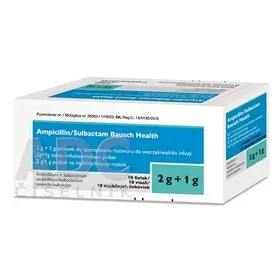
Table of Contents
- Package leaflet: Information for the patient
- 1. What Ampicillin/Sulbactam Bausch Health is and what it is used for
- 2. Important information before using Ampicillin/Sulbactam Bausch Health
- 3. How to use Ampicillin/Sulbactam Bausch Health
- 4. Possible adverse reactions
- 5. How to store Ampicillin/Sulbactam Bausch Health
- 6. Contents of the pack and other information
Package leaflet: Information for the patient
Ampicillin/Sulbactam Bausch Health, 1 g + 0.5 g, powder for solution for injection/infusion
Ampicillin/Sulbactam Bausch Health, 2 g + 1 g, powder for solution for injection/infusion
Ampicillinum + Sulbactamum
Please read this leaflet carefully before using the medicine, as it contains important information for you.
- Keep this leaflet, as you may need to read it again.
- If you have any further questions, please consult your doctor or nurse.
- This medicine has been prescribed for a specific individual. Do not pass it on to others. It may harm someone else, even if their symptoms are the same.
- If you experience any adverse reactions, including any not listed in this leaflet, inform your doctor or nurse. See section 4.
Table of contents
- What Ampicillin/Sulbactam Bausch Health is and what it is used for
- Important information before using Ampicillin/Sulbactam Bausch Health
- How to use Ampicillin/Sulbactam Bausch Health
- Possible side effects
- How to store Ampicillin/Sulbactam Bausch Health
- Contents of the pack and other information
1. What Ampicillin/Sulbactam Bausch Health is and what it is used for
Ampicillin/Sulbactam Bausch Health is a broad-spectrum antibiotic used to treat infections caused by bacteria sensitive to ampicillin and sulbactam.
Ampicillin belongs to a group of medicines called "penicillins" (a type of beta-lactam antibiotics). It works by inhibiting bacterial cell wall formation during bacterial multiplication (biosynthesis).
Sulbactam has effective antibacterial activity against bacterial strains resistant to ampicillin.
Your doctor may administer Ampicillin/Sulbactam Bausch Health by injection to treat the following bacterial infections:
- Upper respiratory tract infections, including sinusitis, otitis media, or laryngitis (epiglottitis);
- Lower respiratory tract infections, including pneumonia;
- Urinary tract infections, including kidney infections (pyelonephritis);
- Gastrointestinal tract infections, including intra-abdominal infections (peritonitis), cholecystitis;
- Bone and joint infections;
- Skin and soft tissue infections;
- Sexually transmitted infections, including gonorrhea;
- Genital tract infections in women, including endometritis, pelvic cellulitis;
- Following abortion or caesarean section to reduce the risk of postoperative infections;
- Septicaemia (bacterial infection spreading through the bloodstream);
- Preoperative and postoperative use: to prevent infections following abdominal or pelvic surgical procedures.
2. Important information before using Ampicillin/Sulbactam Bausch Health
When not to use Ampicillin/Sulbactam Bausch Health:
- if the patient is allergic (hypersensitive) to ampicillin or sulbactam.
- if the patient has previously experienced an allergic reaction (hypersensitivity) to any type of penicillin (beta-lactam antibiotics).
Warnings and precautions
Before starting treatment with Ampicillin/Sulbactam Bausch Health, discuss with your doctor,
pharmacist or nurse if:
- the patient has previously experienced allergic reactions to penicillins or other antibiotics (cephalosporins), or if the patient has hypersensitivity to allergenic chemical substances;
- the patient has liver, kidney or blood cell formation problems;
- the patient is taking oral contraceptives (ampicillin may reduce their effectiveness). You should consult your doctor about using an alternative or additional safe and effective method of contraception during treatment with Ampicillin/Sulbactam Bausch Health.
As with any long-term therapy, periodic monitoring for kidney, liver and haematopoietic system function disturbances is recommended during treatment with Ampicillin/Sulbactam Bausch Health, especially in premature infants, newborns and infants.
You should immediately inform the doctor if the patient develops abdominal pain, itching, dark urine, yellowing of the whites of the eyes or skin, nausea or weakness. These may be symptoms of impaired liver function caused by ampicillin with sulbactam.
Because infectious mononucleosis is a viral disease, Ampicillin/Sulbactam Bausch Health should not be used in its treatment. Skin rashes have occurred in many patients with mononucleosis who were given ampicillin.
During treatment with Ampicillin/Sulbactam Bausch Health, inform the doctor immediately if the patient develops:
- severe skin reactions (redness, rash). The doctor will decide whether treatment should be discontinued.
- allergic reactions. In such cases, administration of Ampicillin/Sulbactam Bausch Health must be stopped, and the doctor will initiate appropriate alternative therapy. Severe hypersensitivity reactions require emergency treatment.
- persistent and severe diarrhoea (with blood and mucus). Seek immediate medical advice, as these symptoms may indicate a life-threatening condition. As with other antibiotics, prolonged treatment may lead to overgrowth of microorganisms resistant to Ampicillin/Sulbactam Bausch Health, including fungi. In such cases, appropriate treatment should be initiated according to the doctor's recommendations, depending on the patient's condition. Do not take anti-diarrhoeal medicines without consulting a doctor.
Ampicillin/Sulbactam Bausch Health and other medicines
Tell your doctor, pharmacist or nurse about all medicines the patient is currently taking or has recently taken, as well as any medicines the patient plans to take.
Some medicines may alter the effectiveness of Ampicillin/Sulbactam Bausch Health, and Ampicillin/Sulbactam Bausch Health may also affect the effectiveness of other medicines.
Inform your doctor if the patient is taking any of the following medicines:
- concomitant use of a medicine used to treat gout (allopurinol, probenecid) increases the risk of developing rashes
- aminoglycoside antibiotics
- anticoagulant medicines (blood thinners)
- antibacterial agents (chloramphenicol, erythromycin, sulfonamides and tetracyclines)
- oral contraceptives containing estrogens
- methotrexate (a medicine used in the treatment of cancer or rheumatic diseases)
Effect on laboratory test results
Urine glucose tests and certain hormone level tests in pregnant women may yield false positive results.
Pregnancy and breastfeeding
If the patient is pregnant or breastfeeding, suspects she may be pregnant, or is planning to have a child, she should consult her doctor or pharmacist before using this medicine.
During pregnancy, the doctor will carefully assess whether Ampicillin/Sulbactam Bausch Health should be used, weighing the benefits against the risks, as there is no evidence that use of this medicine in pregnant women is safe.
Ampicillin and sulbactam are excreted in small amounts into human milk. Use in breastfeeding mothers may cause adverse effects in breastfed infants, such as diarrhoea.
Ampicillin/Sulbactam Bausch Health should be used during breastfeeding only if, in the doctor's opinion, the expected benefits outweigh the potential risks.
Before using this medicine during breastfeeding, consult your doctor, pharmacist or nurse.
Driving and operating machinery
It is not known whether Ampicillin/Sulbactam Bausch Health may affect the ability to drive or operate machinery; however, due to possible adverse effects, the patient's reaction ability may be reduced. In such cases, driving vehicles should be avoided.
Ampicillin/Sulbactam Bausch Health contains sodium
Ampicillin/Sulbactam Bausch Health 1 g + 0.5 g, powder for solution for injection/infusion, contains 115.1 mg of sodium (the main component of table salt) in each vial. This corresponds to 5.8% of the maximum recommended daily sodium intake in the adult diet. Please consult your doctor or pharmacist if the patient is to receive 4 or more vials per day over a prolonged period, especially if a low-sodium (low-salt) diet has been recommended.
Ampicillin/Sulbactam Bausch Health 2 g + 1 g, powder for solution for injection/infusion, contains 230.2 mg of sodium (the main component of table salt) in each vial. This corresponds to 11.5% of the maximum recommended daily sodium intake in the adult diet. Please consult your doctor or pharmacist if the patient is to receive 2 or more vials per day over a prolonged period, especially if a low-sodium (low-salt) diet has been recommended.
3. How to use Ampicillin/Sulbactam Bausch Health
This medicine can be administered intramuscularly or intravenously and will always be prepared and given by a doctor, pharmacist, or nurse.
Adults
Your doctor will determine the dose of the medicine depending on the severity of the infection and the patient's condition.
The dosage range for Ampicillin/Sulbactam Bausch Health is from 1.5 g to 12 g per day in divided doses. The total daily dose of sulbactam should not exceed 4 grams per day.
| Severity of infection | Daily dose of Ampicillin/Sulbactam Bausch Health drug (sulbactam + ampicillin) (g) |
| Mild | 1.5–3 (0.5 + 1 or 1 + 2) |
| Moderate | up to 6 (2 + 4) |
| Severe | up to 12 (4 + 8) |
The dosing frequency may be determined according to the severity of the disease and renal function.
In less severe infections, injections may be administered 3 to 4 times daily (every 6 to 8 hours) or twice daily (every 12 hours). The total daily dose of sulbactam should not exceed 4 grams. Less severe infections may be treated using the 12-hourly dosing regimen.
Treatment is usually continued for 48 hours after the resolution of fever and other abnormal symptoms. Treatment typically lasts 5–14 days, but additional ampicillin may be administered in severely ill patients.
Prophylaxis of surgical infections
1.5 g to 3 g of Ampicillin/Sulbactam Bausch Health should be administered during induction of anesthesia. The dose may be repeated every 6–8 hours. Administration of the drug should be discontinued within 24 hours after completion of most surgical procedures, unless another therapeutic course of Ampicillin/Sulbactam Bausch Health is indicated.
Treatment of uncomplicated gonorrhea
Ampicillin/Sulbactam Bausch Health may be administered as a single 1.5 g dose. The physician may initiate concomitant oral administration of probenecid at a dose of 1.0 g.
Neonates, infants, and children
The dose for treatment of most infections in children, infants, and neonates is 150 mg/kg body weight per day (corresponding to 50 mg/kg body weight per day of sulbactam and 100 mg/kg body weight per day of ampicillin), usually administered every 6 or 8 hours.
In neonates during the first week of life and in premature infants, the recommended dose is 75 mg/kg body weight per day (corresponding to 25 mg/kg body weight per day of sulbactam and 50 mg/kg body weight per day of ampicillin), given in divided doses every 12 hours.
Patients with renal impairment
In these patients, Ampicillin/Sulbactam Bausch Health should be administered less frequently.
Administration of a higher than recommended dose of Ampicillin/Sulbactam Bausch Health
It is unlikely that a physician or healthcare professional—usually in a hospital setting—would administer a higher than recommended dose of the drug to a patient.
Expected symptoms of overdose may primarily include an intensification of adverse reactions reported after administration of the drug. High concentrations of beta-lactam antibiotics in cerebrospinal fluid are known to cause neurological effects, such as seizures.
Since ampicillin and sulbactam are eliminated from the circulation by hemodialysis, such procedures may enhance drug elimination in cases of overdose, particularly in patients with impaired renal function.
If you have any further questions regarding the use of this medicinal product, consult your physician or pharmacist.
4. Possible adverse reactions
Like all medicines, this medicine can cause adverse reactions, although not everyone will experience them.
Serious adverse reactions
Immediately inform a doctor if the patient experiences any of the following serious
adverse reactions, as urgent medical attention may be required.
The frequency of occurrence of the adverse reactions listed below is unknown (cannot be
determined from available data):
- sudden onset of allergic (anaphylactoid) reactions and anaphylactic shock (circulatory collapse);
- chest pain, which may be a symptom of a potentially serious allergic reaction called Kounis syndrome;
- severe diarrhoea due to inflammation of the large intestine (bacterial pseudomembranous colitis);
- severe skin diseases with blisters, skin peeling, and necrotic lesions (toxic epidermal necrolysis, Stevens-Johnson syndrome, erythema multiforme, acute generalized exanthematous pustulosis);
- inflammation of the kidneys.
The adverse reactions listed below are categorized by frequency of occurrence:
Common (may occur in 1 out of 10 patients):
- decrease in the number of red blood cells (anaemia) and platelets (thrombocytopenia), increase in a certain type of white blood cells (eosinophilia). These reactions usually resolve after completion of treatment.
- inflammation of a vein
- diarrhoea
- transient increase in liver enzyme activity (AspAT, AlAT) and bilirubin concentration due to impaired liver function
- pain at the injection site
Uncommon (may occur in 1 out of 100 patients):
- decrease in the number of white blood cells (usually returns to normal after treatment)
- headache
- change in blood cell count (decrease in so-called neutrophil granulocytes)
- vomiting
- rash, itching
- fatigue
- malaise
Rare (may occur in 1 out of 1000 patients):
- nausea
- inflammation of the tongue
- abdominal pain
Frequency unknown (cannot be determined from available data):
- anaemia due to excessive breakdown of red blood cells (haemolytic anaemia)
- change in blood cell count (decrease in so-called granulocytes)
- pinpoint, red, bleeding spots caused by reduced platelet count
- anaphylactic reaction, anaphylactoid shock, hypersensitivity
- somnolence
- seizures
- dizziness
- breathing difficulties
- inflammation of the small and large intestine (so-called enterocolitis)
- black, tarry stools
- inflammation of the mouth
- discoloration of the tongue
- extensive skin reactions (reddish, swollen, purulent blisters)
- exfoliative dermatitis
- impaired liver function, jaundice, cholestasis, cholestatic hepatitis
- local reaction at the injection site
- swelling of the face, lips, tongue, and (or) throat with difficulty swallowing and breathing (angioedema), with skin rash (erythema), blisters, redness of the skin, or bruising
- inflammation of the part of the kidney called interstitium (interstitial nephritis)
Other adverse reactions characteristic of ampicillin may also occur during treatment.
Reporting of adverse reactions
If any adverse symptoms occur, including any adverse symptoms not listed
in this leaflet, inform your doctor or pharmacist. Adverse reactions can be reported
directly to the Department of Monitoring Adverse Drug Reactions of the Office for Registration of Medicinal Products, Medical Devices and Biocidal Products
Al. Jerozolimskie 181 C
02-222 Warsaw
Tel.: +48 22 49 21 301
Fax: +48 22 49 21 309
Website: https://smz.ezdrowie.gov.pl
Adverse reactions can also be reported to the responsible entity.
Reporting adverse reactions allows for the collection of additional information on the safety of the medicine.
5. How to store Ampicillin/Sulbactam Bausch Health
Keep this medicine out of sight and reach of children.
There are no special storage instructions for this medicine.
Do not use this medicine after the expiry date (EXP) stated on the container and vial.
The expiry date refers to the last day of the stated month.
Medicines must not be disposed of via wastewater or household waste. Ask your pharmacist how to dispose of medicines no longer required. Such measures will help protect the environment.
6. Contents of the pack and other information
What Ampicillin/Sulbactam Bausch Health contains
- Active substances:
Ampicillin/Sulbactam Bausch Health, 1 g + 0.5 g, powder for solution for injection/infusion
Each vial contains 1.0 g of ampicillin (equivalent to 1.063 g of sodium ampilicin) and 0.5 g of sulbactam (equivalent to 0.547 g of sodium sulbactam).
Ampicillin/Sulbactam Bausch Health, 2 g + 1 g, powder for solution for injection/infusion
Each vial contains 2.0 g of ampicillin (equivalent to 2.126 g of sodium ampicillin) and 1 g of sulbactam (equivalent to 1.094 g of sodium sulbactam).
- Other components: none
What Ampicillin/Sulbactam Bausch Health looks like and contents of the pack
Powder for solution for injection/infusion.
White or almost white sterile powder, free from foreign particles.
Ampicillin/Sulbactam Bausch Health, 1 g + 0.5 g, powder for solution for injection/infusion
Vials made of colourless type I glass, closed with bromobutyl rubber stoppers type I and blue aluminium seals with a polypropylene (PP) flip-off cap, packed in a cardboard box.
Ampicillin/Sulbactam Bausch Health, 2 g + 1 g, powder for solution for injection/infusion
Vials made of colourless type I glass, closed with bromobutyl rubber stoppers type I and orange aluminium seals with a polypropylene (PP) flip-off cap, packed in a cardboard box.
Pack contains 10 vials.
Marketing Authorisation Holder and Manufacturer
Marketing Authorisation Holder
Bausch Health Ireland Limited
3013 Lake Drive
Citywest Business Campus
Dublin 24, D24PPT3
Ireland
Tel: +48 17 865 51 00
Manufacturer
Acs Dobfar S.p.A
San Nicolo A Tordino
Nucleo Industriale S Atto
64100 Teramo
Italy
This medicinal product is authorised in the European Economic Area countries under the following names:
Poland: Ampicillin/Sulbactam Bausch Health
Estonia: Ampicillin/Sulbactam Bausch Health
Slovakia: Ampicillin/Sulbactam Bausch Health 2g/1g