Vivin C
Italy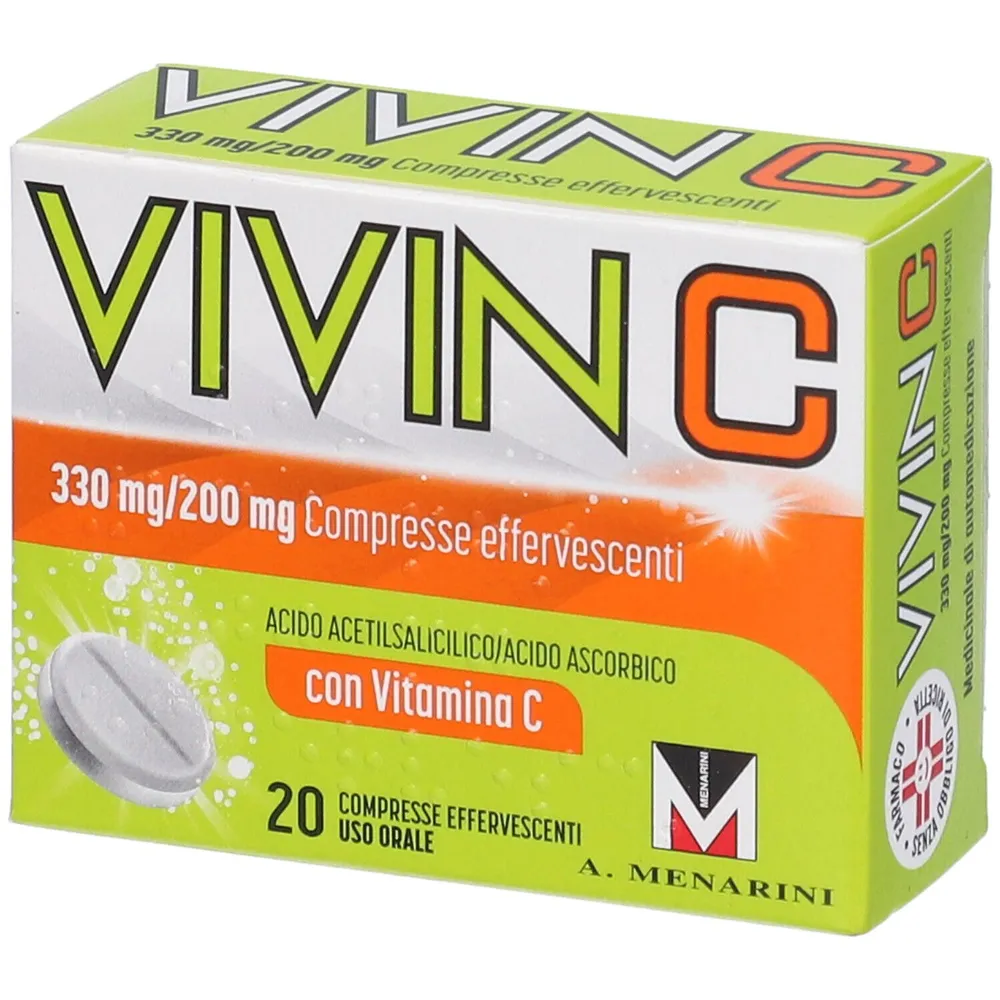
Table of Contents
Package leaflet: Information for the patient
VIVIN C 330 mg/200 mg effervescent tablets
acetylsalicylic acid/ascorbic acid
Please read this leaflet carefully before taking this medicine because it contains important information for you.
Always take this medicine exactly as described in this leaflet or as your doctor or pharmacist has instructed you.
- Keep this leaflet. You may need to read it again.
- If you need more information or advice, consult your pharmacist.
- If you experience any side effects, including those not listed in this leaflet, contact your doctor or pharmacist. See section 4.
- Consult your doctor if you do not notice improvement or if your symptoms worsen after 3 days of treatment at the maximum dose or after 5 days of continuous use.
Contents of this leaflet:
- What VIVIN C is and what it is used for
- What you need to know before taking VIVIN C
- How to take VIVIN C
- Possible side effects
- How to store VIVIN C
- Contents of the pack and other information
1. WHAT VIVIN C IS AND WHAT IT IS USED FOR
VIVIN C contains the active substances acetylsalicylic acid (an inhibitor of prostaglandin synthesis with anti-inflammatory and analgesic activity) and ascorbic acid (vitamin C).
VIVIN C is used in adults for the symptomatic treatment of:
- headache and toothache, neuralgia (severe pain caused by irritation of one or more nerves), menstrual pain (associated with the menstrual cycle), rheumatic pain (of the joints) and muscular pain (of the muscles);
- febrile conditions and influenza-like and cold syndromes.
Consult your doctor if you do not feel better or if you feel worse after 3 days of use at the maximum dose or after 5 days of continuous use.
2. WHAT YOU NEED TO KNOW BEFORE TAKING VIVIN C
Do not take VIVIN C
- if you are allergic to the active substances (acetylsalicylic acid and ascorbic acid), to other analgesics (painkillers), antipyretics (fever-reducing medicines), or non-steroidal anti-inflammatory drugs (NSAIDs), or to any of the other ingredients of this medicine (listed in section 6);
- if you have a known tendency to bleeding (loss of blood from blood vessels);
- if you suffer from gastropathy (stomach disorders), for example, gastro-duodenal ulcer (a lesion occurring in the stomach or the first part of the intestine);
- if you have asthma (narrowing of the lower airways causing breathing difficulties);
- if you have a history of gastrointestinal bleeding (in the stomach or intestine) or perforation (a serious lesion of the wall of the stomach or intestine) related to previous active treatments (treatments directly aimed at curing a disease or injury);
- if you have a history of recurrent bleeding or peptic ulcer (erosion of the inner lining of the stomach, intestine, or lower esophagus) (two or more distinct episodes of proven ulceration or bleeding);
- if you suffer from severe renal (reduced kidney function), cardiac (heart), or hepatic (liver) insufficiency;
- if you are taking methotrexate (at doses of 15 mg/week or more) or warfarin (see "Other medicines and VIVIN C");
- if you are in the last three months of pregnancy, do not take a dose of acetylsalicylic acid exceeding 100 mg per day (see "Pregnancy, breastfeeding and fertility");
- if you are breastfeeding.
This medicine is also contraindicated in children and adolescents under 16 years of age (see
"Children and adolescents").
Warnings and precautions
Talk to your doctor or pharmacist before taking VIVIN C.
Avoid taking VIVIN C in combination with other NSAIDs (non-steroidal anti-inflammatory drugs), including
selective COX-2 inhibitors such as celecoxib, valdecoxib, lumiracoxib, etc. (see "Other medicines and
VIVIN C").
Take VIVIN C with caution if:
- you are simultaneously taking medicines that could increase the risk of ulceration or bleeding, such as oral corticosteroids (medicines used as anti-inflammatory agents and in some cases for allergic reactions), anticoagulants (medicines that inhibit blood clotting), selective serotonin reuptake inhibitors (SSRIs, medicines used to treat depression or obsessive-compulsive disorders), or antiplatelet agents such as aspirin (see "Other medicines and VIVIN C"), or if you are taking heparins;
- you have previously had gastrointestinal diseases such as ulcerative colitis or Crohn's disease (chronic inflammatory bowel diseases), as these conditions may be exacerbated (worsened) (see section 4 "Possible side effects");
- you have previously had hypertension (high blood pressure) and/or heart failure, as fluid retention (tendency to retain fluids in the body) and edema (fluid accumulation in tissues) have been reported during NSAID therapy. The risk is higher in patients being treated with diuretics.
It is advisable to consult your doctor if you have:
- glucose-6-phosphate dehydrogenase deficiency (an enzyme deficiency, genetically determined, leading to a disease characterized by reduced survival of red blood cells);
- gastric or intestinal disorders;
- reduced kidney function (mild to moderate reduction in kidney function);
- any unusual gastrointestinal symptoms (especially gastrointestinal bleeding), particularly in the initial stages of treatment;
- if you are in the first or second trimester of pregnancy (see "Pregnancy, breastfeeding and fertility");
- if you are diabetic, as salicylates may enhance the hypoglycemic effect of sulfonylureas.
If gastrointestinal bleeding or ulceration occurs while you are taking VIVIN C,
stop treatment immediately and do not restart without first consulting your doctor.
During treatment with all NSAIDs, at any time, with or without warning symptoms or a history of serious
gastrointestinal events (diseases of the stomach or intestine), bleeding in the stomach and intestine, ulceration, or
perforation have been reported, which may be fatal.
The risk of gastrointestinal bleeding, ulceration, or perforation is higher with high NSAID doses in patients who
have previously experienced ulcer episodes, especially if complicated by bleeding or perforation (see section 4
"Possible side effects"). Individuals who habitually consume large amounts of alcohol are at greater risk of
bleeding.
In such cases, treatment should be initiated at the lowest available dose, and consideration should be given to
concomitant use of gastro-protective agents (e.g., misoprostol or proton pump inhibitors). The use of
gastro-protective agents should also be considered when taking low-dose acetylsalicylic acid or other medicines
that may increase the risk of gastrointestinal events (see "Other medicines and VIVIN C").
Undesirable effects can be minimized by using the lowest effective dose for the shortest duration necessary to
control symptoms (see section 3 "How to take VIVIN C").
Severe skin reactions (of the skin), some of which are fatal, including exfoliative dermatitis (severe erythema
with skin peeling), Stevens-Johnson syndrome (a severe disease of the skin and mucous membranes often caused
by an acute allergic reaction to drugs), and toxic epidermal necrolysis (the most severe form of Stevens-Johnson
syndrome in which the skin detaches in sheets), have been very rarely reported in association with the use of
NSAIDs (see section 4 "Possible side effects"). Patients appear to be at higher risk during the early stages of
treatment: the reaction usually occurs within the first month of treatment.
Discontinue treatment with VIVIN C at the first appearance of skin rash (sudden reddening of the skin), mucosal
lesions, or any other sign of hypersensitivity (allergy).
Acetylsalicylic acid and other NSAIDs may cause allergic reactions including asthma attacks, runny nose,
angioedema (swelling of the skin and mucous membranes of the face), or urticaria (small spots on the skin
accompanied by itching).
In patients with asthma and/or rhinitis (with or without nasal polyps) and/or urticaria, these reactions may be
more frequent and severe.
Acetylsalicylic acid alters uricemia (level of uric acid in the blood).
Surgery
If you are scheduled for surgery (even minor procedures, such as dental extractions) and have recently taken
acetylsalicylic acid or another NSAID, there is an increased risk of bleeding, and you must inform your surgeon
due to possible effects on blood coagulation.
Metrorrhagia or menorrhagia: concomitant intake of acetylsalicylic acid may increase the risk of increased
intensity and duration of bleeding.
Children and adolescents
The use of VIVIN C is contraindicated in children and adolescents under 16 years of age (see "Do not take
VIVIN C").
Cases of Reye's syndrome, a very rare but life-threatening disease requiring immediate medical intervention,
have been observed in children with viral infections (particularly chickenpox and flu-like conditions) treated with
acetylsalicylic acid. This condition manifests with persistent vomiting and signs of progressive central nervous
system damage such as lethargy (slowing of normal mental activity) up to seizures (involuntary contractions of
certain muscles) and coma, signs of liver damage, and hypoglycemia (decreased blood glucose concentration).
Elderly
Elderly patients have an increased frequency of adverse reactions to NSAIDs, especially gastrointestinal bleeding
and perforations, which may be fatal (see section 3 "How to take VIVIN C"). The risk is higher with increased
NSAID doses; therefore, these patients should start treatment with the lowest available dose, and concomitant use
of gastro-protective agents (e.g., misoprostol or proton pump inhibitors) should be considered.
Patients over 70 years of age, especially those undergoing other treatments, should take this medicine only after
consulting their doctor.
Other medicines and VIVIN C
Inform your doctor or pharmacist if you are taking, have recently taken, or might take any other medicine.
Do not take VIVIN C together with the following medicines (see "Do not take VIVIN C"):
- Methotrexate (used in certain cancers and rheumatoid arthritis) (doses greater than or equal to 15 mg/week);
- Warfarin (anticoagulant).
Caution should be exercised in patients taking concomitant medicines that could increase the risk of ulceration,
bleeding, or other adverse effects. Therefore, unless otherwise prescribed by a physician, do not take VIVIN C
if you are taking:
- corticosteroids, which may increase the risk of gastrointestinal ulceration or bleeding (see "Warnings and precautions");
- anticoagulants, which may increase the risk of bleeding, duodenal mucosal injury, potentiation of these drugs' effects, and displacement of anticoagulants (see "Warnings and precautions");
- low molecular weight heparin and fractionated heparins: increased risk of bleeding;
- anagrelide, a medicine used to reduce excessively high platelet levels in the blood, thereby increasing the risk of bleeding;
- antiplatelet agents and selective serotonin reuptake inhibitors (SSRIs); in this case, concomitant administration with NSAIDs (such as VIVIN C) increases the risk of gastrointestinal bleeding (see "Warnings and precautions");
- methotrexate (an antineoplastic and antirheumatic medicine used to treat certain conditions such as leukemias, lymphomas, rheumatoid arthritis, lupus, and psoriasis at doses below 15 mg/week), as this combination, especially over prolonged periods, may increase the adverse effects of this medicine;
- diuretics (medicines to increase urine output) and antihypertensives: increased risk of acute renal failure;
- pemetrexed, a medicine used in cancer treatment;
- antidiabetics (medicines that reduce blood glucose concentration) such as sulfonylureas; concomitant intake with VIVIN C may enhance the effects and secondary manifestations of these medicines;
- valproic acid: acetylsalicylic acid reduces the binding of valproic acid to serum albumin, increasing its plasma concentrations;
- metamizole (a substance used to reduce pain and fever) may reduce the effect of acetylsalicylic acid on platelet aggregation (blood cells that clump together to form a clot) when taken simultaneously. Therefore, this combination should be used with caution in patients taking low-dose aspirin for cardioprotection;
- urinary alkalinizers (e.g., antacids, citrates): reduce the absorption of the medicine;
- digoxin and lithium: acetylsalicylic acid reduces renal excretion of digoxin and lithium, resulting in increased plasma concentrations;
- carbonic anhydrase inhibitors (acetazolamide): reduced elimination of acetazolamide, which may cause severe acidosis and increased central nervous system toxicity;
- phenytoin: increased effect of phenytoin;
- metoclopramide and domperidone: increased effect of acetylsalicylic acid due to enhanced absorption rate;
- uricosurics (e.g., probenecid, benzbromarone, sulfinpyrazone): reduced uricosuric effect;
- varicella vaccine: it is recommended not to administer salicylates to patients who have received the varicella vaccine for a period of six weeks after vaccination. Cases of Reye's syndrome have occurred following the use of salicylates during varicella infection;
- zafirlukast, an asthma medicine whose blood concentration may increase;
- alcohol: increased risk of intestinal bleeding.
Pregnancy, breastfeeding and fertility
If you are pregnant, think you may be pregnant, planning a pregnancy, or breastfeeding, consult your doctor or
pharmacist before taking this medicine.
If you continue or start treatment with VIVIN C during pregnancy as instructed by your doctor, use VIVIN C
as advised by your doctor and do not exceed the recommended dose.
Pregnancy – third trimester
Do not take VIVIN C at a dose exceeding 100 mg per day during the last three months of pregnancy, as it may
harm the fetus or cause problems during delivery. This medicine may cause kidney and heart problems in the
fetus. In addition, it may affect your and your baby's tendency to bleed and delay or prolong labor beyond
expectations.
If you take VIVIN C at low doses (up to 100 mg per day inclusive), strict obstetric monitoring as advised by your
doctor is required.
Pregnancy – first and second trimesters
You should not take VIVIN C during the first six months of pregnancy unless absolutely necessary and under
medical advice. If treatment is required during this period or during attempts to conceive, the lowest possible dose
for the shortest possible time should be used. If taken for more than a few days from week 20 of pregnancy
onwards, VIVIN C may cause kidney problems in the fetus, reducing amniotic fluid levels surrounding the baby
(oligohydramnios), or narrowing of a blood vessel (ductus arteriosus) in the baby's heart. If treatment is needed
for more than a few days, your doctor may recommend additional monitoring.
In early pregnancy, taking prostaglandin synthesis inhibitors such as acetylsalicylic acid at doses between 100
and 500 mg per day or above 500 mg per day may increase the risk of miscarriage (pregnancy loss), cardiac
malformations, and gastroschisis (defect in the formation of the fetal abdominal wall). In population studies, the
absolute risk of cardiac malformations increased from less than 1% to approximately 1.5%; the risk has been
observed to increase with dose and duration of therapy.
Breastfeeding
Acetylsalicylic acid passes into breast milk in small amounts: VIVIN C must not be taken during breastfeeding.
Fertility
If acetylsalicylic acid is used by a woman trying to conceive, the dose and duration of treatment should be kept as
low as possible.
Driving and using machines
VIVIN C does not affect the ability to drive or use machinery.
VIVIN C effervescent tablets contain sodium. This medicine contains 485 mg of sodium (main component of
table salt) per tablet. This corresponds to 24.25% of the maximum recommended daily dietary intake for an adult.
VIVIN C effervescent tablets contain sodium benzoate. This medicine contains 48 mg of sodium benzoate per
tablet, equivalent to 48 mg / 3500 mg.
The sodium content per effervescent tablet should be considered in individuals with reduced kidney function, high
blood pressure, or heart failure who are on a low-sodium diet.
3. HOW TO TAKE VIVIN C
Take this medicine exactly as stated in this leaflet or as directed by your doctor or pharmacist. If you have any doubts, consult your doctor or pharmacist.
The recommended dose is 1 or 2 tablets, if necessary, up to 3–4 times daily.
Do not exceed the recommended dose, and especially if you are elderly, adhere to the lowest dosage: 1 tablet at most 3 times a day.
VIVIN C is not indicated for use in the paediatric population.
Consult your doctor if you do not notice any improvement or if you experience worsening of symptoms after three days of use at the maximum dose or after 5 consecutive days of VIVIN C use.
Instructions for use
Dissolve 1 or 2 tablets of VIVIN C in half a glass of water (non-carbonated).
Take this medicine with food.
If you take more VIVIN C than you should
In case of overdose, contact immediately a poison control centre or the nearest hospital.
Salicylate toxicity (a dosage exceeding 100 mg/kg/day for 2 consecutive days may induce toxicity) may result from chronic ingestion of excessive doses or from acute overdose, potentially life-threatening, including accidental ingestion in children.
Moderate intoxication: tinnitus, sensation of reduced hearing acuity, headache, and dizziness are characteristic signs of excessive dosage and may be controlled by reducing the dose.
Severe poisoning: symptoms include fever, hyperventilation (excessively deep breathing), ketosis (acetone), respiratory alkalosis (acid-base imbalance due to altered respiration), metabolic acidosis (accumulation of acidic molecules in the body), coma, cardiovascular collapse, respiratory failure, and severe hypoglycaemia (decreased blood glucose concentration).
In such cases, necessary supportive measures are implemented to limit drug absorption in the gastrointestinal tract, including:
- gastric lavage (forced emptying of the stomach);
- administration of activated charcoal (a substance that adsorbs the excess drug on its surface);
- monitoring of acid-base balance;
- alkaline diuresis (alkalinization of urine);
- correction of dehydration (excessive fluid loss) through adequate fluid administration;
- symptomatic supportive treatment.
If you forget to take VIVIN C
Do not take a double dose to make up for the forgotten tablet.
If you have any doubts about how to use this medicine, consult your doctor or pharmacist.
4. POSSIBLE ADVERSE REACTIONS
Like all medicines, this medicine can cause adverse reactions, although not everyone experiences them.
Most adverse reactions depend on both the dose and the duration of treatment.
The most commonly observed adverse reactions following administration of VIVIN C are gastrointestinal in nature:
- nausea, vomiting, diarrhoea, flatulence (presence of gas in the gastrointestinal tract), constipation (difficulty in emptying the bowel), dyspepsia (presence of pain or discomfort localized in the upper abdomen associated with food intake), abdominal pain, ulcerative stomatitis (severe inflammation of the oral mucosa, characterized by ulcers on the cheeks, tongue, and lips), exacerbation of colitis (inflammation of the intestine, particularly in the portion called the colon) and Crohn's disease (see "Warnings and precautions");
- peptic ulcer (erosion of the inner lining of the stomach, intestine, or lower oesophagus), even perforated;
- gastrointestinal bleeding, which may present as haematemesis (vomiting of blood) and melena (presence of blood in stools), and may occasionally be fatal; or may remain occult (i.e. not apparent) and lead to iron-deficiency anaemia (reduced haemoglobin levels due to iron deficiency); such bleeding events are more frequent with increasing dosage, particularly in elderly patients (see "Warnings and precautions");
- gastritis (less frequently).
Other adverse reactions that may occur following administration of VIVIN C include:
- oedema (fluid accumulation in body tissues), hypertension, and heart failure;
- bullous reactions (formation of blisters on the skin), up to severe forms such as Stevens-Johnson syndrome and toxic epidermal necrolysis (see "Warnings and precautions");
- haemorrhagic syndromes, such as epistaxis (nosebleed), gingival bleeding, thrombocytopenia (reduction in blood platelets), purpura (haemorrhagic disorder characterized by the appearance of red-purple spots that do not fade upon pressure), with prolonged bleeding time;
this effect may last for 4–8 days even after discontinuation of VIVIN C and may increase the risk of bleeding in patients undergoing surgical procedures;
- chronic haemolysis (destruction of red blood cells due to increased vitamin C levels exceeding 1 gram) in patients with G6PD deficiency;
- hypersensitivity reactions (allergy) such as angioedema (rapid swelling of subcutaneous and submucosal tissues), Quincke's oedema (rapid swelling of tissues in the face, hands, feet, genitals, and mucous membranes), urticaria (skin rash characterized by raised lesions, usually accompanied by itching), erythema (redness and burning sensation of the skin), asthma, anaphylactic reactions (rapid-onset allergic reactions);
- tinnitus (ringing in the ears), sensation of hearing loss, headache, dizziness;
- delayed labour;
- formation of oxalate and uric acid stones in the kidneys and urinary tract due to high doses of vitamin C (exceeding 1 gram);
- rhinitis (runny nose), dyspnoea (difficulty breathing);
- bronchospasm (abnormal contraction of the smooth muscles of the bronchi or bronchioles), asthma attacks.
Reporting of adverse reactions
If you experience any adverse reaction, including those not listed in this leaflet, consult your doctor or pharmacist.
You may also report adverse reactions directly via the national reporting system at https://www.aifa.gov.it/content/segnalazioni-reazioni-avverse.
By reporting adverse reactions, you can help provide more information on the safety of this medicine.
5. HOW TO STORE VIVIN C
Keep this medicine out of the sight and reach of children.
Do not use this medicine after the expiry date stated on the packaging. The expiry date refers to the last day of that month.
Do not store VIVIN C above 25°C.
Keep the tube tightly closed to protect the medicine from moisture.
After first opening the tube, the medicine remains suitable for use for 6 months.
Do not dispose of medicines via wastewater or household waste. Ask your pharmacist how to dispose of medicines no longer in use. This will help protect the environment.
6. PACKAGING CONTENTS AND OTHER INFORMATION
What VIVIN C contains
Each effervescent tablet contains:
Active substances: acetylsalicylic acid 330 mg/ascorbic acid 200 mg.
Other components: glycine, anhydrous citric acid, sodium hydrogen carbonate, sodium benzoate.
Description of the appearance of VIVIN C and packaging contents
White effervescent tablets.
Tube containing 10 or 20 effervescent tablets.
Marketing Authorization Holder
A. Menarini Industrie Farmaceutiche Riunite s.r.l., via Sette Santi, 3 – Florence.
Manufacturer
E-Pharma Trento S.p.A., via Provina 2, Trento (Italy)