Lisinopril Mylan Generics
Italy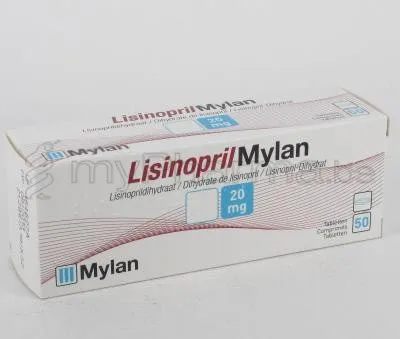
Table of Contents
- Package leaflet: Information for the patient
- Lisinopril Mylan Generics 5 mg, 20 mg tablets
- 1. What Lisinopril Mylan Generics is and what it is used for
- 2. What you need to know before taking Lisinopril Mylan Generics
- 3. How to take Lisinopril Mylan Generics
- 4. Possible side effects
- 5. How to store Lisinopril Mylan Generics
- 6. Package contents and other information
Package leaflet: Information for the patient
Lisinopril Mylan Generics 5 mg, 20 mg tablets
(lisinopril dihydrate)
Generic medicine
Please read all of this leaflet carefully before you start taking this medicine because it contains important information for you.
- Keep this leaflet. You may need to read it again.
- If you have any questions, ask your doctor or pharmacist.
- This medicine has been prescribed for you only. Do not give it to other people, even if their symptoms are the same as yours, as it may be harmful.
- If you experience any side effects, including those not listed in this leaflet, tell your doctor or pharmacist. See section 4.
Contents of this leaflet:
- What Lisinopril Mylan Generics is and what it is used for
- What you need to know before taking Lisinopril Mylan Generics
- How to take Lisinopril Mylan Generics
- Possible side effects
- How to store Lisinopril Mylan Generics
- Contents of the pack and other information
1. What Lisinopril Mylan Generics is and what it is used for
Lisinopril Mylan Generics contains lisinopril, which belongs to a group of medicines called Angiotensin Converting Enzyme (ACE) inhibitors. ACE inhibitors reduce blood pressure and dilate blood vessels, allowing blood to flow more easily and reducing the effort required by the heart to pump blood throughout the body. Lisinopril Mylan Generics is used to treat high blood pressure (hypertension), heart failure, and, in combination with other medicines, may be given after a heart attack. Lisinopril Mylan Generics may also be given to treat kidney problems in diabetic patients with high blood pressure (hypertension).
2. What you need to know before taking Lisinopril Mylan Generics
Do not take Lisinopril Mylan Generics
- If you are allergic to lisinopril, to any other angiotensin-converting enzyme (ACE) inhibitor such as captopril, enalapril, ramipril, or to any of the other ingredients of this medicine (listed in section 6).
- If you have previously been treated with an ACE inhibitor and experienced an allergic reaction. Signs may include swelling of the face, lips, tongue and/or throat, with difficulty swallowing or breathing (angioedema).
- If you or a family member has a history of angioedema.
- If you are more than 3 months pregnant. (It is best to avoid Lisinopril during the first months of pregnancy; see section “Pregnancy and breastfeeding”).
- If you have diabetes or impaired kidney function and are being treated with a blood pressure-lowering medicine containing aliskiren.
- If you have taken or are currently taking sacubitril/valsartan, a medicine used to treat chronic heart failure in adults, as this increases the risk of angioedema (rapid swelling under the skin, for example in the throat).
Warnings and precautions
Talk to your doctor or pharmacist before taking Lisinopril Mylan Generics if:
You have low blood pressure (hypotension).
You are dehydrated due to treatment with diuretics, dialysis, reduced salt intake, vomiting, or
diarrhea. You are likely to experience a significant drop in blood pressure at the beginning of
treatment and may feel weak or lightheaded.
You have abnormal heart function, heart failure, heart valve disease, arterial stiffness, aortic stenosis (narrowing of a heart valve), or an enlarged heart.
You have had a stroke or mini-stroke (also known as transient ischemic attack, TIA).
You have kidney disease, impaired kidney function, narrowing of the blood vessels to the kidneys, or if one of your kidneys has been removed.
You are of Black race and taking an ACE inhibitor, as you have a higher risk of angioedema compared to non-Black individuals, and this medicine may be less effective.
You require dialysis or have had a kidney transplant.
You require blood separation treatment (apheresis to help remove cholesterol) or desensitization treatment, for example following a wasp or bee sting; your doctor may stop treatment with lisinopril to prevent a possible allergic reaction.
You have a collagen vascular disease, e.g. scleroderma, systemic lupus erythematosus (SLE or lupus, an autoimmune condition causing joint pain, skin rash, and fever). Your doctor may order blood tests to monitor for possible infections during treatment.
You have diabetes.
You have high levels of potassium in your blood.
You are taking any of the following medicines used to treat high blood pressure:
- An angiotensin II receptor antagonist (AIIRA) (also known as sartans – for example valsartan, telmisartan, irbesartan), particularly if you have kidney problems related to diabetes.
- Aliskiren. If you are taking any of the following medicines, the risk of angioedema (rapid swelling under the skin, for example in the throat) is increased:
- Racecadotril (a medicine used to treat diarrhoea)
- Medicines used to prevent rejection of transplanted organs and to treat cancer (such as temsirolimus, sirolimus, everolimus)
- Vildagliptin (a medicine used to treat diabetes)
Your doctor may monitor your kidney function, blood pressure, and levels of electrolytes (e.g. potassium) in your blood at regular intervals.
See also the section “Do not take Lisinopril Mylan Generics”.
You must inform your doctor if you think you are pregnant or are planning a pregnancy. Lisinopril is not
recommended during the first months of pregnancy and must not be taken from the third month of pregnancy onwards, as it may cause serious harm to your baby (see section “Pregnance and breastfeeding”).
During treatment
Inform your doctor or hospital staff if you require surgery or anaesthesia.
Other medicines and Lisinopril Mylan Generics
Do not take Lisinopril Mylan Generics if you have taken or are currently taking sacubitril/valsartan (see above under “Do not take Lisinopril Mylan Generics”).
Inform your doctor or pharmacist if you are taking, have recently taken, or might take any other medicines, including those without a prescription, or the following:
- Diuretics, e.g. amiloride, triamterene, spironolactone.
- Potassium supplements (including salt substitutes), potassium-sparing diuretics, and other medicines that may increase potassium levels in the blood (such as trimethoprim and co-trimoxazole used to treat bacterial infections; ciclosporin, an immunosuppressant medicine used to prevent rejection of transplanted organs; and heparin, a medicine used to thin the blood and prevent clotting).
- Lithium, used to treat certain mental illnesses.
- Painkillers called non-steroidal anti-inflammatory drugs (NSAIDs), used to treat pain and inflammation, such as indometacin, aspirin (if taken for more than 3 days), celecoxib, rofecoxib.
- Injectable gold salts, used to treat arthritis, e.g. sodium aurothiomalate, which may cause flushing, dizziness, vomiting, and low blood pressure.
- Other medicines to treat high blood pressure (e.g. atenolol, glyceryl trinitrate).
- Medicines to treat depression, e.g. amitriptyline.
- Antipsychotic medicines, e.g. fluphenazine.
- Medicines used to stimulate the central nervous system, e.g. ephedrine or pseudoephedrine, often found in cough and cold medicines.
- Insulin or other antidiabetic medicines, e.g. gliclazide, metformin; blood glucose levels should be closely monitored during the first month of treatment with lisinopril.
- Allopurinol, used to treat gout.
- Procainamide, used to treat abnormal heart rhythms.
- Racecadotril (often used to treat diarrhoea), vildagliptin (for treating diabetes), or medicines used to prevent rejection of transplanted organs (sirolimus, everolimus and other mTOR inhibitors). The risk of angioedema (rapid swelling under the skin, for example in the throat) may be increased. See sections “Do not take Lisinopril Mylan Generics” and “Warnings and precautions”.
- Medicines used to break down blood clots (usually administered in hospital).
- Anaesthetics, such as lidocaine.
Your doctor may consider it necessary to adjust your dose and/or take other precautions:
If you are taking an angiotensin II receptor antagonist (AIIRA) or aliskiren (see also sections “Do not take Lisinopril Mylan Generics” and “Warnings and precautions”).
Pregnancy and breastfeeding
Pregnancy
If you are pregnant, think you may be pregnant, are planning to become pregnant, or are breastfeeding, consult your doctor or pharmacist before taking this medicine.
Inform your doctor if you think you are pregnant or if you are planning to become pregnant. Your doctor will likely advise you to stop treatment with Lisinopril Mylan Generics before becoming pregnant or as soon as you find out you are pregnant, and will recommend an alternative medicine instead of Lisinopril Mylan Generics.
Lisinopril Mylan Generics is not recommended during the first months of pregnancy, and must not be taken if you are more than 3 months pregnant, as it may cause serious harm to the baby if taken after the third month of pregnancy.
Breastfeeding
Inform your doctor if you are breastfeeding or intend to start breastfeeding. Lisinopril Mylan Generics
is not recommended during breastfeeding, and your doctor may choose a different treatment if you wish to breastfeed, especially if your baby is a newborn or was born prematurely.
Driving and using machines
Do not drive or operate machinery if you feel dizzy or unusually tired after taking this medicine.
3. How to take Lisinopril Mylan Generics
Take this medicine exactly as instructed by your doctor or pharmacist. If you have any doubts, consult your doctor or pharmacist.
- Swallow the tablets with a glass of water.
- Try to take the tablets at the same time each day.
At the beginning of treatment, your doctor will carefully monitor your condition, carry out blood tests, check the function of your kidneys, and periodically monitor the levels of salts in your blood. These tests will be more frequent if you have kidney problems, a collagen disease, or are being treated with allopurinol, probenecid, or immunosuppressants.
Adults (including the elderly)
To treat high blood pressure: The recommended starting daily dose is 10 mg. In some cases, the starting daily dose is 2.5 mg or 5 mg. Your doctor will gradually increase the dose until the best possible control of your blood pressure is achieved. The recommended maintenance dose is 20 mg once daily. The maximum dose is 80 mg once daily.
Lisinopril Mylan Generics may be less effective in lowering blood pressure in black patients.
If you are already taking a diuretic for blood pressure, your doctor may ask you to stop taking the diuretic or reduce its dose before starting treatment with Lisinopril Mylan Generics. Once your blood pressure stabilizes, your doctor may restart your diuretic treatment.
To treat heart failure: The recommended starting daily dose is 2.5 mg. Depending on your response to treatment, your doctor may gradually increase the dose, but not by more than 10 mg every two weeks or longer. The maximum daily dose is 35 mg.
Your doctor may also prescribe other medicines such as a diuretic and digoxin, or a beta-blocker such as atenolol, to treat your condition.
To treat patients who have suffered a heart attack: The recommended dose is 5 mg on the first and second day, followed by 10 mg once daily. Your doctor may start treatment with a lower daily dose of 2.5 mg if you have low blood pressure.
The recommended maintenance dose is 10 mg per day. Your doctor may adjust the dose or even discontinue treatment depending on your response to therapy.
To treat conditions related to diabetes: The recommended daily dose is 10 mg. If necessary, your doctor may increase the daily dose to 20 mg.
In patients with kidney problems, a lower dose of Lisinopril Mylan Generics may be required. Your doctor may adjust treatment to the dose that best controls your blood pressure, up to a maximum of 40 mg per day.
Treatment with lisinopril is not recommended if you have recently undergone a kidney transplant.
Use in children and adolescents (6 to 16 years) with high blood pressure
- Lisinopril Mylan Generics is not recommended in children under 6 years of age or in any child with severe kidney problems.
- Your doctor will determine the correct dose for your child. The dose depends on the child's body weight.
- For children weighing between 20 kg and 50 kg, the recommended starting dose is 2.5 mg once daily, up to a maximum daily dose of 20 mg.
- For children weighing more than 50 kg, the recommended starting dose is 5 mg once daily, up to a maximum daily dose of 40 mg.
- Lisinopril Mylan Generics is not recommended in children for indications other than hypertension.
The tablet can be divided into equal parts.
If you take more Lisinopril Mylan Generics than you should
Contact your doctor or the nearest emergency department immediately. Take the container and any remaining tablets with you. Symptoms of overdose include low blood pressure, shock, kidney failure, changes in blood salts detectable by blood tests, difficulty breathing, increased or decreased heart rate, dizziness, anxiety, and cough.
If you forget to take Lisinopril Mylan Generics
Take the next dose as soon as you remember, unless it is almost time for the next dose. Do not take a double dose to make up for the forgotten tablet.
If you stop taking Lisinopril Mylan Generics
Do not stop treatment with Lisinopril Mylan Generics suddenly, as this may lead to serious fluctuations in your blood pressure. If you wish to stop treatment, discuss this with your doctor or pharmacist.
If you have any doubts about how to use Lisinopril Mylan Generics, consult your doctor or pharmacist.
4. Possible side effects
Like all medicines, this medicine can cause side effects, although not everybody gets them.
If any of the following side effects occur, stop taking this medicine immediately and contact your doctor or go to the nearest emergency department straight away:
Uncommon (may affect up to 1 in 100 people):
- Severe chest pain that may spread to the neck and shoulders (heart attack) or stroke (especially if you experience severe dizziness, lightheadedness (at the beginning of treatment or when the dose is increased, or when standing up). These side effects are caused by a strong drop in blood pressure.
Rare (may affect up to 1 in 1,000 people):
- Malaise, confusion and/or weakness, feeling unwell (nausea), loss of appetite, irritability. This is sometimes called “syndrome of inappropriate antidiuretic hormone secretion” (SIADH).
- Kidney failure (with signs such as back pain, swelling of the legs, feet, hands and face, tiredness, difficulty urinating).
- Severe allergic reactions. Signs may include sudden onset of:
- Swelling of the face, lips, tongue and/or throat which may cause difficulty in breathing or swallowing (more likely in black patients), shortness of breath and wheezing.
- Severe itching of the skin (with skin lumps).
Very rare (may affect up to 1 in 10,000 people):
- Inflammation of the pancreas which may cause severe abdominal pain with malaise.
- Severe skin reaction with blisters on the skin, in the mouth, eyes and genitals or sores.
- A serious skin condition causing red spots, often itchy, developing on the limbs and sometimes on the face and rest of the body. The spots may develop blisters or progress into raised, red and pale-centered lesions. This may be accompanied by fever, joint pain, sore throat, headache and/or diarrhoea.
- An increased risk of infections or fever, for example sore throat, mouth ulcers which you may develop (this is more likely in patients with kidney problems and collagen vascular disease e.g. scleroderma, or in patients taking immunosuppressants, allopurinol or procainamide), or if you notice unexplained or more frequent bruising or bleeding, or yellowing of the skin or eyes, or feel tired, pale or weak. These may be signs of changes, some serious, in the number or type of blood cells due to reduced bone marrow activity (where blood cells are produced).
- Immune system problems which may include the immune system attacking the body's normal cells.
- Yellowing of the skin and/or eyes, pale stools, dark-coloured urine or stomach pain (these may be signs of liver problems such as liver inflammation or blockage of the bile duct), which may lead to liver failure.
- Lung inflammation or inflammation of the airways in the lungs.
- Changes in kidney function causing reduced urine output or no urine production.
Other possible side effects:
Common (may affect up to 1 in 10 people):
- Dizziness or lightheadedness when standing up, especially when moving from a sitting or lying position to a standing position.
- Headache.
- Cough.
- Diarrhoea.
- Vomiting.
- Kidney problems.
Uncommon (may affect up to 1 in 100 people):
- Mood changes.
- Itching, tingling.
- Sensation of movement (dizziness).
- Taste disturbances.
- Sleep disturbances.
- Irregular heartbeat or missed beats.
- Rapid heartbeat.
- Circulatory problems causing painful, cold fingers.
- Itchy, runny nose.
- Nausea.
- Discomfort or stomach pain.
- Hallucinations (seeing, hearing or sensing things that do not really exist).
- Indigestion.
- Redness or itchy skin.
- Impotence.
- Tiredness or weakness.
- Increased levels of urea, creatinine or liver enzymes in the blood.
- Increased potassium levels in the blood which may lead to an abnormal heart rhythm.
Rare (may affect up to 1 in 1,000 people):
- Decrease in blood cells carrying oxygen around the body.
- Confusion.
- Changes in sense of smell.
- Dry mouth.
- Hives (urticaria).
- Hair loss.
- Skin disease with thickened, red patches of skin, often with silvery scales (psoriasis).
- High levels of urea, which may cause gout (a painful inflammation of the joints).
- Enlargement of the breast in men.
- Increased levels of bilirubin which may lead to yellowing of the skin.
- Low sodium levels in the blood which may cause tiredness and confusion, muscle cramps, seizures or coma.
Very rare (may affect up to 1 in 10,000 people):
- Swelling of the glands in the neck, armpit or groin.
- Low blood sugar (glucose) levels which may cause sweating, weakness, hunger, dizziness, tremors, headache, flushing or paleness, numbness, and a rapid heartbeat.
- Asthma, difficulty breathing.
- Inflamed and swollen sinuses causing pain, high temperature and tenderness.
- Swollen intestine.
- Sweating.
- Disorders of the lymph glands.
Not known (frequency cannot be estimated from the available data):
- Symptoms of depression.
- Fainting.
- Changes in urine production (producing more urine than usual or no urine at all).
Lisinopril may also cause a syndrome with fever, inflammation of blood vessels, often with skin redness, muscle or bone pain, and skin sensitivity to light.
Side effects in children
Side effects in children appear to be similar to those observed in adults.
Reporting of side effects
If you experience any side effect, including those not listed in this leaflet, talk to your doctor or pharmacist. You can also report side effects directly via the national reporting system at https://www.aifa.gov.it/content/segnalazioni-reazioni-avverse. By reporting side effects, you can help provide more information on the safety of this medicine.
5. How to store Lisinopril Mylan Generics
Keep this medicine out of the sight and reach of children.
Do not use this medicine after the expiry date stated on the carton and blister after Exp. The expiry date refers to the last day of that month.
This medicine does not require any special storage conditions.
Do not dispose of medicines via wastewater or household waste. Ask your pharmacist how to dispose of medicines you no longer use. This will help protect the environment.
6. Package contents and other information
What Lisinopril Mylan Generics contains
The active substance is lisinopril. Each tablet contains 5 mg or 20 mg of lisinopril (as lisinopril dihydrate).
The other ingredients are magnesium stearate, talc, mannitol, maize starch, and calcium phosphate dibasic dihydrate.
What Lisinopril Mylan Generics looks like and contents of the pack
Your medicine is a white tablet. The 5 mg tablets are marked with "5" on one side and have a break line on the opposite side. The 20 mg tablets are marked with "20" on one side and have a break line on the opposite side.
Lisinopril Mylan Generics 5 mg tablets are available in blisters containing 14, 15, 28, 30, 50, 60, and 100 tablets.
Lisinopril Mylan Generics 20 mg tablets are available in blisters containing 14, 15, 28, 30, 50, and 100 tablets.
Not all pack sizes may be marketed.
Marketing Authorisation Holder
Mylan S.p.A., Via Vittor Pisani 20, 20124 Milano, Italy
Manufacturer
McDermott Laboratories Ltd (trading as Gerard Laboratories), 35/36 Baldoyle Industrial Estate Grange Road,
Dublin 13, Ireland
Generics [UK] Ltd., Station Close, Potters Bar, Hertfordshire EN6 1TL, United Kingdom
This medicinal product is authorised in the European Economic Area countries under the following names:
Austria - Lisinopril "Arcana" 5 mg, 10 mg & 20 mg Tabletten
Denmark - Lisinopril Mylan 2.5 mg, 5 mg, 10 mg & 20 mg tabletter
Belgium - Lisinopril Mylan 5 mg & 20 mg tabletten
Ireland - Zesger 2.5 mg, 5 mg, 10 mg & 20 mg Tablets
Italy - Lisinopril Mylan Generics 5 mg & 20 mg compresse
Luxembourg – Lisinopril Mylan CPR. 5 mg & 20 mg
United Kingdom - Lisinopril 2.5 mg, 5 mg, 10 mg & 20 mg Tablets
This leaflet was last approved on: