Glucose Baxter S.p.A.
Italy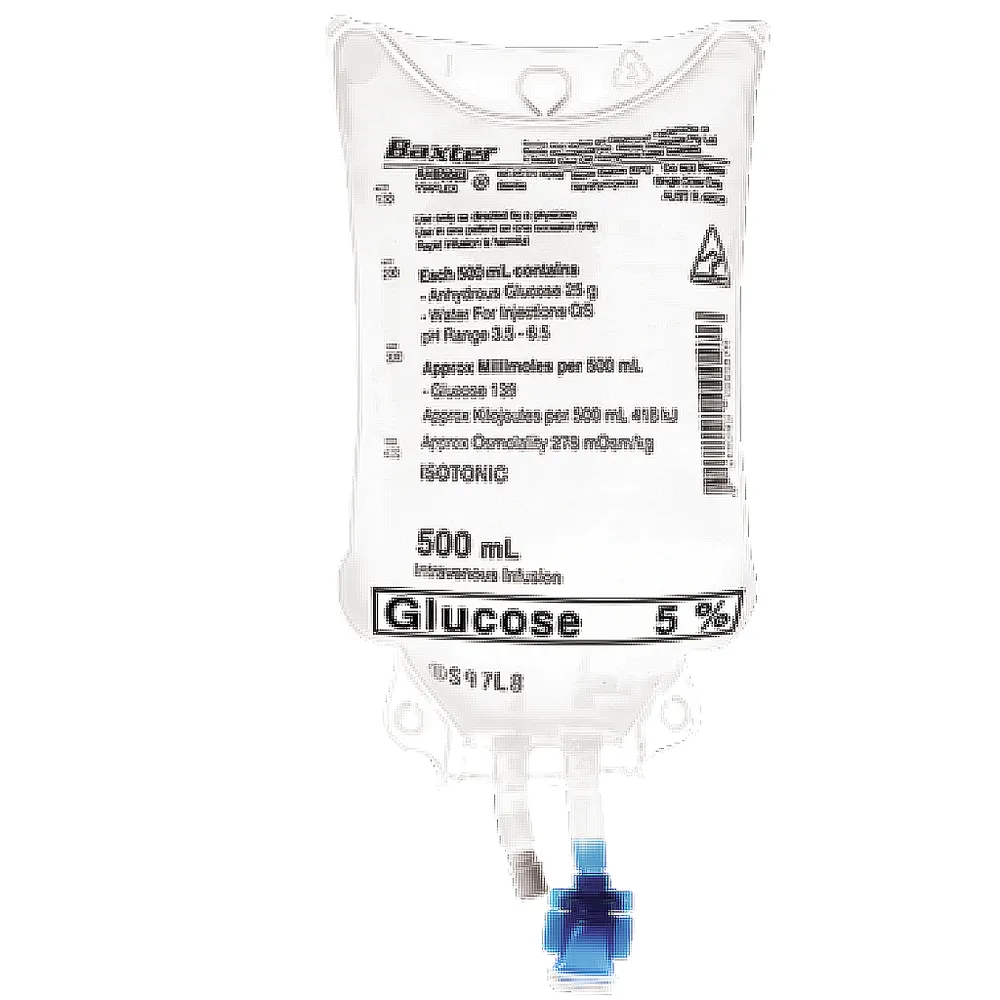
Table of Contents
- Package leaflet: Information for the user
- GLUCOSIO BAXTER S.P.A. 5% Solution for infusion, 10% Solution for infusion, 20% Solution for infusion, 33% Solution for infusion, 50% Solution for infusion
- 1. WHAT GLUCOSIO BAXTER S.P.A. IS AND WHAT IT IS USED FOR
- 2. WHAT YOU NEED TO KNOW BEFORE USING GLUCOSE BAXTER S.P.A.
- 3. HOW TO USE GLUCOSIO BAXTER S.P.A.
- 4. POSSIBLE ADVERSE REACTIONS
- 5. HOW TO STORE GLUCOSIO BAXTER S.P.A.
- 6. PACKAGING CONTENTS AND OTHER INFORMATION
Package leaflet: Information for the user
GLUCOSIO BAXTER S.P.A. 5% Solution for infusion, 10% Solution for infusion, 20% Solution for infusion, 33% Solution for infusion, 50% Solution for infusion
Generic medicine
Please read this leaflet carefully before using this medicine because it contains important information for you.
- Keep this leaflet. You may need to read it again.
- If you have any questions, ask your doctor or nurse.
- If you experience any side effects, including those not listed in this leaflet, tell your doctor or nurse. See section 4.
Contents of this leaflet:
- What GLUCOSIO BAXTER S.P.A. is and what it is used for
- What you need to know before using GLUCOSIO BAXTER S.P.A.
- How to use GLUCOSIO BAXTER S.P.A.
- Possible side effects
- How to store GLUCOSIO BAXTER S.P.A.
- Contents of the pack and other information
1. WHAT GLUCOSIO BAXTER S.P.A. IS AND WHAT IT IS USED FOR
GLUCOSIO BAXTER S.P.A. is a parenteral nutritional solution (allows administration of nutrients directly into the vein).
GLUCOSIO BAXTER S.P.A. is used in adults and children for:
- providing water and sugars to the body in emergency situations, especially in patients who do not require salts or in whom salts should be avoided. The GLUCOSIO BAXTER S.P.A. concentrations of 20%, 33%, and 50% may be used as part of a parenteral nutrition regimen.
- treatment of low blood sugar (hypoglycemia).
2. WHAT YOU NEED TO KNOW BEFORE USING GLUCOSE BAXTER S.P.A.
Do not use GLUCOSE BAXTER S.P.A.
- If you are allergic to the active substance or to any of the other ingredients of this medicine (listed in section 6).
- If you have problems urinating (anuria).
- In case of bleeding (haemorrhage) occurring in the spinal cord (spinal haemorrhage) or within the skull (intracranial haemorrhage).
- If you suffer from delirium tremens (an acute psychotic syndrome often associated with alcoholism, characterised by tremors, motor restlessness, hallucinations, attention disturbances, incoherence, and anxiety) and are already dehydrated.
- If you have lost a large amount of fluids (severe dehydration).
- If you are in hepatic coma (mental confusion, altered level of consciousness and coma due to reduced liver function).
- If you have clinically significant hyperglycaemia (elevated blood glucose levels).
Warnings and precautions
Talk to your doctor, pharmacist, or nurse before using GLUCOSE BAXTER S.P.A.
Use this medicine with caution and inform your doctor in the following cases:
- If you have overt or latent diabetes mellitus (a condition characterised by elevated blood sugar levels), or if you have any form of glucose intolerance. To minimise the risk of hyperglycaemia (increased blood sugar) and subsequent glycosuria (presence of sugar in urine), blood and urine glucose levels should be monitored and insulin administered if required.
- If you suffer from heart failure (reduced heart function).
- If you suffer from severe renal failure (reduced kidney function).
- In clinical conditions associated with oedema (fluid accumulation) and water-salt retention.
- If you are being treated with corticosteroids (anti-inflammatory medicines) or corticotropin (used to assess adrenal gland function or to treat diseases requiring corticosteroid therapy) (see “Other medicines and GLUCOSE BAXTER S.P.A.”).
The 5% solution is isotonic with blood (has the same concentration).
Solutions of 10%, 20%, 33%, and 50% must be infused with caution and at a controlled infusion rate as they are hypertonic (have a higher solute concentration) compared to blood.
During prolonged use of concentrated glucose solutions, fluid overload (excess water accumulation in the body) and excessive loss of minerals such as potassium and phosphate (electrolyte deficiency) may occur. Therefore, your doctor should periodically monitor electrolyte concentrations and correct any imbalances in fluid and electrolyte status as necessary.
Additionally, vitamins and minerals may be administered if required.
When concentrated glucose infusion needs to be abruptly discontinued, it is recommended to continue with a 5%–10% glucose infusion to prevent rebound hypoglycaemia (see “If you stop using GLUCOSE BAXTER S.P.A.”).
Concentrated glucose solutions must not be administered subcutaneously (under the skin) or intramuscularly (into the muscle).
Do not administer if the solution is not clear or if the container is damaged.
One gram of glucose provides approximately 3.74 kcal (about 15.6 kJoules) of energy.
Glucose solutions must not be administered through the same infusion catheter as whole blood due to the possible risk of pseudoagglutination (clumping of red blood cells, the oxygen-carrying blood cells) and haemolysis (destruction of red blood cells).
Use in elderly patients
When prescribing the type of infusion solution and the volume/infusion rate for an elderly patient, the doctor must consider that elderly patients are generally more likely to have heart, kidney, or liver disease or to be receiving concomitant therapies.
Hypersensitivity reactions
Hypersensitivity reactions (allergy) and infusion-related reactions, including anaphylactic and/or anaphylactoid reactions (rapid-onset allergic reactions), have been reported with the administration of glucose solutions (such as GLUCOSE BAXTER S.P.A.) (see section 4 “Possible side effects”).
Immediately discontinue the infusion if signs or symptoms of a suspected hypersensitivity reaction occur. The doctor will initiate appropriate therapeutic countermeasures as clinically indicated.
Use glucose-containing solutions with caution, especially if you have a known allergy to maize or its derivatives.
Depending on the volume and infusion rate, and your clinical condition and ability to metabolise glucose, intravenous administration of glucose may cause, in addition to the above:
- Effects on body fluid volume: hyperosmolality, osmotic diuresis, dehydration, hypo-osmolality, hypervolaemia.
- Hyponatraemia, hypomagnesaemia (decreased levels of sodium and magnesium in the blood).
- Pulmonary congestion and oedema (fluid accumulation in the lungs and tissues).
These effects are not only due to the administration of electrolyte-free fluids but also to glucose administration.
An increase in serum glucose concentration is associated with increased serum osmolality. Osmotic diuresis associated with hyperglycaemia (elevated blood glucose levels) may cause or contribute to dehydration and electrolyte loss.
Hyperglycaemia also causes transcellular water shift, leading to decreased extracellular sodium concentrations and hyponatraemia.
As glucose is metabolised, glucose infusion leads to an increase in total body water, resulting in hypotonic hyponatraemia, a condition that may cause headache, nausea, seizures (recurrent and sudden episodes of unconsciousness and violent convulsive muscle movements), lethargy (a deep state of drowsiness), coma, cerebral oedema (fluid accumulation in the brain), and death. The risk of developing hypotonic hyponatraemia is higher, for example:
- If you are elderly.
- If you have undergone surgery.
- If you suffer from psychogenic polydipsia (a mental disorder causing excessive drinking).
- In women.
- In children (see “Children and adolescents”).
Acute symptomatic hyponatraemic encephalopathy (a severe illness due to increased fluid volume in the brain) is considered a medical emergency. The risk of developing encephalopathy as a complication of hypotonic hyponatraemia is higher, for example:
- In paediatric patients (under 16 years of age) (see “Children and adolescents”).
- In women, particularly if premenopausal.
- If you have hypoxaemia (low oxygen levels in the blood).
- If you suffer from diseases of the central nervous system.
Clinical evaluation and periodic laboratory tests may be necessary to monitor changes in fluid balance, electrolyte concentrations, and acid-base balance during prolonged parenteral therapy or when your condition or infusion rate requires such monitoring.
Pay particular attention if you are at increased risk of fluid and electrolyte disturbances that may be worsened by increased water volume, hyperglycaemia, or potential need for insulin administration.
In such cases, appropriate preventive and corrective measures will be implemented as clinically indicated.
Hyperglycaemia
Rapid administration of glucose solutions may cause marked hyperglycaemia and subsequent hyperosmolar syndrome (a serious condition in which blood glucose levels are excessively high).
To avoid hyperglycaemia, the doctor will set an infusion rate that does not exceed the patient’s ability to utilise glucose.
To reduce the risk of complications associated with hyperglycaemia, the doctor will adjust the infusion rate or administer insulin if blood glucose levels exceed acceptable thresholds for the individual patient.
Intravenous glucose must be administered with caution, for example, in cases of:
- Impaired glucose tolerance (as in diabetes mellitus, renal failure, or in the presence of infection, trauma, or shock).
- Severe malnutrition, due to the risk of refeeding syndrome.
- Thiamine deficiency (vitamin B1), for example in patients with chronic alcoholism, due to the risk of developing severe lactic acidosis caused by impaired oxidative metabolism of pyruvate.
- Fluid and electrolyte disturbances that may be worsened by increased glucose and/or water volume.
For GLUCOSE BAXTER S.P.A. concentrations above 10%, as with general intravenous administration of nutrients (e.g., glucose, amino acids, and lipids), metabolic complications may occur if nutrient intake is not adapted to the patient’s needs (e.g., if nutrient amounts are insufficient or excessive) or if the metabolic value of a dietary component is inaccurately assessed, resulting in administration of an inappropriate mixture.
Glucose solutions should also be used with caution if:
- You suffer from ischaemic infarction. Hyperglycaemia is involved in increased ischaemic brain damage and impairs recovery after acute ischaemic events.
- You have suffered severe traumatic brain injury, particularly during the first 24 hours after trauma. Early hyperglycaemia has been associated with poor outcomes in patients with severe traumatic brain injury.
- In neonates (see “Children and adolescents”). Prolonged intravenous glucose administration and the resulting hyperglycaemia may reduce the rate of glucose-stimulated insulin secretion.
Refeeding syndrome
Refeeding in severely malnourished patients may cause refeeding syndrome, characterised by the shift of potassium, phosphate, and magnesium into the intracellular compartment as the patient becomes anabolic. Thiamine deficiency and fluid retention (accumulation) may also develop.
Close monitoring and gradual increase in nutrient intake to avoid overfeeding can prevent these complications.
Risk of gas embolism
Do not use plastic containers connected in series, as they may cause gas embolism due to residual air from the primary container before completion of fluid administration from the secondary container.
Pressurising intravenous solutions contained in flexible plastic containers to increase flow rates may cause gas embolism if residual air in the container is not completely removed before administration.
Using an intravenous administration set with the vent in the open position may cause gas embolism. Intravenous administration sets with the vent open must not be used with flexible plastic containers.
GLUCOSE BAXTER S.P.A. concentrations above 10% may also cause the following effects:
Hepatic disorders
It is known that some patients receiving parenteral nutrition may develop hepatobiliary disorders (affecting the liver and biliary tract), including cholestasis (impaired bile flow from the liver to the intestine), hepatic steatosis (fat accumulation in the liver), fibrosis, and cirrhosis (serious liver impairment conditions), which may lead to liver failure, cholecystitis, and cholelithiasis (gallstones). The cause of these disorders is believed to be multifactorial and may vary between patients. If you present abnormal laboratory parameters or other signs of hepatobiliary disorders, you should be evaluated early by a specialist in liver diseases to identify possible causative and contributing factors and potential therapeutic and preventive interventions.
Infections and sepsis
Infections and sepsis (presence of a high number of bacteria in the blood) may occur with the use of intravenous catheters for administration of parenteral formulations or contaminated solutions, or due to inadequate catheter maintenance. Immunosuppression (reduced immune system function) and other factors such as hyperglycaemia, malnutrition, and/or other pathological conditions may predispose patients to infections. Early recognition of infections requires careful monitoring of laboratory parameters and symptoms such as fever/chills, leucocytosis (increased number of white blood cells, a type of blood cell, in the blood), technical problems with the access device, and detection of hyperglycaemia. The risk of sepsis can be reduced by healthcare personnel through strict adherence to aseptic techniques (a set of practices aimed at preventing the presence of microorganisms that can cause disease in a sterile environment, such as intravenous administration) during catheter placement and maintenance, as well as in the preparation of the nutritional formulation.
Precipitates
Pulmonary vascular precipitates (solid formations in the blood vessels of the lungs) have been reported in patients receiving parenteral nutrition, for example following excessive intake of calcium and phosphate. In some cases, outcomes have been fatal. Precipitates in solution have also been reported in the absence of phosphate salts. In addition to inspecting the solution, healthcare personnel must periodically check the infusion set and catheter for the presence of precipitates. If signs of pulmonary distress occur, the infusion must be stopped and a medical evaluation initiated.
Children
In neonates, particularly premature infants and children with low birth weight, glucose administration may increase the risk of hyperglycaemia or hypoglycaemia (low blood sugar levels).
Furthermore, in children with low body weight, rapid or excessive infusion may cause increased serum osmolality (blood concentration) and intracerebral haemorrhage (bleeding within brain tissue due to rupture of a blood vessel).
Careful monitoring during treatment with intravenous glucose solutions is necessary to ensure adequate glycaemic control and to avoid potential long-term adverse effects.
Hypoglycaemia in neonates may cause:
- Prolonged seizures (sudden, involuntary muscle movements with loss of consciousness);
- Coma;
- Brain damage.
Hyperglycaemia in neonates has been associated with:
- Brain damage, including intraventricular haemorrhage (bleeding into the brain ventricles);
- Late-onset bacterial and fungal infections;
- Retinopathy of prematurity (an eye disease);
- Necrotising enterocolitis (death of intestinal tissue);
- Bronchopulmonary dysplasia (abnormal development of bronchi and lungs);
- Prolonged hospital stay;
- Death.
Paediatric hyponatraemia-related issues
Children (including neonates and older children) have a higher risk of developing hypotonic hyponatraemia and hyponatraemic encephalopathy.
Hypotonic hyponatraemia may cause headache, nausea, seizures, lethargy, coma, cerebral oedema, and death; acute symptomatic hyponatraemic encephalopathy is considered a medical emergency.
Plasma electrolyte concentrations must be carefully monitored in the paediatric population. Rapid correction of hypotonic hyponatraemia is potentially dangerous due to the risk of developing neurological complications. The dosage, rate, and duration of administration must be determined by a doctor experienced in paediatric intravenous fluid therapy.
Other medicines and GLUCOSE BAXTER S.P.A.
Inform your doctor if you are taking, have recently taken, or might take any other medicines.
Careful monitoring is necessary if GLUCOSE BAXTER S.P.A. is administered concomitantly with corticosteroids (anti-inflammatory medicines) or corticotropin (used to assess adrenal gland function or to treat diseases requiring corticosteroid therapy), as these medicines are associated with reduced carbohydrate tolerance and possible manifestation of latent diabetes mellitus.
If you are using glucose solutions during treatment with other substances that affect glycaemic control (blood glucose levels) and/or fluid-electrolyte balance (related to water and salts), your doctor will take into account both the glycaemic effects of glucose solutions and their effects on fluid-electrolyte balance.
Pregnancy, breastfeeding, and fertility
If you are pregnant, think you may be pregnant, are planning to become pregnant, or are breastfeeding, consult your doctor or pharmacist before using this medicine.
Pregnancy
Glucose should not be used during pregnancy unless absolutely necessary.
If you are pregnant, your doctor will carefully evaluate the risk-benefit ratio before administering glucose solutions.
There are no adequate data on the use of glucose in pregnant women.
Intravenous glucose infusion to the mother during labour may cause fetal insulin production, with a risk of fetal hyperglycaemia and metabolic acidosis (accumulation of acidic substances in the body) or rebound hypoglycaemia in the newborn.
Breastfeeding
It is not known whether glucose affects the quantity and composition of breast milk.
Until further data on glucose use during breastfeeding are available, particular caution should be exercised when deciding to administer glucose to breastfeeding women.
Fertility
There are no adequate data on the effect of glucose on fertility.
Driving and use of machinery
Not applicable.
3. HOW TO USE GLUCOSIO BAXTER S.P.A.
Your treatment with GLUCOSIO BAXTER S.P.A. will be supervised by a physician. The physician will determine the amount of GLUCOSIO BAXTER S.P.A. to administer and will prepare the medicinal product.
Glucose solutions are administered intravenously (into a vein).
The 20%, 33%, and 50% solutions, if not diluted, must be administered exclusively via central venous catheter (a medical device used for infusion of fluids, administration of intravenous drugs, and for parenteral nutrition).
These solutions must be diluted before use when administered together with an amino acid source (protein components containing nitrogen) at a concentration producing an appropriate caloric-to-nitrogen ratio and having an osmolarity compatible with the route of administration, as determined by the physician.
If peripheral administration is required, for example in emergency treatment of hypoglycemic crises (severe decrease in blood sugar levels), the solutions must be injected very slowly into a large-bore vein of the arm.
Administration of hyperosmolar solutions (high glucose concentration) may cause venous irritation and phlebitis (see section 4 “Possible side effects”).
The osmolarity of the final infusion solution mixture must be considered when peripheral administration is planned.
The usual infusion rate is generally 0.4–0.8 g/hour per kg of body weight.
The physician will consider a gradual increase in flow rate when initiating administration of glucose-containing products.
Below are general guidelines for selecting different glucose concentrations.
- 5%–10% solutions: used for fluid and caloric replacement.
- 20%–33% solutions: used for caloric replacement with limited fluid replacement.
- 50% solution: used in the treatment of hypoglycemia (low blood glucose levels) due to hyperinsulinemia (excess insulin in the blood) or other causes.
Electrolyte supplementation may be indicated according to the patient's clinical needs.
When additives are added to the glucose solution, instructions for use of the additive drug and other relevant literature sources must be consulted.
Adults
The concentration of the glucose solution and the dose to be used depend on patient characteristics (age, weight, clinical condition, fluid-electrolyte and acid-base balance, metabolic status, and concomitant therapies).
Elderly
Clinical studies and clinical experience have not shown differences in response between elderly and younger patients following glucose administration. As a general rule, caution should be exercised when administering drugs to elderly patients.
Use in children
The dosage and rate of glucose administration must be determined based on the patient's age, weight, clinical and metabolic condition, and concomitant therapies. For pediatric patients, a physician experienced in pediatric intravenous fluid therapy should be consulted.
Solutions with concentrations higher than 10% are generally not used.
Particular caution is required in pediatric patients, especially in neonates or children with low body weight (see “Warnings and precautions”).
Glucose solutions for intravenous use are incompatible with:
- cyanocobalamin;
- kanamycin sulfate;
- novobiocin sodium;
- warfarin sodium.
Additionally, there are conflicting opinions regarding the compatibility of glucose with the following solutions:
- calcium chloride;
- magnesium chloride;
- potassium chloride;
- sodium chloride;
- sodium lactate;
- hetastarch.
Glucose solutions without added electrolytes should not be administered through the same infusion catheter as whole blood due to the possible formation of clumps and the risk of hemolysis (see “Do not use GLUCOSIO BAXTER S.P.A.”).
Ampicillin and amoxicillin remain stable in glucose solutions only for a short period.
Adopt all standard precautions to maintain sterility before and during intravenous infusion.
Do not use if the packaging is damaged.
Do not use the glucose solution if it is not clear and colorless or slightly yellowish, or if it contains particles (see “Warnings and precautions”).
Parenteral medicinal products should be visually inspected for particulate matter and discoloration prior to administration, whenever solution and container permit.
If you use more GLUCOSIO BAXTER S.P.A. than you should
Prolonged administration of glucose may lead to hyperhydration (excess fluid) and solute overload. In such cases, the patient's clinical condition should be re-evaluated and appropriate corrective measures instituted.
Excessive glucose administration may cause hyperglycemia, disturbances in fluid-electrolyte balance, and related complications (see “Warnings and precautions” and section 4 “Possible side effects”).
Severe hyperglycemia, severe dilutional hyponatremia (due to increased body fluids), and their complications can be fatal.
Therefore, clinically significant overdose of glucose solutions may constitute a medical emergency.
Discontinue treatment in case of excessive dosage. The dose will be reduced, insulin will be administered, and other specific measures will be taken depending on your clinical condition.
If you stop treatment with GLUCOSIO BAXTER S.P.A.
When infusion of concentrated glucose must be abruptly discontinued, it is recommended to continue with administration of 5%–10% glucose solution to prevent the onset of hypoglycemia (reduced blood sugar levels).
If you have any doubts about using this medicine, consult your doctor or nurse.
4. POSSIBLE ADVERSE REACTIONS
Like all medicines, this medicine can cause adverse reactions, although not everyone experiences them.
Some of the adverse reactions listed below have occurred in cases of incorrect administration of the
medication, for example, too rapid administration or administration by a route other than intravenous.
- Extravasation (leakage of the medicine into the surrounding tissues at the injection site).
- Local pain.
- Infection at the administration site.
- Thrombosis (formation of blood clots within blood vessels) at the administration site.
- Thrombophlebitis (inflammation of superficial veins leading to thrombosis), associated with hyperosmolar solutions (highly concentrated solutions).
- Phlebitis (inflammation of the veins) at the infusion site.
- Erythema (redness of the skin) at the infusion site.
- Pyrexia (fever) and chills.
- Fluid and/or solute overload leading to dilution of serum electrolytes: hypokalemia (decreased potassium levels in the blood), hypomagnesemia (decreased magnesium levels in the blood), hypophosphatemia (decreased phosphate levels in the blood), hyperhydration.
- Increased metabolic rate.
- Hyperglycemia (increased blood sugar concentration).
- Hyperosmolarity (excessively high concentration of blood solutes).
- Hypervolemia (increased volume of circulating blood).
- Hypoglycemia (decreased blood sugar concentration).
- Increased insulin levels.
- Increased adrenaline levels.
- Hyponatremia, which may be symptomatic (see "Warnings and precautions").
- Peripheral edema (fluid accumulation in the extremities).
- Pulmonary edema (fluid accumulation in the lungs).
- Cerebral hemorrhage (bleeding in the brain).
- Cerebral ischemia (blockage of blood flow to the brain).
- Hypersensitivity reactions (allergic reactions) and infusion-related reactions, including anaphylactic and anaphylactoid reactions, ranging from mild manifestations such as pruritus (itching), to severe reactions such as bronchospasm (narrowing of the bronchi), cyanosis (bluish discoloration of the skin and mucous membranes due to circulatory and respiratory disorders), angioedema (sudden swelling of the skin or mucous membranes), and hypotension (decreased blood pressure).
- Rash (sudden skin redness).
For GLUCOSIO BAXTER S.P.A. solutions with concentrations exceeding 10%, the following additional adverse reactions may occur due to the presence of glucose:
- Hepatic insufficiency (reduced liver function), hepatic cirrhosis, hepatic fibrosis, cholestasis, hepatic steatosis, increased blood bilirubin levels, increased liver enzymes, cholecystitis, cholelithiasis.
- Pulmonary vascular precipitates.
If you experience any of the following potentially serious adverse reactions:
- If you are in hospital: inform your doctor or nurse immediately.
- After leaving the hospital: go immediately to the Emergency Department of the nearest hospital.
Reporting of adverse reactions
If you experience any adverse reaction, including those not listed in this leaflet, contact your doctor or pharmacist. You may also report adverse reactions directly via the Italian Medicines Agency (Agenzia Italiana del Farmaco) website: http://www.agenziafarmaco.gov.it/it/responsabili.
By reporting adverse reactions, you can help provide further information on the safety of this medicine.
5. HOW TO STORE GLUCOSIO BAXTER S.P.A.
Keep this medicine out of the sight and reach of children.
Do not use this medicine after the expiry date stated on the packaging. The expiry date refers to the last day of that month and applies to the product in intact packaging, stored correctly.
Do not dispose of any medicine via wastewater or household waste. Ask your pharmacist how to dispose of medicines you no longer use. This will help protect the environment.
Do not refrigerate.
Keep the container tightly closed.
After first opening the package, the medicine must be used immediately for a single, uninterrupted administration.
Do not use if the packaging is damaged.
Do not use the glucose solution if it is not clear and colourless or slightly yellowish, or if it contains particles.
Do not store solutions containing additives.
Discard any unused portion.
Do not use additives known to be incompatible with glucose as a diluent.
Before adding any substance or medicine, check that it is soluble and/or stable in water and that the pH range is appropriate.
The instructions for use of the medicine to be added, as well as other literature sources, should be consulted.
When additives are introduced into the glucose solution, an aseptic (sterile) technique must be used.
After addition, check for possible changes in colour and/or formation of precipitates, insoluble complexes, or crystals.
Solutions must be thoroughly mixed after additives have been introduced.
Single-use (the medicine can be used only once; thereafter it must be discarded).
6. PACKAGING CONTENTS AND OTHER INFORMATION
What GLUCOSIO BAXTER S.P.A. contains
Active substance: Glucose
Other components: Water for injections.
The table shows the composition, osmolarity, and pH of each glucose concentration.
| Glucose monohydrate (g/L) (equivalent to anhydrous glucose) | Osmolarity (mOsmol/L) | pH | |
| 5% | 55 (50) | 278 | 3.5 – 6.5 |
| 10% | 110 (100) | 555 | 3.5 – 6.5 |
| 20% | 220 (200) | 1110 | 3.5 – 6.5 |
| 33% | 363 (330) | 1832 | 3.5 – 6.5 |
| 50% | 550 (500) | 2775 | 3.5 – 6.5 |
Description of the appearance of GLUCOSIO BAXTER S.P.A. and contents of the pack
Infusion solution, clear, colourless or slightly straw-yellow, free from particles.
Sterile solution, free from bacterial endotoxins.
Various pack sizes are available:
GLUCOSIO BAXTER S.P.A. 5% Infusion solution
Glass bottles: 50, 100, 250, 500 ml Single pack
Glass bottles 50, 100 ml Pack of 25 units
Glass bottles 250 ml Pack of 30 units
Glass bottles: 500 ml Pack of 20 units
Clear Flex bags: 50, 100, 250, 500 and 1000 ml Single pack
Clear Flex bags 50, 100 ml Pack of 50 units
Clear Flex bags 250 ml Pack of 36 units
Clear Flex bags 500 ml Pack of 20 units
Clear Flex bags 1000 ml Pack of 12 units
GLUCOSIO BAXTER S.P.A. 10% Infusion solution
Glass bottles: 50, 100, 250, 500 ml Single pack
Glass bottles 250 ml Pack of 30 units
Glass bottles: 500 ml Pack of 20 units
Clear Flex bags: 50, 100, 250, 500 and 1000 ml Single pack
GLUCOSIO BAXTER S.P.A. 20% Infusion solution
Glass bottles: 50, 100, 250, 500 ml Single pack
Glass bottles: 500 ml Pack of 20 units
Clear Flex bags: 50, 100, 250, 500 and 1000 ml Single pack
Clear Flex bags 500 ml Pack of 20 units
GLUCOSIO BAXTER S.P.A. 33% Infusion solution
Glass bottles: 50, 100, 250, 500 ml Single pack
Glass bottles: 500 ml Pack of 20 units
Clear Flex bags: 50, 100, 250, 500 and 1000 ml Single pack
Clear Flex bags 500 ml Pack of 20 units
GLUCOSIO BAXTER S.P.A. 50% Infusion solution
Glass bottles: 50, 100, 250, 500 ml Single pack
Glass bottles: 500 ml Pack of 20 units
Clear Flex bags: 50, 100, 250, 500 and 1000 ml Single pack
Clear Flex bags 500 ml Pack of 20 units
Marketing Authorization Holder
BAXTER S.p.A. - Piazzale dell’Industria 20 – 00144 Rome, Italy
Manufacturer
Glass bottles and Clear Flex bags:
BIEFFE MEDITAL S.p.A.
Via Nuova Provinciale - 23034 Grosotto (SO), Italy
Alternatively, the product packed in Clear Flex bags may be manufactured by:
BIEFFE MEDITAL S.A. Ctra de Biesca s/n – 22666 Sabiñanigo (Spain)
For the 5% concentration only, the product packed in Clear Flex bags may also be manufactured by:
Baxter S.A. Boulevard René De Branquart 80, Lessines (Belgium)
Baxter Healthcare S.A. Moneen Road, Castlebar (Ireland)
Baxter Healthcare Ltd, Caxton Way, Thetford (UK)