Vitango film-coated tablets
Spain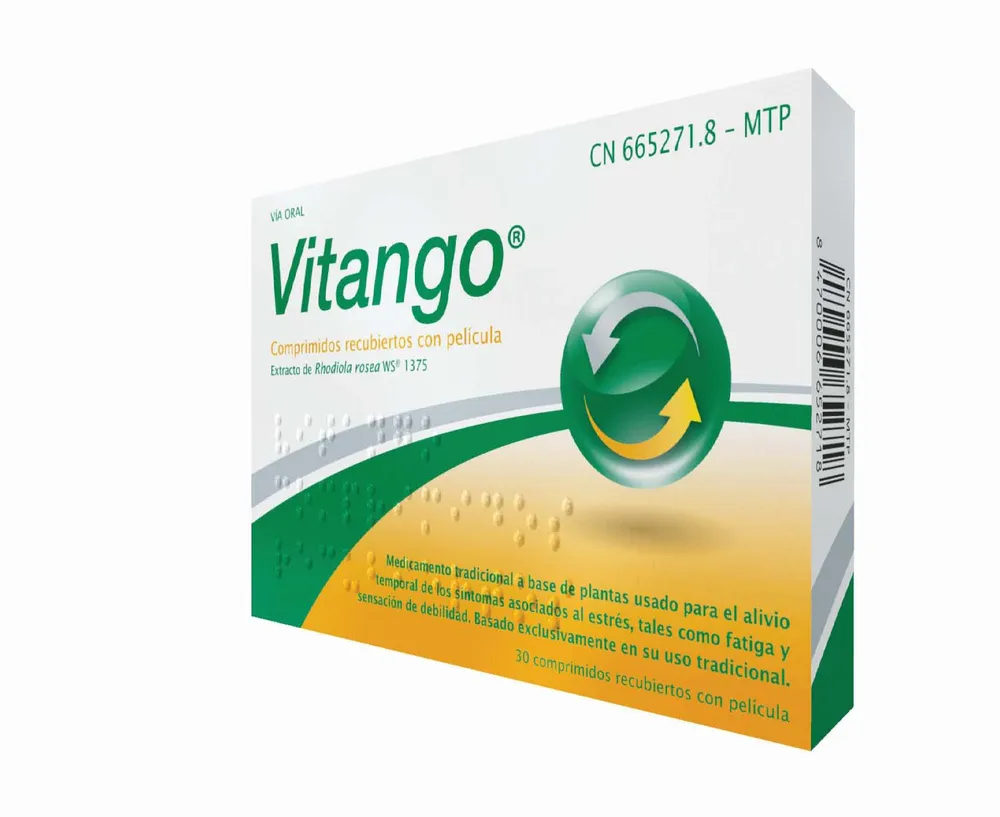
Table of Contents
Package Leaflet: Information for the User
Introduction
Package leaflet: information for the patient
Vitango® film-coated tablets
Rhodiola rosea extract WS® 1375
Read the entire leaflet carefully before you start taking this medicine, as it contains important information for you. Always follow exactly the instructions for use provided in this leaflet or as directed by your doctor or pharmacist.
- Keep this leaflet, as you may need to refer to it again.
- If you need advice or further information, consult your pharmacist.
- If you experience any adverse reactions, consult your doctor or pharmacist, even if they are not listed in this leaflet. See section 4.
- You should consult a doctor if your condition worsens or if you do not feel better after 14 days.
Contents of the leaflet
- What Vitango is and what it is used for
- What you need to know before taking Vitango
- How to take Vitango
- Possible side effects
- How to store Vitango
- Contents of the pack and other information
1. What Vitango is and what it is used for
Therapeutic indications It is a traditional herbal medicinal product used for the temporary relief of symptoms associated with stress, such as fatigue and feeling of weakness. Based solely on traditional use.
2. What you need to know before starting to take Vitango:
Do not take Vitango: If you are allergic (hypersensitive) to the Rhodiola rosea extract or to any of the other components of this medicine (listed in section 6).
Warnings and precautions
Consult your doctor or pharmacist before starting to take Vitango.
If symptoms persist after two weeks of treatment, you should consult your doctor.
After two months of treatment, you should discuss with your doctor whether continued use is appropriate.
Children and adolescents
Vitango is not recommended for use in children and adolescents under 18 years of age.
Other medicines and Vitango
No interactions are known to date.
Inform your doctor or pharmacist if you are taking, have recently taken, or might need to take any other medicines.
Pregnancy and breastfeeding
If you are pregnant or breastfeeding, think you might be pregnant, or plan to become pregnant, consult your doctor or pharmacist before using this medicine.
The use of this medicine during pregnancy or breastfeeding is not recommended.
Driving and using machines
No studies have been conducted on the effects of this medicine on the ability to drive or operate machinery.
3. How to take Vitango
Follow exactly the administration instructions for this medicine provided in this leaflet or those indicated by your doctor or pharmacist. If in doubt, consult your doctor or pharmacist.
Vitango are film-coated tablets for oral administration.
The recommended dose, unless otherwise prescribed by your doctor, is as follows:
Adults and adolescents over 18 years of age: Take two tablets daily (one before breakfast and one before lunch).
It is advisable to take the tablets with a glass of water.
Use in children and adolescents
Vitango is not recommended for use in children and adolescents under 18 years of age, as sufficient data on its use in this age group are not available.
If you take more Vitango than you should
No cases of overdose have been reported.
If you forget to take Vitango
Do not take a double dose to make up for missed doses.
If you have any further questions about the use of this medicine, ask your doctor or pharmacist.
4. Possible adverse effects
Like all medicines, this medicine may cause adverse effects, although not everyone will experience them.
Frequency unknown (cannot be estimated from available data):
- Mild headache
- Mild gastrointestinal discomfort
- Mild hypersensitivity reactions
Reporting of adverse effects
If you experience any type of adverse effect, consult your doctor or pharmacist, even if it is a possible adverse effect not listed in this leaflet. You may also report them directly through the Spanish Pharmacovigilance System for Human Medicines: https://www.notificaram.es. By reporting adverse effects, you can help provide more information on the safety of this medicine.
5. Storage of Vitango
No special storage conditions are required.
Keep this medicine out of the sight and reach of children.
Do not use this medicine after the expiry date stated on the carton and blister after Exp.:. The expiry date is the last day of the month indicated.
Medicines should not be disposed of via wastewater or household waste. Dispose of empty containers and unused medicines at the SIGRE collection point at your usual pharmacy. Ask your pharmacist how to dispose of containers and medicines you no longer need. This will help protect the environment.
6. Contents of the pack and other information
Composition of Vitango: The active substance is: 200 mg dry extract of root of Rhodiola rosea (1.5-5:1) (WS® 1375).
The extraction agent is ethanol 60% (m/m). The other components (excipients) are microcrystalline cellulose, sodium croscarmellose, precipitated silica, magnesium stearate, hypromellose, stearic acid, iron (III) oxide red, titanium dioxide, anti-foaming emulsion (simethicone, methylcellulose, sorbic acid).
Appearance of the product and contents of the pack: Vitango are round, film-coated, red tablets.
Vitango is available in packs containing 15, 20, 30, 40 and 60 film-coated tablets. Only certain pack sizes may be marketed.
Marketing Authorization Holder and Manufacturer:
Dr. Willmar Schwabe GmbH & Co. KG
Willmar-Schwabe-Str. 4
D-76227 Karlsruhe
GERMANY
Further information on this medicinal product can be obtained by contacting the local representative of the Marketing Authorization Holder:
SCHWABE FARMA IBÉRICA, S.A.U.
Avenida de la Industria, 4. Building 2, Staircase 1, 2nd floor.
28108 Alcobendas, Madrid.
Date of the most recent review of this leaflet: March 2023
Other sources of information
Detailed information on this medicinal product is available on the website of the Spanish Agency for Medicines and Health Products (AEMPS): www.aemps.gob.es.