Sycrest 5 mg sublingual tablets
Spain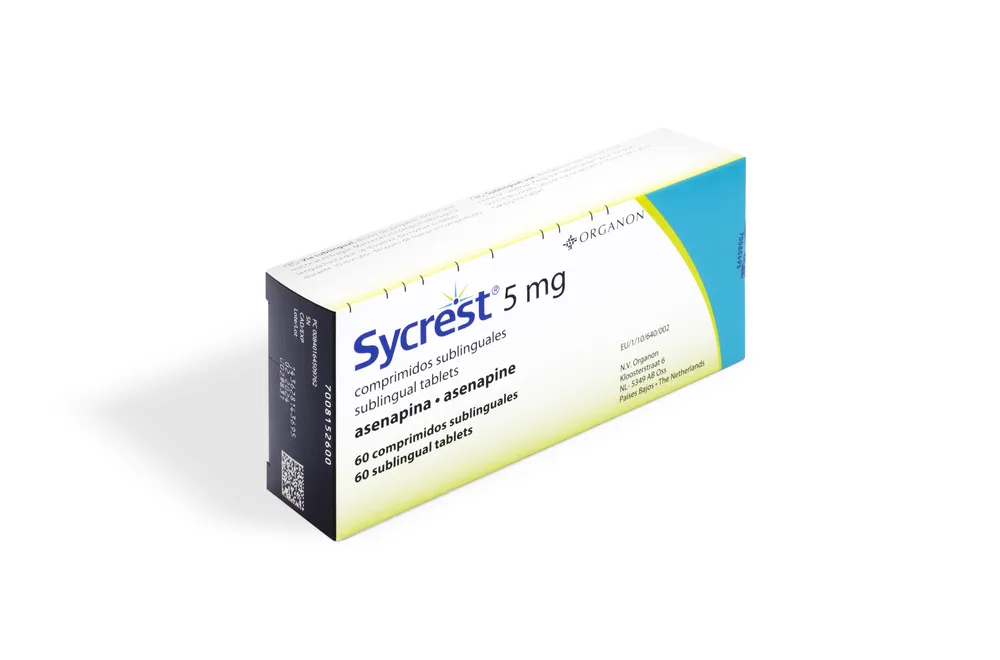
Table of Contents
Package leaflet: Information for the user
Introduction
Package leaflet: information for the patient
Sycrest 5 mg sublingual tablets
Sycrest 10 mg sublingual tablets
asenapine
Read the entire leaflet carefully before you start taking this medicine, because it contains important information for you.
- Keep this leaflet, as you may need to read it again.
- If you have any questions, ask your doctor, pharmacist or nurse.
- This medicine has been prescribed for you only, and you must not give it to others, even if they have the same symptoms as you, because it may harm them.
- If you experience any adverse reactions, consult your doctor, pharmacist or nurse, even if they are adverse reactions not listed in this leaflet. See section 4.
Leaflet contents
- What Sycrest is and what it is used for
- What you need to know before taking Sycrest
- How to take Sycrest
- Possible side effects
- How to store Sycrest
- Contents of the pack and other information
1. What Sycrest is and what it is used for
Sycrest contains the active substance asenapine. This medicine belongs to a group of medicines called antipsychotics. Sycrest is used to treat moderate to severe manic episodes associated with bipolar I disorder in adults. Antipsychotic medicines affect the chemical substances that enable communication between nerve cells (neurotransmitters). Brain disorders such as bipolar I disorder may be due to an imbalance of certain chemicals in the brain, such as dopamine and serotonin, and these imbalances may cause some of the symptoms you are experiencing. The exact way this medicine works is not known, but it is believed to help restore the balance of these chemicals.
Manic episodes associated with bipolar I disorder are a condition characterized by symptoms such as feeling overly well, having excessive energy, needing much less sleep than usual, speaking very rapidly with many ideas, and sometimes extreme irritability.
2. What you need to know before starting Sycrest
Do not take Sycrest
If you are allergic to asenapine or to any of the other ingredients of this medicine (listed in section 6).
Warnings and precautions
Talk to your doctor, pharmacist, or nurse before taking Sycrest.
Sycrest has not been studied in elderly patients with dementia. However, elderly patients treated with other types of similar medicines may have an increased risk of stroke or death. Sycrest has not been approved for the treatment of elderly patients with dementia and is not recommended for use in this particular group of patients.
Sycrest may cause a drop in blood pressure. In the early stages of treatment, some people may faint, especially when getting up from a lying or sitting position. This usually resolves on its own, but if it does not, inform your doctor, as a dose adjustment may be needed.
Asenapine may cause drowsiness, sudden drops in blood pressure when standing up, dizziness, and changes in your ability to move and balance, which may lead to falls and, consequently, fractures or other traumatic injuries. Patients at risk of falling should be evaluated before prescribing asenapine.
Contact your doctor immediately if you experience
- involuntary rhythmic movements of the tongue, mouth, or face. Discontinuation of Sycrest treatment may be necessary.
- fever, severe muscle stiffness, sweating, or decreased level of consciousness (a condition known as "neuroleptic malignant syndrome"). Immediate medical treatment may be required.
Before taking Sycrest, check with your doctor or pharmacist:
- if you have ever been diagnosed with a condition characterized by high body temperature and muscle rigidity (also known as neuroleptic malignant syndrome).
- if you have ever experienced abnormal movements of the tongue or face (tardive dyskinesia).
- You should be aware that both conditions may be caused by this type of medicine.
- if you have heart disease or are being treated for a heart condition that may make you prone to low blood pressure
- if you have diabetes or are at risk of developing diabetes
- if you have Parkinson's disease or dementia
- if you have epilepsy (seizures)
- if you experience difficulty swallowing (dysphagia)
- if you have severe liver problems. If so, you must not take Sycrest
- if you have problems with body temperature regulation
- if you have suicidal thoughts
- if you have abnormally high levels of prolactin in the blood (hyperprolactinemia)
Be sure to inform your doctor if you are in any of these situations so that they can adjust your dose or monitor you for a period of time. Also, consult your doctor immediately if any of these conditions develop or worsen while you are using Sycrest.
Children and adolescents
The use of Sycrest is not recommended in patients under 18 years of age.
Other medicines and Sycrest
Inform your doctor or pharmacist if you are taking, have recently taken, or might need to take any other medicines. Some medicines may reduce or increase the effect of Sycrest.
If you are taking other medicines, Sycrest should be taken last.
You must inform your doctor if you are taking antidepressant medicines (specifically fluvoxamine, paroxetine, or fluoxetine), as it may be necessary to adjust your dose of Sycrest or your dose of the antidepressant.
You must inform your doctor if you are taking medicines for Parkinson's disease (such as levodopa), as this medicine may make them less effective.
Sycrest acts mainly in the brain, so there may be interactions with other medicines (or with alcohol) that also act on the brain due to additive effects on brain function.
Sycrest may lower blood pressure, so caution is advised when Sycrest is taken together with other medicines that lower blood pressure.
Taking Sycrest with food, drinks, and alcohol
Do not eat or drink for 10 minutes after taking this medicine.
You should avoid drinking alcohol while taking this medicine.
Pregnancy and breastfeeding
If you are pregnant or breastfeeding, think you might be pregnant, or are planning to become pregnant, consult your doctor or pharmacist before using this medicine.
Do not take Sycrest during pregnancy unless your doctor tells you to. If you are taking this medicine and become pregnant or plan to become pregnant, consult your doctor as soon as possible to determine whether you can continue taking Sycrest.
The following symptoms may occur in newborn babies of mothers who have been treated with Sycrest during the third trimester of pregnancy (last three months of pregnancy): tremors, muscle stiffness and/or weakness, drowsiness, agitation, breathing difficulties, and feeding problems. If your baby develops any of these symptoms, contact your doctor.
Do not breastfeed while taking Sycrest.
Driving and using machines
Sycrest may cause drowsiness or sedation. Therefore, make sure your concentration and alertness are not affected before driving or operating machinery.
3. How to take Sycrest
Follow exactly the instructions for using this medicine as given by your doctor or pharmacist. If in doubt, consult your doctor or pharmacist again.
The recommended dose is one 5 mg or 10 mg sublingual tablet twice daily. One dose should be taken in the morning and another dose in the evening.
Instructions for use
Sycrest is for sublingual use.
Sycrest is not recommended if you are unable to take the tablet as described below. If you are unable to take this medicine as described below, treatment may not be effective for you.
- Do not remove the sublingual tablet from the blister pack until the time of administration.
- Handle the tablet with dry hands.
- Do not push the tablet through the blister. Do not cut or tear the blister.
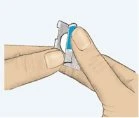
- Peel back the coloured tab (Figure 1).
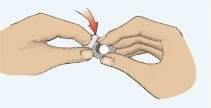
- Carefully remove the tablet (Figure 2). Do not crush the tablet.
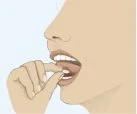
- To ensure optimal absorption, place the tablet under the tongue and wait until it has completely dissolved (Figure 3). The tablet will dissolve in saliva within seconds.
- Do not swallow or chew the tablet.
- Do not eat or drink for 10 minutes after taking the tablet.
|
|
|
Figure 1 | Figure 2 | Figure 3 |
If you take more Sycrest than you should
If you take too much Sycrest, contact a doctor immediately. Take the medicine with you. In case of overdose, you may feel drowsy or tired, have abnormal body movements, problems standing or walking, feel dizzy due to a drop in blood pressure, and feel agitated and confused.
If you forget to take Sycrest
Do not take a double dose to make up for missed doses. If you forget to take a dose, take your next dose as usual. If you forget to take two or more doses, consult your doctor or pharmacist.
If you stop taking Sycrest
If you stop treatment with Sycrest, you will lose the effects of this medicine. You should not stop treatment with this medicine unless your doctor tells you to, as your symptoms may return.
If you have any further questions about the use of this medicine, ask your doctor or pharmacist.
4. Possible adverse effects
Like all medicines, this medicine can cause adverse effects, although not everyone will experience them.
Serious adverse effects have been reported with this medicine. Seek immediate medical attention if you experience any of the following symptoms:
- allergic reactions (usually involve a combination of effects such as difficulty breathing or swallowing, swelling of the face, lips, tongue or throat, rash, itching, and increased heart rate)
- sudden increase in body temperature, with sweating, rapid pulse, severe muscle rigidity, confusion and variable blood pressure, which may lead to coma
- seizures, fits or convulsions
- fainting
- falls may occur as a result of one or more adverse effects such as: drowsiness, sudden drop in blood pressure when standing up, dizziness, and changes in your ability to move and in balance.
Immediately inform your doctor if you have:
- signs of increased blood sugar levels such as excessive thirst, hunger or urination, weakness, or worsening of diabetes
- snake-like movements of the tongue, or other uncontrolled movements of the tongue, mouth, cheeks, jaw, which may progress to arms and legs
Other adverse effects reported with this medicine are:
Very common adverse effects (may affect more than 1 in 10 people)
- anxiety
- somnolence
Common adverse effects (may affect up to 1 in 10 people)
- weight gain
- increased appetite
- slow or sustained muscle contractions
- restlessness
- involuntary muscle contractions
- slow movements, tremor
- sedation
- dizziness
- nausea
- change in taste
- sensation of numbness in the tongue or mouth
- increased saliva (drooling)
- muscle stiffness
- fatigue
- increased liver protein levels
Uncommon adverse effects (may affect up to 1 in 100 people)
- abnormal muscle movements: a group of symptoms known as extrapyramidal symptoms, which may include one or more of the following: abnormal muscle, tongue or jaw movements, slow or sustained muscle contractions, muscle spasms, tremor (agitation), abnormal eye movements, involuntary muscle contractions, slow movements or restlessness
- unpleasant sensation in the legs (also known as restless legs syndrome)
- difficulty speaking
- abnormally slow or fast heartbeat
- heart block
- abnormal electrocardiogram (prolongation of QT interval)
- drop in blood pressure upon standing
- low blood pressure
- tingling in the tongue or mouth
- swollen or painful tongue
- difficulty swallowing
- ulcers, pain, redness, swelling and blisters inside the mouth
- sexual dysfunction
- absence of regular menstrual periods
Rare adverse effects (may affect up to 1 in 1,000 people)
- changes in white blood cell (leukocyte) levels
- difficulty focusing vision
- blood clots in blood vessels leading to the lungs, causing chest pain and difficulty breathing
- muscle disease manifested by unexplained pain
- breast enlargement in men
- leakage of milk or fluids from the breast
Reporting of adverse effects
If you experience any type of adverse effect, talk to your doctor, pharmacist or nurse, even if it is a possible adverse effect not listed in this leaflet. You can also report them directly through the national reporting system included in Appendix V. By reporting adverse effects, you can help provide more information on the safety of this medicine.
5. Storage of Sycrest
Keep this medicine out of the sight and reach of children.
Do not use this medicine after the expiry date stated on the blister and on the outer packaging. The expiry date refers to the last day of the month indicated.
Store this medicine in its original packaging to protect it from light and moisture.
No special storage temperature is required for this medicine.
Medicines should not be disposed of via wastewater or household waste. Ask your pharmacist how to dispose of any packaging and medicines you no longer need. This will help protect the environment.
6. Contents of the pack and other information
Composition of Sycrest
- The active substance is asenapine.
- Each 5 mg sublingual tablet of Sycrest contains 5 mg of asenapine.
- Each 10 mg sublingual tablet of Sycrest contains 10 mg of asenapine.
- The exact amount is shown on your Sycrest packaging.
- The other components are gelatin and mannitol (E-421).
Appearance of the product and contents of the pack
The 5 mg sublingual tablets are round, white to off-white tablets, marked with "5" on one side.
The 10 mg sublingual tablets are round, white to off-white tablets, marked with "10" on one side.
The sublingual tablets are supplied in peelable blisters containing 10 tablets each. Packs contain 20, 60 or 100 tablets.
Some pack sizes may not be marketed.
Marketing Authorization Holder
N.V. Organon
Kloosterstraat 6
NL-5349 AB Oss
The Netherlands
Manufacturer
Organon Heist bv
Industriepark 30
2220 Heist-op-den-Berg, Belgium
For further information regarding this medicinal product, please contact the local representative of the Marketing Authorization Holder:
Belgium/Belgium/Belgium Organon Belgium Tel/Tel: 0080066550123 (+32 2 2418100) | Lithuania Organon Pharma B.V. Lithuania branch Tel.: +370 52041693 |
| Luxembourg/Luxembourg Organon Belgium Tel/Tel: 0080066550123 (+32 2 2418100) |
Czech Republic Organon Czech Republic s.r.o. Tel: +420 277 051 010 | Hungary Organon Hungary Kft. Tel.: +36 1 766 1963 |
Denmark Organon Denmark ApS Tlf: +45 4484 6800 | Malta Organon Pharma B.V., Cyprus branch Tel: +356 2277 8116 |
Germany Organon Healthcare GmbH Tel.: 0800 3384 726 (+49 (0) 89 2040022 10) | Netherlands N.V. Organon Tel: 00800 66550123 (+32 2 2418100) |
Estonia Organon Pharma B.V. Estonian RO Tel: +372 66 61 300 | Norway Organon Norway AS Tlf: +47 24 14 56 60 |
Greece BIANEΞ Α.Ε. Tel: +30 210 80091 11 | Austria Organon Healthcare GmbH Tel: +49 (0) 89 2040022 10 |
Spain Organon Salud, S.L. Tel: +34 91 591 12 79 | Poland Organon Polska Sp. z o.o. Tel.: +48 22 306 57 64 |
France Organon France Tel: +33 (0) 1 57 77 32 00 | Portugal Organon Portugal, Sociedade Unipessoal Lda. Tel: +351 218705500 |
Croatia Organon Pharma d.o.o. Tel: +385 1 638 4530 | Romania Organon Biosciences S.R.L. Tel: +40 21 527 29 90 |
Ireland Organon Pharma (Ireland) Limited Tel: +353 15828260 | Slovenia Organon Pharma B.V., Oss, branch Ljubljana Tel: +386 1 300 10 80 |
Iceland Vistor ehf. Tel: +354 535 7000 | Slovakia Organon Slovakia s.r.o. Tel: +421 2 44 88 98 88 |
Italy Organon Italia S.r.l. Tel: +39 06 90259059 | Finland Organon Finland Oy Tel/Puh: +358 (0) 29 170 3520 |
Cyprus Organon Pharma B.V., Cyprus branch Tel: +357 22866730 | Sweden Organon Sweden AB Tel: +46 8 502 597 00 |
Latvia Commercial representative of “Organon Pharma B.V.” in Latvia Tel: +371 66968876 |
Date of the most recent review of this leaflet: {month/YYYY}.
Detailed information on this medicine is available on the European Medicines Agency website: http://www.ema.europa.eu.