Refixia 500 IU powder and solvent for solution for injection
Spain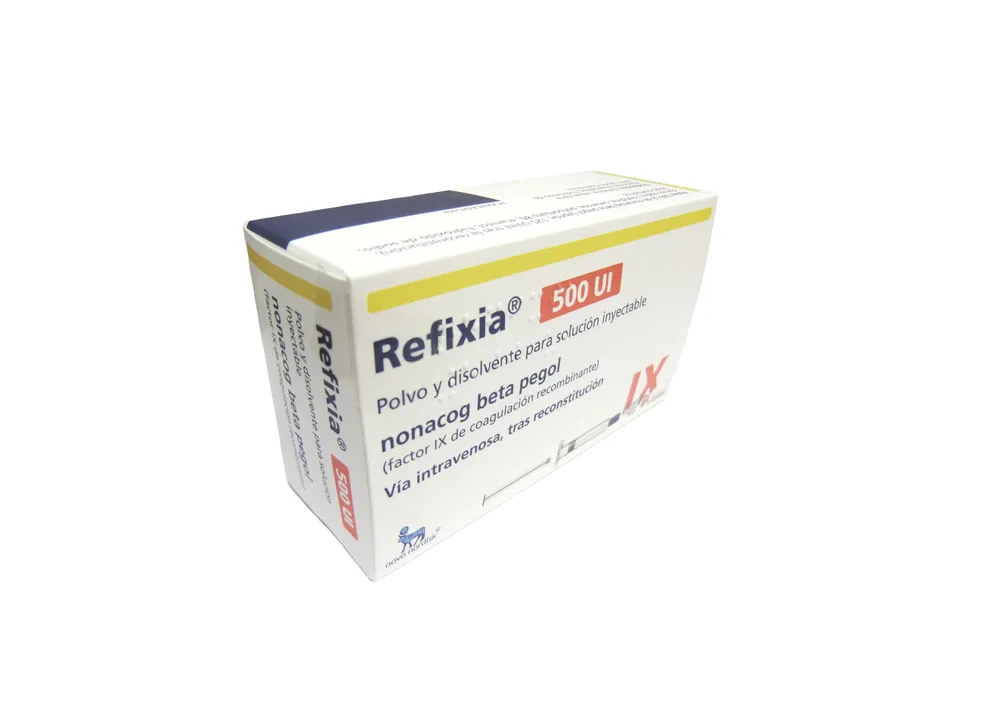
Table of Contents
Package leaflet: Information for the user
Introduction
Package leaflet: information for the user
Refixia 500UI powder and solvent for solution for injection
Refixia 1000UI powder and solvent for solution for injection
Refixia 2000UI powder and solvent for solution for injection
Refixia 3000UI powder and solvent for solution for injection
nonacog beta pegol
This medicinal product is subject to additional monitoring, which will allow quicker identification of new safety information. You can help by reporting any side effects you may experience. Section 4 includes information on how to report side effects.
Read the entire leaflet carefully before you start using this medicine, as it contains important information for you.
- Keep this leaflet, as you may need to read it again.
- If you have any questions, ask your doctor.
- This medicine has been prescribed for you only and must not be given to other people, even if they have the same symptoms as you, because it may harm them.
- If you experience any side effects, consult your doctor, even if they are side effects not listed in this leaflet. See section 4.
Leaflet contents
- What Refixia is and what it is used for
- What you need to know before using Refixia
- How to use Refixia
- Possible side effects
- How to store Refixia
- Contents of the pack and other information
1. What Refixia is and what it is used for
What Refixia is
Refixia contains the active substance nonacog beta pegol. It is a long-acting version of factor IX. Factor IX is a protein naturally present in the blood that helps stop bleeding.
What Refixia is used for
Refixia is used to treat and prevent bleeding episodes in patients of all age groups with haemophilia B (congenital factor IX deficiency).
In patients with haemophilia B, factor IX is either missing or does not work properly. Refixia replaces this missing or malfunctioning factor IX and helps the blood form clots at the site of bleeding.
2. What you need to know before using Refixia
Do not use Refixia
- if you are allergic to the active substance or to any of the other components of this medicine (listed in section 6).
- if you are allergic to hamster proteins.
If you are in any of the above situations or are unsure about them, consult your doctor before using this medicine.
Warnings and precautions
Traceability
It is important to keep a record of the batch number of Refixia. Therefore, each time you receive a new pack of Refixia, you should note down the date and the batch number (shown on the packaging after "Batch") and keep this information in a safe place.
Allergic reactions and development of inhibitors
There is a minimal risk that a sudden and severe allergic reaction (e.g., an anaphylactic reaction) may occur with Refixia. Stop the infusion and contact your doctor or emergency services immediately if you experience signs of an allergic reaction, such as rash, hives, urticaria, widespread itching, redness and/or swelling of the lips, tongue, face or hands, difficulty swallowing or breathing, shortness of breath, wheezing, chest tightness, pale and cold skin, palpitations and/or dizziness.
Your doctor may need to treat these reactions promptly. Your doctor may also perform a blood test to check whether you have developed factor IX inhibitors (neutralizing antibodies) against your medicine, as inhibitors may develop alongside allergic reactions. If you develop such inhibitors, you may have an increased risk of experiencing sudden and severe allergic reactions (e.g., anaphylactic reactions) during future treatment with factor IX.
Due to the risk of allergic reactions with factor IX, your initial treatment with Refixia should be carried out in a healthcare facility or under the supervision of a healthcare professional who can provide appropriate medical care in case of allergic reactions.
Contact your doctor immediately if bleeding does not stop as expected or if you need to significantly increase the amount of Refixia required to control bleeding. Your doctor will perform a blood test to check whether you have developed inhibitors (neutralizing antibodies) against Refixia. The risk of developing inhibitors is higher in individuals who have not previously been treated with factor IX-containing medicines, usually young children.
Blood clots
Inform your doctor if any of the following apply to you, as the risk of blood clot formation increases during treatment with Refixia:
- you have recently undergone surgery
- you have another serious illness, such as liver disease, heart disease, or cancer
- you have risk factors for developing heart disease, such as high blood pressure, obesity, or smoking.
Kidney disease (nephrotic syndrome)
There is a minimal risk of developing a specific kidney disease called "nephrotic syndrome" after administration of high doses of factor IX in patients with hemophilia B and factor IX inhibitors, as well as in those with a history of allergic reactions.
Catheter-related complications
If you have a central venous access device (CVAD), you may develop infections or blood clots at the catheter insertion site.
Other medicines and Refixia
Inform your doctor if you are taking, have recently taken, or might need to take any other medicines.
Pregnancy and breastfeeding
If you are pregnant or breastfeeding, think you may be pregnant, or are planning to become pregnant, consult your doctor before using Refixia.
Driving and using machines
Refixia has no influence on the ability to drive or operate machinery.
Refixia contains sodium
This medicine contains less than 1 mmol of sodium (23 mg) per vial; i.e., essentially "sodium-free". In case of treatment with multiple vials, the total sodium content should be taken into consideration.
3. How to use Refixia
A doctor experienced in treating patients with haemophilia B will initiate treatment with Refixia. Follow exactly the instructions for administration of this medicine given by your doctor. If in doubt, consult your doctor again on how to use Refixia.
Your doctor will calculate your appropriate dose based on your body weight and the intended use of the medicine.
Prevention of bleeding
The usual dose of Refixia is 40 international units (IU) per kg of body weight. It is administered by injection once a week. Your doctor may choose a different dose or change the frequency of injections according to your needs.
Treatment of bleeding
The usual dose of Refixia is 40 international units (IU) per kg of body weight. Depending on the location and severity of the bleeding, you may require a higher dose (80 IU per kg) or additional injections. Consult your doctor for the appropriate dose and number of injections needed.
Use in children and adolescents
Refixia can be used in children and adolescents of all ages. The dose in children and adolescents is also based on body weight and is the same as that for adults.
How Refixia is administered
Refixia is available as a powder and solvent to prepare a solution (reconstitution) which must be injected into a vein. See "Instructions for using Refixia" for more information.
If you use more Refixia than you should
If you use more Refixia than you should, contact your doctor.
If you need to significantly increase the amount of Refixia required to stop a bleed, inform your doctor immediately. For more information, see section 2 "Allergic reactions and development of inhibitors".
If you forget to use Refixia
If you miss a dose, inject the missed dose as soon as you remember. Do not administer a double dose to compensate for the missed dose. If you have any doubts, contact your doctor.
If you stop using Refixia
If you stop treatment with Refixia, you will no longer be protected against bleeding, or an existing bleed may not stop. Do not stop treatment with Refixia without first discussing it with your doctor.
If you have any further questions about the use of this medicine, ask your doctor.
4. Possible side effects
Like all medicines, this medicine can cause side effects, although not everybody gets them.
Allergic reactions may occur with this medicine.
If sudden and severe allergic reactions (e.g., anaphylactic reactions) occur, the injection must be stopped immediately. If you experience any of the following early symptoms of a serious allergic reaction (anaphylactic reaction), contact your doctor or emergency services immediately:
- difficulty swallowing or breathing
- shortness of breath or wheezing
- tightness in the chest
- redness and/or swelling of the lips, tongue, face, or hands
- rash, hives, welts, or itching
- pale and cold skin, palpitations, and/or dizziness (low blood pressure).
In previously untreated children receiving factor IX medications, the development of inhibitors (see section 2) is common (up to 1 in 10 patients). If this occurs, the medication may no longer work properly and your child may experience persistent bleeding. If this happens, you must contact your doctor immediately.
The following side effects have been observed with Refixia:
Frequent side effects (may affect up to 1 in 10 people)
- allergic reactions (hypersensitivity). These may become severe and could be life-threatening (anaphylactic reactions)
- itching (pruritus)
- skin reactions at the injection site
- nausea
- feeling very tired
- rash
- in previously untreated children receiving factor IX medications: neutralizing antibodies (inhibitors), anaphylactic reactions.
Uncommon side effects (may affect up to 1 in 100 people)
- palpitations
- hot flushes.
Reporting of side effects
If you experience any type of side effect, talk to your doctor, pharmacist, or nurse, even if it is a side effect not listed in this leaflet. You can also report them directly through the national reporting system included in Appendix V. By reporting side effects, you can help provide more information on the safety of this medicine.
5. Storage of Refixia
Keep this medicine out of the sight and reach of children.
Do not use Refixia after the expiry date stated on the packaging and on the labels of the vial and the pre-filled syringe, following “EXP”. The expiry date refers to the last day of the month indicated.
Store in a refrigerator (between 2 °C and 8 °C). Do not freeze. Keep the vial in its outer packaging to protect it from light.
Refixia may be kept outside the refrigerator for a maximum period of 1 year and stored at room temperature (up to 30 °C). Record on the packaging the date when Refixia was removed from the refrigerator and placed at room temperature. The new expiry date must never extend beyond the one stated on the carton. Dispose of this medicine if it has not been used before the new expiry date. Once stored at room temperature, do not return the medicine to the refrigerator.
Use the injection immediately after preparing the solution (reconstitution). If immediate use is not possible, the solution must be used within 24 hours if stored in a refrigerator between 2 °C and 8 °C, or within 4 hours if stored outside the refrigerator at a maximum temperature of 30 °C.
The powder in the vial is a white to off-white powder. Do not use if the colour of the powder has changed.
The reconstituted solution is clear and colourless to slightly yellow. Do not use the reconstituted solution if it contains particles or shows signs of discolouration.
Medicines should not be disposed of via wastewater or household waste. Ask your pharmacist how to dispose of medicines no longer required. Doing so helps protect the environment.
6. Package contents and other information
Composition of Refixia
- The active substance is nonacog beta pegol (pegylated recombinant human coagulation factor IX). Each Refixia vial contains 500 IU, 1,000 IU, 2,000 IU, or 3,000 IU of nonacog beta pegol, corresponding to approximately 125 IU/ml, 250 IU/ml, 500 IU/ml, or 750 IU/ml, respectively, after reconstitution with histidine solvent.
- The other components of the powder are sodium chloride, histidine, sucrose, polysorbate 80, mannitol, sodium hydroxide, and hydrochloric acid. See section 2 “Refixia contains sodium”.
- The components of the sterile solvent are histidine, water for injections, sodium hydroxide, and hydrochloric acid.
Appearance of Refixia and contents of the pack
- Refixia is supplied as a powder and solvent for injectable solution (500 IU, 1,000 IU, 2,000 IU, or 3,000 IU of powder in a vial and 4 ml of solvent in a pre-filled syringe, one plunger rod with a vial adapter; pack size of 1).
- The powder is white to off-white and the solvent is clear and colourless.
Marketing Authorisation Holder and Manufacturer
Novo Nordisk A/S
Novo Allé
DK-2880 Bagsværd, Denmark
Date of the most recent revision of this leaflet:
Other sources of information
Detailed information on this medicine is available on the European Medicines Agency website: http://www.ema.europa.eu.
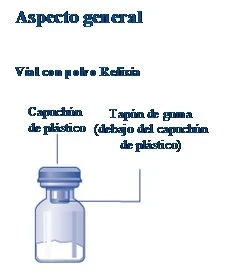
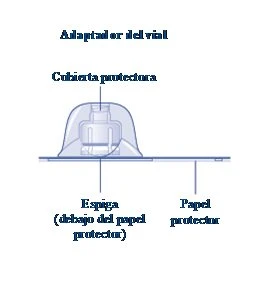
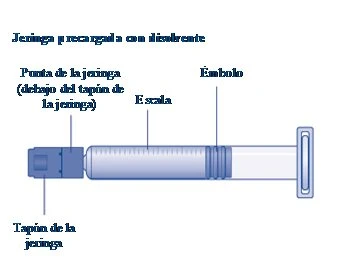
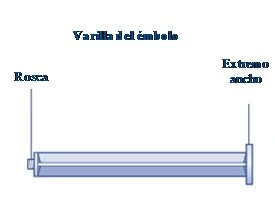
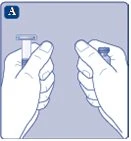
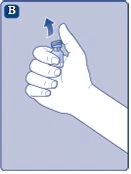
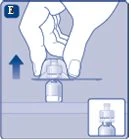
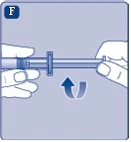
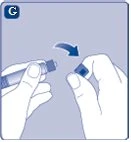
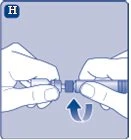
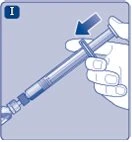
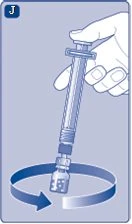
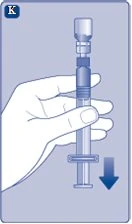
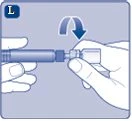
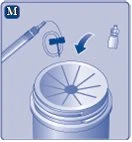
Instructions for using Refixia Read these instructions carefully before using Refixia. Refixia is supplied as a powder. Before injection, a solution (reconstituted) must be prepared using the solvent provided in the syringe. The solvent is a histidine solution. The reconstituted solution should be injected into a vein (intravenous [IV] injection). The components in this package are designed to reconstitute and inject Refixia. You will also need an intravenous infusion set (tubing and butterfly needle), sterile alcohol wipes, gauze, and bandages. These materials are not included in the Refixia package. Do not use the equipment without proper training from your doctor or nurse. Always wash your hands and ensure the area around you is clean. When preparing and injecting medication directly into veins, it is important to use a clean, germ-free (aseptic) technique. Incorrect technique may introduce germs capable of causing blood infections. Do not open the equipment until you are ready to use it. Do not use the equipment if it has been dropped or damaged. Use a new package instead. Do not use the equipment if it has expired. Use a new package instead. The expiration date is printed on the outer packaging, vial, vial adapter, and pre-filled syringe. Do not use the equipment if you suspect contamination. Use a new package instead. Do not discard any components until the reconstituted solution has been injected. The equipment is for single use only. | |
Contents The package contains:
| |
| |
|
|
|
|
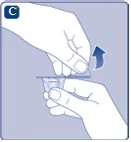
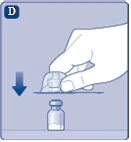
If the protective paper is not fully sealed or is torn, do not use the vial adapter. Do not remove the vial adapter from its protective cover with your fingers. If you touch the spike of the vial adapter, you may transfer germs from your fingers. |
|
Once attached, do not remove the vial adapter from the vial. |
|
Remove the protective cover from the vial adapter. Do not remove the vial adapter from the vial when removing the protective cover. |
|
|
|
If the syringe cap is loose or missing, do not use the pre-filled syringe. |
|
|
|
|
|
Do not shake the vial, as this may cause foaming.
|
|
It is recommended to use Refixia immediately after reconstitution, as delaying use may compromise sterility and lead to infections. If the reconstituted Refixia solution cannot be used immediately, it must be used within 4 hours if stored at room temperature (up to 30°C) or within 24 hours if refrigerated (between 2°C and 8°C). Store the reconstituted product in the vial. Do not freeze the reconstituted Refixia solution or store it in syringes. Store the reconstituted Refixia solution away from direct light. If your dose requires more than one vial, repeat steps A through J with additional vials, vial adapters, and pre-filled syringes until the required dose is achieved. | |
If air is present in the syringe at any point, inject the air back into the vial.
|
|
|
|
Refixia is now ready to be injected into a vein.
Injecting Refixia through needle-free connectors for intravenous (IV) catheters Caution: The pre-filled syringe is made of glass and is designed to be compatible with standard luer-lock connections. Some needle-free connectors with an internal spike are incompatible with the pre-filled syringe. This incompatibility may prevent drug administration and/or damage the needle-free connector. Injecting the solution through a central venous access device (CVAD), such as a central venous catheter or subcutaneous port:
| |
Disposal
Do not throw it in household trash. |
|
Do not disassemble the equipment before disposal. Do not reuse the equipment. |