Reagila 3 mg hard capsules
Spain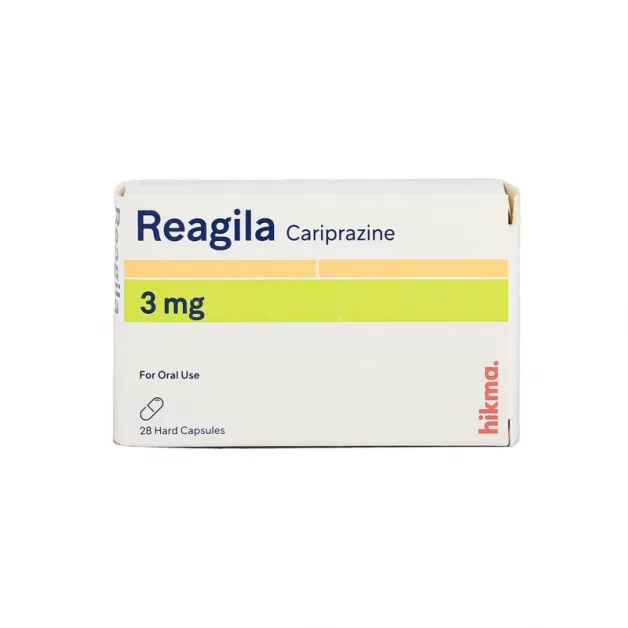
Table of Contents
Package leaflet: Information for the user
Introduction
Package leaflet: information for the user
Reagila 1.5 mg hard capsules
Reagila 3 mg hard capsules
Reagila 4.5 mg hard capsules
Reagila 6 mg hard capsules
cariprazine
This medicinal product is subject to additional monitoring, which will allow quicker identification of new safety information. You can help by reporting any side effects you may experience. Section 4 includes information on how to report side effects.
Read the entire leaflet carefully before starting to take this medicine, as it contains important information for you.
-
Keep this leaflet, as you may need to read it again.
-
If you have any questions, ask your doctor or pharmacist.
-
This medicine has been prescribed for you only, and you should not give it to others, even if they have the same symptoms as you, because it may harm them.
-
If you experience any side effects, consult your doctor, even if they are side effects not listed in this leaflet. See section 4.
Contents of the leaflet
- What Reagila is and what it is used for
- What you need to know before taking Reagila
- How to take Reagila
- Possible side effects
- How to store Reagila
- Contents of the pack and other information
1. What Reagila is and what it is used for
Reagila contains the active substance cariprazine and belongs to a group of medicines called antipsychotics. It is used to treat adult patients with schizophrenia.
Schizophrenia is a disorder characterized by symptoms such as hearing, seeing, or feeling things that do not exist (hallucinations), mistrust, false beliefs, incoherent speech and behaviour, and lack of emotional expression. People with this disorder may feel depressed, anxious, guilty, tense, or unable to start or continue with planned activities, may be reluctant to speak, and may show no emotional response to a situation that would normally evoke feelings in others.
2. What you need to know before taking Reagila
Do not take Reagila:
-
if you are allergic to cariprazine or any of the other ingredients of this medicine (listed in section 6).
-
if you are taking medicines used to treat:
- hepatitis caused by the hepatitis C virus (medicines containing boceprevir or telaprevir)
-
bacterial infections (medicines containing clarithromycin, telithromycin, erythromycin, and nafcillin)
-
tuberculosis (medicines containing rifampicin)
-
HIV infections (medicines containing cobicistat, indinavir, nelfinavir,
ritonavir, saquinavir, efavirenz, and etravirine)
-
fungal infections (medicines containing itraconazole, posaconazole, voriconazole, and fluconazole)
-
Cushing's syndrome, in which the body produces excess cortisol (medicines containing ketoconazole)
-
depression (phytotherapy containing St. John's wort (Hypericum perforatum) and medicines containing nefazodone)
-
epilepsy and seizures (medicines containing carbamazepine, phenobarbital, and phenytoin)
-
heart diseases (medicines containing diltiazem and verapamil)
-
sleepiness (medicines containing modafinil)
-
pulmonary hypertension (medicines containing bosentan).
Warnings and precautions
Contact your doctor immediately:
- if you have thoughts or feelings about harming yourself or committing suicide. Suicidal thoughts and behaviour occur more frequently at the beginning of treatment.
- if you experience a combination of fever, sweating, rapid breathing, muscle stiffness, and lethargy or drowsiness (these may be signs of neuroleptic malignant syndrome).
Consult your doctor or pharmacist before starting Reagila or during treatment, if:
-
you have experienced or begin to experience restlessness and inability to stay still. These symptoms may occur early during treatment with Reagila. Inform your doctor if this happens.
-
you have experienced or begin to experience abnormal and involuntary movements, most frequently of the tongue or face. Inform your doctor if this happens.
-
visual impairment. Your doctor may recommend that you visit an ophthalmologist.
-
you have irregular heartbeats or if any of your family members have a history of irregular heartbeats (including the so-called QT interval prolongation seen on ECG monitoring), and inform your doctor if you are taking other medicines, as they could cause or worsen this ECG change.
-
you suffer from high or low blood pressure, or cardiovascular disease. Your doctor will need to monitor your blood pressure regularly.
-
you experience dizziness upon standing due to a drop in blood pressure, which may lead to fainting
-
you have a history of blood clots, or if any other family member has a history of blood clots, as antipsychotic medicines have been associated with blood clot formation
-
you have a history of stroke, especially if you are elderly or know you have other risk factors for stroke. Inform your doctor immediately if you notice any signs of stroke.
-
you have dementia (loss of memory and other mental abilities), especially if you are elderly
-
you have Parkinson's disease
-
you have diabetes or risk factors for diabetes (e.g. obesity, or if someone else in your family has diabetes). Your doctor will need to monitor your blood sugar levels regularly, as Reagila may increase them. Signs of high blood sugar include excessive thirst, increased urination, increased appetite, and feeling weak.
-
you have a history of seizures or epilepsy.
Weight gain
Reagila may cause significant weight gain, which could affect your health. Your doctor will therefore monitor your weight regularly.
Contraception
Women of childbearing potential must use highly effective contraceptive methods while taking Reagila and for at least 10 weeks after stopping treatment. If you are using hormonal contraceptives, you should also use a barrier method (i.e. condom or diaphragm). See section "Pregnancy and breastfeeding".
Children and adolescents
This medicine is not recommended for children and adolescents under 18 years of age due to lack of data in these patients.
Other medicines and Reagila
Inform your doctor or pharmacist if you are taking, have recently taken, or might need to take any other medicines. You must not take certain medicines with Reagila (see section "Do not take Reagila").
When taking Reagila with certain medicines, it may be necessary to adjust the dose of Reagila or the other medicine. These include medicines used to treat heart conditions containing digoxin, anticoagulants containing dabigatran, or medicines that affect mental function.
If you are using hormonal contraceptives, a barrier method should also be used (see section "Pregnancy and breastfeeding" below).
Taking Reagila with food, drinks and alcohol
Do not drink grapefruit juice during treatment with Reagila.
Do not drink alcohol while taking Reagila.
Pregnancy and breastfeeding
Women of childbearing potential
Women of childbearing potential must use effective contraception during treatment with Reagila. Even after stopping treatment, contraception should continue for at least 10 weeks after the last dose of Reagila. This is because the medicine will remain in the body for some time after the last dose. If you are using hormonal contraceptives, you should also use a barrier method (i.e. condom or diaphragm). Consult your doctor about suitable contraceptive options.
Pregnancy
You should not take this medicine during pregnancy unless your doctor has specifically instructed you to do so.
If your doctor decides that you should take this medicine during pregnancy, your baby will be closely monitored after birth. This is because newborns of mothers who have taken this medicine during the third trimester (last three months) of pregnancy may experience the following symptoms:
- tremors, muscle stiffness or weakness, drowsiness, agitation, breathing difficulties, and feeding problems.
If your baby shows any of these symptoms, you must consult your doctor.
Breastfeeding
Do not breastfeed while taking Reagila, as a risk to the baby cannot be excluded.
Consult your doctor.
Driving and using machines
There is a small to moderate risk that this medicine may affect your ability to drive and use machines. Drowsiness, dizziness, and vision problems may occur during treatment with this medicine (see section 4). Do not drive or operate tools or machinery until you know that this medicine does not affect you negatively.
Reagila 3 mg, 4.5 mg, 6 mg hard capsules contain Allura Red AC (E 129).
Allura Red AC is a dye that may cause allergic reactions.
3. How to take Reagila
Follow exactly the instructions for using this medicine as given by your doctor.
If you are unsure, consult your doctor or pharmacist again.
The recommended starting dose is 1.5 mg once daily by oral administration. Afterwards, your doctor may slowly adjust the dose, in increments of 1.5 mg, depending on how effective the treatment is for you.
The maximum dose must not exceed 6 mg once daily.
Take Reagila once daily at the same time each day, with or without food.
If you were taking another medicine to treat schizophrenia before starting Reagila, your doctor will decide whether to gradually or immediately discontinue the other medicine and how to adjust the dose of Reagila. Your doctor will also advise you on how to proceed if switching from Reagila to another medicine.
Patients with kidney or liver problems
If you have severe kidney or liver problems, Reagila may not be suitable for you. Consult your doctor.
Elderly patients
Your doctor will carefully select the appropriate dose according to your needs.
Elderly patients with dementia (memory loss) must not use Reagila.
If you take more Reagila than you should
If you have taken more Reagila than your doctor recommended, or if, for example, a child has accidentally taken it, contact your doctor or go immediately to the nearest hospital, and take the medicine pack with you. You may experience dizziness due to low blood pressure or abnormal heartbeats, feel drowsy or tired, or have abnormal body movements and difficulty standing or walking.
If you forget to take Reagila
If you forget to take a dose, take it as soon as you remember. However, if it is almost time for your next dose, skip the missed dose and take the next dose at your usual time. Do not take a double dose to make up for a missed dose.
If you miss two or more doses, consult your doctor.
If you stop taking Reagila
If you stop treatment with this medicine, you will lose its effects. Even if you feel better, do not change or stop your daily dose of Reagila unless instructed by your doctor, as symptoms may return.
If you have any further questions about the use of this medicine, ask your doctor.
4. Possible adverse effects
Like all medicines, this medicine can cause adverse effects, although not everyone will experience them.
Consult your doctor immediately if you notice any of the following symptoms:
-
severe allergic reaction including fever, swelling of the mouth, face, lips or tongue, shortness of breath, itching, skin rash and sometimes a drop in blood pressure. (Rare adverse effect)
-
combination of fever, sweating, muscle stiffness and drowsiness. These could be symptoms of a condition known as neuroleptic malignant syndrome. (Adverse effect with frequency not known)
-
unexplained muscle pain, muscle cramps or muscle weakness. These may be signs of muscle injury which can lead to very serious kidney problems. (Rare adverse effect)
-
symptoms related to blood clots in the veins, especially in the legs (symptoms include swelling, pain and redness in the leg), which may travel through blood vessels to the lungs and cause chest pain and difficulty breathing. (Adverse effect with frequency not known)
-
thoughts or feelings of harming yourself or suicide, suicide attempt (Uncommon adverse effect)
Other adverse effects
Very common adverse effects (may affect more than 1 in 10 people)
- feeling of restlessness and inability to stay still
- Parkinsonism: a condition with various symptoms including slow or reduced body movements, slowed thinking, tremors when moving limbs (cogwheel rigidity), shuffling gait, agitation, reduced or absent facial expression, muscle stiffness, drooling
Common adverse effects (may affect up to 1 in 10 people)
- anxiety
- drowsiness, difficulty sleeping, abnormal dreams, nightmares, sleepwalking
- dizziness
- involuntary twisting movements and abnormal postures
- excessive teeth grinding or jaw clenching, drooling, persistent blinking in response to tapping the forehead (an abnormal reflex), movement disorders, tongue movement disorder (these are called extrapyramidal symptoms)
- blurred vision
- high blood pressure
- rapid and irregular heartbeat
- decreased or increased appetite
- nausea, vomiting, constipation
- weight gain
- fatigue
- the following effects may be observed in laboratory tests:
- increases in liver enzymes
- increased levels of creatine phosphokinase in the blood
- abnormal levels of lipids (e.g., cholesterol or fat) in the blood
Uncommon adverse effects (may affect up to 1 in 100 people)
- depression
- sudden and severe confusion
- sensation of spinning
- unpleasant and abnormal sense of touch
- drowsiness, lack of energy or lack of interest in doing things
- involuntary movements, more frequently affecting the tongue or face. These may occur after short- or long-term use.
- decreased or increased sexual desire, erectile problems
- eye irritation, increased eye pressure, poor vision
- focusing problems, difficulty shifting focus from far to near vision
- low blood pressure
- abnormal ECG readings, abnormal nerve impulses in the heart
- slow and irregular heartbeat
- hiccups
- stomach acid reflux
- thirst
- pain when urinating
- abnormally frequent and excessive urination
- itching, rash
- diabetes
- the following effects may be observed in laboratory tests:
- abnormal sodium levels in the blood
- increased blood glucose (blood sugar), increased biliary pigment (bilirubin) in the blood
- anaemia (reduction in red blood cell levels)
- increase in a type of white blood cells
- reduction in thyroid-stimulating hormone (TSH) levels in the blood
Rare adverse effects (may affect up to 1 in 1,000 people)
- seizures
- memory loss, loss of speech
- eye discomfort in bright light
- clouding of the lens causing reduced vision (cataracts)
- difficulty swallowing
- reduction in levels of a type of white blood cells, which may make you more susceptible to infections
- underactive thyroid gland
Adverse effects with frequency not known (frequency cannot be estimated from available data)
- inflammation of the liver (pain in the upper right part of the abdomen, yellowing of the eyes and skin, weakness, fever)
Reporting of adverse effects
If you experience any adverse effect, talk to your doctor, even if it is a possible adverse effect not listed in this leaflet. You may also report them directly through the national reporting system listed in Appendix V. By reporting adverse effects, you can help provide more information on the safety of this medicine.
5. Storage of Reagila
Keep this medicine out of the sight and reach of children.
Do not use this medicine after the expiry date stated on the carton and blister after CAD and EXP. The expiry date is the last day of the month indicated.
Store the blister in the outer packaging to protect it from light.
This medicine does not require any special storage temperature.
Medicines should not be disposed of via wastewater or household waste. Ask your pharmacist how to dispose of any packaging and medicines you no longer need. This will help protect the environment.
6. Contents of the pack and other information
Composition of Reagila
- The active substance is cariprazine.
Reagila 1.5 mg: each hard capsule contains cariprazine hydrochloride equivalent to 1.5 mg of cariprazine.
Reagila 3 mg: each hard capsule contains cariprazine hydrochloride equivalent to 3 mg of cariprazine.
Reagila 4.5 mg: each hard capsule contains cariprazine hydrochloride equivalent to 4.5 mg of cariprazine.
Reagila 6 mg: each hard capsule contains cariprazine hydrochloride equivalent to 6 mg of cariprazine.
- The other components are:
Reagila 1.5 mg hard capsules: pregelatinized starch (maize), magnesium stearate, titanium dioxide (E 171), gelatin, black ink (lake, black iron oxide [E 172], propylene glycol, potassium hydroxide).
Reagila 3 mg hard capsules: pregelatinized starch (maize), magnesium stearate, Allura Red AC (E 129), Brilliant Blue FCF (E 133), titanium dioxide (E 171), yellow iron oxide (E 172), gelatin, black ink (lake, black iron oxide [E 172], propylene glycol, potassium hydroxide).
Reagila 4.5 mg hard capsules: pregelatinized starch (maize), magnesium stearate, Allura Red AC (E 129), Brilliant Blue FCF (E 133), titanium dioxide (E 171), yellow iron oxide (E 172), gelatin, white ink (lake, titanium dioxide [E 171], propylene glycol, simethicone).
Reagila 6 mg hard capsules: pregelatinized starch (maize), magnesium stearate, Brilliant Blue FCF (E 133), Allura Red AC (E 129), titanium dioxide (E 171), gelatin, black ink (lake, black iron oxide [E 172], propylene glycol, potassium hydroxide).
Nature of the product and pack contents
-
Reagila 1.5 mg hard capsules: Hard gelatin capsule, size 4 (approximately 14.3 mm in length), with an opaque white cap and body, printed with “GR 1.5” in black on the body of the capsule. The capsules contain white to yellowish-white powder.
-
Reagila 3 mg hard capsules: Hard gelatin capsule, size 4 (approximately 14.3 mm in length), with an opaque green cap and opaque white body, printed with “GR 3” in black on the body of the capsule. The capsules contain white to yellowish-white powder.
-
Reagila 4.5 mg hard capsules: Hard gelatin capsule, size 4 (approximately 14.3 mm in length), with an opaque green cap and body, printed with “GR 4.5” in white on the body of the capsule. The capsules contain white to yellowish-white powder.
-
Reagila 6 mg hard capsules: Hard gelatin capsule, size 3 (approximately 15.9 mm in length), with an opaque violet cap and opaque white body, printed with “GR 6” in black on the body of the capsule. The capsules contain white to yellowish-white powder.
The capsules are packed in transparent rigid PVC/PE/PVDC blisters, heat-sealed onto a hard aluminium foil laminate. The blisters are contained in a cardboard box.
Reagila 1.5 mg and Reagila 3 mg hard capsules are available in pack sizes containing
7, 14, 21, 28, 30, 49, 56, 60, 84, 90 or 98 hard capsules.
Reagila 4.5 mg and Reagila 6 mg hard capsules are available in pack sizes containing 21, 28, 30, 49, 56, 60, 84, 90 or 98 hard capsules.
Only some pack sizes may be marketed.
Marketing Authorization Holder and Manufacturer
Gedeon Richter Plc.
Gyömroi út 19-21
1103 Budapest
Hungary
For further information about this medicinal product, please contact the local representative of the Marketing Authorization Holder:
Belgium/Belgium/Belgium Recordati BVBA Tel/Tel: +32 2 46101 36 | Lithuania Gedeon Richter Plc. Representative Office in Lithuania Tel: +370 5 261 01 54 |
Bulgaria LLC “Gedeon Richter Bulgaria” Tel.: +359 2 8129063 | Luxembourg/Luxembourg Recordati BVBA Tél/Tel: +32 2 46101 36 (Belgium/Belgium) |
Czech Republic Gedeon Richter Marketing CR, s.r.o. Tel: +420 261 141 200 | Hungary Richter Gedeon Nyrt. Tel.: +36 1 505 7032 |
Denmark Recordati AB Tlf: +46 8 545 80 230 (Sweden) | Malta Recordati Ireland Limited Tel: +353 21 4379400 (Ireland) |
Germany Recordati Pharma GmbH Tel: +49 731 70470 | Netherlands Recordati BVBA Tel: +32 2 46101 36 (Belgium) |
Estonia Richter Gedeon Eesti filiaal Tel: +372 608 5301 | Norway Recordati AB Tlf: +46 8 545 80 230 (Sweden) |
Greece Recordati Hellas Pharmaceuticals S.A. Tel: +30 210-6773822 | Austria Recordati Pharma GmbH Tel: +49 731 70470 (Germany) |
Spain Casen Recordati S.L. Tel: +34 91 659 15 50 | Poland GEDEON RICHTER POLSKA Sp. z o.o. Tel.: +48 (22)755 96 48 |
France Bouchara-Recordati S.A.S. Tél: +33 1 45 19 10 00 | Portugal Jaba Recordati S.A. Tel: +351 21 432 95 00 |
Croatia Gedeon Richter Croatia d.o.o. Tel: +385 1 5625 712 | Romania Gedeon Richter România S.A. Tel: +40-265-257 011 |
Ireland Recordati Ireland Limited Tel: +353 21 4379400 | Slovenia Gedeon Richter d.o.o. Tel: ++386 8 205 68 70 |
Iceland Recordati AB Sími: +46 8 545 80 230 (Sweden) | Slovak Republic Gedeon Richter Slovakia, s.r.o. Tel: +421 2 5020 5801 |
Italy RECORDATI S.p.A. Tel: +39 02 487871 | Finland/Finland Recordati AB Puh/Tel: +46 8 545 80 230 (Finland/Sweden) |
Cyprus Recordati Hellas Pharmaceuticals S.A. Tel: +30 210-6773822 (Greece) | Sweden Recordati AB Tel: +46 8 545 80 230 |
Latvia Gedeon Richter Plc. Representative Office in Latvia Tel: +371 67845338 | United Kingdom Recordati Pharmaceuticals Ltd. Tel: +44 1491 576336 |
Date of the most recent review of this leaflet: <{MM/YYYY}> Other sources of information
Detailed and up-to-date information on this medicinal product is available by scanning the QR code below on the outer packaging using a smartphone.
The same information is also available at the following URL: www.reagila.com “A QR code must be included” + www.reagila.com
Detailed information on this medicinal product is available on the website of the European Medicines Agency: http://www.ema.europa.eu.