Rabidux 2.5 mg/1.25 mg hard capsules
Spain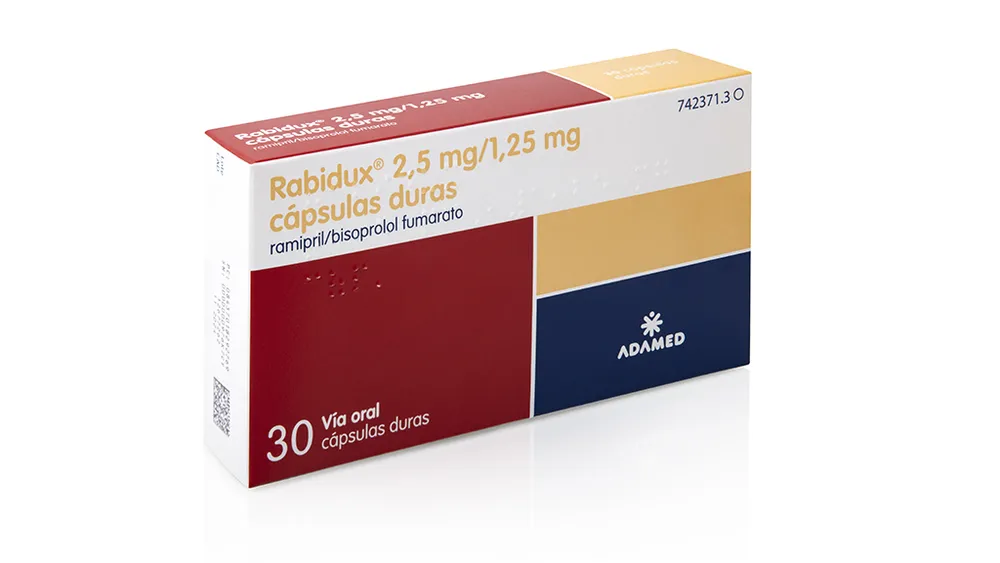
Table of Contents
Package leaflet: Information for the user
Introduction
Package leaflet: information for the patient
Rabidux 2.5 mg/1.25 mg hard capsules
Rabidux 2.5 mg/2.5 mg hard capsules
Rabidux 5 mg/2.5 mg hard capsules
Rabidux 5 mg/5 mg hard capsules
Rabidux 10 mg/5 mg hard capsules
Rabidux 10 mg/10 mg hard capsules
ramipril/bisoprolol fumarate
Read the entire leaflet carefully before you start taking this medicine, because it contains important information for you.
- Keep this leaflet, as you may need to read it again.
- If you have any questions, ask your doctor, pharmacist or nurse.
- This medicine has been prescribed for you only, and you should not give it to other people, even if they have the same symptoms as you, because it may harm them.
- If you experience any adverse reactions, consult your doctor, pharmacist or nurse, even if they are adverse reactions not listed in this leaflet. See section 4.
Contents of the leaflet
- What Rabidux is and what it is used for
- What you need to know before taking Rabidux
- How to take Rabidux
- Possible adverse effects
- How to store Rabidux
- Contents of the pack and other information
1. What Rabidux is and what it is used for
Rabidux contains two active substances, bisoprolol fumarate and ramipril, in a single capsule:
- Ramipril is an angiotensin-converting enzyme (ACE) inhibitor. It works by dilating blood vessels, making it easier for the heart to pump blood through them.
- Bisoprolol fumarate belongs to a group of medicines called beta-blockers. Beta-blockers slow down the heart rate and make the heart pump blood more effectively throughout the body.
This medicine is used to treat high blood pressure (hypertension) and/or chronic heart failure with left ventricular dysfunction (a condition in which the heart cannot pump enough blood to meet the body's needs, causing breathlessness and swelling) and/or to reduce the risk of cardiovascular events, such as myocardial infarction, in patients with chronic coronary artery disease (a condition in which blood flow to the heart is reduced or blocked) who have already had a myocardial infarction and/or a procedure to improve blood flow to the heart by dilating the blood vessels supplying it, or diabetes with at least one cardiovascular risk factor.
Instead of taking bisoprolol fumarate and ramipril in separate capsules, you will take a single capsule of this medicine containing both active substances in the same formulation.
2. What you need to know before taking Rabidux
Do not take Rabidux:
- if you are allergic to bisoprolol or any other beta-blocker, to ramipril or any other angiotensin-converting enzyme (ACE) inhibitor, or to any of the other ingredients of this medicine (listed in section 6),
- if you have heart failure that suddenly worsens and/or that may require hospital treatment,
- if you have cardiogenic shock (a serious heart condition caused by very low blood pressure),
- if you have a heart condition characterized by a slow or irregular heartbeat (second- or third-degree atrioventricular block, sinoatrial block, sick sinus syndrome),
- if you have a slow heart rate,
- if you have very low blood pressure,
- if you have severe asthma or severe chronic lung disease,
- if you have serious circulation problems in the limbs (such as Raynaud's syndrome), which may cause tingling in the fingers and toes or make them pale or blue,
- if you have untreated pheochromocytoma, a rare tumor of the adrenal gland (medulla),
- if you have metabolic acidosis, a condition in which your blood contains too much acid,
- if you have previously experienced symptoms such as wheezing, swelling of the face, tongue or throat, severe itching or serious skin rashes during prior treatment with an ACE inhibitor, or if you or a family member have ever had these symptoms under any other circumstances (a condition called “angioedema”),
- if you are more than 3 months pregnant (it is also advisable to avoid this medicine in early pregnancy; see section “Pregnancy and breastfeeding”),
- if you have diabetes or kidney failure and are being treated with a blood pressure-lowering medicine containing aliskiren,
- if you are undergoing dialysis or any other type of blood filtration. Depending on the machine used, this medicine may not be suitable for you,
- if you have kidney problems involving reduced blood supply to the kidneys (renal artery stenosis),
- if you have taken or are currently taking sacubitril/valsartan, a medicine used to treat a type of heart failure (see “Warnings and precautions” and “Other medicines and Rabidux”).
Warnings and precautions
Consult your doctor or pharmacist before starting to take this medicine if you:
-
have diabetes,
-
have kidney problems (including kidney transplant) or are undergoing dialysis,
-
have liver problems,
-
have aortic or mitral stenosis (narrowing of the main blood vessel leaving the heart) or hypertrophic cardiomyopathy (a heart muscle disease) or renal artery stenosis (narrowing of the artery supplying blood to the kidney),
-
have abnormally high levels of a hormone called aldosterone in your blood (primary hyperaldosteronism),
-
have heart failure or any other heart condition, such as minor heart rhythm disturbances or severe chest pain at rest (Prinzmetal's angina),
-
suffer from a collagen vascular disease (connective tissue disease) such as systemic lupus erythematosus or scleroderma,
-
are on a salt-restricted diet or use salt substitutes containing potassium (excess potassium in the blood may cause changes in heart rate),
-
have recently had diarrhea or vomiting, or are dehydrated (this medicine may cause a drop in blood pressure),
-
are scheduled to undergo LDL apheresis (removal of cholesterol from the blood using a machine),
-
are currently receiving allergy treatment or are about to undergo desensitization therapy to reduce the effects of an allergy to bee or wasp stings,
-
are under strict fasting or dieting,
-
are scheduled to undergo anesthesia and/or major surgery,
-
have any problems with circulation in your limbs,
-
have asthma or chronic lung disease,
-
have (or have had) psoriasis,
-
have a tumor of the adrenal gland (pheochromocytoma),
-
have thyroid disorders (this medicine may mask symptoms of an overactive thyroid),
-
have angioedema (a severe allergic reaction with swelling of the face, lips, tongue or throat, causing difficulty in swallowing or breathing). This may occur at any time during treatment. If you develop such symptoms, stop taking this medicine immediately and consult a doctor without delay,
-
are of Black race, as you may have a higher risk of angioedema and this medicine may be less effective in lowering blood pressure compared to non-Black patients,
-
are taking any of the following medicines used to treat high blood pressure:
-
an “angiotensin II receptor antagonist” (ARA) (also known as “sartans”, e.g., valsartan, telmisartan, irbesartan), particularly if you have kidney problems related to diabetes,
-
aliskiren.
Your doctor may monitor your kidney function, blood pressure, and blood electrolyte levels (e.g., potassium) at regular intervals. See also information under the heading “Do not take Rabidux”.
-
are taking any of the following medicines, as they increase the risk of angioedema:
-
racecadotril (used to treat diarrhea),
-
sirolimus, everolimus, temsirolimus, and other medicines belonging to the class of mTOR inhibitors (used to prevent rejection of transplanted organs),
-
sacubitril (available as a fixed-dose combination with valsartan), used to treat long-term heart failure.
Do not stop taking this medicine suddenly, as this may cause a serious worsening of your heart condition. Treatment should not be stopped abruptly, especially in patients with coronary artery disease.
Inform your doctor if you think you are (or might be) pregnant. This medicine is not recommended in early pregnancy and must not be taken if you are more than 3 months pregnant, as it may cause serious harm to your baby if taken during this stage (see section “Pregnancy and breastfeeding”).
Children and adolescents
The use of this medicine is not recommended in children and adolescents under 18 years of age.
Other medicines and Rabidux
Inform your doctor or pharmacist if you are taking, have recently taken, or might need to take any other medicine.
Some medicines may alter the effect of this medicine, or their effect may be altered by this medicine. Such interactions could make one or both medicines less effective. They could also increase the risk or severity of side effects.
Be sure to inform your doctor if you are taking any of the following medicines:
- medicines used to control blood pressure or medicines for heart problems (such as amiodarone, amlodipine, clonidine, digitalis glycosides, diltiazem, disopyramide, felodipine, flecainide, lidocaine, methyldopa, moxonidine, procainamide, propafenone, quinidine, rilmenidine, verapamil),
- other medicines used to treat high blood pressure, including angiotensin II receptor antagonists (ARA), aliskiren (see also information under the headings “Do not take Rabidux” and “Warnings and precautions”), or diuretics (medicines that increase the amount of urine produced by the kidneys),
- potassium-sparing medicines (e.g., triamterene, amiloride), potassium supplements, or salt substitutes containing potassium, other medicines that may increase potassium in your body (such as heparin and co-trimoxazole, also known as trimethoprim/sulfamethoxazole),
- potassium-sparing agents used in the treatment of heart failure: eplerenone and spironolactone at doses between 12.5 mg and 50 mg per day,
- sympathomimetic agents used to treat clinical shock (adrenaline, noradrenaline, dobutamine, isoprenaline, ephedrine),
- estramustine used in cancer therapy,
- medicines used more frequently to treat diarrhea (racecadotril) or to prevent rejection of transplanted organs (sirolimus, everolimus, temsirolimus and other medicines belonging to the class of mTOR inhibitors). See section “Warnings and precautions”,
- sacubitril/valsartan (used to treat long-term heart failure). See sections “Do not take Rabidux” and “Warnings and precautions”,
- lithium used to treat mania or depression,
- certain medicines used to treat depression, such as imipramine, amitriptyline, monoamine oxidase inhibitors (MAO) (except MAO-B inhibitors),
- rifampicin, an antibiotic used to treat infections,
- ergotamine derivatives, medicines used to treat dementia and migraine,
- certain medicines used to treat schizophrenia (antipsychotics),
- certain medicines used to treat epilepsy (phenytoin, barbiturates such as phenobarbital),
- anesthetic agents used for surgery,
- vasodilators, including nitrates (substances that cause blood vessels to widen),
- trimethoprim used to treat infections,
- medicines for cancer treatment (chemotherapy),
- immunosuppressants (medicines that reduce the body's defense mechanism) such as cyclosporine, tacrolimus, used to treat autoimmune disorders or after organ transplant surgery,
- steroid medicines for inflammation such as prednisolone,
- allopurinol used to treat gout,
- parasympathomimetic medicines used to treat conditions such as Alzheimer's disease or glaucoma,
- topical beta-blockers used to treat glaucoma (increased pressure in the eye),
- mefloquine used to prevent or treat malaria,
- baclofen used to treat muscle stiffness in conditions such as multiple sclerosis,
- gold salts, especially when administered intravenously (used to treat symptoms of rheumatoid arthritis),
- medicines for treating diabetes such as insulin, metformin, linagliptin, saxagliptin, sitagliptin, vildagliptin,
- non-steroidal anti-inflammatory drugs (NSAIDs) such as ibuprofen or diclofenac or high doses of aspirin used to treat arthritis, headache, pain or inflammation.
Taking Rabidux with food, drinks and alcohol
It is preferable to take this medicine before a meal.
Pregnancy and breastfeeding
If you are pregnant or breastfeeding, think you might be pregnant, or plan to become pregnant, consult your doctor or pharmacist before using this medicine.
Pregnancy
You must inform your doctor if you think you are (or might be) pregnant. Your doctor will usually advise you to stop taking this medicine before becoming pregnant or as soon as you know you are pregnant, and will recommend an alternative medicine. This medicine is not recommended during early pregnancy and must not be taken if you are more than 3 months pregnant, as it may cause serious harm to your baby if used after the third month of pregnancy.
Breastfeeding
Inform your doctor if you are breastfeeding or plan to breastfeed. This medicine is not recommended for breastfeeding mothers, and your doctor may choose an alternative treatment for you if you wish to breastfeed, especially if your baby is a newborn or was born prematurely.
Driving and use of machines
This medicine generally does not affect alertness, but some patients may experience dizziness or weakness due to low blood pressure, particularly at the beginning of treatment or when changing medication, especially when combined with alcohol. If this occurs, do not drive or operate tools or machinery.
Rabidux contains lactose
Rabidux 2.5 mg/1.25 mg contains 40.97 mg of lactose (20.49 mg glucose and 20.49 mg galactose) per dose, which should be considered in patients with diabetes mellitus.
Rabidux 2.5 mg/2.5 mg contains 40.97 mg of lactose (20.49 mg glucose and 20.49 mg galactose) per dose, which should be considered in patients with diabetes mellitus.
Rabidux 5 mg/2.5 mg contains 81.94 mg of lactose (40.97 mg glucose and 40.97 mg galactose) per dose, which should be considered in patients with diabetes mellitus.
Rabidux 5 mg/5 mg contains 81.94 mg of lactose (40.97 mg glucose and 40.97 mg galactose) per dose, which should be considered in patients with diabetes mellitus.
Rabidux 10 mg/5 mg contains 163.88 mg of lactose (81.94 mg glucose and 81.94 mg galactose) per dose, which should be considered in patients with diabetes mellitus.
Rabidux 10 mg/10 mg contains 163.88 mg of lactose (81.94 mg glucose and 81.94 mg galactose) per dose, which should be considered in patients with diabetes mellitus.
Rabidux contains sodium
This medicine contains less than 1 mmol of sodium (23 mg) per capsule; hence, it is essentially “sodium-free”.
3. How to take Rabidux
Follow exactly the instructions given by your doctor or pharmacist for taking this medicine. If you are unsure, consult your doctor or pharmacist again.
The recommended dose is one capsule once daily. Swallow the capsule with a glass of water in the morning before a meal.
Patients with renal impairment
Your doctor will adjust the dose of this medicine if you have moderate kidney disease. This medicine is not recommended if you have severe kidney disease.
Patients with hepatic impairment
Your doctor will closely monitor the start of treatment with this medicine if you have mild or moderate liver disease.
Use in children and adolescents
Use in children and adolescents is not recommended.
If you take more Rabidux than you should
If you take more capsules than prescribed, contact your doctor or pharmacist immediately.
The most likely effects in case of overdose are low blood pressure, which may cause dizziness or fainting (if this occurs, lying down with legs raised may help), severe difficulty breathing, tremors (due to low blood sugar), and slow heart rate.
In case of overdose or accidental ingestion, contact your doctor or pharmacist immediately or call the Toxicology Information Service at telephone number 91 562 04 20, indicating the medicine and the amount ingested.
If you forget to take Rabidux
It is important that you take your medicine every day, as regular treatment works best. However, if you forget to take a dose of this medicine, take the next dose at the usual time. Do not take a double dose to make up for missed doses.
If you stop taking Rabidux
Do not stop taking this medicine suddenly or change the dose without consulting your doctor, as this may cause a serious worsening of heart condition. Treatment should not be stopped abruptly, especially in patients with coronary artery disease.
If you have any further questions about the use of this medicine, ask your doctor, pharmacist, or nurse.
4. Possible adverse effects
Like all medicines, this medicine can cause adverse effects, although not everyone will experience them.
Stop taking this medicine and consult a doctor immediately if you notice any of the following serious side effects:
- severe dizziness or fainting due to low blood pressure (common – may affect up to 1 in 10 people),
- worsening of heart failure causing increased shortness of breath and/or fluid retention (common – may affect up to 1 in 10 people),
- swelling of the face, lips, mouth, tongue or throat, difficulty breathing (angioedema) (uncommon – may affect up to 1 in 100 people),
- sudden wheezing, chest pain, difficulty breathing or shortness of breath (bronchospasm) (uncommon – may affect up to 1 in 100 people),
- unusually fast or irregular heartbeat, chest pain (angina), chest tightness, or more serious problems including heart attack (uncommon – may affect up to 1 in 100 people),
- weakness in arms or legs, or difficulty speaking which could be signs of a possible stroke (frequency cannot be estimated from available data),
- inflamed pancreas which may cause severe abdominal and back pain accompanied by general malaise (uncommon – may affect up to 1 in 100 people),
- yellowing of the skin or eyes (jaundice), which could be a sign of hepatitis (rare – may affect up to 1 in 1,000 people),
- severe skin reactions including rash, mouth ulcers, worsening of pre-existing skin disease, redness, blisters or skin peeling (such as Stevens-Johnson syndrome, toxic epidermal necrolysis or erythema multiforme) (frequency unknown – frequency cannot be estimated from available data).
This medicine is usually well tolerated, but as with any medicine, people may experience different side effects, especially when starting treatment for the first time.
If you notice any of the adverse effects listed below or not mentioned, inform your doctor or pharmacist immediately:
Very common (may affect more than 1 in 10 people):
- slow heart rate.
Common (may affect up to 1 in 10 people):
- headache,
- dizziness,
- fainting, hypotension (abnormally low blood pressure), especially when standing up or sitting down quickly,
- numbness in hands or feet,
- feeling of coldness in hands or feet,
- dry, irritating cough,
- difficulty breathing,
- sinus swelling (sinusitis) or bronchitis,
- chest pain,
- gastrointestinal disorders such as nausea, vomiting, stomach or abdominal pain, indigestion or dyspepsia, diarrhea, constipation,
- allergic reactions such as rashes with or without raised areas, itching,
- muscle cramps, muscle pain (myalgia),
- feeling tired,
- fatigue,
- blood tests showing higher than normal potassium levels in your blood.
Uncommon (may affect up to 1 in 100 people):
- dizziness,
- loss or changes in taste,
- pins and needles (paraesthesia),
- blurred vision,
- tinnitus (sensation of ringing or noise in the ears),
- stuffy nose, difficulty breathing or worsening of asthma,
- abdominal swelling known as “intestinal angioedema” with symptoms such as abdominal pain, vomiting and diarrhea,
- upper abdominal pain, including gastritis,
- rhinitis, nasal congestion,
- flushing,
- mood changes,
- sleep disorders,
- feeling depressed, anxious, more nervous than usual or restless,
- dry mouth,
- sweating,
- kidney problems,
- excessive urination, more than normal during the day,
- impotence,
- elevated eosinophils (a type of white blood cells),
- drowsiness,
- palpitations,
- tachycardia,
- irregular heartbeat (atrioventricular (AV) conduction disorders),
- muscle weakness,
- arthralgia (joint pain),
- localized swelling (peripheral edema),
- fever,
- loss or decrease in appetite (anorexia),
- changes in blood test parameters: increase in certain white blood cells (eosinophilia), increased blood urea, increased blood creatinine, increased liver enzymes, high serum bilirubin levels, indicating changes in how your liver, pancreas or kidneys are functioning,
- increased protein levels in urine,
- mouth ulcers.
Rare (may affect up to 1 in 1,000 people):
- nightmares, hallucinations,
- reduced tear flow (dry eyes),
- red, itchy, swollen or watery eyes,
- severe skin scaling or peeling, raised rash, itching,
- nail problems (e.g. loss or separation of a nail from its bed),
- ear problems,
- redness of the skin and cold extremities,
- tremor, balance disorders,
- liver inflammation which may cause yellowing of the skin or whites of the eyes,
- inflammation of blood vessels (vasculitis),
- changes in blood test parameters: abnormal fat levels, decreased number of red blood cells, white blood cells or platelets, or decreased hemoglobin levels,
- allergic rhinitis.
Very rare (may affect up to 1 in 10,000 people):
- confusion,
- pancreatitis (causing severe abdominal and back pain),
- hair loss,
- onset or worsening of scaly skin rash (psoriasis), psoriasis-like rash,
- increased skin sensitivity to sunlight (photosensitivity reaction).
Frequency not known (frequency cannot be estimated from available data):
- difficulty concentrating,
- discoloration, numbness and pain in fingers or toes (Raynaud's phenomenon),
- breast enlargement in men,
- low sodium levels, very low blood sugar levels (hypoglycemia) in diabetic patients,
- tongue swelling,
- coordination problems, slowness or difficulty reacting,
- burning sensation,
- change in the smell of things.
Concentrated urine (dark in color), feeling or being unwell, muscle cramps, confusion and seizures that may be due to inappropriate ADH (antidiuretic hormone) secretion can occur with ACE inhibitors. If you experience these symptoms, contact your doctor as soon as possible.
Reporting of adverse effects
If you experience any type of adverse effect, consult your doctor, pharmacist or nurse, even if it is a possible adverse effect not listed in this leaflet. You may also report them directly via the Spanish Pharmacovigilance System for Human Medicines: https://www.notificaram.es. By reporting adverse effects, you can help provide more information on the safety of this medicine.
5. Storage of Rabidux
Keep this medicine out of the sight and reach of children.
Do not use this medicine after the expiry date stated on the blister and outer packaging following EXP. The expiry date refers to the last day of the month indicated.
Do not store above 30°C. Do not refrigerate or freeze.
Medicines must not be disposed of via wastewater or household waste. Dispose of unused medicines and their containers at the SIGRE Point located at the pharmacy. Ask your pharmacist how to dispose of medicines and containers you no longer need. This will help protect the environment.
6. Contents of the pack and other information
Composition of Rabidux
- The active substances are ramipril and bisoprolol fumarate.
- The other components are:
Capsule contents: lactose monohydrate, poly(vinyl alcohol), sodium croscarmellose (E468), stearic acid fumarate and sodium, microcrystalline cellulose, anhydrous calcium hydrogen phosphate, crospovidone type A, colloidal anhydrous silica, and magnesium stearate.
Film coating: AquaPolish P yellow: hypromellose (E464), hydroxypropylcellulose (E463), medium-chain triglycerides, talc (E553b), titanium dioxide (E171), and yellow iron oxide (E172).
Capsule shell: titanium dioxide (E171), gelatin, red iron oxide (E172) in capsules of 5 mg/2.5 mg, 5 mg/5 mg, 10 mg/5 mg, and 10 mg/10 mg; yellow iron oxide (E172) in capsules of 2.5 mg/1.25 mg, 2.5 mg/2.5 mg, 5 mg/2.5 mg, 5 mg/5 mg, and 10 mg/5 mg; and quinoline yellow (E104) in capsules of 2.5 mg/1.25 mg, 2.5 mg/2.5 mg, and 5 mg/2.5 mg.
Printing ink: shellac (E904), black iron oxide (E172), propylene glycol, strong ammonia solution, and potassium hydroxide.
Appearance of the product and contents of the pack
Rabidux 2.5 mg/1.25 mg hard capsules: the capsule has a yellow cap printed in black with "2.5 mg" and a white body printed in black with "1.25 mg".
Contents of the 2.5 mg/1.25 mg capsule: white or almost white ramipril powder and a yellow, round, biconvex tablet of bisoprolol fumarate.
Rabidux 2.5 mg/2.5 mg hard capsules: the capsule has a yellow cap printed in black with "2.5 mg" and a yellow body printed in black with "2.5 mg".
Contents of the 2.5 mg/2.5 mg capsule: white or almost white ramipril powder and a yellow, round, biconvex tablet of bisoprolol fumarate.
Rabidux 5 mg/2.5 mg hard capsules: the capsule has an orange cap printed in black with "5 mg" and a yellow body printed in black with "2.5 mg".
Contents of the 5 mg/2.5 mg capsule: white or almost white ramipril powder and a yellow, round, biconvex tablet of bisoprolol fumarate.
Rabidux 5 mg/5 mg hard capsules: the capsule has an orange cap printed in black with "5 mg" and an orange body printed in black with "5 mg".
Contents of the 5 mg/5 mg capsule: white or almost white ramipril powder and a yellow, round, biconvex tablet of bisoprolol fumarate.
Rabidux 10 mg/5 mg hard capsules: the capsule has a reddish-brown cap printed in black with "10 mg" and an orange body printed in black with "5 mg".
Contents of the 10 mg/5 mg capsule: white or almost white ramipril powder and a yellow, round, biconvex tablet of bisoprolol fumarate.
Rabidux 10 mg/10 mg hard capsules: the capsule has a reddish-brown cap printed in black with "10 mg" and a reddish-brown body printed in black with "10 mg".
Contents of the 10 mg/10 mg capsule: white or almost white ramipril powder and two yellow, round, biconvex tablets of bisoprolol fumarate.
BOPA/Al/PVC-Aluminum blisters.
Capsules are available in packs of 10, 30, 60, and 100 capsules.
Only some pack sizes may be marketed.
Marketing Authorization Holder
Adamed Laboratorios, S.L.U.
c/ de las Rosas de Aravaca, 31 - 2nd floor
28023 Madrid
Spain
Manufacturer
Adamed Pharma S.A.
ul. Marszalka Józefa Pilsudskiego 5
95-200 Pabianice
Poland
This medicinal product is authorized in the European Economic Area member states under the following names:
Member State | Medicinal Product Name |
Poland | Ramizek Plus |
Germany | RamiBiso APONTIS 2.5 mg/1.25 mg Hard Capsules RamiBiso APONTIS 2.5 mg/2.5 mg Hard Capsules RamiBiso APONTIS 5 mg/2.5 mg Hard Capsules RamiBiso APONTIS 5 mg/5 mg Hard Capsules RamiBiso APONTIS 10 mg/5 mg Hard Capsules RamiBiso APONTIS 10 mg/10 mg Hard Capsules |
Italy | Rabisop |
Spain | Rabidux 2.5 mg/1.25 mg Hard Capsules Rabidux 2.5 mg/2.5 mg Hard Capsules Rabidux 5 mg/2.5 mg Hard Capsules Rabidux 5 mg/5 mg Hard Capsules Rabidux 10 mg/5 mg Hard Capsules Rabidux 10 mg/10 mg Hard Capsules |
Date of the most recent review of this leaflet: February 2026
Detailed information about this medicine is available on the website of the Spanish Agency for Medicines and Health Products (AEMPS): http://www.aemps.gob.es.