Quetiapine Tecnigen 200 mg film-coated tablets EFG
Spain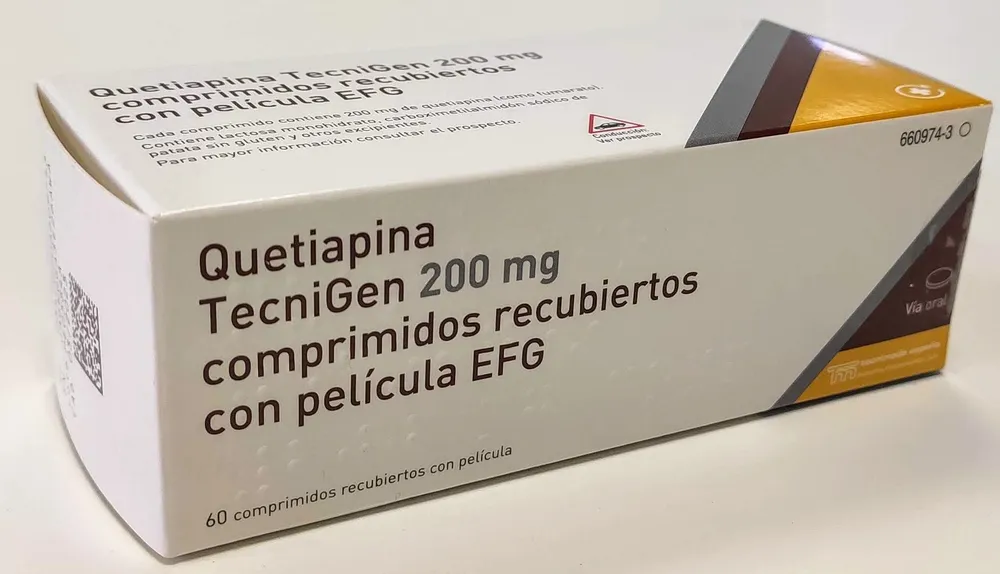
Table of Contents
- Package leaflet: Information for the user
- Introduction
- 1. What Quetiapina TecniGen film-coated tablets are and what they are used for
- 2. What you need to know before taking Quetiapina TecniGen film-coated tablets
- 3. How to take Quetiapina TecniGen film-coated tablets
- 4. Possible adverse effects
- 5. Storage of Quetiapine TecniGen film-coated tablets
- 6. Contents of the pack and other information
Package leaflet: Information for the user
Introduction
Package leaflet: information for the patient
Quetiapina TecniGen 200 mg film-coated tablets EFG
Quetiapine
Read the entire leaflet carefully before you start taking this medicine, because it contains important information for you.
- Keep this leaflet, as you may need to read it again.
- If you have any questions, ask your doctor or pharmacist.
- This medicine has been prescribed for you and you should not give it to others, even if they have the same symptoms as you, because it could harm them.
- If you experience any adverse reactions, consult your doctor or pharmacist, even if they are adverse reactions not listed in this leaflet. See Section 4.
Contents of the leaflet:
- What Quetiapina TecniGen film-coated tablets are and what they are used for
- What you need to know before taking Quetiapina TecniGen film-coated tablets
- How to take Quetiapina TecniGen film-coated tablets
- Possible side effects
- How to store Quetiapina TecniGen film-coated tablets
- Contents of the pack and other information
1. What Quetiapina TecniGen film-coated tablets are and what they are used for
Quetiapina TecniGen contains a substance called quetiapine. It belongs to a group of medicines known as antipsychotics. Quetiapina TecniGen can be used to treat several conditions, such as:
- Bipolar depression: when you feel sad. You may find that you feel depressed, guilty, lack energy, lose your appetite, or are unable to sleep.
- Mania: when you may feel very excited, euphoric, agitated, enthusiastic, or hyperactive, or have poor judgment, including being aggressive or violent.
- Schizophrenia: when you may hear or feel things that are not there, believe things that are not true, or feel abnormally suspicious, anxious, confused, guilty, tense, or depressed.
Your doctor may continue prescribing Quetiapina TecniGen even after you start feeling better.
2. What you need to know before taking Quetiapina TecniGen film-coated tablets
Do not take Quetiapina TecniGen:
-
If you are allergic (hypersensitive) to quetiapine or to any of the other ingredients of Quetiapina TecniGen film-coated tablets (listed in section 6).
-
If you are taking any of the following medicines:
- some medicines for HIV
- azole-type medicines (for fungal infections)
- erythromycin or clarithromycin (for infections)
- nefazodone (for depression).
Do not take Quetiapina TecniGen if any of the above applies to you. If you have any doubts, consult your doctor or pharmacist before taking Quetiapina TecniGen.
Warnings and precautions
Talk to your doctor or pharmacist before starting to take Quetiapina TecniGen if:
- You suffer from depression or other conditions treated with antidepressants. Using these medicines together with Quetiapina TecniGen may cause serotonin syndrome, a potentially life-threatening condition (see "Use of Quetiapina TecniGen with other medicines").
- You, or a family member, have or have had any heart problems, for example, irregular heartbeat, weakening of the heart muscle, or inflammation of the heart, or if you are taking any medicine that may affect your heartbeat.
- You have low blood pressure.
- You have had a stroke, especially if you are elderly.
- You have liver problems.
- You have ever had a seizure (epileptic fit).
- You have diabetes or are at risk of developing diabetes. If so, your doctor may monitor your blood sugar levels while you are taking quetiapine.
- You know you have previously had low levels of white blood cells (either with or without being caused by other medicines).
- You are an elderly person with dementia (loss of brain functions). In this case, you should not take quetiapine, as the group of medicines to which Quetiapina TecniGen belongs may increase the risk of stroke or, in some cases, death in these patients.
- You or a family member have a history of blood clots, as medicines like this have been associated with blood clot formation.
Contact your doctor immediately if, after taking Quetiapina TecniGen, you experience any of the following:
- A combination of fever, severe muscle stiffness, sweating, or decreased level of consciousness (a disorder known as "neuroleptic malignant syndrome"). Immediate medical treatment may be necessary.
- Uncontrolled movements, mainly of your face or tongue.
- Dizziness or excessive drowsiness. This may increase the risk of accidental injury (falls) in elderly patients.
- Seizures (epileptic fits).
- A prolonged and painful erection (priapism).
- Fast or irregular heartbeat, even at rest, palpitations, breathing difficulties, chest pain, or unexplained tiredness. Your doctor should examine your heart and, if necessary, refer you immediately to a cardiologist.
These disorders may be caused by this type of medicine.
Contact your doctor as soon as possible if you have:
- Fever, flu-like symptoms, sore throat, or any other infection, as this could be due to a very low count of white blood cells and may require stopping treatment with quetiapine and/or additional treatment.
- Constipation together with persistent abdominal pain, or constipation that has not responded to treatment, as this could lead to a more serious intestinal blockage.
Suicidal thoughts and worsening of depression
If you are depressed, you may sometimes think about harming yourself or committing suicide. This risk may increase at the beginning of treatment, as all these medicines take time to work—usually about two weeks, but sometimes longer. These thoughts may also increase if you suddenly stop taking your medication. This may be more likely if you are a young adult. Clinical trial data have shown an increased risk of suicidal thoughts and/or behaviour in young adults under 25 years of age with depression.
If at any time you think about harming yourself or committing suicide, contact your doctor or go to a hospital immediately. It may help to tell a close family member or friend that you are depressed and ask them to read this leaflet. You may also ask them to let you know if they think your depression is getting worse or if they are concerned about changes in your behaviour.
Weight gain
Weight gain has been observed in patients taking quetiapine. You and your doctor should monitor your weight regularly.
Children and adolescents
Quetiapina TecniGen must not be used in children and adolescents under 18 years of age.
Use of Quetiapina TecniGen with other medicines
Tell your doctor if you are taking, have recently taken, or might need to take any other medicines.
Do not take Quetiapina TecniGen if you are using any of the following medicines:
- Some medicines for HIV.
- Azole-type medicines (for fungal infections).
- Erythromycin or clarithromycin (for infections).
- Nefazodone (for depression).
Inform your doctor if you are using any of the following medicines:
- Antidepressants. These medicines may interact with Quetiapina TecniGen, and you may experience symptoms such as involuntary and rhythmic muscle contractions, including muscles controlling eye movement, agitation, hallucinations, coma, excessive sweating, tremor, exaggerated reflexes, increased muscle tension, and body temperature above 38°C (serotonin syndrome). Contact your doctor if you experience these symptoms.
- Medicines for epilepsy (such as phenytoin or carbamazepine).
- Medicines for high blood pressure.
- Barbiturates (for difficulty sleeping).
- Thioridazine or lithium (other antipsychotic medicines).
- Medicines that affect your heartbeat, for example, medicines that may cause an electrolyte imbalance (low levels of potassium or magnesium), such as diuretics (medicines to increase urination) or certain antibiotics (medicines to treat infections).
- Medicines that may cause constipation.
Do not stop taking any of your medicines without first consulting your doctor.
Taking Quetiapina TecniGen film-coated tablets with food, drinks, and alcohol
- Quetiapina TecniGen can be taken with or without food.
- Be cautious about the amount of alcohol you consume. This is because the combined effect of Quetiapina TecniGen and alcohol may make you drowsy.
- Do not drink grapefruit juice while taking Quetiapina TecniGen. It may affect how the medicine works.
Pregnancy and breastfeeding
If you are pregnant or breastfeeding, think you may be pregnant, or plan to become pregnant, consult your doctor before using this medicine. You should not take Quetiapina TecniGen during pregnancy unless advised by your doctor. You should not use Quetiapina TecniGen if you are breastfeeding.
The following symptoms, which may represent a withdrawal syndrome, may occur in newborns whose mothers have used quetiapine during the third trimester (last three months of pregnancy): tremor, muscle stiffness and/or weakness, drowsiness, agitation, breathing difficulties, and feeding problems. If your newborn develops any of these symptoms, you may need to contact your doctor.
Driving and using machines
These tablets may make you feel drowsy. Do not drive or operate tools or machinery until you know how these tablets affect you.
Quetiapina TecniGen film-coated tablets contain lactose
This medicine contains lactose. If your doctor has told you that you have an intolerance to certain sugars, consult him before taking this medicine.
This medicine contains less than 23 mg of sodium (1 mmol) per tablet; this is essentially "sodium-free".
Effect on urine drug screening tests
If you are undergoing a urine drug screening test, taking quetiapine may produce positive results for methadone or certain antidepressant medicines known as tricyclic antidepressants (TCAs), when certain testing methods are used—even if you are not taking methadone or TCAs. If this occurs, a more specific test can be performed.
3. How to take Quetiapina TecniGen film-coated tablets
Follow exactly the instructions for use of this medicine as given by your doctor. If in doubt, please consult your doctor or pharmacist again. Your doctor will determine your initial dose. The maintenance dose (daily dose) will depend on your condition and individual needs, but will usually range between 150 mg and 800 mg.
- You will take your tablets once daily at bedtime or twice daily, depending on your condition.
- Swallow your tablets whole with water.
- You may take the tablets with or without food.
- Do not drink grapefruit juice while taking Quetiapina TecniGen. It may affect how the medicine works.
- Do not stop taking your tablets even if you feel better, unless your doctor tells you to.
Liver problems
If you have liver problems, your doctor may adjust your dose.
Elderly patients
If you are elderly, your doctor may adjust your dose.
Use in children and adolescents
Quetiapina TecniGen must not be used in children and adolescents under 18 years of age.
If you take more Quetiapina TecniGen than you should
If you take more Quetiapina TecniGen than prescribed by your doctor, you may feel drowsy, dizzy, or experience abnormal heartbeats. Contact your doctor or nearest hospital immediately. Take the Quetiapina TecniGen tablets with you.
You may also call the Toxicology Information Service, Telephone: 915620420, stating the medicine and the amount taken.
If you forget to take Quetiapina TecniGen
If you forget to take a dose, take it as soon as you remember. If it is almost time for your next dose, wait until then. Do not take a double dose to make up for the missed tablet.
If you stop taking Quetiapina TecniGen
If you stop taking Quetiapina TecniGen abruptly, you may have difficulty sleeping (insomnia), or may feel nauseous, or may experience headache, diarrhea, vomiting, dizziness, or irritability. Your doctor may recommend gradually reducing the dose before stopping treatment.
If you have any further questions about the use of this medicine, ask your doctor or pharmacist.
4. Possible adverse effects
Like all medicines, this medicine can cause adverse effects, although not everyone experiences them.
Very common adverse effects (may affect more than 1 in 10 people):
- Dizziness (which may lead to falls), headache, dry mouth.
- Drowsiness (which may go away over time as you continue taking quetiapine) (this may lead to falls).
- Withdrawal symptoms (symptoms that occur when you stop taking quetiapine), including inability to sleep (insomnia), feeling nauseous, headache, diarrhoea, vomiting, dizziness, and irritability. Gradual discontinuation over a period of at least 1 to 2 weeks is recommended.
- Weight gain.
- Abnormal muscle movements. These include difficulty initiating muscle movements, tremor, feeling restless, or painless muscle stiffness.
- Changes in levels of certain fats (triglycerides and total cholesterol).
Common adverse effects (may affect up to 1 in 10 people):
- Fast heartbeat.
- Feeling as if your heart is pounding, racing, or beating irregularly.
- Constipation, upset stomach (indigestion).
- Feeling weak.
- Swelling of arms or legs.
- Low blood pressure when standing. This may make you feel dizzy or faint (which may lead to falls).
- Increased blood sugar levels.
- Blurred vision.
- Abnormal dreams and nightmares.
- Increased appetite.
- Feeling irritable.
- Speech and language disorders.
- Suicidal thoughts and worsening of depression.
- Shortness of breath.
- Vomiting (mainly in elderly people).
- Fever.
- Changes in levels of thyroid hormones in the blood.
- Decrease in the number of certain types of blood cells.
- Increases in liver enzyme levels measured in blood.
- Increases in blood levels of prolactin hormone. Elevated prolactin levels may, in rare cases, lead to:
- Breast enlargement and unexpected milk production in both men and women.
- In women, absence of menstruation or irregular periods.
Uncommon adverse effects (may affect up to 1 in 100 people):
- Seizures or convulsions.
- Allergic reactions which may include raised, itchy rashes (hives), skin swelling, and swelling around the mouth.
- Unpleasant sensations in the legs (also known as restless legs syndrome).
- Difficulty swallowing.
- Uncontrollable movements, mainly of the face or tongue.
- Sexual dysfunction.
- Diabetes.
- Changes in the heart's electrical activity seen on ECG (QT interval prolongation).
- Slower than normal heart rate, which may occur at the start of treatment and may be associated with low blood pressure and fainting.
- Difficulty urinating.
- Fainting (which may lead to falls).
- Stuffy nose.
- Decrease in red blood cell count.
- Decrease in blood sodium levels.
Rare adverse effects (may affect up to 1 in 1,000 people):
- A combination of high temperature (fever), sweating, muscle stiffness, and extreme drowsiness or dizziness (a disorder known as "neuroleptic malignant syndrome").
- Yellowing of the skin and eyes (jaundice).
- Inflammation of the liver (hepatitis).
- Prolonged and painful erection (priapism).
- Breast enlargement and unexpected milk production (galactorrhoea).
- Menstrual disorders.
- Blood clots in veins, particularly in the legs (symptoms include swelling, pain, and redness in the leg), which may travel through blood vessels to the lungs, causing chest pain and difficulty breathing. If you notice any of these symptoms, seek medical help immediately.
- Walking, talking, eating, or other activities while asleep.
- Decreased body temperature (hypothermia).
- Inflammation of the pancreas.
- A condition (called "metabolic syndrome") in which you may have a combination of 3 or more of the following: increased abdominal fat, decreased "good cholesterol" (HDL-C), increased levels of a type of fat in the blood called triglycerides, increased blood pressure, and increased blood sugar.
- A combination of fever, flu-like symptoms, sore throat, or any other infection with a very low white blood cell count, a condition known as agranulocytosis.
- Intestinal obstruction.
- Increased blood creatine phosphokinase (a substance from muscles).
Very rare adverse effects (may affect up to 1 in 10,000 people):
- Severe rash, blisters, or red spots on the skin.
- Severe allergic reaction (called anaphylaxis) which may cause difficulty breathing or shock.
- Rapid swelling of the skin, usually around the eyes, lips, and throat (angioedema).
- A serious condition with blisters on the skin, mouth, eyes, and genitals (Stevens-Johnson syndrome).
- Inappropriate secretion of a hormone that controls urine volume.
- Muscle fiber breakdown and muscle pain (rhabdomyolysis).
- Worsening of pre-existing diabetes.
Not known (frequency cannot be estimated from available data):
- Skin rashes with irregular red spots (erythema multiforme).
- Sudden and severe allergic reaction with symptoms such as fever, skin blisters, and skin peeling (toxic epidermal necrolysis).
- Withdrawal symptoms may occur in newborns of mothers who have used quetiapine during pregnancy.
- Drug rash with eosinophilia and systemic symptoms (DRESS). Widespread rash, high body temperature, elevated liver enzymes, blood abnormalities (eosinophilia), enlarged lymph nodes, and involvement of other organs (drug rash with eosinophilia and systemic symptoms, also known as DRESS). If you develop these symptoms, stop using quetiapine and contact your doctor or seek immediate medical attention.
- Heart muscle disorder (cardiomyopathy).
- Inflammation of the heart muscle (myocarditis).
- Inflammation of blood vessels (vasculitis), often with a skin rash showing small red or purple spots.
The class of medicines to which Quetiapina TecniGen belongs may cause problems with heart rhythm that can be serious and, in severe cases, may be fatal.
Some adverse effects are only detected through blood tests. These include changes in levels of certain fats (triglycerides and total cholesterol) or blood sugar, changes in thyroid hormone levels in the blood, increased liver enzymes, decreases in the number of certain types of blood cells, decreased red blood cell count, increased blood creatine phosphokinase (a substance found in muscles), decreased blood sodium levels, and increased blood levels of prolactin hormone. Elevated prolactin levels may, in rare cases, lead to:
- Breast enlargement and unexpected milk production in both men and women.
- In women, absence of menstruation or irregular periods.
Your doctor may ask you to have blood tests from time to time.
Adverse effects in children and adolescents
The same adverse effects that may occur in adults may also occur in children and adolescents.
The following adverse effects have been observed more frequently in children and adolescents, or were not observed in adults:
Very common adverse effects (may affect more than 1 in 10 people):
- Increase in blood levels of a hormone called prolactin. Elevated prolactin levels may, in rare cases, lead to:
- Breast enlargement and unexpected milk production in both boys and girls.
- In girls, absence of menstruation or irregular periods.
- Increased appetite.
- Vomiting.
- Abnormal muscle movements. These include difficulty initiating muscle movements, tremors, restlessness, or painless muscle stiffness.
- Increased blood pressure.
Common adverse effects (may affect up to 1 in 10 people):
- Feeling weak, fainting (which may lead to falls).
- Stuffy nose.
- Feeling irritable.
Reporting of adverse effects
If you experience any adverse effect, talk to your doctor, pharmacist, or nurse, even if it is a possible adverse effect not listed in this leaflet. You can also report them directly via the Spanish Pharmacovigilance System for Human Medicines: https://www.notificaram.es. By reporting adverse effects, you can help provide more information on the safety of this medicine.
5. Storage of Quetiapine TecniGen film-coated tablets
Keep this medicine out of the sight and reach of children.
Do not use this medicine after the expiry date stated on the packaging after EXP. The expiry date refers to the last day of the month indicated.
This medicine does not require any special storage conditions.
Medicines must not be disposed of via wastewater or household waste. Dispose of unused medicines and their containers at the SIGRE point in your pharmacy. If you are in doubt, ask your pharmacist how to dispose of medicines and containers you no longer need. This will help protect the environment.
6. Contents of the pack and other information
Composition of Quetiapine TecniGen film-coated tablets
The active substance is quetiapine. The tablets contain 200 mg of quetiapine (as quetiapine fumarate).
The other components are:
Core:
Anhydrous calcium hydrogen phosphate, lactose monohydrate, microcrystalline cellulose, sodium carboxymethyl starch from potato (gluten-free, type A), povidone, magnesium stearate.
Coating:
Hypromellose, titanium dioxide (E 171), macrogol 400.
Appearance of Quetiapine TecniGen film-coated tablets and pack contents
The tablets are round, biconvex and white.
They are available in PVC/PE/PVDC/aluminum blisters containing 1, 3, 6, 10, 20, 28, 30, 50, 60, 90, 98, 100, 120, 180, 240 tablets or 30x1, 50x1, 100x1 (combination pack).
They may also be available in HDPE bottles containing 60 or 100 tablets.
Only certain pack sizes may be marketed.
Marketing Authorization Holder and Manufacturer
Marketing Authorization Holder
Tecnimede España Industria Farmacéutica, S.A.
Avda. de Bruselas, 13, 3º D. Edificio América. Polígono Arroyo de la Vega, 28108 Alcobendas (Madrid) SPAIN
Manufacturer
HBM Pharma s.r.o
Sklabinská 30
03680 Martin
Slovene Republic
Atlantic Pharma – Produções Farmacêuticas SA
Rua da Tapada Grande nº 2,
Abrunheira. 2710 – 089 Sintra (Portugal)
Bluepharma - Indústria Farmacêutica, S.A.,
- Martino do Bispo,
Coimbra,
3045-016, Portugal
Date of the most recent revision of this leaflet: July 2024
Detailed and up-to-date information on this medicinal product is available on the website of the Spanish Agency of Medicines and Health Products (AEMPS) http://www.aemps.gob.es/