Pomalidomide STADA 4 mg hard capsules EFG
Spain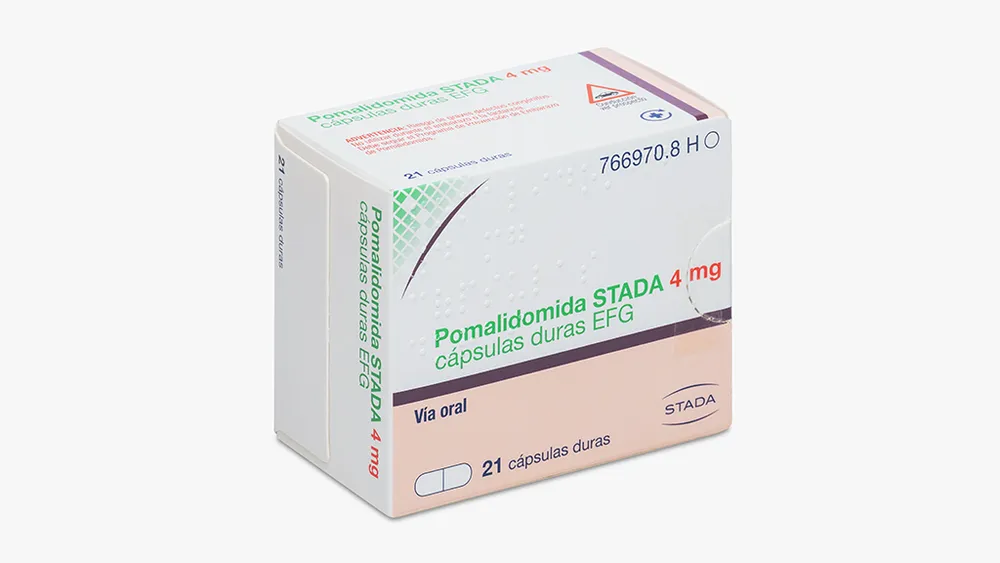
Table of Contents
- Package leaflet: Information for the user
- Introduction
- 1. What Pomalidomide Stada is and what it is used for
- 2. What you need to know before starting Pomalidomide Stada
- 3. How to take Pomalidomide Stada
- 4. Possible adverse effects
- 5. Storage of Pomalidomida Stada
- 6. Contents of the pack and other information
Package leaflet: Information for the user
Introduction
Package leaflet: information for the patient
Pomalidomide Stada 1 mg hard capsules EFG
Pomalidomide Stada 2 mg hard capsules EFG
Pomalidomide Stada 3 mg hard capsules EFG
Pomalidomide Stada 4 mg hard capsules EFG

Read the entire leaflet carefully before you start taking this medicine, as it contains important information for you.
- Keep this leaflet, as you may need to read it again.
- If you have any questions, ask your doctor, pharmacist, or nurse.
- This medicine has been prescribed for you only, and you should not give it to other people, even if they have the same symptoms as you, because it may harm them.
- If you experience any adverse effects, consult your doctor, pharmacist, or nurse, even if they are effects not listed in this leaflet. See section 4.
Leaflet contents
- What Pomalidomide Stada is and what it is used for
- What you need to know before taking Pomalidomide Stada
- How to take Pomalidomide Stada
- Possible side effects
- Storage of Pomalidomide Stada
- Contents of the pack and other information
1. What Pomalidomide Stada is and what it is used for
What Pomalidomide Stada is
Pomalidomide Stada contains the active substance "pomalidomide". This medicine is related to thalidomide and belongs to a group of medicines that affect the immune system (the body's natural defenses).
What Pomalidomide Stada is used for
Pomalidomide is used to treat adults with a type of cancer called "multiple myeloma".
Pomalidomide is used in combination with:
- Two other medicines, called "bortezomib" (a type of chemotherapy medicine) and "dexamethasone" (an anti-inflammatory medicine), in people who have received at least one other treatment, including lenalidomide.
Or
- One other medicine, called "dexamethasone", in people whose myeloma has worsened despite having received at least two other types of treatments, including the medicines lenalidomide and bortezomib.
What is multiple myeloma
Multiple myeloma is a type of cancer that affects a specific type of white blood cells (called "plasma cells"). These cells grow uncontrollably and accumulate in the bone marrow, damaging bones and kidneys.
Multiple myeloma is usually incurable. However, treatment can reduce or eliminate signs and symptoms of the disease for a period of time. When this happens, it is called a "response".
How Pomalidomide Stada works
Pomalidomide works in several ways:
- It stops the growth of myeloma cells;
- It stimulates the immune system to attack cancer cells;
- It inhibits the formation of blood vessels that supply cancer cells.
Benefit of using Pomalidomide Stada with bortezomib and dexamethasone
When pomalidomide is used with bortezomib and dexamethasone in people who have received at least one other treatment, it can delay the progression of multiple myeloma:
- Typically, the combination of Pomalidomide Stada with bortezomib and dexamethasone delayed the recurrence of multiple myeloma for up to 11 months, compared to 7 months in patients receiving bortezomib and dexamethasone alone.
Benefit of using Pomalidomide Stada with dexamethasone
When Pomalidomide Stada is used with dexamethasone in people who have received at least two prior treatments, it can delay the progression of multiple myeloma:
- Typically, the combination of Pomalidomide Stada and dexamethasone delayed the recurrence of multiple myeloma for up to 4 months, compared to 2 months in patients receiving dexamethasone alone.
2. What you need to know before starting Pomalidomide Stada
Do not take Pomalidomide Stada
- if you are allergic to pomalidomide or to any of the other ingredients of this medicine (listed in section 6). If you think you might be allergic, consult your doctor.
- if you are pregnant, think you might be pregnant, or intend to become pregnant, as pomalidomide is expected to be harmful to the fetus. (Men and women taking this medicine should read the section “Pregnancy, contraception and breastfeeding – information for women and men” below.)
- if you could become pregnant, unless you are taking all necessary measures to prevent pregnancy (see “Pregnancy, contraception and breastfeeding – information for women and men”). If you could become pregnant, your doctor will document with each prescription that all necessary measures have been taken and will provide you with this confirmation.
If you are unsure whether any of the situations described above apply to you, consult your doctor, pharmacist, or nurse before taking Pomalidomide Stada.
Warnings and precautions
Talk to your doctor, pharmacist, or nurse before starting pomalidomide if:
- you have ever had blood clots in the past. During treatment with pomalidomide, you have an increased risk of developing blood clots in your veins or arteries. Your doctor may recommend additional treatments (e.g., warfarin) or reducing your dose of pomalidomide to lower the risk of blood clots;
- you have ever had an allergic reaction, such as rash, itching, swelling, dizziness, or breathing problems while taking related medicines called “thalidomide” or “lenalidomide”;
- you have had a heart attack, have heart failure, have difficulty breathing, or if you are a smoker, have high blood pressure or high cholesterol levels;
- you have a high overall tumor burden in your body, including in the bone marrow. This could lead to a condition in which tumors break down and release unusual levels of chemicals into the blood, which in turn may cause kidney failure. You may also experience irregular heartbeats. This condition is called tumor lysis syndrome;
- you have or have had neuropathy (nerve damage causing tingling or pain in your feet or hands);
- you have or have had hepatitis B virus infection. Treatment with pomalidomide may reactivate the hepatitis B virus in patients who carry the virus, leading to a recurrence of the infection. Your doctor should check whether you have ever had a hepatitis B virus infection.
- you are experiencing or have previously experienced a combination of any of the following symptoms: facial or widespread rash, redness of the skin, high fever, flu-like symptoms, swollen lymph nodes (symptoms of a serious skin reaction called drug reaction with eosinophilia and systemic symptoms, or DRESS syndrome, or drug hypersensitivity syndrome, toxic epidermal necrolysis [TEN], or Stevens-Johnson syndrome [SJS]). See also section 4 “Possible side effects”.
It is important to note that patients with multiple myeloma treated with pomalidomide may develop other types of cancer, so your doctor must carefully evaluate the benefits and risks when prescribing this medicine.
At any time during or after treatment, inform your doctor or nurse immediately if you experience: blurred vision, loss of vision or double vision, difficulty speaking, weakness in one arm or leg, a change in the way you walk or problems with balance, persistent numbness, decreased sensation or loss of sensation, memory loss or confusion. All of these could be symptoms of a serious and potentially life-threatening brain disease known as progressive multifocal leukoencephalopathy (PML). If you had any of these symptoms before starting treatment with pomalidomide, inform your doctor if you notice any changes in these symptoms.
At the end of treatment, you must return all unused capsules to the pharmacist.
Children and adolescents
The use of pomalidomide is not recommended in children and adolescents under 18 years of age.
Other medicines and Pomalidomide Stada
Inform your doctor, pharmacist, or nurse if you are taking, have recently taken, or might need to take any other medicines. This is because pomalidomide may affect how other medicines work. In addition, some medicines may affect how pomalidomide works.
In particular, inform your doctor, pharmacist, or nurse before taking pomalidomide if you are taking any of the following medicines:
- certain antifungals such as ketoconazole
- certain antibiotics (e.g., ciprofloxacin, enoxacin)
- certain antidepressants such as fluvoxamine
Pregnancy, contraception and breastfeeding – information for men and women
You must follow the instructions outlined in the Pomalidomide Pregnancy Prevention Programme.
Men and women taking pomalidomide must not father children or become pregnant.
The reason is that pomalidomide is expected to be harmful to the fetus. You and your partner must use effective contraceptive methods while taking this medicine.
Women
Do not take pomalidomide if you are pregnant, think you might be pregnant, or intend to become pregnant. The reason is that this medicine is expected to be harmful to the fetus. Before starting treatment, you must inform your doctor if there is any possibility that you could become pregnant, even if you believe this is unlikely.
If you could become pregnant:
- you must use effective contraceptive methods starting at least 4 weeks before beginning treatment, throughout the time you are taking the medicine, and for at least 4 weeks after stopping treatment. Your doctor will advise you on the most appropriate contraceptive methods;
- each time your doctor prescribes a new prescription, they will ensure that you understand the necessary measures to prevent pregnancy;
- your doctor will schedule pregnancy tests before treatment, at least every 4 weeks during treatment, and at least 4 weeks after stopping treatment.
If you become pregnant despite preventive measures:
- you must stop treatment immediately and inform your doctor immediately.
Breastfeeding
It is unknown whether pomalidomide passes into human breast milk. Inform your doctor if you are breastfeeding or intend to breastfeed. Your doctor will advise you whether you can continue or should stop breastfeeding.
Men
Pomalidomide passes into human semen.
- If your partner is pregnant or could become pregnant, you must use condoms throughout the time you are taking the medicine and for 7 days after stopping treatment.
- If your partner becomes pregnant while you are taking pomalidomide, inform your doctor immediately. Your partner must also inform her doctor immediately.
You must not donate semen or sperm during treatment and for 7 days after stopping treatment.
Blood donation and blood tests
You must not donate blood during treatment and for 7 days after stopping treatment.
Before starting treatment with pomalidomide and during treatment, you will have periodic blood tests. This is because your medicine may cause a decrease in the number of blood cells that help fight infections (white blood cells) and in the number of cells that help stop bleeding (platelets).
Your doctor will ask you to have a blood test:
- before starting treatment;
- weekly during the first 8 weeks of treatment;
- at least once a month while continuing pomalidomide treatment.
Your doctor may adjust the dose of pomalidomide or interrupt your treatment, depending on the results of these tests. Your doctor may also adjust the dose or interrupt this medicine due to your overall health condition.
Driving and use of machines
Some people experience fatigue, fainting, confusion, or reduced alertness while taking pomalidomide. If this happens to you, do not drive or operate tools or machinery.
Pomalidomide Stada contains sodium and isomalt
This medicine contains less than 1 mmol of sodium (23 mg) per capsule; hence, it is essentially “sodium-free”.
This medicine contains isomalt. If your doctor has informed you of an intolerance to certain sugars, consult with him before taking this medicine.
3. How to take Pomalidomide Stada
Pomalidomide must be prescribed and supervised by a physician experienced in the treatment of multiple myeloma.
Follow exactly the dosing instructions provided by your doctor. If in doubt, consult your doctor, pharmacist, or nurse.
When to take pomalidomide with other medicines
Pomalidomide in combination with bortezomib and dexamethasone
- Refer to the package leaflet for bortezomib and dexamethasone for additional information on their use and effects.
- Pomalidomide, bortezomib, and dexamethasone are administered in "treatment cycles". Each cycle lasts 21 days (3 weeks).
- Refer to the following chart to see which medicines you should take each day of the 3-week cycle:
- Each day, check the chart and identify the correct day to determine which medicines to take.
- On some days you will take all three medicines, on other days only one or two medicines, and on some days none of them.
POM: Pomalidomide; BOR: Bortezomib; DEX: Dexamethasone
Cycles 1 to 8 | Cycle 9 and beyond |
Drug Name | Drug Name | |||||||
Day | POM | BOR | DEX | Day | POM | BOR | DEX | |
1 | √ | √ | √ | 1 | √ | √ | √ | |
2 | √ | √ | 2 | √ | √ | |||
3 | √ | 3 | √ | |||||
4 | √ | √ | √ | 4 | √ | |||
5 | √ | √ | 5 | √ | ||||
6 | √ | 6 | √ | |||||
7 | √ | 7 | √ | |||||
8 | √ | √ | √ | 8 | √ | √ | √ | |
9 | √ | √ | 9 | √ | √ | |||
10 | √ | 10 | √ | |||||
11 | √ | √ | √ | 11 | √ | |||
12 | √ | √ | 12 | √ | ||||
13 | √ | 13 | √ | |||||
14 | √ | 14 | √ | |||||
15 | 15 | |||||||
16 | 16 | |||||||
17 | 17 | |||||||
18 | 18 | |||||||
19 | 19 | |||||||
20 | 20 | |||||||
21 | 21 |
- After completing each 3-week cycle, begin a new one.
Pomalidomide alone with dexamethasone
-
Refer to the package leaflet supplied with dexamethasone for additional information on its use and effects.
-
Pomalidomide and dexamethasone are taken in "treatment cycles". Each cycle lasts 28 days (4 weeks).
-
See the following chart to determine which medications to take each day of the 4-week cycle:
- Each day, consult the chart and identify the correct day to see which medications you should take.
- On some days you will take both medications, on other days only one medication, and on some days neither.
POM: Pomalidomide; DEX: dexamethasone
Medication Name | ||
Day | POM | DEX |
1 | √ | √ |
2 | √ | |
3 | √ | |
4 | √ | |
5 | √ | |
6 | √ | |
7 | √ | |
8 | √ | √ |
9 | √ | |
10 | √ | |
11 | √ | |
12 | √ | |
13 | √ | |
14 | √ | |
15 | √ | √ |
16 | √ | |
17 | √ | |
18 | √ | |
19 | √ | |
20 | √ | |
21 | √ | |
22 | √ | |
23 | ||
24 | ||
25 | ||
26 | ||
27 | ||
28 |
- After completing each 4-week cycle, begin a new one.
How much pomalidomide to take with other medicines
Pomalidomide with bortezomib and dexamethasone
- The recommended starting dose of pomalidomide is 4 mg once daily.
- The recommended starting dose of bortezomib will be calculated by your doctor based on your height and weight (1.3 mg/m2 body surface area).
- The recommended starting dose of dexamethasone is 20 mg daily. However, if you are over 75 years of age, the recommended starting dose is 10 mg daily.
Pomalidomide alone with dexamethasone
- The recommended dose of pomalidomide is 4 mg once daily.
- The recommended starting dose of dexamethasone is 40 mg daily. However, if you are over 75 years of age, the recommended starting dose is 20 mg daily.
Your doctor may need to reduce the dose of pomalidomide, bortezomib, or dexamethasone, or interrupt one or more of these medicines based on your blood test results and general condition, whether you are taking other medicines (e.g., ciprofloxacin, enoxacin, and fluvoxamine), and if you experience adverse effects (especially rash or swelling) as a result of treatment.
If you have liver or kidney problems, your doctor will carefully monitor your condition while you are receiving this medicine.
How to take Pomalidomide Stada
- Do not break, open, or chew the capsules. If the powder from a broken capsule comes into contact with the skin, wash the skin immediately and thoroughly with soap and water.
- Healthcare professionals, caregivers, and family members should wear disposable gloves when handling the blister pack or capsule. Gloves should then be carefully removed to avoid skin exposure, placed into a sealed polyethylene plastic bag, and disposed of according to local requirements. Hands should then be washed thoroughly with soap and water. Pregnant women or women who suspect they may be pregnant must not handle the blister pack or capsule.
- Swallow the capsules whole, preferably with water.
- You may take the capsules with or without food.
- You should take the capsules at approximately the same time each day.
To remove the capsule from the blister pack, press only on one end of the capsule so that it comes through the foil. Do not press in the center of the capsule, as this may break it.
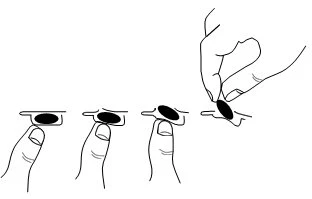
Your doctor will advise you on how and when to take pomalidomide if you have kidney problems and are undergoing dialysis treatment.
Duration of treatment with Pomalidomide Stada
You should continue treatment cycles until your doctor tells you to stop treatment.
If you take more Pomalidomide Stada than you should
If you take more pomalidomide than you should, inform your doctor or go to hospital immediately. Take the medicine packaging with you.
In case of overdose or accidental ingestion, contact your doctor or pharmacist immediately, or call the Toxicology Information Service at 91 562 04 20, indicating the medicine and the amount ingested.
If you forget to take Pomalidomide Stada
If you forget to take pomalidomide on the day you were supposed to, take the next capsule the following day at your usual time.
Do not take extra capsules to make up for the dose of pomalidomide you missed the previous day.
If you have any further questions about the use of this medicine, ask your doctor or pharmacist.
4. Possible adverse effects
Like all medicines, this medicine can cause adverse effects, although not everyone experiences them.
Serious adverse effects
If you experience any of the following serious adverse effects, stop treatment with pomalidomide and see a doctor immediately, as you may require urgent medical treatment:
- Fever, chills, sore throat, cough, mouth ulcers, or any other sign of infection (due to reduced white blood cells responsible for fighting infection).
- Bleeding or bruising without apparent cause, including nosebleeds and intestinal or stomach bleeding (due to effects on blood cells called "platelets").
- Rapid breathing, fast pulse, fever and chills, little or no urine output, nausea and vomiting, confusion, unconsciousness (due to a blood infection called sepsis or septic shock).
- Severe, persistent, or bloody diarrhea (possibly accompanied by stomach pain or fever) caused by the bacterium Clostridium difficile.
- Chest or leg pain and swelling, especially in the lower leg or calves (caused by blood clots).
- Difficulty breathing (due to a severe chest infection, lung inflammation, heart failure, or blood clots).
- Swelling of the face, lips, tongue, and throat, which may cause breathing difficulties (due to severe types of allergic reactions called angioedema and anaphylactic reaction).
- Certain types of skin cancer (squamous cell carcinoma and basal cell carcinoma), which may cause changes in the appearance of the skin or lumps on the skin. If you notice changes in your skin while taking pomalidomide, inform your doctor as soon as possible.
- Reactivation of hepatitis B virus infection, which may cause yellowing of the skin and eyes, dark brown urine, right-sided abdominal pain, fever, nausea, or malaise. Inform your doctor immediately if you notice any of these symptoms.
- Widespread rash, high body temperature, swollen lymph nodes, and effects on other organs (drug reaction with eosinophilia and systemic symptoms, also known as DRESS syndrome or drug hypersensitivity syndrome, toxic epidermal necrolysis, or Stevens-Johnson syndrome). Stop taking pomalidomide if you develop these symptoms and contact your doctor or seek immediate medical attention. See also section 2.
If you experience any of the following serious adverse effects, stop treatment with pomalidomide and seek medical help immediately, as you may require urgent medical treatment.
Other adverse effects
Very common (may affect more than 1 in 10 people):
- Difficulty breathing (dyspnea).
- Lung infection (pneumonia and bronchitis).
- Infections of the nose, sinuses, and throat caused by bacteria or viruses.
- Flu-like symptoms (influenza).
- Low red blood cell count, which may lead to anemia causing fatigue and weakness.
- Low levels of potassium in the blood (hypokalemia), which may cause weakness, muscle cramps and pain, palpitations, tingling or numbness, dyspnea, and mood changes.
- High blood sugar levels.
- Fast and irregular heartbeat (atrial fibrillation).
- Loss of appetite.
- Constipation, diarrhea, or nausea.
- Vomiting.
- Abdominal pain.
- Lack of energy.
- Difficulty falling or staying asleep.
- Dizziness, tremor.
- Muscle spasms, muscle weakness.
- Bone pain, back pain.
- Numbness, tingling, or burning sensation in the skin, pain in hands or feet (peripheral sensory neuropathy).
- Generalized swelling, including swelling of arms and legs.
- Skin rashes.
- Urinary tract infection, which may cause a burning sensation when urinating or increased need to urinate.
Common (may affect up to 1 in 10 people):
- Falls.
- Bleeding inside the skull.
- Reduced ability to move or feel (sensation) in the hands, feet, and legs due to neurological damage (peripheral sensorimotor neuropathy).
- Numbness, itching, or tingling in the skin (paresthesia).
- Sensation of dizziness or vertigo, making it difficult to stand or move normally.
- Swelling due to fluid retention.
- Hives (urticaria).
- Itching of the skin.
- Shingles (herpes zoster).
- Heart attack (chest pain spreading to the arms, neck, and jaw, sweating, shortness of breath, nausea or vomiting).
- Chest pain, chest infection.
- Increased blood pressure.
- Reduction in the number of red blood cells, white blood cells, and platelets at the same time (pancytopenia), making you more prone to bleeding and bruising. You may feel tired and weak and have difficulty breathing. You will also be more susceptible to infections.
- Decreased number of lymphocytes (a type of white blood cell), often due to infection (lymphopenia).
- Low levels of magnesium in the blood (hypomagnesemia), which may cause fatigue, generalized weakness, muscle cramps, irritability, and may lead to low levels of calcium in the blood (hypocalcemia), causing numbness or tingling in the hands, feet, or lips, muscle cramps, muscle weakness, dizziness, confusion.
- Low levels of phosphate in the blood (hypophosphatemia), which may cause muscle weakness, irritability, or confusion.
- High levels of calcium in the blood (hypercalcemia), which may slow reflexes and cause skeletal muscle weakness.
- High levels of potassium in the blood, which may cause an abnormal heart rhythm.
- Low levels of sodium in the blood, which may cause fatigue and confusion, muscle twitching, seizures (epileptic convulsions), or coma.
- High levels of uric acid in the blood, which may cause a type of arthritis called gout.
- Low blood pressure, which may cause dizziness or fainting.
- Mouth pain or dryness.
- Changes in taste.
- Bloating.
- Confusion.
- Feeling low (depressed mood).
- Loss of consciousness, fainting.
- Cloudiness in the eye (cataract).
- Kidney damage.
- Inability to urinate.
- Abnormal results in liver function tests.
- Pelvic pain.
- Weight loss.
Uncommon (may affect up to 1 in 100 people):
- Stroke.
- Inflammation of the liver (hepatitis), which may cause itchy skin, yellowing of the skin and whites of the eyes (jaundice), pale stools, dark urine, and abdominal pain.
- Breakdown of tumor cells resulting in the release of toxic substances into the bloodstream (tumor lysis syndrome). This may lead to kidney problems.
- Underactive thyroid gland, which may cause symptoms such as fatigue, lethargy, muscle weakness, slow heart rate, and weight gain.
Frequency not known (cannot be estimated from available data):
- Rejection of solid organ transplants (such as heart or liver).
Reporting of adverse effects
If you experience any adverse effect, talk to your doctor or pharmacist, even if it is a possible adverse effect not listed in this leaflet. You may also report them directly via the Spanish Pharmacovigilance System for Human Medicines: https://www.notificaram.es. By reporting adverse effects, you can help provide more information on the safety of this medicine.
5. Storage of Pomalidomida Stada
Keep this medicine out of the sight and reach of children.
Do not use this medicine after the expiry date stated on the blister and carton after EXP. The expiry date is the last day of the month indicated.
No special storage conditions are required.
Do not use Pomalidomida Stada if you notice any visible signs of deterioration or evidence of tampering with the medicine.
Medicines must not be disposed of via wastewater or household waste. Dispose of unused medicines and their packaging at a SIGRE point at your pharmacy. If you have any doubts, ask your pharmacist how to dispose of medicines and packaging you no longer need. This will help protect the environment.
6. Contents of the pack and other information
Composition of Pomalidomide Stada
- The active substance is pomalidomide.
- The other components are isomalt 801, isomalt 721, pregelatinized corn starch, and stearoyl fumarate sodium.
Pomalidomide Stada 1 mg hard capsules EFG:
- Each capsule contains 1 mg of pomalidomide.
- The capsule shell contains: gelatin, titanium dioxide (E171), yellow iron oxide (E172), and black ink.
Pomalidomide Stada 2 mg hard capsules EFG:
- Each capsule contains 2 mg of pomalidomide.
- The capsule shell contains: gelatin, titanium dioxide (E171), red iron oxide (E172), yellow iron oxide (E172), and black ink.
Pomalidomide Stada 3 mg hard capsules EFG:
- Each capsule contains 3 mg of pomalidomide.
- The capsule shell contains: gelatin, titanium dioxide (E171), brilliant blue FCF (E133), and black ink.
Pomalidomide Stada 4 mg hard capsules EFG:
- Each capsule contains 4 mg of pomalidomide.
- The capsule shell contains: gelatin, brilliant blue FCF (E133), titanium dioxide (E171), erythrosine (E127), and black ink.
The printing ink contains shellac (E904), concentrated ammonia solution, potassium hydroxide, and black iron oxide (E172).
Appearance of the product and contents of the pack
Pomalidomide Stada 1 mg hard capsules EFG: Opaque yellow cap and opaque yellow body, capsule size No. 4 (approximately 14 mm x 5 mm), printed with "LP" in black ink on the cap and "664" on the body, containing yellow granular powder.
Pomalidomide Stada 2 mg hard capsules EFG: Opaque orange cap and opaque orange body, capsule size No. 3 (approximately 16 mm x 6 mm), printed with "LP" in black ink on the cap and "665" on the body, containing yellow granular powder.
Pomalidomide Stada 3 mg hard capsules EFG: Opaque blue cap and opaque blue body, capsule size No. 2 (approximately 18 mm x 6 mm), printed with "LP" in black ink on the cap and "690" on the body, containing yellow granular powder.
Pomalidomide Stada 4 mg hard capsules EFG: Opaque blue cap and opaque blue body, capsule size No. 2 (approximately 18 mm x 6 mm), printed with "LP" in black ink on the cap and "667" on the body, containing yellow granular powder.
Pack sizes:
PVC/PCTFE (Aclar) – Aluminium or OPA/Al/PVC – Aluminium blisters:
14 hard capsules (blister)
14 hard capsules (single-dose perforated blister)
21 hard capsules (blister)
21 hard capsules (single-dose perforated blister)
Only some pack sizes may be marketed.
Marketing Authorization Holder
Laboratorio STADA, S.L.
Frederic Mompou, 5
08960 Sant Just Desvern (Barcelona)
Spain
Manufacturer
Qualimetrix S.A.
Mesogeion Avenue 579, Agia Paraskevi
Athens 153 43
Greece
or
Adalvo Limited
Malta Life Sciences Park Building 1 Level 4
Sir Temi Zammit Buildings
San Gwann, SGN 3000
Malta
or
Pharmadox Healthcare Limited
Kw20a Kordin Industrial Park
Paola, PLA 3000
Malta
or
STADA Arzneimittel AG
Stadastrasse 2-18, Dortelweil
Bad Vilbel 61118
Germany
or
STADA Arzneimittel GmbH
Muthgasse 36/2
Vienna 1190
Austria
or
Clonmel Healthcare Limited
Waterford Road
Clonmel, Co. Tipperary E91 D768
Ireland
This medicinal product is authorized in the European Economic Area member states under the following names:
Netherlands Pomalidomide CF 1 mg, hard capsules
Pomalidomide CF 2 mg, hard capsules
Pomalidomide CF 3 mg, hard capsules
Pomalidomide CF 4 mg, hard capsules
Austria Pomalidomid STADA 1 mg Hartkapseln
Pomalidomid STADA 2 mg Hartkapseln
Pomalidomid STADA 3 mg Hartkapseln
Pomalidomid STADA 4 mg Hartkapseln
Belgium Pomalidomide EG 1 mg hard capsules
Pomalidomide EG 2 mg hard capsules
Pomalidomide EG 3 mg hard capsules
Pomalidomide EG 4 mg hard capsules
Cyprus Pomalidomide/Stada
Germany Pomalidomid AL 1 mg Hartkapseln
Pomalidomid AL 2 mg Hartkapseln
Pomalidomid AL 3 mg Hartkapseln
Pomalidomid AL 4 mg Hartkapseln
Denmark Pomalidomide STADA
Estonia Pomalidomide STADA
Greece Pomalidomide/Stada
Spain Pomalidomida STADA 1 mg cápsulas duras EFG
Pomalidomida STADA 2 mg cápsulas duras EFG
Pomalidomida STADA 3 mg cápsulas duras EFG
Pomalidomida STADA 4 mg cápsulas duras EFG
Finland Pomalidomide STADA 1 mg kapselit, kovat
Pomalidomide STADA 2 mg kapselit, kovat
Pomalidomide STADA 3 mg kapselit, kovat
Pomalidomide STADA 4 mg kapselit, kovat
France POMALIDOMIDE EG 1 mg, gélule
POMALIDOMIDE EG 2 mg, gélule
POMALIDOMIDE EG 3 mg, gélule
POMALIDOMIDE EG 4 mg, gélule
Hungary Pomalidomide Stada 1 mg kemény kapszula
Pomalidomide Stada 2 mg kemény kapszula
Pomalidomide Stada 3 mg kemény kapszula
Pomalidomide Stada 4 mg kemény kapszula
Ireland Pomalidomide Clonmel 1 mg hard capsules
Pomalidomide Clonmel 2 mg hard capsules
Pomalidomide Clonmel 3 mg hard capsules
Pomalidomide Clonmel 4 mg hard capsules
Iceland Pomalidomide STADA 1 mg hörð hylki
Pomalidomide STADA 2 mg hörð hylki
Pomalidomide STADA 3 mg hörð hylki
Pomalidomide STADA 4 mg hörð hylki
Italy Pomalidomide EG
Lithuania Pomalidomide STADA 1 mg kietosios kapsulės
Pomalidomide STADA 2 mg kietosios kapsulės
Pomalidomide STADA 3 mg kietosios kapsulės
Pomalidomide STADA 4 mg kietosios kapsulės
Luxembourg Pomalidomide EG 1 mg gélules
Pomalidomide EG 2 mg gélules
Pomalidomide EG 3 mg gélules
Pomalidomide EG 4 mg gélules
Latvia Pomalidomide STADA 1 mg cietas kapsulas
Pomalidomide STADA 2 mg cietas kapsulas
Pomalidomide STADA 3 mg cietas kapsulas
Pomalidomide STADA 4 mg cietas kapsulas
Malta Pomalidomide Clonmel 1 mg hard capsules
Pomalidomide Clonmel 2 mg hard capsules
Pomalidomide Clonmel 3 mg hard capsules
Pomalidomide Clonmel 4 mg hard capsules
Norway Pomalidomide STADA
Poland Pomalidomide Stada
Portugal Pomalidomida Stada
Romania Pomalidomida Stada 1 mg capsule
Pomalidomida Stada 2 mg capsule
Pomalidomida Stada 3 mg capsule
Pomalidomida Stada 4 mg capsule
Sweden Pomalidomide STADA 1 mg hårda kapslar
Pomalidomide STADA 2 mg hårda kapslar
Pomalidomide STADA 3 mg hårda kapslar
Pomalidomide STADA 4 mg hårda kapslar
Slovenia Pomalidomid STADA 1 mg trde kapsule
Pomalidomid STADA 2 mg trde kapsule
Pomalidomid STADA 3 mg trde kapsule
Pomalidomid STADA 4 mg trde kapsule
Slovakia Pomalidomid STADA 1/2/3/4 mg tvrdé kapsuly
Date of latest review of this package leaflet: December 2024
Detailed information on this medicinal product is available on the website of the Spanish Agency of Medicines and Health Products (AEMPS) http://www.aemps.gob.es/.