Piqray 200 mg film-coated tablets
Spain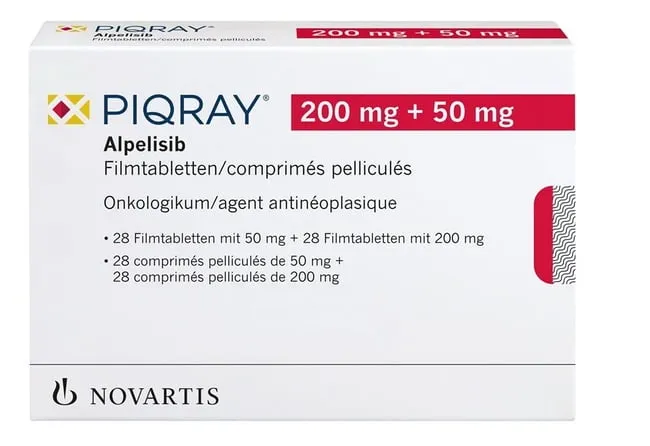
Table of Contents
Package leaflet: Information for the patient
Introduction
Package leaflet: information for the patient
Piqray 50 mg film-coated tablets
Piqray 150 mg film-coated tablets
Piqray 200 mg film-coated tablets
alpelisib
Read the entire leaflet carefully before you start taking this medicine, because it contains important information for you.
- Keep this leaflet; you may need to read it again.
- If you have any questions, ask your doctor, pharmacist, or nurse.
- This medicine has been prescribed for you only; do not give it to others, even if they have the same symptoms as you, because it may harm them.
- If you experience any adverse effects, consult your doctor, pharmacist, or nurse, even if they are effects not listed in this leaflet. See section 4.
Contents of the leaflet
- What Piqray is and what it is used for
- What you need to know before taking Piqray
- How to take Piqray
- Possible side effects
- How to store Piqray
- Contents of the pack and other information
1. What Piqray is and what it is used for
What Piqray is
Piqray contains the active substance alpelisib, which belongs to a group of medicines known as phosphatidylinositol 3-kinase (PI3K) inhibitors.
What Piqray is used for
Piqray is used to treat postmenopausal women and men with a type of breast cancer called advanced hormone receptor-positive (HR+), human epidermal growth factor receptor 2-negative (HER2-) breast cancer. Piqray is used in combination with fulvestrant, a hormonal therapy for cancer, in patients whose cancer has not responded to other hormonal treatments and who have specific genetic alterations (mutations) in a gene called PIK3CA.
Your doctor will take a blood and/or tumour tissue sample, which will be tested for these PIK3CA mutations. If the test result is positive, it is likely that the cancer will respond to treatment with Piqray.
How Piqray works
Piqray works by blocking the effects of enzymes called phosphatidylinositol-3-kinases (PI3K). These enzymes help cancer cells grow and multiply. By blocking their activity, Piqray may reduce the growth and spread of cancer and help destroy cancer cells.
If you have any questions about how Piqray works or why this medicine has been prescribed for you, ask your doctor, pharmacist, or nurse.
2. What you need to know before taking Piqray
Follow your doctor's instructions carefully, as they may differ from the general information contained in this leaflet. Consult your doctor if you have any questions.
Do not take Piqray
- if you are allergic to alpelisib or to any of the other ingredients of this medicine (listed in section 6). If you think you may be allergic, consult your doctor.
Warnings and precautions
Talk to your doctor or pharmacist before taking Piqray.
Tell your doctor or pharmacist if you are in any of the following situations before starting Piqray:
- if you have or have ever had high blood sugar levels or diabetes (or signs of high blood sugar such as excessive thirst and dry mouth, need to urinate more frequently than usual, increased urine output, fatigue, nausea, increased appetite with weight loss).
- if you have ever had Stevens-Johnson syndrome (SJS, a serious reaction with flu-like symptoms and a painful rash affecting the skin, mouth, eyes, and genitals), erythema multiforme (EM, a skin reaction causing red spots or patches on the skin that may look like targets or "bull's-eye" lesions with a dark red center surrounded by paler red rings), drug reaction with eosinophilia and systemic symptoms (DRESS, a skin reaction combined with fever, facial swelling, swollen lymph nodes, and kidney or liver involvement), or toxic epidermal necrolysis (TEN, a serious skin reaction with redness of the skin, blistering of the lips, eyes or mouth, skin peeling, with or without fever, rash).
- if you have a serious bone disease affecting the jaw (osteonecrosis of the jaw, ONJ).
Tell your doctor or pharmacist immediately if you experience any of the following during treatment with Piqray:
- rash, itching, hives, wheezing, difficulty breathing, shortness of breath, cough, fainting, dizziness, changes in level of consciousness, low blood pressure, redness of the skin, swelling of the face or throat, bluish discoloration of the lips, tongue, or skin (possible signs of a severe allergic reaction).
- new or worsening respiratory problems, such as difficulty or painful breathing, cough, rapid breathing, bluish discoloration of lips, tongue or skin, hiccups (possible signs of non-infectious pneumonitis or pneumonia).
- increased thirst and dry mouth, urinating more frequently than usual, fatigue, increased appetite with weight loss, confusion, nausea, vomiting, fruity breath odor, difficulty breathing, and dry or red skin, which may be signs of high blood sugar (hyperglycemia) and its complications.
- rash, redness of the skin, blistering of the lips, eyes or mouth, skin peeling, sometimes with fever (possible signs of one of the following skin disorders: Stevens-Johnson syndrome [SJS], erythema multiforme [EM], drug reaction with eosinophilia and systemic symptoms [DRESS], or toxic epidermal necrolysis [TEN]).
- onset or worsening of symptoms affecting the mouth (such as loose teeth, pain or swelling, poor healing of mouth sores, or discharge).
- severe diarrhea or severe abdominal pain or stools containing mucus or blood, which may be signs of inflammation of the intestine (colitis).
Your doctor may need to treat these symptoms and temporarily interrupt your treatment, reduce the dose, or permanently stop your treatment with Piqray.
Blood tests before and during your treatment with Piqray
Your doctor will perform blood tests before and periodically during treatment with Piqray to monitor your blood sugar levels. Based on the results, your doctor will take necessary actions, such as prescribing a medication to lower blood sugar levels. If necessary, your doctor may decide to temporarily interrupt Piqray treatment or reduce the Piqray dose to allow blood sugar levels to decrease. Your doctor may also decide to permanently discontinue Piqray treatment.
Make sure you regularly monitor your blood sugar levels before starting treatment, during treatment, and after stopping treatment with Piqray.
- Your doctor will inform you when and where to have blood tests performed. Treatment with Piqray can only begin if blood tests show that your blood sugar levels are within acceptable limits. This is because Piqray can cause an increase in blood sugar (hyperglycemia), which can be serious and require treatment. Your doctor can only detect developing hyperglycemia through periodic fasting blood tests.
- Your doctor will tell you exactly when and where to perform blood sugar testing. Testing will be more frequent during the first 4 weeks of treatment, especially during the first 2 weeks of Piqray treatment. Afterward, blood tests will be needed at least once a month, depending on your blood sugar levels.
Children and adolescents
Piqray must not be used in children and adolescents under 18 years of age.
Other medicines and Piqray
Tell your doctor or pharmacist if you are taking, have recently taken, or might need to take any other medicines. This includes especially:
- eltrombopag, a medicine used to treat low platelet counts
- medicines used to treat breast cancer (such as lapatinib, ribociclib)
- everolimus, apalutamide, enzalutamide, and mitotane, medicines used to treat certain types of cancer
- pantoprazole, a medicine used to treat acid reflux and reduce stomach acid production
- midazolam, a medicine used for sedation or sleep disorders
- rifampicin, a medicine used to treat tuberculosis or certain other serious infections
- carbamazepine and phenytoin, medicines used to treat seizures
- St. John’s wort, a herbal product used to treat depression and other conditions
- encorafenib, a medicine used to treat a type of skin cancer
- warfarin, a medicine used to reduce blood clotting
Consult your doctor or pharmacist if you are unsure whether your medicine is one of those listed above.
Pregnancy, breastfeeding, and fertility
Piqray must not be used in women who are pregnant or may be pregnant or who are breastfeeding. Piqray may harm your unborn baby. If you think you may be pregnant or plan to become pregnant, consult your doctor or pharmacist before using this medicine. Women must not breastfeed during treatment and for at least 1 week after the last dose of Piqray. Your doctor will discuss with you the potential risks of taking Piqray during pregnancy or breastfeeding.
If you are a woman who could become pregnant, your doctor must rule out pregnancy before starting treatment with Piqray. This may include performing a pregnancy test.
Women who could become pregnant must use an effective method of contraception during treatment and for at least 1 week after stopping Piqray treatment. Discuss the most appropriate methods with your doctor. If you think you may be pregnant after starting Piqray treatment, inform your doctor immediately.
During treatment and for at least 1 week after stopping treatment, male patients must use condoms when having sexual intercourse with women who could become pregnant. If a male patient’s partner suspects she has become pregnant during this time, she must inform the doctor immediately.
Driving and using machines
Treatment with Piqray may cause fatigue or blurred vision. Therefore, you should exercise caution when driving or operating machinery during treatment with Piqray.
Piqray contains sodium
This medicine contains less than 1 mmol of sodium (23 mg) per film-coated tablet; this is essentially "sodium-free".
3. How to take Piqray
Follow exactly the instructions for using this medicine as given by your doctor.
If you are unsure, consult your doctor again.
How much Piqray to take
The usual starting dose of Piqray is 300 mg once daily. Your doctor will decide the appropriate dose for you.
Depending on the dose prescribed to you, you will need to take the following number of tablets:
- 300 mg dose: two 150 mg tablets
- 250 mg dose: one 200 mg tablet and one 50 mg tablet
- 200 mg dose: one 200 mg tablet
Depending on how you respond to treatment with Piqray, your doctor may adjust your Piqray dose. It is very important to follow your doctor's instructions. If you experience any adverse effects, your doctor may advise you to switch to a lower dose, temporarily interrupt treatment, or discontinue treatment.
Your doctor will determine the dose of fulvestrant you should receive and when you should receive it.
When to take Piqray
Piqray tablets are supplied in packs containing blister strips. Each blister shows the tablet(s) to be taken each day of the week. Follow the instructions on the blister.
Take Piqray once daily, immediately after a meal. Taking Piqray at the same time each day will help you remember when to take your medicine.
How to take Piqray
Piqray tablets must be swallowed whole and must not be chewed, crushed, or split before swallowing. Do not take any tablets that are broken, cracked, or damaged, as you may not receive the full dose.
If you vomit after taking the Piqray tablet(s), do not take another tablet until your next scheduled dose.
How long to take Piqray
Take Piqray for as long as your doctor tells you to.
This is a long-term treatment, possibly lasting months or years. Your doctor will periodically review your condition to monitor whether the treatment is having the desired effect.
If you have any doubts about how long you should take Piqray, consult your doctor or pharmacist.
If you take more Piqray than you should
People who have taken too many Piqray tablets have experienced effects that are known adverse reactions of Piqray, including high blood sugar levels, nausea, fatigue, and rash. If you accidentally take too many tablets, or if someone else accidentally takes your medicine, contact a doctor or go to a hospital immediately. Medical treatment may be necessary.
If you forget to take Piqray
If you forget to take a dose of Piqray, you may take it immediately after a meal, up to 9 hours after the time you were supposed to take it. If you remember more than 9 hours after the scheduled time, do not take the missed dose. On the next day, take your dose at the usual time. Do not take a double dose to make up for a missed dose.
If you stop taking Piqray
Stopping your treatment with Piqray may cause your condition to worsen. Do not stop treatment with Piqray unless your doctor tells you to.
If you have any further questions about the use of this medicine, ask your doctor or pharmacist.
4. Possible adverse effects
Like all medicines, this medicine can cause adverse effects, although not everyone experiences them.
Some adverse effects could be serious
If you experience any serious adverse effect, stop taking the medicine immediately and inform your doctor right away.
Very common (may affect more than 1 in 10 patients):
- Excessive thirst, urinating more frequently than usual, or passing larger amounts of urine than usual, increased appetite with weight loss (possible symptoms of high blood sugar levels, also called hyperglycemia)
- Fever, cough, nasal inflammation, enlarged lymph nodes, painful joints, rash, night sweats, weight loss (possible symptoms of low lymphocyte levels, a type of white blood cell)
Common (may affect up to 1 in 10 patients):
- Rash, itching, hives, shortness of breath, difficulty breathing, wheezing, cough, fainting, dizziness, changes in level of consciousness, low blood pressure, skin redness, swelling of the face and/or throat, bluish discoloration of the lips, tongue, or skin (possible signs of severe allergic reactions)
- Difficulty breathing, headache, nausea, vomiting (possible symptoms of a condition called ketoacidosis, which involves high levels of acid in the blood)
- Breathing problems including labored and painful breathing, cough, rapid breathing, bluish discoloration of the lips, tongue, or skin, hiccups (possible symptoms of pneumonitis)
- Urinating less frequently than usual or passing smaller amounts of urine than usual, swelling in the legs, ankles, and around the eyes, fatigue, confusion, nausea, seizures, chest pain (possible symptoms of acute kidney failure)
- Pain, swelling, or numbness in the jaw, a feeling of heaviness in the jaw, or tooth loss (possible symptoms of osteonecrosis of the jaw)
- Rash, skin redness, blisters on the lips, eyes, or mouth, skin peeling (possible symptoms of erythema multiforme)
Uncommon (may affect up to 1 in 100 patients):
- Severe pain in the upper abdomen (possible symptom of pancreatitis)
- Rash, skin redness, blisters on the lips, eyes, or mouth, skin peeling, fever (possible symptoms of Stevens-Johnson syndrome)
Frequency not known (cannot be estimated from available data):
- Diarrhea, increased number of bowel movements compared to usual, blood in the stool or darker stools, stomach pain or tenderness (possible symptoms of colitis, inflammation of the intestines)
- Confusion, dry mouth, dry or red skin, nausea, vomiting, fatigue, need to urinate more frequently, thirst (possible symptoms of hyperosmolar hyperglycemic state without ketosis (HHS))
- Swelling of the face or throat and difficulty breathing (possible symptoms of angioedema, a type of serious adverse reaction)
- Rash, fever (possible symptoms of rash with eosinophilia and systemic symptoms (RESS))
- Eye redness, eye pain, light sensitivity, dark floating spots in the field of vision, blurred vision, vision loss, small pupil (possible symptoms of uveitis)
Other possible adverse effects
Other possible adverse effects include those listed below. If these adverse effects become severe, inform your doctor, pharmacist, or nurse.
Very common (may affect more than 1 in 10 patients):
- Frequent and painful urination (possible symptom of urinary tract infection)
- Fatigue, pale skin (possible symptoms of anemia, a condition with low red blood cell levels)
- Spontaneous bleeding or bruising (signs of low platelet count, also called thrombocytopenia)
- Loss of appetite
- Headache
- Altered taste in the mouth (dysgeusia)
- Diarrhea
- Nausea
- Vomiting
- Mouth sores or ulcers with inflamed gums (stomatitis)
- Abdominal pain
- Stomach discomfort, indigestion (dyspepsia)
- Rash
- Hair loss or hair thinning (alopecia)
- Itching (pruritus)
- Dry skin
- Fatigue
- Pain, redness, and swelling of the airways, digestive tract, or genital mucosa (mucosal inflammation)
- Swelling in the hands, ankles, or feet (peripheral edema)
- Fever (pyrexia)
- Dry mucous membranes
- Weight loss
- Decreased blood calcium levels, which may cause cramps (hypocalcemia)
- Decreased blood potassium levels, associated with muscle weakness, muscle spasms, and/or abnormal heart rhythm (hypokalemia)
- Headache, dizziness (possible symptoms of high blood pressure)
Common (may affect up to 1 in 10 patients):
- Dehydration
- Trouble falling asleep (insomnia)
- Dry eyes
- Blurred vision
- Swelling of part or all of the arm (including fingers) or leg (including toes), feeling of heaviness, restricted movement, discomfort, skin thickening, and recurrent infections (possible symptoms of lymphedema)
- Toothache
- Bleeding, tender or swollen gums (signs of gum inflammation)
- Cracked lips (cheilitis)
- Gingival pain
- Erythema
- Skin inflammation with rash (dermatitis)
- Redness and/or swelling and possibly peeling on the palms of the hands and soles of the feet, which may be accompanied by tingling or burning pain (signs of hand-foot syndrome)
- Muscle spasms
- Muscle pain (myalgia)
- Generalized swelling (edema)
During treatment with Piqray, results of certain blood tests may become abnormal, such as:
Very common (may affect more than 1 in 10 patients):
- High blood levels of the following enzymes: gamma-glutamyl transferase, alanine aminotransferase, lipase
- High blood sugar levels
- High blood creatinine and/or calcium levels
- Low blood levels of lymphocytes, platelets, glucose, hemoglobin, and/or albumin
- Prolonged activated partial thromboplastin time (a measure of blood clotting ability)
Common (may affect up to 1 in 10 patients):
- High levels of glycated hemoglobin in the blood (a marker of blood sugar levels over the past 8 to 12 weeks)
Reporting of adverse effects
If you experience any adverse effect, consult your doctor, pharmacist, or nurse, even if it is a possible adverse effect not listed in this leaflet. You may also report them directly through the national reporting system included in Appendix V. By reporting adverse effects, you can help provide more information on the safety of this medicine.
5. Storage of Piqray
Keep this medicine out of the sight and reach of children.
Do not use this medicine after the expiry date stated on the carton and blister after “CAD” and “EXP”. The expiry date refers to the last day of the month indicated.
This medicine does not require any special storage conditions.
Do not take this medicine if you notice any damage to the packaging or any signs of tampering.
Medicines should not be disposed of via wastewater or household waste. Ask your pharmacist how to properly dispose of any unused medicines and their packaging. This will help protect the environment.
6. Contents of the pack and other information
Composition of Piqray
- The active substance in Piqray is alpelisib.
- Each Piqray 50 mg film-coated tablet contains 50 mg of alpelisib.
- Each Piqray 150 mg film-coated tablet contains 150 mg of alpelisib.
- Each Piqray 200 mg film-coated tablet contains 200 mg of alpelisib.
- The other components are:
- Tablet core: microcrystalline cellulose, mannitol, sodium starch glycolate (see section 2 “Piqray contains sodium”), hypromellose, magnesium stearate.
- Coating: Hypromellose, red and black iron oxide (E172), titanium dioxide (E171), macrogol, talc.
Appearance of Piqray and contents of the pack
Piqray 50 mg film-coated tablets are light pink, round tablets, with the imprint “L7” on one side and “NVR” on the other side. Approximate diameter: 7.2 mm.
Piqray 150 mg film-coated tablets are pale red, oval-shaped tablets, with the imprint “UL7” on one side and “NVR” on the other side. Approximate size: 14.2 mm (length); 5.7 mm (width).
Piqray 200 mg film-coated tablets are light red, oval-shaped tablets, with the imprint “YL7” on one side and “NVR” on the other side. Approximate size: 16.2 mm (length); 6.5 mm (width).
Piqray is supplied as film-coated tablets in blister packs. Piqray is available in the following pack sizes:
- Packs containing film-coated tablets of 50 mg and 200 mg (for patients on a daily dose of 250 mg):
- Packs containing a 14-day supply: 28 film-coated tablets (14 of 50 mg and 14 of 200 mg).
- Packs containing a 28-day supply: 56 film-coated tablets (28 of 50 mg and 28 of 200 mg).
- Multiple packs containing 168 film-coated tablets (3 x 56, each with 28 of 50 mg and 28 of 200 mg).
- Packs containing film-coated tablets of 150 mg (for patients on a daily dose of 300 mg):
- Packs containing a 14-day supply: 28 film-coated tablets.
- Packs containing a 28-day supply: 56 film-coated tablets.
- Multiple packs containing 168 film-coated tablets (3 x 56).
- Packs containing film-coated tablets of 200 mg (for patients on a daily dose of 200 mg):
- Packs containing a 14-day supply: 14 film-coated tablets.
- Packs containing a 28-day supply: 28 film-coated tablets.
- Multiple packs containing 84 film-coated tablets (3 x 28).
Only certain pack sizes may be marketed.
Marketing Authorization Holder
Novartis Europharm Limited
Vista Building
Elm Park, Merrion Road
Dublin 4
Ireland
Manufacturer
Novartis Pharma GmbH
Roonstrasse 25
90429 Nuremberg
Germany
Lek Pharmaceuticals d.d.
Verovškova Ulica 57
1526 Ljubljana
Slovenia
Novartis Pharmaceutical Manufacturing LLC
Verovskova ulica 57
1000 Ljubljana
Slovenia
For more information about this medicine, please contact the local representative of the Marketing Authorization Holder:
Belgium/Belgium/Belgium Novartis Pharma N.V. Tel/Tel: +32 2 246 16 11 | Lithuania SIA Novartis Baltics Lithuania branch Tel: +370 5 269 16 50 |
| Luxembourg/Luxembourg Novartis Pharma N.V. Tel/Tel: +32 2 246 16 11 |
Czech Republic Novartis s.r.o. Tel: +420 225 775 111 | Hungary Novartis Hungária Kft. Tel.: +36 1 457 65 00 |
Denmark Novartis Healthcare A/S Tlf: +45 39 16 84 00 | Malta Novartis Pharma Services Inc. Tel: +356 2122 2872 |
Germany Novartis Pharma GmbH Tel: +49 911 273 0 | Netherlands Novartis Pharma B.V. Tel: +31 88 04 52 111 |
Estonia SIA Novartis Baltics Estonia branch Tel: +372 66 30 810 | Norway Novartis Norge AS Tlf: +47 23 05 20 00 |
Greece Novartis (Hellas) S.A. Tel: +30 210 281 17 12 | Austria Novartis Pharma GmbH Tel: +43 1 86 6570 |
Spain Novartis Farmacéutica, S.A. Tel: +34 93 306 42 00 | Poland Novartis Poland Sp. z o.o. Tel.: +48 22 375 4888 |
France Novartis Pharma S.A.S. Tel: +33 1 55 47 66 00 | Portugal Novartis Farma - Produtos Farmacêuticos, S.A. Tel: +351 21 000 8600 |
Croatia Novartis Hrvatska d.o.o. Tel. +385 1 6274 220 | Romania Novartis Pharma Services Romania SRL Tel: +40 21 31299 01 |
Ireland Novartis Ireland Limited Tel: +353 1 260 12 55 | Slovenia Novartis Pharma Services Inc. Tel: +386 1 300 75 50 |
Iceland Vistor hf. Tel: +354 535 7000 | Slovakia Novartis Slovakia s.r.o. Tel: +421 2 5542 5439 |
Italy Novartis Farma S.p.A. Tel: +39 02 96 54 1 | Finland Novartis Finland Oy Puh/Tel: +358 (0)10 6133 200 |
Cyprus Novartis Pharma Services Inc. Tel: +357 22 690 690 | Sweden Novartis Sverige AB Tel: +46 8 732 32 00 |
Latvia SIA Novartis Baltics Tel: +371 67 887 070 |

Date of the most recent review of this leaflet:
Other sources of information
Detailed information on this medicine is available on the website of the European Medicines Agency: http://www.ema.eu游戏副本