HyQvia 100 mg/ml solution for infusion
Spain
Table of Contents
Package leaflet: Information for the user
Introduction
Package leaflet: Information for the user
HyQvia 100 mg/ml, solution for infusion
normal human immunoglobulin
Read all of this leaflet carefully before you start using this medicine because it contains important information for you.
- Keep this leaflet; you may need to read it again.
- If you have any questions, ask your doctor, pharmacist or nurse.
- This medicine has been prescribed for you only and must not be given to other people, even if they have the same symptoms as you, because it may harm them.
- If you experience any side effects, talk to your doctor, pharmacist or nurse, even if they are side effects not listed in this leaflet. See section 4.
Contents of the leaflet
- What HyQvia is and what it is used for
- What you need to know before using HyQvia
- How to use HyQvia
- Possible side effects
- How to store HyQvia
- Contents of the pack and other information
1. What HyQvia is and what it is used for
What is HyQvia
HyQvia contains 2 solutions for subcutaneous infusion (subcutaneous infusion or SC). It is supplied in a container that includes:
- a vial of 10% normal human immunoglobulin (the active substance),
- a vial of recombinant human hyaluronidase (a substance that helps 10% normal human immunoglobulin reach the bloodstream).
The 10% normal human immunoglobulin belongs to a class of medicines called "normal human immunoglobulins". Immunoglobulins are also antibodies and are found in the blood of healthy individuals. Antibodies are part of the immune system (the body's natural defenses) and help the body fight infections.
How HyQvia works
Recombinant human hyaluronidase is a protein that facilitates the subcutaneous infusion (by drip) of immunoglobulins and their passage into the circulatory system.
The immunoglobulin vial is prepared from the blood of healthy individuals. Immunoglobulins are produced by the human immune system. They help your body fight infections caused by bacteria and viruses or help maintain immune system balance (known as immunomodulation). The medicine works in the same way as the immunoglobulins naturally present in blood.
What HyQvia is used for
Replacement therapy in adults and children (0 to 18 years of age)
HyQvia is used in patients with a weakened immune system who do not have enough antibodies in their blood and are prone to infections, including the following groups:
- patients born with an inability or reduced ability to produce antibodies (primary immunodeficiencies),
- patients suffering from severe or recurrent infections due to a weakened immune system resulting from other conditions or treatments (secondary immunodeficiencies).
Regular and adequate doses of HyQvia can increase abnormally low levels of immunoglobulins in your blood to normal levels (replacement therapy).
Immunomodulatory therapy in adults, children, and adolescents (0 to 18 years of age)
HyQvia is used in adult, pediatric, and adolescent patients (0 to 18 years of age) with chronic inflammatory demyelinating polyradiculoneuropathy (CIDP), a type of autoimmune disease. CIDP is characterized by chronic inflammation of the peripheral nerves causing muscle weakness and/or numbness, primarily in the legs and arms. It is believed that the body's own defense system attacks the peripheral nerves, causing nerve damage and inflammation. The immunoglobulins present in HyQvia are thought to help protect nerves from damage caused by the immune system.
2. What you need to know before using HyQvia
Do not inject or infuse HyQvia
- if you are allergic to immunoglobulins, hyaluronidase, recombinant hyaluronidase, or to any of the other components of this medicine (listed in section 6, “Contents of the pack and other information”)
- if you have antibodies against immunoglobulin A (IgA) in your blood. This may occur if you have IgA deficiency. Since HyQvia contains traces of IgA, you may experience an allergic reaction
- into a blood vessel (intravenously) or into a muscle (intramuscularly).
Warnings and precautions
Talk to your doctor or nurse before starting to use HyQvia.
-
Before treatment, inform your doctor or healthcare professional if any of the following apply to you or your child:
-
You or your child may be allergic to immunoglobulins and not know it. Allergic reactions, such as a sudden drop in blood pressure or anaphylactic shock (a sudden drop in blood pressure together with other symptoms such as throat swelling, difficulty breathing, and skin rash), are rare but may occur even if you have not previously had problems with similar treatments. You are at higher risk of allergic reactions if you have IgA deficiency with anti-IgA antibodies. Signs or symptoms of these rare allergic reactions include:
-
feeling faint, dizzy, or loss of consciousness,
-
skin rash and itching, swelling of the mouth or throat, difficulty breathing, wheezing (a whistling sound when breathing),
-
abnormal heart rate, chest pain, bluish discoloration of lips or fingers,
-
blurred vision
-
If you notice any of these signs during infusion, inform your doctor or nurse immediately. They will decide whether the infusion rate should be reduced or stopped completely.
Your doctor or nurse will slowly and carefully infuse recombinant human hyaluronidase (HY), followed by immunoglobulin (IG), and will closely monitor you during the first infusion so that any allergic reaction can be detected and treated immediately.
- Your doctor will take special care if you are overweight, elderly, have diabetes, have been bedridden for a prolonged period, have high blood pressure, have low blood volume (hypovolemia), have blood vessel problems (vascular diseases), have an increased tendency for blood clotting (thrombophilia or thrombotic episodes), or have a condition causing your blood to be thicker than normal (hyperviscous blood). In these circumstances, immunoglobulins may increase the risk of heart attack (myocardial infarction), stroke, blood clots in the lungs (pulmonary embolism), or blockage of a blood vessel in the leg, although this is very rare.
- If you notice any of these signs and symptoms during infusion, including shortness of breath, pain, swelling in a limb, or chest pain, inform your doctor or nurse immediately. They will decide whether the infusion rate should be reduced or stopped completely.
Your doctor or nurse will closely monitor you during infusions so that any thromboembolic events can be detected and treated promptly.
- You will receive this medicine at high doses over 1 or 2 days, and if you belong to blood groups A, B, or AB and have an underlying inflammatory condition. In these circumstances, immunoglobulins have commonly been reported to increase the risk of destruction of red blood cells (hemolysis).
- Inflammation of the membranes surrounding the brain and spinal cord (aseptic meningitis syndrome) has been reported in association with immunoglobulin treatment.
- If you notice any of these signs and symptoms after infusion, including severe headache, neck stiffness, dizziness, fever, photophobia, nausea, and vomiting, inform your doctor or nurse immediately.
Your doctor will decide whether further tests are needed and whether treatment with HyQvia should continue.
Infusion rate
It is very important to infuse the medicine at the correct rate. Your doctor or nurse will advise you on the appropriate infusion rate for when HyQvia is infused at home (see section 3, “How to use HyQvia”).
Monitoring during infusion
Certain adverse effects may occur more frequently if:
- you are receiving HyQvia for the first time
- you have previously received another immunoglobulin and have switched to HyQvia
- a long time has passed (e.g., more than 2 or 3 infusion intervals) since your last HyQvia infusion.
- In such cases, you will be closely monitored during the first infusion and for the first hour after the infusion ends.
In all other cases, you will be closely monitored during the infusion and for at least 20 minutes after the first few infusions of HyQvia.
Home treatment
Before starting home treatment, a caregiver will be assigned to you. You and your caregiver will be trained to recognize early signs of adverse effects, especially allergic reactions. This caregiver will help you monitor for possible adverse effects. During the infusion, you should watch for early signs of adverse effects (for more details, see section 4, “Possible side effects”).
- If you notice any adverse effect, you or your caregiver must stop the infusion immediately and contact a doctor.
- If you experience a serious adverse effect, you or your caregiver must seek emergency treatment immediately.
Spread of localized infections
Do not infuse HyQvia into or around an infected, swollen, or red area of skin, as this could spread the infection.
No long-term (chronic) skin changes were observed in clinical studies. However, you should inform your doctor of any long-term inflammation, lumps (nodules), or inflammation at the infusion site that lasts longer than a few days.
Effects on blood tests
HyQvia contains many different antibodies, some of which may interfere with blood tests (serological tests).
- Before having a blood test, inform your doctor that you are being treated with HyQvia.
Information about the source material of HyQvia
The normal human immunoglobulin 10% in HyQvia and human serum albumin (a component of recombinant human hyaluronidase) are produced from human plasma (the liquid part of blood). When medicines are made from human blood or plasma, several measures are taken to prevent possible transmission of infections to patients. These include:
- careful selection of blood and plasma donors to ensure exclusion of donors at risk of carrying infectious diseases
- testing of each donation and plasma pool for possible viruses or infections.
Manufacturers of these products also include steps in the manufacturing process to inactivate and remove viruses. Despite this, when medicines derived from human blood or plasma are used, the possibility of transmitting infectious agents cannot be completely ruled out. This also applies to emerging or unknown viruses and infectious agents.
The measures taken in the production of HyQvia are considered effective against enveloped viruses such as human immunodeficiency virus (HIV), hepatitis B virus (HBV), and hepatitis C virus (HCV), and against non-enveloped viruses such as hepatitis A virus and parvovirus B19.
Immunoglobulins have not been associated with hepatitis A or parvovirus B19 infections, probably because the antibodies related to these infections (and present in HyQvia) provide protection.
- It is strongly recommended that each time a dose of HyQvia is administered, the following information be recorded in the patient’s diary:
- the name of the product,
- the date of administration,
- the batch number of the medicine,
- the volume injected, the rate of administration, the number and location of infusion sites.
Children and adolescents
Replacement therapy
The same indications, doses, and infusion frequencies used for adults apply to children and adolescents (0 to 18 years of age).
Immunomodulatory therapy in patients with CIDP
The safety and efficacy of HyQvia in children and adolescents (0 to 18 years of age) with CIDP have not been established.
Other medicines and HyQvia
Inform your doctor, pharmacist, or nurse if you are taking, have recently taken, or might need to take any other medicines.
Vaccines
HyQvia may reduce the effectiveness of certain vaccines, such as those for measles, mumps, rubella, and varicella (vaccines made with live viruses). Therefore, after receiving HyQvia, you may need to wait up to 3 months before receiving certain vaccines. You may need to wait up to 1 year after receiving HyQvia before receiving the measles vaccine.
- Before vaccination, inform your doctor or nurse about your treatment with HyQvia.
Pregnancy, breastfeeding, and fertility
Data on the effects of long-term use of recombinant human hyaluronidase during pregnancy, breastfeeding, and fertility are limited. HyQvia should only be used in pregnant or breastfeeding women after careful consideration by the doctor.
Driving and use of machines
During treatment with HyQvia, patients may experience adverse effects such as dizziness or nausea, which could affect their ability to drive, ride a bicycle, or operate machinery. If these reactions occur, you or your child should wait until they have subsided before resuming these activities. Consult your doctor about any adverse effects you or your child may experience.
HyQvia contains sodium
This medicine contains 5.0 to 60.5 mg of sodium (main component of table/cooking salt) in each vial of recombinant human hyaluronidase HyQvia. This corresponds to between 0.25% and 3% of the recommended maximum daily sodium intake for an adult.
The Ig 10% component is essentially sodium-free.
3. How to use HyQvia
Follow exactly the administration instructions for this medicine given by your doctor. If in doubt, consult your doctor again.
HyQvia must be infused under the skin (subcutaneous or SC administration).
Your doctor or nurse will start treatment with HyQvia, but once you have received the first infusions under medical supervision and you (and/or your caregiver) have been properly trained, you may use the medicine at home. You and your doctor will decide whether you can use HyQvia at home. Do not start treatment with HyQvia at home until you have received complete instructions.
Dosage
Replacement therapy
Your doctor will calculate the correct dose based on body weight, previous treatments you have received, and your response to treatment. The recommended starting dose is one that provides 400 to 800 mg of active substance per kg of body weight per month. Initially, you will receive one-quarter of that dose at 1-week intervals. Subsequent infusions will gradually increase to higher doses at intervals of 3 to 4 weeks. Sometimes, your doctor may recommend dividing larger doses and administering them at two sites simultaneously. Your doctor may also adjust the dose depending on your response to treatment.
Immunomodulatory therapy
Your doctor will calculate the correct dose for you based on previous treatments you have received and your response to treatment. Treatment usually begins 1 or 2 weeks after the last subcutaneous immunoglobulin infusion, using the calculated equivalent weekly dose. Your healthcare professional may adjust the dose and frequency based on your response to treatment.
If the daily dose is exceeded (> 120 g) or if you cannot tolerate the immunoglobulin infusion volume, the dose may be divided and administered over several days, leaving 48 to 72 hours between doses to allow proper absorption; administration of hyaluronidase should also be divided appropriately.
Starting treatment
Treatment will be initiated by a doctor or nurse experienced in treating patients with a weak immune system (immunodeficiency) and experienced in training patients for home treatment. You will be carefully observed during the infusion and for at least 1 hour afterwards to see if you tolerate the medicine well. Initially, your doctor or nurse will use a slow infusion rate and gradually increase it during the first infusion and subsequent infusions. Once the appropriate dose and infusion rate for you have been established by the doctor or nurse, you may proceed with home treatment.
Home treatment
Do not use HyQvia at home until you have received instructions and training from a healthcare professional.
You will be trained in:
- Aseptic (germ-free) infusion techniques,
- The use of an infusion pump or continuous infusion pump (if necessary),
- Keeping a patient diary, and
- Measures to be taken in case of serious adverse reactions.
You must carefully follow your doctor's instructions regarding dose, infusion rate, and scheduling when infusing HyQvia, so that the treatment works effectively.
The following infusion rates are recommended for Ig 10% per infusion site:
Subjects <40 kg | Subjects ≥40 kg | |||
Interval/minutes | First 2 infusions (mL/hour/infusion site) | Next 2–3 infusions (mL/hour/infusion site) | First 2 infusions (mL/hour/infusion site) | Next 2–3 infusions (mL/hour/infusion site) |
10 minutes | 5 | 10 | 10 | 10 |
10 minutes | 10 | 20 | 30 | 30 |
10 minutes | 20 | 40 | 60 | 120 |
10 minutes | 40 | 80 | 120 | 240 |
Remaining infusion | 80 | 160 | 240 | 300 |
The infusion rates indicated are for a single infusion site. If the patient requires 2 or 3 infusion sites, the infusion rates may be adjusted accordingly (i.e., doubled or tripled depending on the maximum infusion rate of the pump).
If leakage occurs at the infusion site
Ask your doctor, pharmacist, or nurse whether another needle size might be more suitable for you. Any change in needle size must be supervised by your doctor.
If you use more HyQvia than you should
If you think you have used more HyQvia than you should, contact your doctor as soon as possible.
If you forget to use HyQvia
Do not administer a double dose of HyQvia to make up for missed doses. If you think you have missed a dose, contact your doctor as soon as possible.
If you have any further questions about the use of this medicine, ask your doctor, pharmacist, or nurse.
Detailed instructions on use are provided in the following section.
1. Remove HyQvia from the carton:
| |
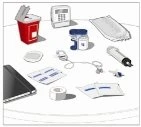
2. Prepare all materials: Prepare all materials needed for infusion. These include: HyQvia dual vial unit(s), infusion materials (subcutaneous needle, solution container [bag or syringe], sterile dressing and tape, pump tubing, transfer devices, syringes, gauze, and tape), sharps container, pump, and treatment logbook, as well as any other necessary materials. |
|
3. Prepare a clean work area. | |
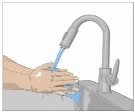
4. Wash hands: Wash hands thoroughly. Place all necessary materials within reach and open them as instructed by your healthcare professional. |
|
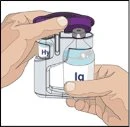
5. Open the dual vial unit(s):
|
|
6. Prepare the recombinant human hyaluronidase vial (HY):
|
|
7. Prepare the needle with recombinant human hyaluronidase (HY): If using the push method to administer (HY):
If using the pump method to administer (HY):
|
|
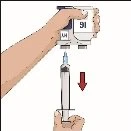
8. Prepare the human normal immunoglobulin 10% vial:
|
|
9. Prepare the pump: Follow the manufacturer's instructions when preparing the pump. | |
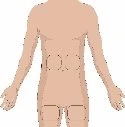
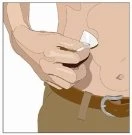
10. Prepare the infusion site:
|
|
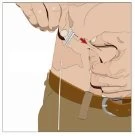
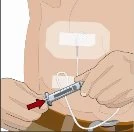
11. Insert the needle:
| 90º angle relative to the skin
|
12. Check correct needle placement before starting the infusion, as directed by your healthcare professional. |
|
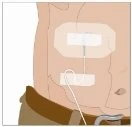
13. Secure the needle to the skin:
|
|
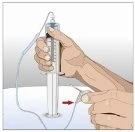
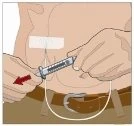
14. Administer recombinant human hyaluronidase infusion first: Divide the content equally among all sites if more than one site is used. If using the push method to administer HY:
If using the pump method to administer HY:
|
|
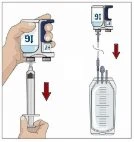
15. Administer human normal immunoglobulin 10%: After infusing the entire content of the smaller syringe (recombinant human hyaluronidase), disconnect the syringe from the needle connector or pump tubing. Connect the pump tubing to the Ig container or vial, or connect the larger syringe containing human normal immunoglobulin 10% to the needle. Administer human normal immunoglobulin 10% using a pump at the rates specified by your healthcare professional and begin the infusion. | |
16. Flush pump tubing at the end of the infusion, if directed by your healthcare professional:
| |
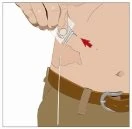
17. Remove the needle:
|
|
18. Record the infusion:
|
4. Possible adverse effects
Like all medicines, this medicine can cause adverse effects, although not everyone will experience them. Some adverse effects, such as headache, chills, or body aches, may be reduced by decreasing the infusion rate.
Serious adverse effects
Infusion of medicines such as HyQvia may occasionally cause severe, although rare, allergic reactions. You may experience a sudden drop in blood pressure and, in isolated cases, anaphylactic shock. Physicians are aware of these possible adverse effects and will monitor you during and after initial infusions.
Typical signs or symptoms include:
dizziness, lightheadedness, or loss of consciousness, skin rash and itching, swelling of the mouth or throat, difficulty breathing, wheezing (a whistling sound when breathing), abnormal heart rate, chest pain, bluish discoloration of lips or fingers, blurred vision.
If you notice any of the following signs during infusion, inform your doctor or nurse immediately.
When using HyQvia at home, you must carry out the infusion in the presence of a designated caregiver who will help you monitor for allergic reactions, stop the infusion, and seek help if necessary.
See section 2 of this leaflet for further information on the risk of allergic reactions and the use of HyQvia at home.
Very common adverse effects (may occur in more than 1 in every 10 infusions):
Local reactions at the infusion site (include all infusion sites listed below). These reactions usually resolve within a few days.
Common adverse effects (may occur in up to 1 in every 10 infusions):
- headache
- malaise (nausea)
- reactions at the infusion site, including pain, discomfort, tenderness, redness, swelling, and itching
- feeling of warmth, fever
- weakness (asthenia), tiredness (fatigue), lack of energy (lethargy), and general feeling of being unwell
Uncommon adverse effects (may occur in up to 1 in every 100 infusions):
- dizziness
- migraine
- sensations of numbness, tingling, or pins and needles (paresthesia)
- rapid heartbeat (tachycardia)
- high blood pressure (hypertension)
- abdominal pain/tenderness
- stomach swelling (abdominal distension)
- diarrhea
- vomiting
- skin redness (erythema)
- rash
- itching (pruritus)
- itchy rash (urticaria)
- muscle pain (myalgia)
- joint pain (arthralgia)
- back pain
- pain in limbs (including limb discomfort)
- musculoskeletal chest pain
- joint stiffness
- reactions at the infusion site (such as discoloration, bruising, redness [hematoma], bleeding [hemorrhage], blood vessel puncture, lump [nodule], induration, swelling [edema], chills, burning sensation, rash)
- genital swelling
Rare adverse effects (may occur in up to 1 in every 1,000 infusions):
- tremor
- stroke
- low blood pressure (hypotension)
- difficulty breathing (dyspnea)
- groin pain
- brown urine (hemosiderinuria)
- excessive sweating (hyperhidrosis)
- inflammation at the infusion site
- warmth at the infusion site
- sensations of numbness, tingling, or pins and needles at the infusion site (infusion site paresthesia)
- positive Coombs test result
Frequency not known (cannot be estimated from available data):
- inflammation of the membranes surrounding the brain and spinal cord (aseptic meningitis)
- allergic reactions (hypersensitivity)
- leakage at the infusion site
- flu-like syndrome (influenza-like illness)
Reporting of adverse effects
If you experience any type of adverse effect, consult your doctor, pharmacist, or nurse, even if it is a possible adverse effect not listed in this leaflet. You may also report them directly through the national reporting system included in Appendix V. By reporting adverse effects, you can help provide more information on the safety of this medicine.
5. Storage of HyQvia
Keep this medicine out of the sight and reach of children.
Do not use this medicine after the expiry date stated on the label and carton after EXP. The expiry date refers to the last day of the month indicated.
Store in a refrigerator (between 2 °C and 8 °C). Do not freeze.
The product may be removed from the refrigerator for up to 3 months and stored at temperatures above 8 °C and below 25 °C. Do not refrigerate again after storage at room temperature. Discard after 3 months at room temperature or after the expiry date, whichever occurs first.
The date of removal from the refrigerator must be recorded on the outer packaging.
Do not shake.
Keep vials in the outer packaging to protect from light.
Do not use this medicine if you notice that the solutions appear cloudy or contain particles or sediment.
After opening, discard any unused solution remaining in the vials.
Medicines must not be disposed of via wastewater or household waste. Ask your pharmacist how to dispose of medicines and packaging that you no longer need. This will help protect the environment.
6. Contents of the pack and other information
Composition of HyQvia
HyQvia is a dual-chamber vial containing:
- a solution of recombinant human hyaluronidase (Step 1 of HyQvia/Infuse first), and
- a solution of 10% normal human immunoglobulin (Step 2 of HyQvia/Infuse second).
The contents of each vial are described below:
- Recombinant human hyaluronidase
This vial contains recombinant human hyaluronidase.
The other components are sodium chloride, sodium phosphate, human albumin, ethylenediaminetetraacetic acid (EDTA) disodium, calcium chloride, and water for injections (see also section 2, “HyQvia contains sodium”).
- 10% Normal human immunoglobulin
One ml of the solution in this vial contains 100 mg of normal human immunoglobulin, of which at least 98% is immunoglobulin G (IgG).
The active substance in HyQvia is normal human immunoglobulin. This medicine contains traces of immunoglobulin A (IgA) (not more than 140 micrograms/ml, average 37 micrograms).
The other components of this vial are glycine and water for injections.
Nature and contents of the container
HyQvia 100 mg/ml solution for subcutaneous infusion (infusion under the skin).
HyQvia is supplied in a pack containing:
- a glass vial of recombinant human hyaluronidase, and
- a glass vial of 10% normal human immunoglobulin.
Recombinant human hyaluronidase is a clear, colourless solution.
10% normal human immunoglobulin is a clear, colourless or slightly yellowish solution.
The following pack sizes are available:
Recombinant human hyaluronidase | Normal human immunoglobulin 10% | |
Volume (ml) | Protein (g) | Volume (ml) |
1.25 | 2.5 | 25 |
2.5 | 5 | 50 |
5 | 10 | 100 |
10 | 20 | 200 |
15 | 30 | 300 |
Only certain pack sizes may be marketed.
Marketing Authorization Holder and Manufacturer
Marketing Authorization Holder:
Baxalta Innovations GmbH
Industriestrasse 67
A-1221 Vienna
Austria
Manufacturer:
Baxalta Belgium Manufacturing SA
Boulevard René Branquart 80
B-7860 Lessines
Belgium
For more information about this medicinal product, please contact the local representative of the Marketing Authorization Holder:
Belgium/Belgium/Belgium Takeda Belgium NV Tel/Tel: +32 2 464 06 11 | Lithuania Takeda, UAB Tel: +370 521 09 070 |
| Luxembourg/Luxembourg Takeda Belgium NV Tél/Tel: +32 2 464 06 11 |
Czech Republic Takeda Pharmaceuticals Czech Republic s.r.o. Tel: +420 234 722 722 | Hungary Takeda Pharma Kft. Tel: +36 1 270 7030 |
Denmark Takeda Pharma A/S Tlf.: +45 46 77 10 10 | Malta Drugsales Ltd Tel: +356 21419070 |
Germany Takeda GmbH Tel: +49 (0)800 825 3325 | Netherlands Takeda Nederland B.V. Tel: +31 20 203 5492 |
Estonia Takeda Pharma OÜ Tel: +372 6177 669 | Norway Takeda AS Tlf: +47 800 800 30 |
Greece Takeda Hellas S.A. Tel: +30 210 6387800 | Austria Takeda Pharma Ges.m.b.H. Tel: +43 (0) 800-20 80 50 |
Spain Takeda Farmacéutica España, S.A. Tel: +34 917 90 42 22 | Poland Takeda Pharma Sp. z o.o. Tel: +48223062447 |
France Takeda France SAS Tél. + 33 1 40 67 33 00 | Portugal Takeda Farmacêuticos Portugal, Lda. Tel: + 351 21 120 1457 |
Croatia Takeda Pharmaceuticals Croatia d.o.o. Tel: +385 1 377 88 96 | Romania Takeda Pharmaceuticals SRL Tel: +40 21 335 03 91 |
Ireland Takeda Products Ireland Ltd Tel: 1800 937 970 | Slovenia Takeda Pharmaceuticals Pharmaceutical Company d.o.o. Tel: + 386 (0) 59 082 480 |
Iceland Vistor ehf. Tel: +354 535 7000 | Slovakia Takeda Pharmaceuticals Slovakia s.r.o. Tel: +421 (2) 20 602 600 |
Italy Takeda Italia S.p.A. Tel: +39 06 502601 | Finland Takeda Oy Tel: 0800 774 051 |
Cyprus Proton Medical (Cyprus) Ltd Tel: +357 22866000 | Sweden Takeda Pharma AB Tel: 020 795 079 |
Latvia Takeda Latvia SIA Tel: +371 67840082 |
Date of the most recent review of this leaflet: 04/2025.
Other sources of information
Detailed information on this medicinal product is available on the website of the European Medicines Agency: http://www.ema.europa.eu.