Effentora 200 microgramos buccal tablets
Spain
Table of Contents
Package leaflet: Information for the user
Introduction
Package leaflet: information for the user
Effentora 100 micrograms orodispersible tablets
Effentora 200 micrograms orodispersible tablets
Effentora 400 micrograms orodispersible tablets
Effentora 600 micrograms orodispersible tablets
Effentora 800 micrograms orodispersible tablets
Fentanyl
Read the entire leaflet carefully before you start using this medicine, because it contains important information for you.
- Keep this leaflet, as you may need to read it again.
- If you have any questions, consult your doctor or pharmacist.
- This medicine has been prescribed for you only, and you should not give it to others, even if they have the same symptoms as you, because it may harm them.
- If you experience any adverse effects, consult your doctor or pharmacist, even if they are adverse effects not listed in this leaflet. See section 4.
Leaflet contents
- What Effentora is and what it is used for
- What you need to know before using Effentora
- How to use Effentora
- Possible side effects
- How to store Effentora
- Contents of the pack and other information
1. What Effentora is and what it is used for
The active substance in Effentora is fentanyl citrate. Effentora is a medicine for pain relief. This medicine is known as an opioid and is used to treat breakthrough pain in adult patients who are already receiving maintenance treatment with other opioids for their persistent (constant) pain associated with cancer.
Breakthrough pain is sudden, additional pain that occurs despite ongoing opioid pain relief treatment.
2. What you need to know before using Effentora
DO NOT use Effentora:
- if you are not already taking an opioid medicine prescribed by your doctor (e.g., codeine, fentanyl, hydromorphone, morphine, oxycodone, meperidine) regularly every day at the same time for at least one week to control persistent pain. If you have not been taking these medicines, do not use Effentora, as its use may increase the risk of your breathing becoming slower and/or shallower, or even stopping completely.
- if you are allergic to fentanyl or any of the other ingredients of this medicine (listed in section 6).
- if you have severe respiratory problems or severe obstructive lung disease.
- if you have short-term pain other than breakthrough pain.
- if you are taking a medicine containing sodium oxybate.
Warnings and precautions
While being treated with Effentora, continue using the opioid analgesic medicine you are taking for your persistent (ongoing) cancer-related pain.
While being treated with Effentora, do not use any other fentanyl-containing medicines previously prescribed for breakthrough pain. If you still have these fentanyl products at home, contact your pharmacist, who will advise you on how to dispose of them properly.
Repeated use of this product may reduce the drug’s effectiveness (you may become accustomed to it) or may lead to drug dependence.
Inform your doctor or pharmacist BEFORE starting to use Effentora:
- if the other opioid medicine you are taking for your persistent (ongoing) cancer-related pain has not yet been stabilized.
- if you have any breathing disorders (such as asthma, wheezing, or difficulty breathing).
- if you have head injuries.
- if you have an unusually slow heart rate or other heart problems.
- if you have liver or kidney problems, as these organs affect how your body metabolizes the medicine.
- if you have low blood volume or hypotension.
- if you are over 65 years of age; you may require a lower dose, and your doctor will carefully review any dose increases.
- if you have heart problems, especially a slow heart rate.
- if you are taking benzodiazepines (see section 2, “Use of Effentora with other medicines”). Using benzodiazepines may increase the likelihood of serious adverse effects, including death.
- if you are taking antidepressants or antipsychotics (selective serotonin reuptake inhibitors [SSRIs], serotonin-norepinephrine reuptake inhibitors [SNRIs], monoamine oxidase inhibitors [MAOIs]); see section 2, “Do not use Effentora” and “Use of Effentora with other medicines”). Using these medicines with Effentora may cause serotonin syndrome, a potentially life-threatening condition (see section 2, “Use of Effentora with other medicines”).
- if you have ever had adrenal insufficiency, a disorder in which the adrenal glands do not produce enough hormones, or sex hormone deficiency (androgen deficiency) with opioid use (see section 4, “Serious adverse effects”).
- if you have ever had opioid abuse or dependence, or dependence on any other drug, alcohol, or drugs.
- if you drink alcohol, refer to the section “Use of Effentora with food, drinks, and alcohol”.
Your doctor may need to monitor you more closely:
- if you or a family member has ever had alcohol, prescription medicine, or drug abuse (“addiction”).
- if you are a smoker.
- if you have ever had mood disorders (depression, anxiety, or personality disorder) or have been treated by a psychiatrist for other mental illnesses.
Consult your doctor DURING use of Effentora:
- if you experience pain or increased sensitivity to pain (hyperalgesia) that does not respond to a higher dose of the medicine as prescribed by your doctor.
- if you experience a combination of the following symptoms: nausea, vomiting, anorexia, fatigue, weakness, dizziness, and low blood pressure. Together, these symptoms may indicate a potentially life-threatening condition called adrenal insufficiency, in which the adrenal glands do not produce enough hormones.
- if you develop sleep-related breathing disorders: Effentora may cause sleep-related breathing disorders such as sleep apnea (pauses in breathing during sleep) and sleep-related hypoxemia (low oxygen levels in the blood). Symptoms may include breathing pauses during sleep, waking up at night due to difficulty breathing, difficulty staying asleep, or excessive daytime sleepiness. If you or someone else notices these symptoms, contact your doctor. Your doctor may consider reducing the dose.
Long-term use and tolerance
This medicine contains fentanyl, an opioid. Repeated use of opioid analgesics may make the medicine less effective (the body becomes accustomed to it, known as pharmacological tolerance). You may also become more sensitive to pain when using Effentora. This is known as hyperalgesia. Increasing the dose of Effentora may continue to reduce pain for a time, but it may also be harmful. If you notice the medicine is losing effectiveness, consult your doctor. Your doctor will decide whether it is better to increase the dose or gradually reduce the use of Effentora.
Dependence and addiction
This medicine contains fentanyl, which is an opioid. It may cause dependence and/or addiction.
Repeated use of Effentora may also lead to dependence, abuse, and addiction, which could result in a potentially fatal overdose. The risk of these adverse effects may be higher with higher doses and prolonged use. Dependence or addiction may cause a feeling of lack of control over the amount of medicine you need to take or how often you need to take it. You may feel the need to continue using the medicine even if it does not help relieve pain. The risk of dependence or addiction varies from person to person. The risk of becoming dependent on or addicted to Effentora may be higher if:
- you or any family member has abused alcohol or experienced
- you smoke
- you have ever had mood disorders (depression, anxiety, or a personality disorder) or have received treatment from a psychiatrist for other mental illnesses.
If you notice any of the following symptoms while using Effentora, they could be signs of dependence or addiction:
- you need to use the medicine for longer than prescribed by your doctor.
- you need to use a higher dose than recommended.
- you are using the medicine for reasons other than prescribed, for example, “to stay calm” or “to help you sleep.”
- you have made repeated, unsuccessful attempts to stop using the medicine or control its use.
- you feel unwell when you stop using the medicine (e.g., nausea, vomiting, diarrhea, anxiety, chills, tremors, and sweating), and feel better once you take it again (“withdrawal effects”).
If you notice any of these signs, consult your doctor to determine the best treatment approach for you, when it is appropriate to stop the medicine, and how to do so safely.
Seek urgent medical assistance:
- if you experience symptoms such as difficulty breathing or dizziness, swelling of the tongue, lips, or throat while using Effentora. These may be early signs of a severe allergic reaction (anaphylaxis, hypersensitivity; see section 4, “Serious adverse effects”).
What to do if someone accidentally takes Effentora
If you suspect someone has accidentally taken Effentora, seek immediate medical attention. Try to keep the person awake until emergency services arrive.
If someone accidentally takes Effentora, they may experience the same side effects described in the section “If you use more Effentora than you should.”
Children and adolescents
Do not give this medicine to children and adolescents under 18 years of age.
Use of Effentora with other medicines
Inform your doctor or pharmacist before starting treatment with Effentora if you are taking, have recently taken, or might need to take any other medicine, including the following:
- the concomitant use of Effentora and sedative medicines, such as benzodiazepines or related drugs, increases the risk of drowsiness, difficulty breathing (respiratory depression), and coma, and can potentially be fatal. Therefore, concomitant use should only be considered when no other treatment options are possible.
However, if your doctor prescribes Effentora with sedative medicines, the dose and duration of concomitant treatment must be limited by your doctor.
Inform your doctor about all sedative medicines you are taking (such as sleeping pills, medicines for treating anxiety, some medicines for treating allergic reactions [antihistamines], or tranquilizers) and strictly follow the dose recommended by your doctor. It may be helpful to inform friends or family members to alert them to the signs and symptoms described above. Contact your doctor if you experience such symptoms.
- certain muscle relaxants, such as baclofen, diazepam (see also section “Warnings and precautions”).
- any medicine that may affect how your body metabolizes Effentora, such as ritonavir, nelfinavir, amprenavir, and fosamprenavir (medicines that help control HIV infection) or other inhibitors of the so-called CYP3A4, such as ketoconazole, itraconazole, or fluconazole (used to treat fungal infections), troleandomycin, clarithromycin, or erythromycin (medicines to treat bacterial infections), aprepitant (used for severe nausea), diltiazem, and verapamil (medicines to treat hypertension or heart conditions).
- medicines called monoamine oxidase inhibitors (MAOIs) (used for severe depression), even if you have taken them within the last two weeks.
- certain types of strong painkillers called partial agonist/antagonists, such as buprenorphine, nalbuphine, and pentazocine (medicines for treating pain). While using these medicines, you may experience symptoms of withdrawal syndrome (nausea, vomiting, diarrhea, anxiety, chills, tremors, and sweating).
- some painkillers for neuropathic pain (gabapentin and pregabalin).
- The risk of adverse effects increases if you are taking medicines such as certain antidepressants or antipsychotics. Effentora may interact with these medicines, and you may experience changes in mental status (e.g., agitation, hallucinations, coma) and other effects such as body temperature above 38°C, increased heart rate, unstable blood pressure, exaggerated reflexes, muscle rigidity, lack of coordination, and/or gastrointestinal symptoms (e.g., nausea, vomiting, diarrhea). Your doctor will tell you whether Effentora is suitable for you.
Inform your doctor or pharmacist if you are taking, have recently taken, or might need to take any other medicine.
Use of Effentora with food, drinks, and alcohol
- Effentora may be taken before or after meals, but not during meals. You may drink a small amount of water before using Effentora to help moisten your mouth, but you must not drink or eat anything while taking the medicine.
- You should not drink grapefruit juice while using Effentora, as it may affect how your body metabolizes this medicine.
- Do not drink alcohol during treatment with Effentora. It may increase the risk of serious adverse effects, including death.
Pregnancy and breastfeeding
If you are pregnant or breastfeeding, think you may be pregnant, or plan to become pregnant, consult your doctor or pharmacist before using this medicine.
Pregnancy
Effentora should not be used during pregnancy unless discussed with your doctor.
If Effentora is used for a prolonged period during pregnancy, there is also a risk that the newborn may experience withdrawal symptoms, which may be potentially fatal if not identified and treated by a doctor.
You should not use Effentora during labor, as fentanyl may cause respiratory depression in the newborn.
Breastfeeding
Fentanyl may pass into breast milk and cause adverse effects in the infant. Do not use Effentora if you are breastfeeding. You should not start breastfeeding until at least 5 days after the last dose of Effentora.
Driving and using machines
Ask your doctor whether it is safe for you to drive or operate machinery after taking Effentora. Do not drive or operate machinery if: you feel sleepy or dizzy, have blurred or double vision, or have difficulty concentrating. It is important to know how you react to Effentora before driving or operating machinery.
Effentora contains sodium
Effentora 100 micrograms
This medicine contains 10 mg of sodium (a main component of table/cooking salt) per buccal tablet. This is equivalent to 0.5% of the maximum daily intake of sodium recommended for an adult.
Effentora 200 micrograms, Effentora 400 micrograms, Effentora 600 micrograms, Effentora 800 micrograms
This medicine contains 20 mg of sodium (a main component of table/cooking salt) per bucc al tablet. This is equivalent to 1% of the maximum daily intake of sodium recommended for an adult.
3. How to use Effentora
Follow exactly the administration instructions for this medicine as given by your doctor. If in doubt, consult your doctor or pharmacist again.
Before starting treatment and regularly during treatment, your doctor will also explain what you can expect from using Effentora, when and for how long you should use it, when you should contact your doctor, and when you should stop using it (see also section 2).
Dosage and frequency
When you first start using Effentora, your doctor will help you find the dose that relieves your breakthrough pain. It is very important that you use Effentora exactly as directed by your doctor. The starting dose is 100 micrograms.
During the determination of the correct dose for you, your doctor may instruct you to take more than one tablet per episode. If breakthrough pain is not relieved within 30 minutes, use only one additional Effentora tablet during the dose adjustment period.
Once the correct dose has been determined with your doctor, use one tablet for a breakthrough pain episode as a general rule. The analgesic dose you require may vary during treatment. You may need higher doses. If breakthrough pain is not relieved within 30 minutes, use only one additional Effentora tablet during this dose re-adjustment period.
Wait at least 4 hours before treating another episode of breakthrough pain with Effentora.
Inform your doctor immediately if you need to take Effentora more than four times a day, as your treatment regimen may need to be changed. Your doctor may change the treatment you are receiving to control persistent pain; once persistent pain is controlled, your doctor may need to adjust your Effentora dose. If your doctor suspects increased pain sensitivity (hyperalgesia) related to Effentora, they may consider reducing the Effentora dose (see section 2, “Warnings and precautions”). For more effective pain relief, inform your doctor about your pain and how Effentora is working for you, so that the dose can be adjusted if necessary.
Do not change the doses of Effentora or other analgesics on your own. Any change in dosing must be prescribed and monitored by your doctor.
If you are unsure about the correct dose, or if you have any questions about using this medicine, contact your doctor.
Method of administration
Effentora buccal tablets are administered by the oral route. When a tablet is placed in the mouth, it dissolves and the medicine is absorbed through the buccal mucosa into the bloodstream. This method of administration allows rapid absorption of the medicine to relieve your breakthrough pain.
How to use the medicine
- Open the blister pack only when you are ready to use the tablet. The tablet should be used immediately after removal from the blister.
- Separate one unit from the blister strip by tearing along the perforations.
- Fold the blister unit along the indicated line.
- Peel back the backing of the blister to expose the tablet. DO NOT try to push the tablet out of the blister, as this may damage it.
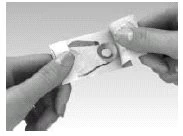
- Remove the tablet from the blister and place it immediately without breaking it next to a molar, between the gum and the cheek (as shown in the photograph). Your doctor may also instruct you to place the tablet under the tongue.
- Do not attempt to crush or split the tablet.
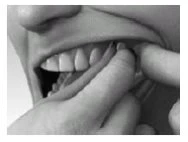
- Do not bite, suck, chew, or swallow the tablet, as this will result in less analgesic effect compared to following these instructions.
- The tablet should remain between the cheek and the gum until it dissolves, which usually takes between 14 and 25 minutes.
- You may feel a slight effervescent sensation between the cheek and the gum as the tablet dissolves.
- If irritation occurs, you may change the placement of the tablet on the gum.
- After 30 minutes, if any remnants of the Effentora tablet remain, you may swallow them with a glass of water.
If you use more Effentora than you should
- The most common adverse effects are drowsiness, dizziness, or nausea. If you start feeling very dizzy or drowsy before the tablet has completely dissolved, rinse your mouth with water and immediately spit any remaining tablet fragments into the sink or toilet.
- A serious adverse effect of Effentora is slow and/or shallow breathing. This may occur if the Effentora dose is too high or if you have taken too much Effentora. In severe cases, taking too much Effentora may lead to coma. If you feel very dizzy, very drowsy, or have slow or shallow breathing, seek immediate medical attention.
If you forget to use Effentora
If breakthrough pain persists, you may take Effentora as directed by your doctor. If breakthrough pain has subsided, do not take Effentora until the next breakthrough pain episode.
If you stop taking Effentora
You should stop Effentora when you no longer have any breakthrough pain. However, you must continue taking your regular opioid analgesic medicine for persistent cancer pain as directed by your doctor. When stopping treatment with Effentora, you may experience withdrawal symptoms similar to possible adverse effects of Effentora. If you experience withdrawal symptoms or are concerned about pain relief, consult your doctor. Your doctor will assess whether you need medication to reduce or eliminate withdrawal symptoms.
If you have any further questions about using this medicine, ask your doctor or pharmacist.
4. Possible adverse effects
Like all medicines, this medicine may cause adverse effects, although not everyone will experience them. If you notice any of these effects, inform your doctor.
Serious adverse effects
-
The most serious adverse effects are shallow breathing, hypotension, and shock. Effentora, like other fentanyl-based products, may cause very serious breathing problems that can lead to death. If you feel very drowsy or have slow and/or shallow breathing, you or your caregiver must contact your doctor immediately and seek urgent medical help.
-
Contact your doctor immediately if you experience a combination of the following symptoms:
-
Nausea, vomiting, anorexia, fatigue, weakness, dizziness, and low blood pressure.
Together, these symptoms may be a sign of a potentially life-threatening condition called adrenal insufficiency, in which the adrenal glands do not produce enough hormones.
Other adverse effects
Very common: may affect more than 1 in 10 people
- dizziness, headache
- nausea, vomiting
- at the tablet application site: pain, ulcer, irritation, bleeding, numbness, loss of sensation, redness, swelling, or spots
Common: may affect up to 1 in 10 people
- feeling anxious or confused, depression, insomnia
- weight loss
- drowsiness, sedation, excessive tiredness, weakness, migraine, numbness, swelling of arms or legs, withdrawal syndrome (which may present as the appearance of the following adverse effects: nausea, vomiting, diarrhoea, anxiety, chills, tremor, and sweating), tremors, falls, chills
- constipation, mouth inflammation, dry mouth, diarrhoea, heartburn, loss of appetite, stomach pain, stomach discomfort, indigestion, toothache, mouth ulcers
- itching, excessive sweating, rash
- shortness of breath, sore throat
- decrease in white blood cells, decrease in red blood cells, decrease or increase in blood pressure, heart rate too high
- muscle pain, back pain
- fatigue
Uncommon: may affect up to 1 in 100 people
- throat discomfort;
- decrease in cells that help blood to clot;
- euphoria, nervousness, oddness, restlessness or sluggishness; seeing or hearing things that are not real (hallucinations), altered state of consciousness, changes in mental state, drug dependence (addiction), disorientation, lack of concentration, loss of balance, dizziness, speech problems, ringing in the ears, ear discomfort;
- blurred or altered vision, red eyes;
- heart rate too low, feeling of intense heat (hot flushes), hypertension;
- serious breathing problems, difficulty breathing during sleep;
- one or more of the following mouth problems: ulcer, loss of sensation, discomfort, abnormal colour, soft tissue changes, tongue abnormalities, pain, blisters or ulcers on the tongue, gum pain, cracked lips, dental disorders;
- oesophagitis, intestinal paralysis, gallbladder disorder;
- cold sweat, facial swelling, generalized itching, hair loss, muscle cramps, muscle weakness, general malaise, chest discomfort, thirst, feeling cold, feeling hot, difficulty urinating;
- general malaise;
- flushing.
Rare: may affect up to 1 in 1,000 people
- thought disorders, movement disturbances
- mouth blisters, dry lips, pus under the skin in the mouth
- lack of testosterone, unusual sensation in the eye, seeing flashes of light, brittle nails
- allergic reactions such as skin rash, redness, swelling of lips and face, urticaria
Not known: frequency cannot be estimated from the available data
-
Loss of consciousness, respiratory arrest, convulsion (epileptic seizure)
-
lack of sex hormones (androgen deficiency)
-
drug dependence (addiction) (see section 2)
-
drug abuse (see section 2)
-
pharmacological tolerance (see section 2)
-
delirium (symptoms may include a combination of agitation, restlessness, disorientation, confusion, fear, seeing or hearing things that are not real, sleep disturbances, and nightmares)
-
prolonged fentanyl treatment during pregnancy may cause withdrawal symptoms in the newborn, which may be potentially life-threatening (see section 2)
-
Difficulty swallowing
Reporting of adverse effects
If you experience any adverse effect, talk to your doctor or pharmacist, even if it is a possible adverse effect not listed in this leaflet. You can also report them directly through the national reporting system included in Appendix V. By reporting adverse effects, you can help provide more information on the safety of this medicine.
5. Storage of Effentora
Keep this medicine in a safe and secure place, out of reach of others. This medicine can cause serious harm or even death to individuals who take it accidentally or intentionally without being prescribed it.
Effentora analgesic is very strong and may be life-threatening if taken accidentally by a child. This medicine must be kept out of sight and reach of children.
- Do not use this medicine after the expiry date stated on the blister pack label and on the carton. The expiry date refers to the last day of the month indicated.
- Store in the original packaging to protect it from moisture.
- Medicines must not be disposed of via wastewater or household waste. Ask your pharmacist how to properly dispose of unused medicines and their packaging. This will help protect the environment.
6. Contents of the pack and other information
Composition of Effentora
The active substance is fentanyl. Each tablet contains:
- 100 micrograms of fentanyl (as citrate)
- 200 micrograms of fentanyl (as citrate)
- 400 micrograms of fentanyl (as citrate)
- 600 micrograms of fentanyl (as citrate)
- 800 micrograms of fentanyl (as citrate)
The other components are mannitol, sodium carboxymethyl starch type A, sodium hydrogen carbonate, sodium carbonate, citric acid, magnesium stearate.
Nature and contents of the container
The buccal tablets are flat-faced, round, bevelled-edged tablets, marked on one side with a “C” and on the other side with “1” for Effentora 100 micrograms, with “2” for Effentora 200 micrograms, with “4” for Effentora 400 micrograms, with “6” for Effentora 600 micrograms and with “8” for Effentora 800 micrograms.
Each blister contains 4 buccal tablets. Packs contain either 4 or 28 buccal tablets.
Only certain pack sizes may be marketed.
Marketing Authorization Holder
Phoenix Labs Unlimited Company
Suite 12, Bunkilla Plaza
Bracetown Business Park
Clonee, County Meath
Ireland
Manufacturer
Merckle GmbH
Ludwig-Merckle-Straße 3
89143 Blaubeuren
Germany
Further information on this medicinal product is available upon request by contacting the local representative of the Marketing Authorization Holder or by calling the following number:
BE, BG, CZ, DK, DE, EE, EL, IE,
HR, IT, CY, LV, LT, LU, HU,
MT, NL, AT, PL, PT, RO, SI,
SK, FI, SE and XI
Phoenix Labs Unlimited Company
Suite 12, Bunkilla Plaza
Bracetown Business Park
Clonee, County Meath
Ireland
Email: [email protected]
Tel: +353 1 5742410
Spain
Euromed Pharma Spain S.L
Tel: +34 932 684 208
France
Centre Spécialités Pharmaceutiques (CSP)
Tél: +33 147048046
Date of the most recent revision of this leaflet: {MM/YYYY}
Detailed information on this medicinal product is available on the website of the European Medicines Agency: http://www.ema.europa.eu/