Clinwas 10 mg/g gel
Spain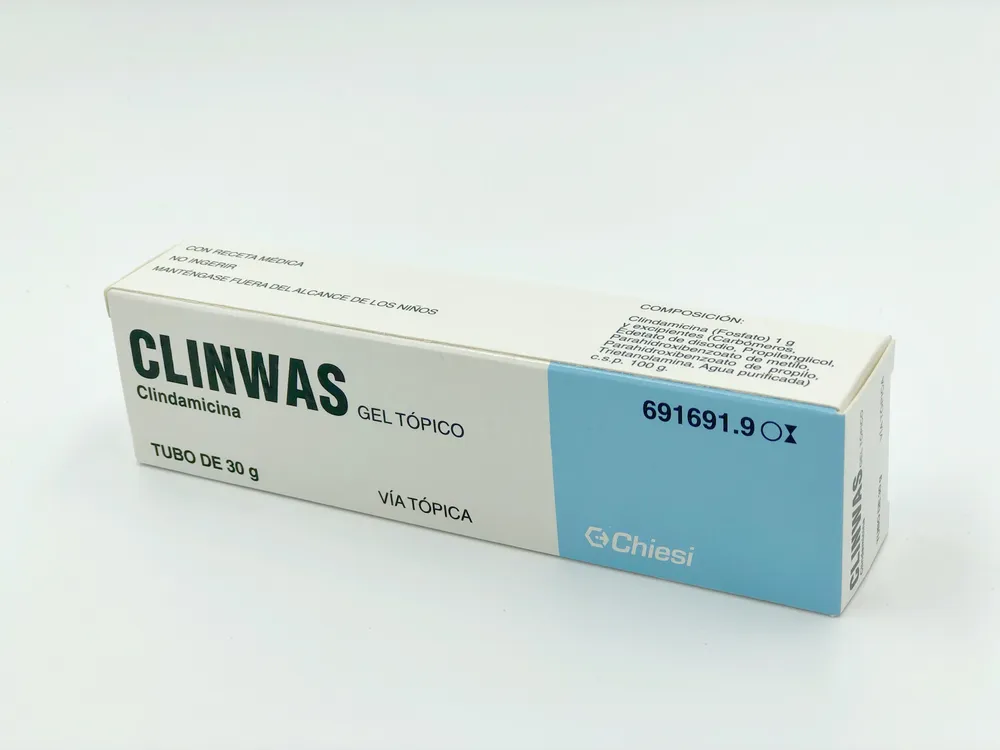
Table of Contents
Package leaflet: Information for the user
Introduction
Package leaflet: information for the user
Clinwas 10 mg/g gel
clindamycin
Read this entire leaflet carefully before you start using this medicine, because it contains important information for you.
- Keep this leaflet, as you may need to read it again.
- If you have any questions, ask your doctor or pharmacist.
- This medicine has been prescribed for you only, and you should not give it to other people, even if they have the same symptoms as you, because it may harm them.
- If you experience any adverse effects, consult your doctor or pharmacist, even if they are adverse effects not listed in this leaflet. See section 4.
Contents of the leaflet
- What Clinwas gel is and what it is used for
- What you need to know before using Clinwas gel
- How to use Clinwas gel
- Possible adverse effects
- How to store Clinwas gel
- Contents of the pack and other information
1. What Clinwas gel is and what it is used for
Clinwas gel is an antibiotic medicine that belongs to a group of drugs known as topical anti-acne preparations. It works by slowing down the growth of bacteria that cause acne.
Antibiotics are used to treat bacterial infections and are not effective against viral infections such as the flu or the common cold. It is important to follow your doctor's instructions regarding dosage, dosing interval, and duration of treatment. Do not store or reuse this medicine. If you have any antibiotic left over after completing the treatment, return it to the pharmacy for proper disposal. Medicines must not be disposed of via the sink or in household waste. |
Clinwas gel is indicated for the treatment of mild to moderate acne vulgaris in adults and adolescents over 12 years of age.
2. What you need to know before using Clinwas
Do not use Clinwas gel
- If you are allergic to clindamycin or to any of the other ingredients of this medicine listed in section 6.
- If you have known sensitivity to lincomycin (an antibiotic).
- If you are pregnant or breastfeeding.
Warnings and precautions
- If you suffer from atopic dermatitis (especially sensitive and dry skin).
- If you have a history of inflammatory gastrointestinal diseases (Crohn's disease, ulcerative colitis).
- If you develop antibiotic-associated diarrhea.
Consult your doctor or pharmacist before starting to use Clinwas gel.
Children and adolescents
This medicine is indicated for adolescents over 12 years of age.
Other medicines and Clinwas gel
Inform your doctor or pharmacist if you are taking, have recently taken, or might need to take any other medicines.
Due to its topical administration, Clinwas gel is not usually associated with interactions with other medicines.
Tell your doctor if you are taking or using any of the following medicines:
- Antibiotic medicines: lincomycin, metronidazole, gentamicin, aminoglycosides, erythromycin, chloramphenicol.
- Anti-inflammatory medicines: acetylsalicylic acid
- Sulfur
- Medicines for the treatment of acne: tretinoin, benzoyl peroxide
- Neuromuscular blocking agents used as muscle relaxants.
- Soaps and cosmetics with a strong drying effect, or cosmetic products with high alcohol content (e.g., after-shave lotions).
Pregnancy and breastfeeding
If you are pregnant or breastfeeding, think you may be pregnant, or plan to become pregnant, consult your doctor or pharmacist before using this medicine.
Safety has not been established; therefore, Clinwas gel should not be used if you are pregnant or suspect you may be pregnant, if you plan to become pregnant, or if you are breastfeeding.
Driving and using machines
The effect of Clinwas gel on the ability to drive and operate machinery is none or negligible.
Clinwas gel contains propylene glycol, methyl parahydroxybenzoate, and propyl parahydroxybenzoate
Clinwas gel contains 50 mg of propylene glycol in each gram of gel.
Clinwas gel may cause allergic reactions (possibly delayed) because it contains methyl parahydroxybenzoate and propyl parahydroxybenzoate.
3. How to use Clinwas gel
Follow exactly the instructions for use of this medicine given by your doctor or pharmacist. If in doubt, consult your doctor or pharmacist again.
Apply a thin layer of gel twice daily to the affected area, gently rubbing it in to promote absorption. It is recommended to apply using cotton or the fingertip onto clean and dry skin.
The duration of treatment should not exceed 12 weeks.
If you use more Clinwas gel than you should
If excessive amounts of Clinwas are applied, skin irritation may occur. In such cases, using a moisturizing cream may be beneficial.
If accidental contact with the eyes and/or mucous membranes occurs, immediately rinse thoroughly with copious amounts of cold water.
In case of overdose or accidental ingestion, contact the Toxicology Information Service (telephone: 91 562 04 20).
If you forget to use Clinwas gel
Do not use a double dose to make up for missed doses.
If you have any further questions about the use of this medicine, ask your doctor or pharmacist.
4. Possible side effects
Like all medicines, this medicine can cause side effects, although not everyone experiences them.
These side effects include, in order from most to least frequent:
Frequent side effects (may affect up to 1 in 10 people)
- Dry skin, skin irritation, skin redness, peeling, burning sensation, irritation of the skin around the eye.
Uncommon side effects (may affect up to 1 in 100 people)
- Abnormal tingling sensation, skin pain, rash, oily skin, abdominal pain, gastrointestinal discomfort (diarrhoea, nausea and vomiting).
Rare side effects (may affect up to 1 in 1,000 people)
- Inflammation of hair follicles, burning sensation, exacerbation of acne.
Very rare side effects (may affect up to 1 in 10,000 people)
- Inflammation of the colon.
Reporting of side effects
If you experience any type of side effect, consult your doctor or pharmacist, even if it is a possible side effect not listed in this leaflet. You can also report them directly through the Spanish Pharmacovigilance System for Human Medicinal Products: https://www.notificaram.es
By reporting side effects, you can help provide more information on the safety of this medicine.
5. Storage of Clinwas gel
This medicine does not require special storage conditions.
Keep this medicine out of the sight and reach of children.
Do not use this medicine after the expiry date stated on the packaging after EXP. The expiry date is the last day of the month indicated.
Medicines should not be disposed of via wastewater or household waste. Dispose of unused medicines and their containers at the SIGRE Point at your pharmacy. Ask your pharmacist how to dispose of medicines and containers you no longer need. This will help protect the environment.
6.
Composition of Clinwas gel
- The active substance is clindamycin. Each gram of gel contains 10 mg of clindamycin.
- The other components are carbomers, disodium edetate, propylene glycol, methylparaben, propylparaben, triethanolamine, and purified water.
Appearance of the medicinal product and contents of the container
Clinwas gel is a collapsible aluminum tube containing 30 grams or 50 grams of transparent gel.
Marketing Authorization Holder and Manufacturer
Marketing Authorization Holder
CHIESI ESPAÑA, S.A.U.
Plaça d’Europa, 41-43, Planta 10
08908 L'Hospitalet de Llobregat
Barcelona (Spain)
Manufacturer
- BRAUN MEDICAL, S.A.
c/ Huelma, 5 Polig. Industrial Los Olivares
23009 Jaén, Spain
Date of the most recent revision of this leaflet: December 2024.
Detailed information on this medicinal product is available on the website of the Spanish Agency of Medicines and Health Products (AEMPS) (http://www.aemps.gob.es).
PR_02_04a