Cibinqo 100 mg film-coated tablets
Spain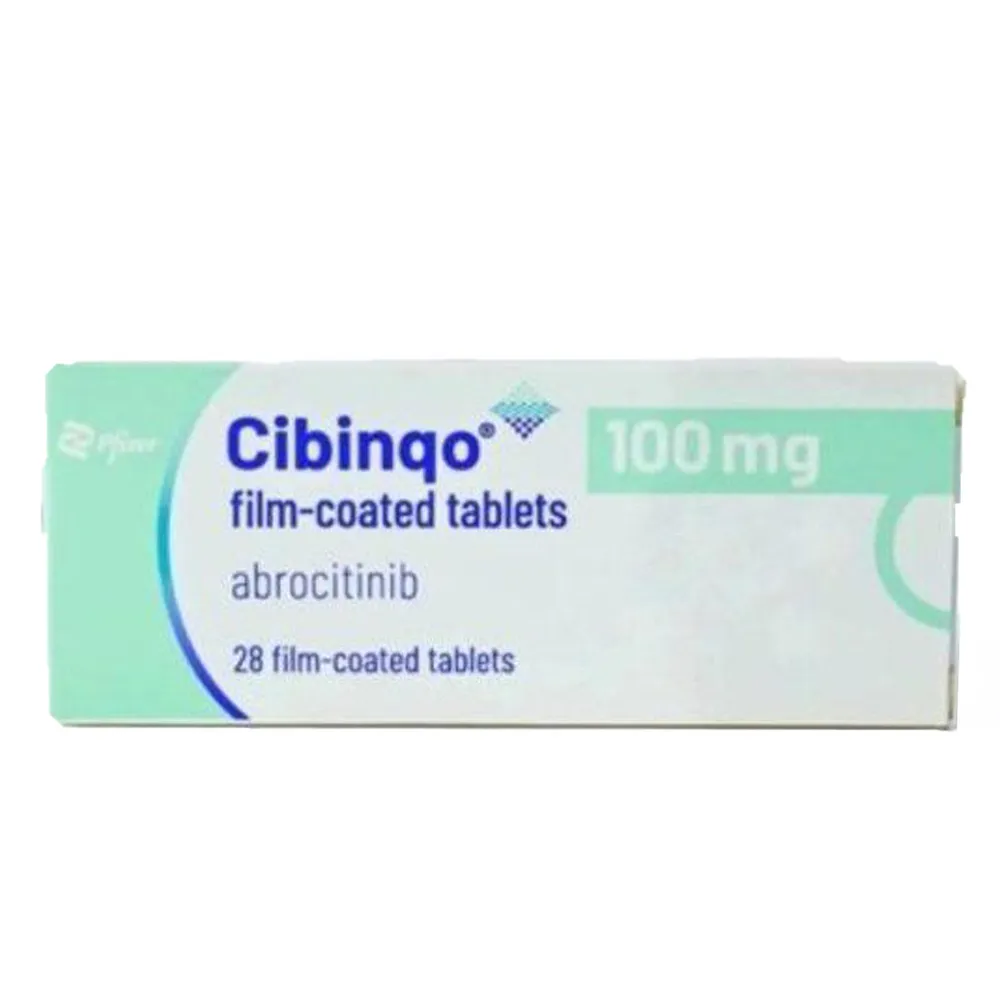
Table of Contents
Package leaflet: Information for the user
Introduction
Package leaflet: information for the patient
Cibinqo 50 mg film-coated tablets
Cibinqo 100 mg film-coated tablets
Cibinqo 200 mg film-coated tablets
abrocitinib
This medicinal product is subject to additional monitoring, which will allow quicker identification of new safety information. You can help by reporting any side effects you may experience. Information on how to report side effects is included at the end of section 4.
Read the entire leaflet carefully before you start taking this medicine, as it contains important information for you.
- Keep this leaflet, as you may need to read it again.
- If you have any questions, consult your doctor or pharmacist.
- This medicine has been prescribed for you only, and you should not give it to others, even if they have the same symptoms as you, as it may harm them.
- If you experience any side effects, consult your doctor or pharmacist, even if they are side effects not listed in this leaflet. See section 4.
In addition to this leaflet, your doctor will provide you with a patient card containing important safety information you should be aware of. Please carry this patient card with you.
Leaflet contents
- What Cibinqo is and what it is used for
- What you need to know before taking Cibinqo
- How to take Cibinqo
- Possible side effects
- How to store Cibinqo
- Contents of the pack and other information
1. What Cibinqo is and what it is used for
Cibinqo contains the active substance abrocitinib. It belongs to a group of medicines called Janus kinase inhibitors, which help reduce inflammation. It works by reducing the activity of an enzyme in the body called "Janus kinase", which is involved in inflammation.
Cibinqo is used to treat adults and adolescents from 12 years of age with moderate to severe atopic dermatitis, also known as atopic eczema. By reducing the activity of Janus kinase enzymes, Cibinqo decreases itching and skin inflammation. This, in turn, may reduce sleep disturbances and other consequences of atopic eczema, such as anxiety or depression, and improves overall quality of life.
2. What you need to know before taking Cibinqo
Do not take Cibinqo
- if you are allergic to abrocitinib or to any of the other ingredients of this medicine (listed in section 6);
- if you currently have a serious infection, including tuberculosis;
- if you have severe liver problems;
- if you are pregnant or breastfeeding (see the section “Pregnancy, contraception, breastfeeding and fertility”).
Warnings and precautions
Talk to your doctor or pharmacist before and during treatment with Cibinqo if:
- you have an infection or get infections frequently. Inform your doctor if you experience symptoms such as fever, wounds, unusual tiredness, or dental problems, as these may be signs of infection. Cibinqo may reduce your body’s ability to fight infections and could worsen an existing infection or increase the likelihood of developing a new infection. If you have diabetes or are 65 years of age or older, you may have a higher risk of infections;
- you have had or currently have tuberculosis or have been in close contact with someone who has tuberculosis. Your doctor will test you for tuberculosis before starting treatment with Cibinqo and may repeat this test during treatment;
- you have ever had herpes (shingles), as Cibinqo may cause it to reappear. Inform your doctor if you develop a painful skin rash with blisters, as this could be a sign of herpes;
- you have ever had hepatitis B or hepatitis C;
- you have recently been vaccinated or plan to receive a vaccine (immunization); this is because certain vaccines (those made with live microorganisms) are not recommended while taking Cibinqo;
- you have previously had blood clots in the veins of your legs (deep vein thrombosis) or in your lungs (pulmonary embolism), or if you have a higher risk of developing them (for example: if you have recently undergone major surgery, if you use hormonal contraceptives/hormone replacement therapy, or if you or your close family members have been identified as having a blood clotting disorder). Your doctor will assess whether Cibinqo is suitable for you. Inform your doctor immediately if you suddenly experience shortness of breath or difficulty breathing, chest pain, upper back pain, swelling in your arms or legs, pain or tenderness in your legs, or redness or discoloration in your arms or legs, as these may be signs of blood clots in the veins;
- you have or have had heart problems, as your doctor will assess whether Cibinqo is suitable for you;
- you have or have had cancer, smoke or have previously smoked, as your doctor will assess whether Cibinqo is suitable for you;
- non-melanoma skin cancer has been observed in patients taking Cibinqo. Your doctor may recommend regular skin examinations while you are taking Cibinqo. If new skin lesions appear during or after treatment, or if existing lesions change in appearance, inform your doctor.
Additional laboratory tests
Your doctor will perform blood tests before and during treatment with Cibinqo and may adjust your treatment if necessary.
Children
This medicine is not approved for use in children under 12 years of age, as the safety and benefits of Cibinqo have not yet been established.
Other medicines and Cibinqo
Inform your doctor or pharmacist if you are taking, have recently taken, or might need to take any other medicines.
In particular, inform your doctor or pharmacist before taking Cibinqo if you are taking any of the following medicines:
- for fungal infections (e.g., fluconazole), depression (e.g., fluoxetine or fluvoxamine), stroke (e.g., ticlopidine), as these may increase the adverse effects of Cibinqo;
- for stomach acid reflux (such as antacids, famotidine or omeprazole), as these may reduce the amount of Cibinqo in your blood;
- for depression (e.g., citalopram, clobazam or escitalopram), as Cibinqo may increase their effects;
- for neurofibromatosis type I (e.g., selumetinib), as Cibinqo may increase their effects;
- for heart failure (e.g., digoxin) or stroke (e.g., dabigatran), as Cibinqo may increase their effects;
- for seizures (e.g., S-mephenytoin), as Cibinqo may increase their effects;
- for stroke (e.g., clopidogrel), as Cibinqo may decrease its effectiveness;
- for asthma, rheumatoid arthritis or atopic dermatitis (e.g., biological antibody treatments, medicines that control the body’s immune response such as cyclosporine, other Janus kinase inhibitors such as baricitinib, upadacitinib), as these may increase the risk of adverse effects.
Your doctor may advise you to avoid using or to stop taking Cibinqo if you are taking any of the following medicines:
- for tuberculosis (e.g., rifampicin), seizures or convulsions (e.g., phenytoin), prostate cancer (e.g., apalutamide, enzalutamide), or HIV infection (e.g., efavirenz), as these may reduce the effectiveness of Cibinqo.
If you are in any of the above situations or if you are unsure, speak with your doctor or pharmacist before taking Cibinqo.
Pregnancy, contraception, breastfeeding and fertility
If you are pregnant or breastfeeding, think you may be pregnant, or plan to become pregnant, consult your doctor or pharmacist before using this medicine.
Contraception in women
If you are a woman of childbearing age, you must use an effective method of contraception during treatment with Cibinqo and for at least one month after your last dose. Your doctor can advise you on suitable contraceptive methods.
Pregnancy
Do not use Cibinqo if you are pregnant, think you may be pregnant, or plan to have a baby, as it may harm the developing baby. Inform your doctor immediately if you become pregnant or think you may have become pregnant during treatment.
Breastfeeding
Do not use Cibinqo while breastfeeding, as it is unknown whether this medicine passes into breast milk and could affect the baby. You and your doctor must decide whether to breastfeed or use this medicine.
Fertility
Cibinqo may cause a temporary reduction in fertility in women of childbearing age. This effect is reversible after stopping treatment.
Driving and using machines
Cibinqo has no effect on your ability to drive or operate machinery.
Cibinqo contains lactose monohydrate and sodium
If your doctor has informed you that you have an intolerance to certain sugars, contact them before taking this medicine.
This medicine contains less than 1 mmol of sodium (23 mg) per tablet; therefore, it is essentially “sodium-free.”
Elderly patients
Patients aged 65 years and older may have an increased risk of infections, heart attack, and certain types of cancer. Your doctor may decide that Cibinqo is not suitable for you.
3. How to take Cibinqo
Follow exactly the instructions for taking this medicine as given by your doctor. If in doubt, consult your doctor or pharmacist again.
Cibinqo is a tablet taken by mouth. It can be used together with other eczema treatments applied to the skin, or it can be used alone.
The recommended starting dose for adults and adolescents (12 to 17 years of age) with a body weight of at least 59 kg is 100 mg or 200 mg once daily, as prescribed by your doctor. Your doctor may increase or decrease your dose depending on how the medicine affects you.
Some patients require a lower starting dose, and your doctor may prescribe 100 mg once daily if:
- you are 65 years of age or older;
- you have a medical history or an existing medical condition, or
- you are an adolescent (12 to 17 years of age) with a body weight of 25 to 58 kg.
If you have moderate to severe kidney problems, or if you are prescribed other medicines, the starting dose may be 50 mg or 100 mg once daily. The starting dose prescribed for you will depend on your individual needs and medical history or conditions, so you must always take this medicine exactly as directed by your doctor.
After starting treatment, your doctor may adjust your dose based on the medicine’s effectiveness and any side effects you may experience. If the medicine is working well, your dose may be reduced. Treatment may also be temporarily or permanently stopped if blood tests show low levels of white blood cells or platelets.
If you have taken Cibinqo for 24 weeks and have not shown improvement, your doctor may decide to permanently discontinue treatment.
Swallow the tablet whole with water. Do not split, crush, or chew the tablet before swallowing, as this may alter the amount of medicine released into your body.
You may take the tablet with or without food. If you experience discomfort (nausea) while taking this medicine, taking it with food may help. To help you remember to take your medicine, it is recommended that you take it at the same time every day.
If you take more Cibinqo than you should
If you take more Cibinqo than prescribed, contact your doctor. You may experience some of the side effects described in section 4.
If you forget to take Cibinqo
- If you miss a dose, take it as soon as you remember, unless your next dose is due in less than 12 hours.
- If less than 12 hours remain before your next dose, skip the missed dose and take your next dose at the usual time.
- Do not take a double dose to make up for a missed dose.
If you stop taking Cibinqo
Do not stop taking Cibinqo without consulting your doctor.
If you have any further questions about the use of this medicine, ask your doctor or pharmacist.
4. Possible adverse effects
Like all medicines, this medicine can cause adverse effects, although not everyone will experience them.
Serious adverse effects
Consult your doctor and seek immediate medical help if you notice any signs of:
- Shingles (herpes zoster), a painful skin rash with blisters and fever
- Blood clots in the lungs, legs, or pelvis, with symptoms such as a painful and swollen leg, chest pain, or difficulty breathing
Other adverse effects
Very common (may affect more than 1 in 10 people)
- Feeling unwell (nausea)
Common (may affect up to 1 in 10 people)
- Cold sores and other types of herpes simplex infections
- Vomiting
- Stomach pain
- Headache
- Dizziness
- Acne
- Increased levels of an enzyme called creatine phosphokinase, observed in a blood test
Uncommon (may affect up to 1 in 100 people)
- Pneumonia (lung infection)
- Low platelet count observed in a blood test
- Low white blood cell count observed in a blood test (lymphocytes and neutrophils)
- High levels of fats in the blood (cholesterol) observed in a blood test (see section 2 “Warnings and precautions”)
Reporting of adverse effects
If you experience any type of adverse effect, consult your doctor or pharmacist, even if it is a possible adverse effect not listed in this leaflet. You may also report them directly through the national reporting system included in Appendix ?. By reporting adverse effects, you can help provide more information on the safety of this medicine.
5. Storage of Cibinqo
Keep this medicine out of the sight and reach of children.
Do not use this medicine after the expiry date which is stated on the carton, bottle, and blister strip after "EXP". The expiry date refers to the last day of the month indicated.
This medicine does not require any special storage conditions.
Medicines should not be disposed of via wastewater or household waste. Ask your pharmacist how to dispose of medicines and containers you no longer need. This will help protect the environment.
6. Contents of the pack and other information
Composition of Cibinqo
- The active substance is abrocitinib.
Each 50 mg tablet contains 50 mg of abrocitinib.
Each 100 mg tablet contains 100 mg of abrocitinib.
Each 200 mg tablet contains 200 mg of abrocitinib.
- The other components are:
Tablet core: microcrystalline cellulose (E460i), anhydrous calcium hydrogen phosphate (E341ii), sodium starch glycolate, magnesium stearate (E470b).
Coating: hypromellose (E464), titanium dioxide (E171), lactose monohydrate, macrogol (E1521), triacetin (E1518), red iron oxide (E172) (see section 2 “Cibinqo contains lactose and sodium”).
Appearance of the product and contents of the pack
Cibinqo 50 mg tablets are pink, oval-shaped tablets, approximately 11 mm long and 5 mm wide, engraved with “PFE” on one side and “ABR 50” on the other.
Cibinqo 100 mg tablets are pink, round tablets, approximately 9 mm in diameter, engraved with “PFE” on one side and “ABR 100” on the other.
Cibinqo 200 mg tablets are pink, oval-shaped tablets, approximately 18 mm long and 8 mm wide, engraved with “PFE” on one side and “ABR 200” on the other.
The 50 mg, 100 mg and 200 mg tablets are available in blisters made of polyvinylidene chloride (PVDC) with aluminium foil or in high-density polyethylene (HDPE) bottles with polypropylene caps. Each blister contains 14, 28 or 91 tablets. Each bottle contains 14 or 30 tablets.
Only certain pack sizes may be marketed.
Marketing Authorization Holder
Pfizer Europe MA EEIG
Boulevard de la Plaine 17
1050 Bruxelles
Belgium
Manufacturer
Pfizer Manufacturing Deutschland GmbH
Mooswaldallee 1
79108 Freiburg Im Breisgau
Germany
Further information on this medicinal product is available upon request to the local representative of the Marketing Authorization Holder:
Belgium/Belgium/Belgium Luxembourg/Luxembourg Pfizer NV/SA Tel/Tel: +32 (0)2 554 62 11 | Lithuania Pfizer Luxembourg SARL branch in Lithuania Tel: +370 52 51 4000 |
| Hungary Pfizer Ltd. Tel.: +36-1-488-37-00 |
Czech Republic Pfizer s.r.o. Tel.: +420 283 004 111 | Malta Vivian Corporation Ltd. Tel: +356 21344610 |
Denmark Pfizer ApS Tlf.: +45 44 20 11 00 | Netherlands Pfizer bv Tel: +31 (0)800 63 34 636 |
Germany PFIZER PHARMA GmbH Tel: +49 (0)30 550055-51000 | Norway Pfizer AS Tlf: +47 67 52 61 00 |
Estonia Pfizer Luxembourg SARL Estonia branch Tel: +372 666 7500 | Austria Pfizer Corporation Austria Ges.m.b.H. Tel: +43 (0)1 521 15-0 |
Greece Pfizer Hellas S.A. Tel: +30 210 6785 800 | Poland Pfizer Polska Sp. z o.o. Tel.: +48 22 335 61 00 |
Spain Pfizer, S.L. Tel: +34 91 490 99 00 | Portugal Laboratórios Pfizer, Lda. Tel: +351 21 423 5500 |
France Pfizer Tél: +33 (0)1 58 07 34 40 | Romania Pfizer Romania S.R.L. Tel: +40 (0) 21 207 28 00 |
Croatia Pfizer Croatia d.o.o. Tel: +385 1 3908 777 | Slovenia Pfizer Luxembourg SARL Pfizer, branch office for consulting in the field of pharmaceutical activities, Ljubljana Tel: +386 (0)1 52 11 400 |
Ireland Pfizer Healthcare Ireland Unlimited Company Tel: +1800 633 363 (toll free) +44 (0)1304 616161 | Slovak Republic Pfizer Luxembourg SARL, organizational unit Tel: +421 2 3355 5500 |
Iceland Icepharma hf. Tel: +354 540 8000 | Finland Pfizer Oy Tel: +358 (0)9 43 00 40 |
Italy Pfizer S.r.l. Tel: +39 06 33 18 21 | Sweden Pfizer AB Tel: +46 (0)8 550 520 00 |
Cyprus Pfizer Hellas S.A. (Cyprus Branch) Tel: +357 22 817690 | |
Latvia Pfizer Luxembourg SARL branch in Latvia Tel: +371 670 35 775 |
Date of the most recent review of this leaflet:
Other sources of information
Detailed information on this medicine is available on the website of the European Medicines Agency: https://www.ema.europa.eu.