Celsentri 300 mg film-coated tablets
Spain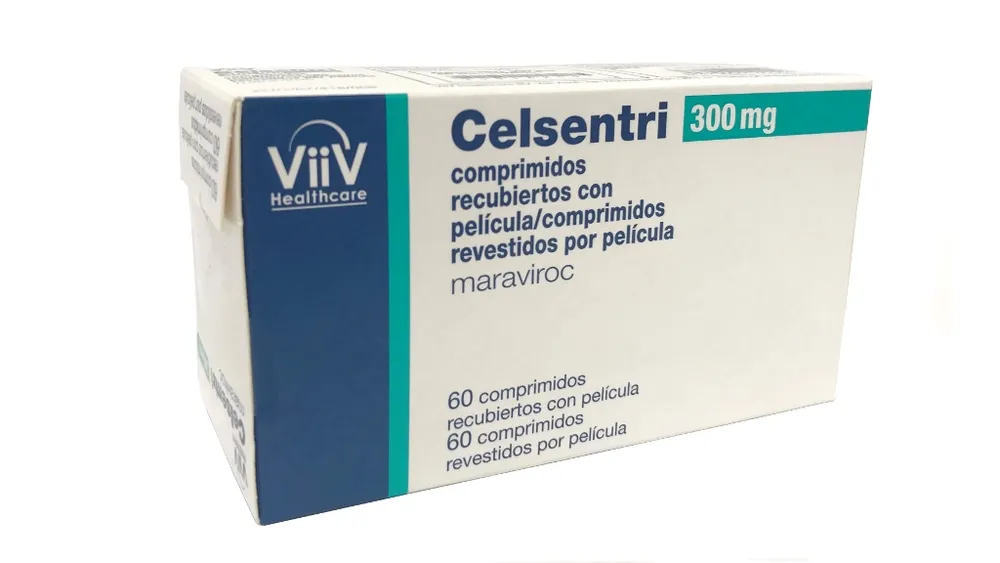
Table of Contents
Package leaflet: Information for the user
Introduction
Package leaflet: information for the user
CELSENTRI 150 mg film-coated tablets
CELSENTRI 300 mg film-coated tablets
maraviroc
Read the entire leaflet carefully before you start taking this medicine, because it contains important information for you.
Keep this leaflet, as you may need to read it again.
- If you have any questions, ask your doctor or pharmacist.
- This medicine has been prescribed for you only, and you should not give it to other people, even if they have the same symptoms as you, because it may harm them.
- If you experience any adverse effects, consult your doctor or pharmacist, even if they are adverse effects not listed in this leaflet. See section 4.
Leaflet contents
- What CELSENTRI is and what it is used for
- What you need to know before taking CELSENTRI
- How to take CELSENTRI
- Possible side effects
- How to store CELSENTRI
- Contents of the pack and other information
1. What CELSENTRI is and what it is used for
CELSENTRI contains an active substance called maraviroc. Maraviroc belongs to a group of medicines known as CCR5 antagonists. CELSENTRI works by blocking a receptor called CCR5, which HIV uses to enter and infect blood cells.
CELSENTRI is used to treat Human Immunodeficiency Virus type 1 (HIV-1) infection in adults, adolescents, and children weighing at least 30 kg.
CELSENTRI must be taken in combination with other medicines used to treat HIV infection. All of these medicines are referred to as anti-HIV medicines or antiretrovirals.
CELSENTRI, as part of combination therapy, reduces the amount of virus in your body and keeps it at a low level. This helps your body increase the CD4 cell count in your blood. CD4 cells are a type of white blood cell important in helping your body fight infections.
2. What you need to know before starting CELSENTRI
Do not take CELSENTRI
-
if you (or your child, if the patient) are allergic to maraviroc, peanuts, soybeans, or any of the other components of CELSENTRI (listed in section 6).
-
Consult your doctor if you think this applies to you or your child.
Warnings and precautions
Talk to your doctor or pharmacist before taking or administering CELSENTRI.
Your doctor should take blood samples to determine whether CELSENTRI is an appropriate treatment for you (or your child, if the patient).
Some people taking CELSENTRI have developed severe allergic reactions or skin reactions (see also “Serious adverse effects” in section 4).
Before taking this medicine, make sure your doctor knows if you (or your child) have or have previously had any of the following conditions:
-
liver problems, including chronic hepatitis B or C. Only a limited number of people with liver problems have taken CELSENTRI. Your liver function may need to be carefully monitored. (See also “Liver problems” in section 4.)
-
low blood pressure, including dizziness when standing up or sitting down quickly, or if you are taking medications to lower blood pressure. This is due to a sudden drop in blood pressure. If this occurs, lie down (or have your child lie down) until you feel better. When getting up, do so as slowly as possible.
-
tuberculosis (TB) or a serious fungal infection. CELSENTRI may potentially increase your risk of developing infections.
-
kidney problems. This is particularly important if you are also taking other medications (see “Other medicines and CELSENTRI” later in section 2).
-
heart or circulatory problems. Only a limited number of people with serious heart or circulatory problems have taken CELSENTRI.
-
Inform your doctor before starting treatment if you think any of the above conditions apply to you (or your child).
Conditions to be aware of
Some people taking medicines for HIV infection develop other disorders, which may be serious. These include:
- Symptoms of infections and inflammation
- Joint pain, stiffness, and bone problems
You need to know which important signs and symptoms to watch for while taking CELSENTRI.
- Read the information on “Other possible adverse effects of combined antiretroviral therapy for HIV” in section 4 of this leaflet.
Elderly patients
Only a limited number of people aged 65 years or older have taken CELSENTRI. If you belong to this age group, consult your doctor about whether you can take CELSENTRI.
Children
Film-coated CELSENTRI tablets are not recommended for children and adolescents weighing less than 30 kg. For children aged 2 years and older weighing between 10 kg and less than 30 kg, CELSENTRI oral solution is recommended.
The use of CELSENTRI has not been studied in children under 2 years of age or weighing less than 10 kg. Therefore, CELSENTRI is not recommended in children under 2 years of age or weighing less than 10 kg.
Other medicines and CELSENTRI
Inform your doctor or pharmacist if you (or your child) are taking, have recently taken, or might need to take any other medicine.
Inform your doctor or pharmacist if you (or your child) start taking a new medicine while taking CELSENTRI.
Medicines containing St John's wort (Hypericum perforatum) are likely to prevent CELSENTRI from working properly. You must not take them while taking CELSENTRI.
Some medicines may affect the levels of CELSENTRI in the body when taken at the same time as CELSENTRI. These include:
-
other medicines for the treatment of HIV infection or hepatitis C virus (e.g.: atazanavir, cobicistat, darunavir, efavirenz, etravirine, fosamprenavir, indinavir, lopinavir, nelfinavir, ritonavir, saquinavir, boceprevir, telaprevir)
-
antibiotics (clarithromycin, telithromycin, rifampicin, rifabutin)
-
antifungal medicines (ketoconazole, itraconazole, fluconazole)
-
anticonvulsant medicines (carbamazepine, phenytoin, phenobarbital).
-
Inform your doctor if you (or your child) are taking any of these medicines. This will allow your doctor to prescribe the correct dose of CELSENTRI.
Pregnancy and breastfeeding
If you are pregnant, think you may be pregnant, or plan to become pregnant:
- Consult your doctor about the risks and benefits of taking CELSENTRI.
It is not recommended that women living with HIV breastfeed, because HIV infection can be transmitted to the baby through breast milk.
It is unknown whether the components of CELSENTRI can also pass into breast milk. If you are breastfeeding or planning to breastfeed, you must consult your doctor as soon as possible.
Driving and using machines
CELSENTRI may make you feel dizzy.
- Do not drive, ride a bicycle, or operate machinery or tools if you are unsure whether it affects you.
CELSENTRI contains soya lecithin and sodium.
Do not take this medicine if you are allergic to peanuts or soya.
CELSENTRI contains less than 1 mmol of sodium (23 mg) per tablet; this is essentially “sodium-free”.
3. How to take CELSENTRI
Follow exactly the instructions given by your doctor for taking this medicine. If you are unsure, consult your doctor or pharmacist.
If you (or your child) are unable to swallow the tablets, your doctor will consider whether it is better for you to take the CELSENTRI oral solution.
What dose to take
Adults
The recommended dose of CELSENTRI is 150 mg, 300 mg, or 600 mg twice daily, depending on whether you are taking other medicines at the same time. Always take the dose recommended by your doctor.
Patients with kidney problems
If you have kidney problems, your doctor may adjust your dose.
- Consult your doctor if this applies to you.
Adolescents and children weighing at least 30 kg
Your doctor will determine the correct dose of CELSENTRI based on body weight and other medicines being taken at the same time.
CELSENTRI may be taken with or without food. CELSENTRI must always be taken by mouth.
CELSENTRI should be taken in combination with other medicines used to treat HIV. Please refer to the package leaflet of these other medicines for instructions on how to take them.
If you take or administer more CELSENTRI than you should
If you accidentally take or administer too much CELSENTRI:
- Contact your doctor or go to the nearest hospital immediately.
If you forget to take or administer CELSENTRI
If you (or your child) forget to take or administer a dose of CELSENTRI, take or administer it as soon as possible, then continue with the next dose at the usual time.
If it is almost time for the next dose, do not take or administer the missed dose. Wait and take the next dose at the scheduled time.
Do not take or administer a double dose to make up for a missed dose.
If you (or your child) stop taking CELSENTRI
Continue taking CELSENTRI until your doctor tells you otherwise.
It is important to take your medicines every day at the correct times to ensure that HIV infection does not spread in your body. Therefore, unless your doctor advises you to stop treatment, it is important that you (or your child) continue taking CELSENTRI as described above.
If you have any further questions about the use of this medicine, ask your doctor or pharmacist.
4. Possible adverse effects
Like all medicines, CELSENTRI may produce adverse effects, although not everyone experiences them. Inform your doctor about any unusual changes in your health or that of your child.
Serious adverse effects – seek immediate medical help
Severe allergic or skin reactions
Some people taking CELSENTRI have developed severe and potentially life-threatening skin and allergic reactions. These are rare and may affect up to 1 in 1,000 people taking CELSENTRI.
If you experience any of the following symptoms while being treated with CELSENTRI:
-
swelling of the face, lips, or tongue
-
difficulty breathing
-
widespread rash
-
fever (high temperature)
-
blistering and peeling of the skin, especially around the mouth, nose, eyes, and genitals
-
Contact your doctor immediately if you have these symptoms. Stop taking CELSENTRI.
Liver problems
These are rare and may affect up to 1 in 1,000 people taking CELSENTRI.
Signs include:
-
loss of appetite
-
nausea/vomiting
-
yellowing of the skin or eyes
-
rash or itching
-
feeling very tired
-
stomach pain or tenderness
-
dark urine
-
drowsiness and confusion
-
fever (high temperature)
-
Contact a doctor immediately if you have these symptoms. Stop taking CELSENTRI.
Other adverse effects
Frequent adverse effects
These may affect up to 1 in 10 people:
- diarrhea, general discomfort, stomach pain, flatulence
- loss of appetite
- headache, difficulty sleeping, depression
- rash (see also “Severe allergic or skin reactions” described earlier in section 4)
- feeling weak or lacking energy, anemia (seen in blood tests)
- increased liver enzymes (seen in blood tests), which may be a sign of liver problems (see also “Liver problems” described earlier in this section 4).
Uncommon adverse effects
These may affect up to 1 in 100 people:
- lung infection
- fungal throat infection (esophagus)
- seizures
- feeling dizzy, weak, or lightheaded when standing up
- kidney failure, presence of protein in the urine
- an increase in a substance known as CPK (seen in blood tests), which is a sign that muscles may be inflamed or damaged.
Rare adverse effects
These may affect up to 1 in 1,000 people:
- chest pain (caused by reduced blood flow to the heart)
- decreased muscle size
- certain types of cancer such as esophageal and bile duct cancer
- reduced number of blood cells (seen in blood tests).
Other possible adverse effects of combined antiretroviral therapy for HIV
People taking combined antiretroviral therapy for HIV may develop other adverse effects.
Symptoms of infection and inflammation
People with advanced HIV infection (AIDS) have a weakened immune system and are more likely to develop serious infections (opportunistic infections). After starting treatment, the immune system becomes stronger, so the body begins to fight these infections.
Symptoms of infection and inflammation may develop, caused either by:
- previously hidden, old infections flaring up again as the body starts fighting them
- the immune system attacking healthy body tissues (autoimmune disorders).
Symptoms of autoimmune disorders may appear many months after starting treatment for HIV infection. Symptoms may include:
- muscle weakness
- weakness starting in the hands and feet and moving upward toward the trunk
- palpitations or tremors
- hyperactivity (excessive restlessness and movement).
If you have any symptoms of infection or notice any of the symptoms listed above:
- Inform your doctor immediately. Do not take other medications for infection without consulting your doctor.
Joint pain, stiffness, and bone problems
Some patients on combined antiretroviral therapy for HIV develop a condition called osteonecrosis. In this condition, parts of the bone tissue die due to reduced blood supply to the bones.
The frequency of this condition is unknown. It is more likely to occur:
- if you have been on combination therapy for a long time
- if you are also taking anti-inflammatory medicines called corticosteroids
- if you drink alcohol
- if you have a severely weakened immune system
- if you are overweight.
Signs to watch for include:
- stiffness in the joints
- pain (especially in the hip, knee, or shoulder)
- difficulty moving.
If you notice any of these symptoms:
- Inform your doctor.
Reporting of adverse effects
If you experience any adverse effect, talk to your doctor or pharmacist, even if it is a possible adverse effect not listed in this leaflet. You can also report them directly through the national reporting system listed in Appendix V. By reporting adverse effects, you can help provide more information on the safety of this medicine.
5. Storage of CELSENTRI
Keep this medicine out of the sight and reach of children.
Do not use CELSENTRI after the expiry date stated on the carton, blister pack, or label of the bottle. The expiry date refers to the last day of the month indicated.
This medicine does not require any special storage conditions.
Medicines should not be disposed of via wastewater or household waste. Ask your pharmacist how to dispose of medicines and packaging that you no longer need. This will help protect the environment.
6. Contents of the pack and other information
Composition of CELSENTRI
-
The active substance is maraviroc. Each film-coated tablet contains 150 mg or 300 mg of maraviroc.
-
The other components are:
Tablet core: microcrystalline cellulose, anhydrous calcium hydrogen phosphate, sodium starch glycolate, magnesium stearate.
Coating: poly (vinyl alcohol), titanium dioxide (E171), macrogol 3350, talc, soya lecithin, indigo carmine aluminium lake (E132).
Appearance of the product and contents of the pack
CELSENTRI film-coated tablets are blue, engraved with "MVC 150" or "MVC 300".
CELSENTRI 150 mg and 300 mg film-coated tablets are supplied in bottles of 60 tablets or in blisters of 30, 60 or 90 film-coated tablets, and in multiple packs containing 180 (2 packs of 90) film-coated tablets.
Only some pack sizes may be marketed.
Marketing Authorization Holder:
ViiV Healthcare BV, Van Asch van Wijckstraat 55H, 3811 LP Amersfoort, The Netherlands.
Manufacturer:
Pfizer Manufacturing Deutschland GmbH, Mooswaldallee 1, 79108 Freiburg Im Breisgau, Germany.
For more information about this medicine, please contact the local representative of the Marketing Authorization Holder:
Belgium/Belgium/Belgium ViiV Healthcare srl/bv Tel/Tel: + 32 (0) 10 85 65 00 | Lithuania ViiV Healthcare BV Tel: +370 80000334 |
| Luxembourg/Luxembourg ViiV Healthcare srl/bv Belgium/Belgium Tel/Tel: + 32 (0) 10 85 65 00 |
Czech Republic GlaxoSmithKline s.r.o. Tel: + 420 222 001 111 | Hungary ViiV Healthcare BV Tel.: +36 80088309 |
Denmark GlaxoSmithKline Pharma A/S Tlf: + 45 36 35 91 00 | Malta ViiV Healthcare BV Tel: +356 80065004 |
Germany ViiV Healthcare GmbH Tel.: + 49 (0)89 203 0038-10 | Netherlands ViiV Healthcare BV Tel: + 31 (0)33 2081199 |
Estonia ViiV Healthcare BV Tel: +372 8002640 | Norway GlaxoSmithKline AS Tlf: + 47 22 70 20 00 |
Greece GlaxoSmithKline Μονοπρόσωπη A.E.B.E. Tel: + 30 210 68 82 100 | Austria GlaxoSmithKline Pharma GmbH Tel: + 43 (0)1 97075 0 |
Spain Laboratorios ViiV Healthcare, S.L. Tel: + 34 900 923 501 | Poland GSK Services Sp. z o.o. Tel.: + 48 (0)22 576 9000 |
France ViiV Healthcare SAS Tel.: + 33 (0)1 39 17 6969 | Portugal VIIVHIV HEALTHCARE, UNIPESSOAL, LDA. Tel: + 351 21 094 08 01 |
Croatia ViiV Healthcare BV Tel: +385 800787089 | Romania ViiV Healthcare BV Tel: +40 800672524 |
Ireland GlaxoSmithKline (Ireland) Limited Tel: + 353 (0)1 4955000 | Slovenia ViiV Healthcare BV Tel: +386 80688869 |
Iceland Vistor ehf. Sími: + 354 535 7000 | Slovakia ViiV Healthcare BV Tel: +421 800500589 |
Italy ViiV Healthcare S.r.l. Tel: + 39 (0)45 7741600 | Finland GlaxoSmithKline Oy Puh/Tel: + 358 (0)10 30 30 30 |
Cyprus ViiV Healthcare BV Tel: +357 80070017 | Sweden GlaxoSmithKline AB Tel: + 46 (0)8 638 93 00 |
Latvia ViiV Healthcare BV Tel: +371 80205045 |
Date of the most recent revision of this leaflet: {MM/YYYY}
Other sources of information
Detailed information on this medicinal product is available on the website of the European Medicines Agency: http://www.ema.europa.eu/.