Captopril CINFA 25 mg tablets EFG
Spain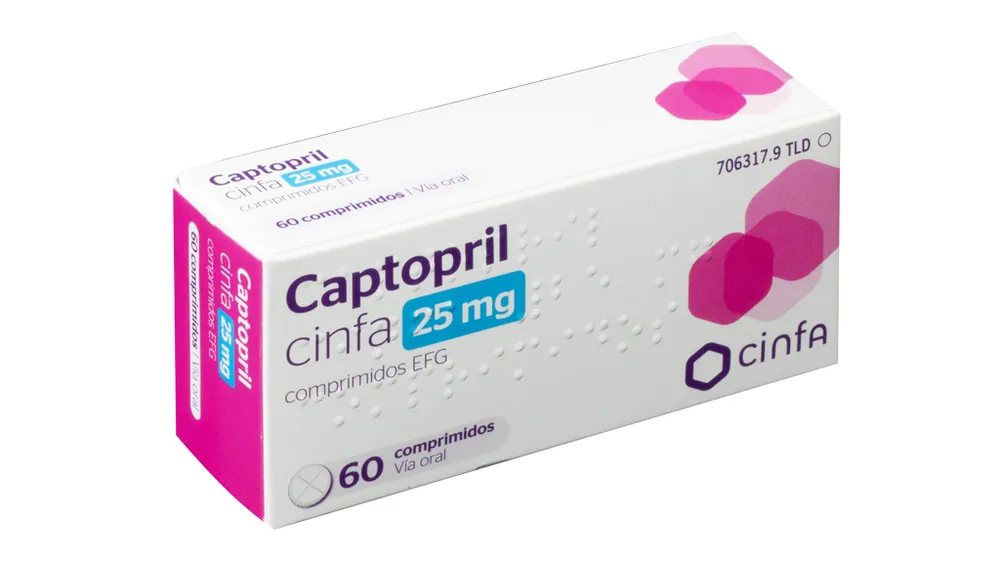
Table of Contents
Package leaflet: Information for the user
Introduction
Package leaflet: information for the user
captopril cinfa 25 mg tablets EFG
Read the entire leaflet carefully before you start taking this medicine because it contains important information for you.
- Keep this leaflet as you may need to read it again.
- If you have any questions, ask your doctor or pharmacist.
- This medicine has been prescribed for you only and must not be given to other people, even if they have the same symptoms as you, because it may harm them.
- If you experience any adverse effects, consult your doctor or pharmacist, even if they are adverse effects not listed in this leaflet. See section 4.
Contents of the leaflet
- What captopril cinfa is and what it is used for
- What you need to know before taking captopril cinfa
- How to take captopril cinfa
- Possible adverse effects
- How to store captopril cinfa
- Contents of the pack and other information
1. What captopril cinfa is and what it is used for
captopril cinfa is a medicine that belongs to a group of medicines called angiotensin-converting enzyme (ACE) inhibitors. Captopril causes relaxation of blood vessels and lowers blood pressure.
captopril cinfa is indicated for:
- Treatment of high blood pressure (hypertension)
- Treatment of chronic heart failure (when the heart does not pump blood properly), in combination with diuretics and, when appropriate, with digitalis medications and beta-blockers
- After a myocardial infarction (heart attack)
- Treatment of kidney problems in patients with type I diabetes (type I diabetic nephropathy).
2. What you need to know before taking captopril cinfa
Do not take captopril cinfa
- If you are allergic to captopril or to any of the other ingredients of this medicine (listed in section 6).
- If you have a history of angioedema (swelling of the face, lips, tongue and/or throat with difficulty swallowing or breathing) associated with previous treatment with medicines of the same class as captopril.
- If you have idiopathic or hereditary angioedema.
- If you have diabetes or kidney impairment and are being treated with a blood pressure-lowering medicine containing aliskiren.
- If you are pregnant (especially if you are in the second or third trimester of pregnancy).
Warnings and precautions
Talk to your doctor or pharmacist before starting captopril cinfa.
- If you are taking any of the following medicines used to treat high blood pressure (hypertension):
- an angiotensin II receptor antagonist (ARA) (also known as “sartans” – for example, valsartan, telmisartan, irbesartan), particularly if you have kidney problems related to diabetes.
- aliskiren.
Your doctor may monitor your kidney function, blood pressure, and blood electrolyte levels (e.g., potassium) at regular intervals.
See also the information under the heading “Do not take captopril cinfa”.
Take special care with captopril
- If you experience swelling of the arms, legs, face, lips, tongue and/or throat with difficulty swallowing or breathing (angioedema), or if you have a history of angioedema. This may occur at any time during treatment. The risk of developing these symptoms with captopril treatment is higher in black patients.
- Abdominal pain, with or without nausea or vomiting (possible symptoms of intestinal angioedema).
- If you develop any signs of infection (such as sore throat or fever) that do not respond quickly to usual treatment.
- If you experience low blood pressure (this may present as dizziness or fainting, especially when standing up).
- If you have severe or persistent vomiting or diarrhoea.
- If you have heart, liver, or kidney disease or diabetes.
- If you are undergoing, or are scheduled to undergo, desensitization procedures for allergy to bee or wasp stings.
- If you are undergoing haemodialysis or apheresis (blood separation procedures), as reactions may occur related to the type of membrane used.
- If you have a collagen disease.
- If you are on a low-salt diet.
- If you develop a cough during treatment.
- Excessive sweating and dehydration should be avoided, as they may lead to a sudden drop in blood pressure.
- If you are scheduled for surgery or will receive anaesthetics, inform your doctor that you are taking captopril.
- If you are of black origin, as with other medicines used to lower blood pressure, this medicine may be less effective in black patients.
Consult your doctor, even if any of the above circumstances occurred only once in the past.
Elderly patients
Captopril may be used in elderly patients; however, as with other antihypertensive agents, treatment should be initiated with lower doses (see section “How to take”).
Children and adolescents
The efficacy and safety of captopril have not been fully established. The use of captopril in children and adolescents should be initiated under close medical supervision.
Other medicines and captopril cinfa
Tell your doctor or pharmacist if you are taking, have recently taken, or might need to take any other medicines.
Certain medicines may interact with captopril. In such cases, it may be necessary to adjust the dose or discontinue treatment with one of the medicines.
It is important to inform your doctor if you are taking any of the following medicines:
- diuretics
- potassium-containing medicines
- medicines that lower blood pressure
- antidiabetic agents
- anti-inflammatory medicines
- lithium (a medicine used in some types of depression)
- tricyclic antidepressants/antipsychotics
- sympathomimetics or agents affecting the sympathetic nervous system
- alpha-blockers
- allopurinol (a medicine used to treat gout attacks)
- procainamide (a medicine used for cardiac rhythm disorders)
- cytostatic or immunosuppressive agents
- medicines used to treat acute myocardial infarction.
Your doctor may need to adjust your dose and/or take other precautions:
If you are taking an angiotensin II receptor antagonist (ARA) or aliskiren (see also the information under the headings “Do not take captopril cinfa” and “Warnings and precautions”).
Taking captopril cinfa with food and drink
Captopril may be taken with or without food.
Inform your doctor if you are taking potassium supplements or consuming a potassium-rich diet.
Pregnancy and breastfeeding
Consult your doctor or pharmacist before using any medicine.
Pregnancy
Captopril is not recommended during the first trimester of pregnancy and is contraindicated during the second and third trimesters of pregnancy. Inform your doctor immediately if you think you may be pregnant.
Angiotensin-converting enzyme (ACE) inhibitors (the class to which captopril belongs) may cause fetal harm or death when administered during the second and third trimesters of pregnancy. If pregnancy is detected, this medicine should be discontinued as soon as possible.
Breastfeeding
The use of captopril during breastfeeding is not recommended.
Driving and using machines
Treatment for high blood pressure may reduce your ability to drive and use machines, especially at the beginning of treatment, when the dose is changed, or when alcohol is consumed.
Do not drive or operate machinery if you notice that this medicine impairs your ability to perform these functions.
captopril cinfa contains lactose
This medicine contains lactose. If your doctor has informed you that you have an intolerance to certain sugars, consult with him before taking this medicine.
3. How to take captopril cinfa
Follow exactly the instructions given by your doctor for taking this medicine. If in doubt, consult your doctor or pharmacist again.
Your doctor will determine the appropriate dose for you and make any necessary adjustments, as dosing must be individualized.
Adults
Treatment of high blood pressure
The recommended initial dose is 25–50 mg per day, administered in two daily doses. Your doctor may gradually increase the dose up to 100–150 mg per day. Your doctor may also recommend concomitant use of other medications that lower blood pressure.
Treatment of chronic heart failure
The recommended initial dose for chronic heart failure (to help the heart pump blood properly) is 6.25–12.5 mg two or three times daily. Your doctor may gradually increase the dose up to a maximum of 150 mg per day and will monitor you closely during the first weeks of treatment or when changing your dose.
Myocardial infarction
The usual dose after a myocardial infarction is an initial test dose of 6.25 mg. Your doctor may gradually increase the dose up to a maximum of 150 mg per day.
Kidney problems
The recommended initial dose for treating kidney problems in patients with type I diabetes is 75–100 mg per day, administered in several divided doses.
Use in children and adolescents:
The recommended initial dose is 0.30 mg/kg body weight. In children requiring special precautions, the starting dose should be 0.15 mg/kg body weight. The use of this medicine in children and adolescents should be initiated under close medical supervision. Your doctor will advise you on the number of daily doses.
Elderly patients:
In elderly patients with impaired renal function and other organ dysfunction, doses lower than the recommended ones should be administered.
Patients with renal impairment:
In patients with kidney impairment, doses lower than the recommended ones should be administered.
If you think that the effect of captopril is too strong or too weak, tell your doctor or pharmacist.
Method of administration:
Swallow the tablets with water, regardless of food intake.
The tablets may be divided into equal doses.
Remember to take your medicine.
Your doctor will tell you how long to continue treatment with captopril. Do not stop treatment prematurely, as only your doctor knows what is best for you.
If you take more captopril cinfa than you should
In case of overdose or accidental ingestion, contact your doctor or pharmacist immediately or call the Toxicology Information Service at telephone: 91 562 04 20, indicating the medicine and the amount ingested.
The most common symptoms of overdose include severe hypotension, shock, stupor, bradycardia (slowing of the heart rate), electrolyte disturbances, and renal failure.
If you forget to take captopril cinfa
If you forget to take your dose, take it as soon as you remember on the same day. If you miss a dose one day, take your normal dose the next day. Do not take a double dose to make up for missed doses.
If you have any further questions about the use of this medicine, ask your doctor or pharmacist.
4. Possible adverse effects
Like all medicines, this medicine can cause adverse effects, although not everyone will experience them.
The following adverse effects have been observed:
Frequent (may affect up to 1 in 10 people): anorexia (loss of appetite), sleep disorders, taste disturbance, dizziness, headache and tingling sensation, cough and difficulty breathing, nausea, vomiting, gastric irritation, abdominal pain, diarrhoea, constipation, dry mouth, gastric ulcer, itching with or without skin rash (sometimes with fever, joint pain, and eosinophilia), skin rash, and hair loss.
Uncommon (may affect up to 1 in 100 people): tachycardia or tachyarrhythmia (increased heart rate), chest pain, palpitations, hypotension, Raynaud's syndrome (episodes of pallor followed by cyanosis and redness, occurring in the fingers), redness, pallor, swelling of the arms, legs, face, lips, tongue and/or throat, chest pain, fatigue, malaise.
Rare (may affect up to 1 in 1,000 people): drowsiness, mouth lesions, intestinal angioedema, renal function disorders including renal failure, kidney failure, and abnormalities in urine excretion.
Very rare (may affect up to 1 in 10,000 people): blood cell count abnormalities, lymph node disorders, autoimmune diseases, changes in blood test results related to potassium and glucose levels, confusion, depression, stroke, blurred vision, cardiac arrest, cardiogenic shock, respiratory disturbances, tongue inflammation, pancreatitis, hepatic dysfunction and yellowing of the skin, hepatitis (liver inflammation) including necrosis, elevations in liver enzymes and bilirubin, appearance of itchy blisters, Stevens-Johnson syndrome, photosensitivity, skin redness, skin peeling, muscle pain, joint pain, nephrotic syndrome, impotence, excessive breast enlargement in men, fever, blood cell count abnormalities, and changes in blood test results.
Frequency not known (frequency cannot be estimated from available data): disturbance of hormones regulating blood glucose leading to a marked decrease in blood sugar levels (insulin autoimmune syndrome).
Reporting of adverse effects
If you experience any type of adverse effect, consult your doctor or pharmacist, even if it is a possible adverse effect not listed in this leaflet. You may also report them directly via the Spanish Pharmacovigilance System for Human Medicines: https://www.notificaram.es. By reporting adverse effects, you can help provide more information on the safety of this medicine.
5. Storage of captopril cinfa
Keep this medicine out of the sight and reach of children.
This medicine does not require any special storage conditions.
Do not use this medicine after the expiry date stated on the packaging after EXP. The expiry date refers to the last day of the month indicated.
Medicines must not be disposed of via wastewater or household waste. Dispose of containers and unused medicines at a pharmacy’s SIGRE collection point. If you are unsure, ask your pharmacist how to dispose of containers and medicines you no longer need. This will help protect the environment.
6. Contents of the pack and other information
Composition of captopril cinfa
- The active substance is captopril. Each tablet contains 25 mg of captopril.
- The other components are microcrystalline cellulose (E-460), lactose, corn starch, stearic acid, and anhydrous colloidal silica.
Appearance of the medicine and contents of the pack
captopril cinfa 25 mg are white, cylindrical, biconvex tablets, bisected on one side and marked "C25C" on the other.
The product is presented in blisters consisting of one layer of aluminum and another of PVC-PVDC. Each pack contains 60 tablets.
Marketing Authorization Holder and Manufacturer
Laboratorios Cinfa, S.A.
Carretera Olaz-Chipi, 10. Polígono Industrial Areta
31620 Huarte (Navarra) - Spain
Date of the most recent review of this leaflet: March 2026
Detailed information on this medicine is available on the website of the Spanish Agency of Medicines and Medical Devices (AEMPS) http://www.aemps.gob.es/.
You can access detailed and up-to-date information about this medicine by scanning with your mobile phone (smartphone) the QR code included in the package leaflet and outer packaging. You can also access this information at the following internet address: https://cima.aemps.es/cima/dochtml/p/62304/P_62304.html
QR code to: https://cima.aemps.es/cima/dochtml/p/62304/P_62304.html