Axitinib Accord 3 mg film-coated tablets EFG
Spain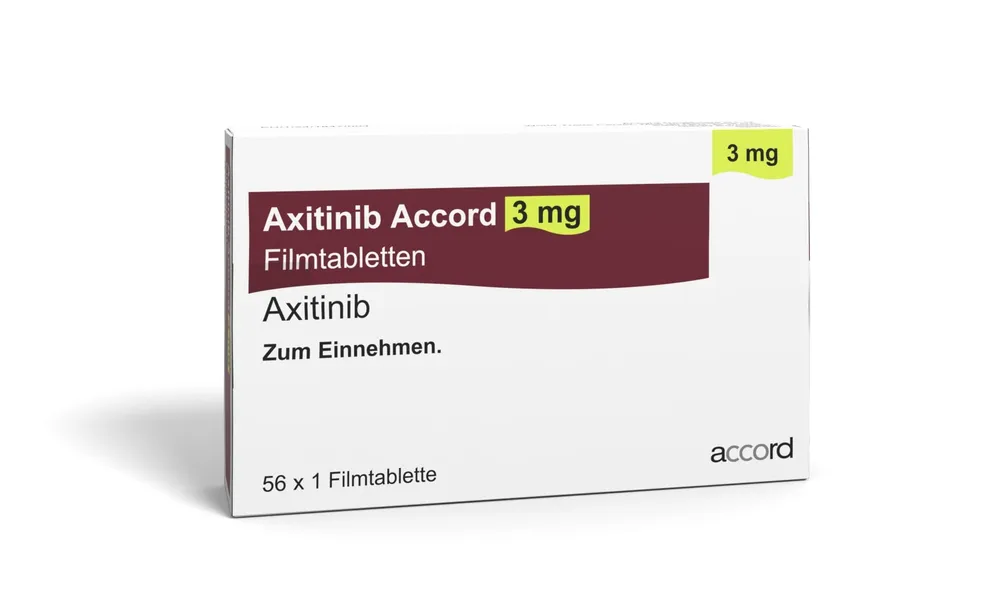
Table of Contents
Package Leaflet: Information for the User
Introduction
Package leaflet: information for the patient
Axitinib Accord 1 mg film-coated tablets
Axitinib Accord 3 mg film-coated tablets
Axitinib Accord 5 mg film-coated tablets
axitinib
Read the entire leaflet carefully before you start taking this medicine, because it contains important information for you.
- Keep this leaflet, as you may need to read it again.
- If you have any questions, ask your doctor, pharmacist, or nurse.
- This medicine has been prescribed for you only, and you should not give it to other people, even if they have the same symptoms as you, because it could harm them.
- If you experience any adverse effects, consult your doctor, pharmacist, or nurse, even if they are adverse effects not listed in this leaflet. See section 4.
Contents of the leaflet
- What Axitinib Accord is and what it is used for
- What you need to know before taking Axitinib Accord
- How to take Axitinib Accord
- Possible side effects
- How to store Axitinib Accord
- Contents of the pack and other information
1. What Axitinib Accord is and what it is used for
Axitinib Accord is a medicine that contains the active substance axitinib. Axitinib reduces the blood supply to the tumour and slows down cancer growth.
Axitinib Accord is indicated for the treatment of advanced kidney cancer (advanced renal cell carcinoma) in adults, when other medicines (called sunitinib or cytokines) are unable to stop the progression of the disease.
If you have any questions about how this medicine works or why it has been prescribed for you, please consult your doctor.
2. What you need to know before starting Axitinib Accord
Do not take Axitinib Accord:
If you are allergic to axitinib or to any of the other ingredients of this medicine (listed in section 6). If you think you may be allergic, consult your doctor.
Warnings and precautions
Consult your doctor or nurse before taking Axitinib Accord:
- If you have high blood pressure.
Axitinib Accord can increase blood pressure. It is important to monitor your blood pressure before starting this medicine and periodically during treatment. If you have high blood pressure (hypertension), you may be treated with medications that lower blood pressure. Your doctor must ensure your blood pressure is controlled before starting treatment with Axitinib Accord, and throughout treatment with this medicine.
- If you have thyroid gland problems.
Axitinib Accord may cause thyroid gland problems. Contact your doctor if you feel unusually tired, frequently feel colder than others, or your voice becomes deeper while taking this medicine. Thyroid function should be checked before starting Axitinib Accord and periodically during treatment. If your thyroid gland does not produce enough thyroid hormone, you may be treated with thyroid hormone replacement therapy before or during treatment with this medicine.
- If you have recently had blood clotting problems in veins or arteries (types of blood vessels), including stroke, heart attack, embolism, or thrombosis.
Call emergency services immediately and contact your doctor if you experience symptoms such as chest pain or pressure, arm, back, neck, or jaw pain, shortness of breath, numbness or weakness on one side of the body, difficulty speaking, headache, vision changes, or dizziness while being treated with this medicine.
- If you have or have had bleeding problems.
Axitinib Accord may increase the risk of bleeding. Inform your doctor if you experience bleeding, cough up blood, or have blood-stained sputum while being treated with this medicine.
-
If you have or have had an aneurysm (a bulge and weakening in the wall of a blood vessel) or a tear in the wall of a blood vessel.
-
If during treatment with this medicine you experience severe stomach (abdominal) pain or stomach pain that does not go away.
Axitinib Accord may increase the risk of developing a stomach or intestinal ulcer or the formation of fistulas (an abnormal tube-like passage from one body cavity to another or to the skin). Consult your doctor if you experience severe abdominal pain while being treated with this medicine.
- If you are scheduled for surgery or have an unhealed wound.
Your doctor should discontinue Axitinib Accord at least 24 hours before surgery, as it may affect wound healing. Treatment with this medicine should be resumed only once the wound has healed properly.
- If during treatment with this medicine you experience symptoms such as headache, confusion, seizures (epileptic fits), or vision changes, with or without high blood pressure.
Call emergency services immediately and contact your doctor. This could be a rare neurological side effect known as reversible posterior leukoencephalopathy syndrome.
- If you have liver problems.
Your doctor should perform blood tests to monitor liver function before and during treatment with Axitinib Accord.
- If during treatment with this medicine you experience symptoms such as excessive tiredness, swelling of the abdomen, legs, or ankles, difficulty breathing, or prominent neck veins (very visible veins).
Axitinib Accord may increase the risk of heart failure events. Your doctor should periodically monitor for signs or symptoms of heart failure throughout treatment with axitinib.
Use in children and adolescents
Axitinib Accord is not recommended for individuals under 18 years of age. This medicine has not been studied in children or adolescents.
Other medicines and Axitinib Accord
Some medicines may affect Axitinib Accord, or be affected by it. Inform your doctor, pharmacist, or nurse if you are taking, have recently taken, or might need to take any other medicines, including over-the-counter medicines, vitamins, and herbal supplements. The medicines listed in this leaflet may not be the only ones that interact with Axitinib Accord.
The following medicines may increase the risk of adverse effects with Axitinib Accord:
- ketoconazole or itraconazole, used to treat fungal infections;
- clarithromycin, erythromycin, or telithromycin, antibiotics used to treat bacterial infections;
- atazanavir, indinavir, nelfinavir, ritonavir, or saquinavir, used to treat HIV/AIDS infections;
- nefazodone, used to treat depression.
The following medicines may reduce the effectiveness of Axitinib Accord:
- rifampicin, rifabutin, or rifapentine, used to treat tuberculosis (TB);
- dexamethasone, a steroid medicine prescribed for the treatment of various conditions, some of which are serious;
- phenytoin, carbamazepine, or phenobarbital, antiepileptic medicines used to prevent seizures or epileptic fits;
- St. John’s wort (Hypericum perforatum), a herbal remedy used to treat depression.
You must not take these medicines during treatment with Axitinib Accord. If you are taking any of them, inform your doctor, pharmacist, or nurse. Your doctor may adjust the dose of these medicines, adjust the dose of Axitinib Accord, or switch to another medicine.
Axitinib Accord may increase the adverse effects associated with theophylline, used to treat asthma or other lung diseases.
Taking Axitinib Accord with food and drinks
Do not take this medicine with grapefruit or grapefruit juice, as it may increase the risk of adverse effects.
Pregnancy and breastfeeding
-
If you are pregnant or breastfeeding, think you may be pregnant, or plan to become pregnant, consult your doctor, pharmacist, or nurse before using this medicine.
-
Axitinib Accord could harm the unborn baby or breastfed infant.
-
Do not take this medicine during pregnancy. If you are pregnant or think you may be pregnant, consult your doctor before taking it.
-
During treatment with Axitinib Accord and for at least 1 week after the last dose, use a reliable method of contraception to prevent pregnancy.
-
Do not breastfeed during treatment with Axitinib Accord. If you are breastfeeding, your doctor will advise whether you should stop breastfeeding or stop treatment with Axitinib Accord.
Driving and using machines
If you experience dizziness and/or feel tired while being treated with Axitinib Accord, exercise particular caution when driving or operating machinery.
Axitinib Accord contains lactose
If your doctor has informed you that you have an intolerance to certain sugars, consult with them before taking this medicine.
Axitinib Accord contains sodium
This medicine contains less than 1 mmol of sodium (23 mg) per film-coated tablet; essentially “sodium-free”.
3. How to take Axitinib Accord
Follow exactly the instructions given by your doctor for taking this medicine. If you are unsure, consult your doctor, pharmacist, or nurse again.
The recommended dose is 5 mg twice daily. Your doctor may subsequently increase or decrease your dose depending on how well you tolerate treatment with Axitinib Accord. Other products are available for the higher dose of 7 mg.
Swallow the tablets whole with some water, with or without food. Take the doses of Axitinib Accord approximately every 12 hours.
If you take more Axitinib Accord than you should
If you accidentally take more tablets or a higher dose than prescribed, contact your doctor immediately for advice. If possible, show your doctor the packaging or this leaflet. You may require medical attention.
If you forget to take Axitinib Accord
Take the next dose at your usual time. Do not take a double dose to make up for the missed dose.
If you vomit while taking Axitinib Accord
If you vomit, do not take an additional dose. Take the next prescribed dose at your usual time.
If you stop taking Axitinib Accord
If you are unable to take this medicine as prescribed by your doctor, or if you think you no longer need it, contact your doctor immediately.
If you have any further questions about the use of this medicine, ask your doctor, pharmacist, or nurse.
4. Possible adverse effects
Like all medicines, this medicine can cause adverse effects, although not everyone will experience them.
Some adverse effects may be serious. You must contact your doctor immediately if you experience any of the following serious adverse effects (see also section 2 “What you need to know before you start taking Axitinib Accord”):
-
Heart failure events. Consult your doctor if you experience excessive tiredness, swelling of the abdomen, legs or ankles, shortness of breath, or bulging neck veins.
-
Blood clots in veins and arteries (types of blood vessels), including stroke, heart attack, embolism, or thrombosis. Call emergency services immediately and contact your doctor if you have symptoms such as chest pain or pressure, arm, back, neck, or jaw pain, shortness of breath, numbness or weakness on one side of the body, difficulty speaking, headache, vision changes, or dizziness.
-
Bleeding. Inform your doctor if you experience any of these symptoms or develop a bleeding problem during treatment with Axitinib Accord: black or tarry stools, coughing up blood or bloody sputum, or changes in mental status.
-
Stomach or intestinal ulcer or formation of fistulas (an abnormal tube-like passage from one body cavity to another body cavity or to the skin). Consult your doctor if you have severe abdominal pain.
-
Severe increase in blood pressure (hypertensive crisis). Consult your doctor if you have very high blood pressure, severe headache, or severe chest pain.
-
Reversible brain disorder (posterior reversible encephalopathy syndrome). Call emergency services immediately and contact your doctor if you experience symptoms such as headache, confusion, seizures (epileptic fits), or vision changes with or without high blood pressure.
Other adverse effects with Axitinib Accord may include:
Very common: may affect more than 1 in 10 people
- High blood pressure or increases in blood pressure.
- Diarrhea, nausea or vomiting, stomach pain, indigestion, mouth, tongue or throat irritation, constipation.
- Shortness of breath, cough, hoarseness.
- Lack of energy, feeling weak or tired.
- Low activity of the thyroid gland (can be seen in blood tests).
- Redness and swelling of the palms of the hands or soles of the feet (hand-foot syndrome), skin rash, dry skin.
- Joint pain, pain in the hands or feet.
- Loss of appetite.
- Protein in urine (can be seen in urine tests).
- Weight loss.
- Headache, altered taste or loss of taste.
Common: may affect up to 1 in 10 people
- Dehydration (loss of body fluids).
- Kidney failure.
- Flatulence (gas), hemorrhoids, bleeding gums, rectal bleeding, burning or stinging sensation in the mouth.
- Hyperthyroidism (can be seen in blood tests).
- Sore throat or irritation of nose and throat.
- Muscle pain.
- Nosebleeds.
- Itching of the skin, skin redness, hair loss.
- Ringing/sounds in the ears (tinnitus).
- Decreased red blood cell count (can be seen in blood tests).
- Decreased platelet count (blood cells that help blood clotting) (can be seen in blood tests).
- Presence of red blood cells in urine (can be seen in urine tests).
- Changes in levels of different substances/enzymes in the blood (can be seen in blood tests).
- Increase in red blood cell count (can be seen in blood tests).
- Swelling of the abdomen, legs or ankles, bulging neck veins, excessive tiredness, difficulty breathing (signs of heart failure events).
- Fistula (abnormal passage connecting one body cavity to another body cavity or to the skin).
- Dizziness.
- Inflammation of the gallbladder.
Uncommon: may affect up to 1 in 100 people
- Decrease in white blood cell count (can be seen in blood tests).
Frequency not known: cannot be estimated from available data
- Increase and weakening of the wall of a blood vessel or tear in the wall of a blood vessel (aneurysms and arterial dissections).
Reporting of adverse effects
If you experience any type of adverse effect, talk to your doctor, pharmacist, or nurse, even if it is a possible adverse effect not listed in this leaflet. You may also report them directly through the national reporting system included in Appendix V. By reporting adverse effects, you can help provide more information on the safety of this medicine.
5. Storage of Axitinib Accord
Keep this medicine out of the sight and reach of children.
Do not use this medicine after the expiry date stated on the carton and on the blister or bottle after "EXP". The expiry date refers to the last day of the month indicated.
This medicine does not require special storage temperature conditions.
OPA/aluminum/PVC/aluminum blister:
Keep in the original packaging to protect from moisture.
HDPE bottle:
Keep the bottle tightly closed to protect from moisture.
Do not use this medicine if it is damaged or shows signs of tampering.
Bottle:
After first opening the bottle:
1 mg: use within 45 days.
3 mg and 5 mg: use within 30 days.
Medicines should not be disposed of via wastewater or household waste. Ask your pharmacist how to dispose of medicines and packaging that you no longer need. This will help protect the environment.
6. Contents of the pack and other information
Composition of Axitinib Accord
- The active substance is axitinib. Axitinib Accord tablets are available in different strengths.
Axitinib Accord 1 mg: each tablet contains 1 mg of axitinib.
Axitinib Accord 3 mg: each tablet contains 3 mg of axitinib.
Axitinib Accord 5 mg: each tablet contains 5 mg of axitinib.
- The other components are lactose, microcrystalline cellulose (E460), anhydrous colloidal silica, hydroxypropylcellulose (300–600 mPa*s), sodium croscarmellose (E468), talc, magnesium stearate (E470b), hypromellose 2910 (15 mPas) (E464), lactose monohydrate, titanium dioxide (E171), triacetin, and red iron oxide (E172) (see section 2 Axitinib Accord contains lactose).
Nature and contents of the container
Axitinib Accord 1 mg film-coated tablets are film-coated, modified capsule-shaped, biconvex, red tablets, engraved with 'S14' on one side and plain on the other. The tablet size is approximately 9.1 ± 0.2 mm × 4.6 ± 0.2 mm. Axitinib Accord 1 mg is available in bottles of 180 tablets and in blisters of 14 tablets. Each blister pack contains 28 or 56 tablets or single-dose perforated blisters of 28 x 1 or 56 x 1 tablets.
Axitinib Accord 3 mg film-coated tablets are film-coated, round, biconvex, red tablets, engraved with 'S95' on one side and plain on the other. The tablet size is approximately 5.3 ± 0.3 mm × 2.6 ± 0.3 mm. Axitinib Accord 3 mg is available in bottles of 60 tablets and in blisters of 14 tablets. Each blister pack contains 28 or 56 tablets or single-dose perforated blisters of 28 x 1 or 56 x 1 tablets.
Axitinib Accord 5 mg film-coated tablets are film-coated, triangular, biconvex, red tablets, engraved with 'S15' on one side and plain on the other. The tablet size is approximately 6.4 ± 0.3 mm × 6.3 ± 0.3 mm. Axitinib Accord 5 mg is available in bottles of 60 tablets and in blisters of 14 tablets. Each blister pack contains 28 or 56 tablets or single-dose perforated blisters of 28 x 1 or 56 x 1 tablets.
Only certain pack sizes may be marketed.
Marketing Authorisation Holder
Accord Healthcare S.L.U.
World Trade Center, Moll de Barcelona, s/n
Edifici Est, 6a Planta
08039 Barcelona
Spain
Manufacturer
APIS Labor GmbH
Resslstraβe 9
9065 Ebenthal in Kärnten,
Austria
Accord Healthcare Polska Sp.z.o.o
ul Lutomierska 50, 95-200
Pabianice
Poland
For more information about this medicine, please contact the local representative of the Marketing Authorisation Holder:
AT / BE / BG / CY / CZ / DE / DK / EE / ES / FI / FR / HR / HU / IE / IS / IT / LT / LV / LX / MT / NL / NO / PL / PT / RO / SE / SI / SK
Accord Healthcare S.L.U.
Tel.: +34 93 301 00 64
EL
Win Medica Α.Ε.
Τηλ: +30 210 74 88 821
Date of the most recent revision of this leaflet:
Other sources of information
Detailed information on this medicine is available on the European Medicines Agency website: https://www.ema.europa.eu/.