Aranesp 80 micrograms solution for injection in pre-filled pen
Spain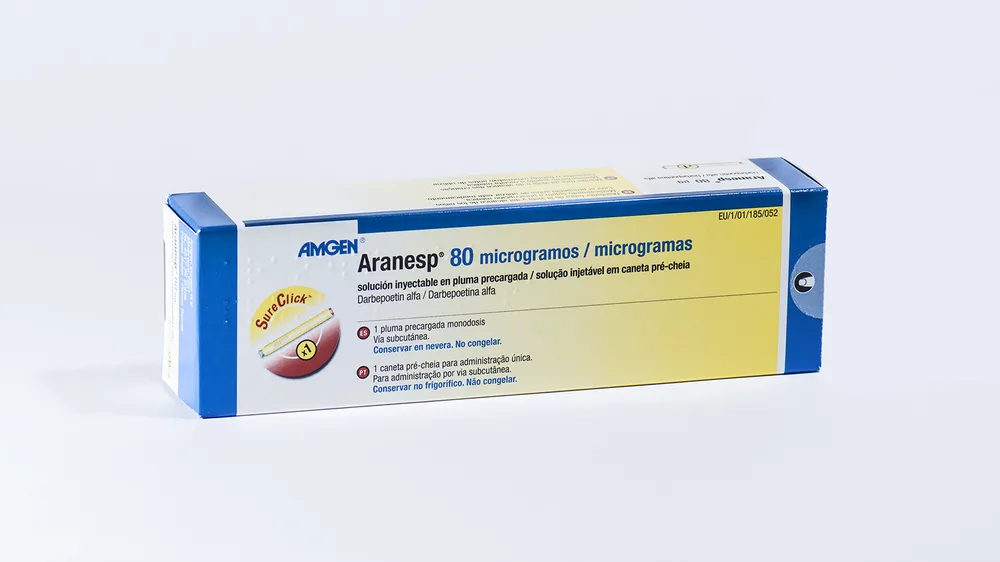
Table of Contents
Package leaflet: Information for the user
Introduction
Package leaflet: information for the user
Aranesp 10 micrograms solution for injection in pre-filled pen (SureClick)
Aranesp 15 micrograms solution for injection in pre-filled pen (SureClick)
Aranesp 20 micrograms solution for injection in pre-filled pen (SureClick)
Aranesp 30 micrograms solution for injection in pre-filled pen (SureClick)
Aranesp 40 micrograms solution for injection in pre-filled pen (SureClick)
Aranesp 50 micrograms solution for injection in pre-filled pen (SureClick)
Aranesp 60 micrograms solution for injection in pre-filled pen (SureClick)
Aranesp 80 micrograms solution for injection in pre-filled pen (SureClick)
Aranesp 100 micrograms solution for injection in pre-filled pen (SureClick)
Aranesp 130 micrograms solution for injection in pre-filled pen (SureClick)
Aranesp 150 micrograms solution for injection in pre-filled pen (SureClick)
Aranesp 300 micrograms solution for injection in pre-filled pen (SureClick)
Aranesp 500 micrograms solution for injection in pre-filled pen (SureClick)
darbepoetin alfa (darbepoetin alfa)
Read the entire leaflet carefully before you start using this medicine, because it contains important information for you.
- Keep this leaflet. You may need to read it again.
- If you have any questions, ask your doctor, pharmacist, or nurse.
- This medicine has been prescribed for you only. Do not give it to others, even if they have the same symptoms as you, because it may harm them.
- If you experience any adverse reactions, consult your doctor, pharmacist, or nurse, even if they are not listed in this leaflet. See section 4.
Contents of the leaflet
- What Aranesp is and what it is used for
- What you need to know before using Aranesp
- How to use Aranesp
- Possible adverse effects
- How to store Aranesp
- Contents of the pack and other information
1. What Aranesp is and what it is used for
Your doctor has prescribed you Aranesp (an anti-anaemic agent) to treat your anaemia. Anaemia occurs when the blood does not contain enough red blood cells, and symptoms may include fatigue, weakness, and shortness of breath.
Aranesp works in exactly the same way as the natural hormone erythropoietin. Erythropoietin is produced in the kidneys and helps the bone marrow to produce more red blood cells. The active substance in Aranesp is darbepoetin alfa, produced by genetic technology in Chinese Hamster Ovary cells (CHO-K1).
If you have chronic renal failure
Aranesp is used to treat symptomatic anaemia associated with chronic renal failure (kidney failure) in adults and children. In renal failure, the kidneys do not produce enough of the natural hormone erythropoietin, which often leads to anaemia.
Since your body will need some time to produce more red blood cells, it will take about four weeks before you notice any effect. Your regular dialysis routine will not affect Aranesp's ability to treat anaemia.
If you are receiving chemotherapy
Aranesp is used to treat symptomatic anaemia in adult patients with non-myeloid tumours who are undergoing chemotherapy.
One of the main side effects of chemotherapy is that it causes the bone marrow to stop producing enough red blood cells. Towards the end of chemotherapy treatment, especially if you have received a lot of chemotherapy, your red blood cell count may drop, causing anaemia.
2. What you need to know before using Aranesp
Do not use Aranesp:
- if you are allergic to darbepoetin alfa or to any of the other ingredients of this medicine (listed in section 6);
- if you have high blood pressure that is not being treated with other medicines prescribed by your doctor.
Warnings and precautions
Talk to your doctor, pharmacist, or nurse before you start using Aranesp.
Tell your doctor if you have or have had:
- high blood pressure being treated with medicines prescribed by your doctor;
- sickle cell anemia;
- epileptic seizures (fits);
- convulsions (spasms and seizures);
- liver disease;
- no response to medicines used to treat anemia;
- latex allergy (the needle cap of the pre-filled pen contains a latex derivative); or
- hepatitis C.
Special precautions:
-
If you experience symptoms such as increased tiredness and lack of energy, this may be due to a condition called pure red cell aplasia (PRCA), which has been observed in some patients. PRCA means that your body has reduced or stopped producing red blood cells, leading to severe anemia. If you experience these symptoms, contact your doctor, who will determine the best way to treat your anemia.
-
Exercise special caution with other medicines that stimulate red blood cell production: Aranesp belongs to a group of medicines that stimulate the production of red blood cells in the same way as human erythropoietic proteins. Your doctor should always keep a record of the exact medicine you are using.
-
If you are a patient with chronic renal failure and especially if you do not respond properly to Aranesp, your doctor will review the Aranesp dose, because if you do not respond to treatment, repeated dose increases of Aranesp could increase the risk of heart or blood vessel problems and could increase the risk of myocardial infarction, stroke, and death.
-
Your doctor will aim to keep your hemoglobin levels between 10 and 12 g/dL. Your doctor will monitor to ensure your hemoglobin does not exceed a certain level, as high hemoglobin concentrations may increase your risk of heart or blood vessel problems and could increase the risk of myocardial infarction, stroke, and death.
-
If you experience symptoms such as severe headache, numbness, confusion, vision problems, nausea, vomiting, or seizures (convulsions), this could indicate very high blood pressure. If you have these symptoms, contact your doctor immediately.
-
If you are a cancer patient, you should know that Aranesp can act as a growth factor for blood cells and, under certain circumstances, may have a negative effect on your cancer. Depending on your individual situation, a blood transfusion may be preferable. Please discuss this with your doctor.
-
Use of this medicine in healthy individuals may cause heart or blood vessel problems that could be fatal.
-
Cases of serious skin reactions associated with treatment with epoetins, including Stevens-Johnson syndrome (SJS) and toxic epidermal necrolysis (TEN), have been reported. SJS/TEN may initially appear as red, target-like spots or circular patches, often with central blisters, typically on the trunk. In addition, mouth, throat, nose, genital, and eye ulcers may occur (red, swollen eyes). These skin rashes are often preceded by fever or flu-like symptoms. The rashes may progress to widespread skin peeling and potentially life-threatening complications.
If you experience a severe rash or any of these skin symptoms, stop taking Aranesp and inform your doctor or seek immediate medical attention.
Using Aranesp with other medicines
Tell your doctor or pharmacist if you are taking, have recently taken, or might need to take any other medicines.
Cyclosporine and tacrolimus (medicines that suppress the immune system) may be affected by the number of red blood cells. It is important to tell your doctor if you are taking any of these medicines.
Using Aranesp with food and drink
Food and drink do not affect Aranesp.
Pregnancy and breast-feeding
If you are pregnant or breast-feeding, think you may be pregnant, or are planning to become pregnant, consult your doctor or pharmacist before using this medicine.
Aranesp has not been used in pregnant women. It is important to tell your doctor if you:
- are pregnant;
- think you may be pregnant; or
- plan to become pregnant.
It is unknown whether darbepoetin alfa is excreted in human milk. If you are being treated with Aranesp, you should discontinue breast-feeding.
Driving and using machines
Aranesp should not affect your ability to drive or operate machinery.
Aranesp contains sodium.
This medicine contains less than 1 mmol of sodium (23 mg) per dose, i.e., essentially "sodium-free".
3. How to use Aranesp
Follow exactly the instructions for administration of this medicine as given by your doctor or pharmacist. If in doubt, consult your doctor or pharmacist again.
After blood tests, your doctor has determined that you need Aranesp because your hemoglobin level is less than or equal to 10 g/dl. Your injection must be administered under the skin (subcutaneously), so you should use the Aranesp pre-filled pen. Your doctor will tell you how much Aranesp you need and how often you should use it to keep your hemoglobin level between 10 and 12 g/dl. This may vary depending on whether you are an adult or a child.
How to self-inject Aranesp
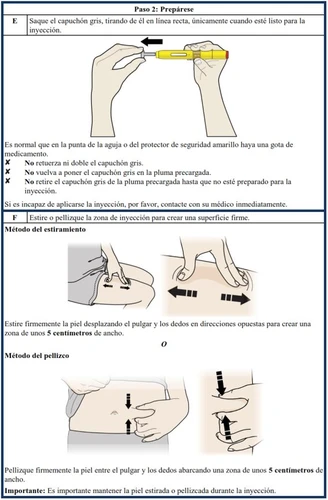
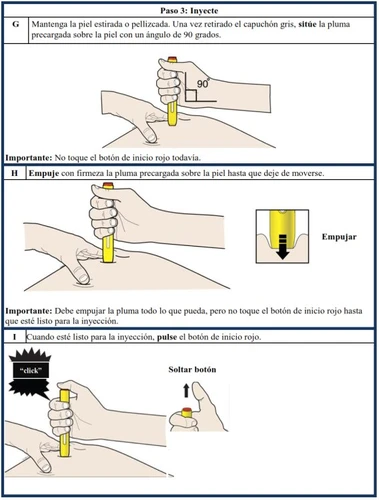
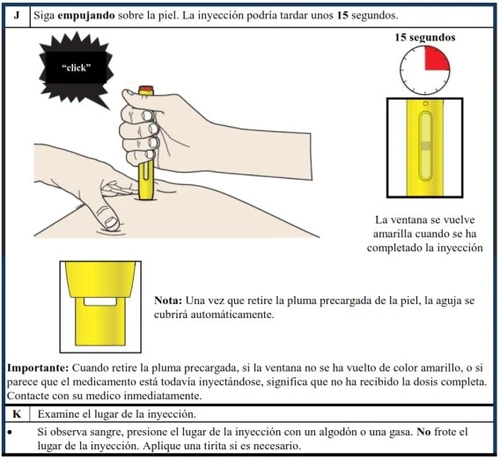
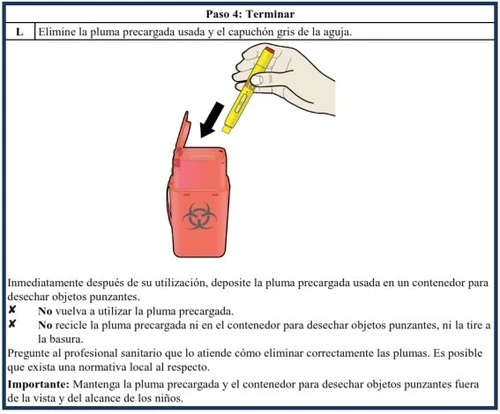
Your doctor has decided that the Aranesp pre-filled pen is the best way for you, your nurse, or another person to administer Aranesp to you. Your doctor, nurse, or pharmacist will teach you how to give yourself the injection using the pre-filled pen. Do not attempt to self-inject if you have not been trained. Never inject Aranesp into a vein yourself. The pre-filled pen is designed only for injection under the skin.
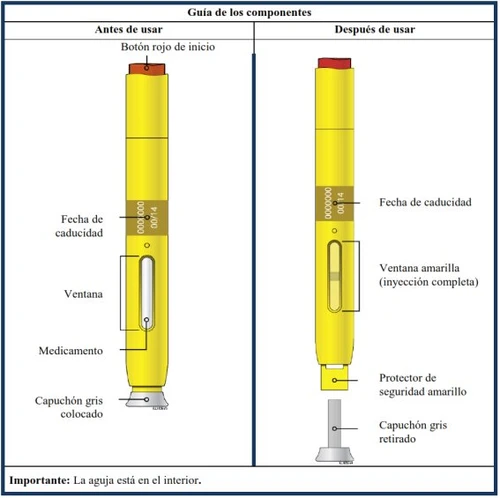
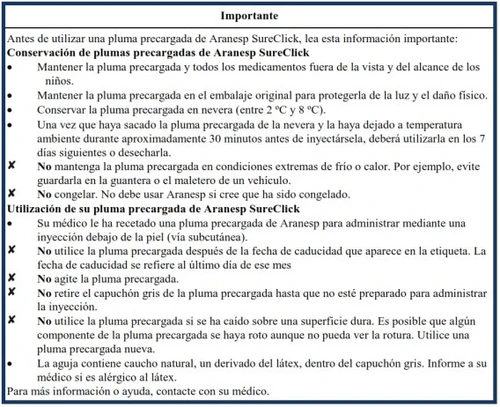
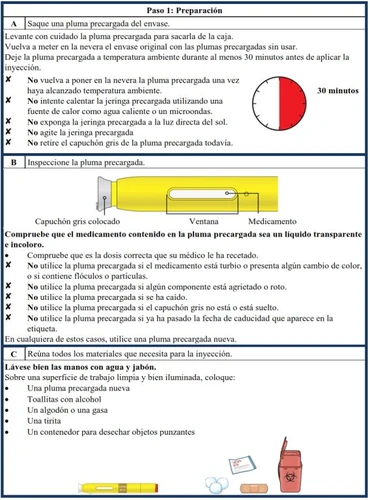
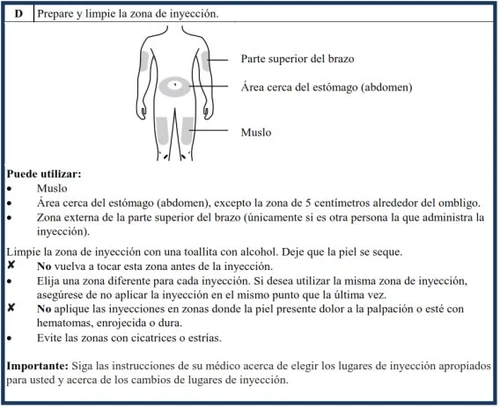
For information on how to use the pre-filled pen, read the instructions at the end of this leaflet.
If you have chronic renal failure
For all adult and pediatric patients ≥ 1 year of age with chronic renal failure, Aranesp pre-filled pen is administered as a single injection under the skin (subcutaneously).
To correct anemia, the initial dose of Aranesp per kilogram of body weight will be:
- 0.75 micrograms once every two weeks, or
- 0.45 micrograms once weekly.
For adult patients not undergoing dialysis, 1.5 micrograms/kg once monthly may also be used as the initial dose.
For all adult and pediatric patients ≥ 1 year of age with chronic renal failure, once your anemia has been corrected, you will continue to receive Aranesp as a single injection either once weekly or once every two weeks. For all adult and pediatric patients ≥ 11 years of age not on dialysis, Aranesp may also be administered as a monthly injection.
Your doctor will perform regular blood tests to monitor how your anemia is responding to treatment, and if necessary, may adjust your dose every four weeks to maintain long-term control of your anemia.
Your doctor will use the lowest effective dose to control the symptoms of your anemia.
If you do not respond adequately to Aranesp, your doctor will review your dose and inform you if a change in Aranesp dosage is needed.
Your doctor will measure your blood pressure regularly, especially at the beginning of treatment.
In some cases, your doctor may recommend that you take iron supplements.
Your doctor may decide to change the route of administration (subcutaneous or intravenous). If this happens, you will start with the same dose you were previously receiving, and blood tests will be performed to ensure that your anemia continues to be properly treated.
If your doctor has decided to switch your treatment from r-HuEPO (recombinant human erythropoietin) to Aranesp, they will choose between administering Aranesp once weekly or once every two weeks. The route of administration will be the same as with r-HuEPO, but your doctor will determine the amount and timing of administration and may adjust your dose as necessary.
If you are receiving chemotherapy
Aranesp is administered under the skin as a single injection, once weekly or once every three weeks.
To correct your anemia, the initial dose of Aranesp will be:
- 500 micrograms once every three weeks (6.75 micrograms of Aranesp per kilogram of body weight), or
- 2.25 micrograms of Aranesp per kilogram of body weight (once weekly).
Your doctor will regularly take blood samples to monitor your response to treatment and may adjust the dose as needed. Treatment will continue for approximately 4 weeks after the end of chemotherapy. Your doctor will tell you exactly when to stop taking Aranesp.
In some cases, your doctor may recommend that you take iron supplements.
If you use more Aranesp than you should
You may experience serious problems if you administer more Aranesp than you should, such as very high blood pressure. Contact your doctor or pharmacist if this occurs. If you feel unwell, contact your doctor or pharmacist immediately.
If you forget to use Aranesp
Do not take a double dose to make up for a missed dose.
If you forget to inject a dose of Aranesp, contact your doctor to determine when you should administer the next dose.
If you stop using Aranesp
If you wish to stop using Aranesp, you must first discuss this with your doctor.
4. Possible side effects
Like all medicines, this medicine can cause side effects, although not everybody gets them.
Some patients have experienced the following side effects when using Aranesp:
Patients with chronic renal failure
Very common: may affect more than 1 in 10 people
- High blood pressure (hypertension)
- Allergic reactions
Common: may affect up to 1 in 10 people
- Stroke
- Pain at the injection site
- Skin rash and/or redness
Uncommon: may affect up to 1 in 100 people
- Blood clots (thrombosis)
- Seizures (spasms and fits)
Frequency not known: frequency cannot be estimated from the available data
- Pure red cell aplasia (PRCA) – (anaemia, unusual tiredness, lack of energy)
Patients with cancer
Very common: may affect more than 1 in 10 people
- Allergic reactions
- Fluid retention (oedema)
Common: may affect up to 1 in 10 people
- High blood pressure (hypertension)
- Blood clots (thrombosis)
- Pain at the injection site
- Skin rash and/or redness
Uncommon: may affect up to 1 in 100 people
- Seizures (spasms and fits)
All patients
Frequency not known: frequency cannot be estimated from the available data
-
Severe allergic reactions which may include:
-
Unexpected allergic reactions that may be life-threatening (anaphylaxis)
-
Swelling of the face, lips, mouth, tongue or throat which may cause difficulty in swallowing or breathing (angioedema)
-
Difficulty in breathing (allergic bronchospasm)
-
Skin rashes
-
Rash (urticaria)
-
Severe skin reactions, including Stevens-Johnson syndrome (SJS) and toxic epidermal necrolysis (TEN), have been reported with epoetin treatment. These may appear as red, target-like spots or circular patches, often with central blisters on the trunk, skin peeling, mouth, throat, nose, genital and eye ulcers, and may be preceded by fever or flu-like symptoms.
Stop taking Aranesp immediately if you experience these symptoms and contact your doctor or seek immediate medical attention. See also section 2.
- Bruising and bleeding at the injection site
Reporting of side effects
If you get any side effects, talk to your doctor, pharmacist or nurse, including any possible side effects not listed in this leaflet. You can also report them directly through the national reporting system listed in Appendix V.
Reporting side effects can help provide more information on the safety of this medicine.
5. Storage of Aranesp
Keep this medicine out of the sight and reach of children.
Do not use this medicine after the expiry date stated on the carton and on the label of the pre-filled pen after “CAD” or “EXP”. The expiry date refers to the last day of the month indicated.
Store in a refrigerator (between 2°C and 8°C). Do not freeze. Do not use Aranesp if you think it has been frozen.
Keep the pre-filled pen in the outer packaging to protect it from light.
Once the pre-filled pen has been removed from the refrigerator and allowed to reach room temperature for approximately 30 minutes prior to injection, it must be used within the following 7 days or discarded.
Do not use this medicine if you notice that the solution in the pre-filled pen is cloudy or contains particles.
Medicines should not be disposed of via wastewater or household waste. Ask your pharmacist how to dispose of medicines and containers you no longer need. This will help protect the environment.
6. Contents of the pack and other information
Composition of Aranesp
- The active substance is darbepoetin alfa, r-HuEPO (erythropoietin produced by genetic technology). The pre-filled pens contain 10, 15, 20, 30, 40, 50, 60, 80, 100, 130, 150, 300 or 500 micrograms of darbepoetin alfa.
- The other components are monobasic sodium phosphate, dibasic sodium phosphate, sodium chloride, polysorbate 80 and water for injections.
Appearance of the product and contents of the pack
Aranesp is a clear, colourless or slightly opalescent injectable solution in a pre-filled pen.
Aranesp (SureClick) is available in packs of 1 or 4 pre-filled pens. Only certain pack sizes may be marketed.
Marketing Authorisation Holder and Manufacturer
Amgen Europe B.V.
Minervum 7061
NL-4817 ZK Breda
The Netherlands
Marketing Authorisation Holder
Amgen Europe B.V.
Minervum 7061
NL-4817 ZK Breda
The Netherlands
Manufacturer
Amgen Technology (Ireland) Unlimited Company
Pottery Road
Dun Laoghaire
Co Dublin
Ireland
Manufacturer
Amgen NV
Telecomlaan 5-7
1831 Diegem
Belgium
Further information on this medicinal product is available upon request to the local representative of the Marketing Authorisation Holder.
Belgium/Belgium/Belgium s.a. Amgen n.v. Tel/Tel: +32 (0)2 7752711 | Lithuania Amgen Switzerland AG Vilnius Branch Tel: +370 5 219 7474 |
| Luxembourg/Luxembourg s.a. Amgen Belgium/Belgium Tel/Tel: +32 (0)2 7752711 |
Czech Republic Amgen s.r.o. Tel: +420 221 773 500 | Hungary Amgen Kft. Tel.: +36 1 35 44 700 |
Denmark Amgen, branch of Amgen AB, Sweden Tlf: +45 39617500 | Malta Amgen B.V. The Netherlands Tel: +31 (0)76 5732500 |
Germany AMGEN GmbH Tel.: +49 89 1490960 | Netherlands Amgen B.V. Tel: +31 (0)76 5732500 |
Estonia Amgen Switzerland AG Vilnius Branch Tel: +372 586 09553 | Norway Amgen AB Tel: +47 23308000 |
Greece Amgen Hellas Pharmaceutical E.P.E. Tel.: +30 210 3447000 | Austria Amgen GmbH Tel: +43 (0)1 50 217 |
Spain Amgen S.A. Tel: +34 93 600 18 60 | Poland Amgen Biotechnologia Sp. z o.o. Tel.: +48 22 581 3000 |
France Amgen S.A.S. Tél: +33 (0)9 69 363 363 | Portugal Amgen Biofarmacêutica, Lda. Tel: +351 21 4220550 |
Croatia Amgen d.o.o. Tel: +385 (0)1 562 57 20 | Romania Amgen România SRL Tel: +4021 527 3000 |
Ireland Amgen Limited United Kingdom Tel: +44 (0)1223 420305 | Slovenia AMGEN zdravila d.o.o. Tel: +386 (0)1 585 1767 |
Iceland Vistor hf. Tel: +354 535 7000 | Slovakia Amgen Slovakia s.r.o. Tel: +421 2 321 114 49 |
Italy Amgen S.r.l. Tel: +39 02 6241121 | Finland/Suomi Amgen AB, branch in Finland/Amgen AB, filial i Finland Puh/Tel: +358 (0)9 54900500 |
Cyprus C.A. Papaellinas Ltd Tel.: +357 22741 741 | Sweden Amgen AB Tel: +46 (0)8 6951100 |
Latvia Amgen Switzerland AG Riga Branch Tel: +371 257 25888 | United Kingdom Amgen Limited Tel: +44 (0)1223 420305 |
Date of the most recent review of this leaflet:
Other sources of information
Detailed information on this medicine is available on the website of the European Medicines Agency: http://www.ema.europa.eu.
This leaflet is available in all EU/EEA languages on the European Medicines Agency website.
Instructions for use
It is important that you or your caregiver do not attempt to administer the injection yourself unless you have been trained by a healthcare professional.