Alprolix 1,000 IU powder and solvent for solution for injection
Spain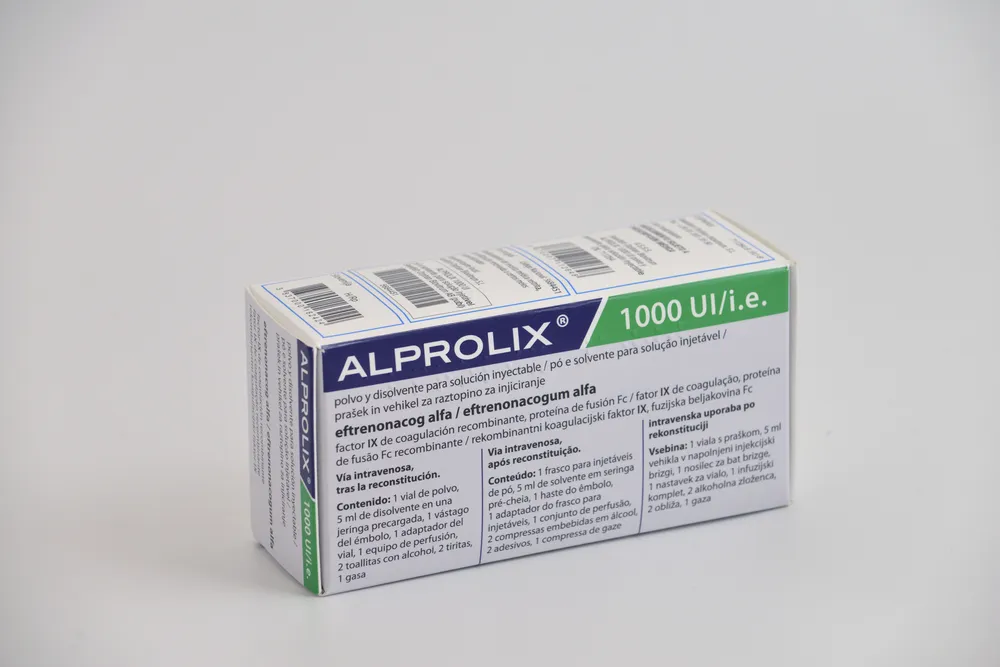
Table of Contents
Package leaflet: Information for the user
Introduction
Package leaflet: information for the user
ALPROLIX 250IU powder and solvent for solution for injection
ALPROLIX 500IU powder and solvent for solution for injection
ALPROLIX 1000IU powder and solvent for solution for injection
ALPROLIX 2000IU powder and solvent for solution for injection
ALPROLIX 3000IU powder and solvent for solution for injection
eftrenonacog alfa (recombinant coagulation factor IX, Fc fusion protein)
Read the entire leaflet carefully before you start using this medicine, because it contains important information for you.
- Keep this leaflet. You may need to read it again.
- If you have any questions, ask your doctor, pharmacist, or nurse.
- This medicine has been prescribed for you only. Do not pass it on to other people, even if they have the same symptoms as you, because it may harm them.
- If you experience any side effects, talk to your doctor, pharmacist, or nurse, including any side effects not listed in this leaflet. See section 4.
Leaflet contents
- What ALPROLIX is and what it is used for
- What you need to know before using ALPROLIX
- How to use ALPROLIX
- Possible side effects
- How to store ALPROLIX
- Contents of the pack and other information
- Instructions for preparation and administration
1. What ALPROLIX is and what it is used for
ALPROLIX contains the active substance eftrenonacog alfa, a recombinant coagulation factor IX, Fc fusion protein. Factor IX is a protein naturally produced by the body and is necessary for blood to form clots and stop bleeding.
ALPROLIX is a medicine used for the treatment and prevention of bleeding in patients of all age groups with haemophilia B (an inherited bleeding disorder caused by factor IX deficiency).
ALPROLIX is produced using recombinant technology without the addition of any components of human or animal origin during the manufacturing process.
How ALPROLIX works
In patients with haemophilia B, factor IX is missing or does not function properly. This medicine is used to replace the missing or deficient factor IX. ALPROLIX increases factor IX concentrations in the blood and temporarily corrects the tendency to bleed. The Fc fusion protein in this medicine prolongs the duration of action of the medicine.
2. What you need to know before using ALPROLIX
Do not use ALPROLIX
- if you are allergic to eftrenonacog alfa or to any of the other ingredients of this medicine (listed in section 6).
Warnings and precautions
Talk to your doctor, pharmacist, or nurse before starting to use ALPROLIX.
-
There is a small possibility that you may experience an anaphylactic reaction (a severe and sudden allergic reaction) to ALPROLIX. Signs of allergic reactions include widespread itching, hives, tightness in the chest, difficulty breathing, and low blood pressure. If any of these symptoms occur, stop the injection immediately and contact your doctor. Because of the risk of allergic reactions with factor IX, your first administrations of ALPROLIX should be performed under medical supervision in a setting where appropriate medical support is available in case of allergic reactions.
-
Consult your doctor if you feel that bleeding is not being controlled with your current dose, as there may be several reasons for this. For example, the development of antibodies (also known as inhibitors) against factor IX is a known complication that may occur during treatment for hemophilia B. Antibodies may prevent the treatment from working properly. Your doctor will check whether this is the case. Do not increase the total dose of ALPROLIX to control bleeding without first talking to your doctor.
Patients with a factor IX inhibitor may have an increased risk of anaphylaxis during future treatments with factor IX. Therefore, if you experience allergic reactions such as those described above, you should be tested for the presence of an inhibitor.
Factor IX medicines may increase the risk of unwanted blood clots in your body, especially if you have risk factors for developing blood clots. Symptoms of a possible unwanted blood clot may include: pain and/or tenderness along a vein, unexpected swelling of an arm or leg, or sudden shortness of breath or difficulty breathing.
Cardiovascular disorders
If you have been diagnosed with heart disease or are at risk of developing it, take special care when using factor IX and consult your doctor.
Catheter-related complications
If a central venous access device (CVAD) is required, the risk of CVAD-related complications should be considered, including local infections, presence of bacteria in the blood, and blood clots at the catheter insertion site.
Documentation
We strongly recommend that each time you administer ALPROLIX, you record the product name and batch number.
Other medicines and ALPROLIX
Tell your doctor or pharmacist if you are taking, have recently taken, or might need to take any other medicines.
Pregnancy and breastfeeding
If you are pregnant or breastfeeding, think you may be pregnant, or are planning to become pregnant, consult your doctor or pharmacist before using this medicine.
Driving and using machines
ALPROLIX has no influence on the ability to drive or operate machinery.
ALPROLIX contains sodium
This medicine contains less than 1 mmol of sodium (23 mg) per vial; i.e., essentially “sodium-free.” In case of treatment with multiple vials, the total sodium content should be taken into account.
ALPROLIX contains polysorbate
This medicine contains 0.5 mg of polysorbate 20 in each vial. Polysorbates may cause allergic reactions. Inform your doctor if you have any known allergies.
3. How to use ALPROLIX
Treatment with ALPROLIX will be initiated by a physician experienced in the care of patients with hemophilia. Follow exactly the administration instructions for this medicine provided by your doctor (see section 7). If in doubt, consult your doctor, pharmacist, or nurse again.
ALPROLIX is administered by intravenous injection. You or another person may administer it after receiving the necessary training. Your doctor will determine the dose (in International Units or "IU") you will receive. The dose depends on your individual factor IX replacement treatment needs and whether it is used for prevention or treatment of bleeding episodes. Consult your doctor if you think your current dose is not adequately controlling bleeding.
How frequently you will need an injection depends on how effective the medicine is proving for you. Your doctor will perform appropriate laboratory tests to ensure you have adequate factor IX concentrations in your blood.
Treatment of bleeding episodes
The ALPROLIX dose is calculated based on your body weight and the desired factor IX concentrations. Target factor IX concentrations depend on the severity and location of the bleeding.
Prevention of bleeding episodes
If you are using ALPROLIX to prevent bleeding episodes, your doctor will determine your dose.
The usual dose of ALPROLIX is 50 IU per kg of body weight, administered once weekly, or 100 IU per kg of body weight, administered once every 10 days. Your doctor may adjust the dose or dosing interval. In some cases, especially in younger patients, shorter dosing intervals or higher doses may be required.
Use in children and adolescents
ALPROLIX can be used in children and adolescents of all ages. In children under 12 years of age, higher doses or more frequent injections may be needed, and the usual dose is 50 to 60 IU per kg of body weight, administered once every 7 days.
If you use more ALPROLIX than you should
Inform your doctor as soon as possible. Follow exactly the administration instructions for ALPROLIX provided by your doctor. If in doubt, ask your doctor, pharmacist, or nurse.
If you forget to use ALPROLIX
Do not take a double dose to make up for missed doses. Take your dose as soon as you remember, and then resume your normal dosing schedule. If you are unsure what to do, consult your doctor, pharmacist, or nurse.
If you stop using ALPROLIX
Do not stop treatment with ALPROLIX without consulting your doctor. If you discontinue treatment with ALPROLIX, you may no longer be protected against bleeding episodes, or an existing bleed may not stop.
If you have any further questions about the use of this medicine, ask your doctor, pharmacist, or nurse.
4. Possible adverse effects
Like all medicines, this medicine can cause adverse effects, although not everyone experiences them.
If severe and sudden allergic reactions (anaphylactic reaction) occur, the injection must be stopped immediately. You should contact your doctor immediately if you experience any of the following symptoms of allergic reactions: facial swelling, rash, generalized itching, hives, tightness in the chest, difficulty breathing, stinging and prickling at the injection site, chills, hot flushes, headache, general feeling of discomfort, nausea, restlessness, rapid heartbeat, and low blood pressure.
In children who have not previously been treated with medicines containing factor IX, inhibitor formation (in up to 1 in 10 patients) is common (see section 2). If this occurs, the medicine may no longer work properly and your child may experience persistent bleeding. If this happens, you must contact your doctor immediately.
The following adverse effects may occur with this medicine.
Frequent adverse effects (may affect up to 1 in 10 people): headache, numbness or tingling in the mouth, pain in the side with blood in the urine (obstructive uropathy), and redness at the injection site.
Children who have not previously been treated with medicines containing factor IX: factor IX inhibitors, hypersensitivity.
Uncommon adverse effects (may affect up to 1 in 100 people): dizziness, taste disturbances, bad breath, feeling of fatigue, pain at the injection site, rapid heartbeat, blood in the urine (haematuria), pain in the side (renal colic), low blood pressure, and decreased appetite.
Adverse effects with unknown frequency (frequency cannot be estimated from available data): severe and sudden allergic reaction, and potentially life-threatening allergic reaction (anaphylactic shock).
Reporting of adverse effects
If you experience any type of adverse effect, consult your doctor, pharmacist, or nurse, even if it is a possible adverse effect not listed in this leaflet. You may also report them directly through the national reporting system included in Appendix V. By reporting adverse effects, you can help provide more information on the safety of this medicine.
5. Storage of ALPROLIX
Keep this medicine out of the sight and reach of children.
Do not use this medicine after the expiry date stated on the carton and label of the vial following “EXP”. The expiry date refers to the last day of the month indicated. Do not use this medicine if it has been stored at room temperature for longer than 6 months.
Store in a refrigerator (between 2 °C – 8 °C). Do not freeze. Keep in the original packaging to protect from light.
Alternatively, ALPROLIX may be stored at room temperature (up to 30 °C) for a single period not exceeding 6 months. Record on the carton the date when ALPROLIX was removed from the refrigerator and placed at room temperature. After storage at room temperature, the medicine must not be returned to the refrigerator.
Once ALPROLIX has been prepared, it should be used immediately. If you cannot use the prepared solution immediately, it must be used within a maximum of 6 hours if stored at room temperature. Do not refrigerate the solution after preparation. Protect the solution from direct sunlight.
The prepared solution should be clear to slightly pearly (opalescent) and colourless. Do not use this medicine if the solution appears cloudy or contains visible particles.
This medicine is for single use only.
Any unused solution should be properly discarded. Medicines should not be disposed of via wastewater or household waste. Ask your pharmacist how to dispose of unused medicines and empty containers. This will help protect the environment.
6. Contents of the container and other information
Composition of ALPROLIX
Powder:
- The active substance is eftrenonacog alfa (recombinant coagulation factor IX, Fc fusion protein). Each vial of ALPROLIX contains nominally 250, 500, 1,000, 2,000 or 3,000 IU of eftrenonacog alfa.
- The other components are sucrose, histidine, mannitol, polysorbate 20, sodium hydroxide and hydrochloric acid. See section 2 if you are on a low-sodium diet.
Solvent:
5 ml of sodium chloride and water for injections
Appearance of the product and contents of the pack
ALPROLIX is presented as a powder and solvent for solution for injection. The powder is a white to off-white powder or cake. The solvent supplied for solution preparation is a clear, colourless solution. After reconstitution, the solution is clear to slightly opalescent and colourless.
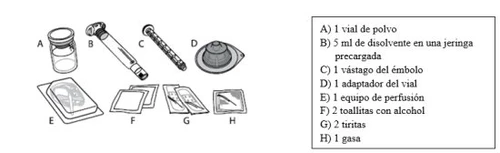
Each pack of ALPROLIX contains 1 vial of powder, 5 ml of solvent in a pre-filled syringe, 1 syringe plunger rod, 1 vial adapter, 1 infusion set, 2 alcohol wipes, 2 plasters and 1 gauze pad.
Marketing Authorisation Holder
Swedish Orphan Biovitrum AB (publ)
SE-112 76 Stockholm
Sweden
Telephone: +46 8 697 20 00
Manufacturer
Swedish Orphan Biovitrum AB (publ)
Norra Stationsgatan 93
SE-113 64 Stockholm
Sweden
Date of the most recent revision of this leaflet:
Detailed information on this medicine is available on the European Medicines Agency website: http://www.ema.europa.eu. There are also links to other websites on rare diseases and orphan medicinal products.
Turn over the leaflet to read section 7. Instructions for preparation and administration.
- Instructions for preparation and administration
The following procedure describes the preparation and administration of ALPROLIX.
ALPROLIX is administered by intravenous (IV) injection after dissolving the lyophilised powder with the solvent supplied in the pre-filled syringe. The ALPROLIX pack contains:
ALPROLIX must not be mixed with other injectable solutions or infusion solutions.
Wash your hands before opening the pack.
Preparation:
correct medicine. Check the expiry date on the ALPROLIX carton. Do not use the medicine if it has expired. | |
solvent syringe (B) to reach room temperature before use. Do not use external heat. | |
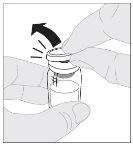
Remove the plastic closure cap from the vial. |
|
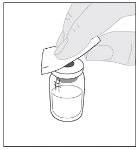
alcohol wipes (F) provided in the package and let it air dry. Do not touch the top of the vial or allow it to come into contact with anything after cleaning. |
|
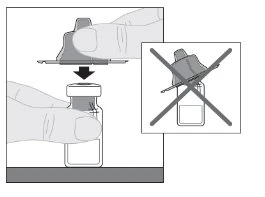
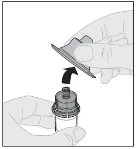
not remove the adapter from its protective closure cap. Do not touch the inside of the vial adapter container. | |
Hold the vial adapter in its protective closure cap and place it directly onto the top of the vial. Press down firmly until the adapter snaps onto the top of the vial, with the adapter's piercing pin penetrating the vial stopper. |
|
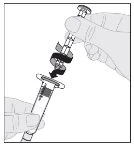
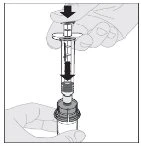
syringe plunger opening. Turn the plunger rod firmly clockwise until it is securely seated in the syringe plunger. |
|
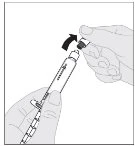
bending the breakaway closure cap until it breaks. Set the cap aside with the top facing down on a flat surface. Do not touch the inside of the closure cap or the syringe tip. |
|
|
|
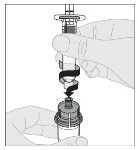
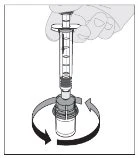
adapter opening. Push firmly and turn the syringe clockwise until it is securely attached. |
|
|
|
gently swirl the vial in a circular motion until the powder is completely dissolved. Do not shake. |
|
| |
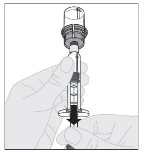
the plunger rod back to transfer all the solution into the syringe through the vial adapter. Note: If more than one ALPROLIX vial is used per injection, each vial must be prepared separately according to the previous instructions (steps 1 to 13), and the solvent syringe must be removed, leaving the vial adapter in place. A single larger luer lock syringe may be used to withdraw the prepared contents from each vial. |
|
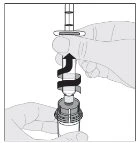
counterclockwise. |
|
Note: If the solution is not to be used immediately, the syringe cap should be carefully replaced over the syringe tip. Do not touch the syringe tip or the inside of the cap. After preparation, ALPROLIX may be stored at room temperature for up to 6 hours prior to administration. After this time, the prepared ALPROLIX solution must be discarded. Protect it from direct sunlight. |
Administration (intravenous injection):
ALPROLIX must be administered using the infusion set (E) supplied in the package.
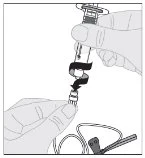
from the end of the tubing. Attach the syringe containing the prepared ALPROLIX solution to the end of the infusion set tubing by turning clockwise. |
|
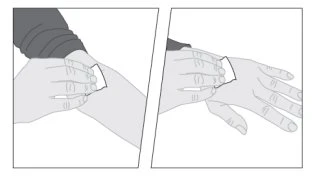
| |
| |
| |
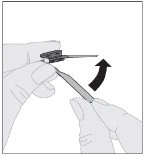
the needle safety shield and slide it over the needle. |
|
in an appropriate medical waste container, as these materials could cause harm to others if not properly discarded. Do not reuse any equipment. |