Alipza 2 mg film-coated tablets
Spain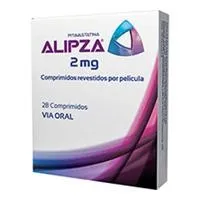
Table of Contents
Patient Information Leaflet
Introduction
Package Leaflet: Information for the User
Alipza 1 mg, 2 mg and 4 mg film-coated tablets
pitavastatin
Read this entire leaflet carefully before you start taking this medicine, because it contains important information for you.
- Keep this leaflet, as you may need to read it again.
- If you have any questions, consult your doctor or pharmacist.
- This medicine has been prescribed for you only, and you should not give it to others, even if they have the same symptoms as you, because it may harm them.
- If you experience any adverse effects, consult your doctor or pharmacist, even if they are effects not listed in this leaflet. See section 4.
Contents of the leaflet:
- What Alipza is and what it is used for
- What you need to know before taking Alipza
- How to take Alipza
- Possible side effects
- How to store Alipza
Pack contents and additional information
1. What Alipza is and what it is used for
Alipza contains a substance called pitavastatin. It belongs to a group of medicines known as 'statins'. Alipza is used to correct levels of fatty substances (lipids) in the blood and can be taken by both children from 6 years of age and adults. An imbalance of fats, especially cholesterol, can sometimes cause a heart attack or stroke.
You have been prescribed Alipza because you have an imbalance of fats, and changes in diet and lifestyle have not been sufficient to correct it. You should continue with a cholesterol-lowering diet and lifestyle changes while taking Alipza.
2. What you need to know before taking Alipza
Do not take Alipza:
- if you are allergic to pitavastatin or any of the other ingredients of this medicine (listed in section 6);
- if you are pregnant or breastfeeding;
- if you are a woman who could become pregnant and are not using an effective method of contraception (see 'Pregnancy and breastfeeding');
- if you currently have liver problems;
- if you are taking ciclosporin, a medicine used after organ transplantation;
- if you have recurrent or unexplained muscle pain.
If in doubt, consult your doctor or pharmacist before starting to take Alipza.
Warnings and precautions
Consult your doctor or pharmacist before starting to take Alipza if:
- you have severe respiratory insufficiency (severe breathing problems);
- you have ever had kidney problems;
- you have previously had liver problems. Statins may affect the liver in some people. Your doctor will usually perform blood tests (to monitor liver function) before and during treatment with Alipza;
- you have ever had thyroid problems;
- you or a family member have a history of muscle disorders;
- you have previously experienced muscle problems while taking other cholesterol-lowering medicines (e.g., statins or fibrates);
- you consume large amounts of alcohol;
- you are taking or have taken within the last 7 days an oral or injectable medicine containing fusidic acid (used to treat bacterial infection). The combination of fusidic acid and Alipza may cause serious muscle problems (rhabdomyolysis);
- you have or have had myasthenia gravis (a disease characterized by generalized muscle weakness, which in some cases affects the muscles used for breathing) or ocular myasthenia (a disease causing weakness of the eye muscles), as statins may sometimes worsen the condition or trigger the onset of myasthenia (see section 4).
If any of the above apply to you (or if you have any doubts), consult your doctor or pharmacist before starting Alipza. Also inform your doctor or pharmacist if you experience persistent muscle weakness. Additional tests or treatments may be needed to diagnose and manage this condition.
While taking this medicine, your doctor will monitor you for diabetes or risk factors for developing diabetes. This risk increases if you have high blood sugar and fat levels, are overweight, or have high blood pressure.
Children and adolescents
Alipza must not be given to children under 6 years of age.
Before taking Alipza, adolescent girls should receive counseling and advice regarding contraception.
Other medicines and Alipza
Inform your doctor or pharmacist if you are taking, have recently taken, or might need to take any other medicines. Some medicines may interfere with each other.
Specifically, inform your doctor or pharmacist if you are taking any of the following medicines:
- other medicines called 'fibrates', such as gemfibrozil and fenofibrate;
- erythromycin or rifampicin, antibiotics used to treat infections;
- warfarin or any other medicine used to thin the blood;
- antiviral medicines for HIV called 'protease inhibitors' (e.g., ritonavir, lopinavir, darunavir, atazanavir) or 'non-nucleoside reverse transcriptase inhibitors' (e.g., efavirenz);
- niacin (vitamin B3);
- if you need to take oral fusidic acid to treat a bacterial infection, you must stop taking this medicine. Your doctor will advise you when you can restart Alipza. Taking Alipza with fusidic acid may cause muscle weakness, tenderness, or pain (rhabdomyolysis). For further information on rhabdomyolysis, see section 4;
- if you are taking medicines containing glecaprevir and pibrentasvir, medicines used to treat hepatitis C. Your doctor may need to adjust your dose of Alipza.
If any of the above apply to you (or if you have any doubts), consult your doctor or pharmacist before starting to take Alipza.
Taking Alipza with food and drink
You may take Alipza with or without food.
Pregnancy, breastfeeding, and fertility
If you are pregnant or breastfeeding, think you may be pregnant, or plan to become pregnant, consult your doctor or pharmacist before using this medicine.
If you are a woman who could become pregnant, you must use an effective method of contraception while taking Alipza. If you become pregnant while taking Alipza, stop taking Alipza immediately and contact your doctor.
If you are pregnant or breastfeeding, consult your doctor or pharmacist before taking any medicine.
Driving and using machines
Alipza is not expected to affect your ability to drive or operate machinery. However, if you feel dizzy or drowsy while taking Alipza, do not drive or operate machinery or tools.
Alipza contains lactose
Alipza contains lactose (a type of sugar). If your doctor has informed you that you have an intolerance to certain sugars, consult with them before taking this medicine.
3. How to take Alipza
Follow exactly the instructions for administration of this medicine given by your doctor. If in doubt, consult your doctor or pharmacist again.
How to take this medicine
Swallow the tablet whole with water, with or without food. You may take it at any time of day. However, try to take the tablet at the same time every day.
How much to take
- To begin with, the usual dose is 1 mg once daily. After a few weeks, your doctor may decide to increase your dose. The maximum dose in adults and children over 10 years of age is 4 mg per day.
- If you have liver problems, you must not take more than 2 mg per day.
Use in children
- The maximum dose in children under 10 years of age is 2 mg per day.
- If necessary, the tablets may be dispersed in a glass of water immediately before taking; then rinse the glass with more water and drink immediately. Do not use fruit juices or milk to disperse the tablets.
- The use of Alipza is not recommended in children under 6 years of age.
Other things you need to know while taking Alipza
- If you go to hospital or receive treatment for another condition, inform the medical staff that you are taking Alipza.
- Your doctor may carry out blood tests regularly to monitor your cholesterol levels.
- Do not stop taking Alipza without first talking to your doctor. Your cholesterol levels may rise.
If you take more Alipza than you should
If you take more Alipza than you should, inform your doctor or go to a hospital immediately. Take the medicine pack with you.
If you forget to take Alipza
Do not worry; take your next dose at the correct time. Do not take a double dose to make up for forgotten doses.
4. Possible adverse effects
Like all medicines, this medicine can cause adverse effects, although not everyone will experience them. This medicine may cause the following adverse effects:
Stop taking Alipza and contact your doctor immediately if you experience any of the following serious adverse effects, as you may require urgent medical treatment:
-
Allergic reaction: some signs include difficulty breathing, swelling of the face, lips, tongue or throat, trouble swallowing, severe skin itching (with rash).
-
Unexplained muscle pain or weakness, especially if you do not feel well, have a fever, or your urine is reddish-brown. In rare cases (in fewer than 1 in 1,000 people), Alipza may cause bothersome muscle effects. If these effects are not investigated, they may lead to serious problems such as abnormal muscle breakdown (rhabdomyolysis), which can cause kidney problems.
-
Breathing problems including persistent cough and/or shortness of breath or fever.
-
Liver problems that may cause yellowing of the skin and eyes (jaundice).
-
Pancreatitis (severe abdominal and back pain).
Other adverse effects include:
Common (affects fewer than 1 in 10 people)
- Joint pain, muscle pain
- Constipation, diarrhea, indigestion, nausea
- Headache
Uncommon (affects fewer than 1 in 100 people)
- Muscle spasms
- Weakness, fatigue or malaise
- Swelling of the ankles, feet or fingers
- Stomach pain, dry mouth, vomiting, loss of appetite, taste disturbances
- Paleness and weakness or shortness of breath (anemia)
- Itching or skin rash
- Ringing in the ears
- Dizziness or drowsiness, insomnia (or other sleep disorders, including nightmares)
- Increased need to urinate (urinary frequency)
- Numbness and reduced sensation in the fingers, toes, legs, and face
Rare (affects fewer than 1 in 1,000 people)
- Skin redness, hives, and skin itching
- Visual impairment
- Tongue pain
- Unpleasant sensation or discomfort in the stomach
- Enlargement of the breast in males (gynecomastia)
Frequency not known (cannot be estimated from available data)
-
Persistent muscle weakness.
-
Lupus-like syndrome (with rash, joint disorders, and effects on blood cells)
-
Myasthenia gravis (a disease causing generalized muscle weakness that, in some cases, affects the muscles used for breathing).
-
Ocular myasthenia (a disease causing weakness of the eye muscles).
-
Consult your doctor if you experience weakness in the arms or legs that worsens after periods of activity, double vision or drooping eyelids, difficulty swallowing, or difficulty breathing.
Other possible adverse effects
- Memory loss
- Sexual dysfunction
- Depression
- Diabetes. This is more likely if you have high levels of sugar and fats in the blood, are overweight, or have high blood pressure. Your doctor will monitor you while you are taking this medicine.
Reporting of adverse effects
If you experience any type of adverse effect, consult your doctor or pharmacist, even if it is a possible adverse effect not listed in this leaflet. You may also report them directly via the Spanish Pharmacovigilance System for Human Medicines: www.notificaRAM.es. By reporting adverse effects, you can help provide more information on the safety of this medicine.
5. Storage of Alipza
Keep this medicine out of the sight and reach of children.
Do not store above 25°C. Keep the blister pack in the outer packaging to protect it from light.
Do not use this medicine after the expiry date stated on the blister and on the carton. The expiry date refers to the last day of the month indicated.
Medicines must not be disposed of via wastewater drains or household waste. Dispose of unused medicines and their packaging at the SIGRE point in your pharmacy. If you are in doubt, ask your pharmacist how to dispose of medicines and packaging you no longer need. This will help protect the environment.
6. Contents of the pack and other information
Composition of Alipza
- The active substance is pitavastatin calcium, equivalent to 1 mg, 2 mg or 4 mg of pitavastatin.
- The other components are monohydrate lactose, LS-hydroxypropylcellulose, hypromellose (E464), titanium dioxide (E171), triethyl citrate (E1505), magnesium aluminometasilicate, magnesium stearate and colloidal anhydrous silica.
Appearance of the product and contents of the pack
Alipza film-coated tablets are available in packs of 7, 28, 30, 90 or 100 tablets. Only certain pack sizes may be marketed.
The tablets are round, white, and are marked with the letters 'KC' on one side. To help identify the different strengths, they are of different sizes and are marked with '1', '2' or '4' on the other side.
Marketing Authorization Holder and Manufacturer
Marketing Authorization Holder:
Kowa Pharmaceutical Europe GmbH.
Görreshof 151, 53347 Alfter,
Germany.
Manufacturer:
Pierre Fabre Médicament Production*,
Rue du Lycée, 45502 Gien Cedex
France
Or
Recordati Industria Chimica e Farmaceutica S.p.A.*
Via M. Civitali, 1, 20148 Milan
Italy
Local Representative:
Casen Recordati, S.L.
Autovía de Logroño, km. 13,300
50180 Utebo (Zaragoza)
Spain
Date of the most recent revision of this leaflet: April 2023
Other sources of information
Detailed information on this medicine is available on the website of the Spanish Agency of Medicines and Health Products (AEMPS) http://www.aemps.gob.es/