Ginseng tincture
Ukraine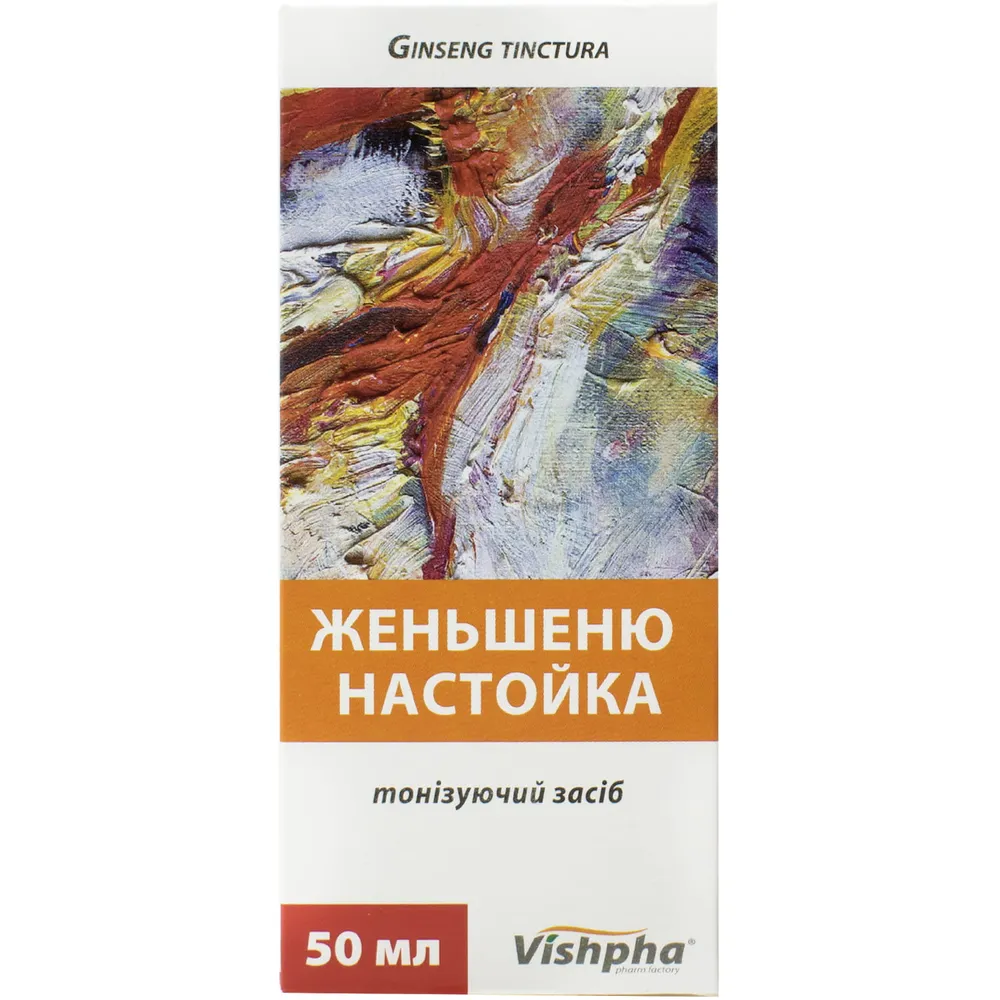
Table of Contents
INSTRUCTIONS FOR MEDICAL USE OF THE MEDICINAL PRODUCT GINSENG TINCTURE (GINSENG TINCTURA)
Composition:
Active substance: 1 vial contains 50 ml of ginseng root tincture (Ginseng radices) (1:10) (extractant – 70% ethanol).
Pharmaceutical form. Tincture.
Main physicochemical properties: clear yellowish liquid with a specific odor. Formation of sediment during storage is permissible.
Pharmacotherapeutic group. Tonics.
ATC code A13A.
Pharmacological properties.
Pharmacodynamics.
The medicinal product exerts an adaptogenic, tonic, and hypertensive effect. It enhances excitatory processes in neurons of the cerebral cortex and brainstem, improves reflex activity, activates metabolism, and increases work capacity. The effects of the drug are dose-dependent: when administered in low doses, excitation is enhanced and inhibitory processes are weakened; at high doses, the latter are enhanced.
Clinical characteristics.
Indications.
Reduced mental and physical performance, asthenic conditions, recovery period after severe illnesses, diminished sexual function of neurasthenic origin (as part of complex therapy).
Contraindications.
Hypersensitivity to the components of the drug. Arterial hypertension, increased excitability, insomnia, tendency to bleeding, acute infectious diseases, epilepsy.
Special precautions.
Ginseng tincture should not be taken in the second half of the day. It should be noted that the drug is most effective in autumn and winter. The drug should be discontinued at least 2 weeks before surgical intervention. Patients suffering from diabetes mellitus should monitor blood glucose levels.
Interaction with other medicinal products and other types of interactions.
Possible reduction of warfarin anticoagulant effect; interaction with other anticoagulants (heparin) is also possible. Interaction with phenelzine [monoamine oxidase inhibitor] cannot be excluded.
The drug increases the clearance of sulfoxidalebendazole (anthelmintic agent). It enhances the effect of psychostimulants, analgesics, anesthetics, caffeine, camphor, phenamine, and other central nervous system (CNS) stimulants; acts as an antagonist of agents that suppress CNS functions (tranquilizers, anticonvulsants, etc.). Reduces the effect of hypnotics, neuroleptics.
The drug is a physiological antagonist of barbiturates; therefore, their simultaneous use is not rational. Do not use together with antidepressants or alcohol.
In combination with digoxin, it may be used only as prescribed by a physician, with monitoring of increased digoxin concentration in the blood.
Special precautions for use.
Ginseng tincture is a conventional herbal medicinal product intended for use according to indications supported by long-standing use.
Use during pregnancy or breastfeeding.
The product is contraindicated during pregnancy or breastfeeding.
Ability to influence reaction speed when driving or operating machinery.
Since the product contains ethanol, it is not recommended to use Ginseng tincture when driving a vehicle or operating potentially hazardous machinery.
Method of administration and dosage.
Take orally, 30–40 minutes before meals. The single dose for adults is 15 to 20 drops. The preparation should be taken 2–3 times daily for 30–40 days.
Repeat the treatment course after 2–3 weeks (if necessary).
For children aged 12 years and older, administer 1 drop per year of life.
Consult a physician if symptoms of the disease do not resolve during treatment or if adverse reactions not listed in the instructions for medical use occur.
Children. Not recommended for children under 12 years of age.
Overdose.
In case of overdose, symptoms such as headache, dizziness, insomnia, nausea, vomiting, elevated body temperature, respiratory disturbances, loss of consciousness, and bleeding may occur.
Treatment: gastric lavage and use of sorbents.
Adverse reactions.
Possible allergic reactions (including skin redness, roseola-like rashes, itching); increased blood pressure, increased excitability, insomnia, headache, tachycardia, nausea, vomiting; bleeding of gums and nasal mucosa (in severe cases — presence of blood traces in vomit and feces); diarrhea; the drug may cause estrogen-like effects manifested as mastalgia, menopausal vaginal bleeding, and gynecomastia.
If any adverse reactions occur, discontinue treatment and consult a physician.
Shelf life. 3 years.
Storage conditions.
Store in the original packaging at a temperature not exceeding 25 °C, in a place inaccessible to children.
Packaging.
50 ml in a bottle; 1 bottle per carton.
50 ml in bottles.
Supply category. Over-the-counter.
Manufacturer.
LLC "DKP "Pharmaceutical Factory".
Manufacturer's address and location of business activity.
4, Korolyova St., Stanishivka village, Zhytomyr district, Zhytomyr region, 12430, Ukraine.