Ciprinol®
Ukraine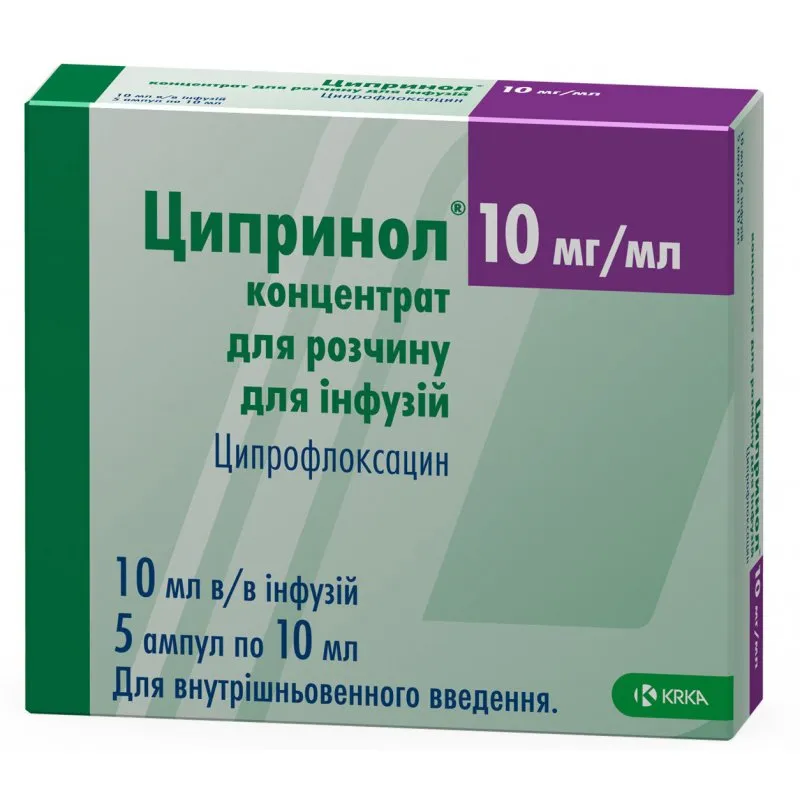
Table of Contents
INSTRUCTIONS FOR MEDICAL USE OF THE MEDICINAL PRODUCT Ciprinol® (Ciprinol®)
Composition:
Active substance: ciprofloxacin;
1 ml of concentrate for infusion solution contains 10 mg of ciprofloxacin;
Excipients: lactic acid, disodium edetate, hydrochloric acid concentrated, water for injections.
Dosage form. Concentrate for infusion solution.
Main physicochemical properties: clear solution of yellowish-green color, practically free from mechanical particles.
Pharmacotherapeutic group. Antibacterial agents for systemic use. Fluoroquinolones. Ciprofloxacin. ATC code J01M A02.
Pharmacological properties.
Pharmacodynamics.
Mechanism of action
The bactericidal activity of ciprofloxacin, a fluoroquinolone antimicrobial agent, is due to its ability to inhibit type II topoisomerases (DNA gyrase and topoisomerase IV), which are essential for various DNA life cycle processes such as replication, transcription, repair, and recombination.
Pharmacokinetic / pharmacodynamic relationships
Efficacy primarily depends on the ratio between the maximum serum concentration (Cmax) and the minimum inhibitory concentration (MIC) of ciprofloxacin against the bacterial pathogen, as well as on the area under the concentration-time curve (AUC) to MIC ratio.
Mechanism of resistance
Resistance to ciprofloxacin in vitro is usually associated with target-site mutations occurring in topoisomerase IV and DNA gyrase through multiple-step mutations. Consequently, the degree of cross-resistance between ciprofloxacin and other fluoroquinolones may vary. Single mutations usually do not lead to clinical resistance; however, multiple mutations typically result in clinical resistance to several or all members of the fluoroquinolone class.
Mechanisms of resistance such as impermeability and/or efflux pumps may exert different effects on susceptibility to fluoroquinolones, depending on the physicochemical properties of individual agents within this class and the affinity of transport systems for each active substance. All resistance mechanisms observed in vitro are generally found in clinical isolates. Resistance mechanisms that inactivate other antimicrobial agents, such as permeability barriers (inherent in Pseudomonas aeruginosa) and efflux mechanisms, may also affect susceptibility to ciprofloxacin.
Plasmid-mediated resistance, encoded by the qnr gene, has been reported.
Spectrum of antimicrobial activity
Breakpoints distinguish susceptible strains from those with intermediate susceptibility, and the latter from resistant strains.
EUCAST recommendations
| Microorganisms |
Susceptible (S) |
Resistant (R) |
| Enterobacteriaceae |
≤ 0.25 mg/L |
> 0.5 mg/L |
| Salmonella spp. |
≤ 0.06 mg/L |
> 0.06 mg/L |
| Pseudomonas spp. |
≤ 0.5 mg/L |
> 0.5 mg/L |
| Acinetobacter spp. |
≤ 1 mg/L |
> 1 mg/L |
| Staphylococcus spp.1 |
≤ 1 mg/L |
> 1 mg/L |
| Haemophilus influenzae |
≤ 0.06 mg/L |
> 0.06 mg/L |
| Moraxella catarrhalis |
≤ 0.125 mg/L |
> 0.125 mg/L |
| Neisseria gonorrhoeae |
≤ 0.03 mg/L |
> 0.06 mg/L |
| Neisseria meningitidis |
≤ 0.03 mg/L |
> 0.03 mg/L |
| Non-species related breakpoints2 |
≤ 0.25 mg/L |
> 0.5 mg/L |
| 1Staphylococcus spp. – breakpoints for ciprofloxacin apply to high-dose therapy. 2Non-species related breakpoints were primarily established based on pharmacokinetic/pharmacodynamic data and are not dependent on MICs for individual species. They are used only for species without their own specific breakpoints, and not for species for which susceptibility testing is not recommended. |
||
The prevalence of acquired resistance in isolated species may vary depending on the region and time; therefore, local information on resistance is necessary, especially when treating severe infections. If necessary, consultation with specialists should be sought when local resistance prevalence has reached a level at which the benefit of using the drug is questionable, at least for certain types of infections.
Generally susceptible bacterial genera and species to ciprofloxacin (for the genus Streptococcus, see section "Special precautions and warnings").
| Susceptible (usually) microorganisms |
| Aerobic gram-positive microorganisms Bacillus anthracis 1) |
| Aerobic gram-negative microorganisms Aeromonas spp. Brucella spp. Citrobacter koseri Francisella tularensis Haemophilus ducreyi Haemophilus influenzae2) Legionella spp. Moraxella catarrhalis2) Neisseria meningitidis Pasteurella spp. Salmonella spp.2) Shigella spp.2) Vibrio spp. Yersinia pestis |
| Anaerobic microorganisms Mobiluncus |
| Other microorganisms Chlamydia trachomatis3) Chlamydia pneumoniae3) Mycoplasma hominis3) Mycoplasma pneumoniae3) |
| Species in which acquired resistance may develop |
| Aerobic gram-positive microorganisms Enterococcus faecalis3) Staphylococcus spp.2),4) |
| Aerobic gram-negative microorganisms Acinetobacter baumannii5) Burkholderia cepacia2),5) Campylobacter spp.2),5) Citrobacter freundii2) Enterobacter aerogenes Enterobacter cloacae2) Escherichia coli2) Klebsiella oxytoca Klebsiella pneumoniae2) Morganella morganii2) Neisseria gonorrhoeae2) Proteus mirabilis2) Proteus vulgaris2) Providencia spp. Pseudomonas aeruginosa2) Pseudomonas fluorescens Serratia marcescens2) |
| Anaerobic microorganisms Peptostreptococcus spp. Propionibacterium acnes |
| Microorganisms inherently resistant to ciprofloxacin |
| Aerobic gram-positive microorganisms Actinomyces Enterococcus faecium Listeria monocytogenes |
| Aerobic gram-negative microorganisms Stenotrophomonas maltophilia |
| Anaerobic microorganisms With the exception of those specified above |
| Other microorganisms Mycoplasma genitalium Ureaplasma urealyticum |
The methicillin resistance rate among all staphylococcal species is approximately 20–50% and is usually high among hospital isolates.
|
Pharmacokinetics.
Absorption
With intravenous infusion, the mean peak concentration of ciprofloxacin is achieved at the end of the infusion. The pharmacokinetics of ciprofloxacin after intravenous administration are linear within the dose range up to 400 mg.
Comparison of pharmacokinetic parameters following intravenous administration twice versus three times daily did not reveal accumulation of ciprofloxacin or its metabolites.
Intravenous infusion of 200 mg ciprofloxacin administered over 60 minutes every 12 hours is characterized by an AUC equivalent to that after the oral dose of 250 mg ciprofloxacin every 12 hours.
Intravenous infusion of 400 mg ciprofloxacin administered over 60 minutes every 12 hours is bioequivalent with respect to AUC to the oral dose of 500 mg ciprofloxacin every 12 hours.
Cmax values after intravenous infusion of 400 mg ciprofloxacin administered over 60 minutes every 12 hours are similar to those after the oral dose of 750 mg ciprofloxacin every 12 hours.
Intravenous infusion of 400 mg ciprofloxacin administered over 60 minutes every 8 hours is equivalent with respect to AUC to the oral dose of 750 mg ciprofloxacin every 12 hours.
Distribution
The percentage of ciprofloxacin binding to plasma proteins is low (20–30%). Ciprofloxacin is present in plasma predominantly in the non-ionized form and has a large volume of distribution at steady state, ranging from 2 to 3 L/kg body weight. Ciprofloxacin achieves high concentrations in various tissues, such as lungs (epithelial lining fluid, alveolar macrophages, biopsy specimens), sinuses, inflamed and damaged tissues (bulla fluid), and tissues of the genitourinary tract (urine, prostate, endometrium), where total concentrations exceed those in plasma.
Biotransformation
Low concentrations of four metabolites have been detected: desethylene-ciprofloxacin (M1), sulfociprofloxacin (M2), oxociprofloxacin (M3), and formylciprofloxacin (M4). The metabolites exhibit antimicrobial activity in vitro, although to a lesser extent than the parent compound.
Ciprofloxacin is known to be a moderate inhibitor of the CYP450 1A2 isoenzyme.
Elimination
Ciprofloxacin is primarily excreted unchanged by the kidneys and to a lesser extent via the gastrointestinal tract. The elimination half-life in individuals with normal renal function is approximately 4–7 hours.
| Excretion of ciprofloxacin (% of dose) after intravenous administration. Name |
Excretion pathways |
|
| In urine |
In feces |
|
| Ciprofloxacin |
61.5 |
15.2 |
| Metabolites (M1–M4) |
9.5 |
2.6 |
Renal clearance is 180–300 mL/kg/h, and total clearance is 480–600 mL/kg/h. Ciprofloxacin undergoes glomerular filtration and tubular secretion. In cases of severe renal impairment, the elimination half-life of ciprofloxacin may extend up to 12 hours.
Non-renal clearance of ciprofloxacin is primarily due to transintestinal secretion and metabolism. One percent (1%) of the dose is excreted via the biliary tract. Ciprofloxacin is present in high concentrations in bile.
Children
Pharmacokinetic data in children are limited.
In studies involving children aged 1 year and older, no age-dependent differences in Cmax and AUC were observed. After repeated administration of the drug (10 mg/kg three times daily), no significant increase in Cmax and AUC was observed.
In 10 infants under 1 year of age with severe sepsis, Cmax was 6.1 mg/L (range 4.6–8.3 mg/L) after a one-hour intravenous infusion at a dose of 10 mg/kg. This value was 7.2 mg/L (range 4.7–11.8 mg/L) in children aged 1 to 5 years. AUC values were 17.4 mg*h/L (range 11.8–32.0 mg*h/L) and 16.5 mg*h/L (range 11.0–23.8 mg*h/L), respectively, in the corresponding age groups. These values are within the range observed in adults receiving therapeutic doses. According to pharmacokinetic analyses in pediatric patients with various infections, the predicted mean elimination half-life in children is approximately 4–5 hours, and the bioavailability of the oral suspension ranges from 50 to 80%.
Clinical characteristics.
Indications.
Ciprinol is indicated for the treatment of the infections listed below (see sections "Pharmacodynamics" and "Special precautions"). Before initiating therapy, due consideration should be given to all available information regarding resistance to ciprofloxacin.
Official recommendations on the appropriate use of antibacterial agents should be taken into account.
Adults
- Lower respiratory tract infections caused by Gram-negative bacteria:
- exacerbations of chronic obstructive pulmonary disease (in exacerbations of chronic obstructive pulmonary disease, ciprofloxacin should be used only when the use of other antibacterial agents normally recommended for the treatment of these infections is considered inappropriate);
- bronchopulmonary infections in cystic fibrosis or bronchiectasis;
- pneumonia.
- Chronic suppurative otitis media.
- Acute exacerbations of chronic sinusitis, particularly if caused by Gram-negative bacteria.
- Urinary tract infections:
- acute pyelonephritis;
- complicated urinary tract infections;
- bacterial prostatitis.
- Genital tract infections:
- orchitis and epididymitis, particularly caused by strains of Neisseria gonorrhoeae;
- pelvic inflammatory disease, particularly caused by strains of Neisseria gonorrhoeae.
- Gastrointestinal tract infections (e.g., traveler's diarrhea).
- Intra-abdominal infections.
- Skin and soft tissue infections caused by Gram-negative bacteria.
- Severe (malignant) otitis externa.
- Bone and joint infections.
- Inhalational anthrax (post-exposure prophylaxis and definitive treatment).
Ciprofloxacin may be used in neutropenic patients if fever is suspected to be due to bacterial infection.
Children and adolescents
- Bronchopulmonary infections caused by Pseudomonas aeruginosa in patients with cystic fibrosis.
- Complicated urinary tract infections and acute pyelonephritis.
- Inhalational anthrax (post-exposure prophylaxis and definitive treatment).
Ciprofloxacin may also be used for the treatment of severe infections in children and adolescents when the physician considers it necessary.
Treatment should be initiated only by a physician experienced in the management of cystic fibrosis and/or severe infections in children and adolescents (see sections "Pharmacodynamics" and "Special precautions").
Contraindications.
Hypersensitivity to ciprofloxacin or to any other component of the medicinal product, or to other fluoroquinolones.
Concomitant administration of ciprofloxacin and tizanidine (see section "Interaction with other medicinal products and other forms of interaction").
Interaction with other medicinal products and other forms of interaction.
Effects of other medicinal products on ciprofloxacin
Medicinal products that prolong the QT interval
Ciprofloxacin, like other fluoroquinolones, should be administered with caution to patients receiving medicinal products that prolong the QT interval (e.g., Class IA and III antiarrhythmics, tricyclic antidepressants, macrolides, antipsychotics) (see section "Special precautions").
Probenecid
Probenecid affects the renal secretion of ciprofloxacin. Concomitant administration of probenecid and ciprofloxacin results in increased serum concentrations of ciprofloxacin.
Effects of ciprofloxacin on other medicinal products
Tizanidine
Tizanidine must not be administered concomitantly with ciprofloxacin (see section "Contraindications"). In a clinical study in healthy volunteers, concomitant administration of ciprofloxacin and tizanidine resulted in increased plasma concentrations of tizanidine (increase in Cmax by 7-fold, range 4–21-fold; increase in AUC by 10-fold, range 6–24-fold). The elevated plasma concentration of tizanidine is associated with enhanced hypotensive and sedative effects.
Methotrexate
Concomitant administration of ciprofloxacin may slow tubular transport (renal metabolism) of methotrexate, potentially leading to increased plasma concentrations of methotrexate. This may increase the risk of methotrexate-related adverse toxic reactions. Concomitant use is not recommended (see section "Special precautions").
Theophylline
Concomitant administration of ciprofloxacin and theophylline may lead to undesirable increases in serum theophylline concentrations, which may result in adverse reactions. In isolated cases, such adverse reactions may be life-threatening or fatal. If concomitant use of these agents cannot be avoided, serum theophylline concentrations should be monitored and the dose adjusted as necessary (see section "Special precautions").
Other xanthine derivatives
Elevated serum concentrations of caffeine or pentoxifylline (oxpentifylline) have been reported following concomitant administration with ciprofloxacin.
Phenytoin
Concomitant administration of ciprofloxacin and phenytoin may lead to increased or decreased serum phenytoin concentrations; therefore, monitoring of phenytoin levels is recommended.
Cyclosporine
Transient increases in serum creatinine have been observed with concomitant administration of ciprofloxacin and cyclosporine-containing medicinal products. Therefore, frequent monitoring (twice weekly) of serum creatinine concentrations is required in such patients.
Vitamin K antagonists
Concomitant administration of ciprofloxacin and vitamin K antagonists may enhance their anticoagulant effect. The degree of risk may vary depending on the type of infection, age, and general condition of the patient, making it difficult to precisely assess the impact of ciprofloxacin on the increase in International Normalized Ratio (INR). Frequent monitoring of INR is recommended during and immediately after concomitant administration of ciprofloxacin and vitamin K antagonists (e.g., warfarin, acenocoumarol, phenprocoumon, or fluindione).
Duloxetine
Clinical studies have shown that concomitant administration of duloxetine with strong CYP450 1A2 inhibitors, such as fluvoxamine, may increase the AUC and Cmax of duloxetine. Although there are no clinical data on potential interaction with ciprofloxacin, similar effects may be expected when these agents are used concomitantly (see section "Special precautions").
Ropinirole
Clinical studies have shown that concomitant administration of ropinirole with ciprofloxacin, a moderate inhibitor of CYP450 1A2 isoenzyme, increases the Cmax and AUC of ropinirole by 60% and 84%, respectively. Monitoring for ropinirole-related adverse reactions and appropriate dose adjustment are recommended during and immediately after concomitant use with ciprofloxacin (see section "Special precautions").
Lidocaine
In healthy volunteers, concomitant administration of ciprofloxacin, a moderate inhibitor of cytochrome P450 1A2 isoenzymes, and lidocaine-containing medicinal products has been reported to reduce the clearance of intravenous lidocaine by 22%. Despite normal tolerability of lidocaine treatment, interaction with ciprofloxacin associated with adverse reactions upon concomitant use of these agents is possible.
Clozapine
Concomitant administration of 250 mg ciprofloxacin with clozapine for 7 days increased serum concentrations of clozapine and N-desmethylclozapine by 29% and 31%, respectively. Clinical monitoring and appropriate dose adjustment of clozapine are recommended during and immediately after concomitant use with ciprofloxacin (see section "Special precautions").
Sildenafil
Cmax and AUC of sildenafil increased approximately 2-fold in healthy volunteers after concomitant oral administration of 50 mg sildenafil and 500 mg ciprofloxacin. Therefore, caution should be exercised when ciprofloxacin is used concomitantly with sildenafil, considering the risk/benefit ratio.
Agomelatine
Clinical studies have shown that fluvoxamine, a strong inhibitor of CYP450 1A2 isoenzyme, moderately inhibits the metabolism of agomelatine, resulting in a 60-fold increase in agomelatine exposure. Although there are no available clinical data on potential interaction with ciprofloxacin, a moderate CYP450 1A2 inhibitor, similar effects may be expected with concomitant administration (see section "Special precautions. Cytochrome P450").
Zolpidem
Concomitant administration of ciprofloxacin may increase blood levels of zolpidem; therefore, concomitant use of these agents is not recommended.
Special precautions for use.
The use of ciprofloxacin should be avoided in patients who have previously experienced serious adverse reactions to drugs containing quinolones or fluoroquinolones (see section "Side effects"). Treatment with ciprofloxacin in such patients should be initiated only if no alternative treatment options are available and after careful assessment of the benefit-risk ratio (see section "Contraindications").
Severe and/or mixed infections caused by Gram-positive or anaerobic bacteria
Ciprofloxacin should not be used as monotherapy for the treatment of severe infections or infections caused by Gram-positive or anaerobic bacteria. For treatment of such infections, ciprofloxacin should be used in combination with appropriate antibacterial agents.
Streptococcal infections (including Streptococcus pneumoniae)
Ciprofloxacin is not recommended for the treatment of streptococcal infections due to insufficient efficacy.
Genitourinary infections
Fluoroquinolone-resistant strains of Neisseria gonorrhoeae may cause epididymo-orchitis and pelvic inflammatory disease. Empirical therapy with ciprofloxacin for epididymo-orchitis and pelvic inflammatory disease may be used only in combination with other appropriate antibacterial agents (e.g., cephalosporins), except in clinical situations where resistant Neisseria gonorrhoeae strains have been ruled out.
If no clinical improvement occurs within 3 days, therapy should be re-evaluated.
Urinary tract infections
In European Union countries, variable resistance to fluoroquinolones among Escherichia coli, the most common causative pathogen of urinary tract infections, has been observed. When prescribing treatment, physicians should take into account local resistance patterns of Escherichia coli to fluoroquinolones.
Intra-abdominal infections
Data on the efficacy of ciprofloxacin in the treatment of postoperative intra-abdominal infections are limited.
Traveler's diarrhea
When selecting a drug, information on resistance to ciprofloxacin among relevant microorganisms in countries visited by the patient should be considered.
Bone and joint infections
Ciprofloxacin should be used in combination with other antimicrobial agents based on microbiological test results.
Inhalational anthrax
Use in humans is based on in vitro susceptibility data, animal studies, and limited human experience. The physician should follow national and/or international treatment guidelines for anthrax.
Children
The use of ciprofloxacin in children and adolescents should be in accordance with current official recommendations. Treatment with ciprofloxacin should be administered only by physicians experienced in treating children and adolescents with cystic fibrosis and/or severe infections.
Ciprofloxacin has caused arthropathy in weight-bearing joints in immature animals. Safety data from a randomized, double-blind study in pediatric patients (ciprofloxacin: n=335, mean age = 6.3 years; comparator group: n=349, mean age = 6.2 years; age range 1–17 years) showed an incidence of arthropathy likely related to drug use (distinct from clinical signs and symptoms directly related to joint involvement) of 7.2% and 4.6% in the ciprofloxacin and comparator groups, respectively, by day 42 of treatment. The incidence of drug-related arthropathy at 1 year of follow-up was 9% and 5.7%, respectively. The increase in arthropathy cases related to drug use was statistically insignificant. However, treatment of children and adolescents with ciprofloxacin should only be initiated after careful benefit-risk assessment due to the potential risk of adverse reactions affecting joints and/or surrounding tissues.
Respiratory tract infections in cystic fibrosis
Clinical trials included children and adolescents aged 5–17 years. Experience in treating children aged 1–5 years is more limited.
Complicated urinary tract infections and pyelonephritis
Treatment of urinary tract infections with ciprofloxacin should be considered when other treatments are not feasible. Therapy should be based on microbiological test results.
Clinical trial data evaluated the use of ciprofloxacin in children and adolescents aged 1–17 years.
Other specific severe infections
Ciprofloxacin use may be justified based on microbiological test results for other severe infections according to official recommendations or after careful benefit-risk assessment when alternative treatments are not available or standard therapy has proven ineffective.
Ciprofloxacin use for specific severe infections not mentioned above has not been evaluated in clinical trials, and clinical experience is limited. Therefore, treatment of patients with such infections should be approached with caution.
Hypersensitivity
Hypersensitivity and allergic reactions, including anaphylactic/anaphylactoid reactions, may occur after a single dose of ciprofloxacin (see section "Side effects") and may be life-threatening. In such cases, ciprofloxacin should be discontinued immediately and appropriate medical treatment initiated if necessary.
Prolonged, disabling, and potentially irreversible adverse reactions
In patients receiving quinolones and fluoroquinolones, very rare cases of prolonged (months or years), disabling, and potentially irreversible serious adverse reactions affecting various body systems (musculoskeletal, nervous system, mental health, and sensory organs) have been reported, regardless of age or risk factors.
Ciprofloxacin should be discontinued immediately upon the first signs or symptoms of any serious adverse reaction, and patients should seek medical advice.
Tendinitis and tendon rupture
Ciprofloxacin generally should not be used in patients with tendon disorders or injuries related to prior quinolone use. However, in very rare cases, after microbiological testing and careful benefit-risk assessment, ciprofloxacin may be prescribed to such patients for the treatment of certain severe infections, particularly when standard therapy is ineffective or bacterial resistance justifies its use based on microbiological data.
Tendinitis and tendon rupture (including Achilles tendon), sometimes bilateral, may occur within the first 48 hours of treatment with quinolones and fluoroquinolones and have been reported even several months after discontinuation of therapy. The risk of tendinitis and tendon rupture is increased in elderly patients, patients with renal impairment, patients who have undergone solid organ transplantation, and those receiving concomitant corticosteroids. Therefore, concomitant use of corticosteroids should be avoided.
If signs of tendinitis (e.g., painful swelling, inflammation) occur, ciprofloxacin therapy should be discontinued and alternative treatment considered. The affected limb should be managed appropriately (e.g., immobilization). Corticosteroids should not be used if signs of tendinopathy develop.
Patients with myasthenia gravis
Ciprofloxacin should be used with caution in patients with myasthenia gravis, as symptoms may worsen (see section "Side effects").
Aortic aneurysm and dissection, valvular regurgitation/insufficiency
Epidemiological studies have shown an increased risk of aortic aneurysm and dissection, as well as aortic and mitral valve regurgitation, associated with fluoroquinolone use, especially in elderly patients. Cases of aortic aneurysm and dissection, sometimes complicated by rupture (including fatal cases), and valvular regurgitation/insufficiency have been reported in patients receiving fluoroquinolones (see section "Side effects").
Therefore, fluoroquinolones, including ciprofloxacin, should be used only after careful benefit-risk assessment and consideration of alternative therapies in patients with a family history of aortic aneurysm or congenital heart valve defects, patients with previously diagnosed aortic aneurysm and/or dissection, patients with heart valve disease, and those with other risk factors:
- Risk factors for aortic aneurysm and/or dissection and/or valvular regurgitation/insufficiency: connective tissue disorders such as Marfan syndrome, Ehlers-Danlos syndrome, Turner syndrome, Behçet’s disease, hypertension, rheumatoid arthritis;
- Risk factors for aortic aneurysm and dissection: vascular disorders such as Takayasu arteritis or giant cell arteritis, atherosclerosis, Sjögren’s syndrome;
- Risk factors for valvular regurgitation/insufficiency: infective endocarditis.
The risk of aortic aneurysm, dissection, and rupture is also increased in patients receiving concomitant systemic corticosteroids.
Patients should seek immediate medical attention in case of sudden abdominal, chest, or back pain.
Patients should also seek immediate medical help if they experience acute dyspnea, new-onset palpitations, or development of abdominal or lower limb edema.
Visual disturbances
Patients should seek immediate medical advice if experiencing visual impairment or any noticeable ocular effects.
Photosensitivity
Ciprofloxacin has been shown to cause photosensitivity reactions. Patients receiving ciprofloxacin are advised to avoid direct sunlight or UV radiation during treatment (see section "Side effects").
Seizures
Ciprofloxacin, like other quinolones, may cause seizures or lower the seizure threshold. Cases of epileptic status have been reported. Ciprofloxacin should be used with caution in patients with CNS disorders predisposing to seizures. If seizures occur, ciprofloxacin should be discontinued (see section "Side effects").
Peripheral neuropathy
Cases of sensory or sensorimotor polyneuropathy, leading to paresthesia, hypoesthesia, dysesthesia, or weakness, have been observed in patients receiving quinolones or fluoroquinolones. Patients receiving ciprofloxacin should inform their physician immediately if symptoms of neuropathy such as pain, burning, tingling, numbness, or weakness develop, to prevent progression to potentially irreversible conditions (see section "Side effects").
Psychotic reactions
Psychotic reactions may occur even after the first dose of ciprofloxacin. In very rare cases, depression or psychosis may progress to suicidal ideation and behavior, including suicide or suicide attempts. If depression, psychotic reactions, or suicidal thoughts or behaviors occur, ciprofloxacin should be discontinued.
Cardiac disorders
Fluoroquinolones, including ciprofloxacin, should be used with caution in patients with known risk factors for QT interval prolongation, including:
- Congenital long QT syndrome;
- Concomitant use of drugs that may prolong the QT interval (e.g., class IA and III antiarrhythmics, tricyclic antidepressants, macrolides, neuroleptics);
- Unresolved electrolyte imbalances (e.g., hypokalemia, hypomagnesemia);
- Presence of cardiac conditions (e.g., heart failure, myocardial infarction, bradycardia).
Women and elderly patients may be more sensitive to drugs that prolong the QT interval. Therefore, fluoroquinolones, including ciprofloxacin, should be used with caution in these patient groups (see sections "Interaction with other medicinal products and other forms of interaction", "Method of administration and dosage" (Elderly patients), "Overdose", "Side effects").
Dysglycemia
As with other quinolones, disturbances in blood glucose levels, including both hypoglycemia and hyperglycemia (see section "Side effects"), have been reported, usually in elderly patients with diabetes mellitus receiving concomitant oral hypoglycemic agents (e.g., glyburide) or insulin. Cases of hypoglycemic coma have been documented. Diabetic patients are advised to closely monitor blood glucose levels.
Gastrointestinal tract
If severe and persistent diarrhea occurs during or after treatment (even weeks after therapy), it may indicate antibiotic-associated colitis (a potentially life-threatening condition with possible fatal outcome) and requires immediate treatment (see section "Side effects"). In such cases, ciprofloxacin should be discontinued and appropriate therapy initiated. Medicinal products that inhibit peristalsis are contraindicated in this clinical situation.
Kidneys and urinary system
Crystalluria associated with ciprofloxacin use has been reported (see section "Side effects"). Patients receiving ciprofloxacin should receive adequate fluid intake. Excessive alkalinity of urine should be avoided.
Renal function impairment
Since ciprofloxacin is primarily excreted unchanged by the kidneys, dosage adjustment is necessary in patients with impaired renal function according to the recommendations in the section "Method of administration and dosage" to avoid increased frequency of adverse reactions due to ciprofloxacin accumulation.
Hepatobiliary system
Cases of life-threatening hepatic necrosis and liver failure have been reported with ciprofloxacin use (see section "Side effects"). If any signs or symptoms of liver disease occur (e.g., anorexia, jaundice, dark urine, pruritus, or abdominal distension), treatment should be discontinued.
Glucose-6-phosphate dehydrogenase deficiency
Hemolytic reactions have been reported with ciprofloxacin use in patients with glucose-6-phosphate dehydrogenase deficiency. Ciprofloxacin should be avoided in such patients unless the potential benefit outweighs the potential risk. In such cases, monitoring for possible hemolysis is recommended.
Resistance
Resistant bacteria may be isolated during or after ciprofloxacin treatment, with or without clinically evident superinfection. There may be an increased risk of emergence of ciprofloxacin-resistant bacteria during prolonged treatment courses and in the treatment of nosocomial infections and/or infections caused by Staphylococcus and Pseudomonas species.
Cytochrome P450
Ciprofloxacin moderately inhibits CYP1A2 and may therefore increase serum concentrations of concurrently administered drugs metabolized by this enzyme (e.g., theophylline, clozapine, olanzapine, ropinirole, tizanidine, duloxetine, agomelatine). Therefore, patients receiving these drugs concomitantly with ciprofloxacin should be closely monitored for possible signs of overdose. Serum concentration monitoring (e.g., theophylline) may also be necessary (see section "Interaction with other medicinal products and other forms of interaction"). Concomitant use of ciprofloxacin and tizanidine is contraindicated.
Methotrexate
Concomitant use of ciprofloxacin and methotrexate is not recommended (see section "Interaction with other medicinal products and other forms of interaction").
Effect on laboratory test results
Ciprofloxacin in vitro may affect Mycobacterium tuberculosis culture results by inhibiting mycobacterial growth, potentially leading to false-negative culture results in patients receiving ciprofloxacin.
Administration site reactions
Administration site reactions have been observed with intravenous ciprofloxacin, occurring more frequently when infusion duration is 30 minutes or less. These may manifest as transient local skin reactions that resolve quickly after infusion completion. Further intravenous administration is not contraindicated unless reactions recur or worsen.
Special warnings regarding inactive ingredients
The concentrate for infusion solution contains less than 1 mmol (23 mg) of sodium per dose, i.e., practically sodium-free.
Each 1 mL of intravenous infusion solution contains 0.1571 mmol (or 3.61 mg) of sodium. Therefore, patients on a low-sodium diet (e.g., patients with congestive heart failure, renal failure, nephrotic syndrome) should consider the additional sodium load.
Use during pregnancy or breastfeeding.
Pregnancy
Data on ciprofloxacin use in pregnant women show no evidence of malformations or fetal/neonatal toxicity. Animal studies do not indicate direct or indirect toxic effects on reproductive function. However, effects on immature cartilage tissue have been observed in young animals and animals exposed to quinolones before birth, so a potential risk to the articular cartilage of newborns/fetus cannot be excluded. Therefore, to prevent adverse effects on the fetus, ciprofloxacin use should be avoided during pregnancy.
Breastfeeding period
Ciprofloxacin passes into breast milk. Due to the potential risk of damage to articular cartilage in newborns, ciprofloxacin should not be used during breastfeeding.
Ability to influence the ability to drive and use machines.
Ciprofloxacin may affect a patient's ability to drive or operate machinery due to nervous system reactions. Therefore, the ability to drive or operate machinery may be impaired.
Method of administration and dosing.
The dose is determined according to the indication, severity and site of infection, pathogen (or pathogens) susceptibility to ciprofloxacin, patient's renal function, and in children and adolescents—according to body weight.
Duration of treatment depends on the severity of the disease, clinical presentation, and type of causative pathogen.
If clinically indicated and according to the physician’s judgment, initial intravenous administration may be switched to tablets or suspension. Such transition from intravenous to oral therapy should be performed as early as possible. In severe cases or when the patient cannot take oral tablets (e.g., a patient receiving enteral nutrition), intravenous ciprofloxacin therapy is recommended initially until oral administration becomes feasible.
Treatment of infections caused by certain bacteria (e.g., Pseudomonas aeruginosa, Acinetobacter, or Staphylococci) may require administration of higher doses of ciprofloxacin and combination with other appropriate antibacterial agents.
Treatment of certain infections (e.g., pelvic inflammatory disease, intra-abdominal infections, infections in neutropenic patients, bone and joint infections) may require concomitant use of other necessary antibacterial agents depending on the type of identified pathogens.
Adults
| Indications |
Daily dose, mg |
Total duration (may include initial parenteral administration of ciprofloxacin) |
|
| Infections of the lower respiratory tract |
From 400 mg twice daily to 400 mg three times daily |
7–14 days |
|
| Infections of the upper respiratory tract |
Exacerbation of chronic sinusitis |
From 400 mg twice daily to 400 mg three times daily |
7–14 days |
| Chronic suppurative otitis media |
From 400 mg twice daily to 400 mg three times daily |
7–14 days |
|
| Severe course of external otitis |
400 mg three times daily |
From 28 days to 3 months |
|
| Infections of the urinary tract (see section "Special instructions") |
Acute and complicated pyelonephritis |
From 400 mg twice daily to 400 mg three times daily |
From 7 to 21 days; in certain special clinical cases (such as abscesses), treatment may be extended beyond 21 days |
| Bacterial prostatitis |
From 400 mg twice daily to 400 mg three times daily |
2 to 4 weeks (acute) |
|
| Infections of the genital organs |
Orchiepididymitis and pelvic inflammatory diseases caused by sensitive Neisseria gonorrhoeae |
From 400 mg twice daily to 400 mg three times daily |
At least 14 days |
| Infections of the gastrointestinal tract and intra-abdominal infections |
Diarrhea caused by bacterial pathogens, particularly Shigella spp., except Shigella dysenteriae type 1, and empirical treatment of severe traveler's diarrhea |
From 400 mg twice daily |
1 day |
| Diarrhea caused by Shigella dysenteriae, type 1 |
From 400 mg twice daily |
5 days |
|
| Diarrhea caused by Vibrio cholerae |
From 400 mg twice daily to 400 mg three times daily |
3 days |
|
| Typhoid fever |
From 400 mg twice daily to 400 mg three times daily |
7 days |
|
| Intra-abdominal infections caused by gram-negative bacteria |
From 400 mg twice daily to 400 mg three times daily |
From 5 to 14 days |
|
| Infections of the skin and soft tissues caused by gram-negative bacteria |
From 400 mg twice daily to 400 mg three times daily |
From 7 to 14 days |
|
| Infections of bones and joints |
From 400 mg twice daily to 400 mg three times daily |
Up to 3 months |
|
| Patients with neutropenia and fever, when there is suspicion that the elevated body temperature is caused by bacterial infection. Ciprofloxacin should be administered concomitantly with appropriate antibacterial agents according to official recommendations |
From 400 mg twice daily to 400 mg three times daily |
Treatment should be continued throughout the entire period of neutropenia |
|
| Post-exposure prophylaxis and treatment of pulmonary anthrax in individuals who can receive oral therapy, when clinically necessary. Administration of the drug should be initiated as soon as possible after suspected or confirmed exposure |
From 400 mg twice daily |
60 days from the date of confirmed exposure to Bacillus anthracis |
|
Children and adolescents
| Indications |
Daily dose, mg |
Total duration (may include initial parenteral administration of ciprofloxacin) |
| Cystic fibrosis |
10 mg/kg body weight 3 times daily with a maximum single dose of 400 mg |
10 to 14 days |
| Complicated urinary tract infections and acute pyelonephritis |
6 mg/kg body weight 3 times daily up to 10 mg/kg body weight 3 times daily with a maximum single dose of 400 mg |
10 to 21 days |
| Post-exposure prophylaxis and treatment of pulmonary anthrax in patients who can be treated orally, if clinically indicated. |
10 mg/kg body weight 2 times daily up to 15 mg/kg body weight 2 times daily with a maximum single dose of 400 mg |
60 days from the date of confirmed exposure to Bacillus anthracis |
| Other severe forms of infections |
10 mg/kg body weight 3 times daily with a maximum single dose of 400 mg |
Depending on the type of infection |
Geriatric patients
Geriatric patients should receive a dose selected according to the severity of infection and the patient's creatinine clearance.
Patients with renal impairment
Recommended initial and maintenance doses for patients with impaired renal function:
| Creatinine clearance, ml/min/1.73 m² |
Serum creatinine, µmol/L |
Oral dose, mg |
| > 60 |
< 124 |
See usual dosage. |
| 30–60 |
124–168 |
200–400 mg every 12 hours |
| < 30 |
> 169 |
200–400 mg every 24 hours |
| Patients on hemodialysis |
> 169 |
200–400 mg every 24 hours (after dialysis) |
| Patients on peritoneal dialysis |
> 169 |
200–400 mg every 24 hours |
Hepatic impairment
Dosage adjustment of ciprofloxacin is not required in patients with hepatic insufficiency.
Studies on ciprofloxacin dosing in children with impaired renal and/or hepatic function have not been conducted.
Administration method
The solution should be visually inspected before administration. The solution must not be used if cloudiness is observed.
Ciprofloxacin should be administered by intravenous infusion. For children, the infusion duration is 60 minutes.
In adult patients, the infusion duration is 60 minutes for 400 mg (200 mL) of ciprofloxacin infusion solution and 30 minutes for 200 mg (100 mL) of ciprofloxacin infusion solution. Slow infusion into a large vein minimizes patient discomfort and reduces the risk of venous irritation.
The concentrate must be diluted in a suitable infusion solution prior to administration. The infusion solution may be administered either separately or after mixing with other compatible infusion solutions. The minimum volume is 50 mL.
Children.
Due to the potential adverse effects on joints and periarticular tissues, ciprofloxacin should be used in children only after careful benefit/risk assessment (see section "Special precautions"). Ciprofloxacin is not recommended for use in children for the treatment of other infectious diseases except those specified in the section "Indications".
Overdose.
Overdose following ingestion of 12 g of the drug has been reported to cause symptoms of moderate toxicity. Acute overdose of 16 g has led to the development of acute renal failure.
Symptoms of overdose included dizziness, tremor, headache, fatigue, seizures, hallucinations, confusion, abdominal discomfort, renal and hepatic failure, as well as crystalluria and hematuria. Reversible nephrotoxicity has also been reported.
In addition to standard emergency measures for overdose, monitoring of renal function is recommended, including determination of urine pH, and, if necessary, increasing urine acidity to prevent crystalluria. Patients should consume sufficient fluids. Antacids containing calcium or magnesium may theoretically reduce ciprofloxacin absorption in overdose.
Only a small amount of ciprofloxacin (< 10%) is removed by hemodialysis or peritoneal dialysis.
In case of overdose, symptomatic treatment should be administered. ECG monitoring is required, as QT interval prolongation may occur.
Adverse reactions.
The most commonly reported adverse reactions were nausea, diarrhea, vomiting, transient elevations in transaminase levels, rash, and injection site reactions.
Data on adverse reactions to ciprofloxacin observed during clinical trials and post-marketing surveillance (oral, parenteral, and sequential administration) are provided below.
When analyzing the frequency of occurrence, data from both oral and intravenous routes of administration of ciprofloxacin should be taken into account.
| System organ class |
Common ≥1/100 to <1/10 |
Uncommon ≥1/1000 to <1/100 |
Rare ≥1/10000 to <1/1000 |
Very rare <1/10000 |
Frequency not known (cannot be estimated from the available data) |
| Infections and infestations |
Fungal superinfections |
||||
| Blood and lymphatic system disorders |
Eosinophilia |
Leukopenia, anemia, neutropenia, leukocytosis, thrombocytopenia, thrombocytosis |
Hemolytic anemia, agranulocytosis, pancytopenia (life-threatening), bone marrow function suppression (life-threatening) |
||
| Immune system disorders |
Allergic reactions, allergic/ angioneurotic edema |
Anaphylactic reactions, anaphylactic shock (potentially life-threatening) (see section "Special precautions"), serum sickness-like reactions |
|||
| Endocrine disorders |
Syndrome of inappropriate antidiuretic hormone secretion (SIADH) |
||||
| Metabolism and nutrition disorders |
Decreased appetite |
Hypoglycemia, hyperglycemia (see section "Special precautions") |
Hypoglycemic coma (see section "Special precautions") |
||
| Psychiatric disorders* |
Psychomotor hyperactivity/anxiety |
Confusion and disorientation, agitation, pathological dreams, depression (with possible suicidal ideation/thoughts or suicide attempts/acts) (see section "Special precautions"), hallucinations |
Psychotic reactions (with possible suicidal ideation/thoughts or suicide attempts/acts) (see section "Special precautions") |
Mania, hypomania |
|
| Nervous system disorders* |
Headache, dizziness, sleep disorders, taste disturbances |
Paraesthesia and dysaesthesia, hypoaesthesia, tremor, seizures (including epileptic status, see section "Special precautions"), vertigo |
Migraine, coordination disturbances, gait disturbances, olfactory disturbances, intracranial hypertension and pseudotumour cerebri |
Peripheral neuropathy and polyneuropathy (see section "Special precautions") |
|
| Eye disorders* |
Visual disturbances (e.g., diplopia) |
Colour vision disturbances |
|||
| Ear and labyrinth disorders* |
Tinnitus, hearing loss/hearing disturbances |
||||
| Cardiac disorders** |
Tachycardia |
Ventricular arrhythmia and torsades de pointes (mainly observed in patients with risk factors for QT interval prolongation), QT interval prolongation (see sections "Special precautions", "Overdose") |
|||
| Vascular disorders** |
Vasodilation, arterial hypotension, syncope |
Vasculitis |
|||
| Respiratory, thoracic and mediastinal disorders |
Dyspnoea (including asthmatic conditions) |
||||
| Gastrointestinal disorders |
Nausea, diarrhoea |
Vomiting, stomach and intestinal discomfort, abdominal pain, dyspepsia, flatulence |
Antibiotic-associated colitis (very rare with possible fatal outcome) (see section "Special precautions") |
Pancreatitis |
|
| Hepatobiliary disorders |
Elevated transaminase and bilirubin levels |
Liver function disturbances, cholestatic jaundice, hepatitis |
Liver necrosis (rarely progressing to life-threatening hepatic failure) (see section "Special precautions") |
||
| Skin and subcutaneous tissue disorders |
Rash, pruritus, urticaria |
Photosensitivity reactions (see section "Special precautions") |
Petechiae, erythema multiforme, nodular erythema, Stevens-Johnson syndrome (potentially life-threatening), toxic epidermal necrolysis (potentially life-threatening) |
Acute generalized exanthematous pustulosis (AGEP), drug reaction with eosinophilia and systemic symptoms (DRESS syndrome) |
|
| Musculoskeletal and connective tissue disorders* |
Musculoskeletal pain (e.g., limb pain, back pain, chest pain), arthralgia |
Myalgia, arthritis, increased muscle tone and muscle spasms |
Muscle weakness, tendinitis, tendon ruptures (mainly Achilles tendons) (see section "Special precautions"), exacerbation of symptoms of myasthenia gravis (see section "Special precautions") |
||
| Renal and urinary disorders |
Renal function disturbances |
Renal failure, haematuria, crystalluria (see section "Special precautions"), tubulointerstitial nephritis |
|||
| General disorders and administration site conditions* |
Injection and infusion site reactions (intravenous administration only) |
Asthenia, fever |
Edema, increased sweating (hyperhidrosis) |
||
| Investigations |
Increased blood alkaline phosphatase activity |
Increased amylase activity |
Increased INR (in patients concomitantly receiving vitamin K antagonists) |
*Very rare cases of prolonged (lasting for months or years), disabling and potentially irreversible serious adverse reactions affecting various, sometimes multiple, organ system classes and sensory organs (including such reactions as tendinitis, tendon rupture, arthralgia, limb pain, gait disturbance, neuropathy associated with paresthesia and neuralgia, fatigue, psychiatric symptoms (including sleep disorders, anxiety, panic attacks, depression, and suicidal thoughts), memory and concentration impairment, disturbances of hearing, vision, taste, and smell) have been reported in association with the use of quinolones and fluoroquinolones, in some cases regardless of existing risk factors (see section "Special precautions").
**In patients receiving fluoroquinolones, cases of aneurysms and dissections of the aorta, sometimes complicated by rupture (including fatal cases), and regurgitation/insufficiency of any heart valve have been reported (see section "Special precautions").
The following adverse reactions have a higher frequency category in subgroups of patients who received intravenous or step-down (switch from intravenous to oral) therapy:
| Common |
Vomiting, transient increase in transaminases, rash |
| Uncommon |
Thrombocytopenia, thrombocytosis, confusion and disorientation, hallucinations, paresthesia and dysesthesia, seizures, dizziness, visual disturbances, hearing disturbances, tachycardia, vasodilation, hypotension, transient liver failure, cholestatic jaundice, renal failure, edema |
| Rare |
Pancytopenia, bone marrow suppression, anaphylactic shock, psychotic reactions, migraine, olfactory nerve disorders, hearing impairment, vasculitis, pancreatitis, liver necrosis, petechiae, tendon rupture |
Use in children
The frequency of arthropathy (arthralgia, arthritis) mentioned above is based on data obtained during studies involving adult patients. Arthropathy is observed more frequently in children (see section "Special instructions").
Reporting suspected adverse reactions
Reporting adverse reactions after drug registration is of great importance. It allows continuous monitoring of the benefit-risk balance of the use of this medicinal product. Medical and pharmaceutical professionals, as well as patients or their legal representatives, should report all cases of suspected adverse reactions and lack of efficacy of the medicinal product through the Automated Pharmacovigilance System at the following link: https://aisf.dec.gov.ua.
Shelf life. 5 years.
Storage conditions.
Store in the original packaging to protect from light. No special temperature storage conditions are required for this medicinal product. Keep out of reach of children.
Incompatibility.
The product should not be mixed with other medicinal products in the same container, except as specified below.
Ciprinol, concentrate for infusion solution, is compatible with 0.9% sodium chloride solution, Ringer's solution, Hartmann's solution (lactated Ringer's), 5% and 10% glucose solution, 10% fructose solution, and 5% glucose with 0.225% NaCl or 0.45% NaCl.
If compatibility with other infusion solutions/products has not been confirmed, the ciprofloxacin infusion solution should be administered separately. Visible signs of incompatibility include precipitation, cloudiness, or change in solution color.
Incompatibility occurs when used with all infusion solutions/products that are physically or chemically unstable at pH levels between 3 and 4 (e.g., penicillins, heparin solutions), especially in combination with solutions whose pH has been adjusted to alkaline (pH of ciprofloxacin solutions: 3.9–4.5).
Packaging.
10 ml (100 mg) in an ampoule; 5 ampoules per cardboard box.
Prescription status. Prescription only.
Manufacturer.
KRKA, d.d., Novo mesto / KRKA, d.d., Novo mesto.
Manufacturer's address and location of business operations.
Smarjeska cesta 6, 8501 Novo mesto, Slovenia / Smarjeska cesta 6, 8501 Novo mesto, Slovenia.