Trizipine® long
Ukraine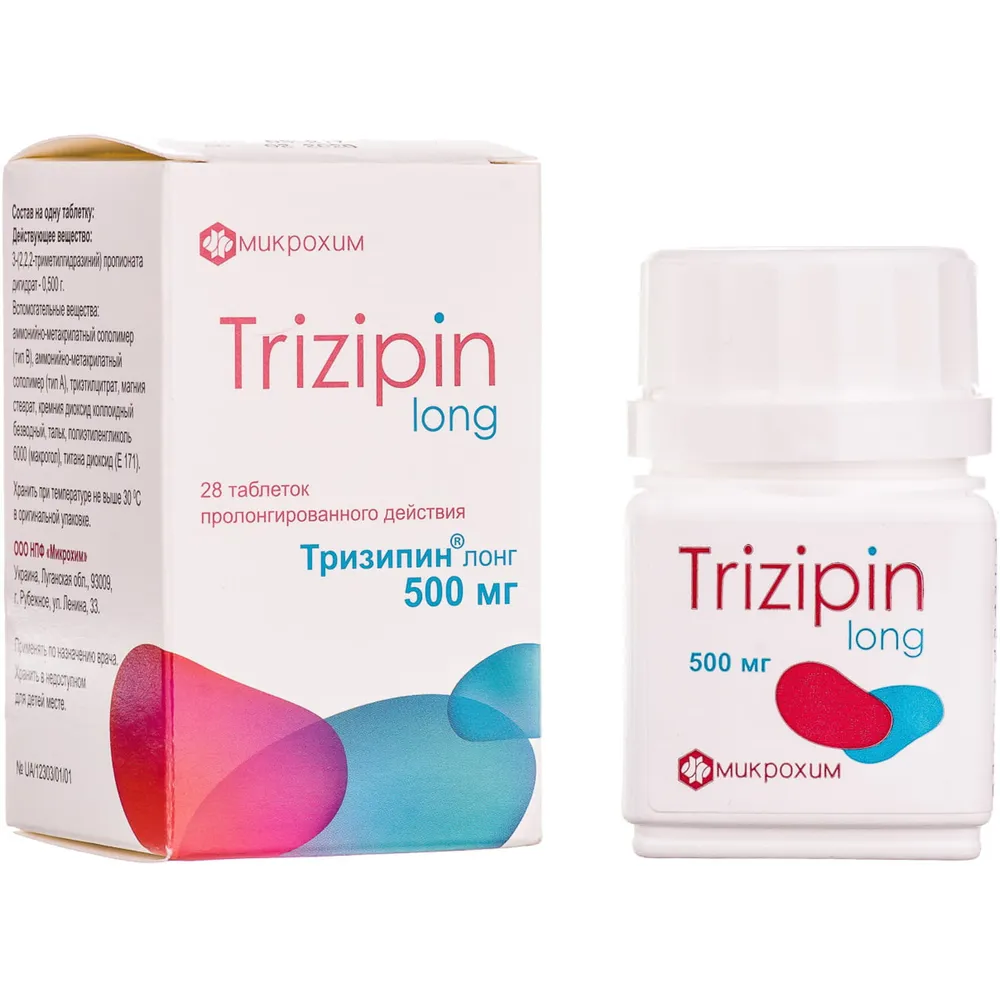
Table of Contents
- INSTRUCTIONS FOR MEDICAL USE OF THE MEDICINAL PRODUCT TRIZIPIN LONG (TRIZIPIN LONG)
- Composition:
- Pharmacological Properties
- Clinical characteristics.
- Special precautions for use.
- Dosage and Administration
- Adverse reactions.
- Composition:
- Pharmacological Properties.
- Clinical characteristics.
- Special precautions for use.
- Dosage and Administration.
- Adverse reactions.
INSTRUCTIONS FOR MEDICAL USE OF THE MEDICINAL PRODUCT TRIZIPIN LONG (TRIZIPIN LONG)
Composition:
Active substance: meldonium;
1 tablet contains trizipine (3-(2,2,2-trimethylhydrazinium) propionate dihydrate) 500 mg, or 750 mg, or 1000 mg;
Excipients: ammonio methacrylate copolymer (type B), triethyl citrate, magnesium stearate, colloidal anhydrous silicon dioxide, talc, ammonio methacrylate copolymer (type A), polyethylene glycol 6000 (macrogol), titanium dioxide (E 171).
Pharmaceutical form. Prolonged-release tablets.
Main physicochemical properties: oval tablets with a double-convex smooth surface of white or white with a creamy shade, with a specific odor, coated with a film coating.
Pharmacotherapeutic group.
Other cardiac preparations. Meldonium. ATC code C01EB22.
Pharmacological Properties
Pharmacodynamics
The active ingredient of TRIZIPIN® LONG is a structural analogue of γ-butyrobetaine, a substance that is a precursor of carnitine. The drug inhibits the activity of γ-butyrobetaine hydroxylase, thereby reducing the biosynthesis of carnitine and the transport of long-chain fatty acids into mitochondria. It prevents the accumulation in cells of activated forms of non-oxidized fatty acids—acylcarnitine A derivatives—thus avoiding their adverse effects. TRIZIPIN® LONG restores the balance between oxygen delivery and oxygen consumption in cells; it prevents disturbances in ATP transport and simultaneously activates glycolysis, which occurs without additional oxygen consumption. As a result of reduced carnitine concentration, γ-butyrobetaine synthesis is enhanced, which exerts vasodilatory effects.
The mechanism of action of TRIZIPIN® LONG determines its broad spectrum of pharmacological effects. It enhances work capacity and reduces symptoms of mental and physical overstrain. The drug has pronounced cardioprotective properties. In heart failure, it improves myocardial contractility and increases tolerance to physical exertion. In patients with stable angina of functional classes II and III, it increases physical performance and reduces the frequency of angina attacks.
In acute and chronic ischemic disturbances of cerebral circulation, TRIZIPIN® LONG improves blood circulation in the ischemic focus by promoting redistribution of cerebral blood flow in favor of the ischemic area. TRIZIPIN® LONG also exerts a tonic effect on the central nervous system (CNS), eliminates functional disorders of somatic and autonomic nervous systems, including alcohol withdrawal syndrome in patients with chronic alcoholism. The drug also has a beneficial effect on dystrophic changes in retinal vessels and cellular immunity.
Pharmacokinetics
The prolonged-release formulation of TRIZIPIN® LONG ensures a uniform release of the active ingredient over 12–16 hours at a rate of 35–80 mg/hour for different strengths of TRIZIPIN® LONG tablets, independent of pH levels. Maximum plasma concentration of the active ingredient is reached 5–6 hours after drug administration and gradually declines over the following 18–20 hours, remaining within the therapeutic range. Bi transformation of trimethylhydrazine propionate occurs in the liver, forming two main metabolites, which are excreted by the kidneys. The elimination half-life is 15–17 hours.
Clinical characteristics.
Indications.
In complex therapy in the following cases:
- diseases of the heart and vascular system: stable exertional angina, chronic heart failure (NYHA functional class I–III), dysg hormonal cardiomyopathy;
- acute and chronic ischemic disorders of cerebral circulation;
- reduced work capacity, physical and psycho-emotional overstrain.
Contraindications.
Hypersensitivity to any component of the drug. Organic lesions of the central nervous system. Increased intracranial pressure (in case of impaired venous outflow, intracranial tumors); pregnancy and lactation, childhood age. Severe hepatic and/or renal insufficiency (there are insufficient data on safety of use).
Interaction with other medicinal products and other types of interactions.
Meldonium can be used in combination with prolonged-action nitrates and other antianginal agents (stable exertional angina), cardiac glycosides and diuretics (heart failure). It can also be combined with anticoagulants, antiplatelet agents, antiarrhythmic agents and other drugs improving microcirculation.
Meldonium may enhance the effect of drugs containing nitroglycerin, nifedipine, β-adrenoblockers and other antihypertensive agents and peripheral vasodilators.
As a result of concomitant administration of iron-containing drugs and meldonium in patients with iron-deficiency anemia, the fatty acid composition in erythrocytes improved.
When meldonium is used in combination with orotic acid to eliminate ischemia/reperfusion-induced injuries, an additional pharmacological effect is observed.
Meldonium helps eliminate cardiac changes caused by zidovudine (AZT) and indirectly affects oxidative stress reactions induced by AZT, which lead to mitochondrial dysfunction. The use of meldonium in combination with AZT or other drugs for AIDS treatment has a positive effect in the treatment of acquired immunodeficiency syndrome (AIDS).
In the test of ethanol-induced loss of righting reflex, meldonium reduced sleep duration. In seizures induced by pentylentetrazole, pronounced anticonvulsant action of meldonium was established. In turn, when α2-adrenoblocker yohimbine at a dose of 2 mg/kg and nitric oxide synthase (NOS) inhibitor N-(G)-nitro-L-arginine at a dose of 10 mg/kg were administered prior to meldonium therapy, the anticonvulsant effect of meldonium was completely blocked.
Overdose of meldonium may enhance cardiotoxicity caused by cyclophosphamide.
Carnitine deficiency induced by meldonium may enhance cardiotoxicity caused by ifosfamide.
Meldonium exerts protective action in cardiotoxicity caused by indinavir and neurotoxicity caused by efavirenz.
Do not use meldonium together with other products containing meldonium, since the risk of adverse reactions may increase.
Special precautions for use.
Caution should be exercised when administering the drug to patients with mild to moderate hepatic and/or renal impairment (liver and/or kidney function should be monitored).
Since TRIZIPIN® LONG inhibits the biosynthesis of carnitine, it should not be prescribed to patients with congenital carnitine deficiency or to those with hyperthyroidism. The drug should be administered with caution to patients with severe arterial hypertension or hypotension, as isolated cases of abnormal reactions have been reported in such patients. TRIZIPIN® LONG is not recommended for patients undergoing hemodialysis treatment, as hemodialysis significantly reduces carnitine levels.
Long-term experience in treating acute myocardial infarction and unstable angina in cardiology departments has shown that meldonium is not a first-line drug for acute coronary syndrome.
Due to the possible development of an excitatory effect, the drug is recommended to be administered in the first half of the day.
Use during pregnancy or breastfeeding.
Pregnancy.
There are insufficient animal studies to assess the effects of meldonium on pregnancy, embryonic/fetal development, labor, and postnatal development. The potential risk to humans is unknown; therefore, meldonium is contraindicated during pregnancy.
Breastfeeding.
Available animal data indicate that meldonium passes into breast milk. It is unknown whether meldonium is excreted in human breast milk. The risk to newborns/infants cannot be excluded; therefore, meldonium is contraindicated during breastfeeding.
Ability to influence reaction speed when driving or operating machinery.
During treatment, caution is advised when driving or operating complex machinery, taking into account the possibility of adverse effects that may affect reaction speed and the ability to concentrate.
Dosage and Administration
The drug is intended for oral use in adults, regardless of food intake. To ensure gradual and sustained release of the active substance, the tablet should be swallowed whole with a glass of water. Due to its potential stimulating effect, the drug is recommended to be taken in the first half of the day.
Due to the prolonged-release formulation technology, a soft, sponge-like matrix may be observed in the feces. This matrix resembles the original tablet in shape but does not contain any active substance.
The dosage of TRIZIPIN® LONG should be individually adjusted according to medical indications, severity of the disease, and patients' anatomical and physiological characteristics.
Adults.
Daily dose is 500–1000 mg. Maximum daily dose is 1000 mg.
The duration of treatment is 4–6 weeks. The treatment course may be repeated 2–3 times per year.
Elderly patients.
In elderly patients with impaired liver and/or kidney function, dose reduction of meldonium may be required.
Patients with renal impairment.
Since the drug is excreted via the kidneys, patients with mild to moderate renal impairment should receive a reduced dose of meldonium.
Patients with hepatic impairment.
Patients with mild to moderate hepatic impairment should receive a reduced dose of meldonium.
Children.
There is no data on the safety and efficacy of meldonium in children (under 18 years of age); therefore, meldonium is contraindicated in this patient population.
Overdose.
Cases of meldonium overdose have not been reported. The drug is low in toxicity and does not cause life-threatening adverse effects.
In cases of hypotension, headache, dizziness, tachycardia, and general weakness may occur. Treatment is symptomatic.
In case of severe overdose, liver and kidney functions should be monitored.
Hemodialysis is not significantly effective in meldonium overdose due to the drug's pronounced protein binding.
Adverse reactions.
Adverse effects are classified by organ systems and MedDRA frequency categories: common (≥ 1/100 to < 1/10), rare (≥ 1/10000 to < 1/100), very rare (< 1/10000).
Adverse effects observed in clinical trials and during the post-marketing period:
| Immune system disorders |
|
| Common Uncommon |
Allergic reactions* Increased sensitivity, including allergic dermatitis, urticaria, angioneurotic edema, anaphylactic reactions up to shock |
| Psychiatric disorders |
|
| Uncommon |
Excitation, fear, obsessive thoughts, sleep disturbances |
| Nervous system disorders |
|
| Common Uncommon |
Headache* Paresthesia, tremor, hypesthesia, tinnitus, vertigo, dizziness, gait disturbance, pre-syncopal state, syncope |
| Cardiac disorders |
|
| Uncommon |
Change in heart rhythm, palpitations, tachycardia/sinus tachycardia, atrial fibrillation, arrhythmia, chest discomfort/chest pain |
| Vascular disorders |
|
| Uncommon |
Increased/decreased blood pressure, hypertensive crisis, hyperemia, pallor of the skin |
| Respiratory, thoracic and mediastinal disorders |
|
| Common Uncommon |
Respiratory tract infections Pharyngitis, cough, dyspnea, apnea |
| Gastrointestinal disorders |
|
| Common Uncommon |
Dyspepsia* Dysgeusia (metallic taste in mouth), loss of appetite, nausea, vomiting, flatulence, diarrhea, abdominal pain, dry mouth or hypersalivation |
| Skin and subcutaneous tissue disorders |
|
| Uncommon |
Rash, generalized/maculopapular/papular rash, pruritus |
| Musculoskeletal and connective tissue disorders |
|
| Uncommon |
Back pain, muscle weakness, muscle spasms |
| Renal and urinary disorders |
|
| Uncommon |
Frequency of urination (polyuria) |
| General disorders |
|
| Uncommon |
General weakness, chills, asthenia, edema, facial swelling, leg swelling, feeling of heat, feeling of cold, cold sweat |
| Investigations |
|
| Common Uncommon |
Dyslipidemia, increased C-reactive protein levels Electrocardiogram (ECG) abnormalities, increased heart rate, eosinophilia* |
*Adverse effects observed in previously conducted non-controlled clinical trials.
Shelf life.
3 years.
Do not use after the expiry date stated on the packaging.
Storage conditions.
Store at a temperature not exceeding 30 °C in the original packaging.
Keep out of reach of children.
Packaging.
28 tablets in a polymer bottle, in a cardboard box.
Prescription status.
Prescription only.
Manufacturer.
MICROCHEM LLC (responsible for batch release, excluding batch control/testing).
Manufacturer's address and place of business.
5, Budyndustrії St., Kyiv, Ukraine, 01013.
To report adverse events related to the use of the medicinal product, please call +38 (050) 309-83-54 (24/7).
INSTRUCTION
for medical use of the medicinal product
TRIZIPIN® LONG
(TRIZIPIN LONG)
Composition:
Active ingredient: meldonium;
1 tablet contains 500 mg, or 750 mg, or 1000 mg of mildronate (3-(2,2,2-trimethylhydrazinium) propionate dihydrate);
Excipients: ammonio methacrylate copolymer (type B), triethyl citrate, magnesium stearate, colloidal anhydrous silicon dioxide, talc, ammonio methacrylate copolymer (type A), polyethylene glycol 6000 (macrogol), titanium dioxide (E 171).
Pharmaceutical form. Prolonged-release tablets.
Main physicochemical properties: oval tablets with a biconvex smooth surface, white or white with a creamy shade, with a specific odor, film-coated.
Pharmacotherapeutic group.
Other cardiac preparations. Meldonium. ATC code C01EB22.
Pharmacological Properties.
Pharmacodynamics.
The active ingredient of TRIZIPIN® LONG is a structural analogue of γ-butyrobetaine, a substance which is a precursor of carnitine. The drug inhibits the activity of γ-butyrobetaine hydroxylase, thereby reducing carnitine biosynthesis and the transport of long-chain fatty acids into mitochondria, preventing the accumulation in cells of activated forms of non-oxidized fatty acids—acylcarnitine A derivatives—thus avoiding their adverse effects. TRIZIPIN® LONG restores the balance between oxygen delivery and oxygen consumption in cells; it prevents disturbances in ATP transport and simultaneously activates glycolysis, which proceeds without additional oxygen consumption. As a result of reduced carnitine concentration, γ-butyrobetaine synthesis is enhanced, which has vasodilatory properties.
The mechanism of action of TRIZIPIN® LONG determines its broad spectrum of pharmacological effects. It enhances work capacity and reduces symptoms of mental and physical overexertion. The drug exerts a pronounced cardioprotective effect. In heart failure, it improves myocardial contractility and increases tolerance to physical exertion. In stable angina pectoris of functional classes II and III, it increases physical performance and reduces the frequency of angina attacks.
In acute and chronic ischemic disturbances of cerebral circulation, TRIZIPIN® LONG improves blood flow in the ischemic area by influencing the redistribution of cerebral blood flow in favor of the ischemic region. TRIZIPIN® LONG also has a tonic effect on the CNS, eliminates functional disorders of the somatic and autonomic nervous systems, including during alcohol withdrawal syndrome in patients with chronic alcoholism. The drug also has a beneficial effect on dystrophically altered retinal vessels and cellular immunity.
Pharmacokinetics.
The prolonged-release formulation of TRIZIPIN® LONG ensures uniform release of the active ingredient over 12–16 hours at a rate of 35–80 mg/hour for different strengths of TRIZIPIN® LONG tablets, independent of pH. Maximum plasma concentration of the active ingredient is reached 5–6 hours after administration and gradually decreases over the following 18–20 hours, remaining within the therapeutic range. Biodegradation of trimethylhydrazine propionate occurs in the liver, forming two main metabolites, which are excreted by the kidneys. The elimination half-life is 15–17 hours.
Clinical characteristics.
Indications.
In complex therapy in the following cases:
- diseases of the heart and vascular system: stable exertional angina, chronic heart failure (NYHA functional class I–III), dysg hormonal cardiomyopathy;
- acute and chronic ischemic disorders of cerebral circulation;
- reduced work capacity, physical and psycho-emotional overstrain.
Contraindications.
Hypersensitivity to any component of the drug. Organic lesions of the central nervous system. Increased intracranial pressure (in conditions associated with impaired venous outflow, intracranial tumors); pregnancy and lactation, childhood. Severe hepatic and/or renal insufficiency (insufficient safety data available).
Interaction with other medicinal products and other forms of interaction.
Meldonium can be used in combination with prolonged-action nitrates and other antianginal agents (stable exertional angina), cardiac glycosides, and diuretics (heart failure). It may also be combined with anticoagulants, antiplatelet agents, antiarrhythmics, and other drugs improving microcirculation.
Meldonium may enhance the effects of drugs containing nitroglycerin, nifedipine, β-adrenoblockers, and other antihypertensive agents and peripheral vasodilators.
When iron-containing drugs and meldonium are used concomitantly in patients with iron-deficiency anemia, improvement in fatty acid composition of erythrocytes has been observed.
When meldonium is used in combination with orotic acid to counteract ischemia/reperfusion-induced injuries, an additional pharmacological effect is observed.
Meldonium helps eliminate cardiac changes caused by zidovudine (AZT) and indirectly affects oxidative stress reactions induced by AZT, which lead to mitochondrial dysfunction. The use of meldonium in combination with AZT or other drugs for AIDS treatment has a positive effect in the treatment of acquired immunodeficiency syndrome (AIDS).
In the test of ethanol-induced loss of righting reflex, meldonium reduced sleep duration. In seizures induced by pentamethylenetetrazole, pronounced anticonvulsant action of meldonium was demonstrated. Meanwhile, pretreatment with the α2-adrenoblocker yohimbine at a dose of 2 mg/kg and with the nitric oxide synthase (NOS) inhibitor N-(G)-nitro-L-arginine at a dose of 10 mg/kg completely blocks the anticonvulsant effect of meldonium.
Overdose of meldonium may enhance cardiotoxicity caused by cyclophosphamide.
Carnitine deficiency induced by meldonium may enhance cardiotoxicity caused by ifosfamide.
Meldonium exerts protective action against cardiotoxicity induced by indinavir and neurotoxicity induced by efavirenz.
Do not use meldonium together with other products containing meldonium, as this may increase the risk of adverse reactions.
Special precautions for use.
Caution should be exercised when administering the drug to patients with mild or moderate hepatic and/or renal impairment in their medical history (monitoring of liver and/or kidney function is recommended).
Since TRIZIPIN® LONG inhibits the biosynthesis of carnitine, it should not be prescribed to patients with congenital carnitine deficiency or to those with hyperthyroidism. The drug should be administered with caution to patients with severe arterial hypertension or hypotension, as isolated cases of abnormal reactions have been reported in such patients. TRIZIPIN® LONG is not recommended for patients undergoing hemodialysis treatment, as it significantly reduces carnitine levels.
Long-term experience in treating acute myocardial infarction and unstable angina in cardiology departments has shown that meldonium is not a first-line drug for acute coronary syndrome.
Due to the potential for developing an excitatory effect, the drug is recommended to be administered in the first half of the day.
Use during pregnancy or breastfeeding.
Pregnancy.
There is insufficient animal data to assess the effects of meldonium on pregnancy, embryonic/fetal development, labor, and postnatal development. The potential risk to humans is unknown; therefore, meldonium is contraindicated during pregnancy.
Breastfeeding.
Available animal data indicate that meldonium passes into breast milk. It is unknown whether meldonium passes into human breast milk. Risk to newborns/infants cannot be excluded; therefore, meldonium is contraindicated during breastfeeding.
Ability to influence reaction rate while driving or operating machinery.
During treatment, caution is necessary when driving or operating complex machinery, taking into account the possibility of adverse effects that may affect reaction speed and the ability to concentrate.
Dosage and Administration.
Administer orally to adults, regardless of food intake. To ensure gradual and uniform release of the active substance, the tablet should be swallowed whole with a glass of water. Due to the possible stimulating effect, the drug is recommended to be taken in the first half of the day.
Due to the prolonged-release formulation technology, a soft, sponge-like matrix that resembles the tablet in shape but does not contain the active ingredient may be excreted in the feces.
The dosage of TRIZIPIN® LONG should be individually adjusted according to medical indications, disease severity, and patients' anatomical and physiological characteristics.
Adults.
The daily dose is 500–1000 mg. The maximum daily dose is 1000 mg.
The duration of treatment course is 4–6 weeks. The treatment course may be repeated 2–3 times per year.
Elderly patients.
In elderly patients with impaired liver and/or kidney function, dose reduction of meldonium may be required.
Patients with renal impairment.
Since the drug is eliminated via the kidneys, patients with mild to moderate renal impairment should receive a reduced dose of meldonium.
Patients with hepatic impairment.
Patients with mild to moderate hepatic impairment should receive a reduced dose of meldonium.
Children.
There are no data on the safety and efficacy of meldonium in children (under 18 years of age); therefore, meldonium is contraindicated in this patient population.
Overdose.
There have been no reports of meldonium overdose. The drug is low in toxicity and does not cause life-threatening adverse effects.
In cases of low blood pressure, headache, dizziness, tachycardia, and general weakness may occur. Treatment is symptomatic.
In cases of severe overdose, liver and kidney functions should be monitored.
Hemodialysis is not significantly effective in meldonium overdose due to its pronounced protein binding.
Adverse reactions.
Adverse effects are classified by system organ class and MedDRA frequency: common (≥ 1/100 to < 1/10), rare (≥ 1/10000 to < 1/100), very rare (< 1/10000).
Adverse effects observed in clinical studies and in the post-marketing period:
| From the immune system |
|
| Common Rare |
Allergic reactions* Increased sensitivity, including allergic dermatitis, urticaria, angioneurotic edema, anaphylactic reactions up to shock |
| From the psyche |
|
| Rare |
Excitation, fear, obsessive thoughts, sleep disturbances |
| From the nervous system |
|
| Common Rare |
Headaches* Paraesthesia, tremor, hypaesthesia, tinnitus, vertigo, dizziness, gait disturbance, pre-syncope, syncope |
| From the heart |
|
| Rare |
Change in heart rhythm, palpitations, tachycardia/sinus tachycardia, atrial fibrillation, arrhythmia, chest discomfort/chest pain |
| From the vascular system |
|
| Rare |
Increased/decreased blood pressure, hypertensive crisis, hyperemia, pallor of the skin |
| Respiratory, thoracic and mediastinal disorders |
|
| Common Rare |
Respiratory tract infections Pharyngitis, cough, dyspnea, apnea |
| Gastrointestinal disorders |
|
| Common Rare |
Dyspepsia* Dysgeusia (metallic taste in mouth), loss of appetite, nausea, vomiting, flatulence, diarrhea, abdominal pain, dry mouth or hypersalivation |
| Skin and subcutaneous tissue disorders |
|
| Rare |
Rash, generalized/maculopapular/papular rash, pruritus |
| Musculoskeletal and connective tissue disorders |
|
| Rare |
Back pain, muscle weakness, muscle spasms |
| Renal and urinary disorders |
|
| Rare |
Frequency |
| General disorders |
|
| Rare |
Generalized weakness, chills, asthenia, edema, facial swelling, leg swelling, feeling of heat, feeling of cold, cold sweat |
| Investigations |
|
| Common Rare |
Dyslipidemia, increased C-reactive protein level Electrocardiogram (ECG) abnormalities, increased heart rate, eosinophilia* |
*Adverse reactions observed in previously conducted non-controlled clinical trials.
Shelf life.
3 years.
Do not use after the expiry date stated on the packaging.
Storage conditions.
Store at a temperature not exceeding 30 °C in the original packaging.
Keep out of reach of children.
Packaging.
28 tablets in a polymer bottle, in a cardboard box.
Prescription status.
Prescription only.
Manufacturer.
MICROCHEM LLC.
Manufacturer's address and place of business.
33, Lenin St., Rubizhne, Luhansk region, 93000, Ukraine.
To report adverse events during the use of this medicinal product, please call +38 (050) 309-83-54 (24/7).