Triseptol
Ukraine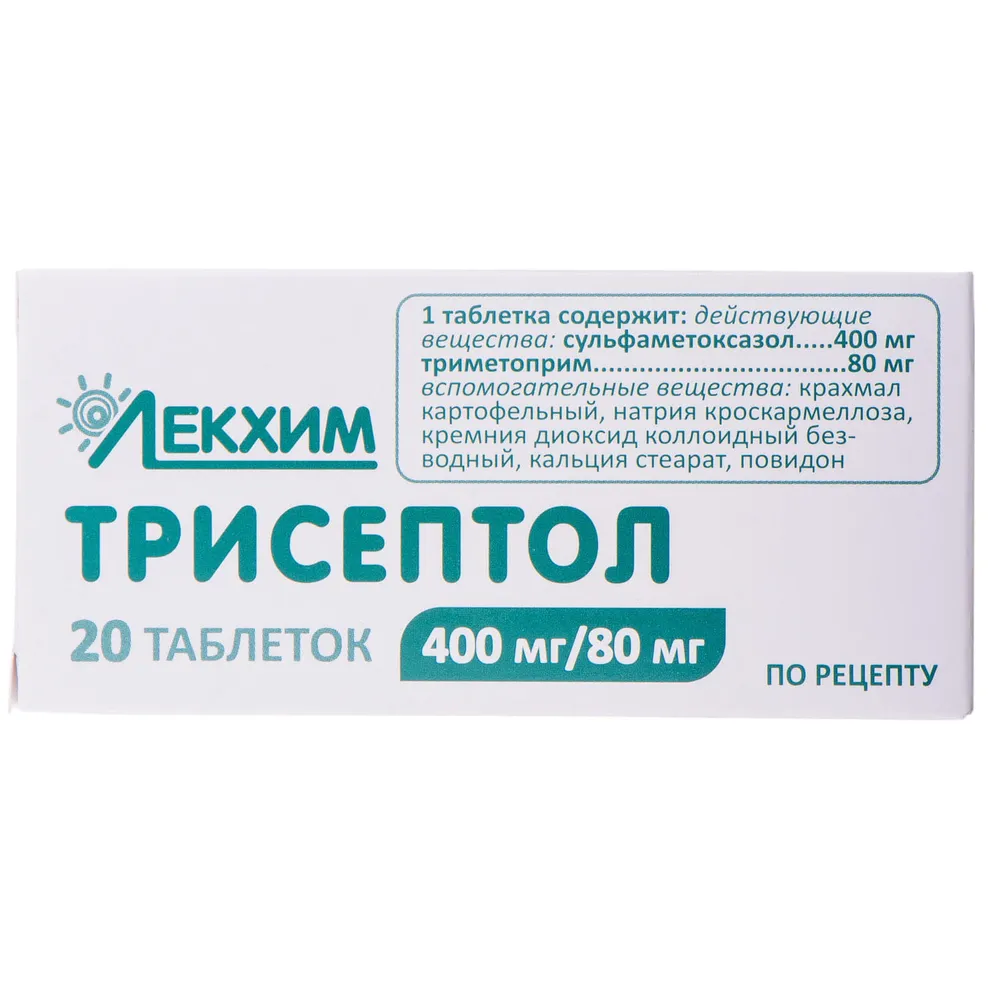
Table of Contents
INSTRUCTIONS FOR MEDICAL USE OF THE MEDICINAL PRODUCT TRISEPTOL (TRISEPTOL)
Composition:
Active substances: sulfamethoxazole, trimethoprim;
One 400 mg/80 mg tablet contains: sulfamethoxazole – 400 mg, trimethoprim – 80 mg;
One 100 mg/20 mg tablet contains: sulfamethoxazole – 100 mg, trimethoprim – 20 mg;
Excipients: potato starch, sodium croscarmellose, colloidal anhydrous silicon dioxide, calcium stearate, povidone.
Pharmaceutical form. Tablets.
Main physicochemical characteristics: 400 mg/80 mg tablets – white to creamy-white tablets with a dividing line and chamfered edges; 100 mg/20 mg tablets – white to creamy-white tablets.
Pharmacotherapeutic group. Antibacterials for systemic use. Combinations of sulfonamides and trimethoprim, including derivatives. ATC code J01EE01.
Pharmacological properties.
Pharmacodynamics.
Trisepthol is a combined antibacterial agent with bactericidal activity due to the synergistic action of its two components — sulfamethoxazole and trimethoprim. The two active components block two consecutive stages of folic acid biosynthesis in microorganisms and thereby inhibit the synthesis of nucleic acids and proteins. By competitive inhibition, sulfamethoxazole interferes with the incorporation of para-aminobenzoic acid — an essential compound for microorganisms — into the molecule of dihydrofolic acid and inhibits dihydropteroate synthetase. Trimethoprim selectively inhibits dihydrofolate reductase, the enzyme that converts dihydrofolic acid into tetrahydrofolic acid. This effect is selective because trimethoprim has a several-fold (10^5) higher affinity for bacterial dihydrofolate reductase than for the human enzyme, and because humans can obtain folic acid and folinic acid from external sources, whereas microorganisms must synthesize these compounds independently. Consequently, bacteriostatic concentrations of the components when used separately in vitro become bactericidal when used in combination. The combination of compounds reduces the risk of resistance development, although the emergence of plasmid-mediated resistance remains possible. The antibacterial activity of the drug covers a broad spectrum of Gram-positive and Gram-negative microorganisms and protozoa.
The drug is effective against the following microorganisms:
Gram-positive microorganisms: Listeria monocytogenes, Nocardia asteroides, Staphylococcus aureus (90%), coagulase-negative Staphylococcus;
Gram-negative microorganisms: Aeromonas spp., Bartonella henselae, Bordetella pertussis, Chlamydia trachomatis, Escherichia coli (70%), Haemophilus ducreyi, Haemophilus influenzae, Klebsiella spp., Morganella morganii, Neisseria meningitidis, Proteus spp., Burkholderia (Pseudomonas) cepacia, Burkholderia (Pseudomonas) pseudomallei, Salmonella spp., Salmonella typhi, Salmonella paratyphi (90%), Vibrio cholerae, Yersinia enterocolitica (90%), Stenotrophomonas (Xanthomonas) maltophilia;
Protozoan pathogens: Isospora belli, Plasmodium spp., Pneumocystis carinii, Toxoplasma gondii;
Partially sensitive microorganisms: Brucella spp., Enterobacter spp., Moraxella catarrhalis, Neisseria gonorrhoeae, Serratia marcescens, Shigella spp., Streptococcus pneumoniae, Streptococcus pyogenes;
Resistant microorganisms: Mycoplasma spp., Mycobacterium tuberculosis, Enterococcus faecalis, Pseudomonas aeruginosa, and Treponema pallidum.
The drug has low efficacy against anaerobic bacteria and is ineffective against anaerobic species of normal intestinal flora.
For infections caused by partially sensitive microorganisms, sensitivity testing is recommended to exclude possible pathogen resistance.
Drug sensitivity can be determined by standard methods, such as the disk diffusion method or the dilution method recommended by the National Committee for Clinical Laboratory Standards (NCCLS).
The NCCLS recommends the following susceptibility criteria:
| Disc method, diameter of growth inhibition zone (mm) |
Dilution method**, MIC (μg/ml) TM SMZ |
||
| Susceptible |
≥16 |
≤2 |
≤38 |
| Intermediate |
11-15 |
4 |
76 |
| Resistant |
≤10 |
≥8 |
≥152 |
Disk: 1.25 mcg trimethoprim and 23.75 mcg sulfamethoxazole.
** trimethoprim (TMP) and sulfamethoxazole (SMX) in a ratio of 1 to 20.
Pharmacokinetics.
The pharmacokinetic parameters of both components of Trisepthol are similar. This similarity allows for combined administration of the two active substances. Both active compounds are well absorbed after oral administration; approximately 90% of trimethoprim and about 80% of sulfamethoxazole are absorbed from the gastrointestinal tract.
Maximum plasma concentration of each component is achieved within 1 to 4 hours after oral administration. Protein binding in plasma amounts to 42–46% for trimethoprim and 66% for sulfamethoxazole. The therapeutic effect of the drug is attributed to the free fraction.
Concomitant food intake reduces the area under the concentration-time curve (AUC) of trimethoprim by approximately 20%. The drug is well distributed in tissues, with a volume of distribution of 69–133 L for trimethoprim and 10–16 L for sulfamethoxazole.
Tissue concentrations and concentrations in various body fluids are similar to those in blood serum. Both components penetrate the blood-brain barrier and placenta, and can also be detected in cerebrospinal fluid, middle ear fluid, vaginal fluid, saliva, bile, and trimethoprim is additionally found in bronchial secretions. Both components of Trisepthol are excreted into breast milk.
Both drug components are primarily metabolized in the liver. The active substances, as well as their metabolites, are excreted by the kidneys (via glomerular filtration and tubular secretion); the concentration of trimethoprim and sulfamethoxazole in urine is higher than that in blood.
The elimination half-life of trimethoprim is 10–12 hours and that of sulfamethoxazole is 9–12 hours. Almost 80% of the administered dose of trimethoprim and nearly 30% of the dose of sulfamethoxazole are excreted unchanged in urine. Blood concentrations of both components can be determined 24 hours after dose administration.
A small fraction of the molecules is excreted in bile. Neither component can be removed by peritoneal dialysis, but both components can be partially removed by hemodialysis.
Pharmacokinetics in elderly patients: renal clearance of sulfamethoxazole is reduced.
Pharmacokinetics in patients with renal impairment (creatinine clearance less than 25 mL/min): the elimination half-life of both drug components is prolonged (20–30 hours).
Clinical characteristics.
Indications.
Treatment of infections caused by pathogenic microorganisms sensitive to the drug, when the benefit of such treatment outweighs the potential risk; it is necessary to consider whether monotherapy with a single antibacterial agent might be appropriate.
Infections of the ear, nose, throat, and respiratory tract: sinusitis, otitis media, acute and chronic bronchitis, bronchiectasis, pneumonia (including that caused by Pneumocystis carinii), pharyngitis, tonsillitis (in infections caused by β-hemolytic streptococci group A, eradication rates are not fully adequate).
Infections of the kidneys and urinary tract: acute and chronic cystitis, pyelonephritis, urethritis, prostatitis, chancroid.
Gastrointestinal infections: typhoid fever and paratyphoid, shigellosis (caused by susceptible strains of Shigella flexneri and Shigella sonnei, when antibacterial therapy is indicated), traveler's diarrhea caused by enterotoxigenic strains of Escherichia coli, cholera (in addition to fluid and electrolyte replacement).
Other bacterial infections: acute and chronic osteomyelitis, brucellosis, nocardiosis, actinomycosis, toxoplasmosis, South American blastomycosis.
Contraindications.
Hypersensitivity to trimethoprim and sulfamethoxazole (including sulfonamide derivatives, sulfonylurea antidiabetic agents, and thiazide diuretics) and to other components of the drug.
Acute hepatitis, severe hepatic dysfunction, severe liver failure, including diagnosed parenchymal liver damage, porphyria.
Blood disorders (with severe persistent changes in blood cell composition, except in exceptional cases), immune thrombocytopenia induced by trimethoprim and/or sulfamethoxazole, hematopoietic suppression, megaloblastic anemia due to folic acid deficiency, glucose-6-phosphate dehydrogenase deficiency.
Renal failure characterized by a creatinine clearance of less than 15 mL/min (except in cases undergoing hemodialysis).
The drug is contraindicated in patients undergoing chemotherapy.
Must not be administered in combination with dofetilide.
Interaction with other medicinal products and other forms of interaction.
Ascorbic acid increases crystalluria.
Trimethoprim has low affinity for human dihydrofolate reductase but may increase methotrexate toxicity, especially in the presence of other risk factors: advanced age, hypoalbuminemia, renal impairment, bone marrow suppression. This adverse effect of the drug may be particularly pronounced when high-dose methotrexate is administered. It is recommended to treat such patients with folic acid or calcium folinate to prevent effects on hematopoiesis.
Cases of pancytopenia have been reported in patients receiving trimethoprim and methotrexate concurrently.
Cotrimoxazole increases the concentration of the free fraction of methotrexate in serum due to displacement from protein binding.
Concomitant administration of dofetilide and trimethoprim is contraindicated, as dofetilide may cause serious ventricular arrhythmias associated with QT interval prolongation, including bidirectional ventricular tachycardia (torsades de pointes), which is directly dependent on plasma concentration of dofetilide.
The drug may reduce the efficacy of oral contraceptives. Therefore, patients should be advised to use additional contraceptive measures during treatment.
Caution should be exercised in patients taking other medications that may cause hyperkalemia.
Sulfonamide derivatives are chemically closely related to diuretics (e.g., acetazolamide, thiazides) and oral antidiabetic agents. There is a possibility of developing cross-sensitivity reactions to these components. Rarely, in patients receiving sulfonamides, diuresis and/or hypoglycemia may be enhanced.
Elderly patients receiving diuretics, particularly thiazides, are more prone to developing thrombocytopenic purpura.
Cotrimoxazole potentiates the effect of oral anticoagulants (coumarins). Therefore, when prescribing the drug to patients receiving oral anticoagulants, prothrombin time should be carefully monitored and, if necessary, the anticoagulant dose adjusted.
When used concomitantly, cotrimoxazole increases the half-life of phenytoin by 39% and reduces its metabolic clearance by 27%, which may lead to phenytoin toxicity. Therefore, when co-administering both drugs, close monitoring of clinical symptoms and serum phenytoin levels is recommended.
Sulfonamides may reduce plasma protein binding and renal transport of methotrexate, thereby increasing the concentration of free methotrexate and enhancing its systemic effects. It is believed that the addition of folic acid may reduce the risk of hematological adverse effects.
Concomitant administration of rifampicin and cotrimoxazole reduces the half-life of trimethoprim by approximately one week.
In renal transplant patients receiving both cotrimoxazole and cyclosporine, transient renal dysfunction has been observed.
Mostly in elderly patients, concomitant use of cotrimoxazole and digoxin may increase the serum concentration of the latter; therefore, monitoring of serum digoxin levels may be necessary.
Indomethacin and other nonsteroidal anti-inflammatory drugs may increase the blood concentration of sulfonamides.
Occasionally, when cotrimoxazole is administered concurrently to patients receiving pyrimethamine for malaria prophylaxis at doses exceeding 25 mg per week, megaloblastic anemia may develop.
Cotrimoxazole may reduce the efficacy of tricyclic antidepressants.
Like other sulfonamides, cotrimoxazole also enhances the effect of oral hypoglycemic agents; therefore, carbohydrate metabolism should be more closely monitored during cotrimoxazole therapy.
Concomitant use of trimethoprim and other medicinal products (e.g., amantadine or procainamide) that are cationic at physiological pH and partially excreted via tubular secretion may increase the concentration of each component. Concomitant use of cotrimoxazole and zidovudine may increase the risk of hematological adverse reactions. If combined therapy is necessary, hematological parameters should be monitored.
Trimethoprim/sulfamethoxazole (160 mg/800 mg) may increase lamivudine activity by up to 40% due to the trimethoprim component. Lamivudine does not affect the pharmacokinetics of trimethoprim or sulfamethoxazole.
Laboratory tests.
Cotrimoxazole, specifically trimethoprim contained in it, may interfere with serum methotrexate concentration measurements performed by competitive protein binding assay using dihydrofolate reductase.
Cotrimoxazole may interfere with the Jaffe reaction (creatinine determination by reaction with picric acid in alkaline medium). In this case, results within the normal range may be overestimated by approximately 10%.
Special precautions for use.
Rarely, severe, potentially life-threatening adverse reactions may develop during treatment with the drug, such as Stevens-Johnson syndrome, Lyell's syndrome (toxic epidermal necrolysis), fulminant hepatic necrosis, agranulocytosis, aplastic anemia, dyscrasia, and severe hypersensitivity reactions.
Patients should be informed about subjective and objective symptoms of skin reactions and the necessity for careful monitoring. The highest risk of developing severe skin reactions (Stevens-Johnson syndrome and toxic epidermal necrolysis) occurs during the first weeks of treatment.
Treatment with the drug should be discontinued immediately if subjective or objective symptoms of Stevens-Johnson syndrome or toxic epidermal necrolysis appear (such as sudden onset of skin rashes, often with blisters or mucous membrane involvement).
If a patient develops Stevens-Johnson syndrome or toxic epidermal necrolysis during treatment with the drug, the drug should not be prescribed again in the future.
In case of skin rash or early symptoms of the aforementioned severe adverse reactions (sore throat, fever, joint pain, pallor, purpura, jaundice) that cannot be explained by other causes, Triseptol should be discontinued immediately. Cough, dyspnea, and development of pulmonary infiltrates may also be signs of a hypersensitivity reaction. Caution should be exercised when administering the drug to patients with a history of severe allergic reactions or bronchial asthma.
Elderly patients. Triseptol should be used with particular caution in elderly patients, as adverse reactions occur more frequently in this patient group. Severe skin reactions, bone marrow suppression, and thrombocytopenia are the most common adverse effects. Elderly patients taking diuretics, particularly thiazides, are more prone to developing thrombocytopenic purpura.
Treatment of elderly patients should not be prolonged.
The dose of the drug should be reduced in patients with impaired renal function.
Hematological adverse reactions characteristic of folate deficiency may occur in elderly patients and in patients with pre-existing folate deficiency. Therefore, during treatment of elderly patients and patients with probable folate deficiency (chronic alcoholism, patients taking anticonvulsants, malnutrition and/or malabsorption, renal insufficiency), consideration should be given to additional administration of folic acid.
Adverse reactions occur more frequently also in patients with AIDS and in individuals with other chronic diseases.
Patients with impaired renal function are recommended to receive reduced doses of the drug, and plasma drug concentrations should be monitored.
Trimethoprim, a component of Triseptol, may cause hyperkalemia in patients taking other drugs that increase potassium levels in blood or in individuals with impaired potassium metabolism (e.g., chronic renal failure). In these patient groups, serum electrolyte levels should be monitored regularly; if hyperkalemia develops, the drug should be discontinued.
During the first few days of treatment, the drug may cause hypoglycemia even in patients without diabetes mellitus. Patients receiving high doses of the drug are particularly susceptible to developing hypoglycemia.
To avoid crystalluria, an adequate amount of fluid (at least 1.5 L) should be consumed during treatment. The risk of crystalluria increases with poor nutrition.
During prolonged treatment, regular monitoring of blood counts, platelets, renal and liver function, and urine sediment is required. To mitigate hematological effects during treatment, folic acid (5–10 mg/day) may be added without risk of reducing the antibacterial efficacy of the drug.
For tonsillopharyngitis caused by beta-hemolytic streptococcus A, penicillin-containing drugs should be preferred, as the combination of sulfamethoxazole with trimethoprim does not ensure bacterial eradication and therefore cannot prevent complications such as rheumatic fever.
Trimethoprim impairs phenylalanine metabolism; however, this does not affect patients with phenylketonuria as long as an appropriate diet is followed.
In case of severe and persistent diarrhea, pseudomembranous colitis should be considered. The course of the disease may range from mild to life-threatening. Therefore, accurate diagnosis of this condition in patients who develop diarrhea during antibacterial treatment is crucial. Antibacterial therapy alters the normal flora of the colon and may lead to overgrowth of anaerobic bacilli. Toxins produced by Clostridium difficile are one of the main causes of colitis.
In mild cases of pseudomembranous colitis, discontinuation of the drug is usually sufficient. In moderate and severe cases, patients require fluid, electrolyte, protein, and antibacterial therapy active against Clostridium difficile (metronidazole or vancomycin). Drugs that inhibit peristalsis or other antidiarrheal agents should not be used.
Treatment with Triseptol in patients with thyroid disorders requires special caution, as both trimethoprim and sulfamethoxazole may induce recurrence or exacerbation of the disease.
Since Triseptol may cause photosensitivity, patients should be advised to avoid direct sunlight or to use protective clothing and/or photoprotective agents during treatment.
Caution should be exercised when prescribing Triseptol to patients with X-linked mental retardation, as folate deficiency may exacerbate psychomotor disorders associated with the condition.
Concomitant use of diuretics increases the risk of bleeding.
Except in exceptional cases, the drug should not be prescribed to patients with serious, persistent changes in blood cell composition. Occasionally, the drug has been used in patients receiving cytotoxic agents without any signs of adverse effects on bone marrow or peripheral blood.
Prolonged treatment with the drug is not recommended.
Long-term therapy may lead to overgrowth of resistant microorganisms and fungi. In case of superinfection, appropriate treatment should be initiated immediately.
Respiratory toxicity. Very rare, severe cases of respiratory toxicity have been reported during treatment with sulfamethoxazole/trimethoprim, sometimes progressing to acute respiratory distress syndrome (ARDS). The appearance of pulmonary manifestations such as cough, fever, and dyspnea, in combination with radiological signs of pulmonary infiltrates and worsening pulmonary function, may be early signs of ARDS. Under such circumstances, treatment with sulfamethoxazole/trimethoprim should be discontinued and appropriate therapy initiated.
Hemophagocytic lymphohistiocytosis (HLH). Very rare cases of hemophagocytic lymphohistiocytosis have been reported in patients receiving sulfamethoxazole/trimethoprim. Hemophagocytic lymphohistiocytosis (HLH) is a life-threatening syndrome of pathological immune activation, characterized by clinical signs and symptoms of excessive systemic inflammation (e.g., fever, hepatosplenomegaly, hypertriglyceridemia, hypofibrinogenemia, high serum ferritin levels, cytopenia, and hemophagocytosis). Patients who develop early signs of pathological immune activation should be evaluated immediately. If the diagnosis of hemophagocytic lymphohistiocytosis is confirmed, treatment with sulfamethoxazole/trimethoprim should be discontinued.
Use during pregnancy or breastfeeding.
The drug is not recommended for use in pregnant women or women who are breastfeeding.
Ability to affect reaction speed when driving vehicles or operating machinery.
Due to the possibility of dizziness, caution should be exercised when driving vehicles or operating machinery requiring concentration of attention.
Dosage and Administration
Adults and children aged 12 years and older. The usual initial dose is 2 tablets of Trisepthol 400 mg/80 mg twice daily (morning and evening), taken after meals with plenty of fluid. In severe infections, higher daily doses may be prescribed—up to 3 tablets of Trisepthol 400 mg/80 mg twice daily. For maintenance therapy lasting longer than 14 days, it is recommended to take 1 tablet of Trisepthol 400 mg/80 mg or 4 tablets of Trisepthol 100 mg/20 mg twice daily.
Children aged 6–12 years. The recommended daily dose for children is 6 mg of trimethoprim and 30 mg of sulfamethoxazole per kg of body weight. This dose should be divided into two administrations.
The recommended daily dose for children aged 6 to 12 years is 1 tablet of Trisepthol 400 mg/80 mg or 4 tablets of Trisepthol 100 mg/20 mg twice daily.
Children under 6 years of age should be given other dosage forms of the drug (e.g. suspension).
Duration of treatment for acute infections, except gonorrhea, should be at least 5 days and continued for 2 days after symptoms have disappeared. A 3-day course may be sufficient for women with uncomplicated acute cystitis. However, in children with this condition, treatment is recommended for 5–7 days. For acute brucellosis, treatment duration should be at least 4 weeks, and for nocardiosis, even longer (6–8 tablets of Trisepthol 400 mg/80 mg daily for 3 months).
For prophylaxis and treatment of toxoplasmosis (Toxoplasmosis), the dosing regimen for Pneumocystis carinii (see below) may be used.
In uncomplicated gonorrhea, a single-day treatment course is possible—5 tablets of Trisepthol 400 mg/80 mg twice daily (morning and evening), or a two-day course—4 tablets of Trisepthol 400 mg/80 mg twice daily.
For the treatment of pneumonia caused by Pneumocystis carinii, the recommended daily dose is 20 mg of trimethoprim and 100 mg of sulfamethoxazole per kg of body weight (15–16 tablets of Trisepthol 400 mg/80 mg). This dose should be divided into 2 or more administrations, and treatment should continue for 14–21 days.
For prophylaxis of pneumonia caused by Pneumocystis carinii, the recommended dose for adults is 2 tablets of Trisepthol 400 mg/80 mg or 8 tablets of Trisepthol 100 mg/20 mg once daily; or 2 tablets of Trisepthol 400 mg/80 mg or 8 tablets of Trisepthol 100 mg/20 mg every other day; or 2 tablets of Trisepthol 400 mg/80 mg or 8 tablets of Trisepthol 100 mg/20 mg twice daily during periods of increased infection risk.
For prophylaxis in children, the usual therapeutic dose calculated based on age and body weight should be administered once daily or three times weekly for three consecutive days. This dose corresponds approximately to 150 mg/m² of trimethoprim and 750 mg/m² of sulfamethoxazole. The maximum daily doses of trimethoprim and sulfamethoxazole are 320 mg and 1600 mg, respectively.
Special patient groups.
For patients with impaired renal function, the dose can be adjusted according to the following scheme (adults and children aged 12 years and older):
| Serum creatinine level |
Daily dose (% of usual dose) |
Dosing frequency |
|
| Creatinine clearance, mL/min |
Creatinine clearance, µmol/L |
||
| >25 |
Men: <265 Women: <175 |
100 |
Every 12 hours |
| 15–25 |
Men: 265–620 Women: 175–400 |
50 |
Every 12 or 24 hours |
| <15 |
Men: >620 Women: >400 |
Drug administration should be avoided except when hemodialysis is performed. |
|
Plasma concentration measurement of sulfamethoxazole is recommended on the 2nd-3rd day of treatment (12 hours after Trisepthol administration). If the plasma concentration of sulfamethoxazole reaches 150 mcg/ml, treatment should be suspended until the sulfamethoxazole concentration decreases to 120 mcg/ml.
Patients undergoing regular hemodialysis should receive 50% of the usual dose of the drug before hemodialysis and half of the administered dose after completion of the procedure. Hemodialysis lasts 4 hours, during which 44% of trimethoprim and 57% of sulfamethoxazole are eliminated from the body. The drug is not recommended for use on days when hemodialysis is not performed.
Trisepthol should be used with special caution in elderly patients, as adverse reactions occur more frequently in this patient group, especially in individuals with renal or hepatic insufficiency, or when other medicinal products are used concomitantly.
Children. Indicated for treatment of children aged 6 years and older.
For children under 6 years of age, other pharmaceutical forms of the drug (suspension) should be used if necessary.
Overdose.
Symptoms of acute overdose: headache, nausea, vomiting, diarrhea, anorexia, colic, dizziness, mental disturbances, confusion, loss of consciousness, drowsiness, cognitive disorders, and visual disturbances; chills, fever, petechiae, purpura, jaundice, bone marrow suppression, and blood composition disorders. In severe cases – hematuria, crystalluria, and anuria.
Symptoms of chronic overdose: suppression of hematopoiesis (thrombocytopenia, leukopenia, megaloblastic anemia), as well as other pathological changes in blood picture due to folic acid deficiency.
Treatment is symptomatic. Induction of vomiting, gastric lavage, and forced diuresis are recommended. Alkalinization of urine may enhance elimination of sulfamethoxazole, but it reduces excretion of trimethoprim. The drug is not removed from the body by peritoneal dialysis, but it is partially removed by hemodialysis. Blood picture and electrolyte levels should be monitored. Specific treatment should be administered in cases of pronounced pathological blood changes or jaundice. To counteract the effects of trimethoprim on hematopoiesis, potassium folinate may be administered intramuscularly at a dose of 3–6 mg for 5–7 days.
Hypersensitivity reactions may be managed with steroid medications.
In cases of bone marrow suppression caused by prolonged high-dose Trisepthol therapy, leucovorin may be used at doses of 5–15 mg per day until hematopoiesis normalizes.
Adverse Reactions
Gastrointestinal system: frequently observed abdominal pain, loss of appetite, nausea, vomiting, diarrhea, and anorexia, as well as gastritis and pseudodiphtheritic enteritis. Gingivitis, stomatitis, and glossitis may occasionally develop; very rarely – pancreatitis and pseudomembranous colitis. Treatment with Trisepthol may lead to increased levels of bilirubin and transaminases in blood serum. In isolated cases, necrotic hepatitis and cholestatic jaundice may occur.
Skin and subcutaneous tissues: skin rashes and urticaria are common. Photosensitivity may occur, and in some cases exfoliative dermatitis, erythema multiforme, Stevens-Johnson syndrome, Lyell's syndrome (toxic epidermal necrolysis), Henoch-Schönlein purpura, and skin inflammation with desquamation may develop.
Allergic reactions: in isolated cases, the following adverse effects have been reported: fever, angioneurotic edema, anaphylactoid reactions, serum sickness, allergic myocarditis, allergic vasculitis, periarteritis nodosa, and systemic lupus erythematosus. Very rarely, life-threatening allergic eosinophilic alveolitis may occur. Hypersensitivity reactions, including fever and drug fever, are possible. Severe allergic reactions are very rare but potentially life-threatening. Therefore, if erythroderma, rash, pruritus, or early signs of respiratory distress occur, Trisepthol therapy should be discontinued.
Nervous system: headache, dizziness, fatigue, weakness, tiredness, insomnia, acute psychosis, and restlessness. Tinnitus, neuropathy (including peripheral neuritis and paresthesia), ataxia, seizures, hallucinations, uveitis, depression, and apathy may occasionally occur. Aseptic meningitis, a rare and transient adverse effect, has been reported and resolved after discontinuation of Trisepthol.
Eyes: conjunctival and scleral hyperemia.
Blood system: thrombocytopenia, neutropenia, and leukopenia may occur. Immune hemolytic anemia, agranulocytosis, granulocytopenia, megaloblastic, hemolytic, or aplastic anemia, methemoglobinemia, pancytopenia, purpura, polycythemia, eosinophilia, and increased non-protein nitrogen may occasionally develop. In patients with glucose-6-phosphate dehydrogenase deficiency, Trisepthol may cause hemolysis. In patients with folate or vitamin B12 deficiency, the risk of developing anemia, megaloblastic changes, or neutropenia is increased.
Vascular system: frequency unknown – circulatory shock.
Respiratory system: cough, dyspnea, and pulmonary infiltrates have been reported in isolated cases. Severe hypersensitivity reactions involving the respiratory system are possible. If these symptoms appear suddenly, the patient should be examined and discontinuation of Trisepthol should be considered.
Renal and urinary system: in isolated cases – impaired kidney function, renal failure, interstitial nephritis, increased concentrations of urea and/or creatinine, crystalluria, and nephrotoxic syndrome with oliguria or anuria. Sulfonamides, including Trisepthol, may increase diuresis, especially in patients with edema due to cardiovascular disorders.
Hepatobiliary system: elevated aminotransferase levels, hepatitis, cholestasis syndrome, and liver necrosis.
Metabolic disorders: in isolated cases – hyperkalemia, hyponatremia, hypoglycemia.
Musculoskeletal system: arthralgia and myalgia are rare; isolated cases of rhabdomyolysis have been reported.
Adverse reactions in AIDS patients: in patients with AIDS receiving high-dose Trisepthol, neutropenia, rash, and increased serum creatinine and liver enzyme levels may occur. Fungal infections such as candidiasis have also been reported.
The frequency of adverse reactions, particularly rash, fever, leukopenia, and elevated serum aminotransferase activity, is significantly higher in AIDS patients than in other patient populations.
HIV-infected patients often have multiple comorbidities and receive concomitant treatments. They usually undergo long-term prophylaxis or treatment of Pneumocystis carinii (Pneumocystis jirovecii) pneumonia with high doses of the drug. Apart from a slightly increased number of additional adverse effects, the safety profile in these patients is generally similar to that in non-HIV-infected populations. However, certain adverse effects occur more frequently and tend to be more severe, necessitating discontinuation of treatment in some patients.
Description of individual adverse reactions
Circulatory shock. Cases of circulatory shock, often associated with fever and unresponsiveness to standard hypersensitivity treatment, have been reported during administration of sulfamethoxazole in combination with trimethoprim, primarily in immunocompromised patients.
Shelf life. 5 years.
Storage conditions. Store in original packaging at a temperature not exceeding 25 °C.
Keep out of reach of children.
Packaging. 10 tablets in a blister; 2 blisters per pack.
Prescription status. Prescription only.
Manufacturer: Private Joint-Stock Company "Lekhym-Kharkiv".
Manufacturer's address and location of business activity:
36 Severina Pototskogo Street, Kharkiv, Kharkiv Region, 61115, Ukraine.