Tizalud
Ukraine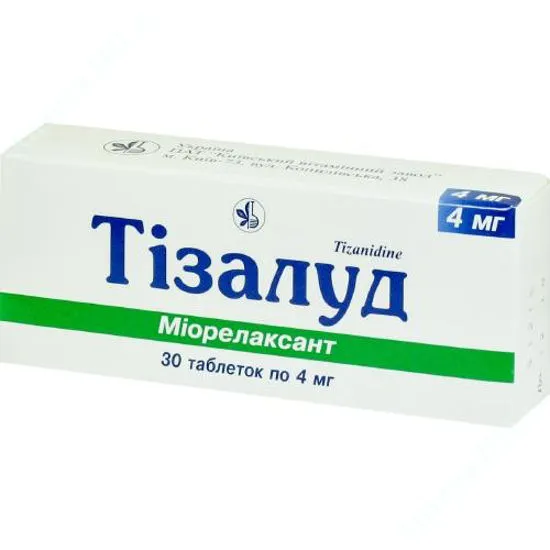
Table of Contents
INSTRUCTIONS FOR MEDICAL USE OF THE MEDICINAL PRODUCT TIZALUD (TIZALUD)
Composition:
Active substance: tizanidine;
1 tablet contains tizanidine 2 mg or 4 mg;
Excipients: microcrystalline cellulose, anhydrous lactose, colloidal anhydrous silicon dioxide, stearic acid.
Pharmaceutical form. Tablets.
Main physico-chemical properties: white or almost white, round-shaped tablets with a flat surface, beveled edges, and a score line.
Pharmacotherapeutic group. Centrally-acting muscle relaxants. ATC code M03B X02.
Pharmacological properties.
Pharmacodynamics.
Tizanidine is a centrally-acting skeletal muscle relaxant. Its primary site of action is the spinal cord. By stimulating presynaptic α2-adrenergic receptors, it inhibits the release of amino acids that stimulate N-methyl-D-aspartate receptors (NMDA receptors). As a result, polysynaptic signal transmission at the level of interneuronal connections in the spinal cord—responsible for excessive muscle tone—is suppressed, leading to reduced muscle tone. Tizalud is effective both in acute painful muscle spasms and in chronic spasticity of spinal and cerebral origin. It reduces resistance to passive movements, suppresses spasms and clonic seizures, and improves the strength of active muscle contractions.
Pharmacokinetics.
Absorption and distribution. Tizanidine is rapidly absorbed. Peak plasma concentrations are reached approximately 1 hour after administration. The mean absolute bioavailability is 34%. The mean volume of distribution at steady state (Vss) after intravenous administration is 2.6 L/kg. Plasma protein binding is 30%.
The relatively low inter-patient variability in pharmacokinetic parameters (Cmax and AUC) facilitates reliable prediction of plasma levels following oral administration.
Metabolism/elimination. The drug undergoes rapid and extensive hepatic metabolism.
Tizanidine is metabolized in vitro primarily by CYP1A2. Metabolites are inactive. They are predominantly excreted by the kidneys (70%). Elimination of total radioactivity (i.e., unchanged substance and metabolites) is biphasic, with an initial rapid phase (elimination half-life t1/2 = 2.5 hours) and a slower elimination phase (t1/2 = 22 hours). Only a small amount of unchanged substance (approximately 2.7%) is excreted renally. The mean elimination half-life of the unchanged substance is 2–4 hours.
Pharmacokinetics in specific patient populations. In patients with renal impairment (creatinine clearance less than 25 mL/min), the mean maximum plasma concentration is twice that observed in healthy volunteers, and the terminal elimination half-life is prolonged to approximately 14 hours, resulting in an average 6-fold increase in the area under the concentration-time curve (AUC).
Studies in patients with hepatic impairment have not been conducted.
Tizanidine is metabolized by the hepatic isoenzyme CYP1A2. Higher plasma concentrations of the substance may occur in patients with impaired liver function.
Tizalud is contraindicated in patients with severe hepatic impairment.
Pharmacokinetic data in elderly patients are limited.
Gender does not influence the pharmacokinetic properties of tizanidine.
The effect of ethnicity and race on the pharmacokinetics of tizanidine has not been studied.
Effect of food. Concomitant food intake does not affect the pharmacokinetic profile of Tizalud tablets. Although peak concentration values increase by one-third, this is not clinically significant. No substantial effect on absorption was observed.
Clinical characteristics.
Indications.
- Painful muscle spasm.
- Spasticity due to multiple sclerosis.
- Spasticity due to spinal cord injury.
- Spasticity due to brain injury.
Contraindications.
- Hypersensitivity to tizanidine or to any of the excipients of the medicinal product.
- Severe hepatic impairment.
- Concomitant use of tizanidine with strong CYP1A2 inhibitors, such as fluvoxamine or ciprofloxacin.
Interaction with other medicinal products and other forms of interaction.
Concomitant use of known CYP1A2 inhibitors may increase plasma levels of tizanidine. Elevated plasma levels of tizanidine may lead to symptoms of overdose, such as QT interval prolongation.
Concomitant use of known CYP1A2 inducers may reduce plasma levels of tizanidine. Reduced plasma levels of tizanidine may result in decreased therapeutic effect of Tizalud.
Concomitant use of strong CYP1A2 inhibitors, such as fluvoxamine or ciprofloxacin, with tizanidine is contraindicated. Concomitant administration of tizanidine with fluvoxamine increases the AUC of tizanidine by 33 times, while concomitant use of tizanidine with ciprofloxacin increases the AUC of tizanidine by 10 times. This may lead to clinically significant and prolonged reduction in blood pressure, accompanied by somnolence, dizziness, and reduced psychomotor performance.
Concomitant use of tizanidine with other CYP1A2 inhibitors, such as antiarrhythmic drugs (amiodarone, mexiletine, propafenone), cimetidine, certain fluoroquinolones (enoxacin, pefloxacin, norfloxacin), rofecoxib, oral contraceptives, and ticlopidine, is not recommended. Increased plasma levels of tizanidine may cause symptoms of overdose, including QT interval prolongation.
Concomitant use of the medicinal product Tizalud with antihypertensive agents, including diuretics, may occasionally cause arterial hypotension and bradycardia. In some patients receiving concomitant antihypertensive therapy, rebound arterial hypertension and rebound tachycardia have been observed upon abrupt discontinuation of tizanidine. In individual cases, rebound arterial hypertension may lead to stroke.
Concomitant use of the medicinal product Tizalud with rifampicin may result in a 50% reduction in tizanidine concentration. Thus, the therapeutic effect may be reduced during rifampicin treatment while receiving Tizalud, which may be clinically significant for some patients. Prolonged concomitant use should be avoided, and if necessary, dosage adjustments should be made with extreme caution.
Use of the medicinal product Tizalud leads to a 30% reduction in systemic exposure to tizanidine in men who smoke (more than 10 cigarettes per day). Long-term use of the drug in heavy smoking men may require higher doses.
Concomitant use of the medicinal product Tizalud with other centrally acting drugs (e.g., sedatives and hypnotics (benzodiazepines or baclofen), certain antihistamines, analgesics, psychotropic agents, narcotics) may enhance the effects of each drug and increase the sedative effect of Tizalud. This particularly applies to concomitant use with alcohol, which may unpredictably alter or enhance the effect of Tizalud and increase the risk of adverse reactions; therefore, alcohol consumption should be avoided.
Concomitant administration of Tizalud with α2-adrenergic agonists (e.g., clonidine) should be avoided due to their potential additive hypotensive effect.
Special precautions for use.
Concomitant use of CYP1A2 inhibitors with tizanidine is not recommended.
Arterial hypertension and tachycardia may occur in patients after abrupt discontinuation of the drug or rapid dose reduction. In individual cases, such rebound arterial hypertension may lead to stroke. Treatment with tizanidine should not be stopped abruptly, but only gradually reduced in dose.
For patients with renal impairment (creatinine clearance < 25 mL/min), the recommended initial dose is 2 mg once daily. The dose should be increased sequentially in small increments, taking into account efficacy and tolerability. To achieve a more pronounced effect, it is recommended to first increase the once-daily dose, followed by increasing the frequency of administration.
Hepatic failure associated with tizanidine use has been reported; however, it is rare in patients receiving daily doses up to 12 mg. Therefore, liver function should be monitored monthly during the first four months of therapy in patients receiving tizanidine at doses of 12 mg or higher, and in patients presenting clinical symptoms suggestive of hepatic impairment (e.g., nausea, loss of appetite, or unexplained fatigue). Treatment with the medicinal product Tizalud should be discontinued if serum ALT or AST levels exceed three times the upper limit of normal for a prolonged period.
Arterial hypotension may occur during tizanidine therapy, as well as as a result of drug interactions with CYP1A2 inhibitors and/or antihypertensive medicinal products.
Severe forms of arterial hypotension have been reported, including loss of consciousness and circulatory collapse.
Caution should be exercised when using this medicinal product with agents that prolong the QT interval (e.g., cisapride, amitriptyline, azithromycin).
Caution is required in patients with ischemic heart disease and/or heart failure. ECG monitoring at regular intervals should be performed at the beginning of Tizalud treatment in such patients.
A careful risk-benefit assessment is required before using this medicinal product in patients with myasthenia gravis.
Experience with use in children and adolescents is limited; therefore, the use of the medicinal product Tizalud is not recommended in this patient group.
Caution should be exercised when administering this medicinal product to elderly patients.
Tizalud tablets contain lactose. Tizalud tablets should not be administered to patients with rare hereditary disorders such as galactose intolerance, severe lactase deficiency, or glucose-galactose malabsorption syndrome.
Use during pregnancy or breastfeeding.
Pregnancy. Data on the use of the medicinal product Tizalud in pregnant women are limited; therefore, it should not be prescribed during pregnancy except when the potential benefit to the mother outweighs the possible risk to the fetus.
Breastfeeding. It has been established that tizanidine passes into breast milk in small amounts. Therefore, the drug should not be administered to breastfeeding women.
Fertility. Available data indicate that tizanidine administered at doses of 10 mg/kg/day in male rats and 3 mg/kg/day in female rats did not cause impairment of fertility. Decreased fertility was observed in male rats receiving tizanidine at 30 mg/kg/day and in female rats receiving the drug at 10 mg/kg/day. Sedation, weight loss, and ataxia were also observed at these doses.
Ability to affect reaction speed when driving or operating machinery.
Tizanidine may cause somnolence, dizziness, and/or arterial hypotension, thereby impairing a patient's ability to drive a vehicle or operate machinery.
The risks increase with concomitant alcohol consumption.
Therefore, patients should refrain from activities requiring high concentration and rapid reaction, such as driving vehicles or operating machines.
Method of Administration and Dosage
Tizanilid has a narrow therapeutic range and high variability in plasma concentrations of tizanidine in different patients. Therefore, it is important to use optimal doses according to the individual needs of each patient. Treatment should be initiated with a low dose of 2 mg to minimize the risk of adverse effects. If necessary, the dose may be gradually increased, observing all necessary precautions.
Adults
Relief of Painful Muscular Spasms
Administer 2–4 mg three times daily. In severe cases, an additional dose of 2 or 4 mg may be taken at bedtime.
Spasticity in Neurological Disorders
The dose must be individually adjusted for each patient.
The initial daily dose should not exceed 6 mg, divided into three doses. This dose may be increased by 2–4 mg every 3–7 days in gradual steps. The optimal therapeutic effect is usually achieved with a daily dose of 12–24 mg, divided into 3 or 4 doses.
The total daily dose should not exceed 36 mg.
Special Patient Populations
Use in Children and Adolescents
Experience with the use of Tizanilid in children and adolescents is limited; therefore, the drug is not recommended for use in this population.
Use in Elderly Patients
Experience with the use of Tizanilid in elderly patients is limited; therefore, caution should be exercised when administering the drug to this patient group. Treatment should be initiated with the lowest dose, and the dose should be gradually and cautiously increased in small increments until the optimal balance between individual tolerability and therapeutic efficacy is achieved.
Use in Patients with Renal Impairment
For patients with renal impairment (creatinine clearance < 25 mL/min), the recommended initial daily dose is 2 mg. Dose escalation should be gradual and cautious, in small increments, until the optimal balance between individual tolerability and therapeutic efficacy is achieved. To enhance therapeutic effectiveness, the single dose should first be increased before increasing the frequency of daily administration.
Use in Patients with Hepatic Impairment
Treatment of patients with severe hepatic dysfunction is contraindicated. Tizanilid is extensively metabolized in the liver. The drug should be used with caution in patients with moderate hepatic impairment. Treatment should be initiated with the lowest possible dose; any dose increase should be made cautiously and with careful consideration of the individual patient's tolerability to Tizanilid.
Discontinuation of Treatment
If treatment interruption is necessary, the dose should be gradually and slowly reduced. This is particularly important for patients who have received high doses over a prolonged period. Gradual tapering reduces the risk of rebound hypertension and tachycardia.
Children. Experience with the use of the drug in pediatric populations is limited. Tizanilid is not recommended for use in children.
Overdose.
Very few cases of overdose with Tizanilid have been reported.
Symptoms: nausea, vomiting, arterial hypotension, bradycardia, QT interval prolongation, dizziness, miosis, respiratory distress, coma, restlessness, somnolence.
Treatment: to eliminate the drug from the body, repeated administration of high doses of activated charcoal is recommended. Forced diuresis may accelerate drug elimination. Further management should be symptomatic.
Adverse reactions.
Adverse reactions – such as somnolence, increased fatigue, dizziness, dry mouth, decreased blood pressure, nausea, gastrointestinal disturbances, and elevated serum transaminase levels – are usually mild and transient in patients receiving low doses recommended for the relief of painful muscular spasm.
When doses higher than those recommended for the treatment of spasticity are used, the aforementioned adverse reactions occur more frequently and are more pronounced; however, they are rarely so severe as to necessitate discontinuation of treatment. Other possible adverse reactions include arterial hypotension, bradycardia, muscle weakness, sleep disturbances, hallucinations, and hepatitis.
The occurrence of such symptoms has been reported after abrupt discontinuation of tizanidine, particularly following long-term treatment and/or use of high daily doses and/or concomitant therapy with antihypertensive medicinal products. Under these circumstances, patients may develop arterial hypertension and tachycardia. In isolated cases, such rebound arterial hypertension may lead to stroke. Therefore, tizanidine treatment should not be stopped abruptly, but only gradually tapered off.
Psychiatric disorders: insomnia, sleep disturbances; hallucinations.
Nervous system disorders: somnolence, dizziness; confusion, vertigo.
Cardiovascular system disorders: arterial hypotension; bradycardia; syncope.
Gastrointestinal disorders: dry mouth, abdominal pain, gastrointestinal disturbances; nausea.
Hepatobiliary disorders: elevated serum transaminase levels; acute hepatitis, hepatic failure.
Musculoskeletal system disorders: muscle weakness.
General disorders: increased fatigue; asthenia, withdrawal syndrome, possible occurrence of hypersensitivity reactions.
Eye disorders: blurred vision.
Investigations: decreased blood pressure, increased transaminase levels.
Shelf life. 5 years.
Storage conditions.
Store in the original packaging at a temperature not exceeding 25 °C.
Keep out of reach of children.
Packaging. 10 tablets in a blister; 3 blisters per carton.
Prescription status. Prescription only.
Manufacturer. JSC "KIEV VITAMIN PLANT".
Manufacturer's address and place of business.
38 Kopilivska Street, Kyiv, 04073, Ukraine.
Web-site: www.vitamin.com.ua.