Simvastatin sandoz®
Ukraine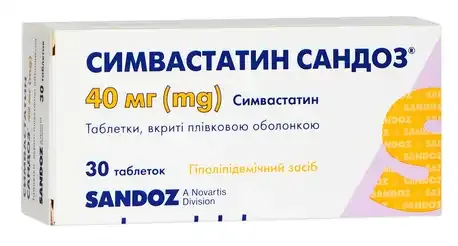
Table of Contents
INSTRUCTIONS FOR MEDICAL USE OF THE MEDICINAL PRODUCT SIMVASTATIN SANDOZ®
Composition:
Active ingredient: simvastatin;
One film-coated tablet contains 20 mg or 40 mg of simvastatin;
Excipients: pregelatinized starch, microcrystalline cellulose, lactose monohydrate, butylhydroxyanisole (E 320), citric acid monohydrate, magnesium stearate, hypromellose, viscosity 6 cP, hypromellose, viscosity 15 cP, talc, titanium dioxide (E 171), yellow iron oxide (E 172)*, red iron oxide (E 172), ethanol 96 %**, water**.
* Present only in 20 mg tablets.
** Components which evaporate during the manufacturing process.
Pharmaceutical form. Film-coated tablets.
Main physicochemical properties:
20 mg tablets: oval, biconvex, film-coated tablets, orange in color, with a score line on both sides and embossing 20 on one side.
40 mg tablets: oval, biconvex, film-coated tablets, red-brown in color, with a score line on both sides and embossing 40 on one side.
Pharmacotherapeutic group. Hypolipidemic agents, single-component. HMG-CoA reductase inhibitors. ATC code C10A A01.
Pharmacological properties.
Pharmacodynamics.
Mechanism of action
Simvastatin is a hypolipidemic agent derived from the fermentation product of Aspergillus terreus. After oral administration, simvastatin, which is an inactive lactone, is hydrolyzed in the liver to the corresponding beta-hydroxy acid derivative, a potent inhibitor of HMG-CoA reductase (3-hydroxy-3-methylglutaryl-CoA reductase), the enzyme that catalyzes the conversion of HMG-CoA to mevalonate, the initial and most significant step in cholesterol biosynthesis. Simvastatin reduces both normal and elevated levels of low-density lipoprotein cholesterol (LDL-C). LDL is formed from very-low-density lipoprotein (VLDL) and is primarily catabolized by high-affinity LDL receptors. The LDL-lowering effect of simvastatin may involve both a reduction in VLDL-C concentration and upregulation of LDL receptors, resulting in decreased production and increased catabolism of LDL-C. Apolipoprotein B levels are also significantly reduced during treatment with simvastatin. In addition, simvastatin markedly increases high-density lipoprotein cholesterol (HDL-C) and reduces plasma triglyceride levels. As a result of these changes, the ratios of total cholesterol to HDL-C and LDL-C to HDL-C are reduced.
Pharmacokinetics.
Simvastatin is an inactive lactone that is readily hydrolyzed, converting in vivo to the beta-hydroxy acid, a potent inhibitor of HMG-CoA reductase. Hydrolysis occurs primarily in the liver; the rate of hydrolysis in human plasma is very low. Pharmacokinetic properties have been evaluated in adults. Pharmacokinetic data in children and adolescents are lacking.
Absorption. In humans, simvastatin is well absorbed and undergoes extensive first-pass hepatic metabolism. Hepatic uptake is dependent on hepatic blood flow. The liver is the primary site of action of the active form. The systemic bioavailability of the beta-hydroxy acid after an oral dose of simvastatin is less than 5% of the administered dose. Maximum plasma concentrations of active inhibitors are reached approximately 1–2 hours after administration of simvastatin. Concomitant food intake does not affect absorption.
Pharmacokinetics of single and multiple doses of simvastatin have demonstrated no accumulation of the drug after repeated dosing.
Distribution. Plasma protein binding of simvastatin and its active metabolite is > 95%.
Elimination. Simvastatin is a substrate of CYP3A4 (see sections «Contraindications» and «Interaction with other medicinal products and other forms of interactions»). The major metabolites of simvastatin present in human plasma are the beta-hydroxy acid and four additional active metabolites. After oral administration of radiolabeled simvastatin to humans, 60% of the administered radioactivity was excreted in feces and 13% in urine within 96 hours. The amount recovered in feces represents both the absorbed drug excreted in bile and the unabsorbed drug. After intravenous administration of the beta-hydroxy acid metabolite, its mean elimination half-life is approximately 1.9 hours. On average, only 0.3% of the dose is excreted in urine as inhibitors.
Simvastatin acid is actively taken up by hepatocytes via the OATP1B1 transporter.
Simvastatin is a substrate of the efflux transporter breast cancer resistance protein (BCRP).
SLCO1B1 polymorphism
In carriers of the c.521T > C allele of the SLCO1B1 gene, reduced OATP1B1 transporter activity is observed. The mean exposure (AUC) of the main active metabolite—simvastatin acid—is 120% in heterozygous carriers (CT) and 221% in homozygous carriers (CC) of the C allele, compared to patients with the most common genotype (TT). The C allele occurs with a frequency of 18% in the European population, and the homozygous CC genotype is found with a frequency of 1.5%. Patients with the SLCO1B1 gene polymorphism have an increased risk of elevated simvastatin acid exposure, which may increase the risk of developing rhabdomyolysis (see section «Special precautions»).
Clinical characteristics.
Indications.
Hypercholesterolemia
Treatment of primary hypercholesterolemia or mixed dyslipidemia as an adjunct to diet when response to diet and other non-pharmacological treatments (e.g., physical exercise, weight reduction) is inadequate.
Treatment of homozygous familial hypercholesterolemia as an adjunct to diet and other lipid-lowering therapies (e.g., low-density lipoprotein apheresis) or when such treatments are not suitable.
Cardiovascular prevention
Reduction of cardiovascular mortality and morbidity in patients with established atherosclerotic cardiovascular disease or diabetes mellitus, with normal or elevated cholesterol levels, as an additional therapy to correction of other risk factors and to other cardioprotective therapies (see section "Pharmacodynamics").
Contraindications.
- Hypersensitivity to the active substance or to any component of the medicinal product.
- Active liver disease or unexplained persistent elevations in serum transaminases.
- Pregnancy and breastfeeding (see also section "Use in pregnancy or breastfeeding").
- Concomitant use of strong CYP3A4 inhibitors (agents increasing AUC approximately 5-fold or more), such as itraconazole, ketoconazole, posaconazole, voriconazole, HIV protease inhibitors (e.g., nelfinavir), boceprevir, telaprevir, erythromycin, clarithromycin, telithromycin, and nefazodone, and medicinal products containing cobicistat (see sections "Interaction with other medicinal products and other forms of interaction" and "Special warnings and precautions for use").
- Concomitant use of gemfibrozil, cyclosporine, or danazol (see sections "Interaction with other medicinal products and other forms of interaction" and "Special warnings and precautions for use").
- In patients with homozygous familial hypercholesterolemia receiving lomitapide and simvastatin at doses exceeding 40 mg (see sections "Interaction with other medicinal products and other forms of interaction", "Special warnings and precautions for use", and "Posology and method of administration").
Interaction with other medicinal products and other forms of interaction.
Several mechanisms may contribute to potential interactions with HMG-CoA reductase inhibitors. Medicinal products or herbal products that inhibit certain enzyme pathways (e.g., CYP3A4) and/or transporters (e.g., OATP1B1) may increase plasma concentrations of simvastatin and simvastatin acid, leading to an increased risk of myopathy/rhabdomyolysis.
Consultation of the prescribing information for all concomitantly used medicinal products is necessary to obtain additional information on their potential interactions with simvastatin and/or possible changes that may occur in enzymes or transporters, and possible dose adjustments or changes in administration regimens.
Interaction studies have been conducted only in adults.
Pharmacodynamic interaction
Interaction with lipid-lowering medicinal products which, when used individually, may cause myopathy. The risk of myopathy, including rhabdomyolysis, is increased when used concomitantly with fibrates. In addition, a pharmacokinetic interaction with gemfibrozil has been observed, leading to increased plasma levels of simvastatin (see subsection "Pharmacokinetic interaction" below and sections "Contraindications" and "Special warnings and precautions for use"). Regarding the combination of simvastatin and fenofibrate, there is no evidence that the risk of myopathy exceeds the sum of the individual risks of each agent. Adequate data from pharmacovigilance and pharmacokinetic studies for other fibrates are lacking.
Occasionally, cases of myopathy/rhabdomyolysis have been associated with concomitant use of simvastatin with lipid-modifying doses (≥ 1 g daily) of niacin (see section "Special warnings and precautions for use").
Pharmacokinetic interaction
Recommendations for concomitant administration of medicinal products interacting with simvastatin are summarized in the table below (see sections "Contraindications", "Special warnings and precautions for use", and "Posology and method of administration").
Interactions with other medicinal products associated with an increased risk of myopathy/rhabdomyolysis
| Interacting drugs |
Appropriate recommendations |
| Potent CYP3A4 inhibitors, e.g.: itraconazole, ketoconazole, posaconazole, voriconazole, erythromycin, clarithromycin, telithromycin, HIV protease inhibitors (e.g., nelfinavir), boceprevir, telaprevir, nefazodone, cobicistat, cyclosporine, danazol, gemfibrozil |
Contraindicated with simvastatin |
| Other fibrates (except fenofibrate) |
Do not exceed 10 mg simvastatin per day |
| Fusidic acid |
Not recommended with simvastatin |
| Niacin (nicotinic acid) (≥ 1 g per day) |
Not recommended to co-administer with simvastatin in patients of Asian origin |
| Amiodarone, amlodipine, verapamil, diltiazem, elbasvir, grazoprevir |
Do not exceed 20 mg simvastatin per day |
| Lomitapide |
In patients with homozygous familial hypercholesterolemia (HoFH), simvastatin should be administered at doses not exceeding 40 mg per day |
| Daptomycin |
Consider temporary discontinuation of simvastatin in patients taking daptomycin, except when the benefit of concomitant use outweighs the risk (see section "Dosage and administration") |
| Ticagrelor |
Concomitant use of ticagrelor with simvastatin doses exceeding 40 mg per day is not recommended |
| Grapefruit juice |
Avoid consumption of grapefruit juice when taking simvastatin |
Effect of other medicinal products on simvastatin
Interaction with CYP3A4 inhibitors. Simvastatin is a substrate of cytochrome P450 3A4. Potent inhibitors of cytochrome P450 3A4 increase the risk of myopathy and rhabdomyolysis by increasing plasma concentrations of the HMG-CoA reductase inhibitory activity during simvastatin therapy. Such inhibitors include itraconazole, ketoconazole, posaconazole, voriconazole, erythromycin, clarithromycin, telithromycin, HIV protease inhibitors (e.g., nelfinavir), boceprevir, telaprevir, nefazodone, and medicinal products containing cobicistat. Concomitant administration of itraconazole resulted in more than a 10-fold increase in exposure to simvastatin acid (the active beta-hydroxyacid metabolite). Telithromycin caused an 11-fold increase in exposure to simvastatin acid.
Combination with itraconazole, ketoconazole, posaconazole, voriconazole, HIV protease inhibitors (e.g., nelfinavir), boceprevir, telaprevir, erythromycin, clarithromycin, telithromycin, nefazodone, and medicinal products containing cobicistat is contraindicated, as well as with gemfibrozil, cyclosporine, and danazol (see section "Contraindications").
If therapy with potent CYP3A4 inhibitors (agents that increase AUC approximately 5-fold or more) cannot be discontinued, simvastatin therapy should be suspended (and consideration given to using an alternative statin) during such treatment. Caution is required when combining simvastatin with other less potent CYP3A4 inhibitors: fluconazole, verapamil, or diltiazem (see sections "Special precautions for use" and "Dosage and administration").
Fluconazole. Rare cases of rhabdomyolysis have been reported in association with concomitant use of simvastatin and fluconazole (see section "Special precautions for use").
Cyclosporine. The risk of developing myopathy/rhabdomyolysis increases when cyclosporine is co-administered with simvastatin; therefore, use with cyclosporine is contraindicated (see sections "Contraindications" and "Special precautions for use"). Although the mechanism of action is not fully understood, it has been demonstrated that cyclosporine increases the AUC of HMG-CoA reductase inhibitors. The increase in AUC for simvastatin occurs primarily, in part, through inhibition of CYP3A4 and/or the OATP1B1 transporter protein.
Danazol. The risk of developing myopathy and rhabdomyolysis increases when danazol is co-administered with simvastatin; therefore, use with danazol is contraindicated (see sections "Contraindications" and "Special precautions for use").
Gemfibrozil. Gemfibrozil increases the AUC of simvastatin acid by 1.9-fold, possibly through inhibition of the glucuronidation pathway and/or the OATP1B1 transporter protein (see sections "Contraindications" and "Special precautions for use"). Concomitant use with gemfibrozil is contraindicated.
Fusidic acid. The risk of developing myopathy, including rhabdomyolysis, may be increased when systemic fusidic acid is used concomitantly with statins. The mechanism of this interaction (pharmacodynamic, pharmacokinetic, or both) is not yet known. Cases of rhabdomyolysis (including fatal cases) have been reported in patients receiving this combination. Concomitant use of this combination may lead to increased plasma concentrations of both drugs. If systemic fusidic acid therapy is considered necessary, treatment with Simvastatin Sandoz® should be discontinued (see section "Special precautions for use").
Amiodarone. The risk of myopathy and rhabdomyolysis is increased during concomitant use of simvastatin with amiodarone (see section "Special precautions for use"). In a clinical study, 6% of patients receiving simvastatin 80 mg and amiodarone reported myopathy. Therefore, the dose of simvastatin should not exceed 20 mg daily in patients taking this drug concomitantly with amiodarone.
Calcium channel blockers
- Verapamil. The risk of myopathy and rhabdomyolysis is increased during concomitant use of verapamil with simvastatin 40 mg or 80 mg (see section "Special precautions for use"). In a pharmacokinetic study, concomitant administration with verapamil led to a 2.3-fold increase in exposure to simvastatin acid, primarily in part due to inhibition of CYP3A4. Therefore, the dose of simvastatin should not exceed 20 mg daily in patients taking this drug concomitantly with verapamil.
- Diltiazem. The risk of myopathy and rhabdomyolysis is increased during concomitant use of diltiazem with simvastatin 80 mg (see section "Special precautions for use"). In a pharmacokinetic study, concomitant administration with diltiazem led to a 2.7-fold increase in exposure to simvastatin acid, primarily in part due to inhibition of CYP3A4. Therefore, the dose of simvastatin should not exceed 20 mg daily in patients taking this drug concomitantly with diltiazem.
- Amlodipine. Patients taking amlodipine concomitantly with simvastatin have an increased risk of developing myopathy. In a pharmacokinetic study, concomitant administration with amlodipine led to a 1.6-fold increase in exposure to simvastatin acid. Therefore, the dose of simvastatin should not exceed 20 mg daily in patients taking this drug concomitantly with amlodipine.
- Lomitapide. The risk of myopathy and rhabdomyolysis is increased when lomitapide is used concomitantly with simvastatin (see sections "Contraindications", "Special precautions for use", and "Dosage and administration"). Therefore, in patients with HoFH receiving lomitapide concomitantly, the dose of simvastatin should not exceed 40 mg daily.
Moderate CYP3A4 inhibitors. Patients taking other medicinal products labeled as exhibiting moderate inhibitory effect on CYP3A4 concomitantly with simvastatin, especially with higher doses of simvastatin, have an increased risk of developing myopathy (see section "Special precautions for use").
Inhibitors of the OATP1B1 transporter protein. Simvastatin acid is a substrate of the OATP1B1 transporter protein. Concomitant administration of medicinal products known to be inhibitors of the OATP1B1 transporter protein may lead to increased plasma concentrations of simvastatin acid and increased risk of developing myopathy (see sections "Contraindications" and "Special precautions for use").
Inhibitors of breast cancer resistance protein (BCRP). Concomitant use with BCRP inhibitors (including medicinal products containing elbasvir or grazoprevir) may lead to increased plasma concentrations of simvastatin and increased risk of developing myopathy (see sections "Special precautions for use" and "Dosage and administration").
Niacin (nicotinic acid). Rare cases of myopathy/rhabdomyolysis have been associated with concomitant use of lipid-modifying doses (≥ 1 g daily) of niacin (nicotinic acid). In a pharmacokinetic study, concomitant administration of a single 2 g dose of extended-release nicotinic acid with simvastatin 20 mg led to a moderate increase in AUC of simvastatin and simvastatin acid and maximum plasma concentration (Cmax) of simvastatin acid.
Daptomycin. The risk of myopathy and/or rhabdomyolysis may be increased when HMG-CoA reductase inhibitors are used concomitantly with daptomycin (see section "Special precautions for use"). Caution should be exercised when prescribing HMG-CoA reductase inhibitors with daptomycin, as either agent may cause myopathy and/or rhabdomyolysis when used alone. Patients receiving daptomycin should temporarily discontinue use of Simvastatin Sandoz®.
Ticagrelor. Concomitant use of ticagrelor with simvastatin increases Cmax of simvastatin by 81% and AUC by 56%, and increases Cmax of simvastatin acid by 64% and AUC by 52%, with some individual cases showing 2- to 3-fold increases in these parameters. Concomitant use of ticagrelor with simvastatin doses exceeding 40 mg daily may lead to adverse reactions to simvastatin and should be weighed against potential benefit.
Simvastatin does not affect plasma levels of ticagrelor. Concomitant use of ticagrelor with simvastatin doses exceeding 40 mg daily is not recommended.
Grapefruit juice. Grapefruit juice inhibits the activity of cytochrome P450 3A4. Concomitant consumption of large quantities of grapefruit juice (more than 1 liter daily) and simvastatin caused a sevenfold increase in drug activity. Consumption of 240 ml of grapefruit juice in the morning and administration of simvastatin in the evening also led to a 1.9-fold increase in effect. Therefore, grapefruit juice should be avoided during simvastatin therapy.
Colchicine. Cases of myopathy and rhabdomyolysis have been reported with concomitant use of colchicine and simvastatin in patients with renal insufficiency. Careful clinical monitoring of patients receiving this combination is recommended.
Rifampicin. Since rifampicin is a potent inducer of CYP3A4, loss of efficacy of simvastatin may occur in patients undergoing long-term rifampicin therapy (e.g., for treatment of tuberculosis). In a pharmacokinetic study involving healthy volunteers, AUC for simvastatin acid decreased by 93% with concomitant administration of rifampicin.
Effect of simvastatin on the pharmacokinetics of other medicinal products. Simvastatin does not have an inhibitory effect on cytochrome P450 3A4; therefore, it is not expected that simvastatin will affect plasma concentrations of substances metabolized by cytochrome P450 3A4.
Oral anticoagulants. In two clinical studies, one involving healthy volunteers and the other involving patients with hypercholesterolemia, simvastatin at doses of 20–40 mg daily moderately increased the effect of coumarin anticoagulants: prothrombin time, measured as the international normalized ratio (INR), increased from a baseline value of 1.7 to 1.8 and from 2.6 to 3.4 in healthy volunteers and patients, respectively. In very rare cases, an elevated INR was observed. In patients receiving coumarin anticoagulants, prothrombin time should be measured before initiating simvastatin therapy and frequently monitored at the start of therapy to ensure no significant change occurs. After stabilization of prothrombin time, monitoring can be performed at intervals typically recommended for patients on coumarin anticoagulants. This procedure should be repeated if the dose of simvastatin is changed or if simvastatin is discontinued. During simvastatin therapy in patients not taking anticoagulants, no bleeding or changes in prothrombin time were observed.
Special precautions for use.
Myopathy/Rhabdomyolysis
Simvastatin, like other HMG-CoA reductase inhibitors, may cause myopathy, which is characterized by muscle pain, tenderness or weakness and is accompanied by an increase in creatine kinase activity of more than ten times the upper limit of normal (ULN). Myopathy may occasionally manifest as rhabdomyolysis, with or without acute renal failure due to myoglobinuria; fatal cases have been reported very rarely. The risk of myopathy increases due to high levels of inhibitory activity against HMG-CoA reductase in blood plasma (elevated plasma levels of simvastatin and simvastatin acid), which may partly be associated with interactions with medicinal products that interfere with the metabolism and/or transport of simvastatin (see section "Interaction with other medicinal products and other forms of interaction"). As with other HMG-CoA reductase inhibitors, the risk of developing myopathy/rhabdomyolysis is dose-dependent. In the clinical trial database, where 41,413 patients received Simvastatin Sandoz®, including 24,747 (approximately 60%) enrolled in studies with a mean observation period of at least 4 years, the incidence of myopathy was approximately 0.03%, 0.08%, and 0.61% at doses of 20, 40, and 80 mg daily, respectively. During these trials, patients were closely monitored, and certain medicinal products with potential interactions upon concomitant use were excluded.
In a clinical study where patients with a history of myocardial infarction received Simvastatin Sandoz® at a dose of 80 mg daily (mean observation period of 6.7 years), the incidence of myopathy was approximately 1.0% compared to 0.02% in patients receiving 20 mg daily. Approximately half of these cases of myopathy occurred within the first year of treatment. The incidence of myopathy during each subsequent year of treatment was approximately 0.1% (see sections "Pharmacological properties" and "Undesirable effects").
The risk of myopathy is higher in patients taking 80 mg of simvastatin compared to patients receiving therapy with other statins with similar efficacy in lowering LDL-C. Therefore, the 80 mg dose of simvastatin should be used only in patients with severe hypercholesterolemia and a high risk of cardiovascular complications who have not achieved treatment goals on lower doses, and when the expected benefit outweighs the potential risk. For patients taking simvastatin 80 mg who require a concomitant interacting medicinal product, a lower dose of simvastatin or an alternative regimen with a lower potential for interaction with other medicinal products should be considered (see below "Measures to reduce the risk of myopathy due to interaction with other medicinal products", "Contraindications", "Interaction with other medicinal products and other forms of interaction", and "Dosage and administration").
In a clinical study where patients at high risk of cardiovascular disease received simvastatin 40 mg daily (mean observation period of 3.9 years), the incidence of myopathy was approximately 0.05% in non-Chinese patients (n = 7,367) compared to 0.24% in Chinese patients (n = 5,468). Although the Asian population in this clinical study was represented only by Chinese individuals, simvastatin should be used cautiously in patients of Asian origin, and the lowest dose should be prescribed.
Reduced function of transporter proteins
Reduced function of hepatic transporter proteins of the OATP family may increase systemic exposure to simvastatin acid and elevate the risk of myopathy and rhabdomyolysis. Reduced function may result from inhibition by interacting medicinal products (e.g., cyclosporine) or in patients who are carriers of the SLCO1B1 (c.521T > C) genotype.
Patients carrying the SLCO1B1 (c.521T > C) allele, which encodes a less active OATP1B1 protein, have increased systemic exposure to simvastatin acid and an elevated risk of myopathy. Regardless of genetic testing, the risk of developing myopathy associated with high doses (80 mg) of simvastatin is approximately 1%. Results from the SEARCH study indicate that homozygous carriers of the C allele (designated CC), who take simvastatin 80 mg, have a 15% risk of developing myopathy within one year, while the risk in heterozygous carriers of the C allele (CT) is 1.5%. The corresponding risk in patients with the most common genotype (TT) is 0.3%. Where possible, before prescribing simvastatin 80 mg to individual patients, genotyping for the presence of the C allele should be considered as part of the benefit-risk assessment, and high doses should be avoided in those identified as CC genotype carriers. However, the absence of this gene in genotyping results does not exclude the possibility of myopathy development in these patients.
Measurement of creatine kinase
Creatine kinase levels should not be measured after strenuous physical exercise or in the presence of any other likely alternative cause of elevated creatine kinase, as this complicates the interpretation of the results. In cases of significant elevation of creatine kinase at baseline (more than 5 times ULN), the level should be re-measured after 5–7 days to confirm the results.
Before treatment. All patients initiating simvastatin therapy, as well as patients whose simvastatin dose has been increased, should be warned about the possibility of developing myopathy and the need to seek immediate medical attention if any unexplained muscle pain, muscle tenderness, or muscle weakness occurs. Caution should be exercised in patients with predisposing factors for rhabdomyolysis. To establish an appropriate baseline value, creatine kinase levels should be measured before starting treatment in the following situations:
- advanced age (age ≥ 65 years);
- female sex;
- impaired renal function;
- uncontrolled hypothyroidism;
- personal or family history of hereditary muscle disorders;
- history of muscle toxicity caused by statins or fibrates;
- alcohol abuse.
In these situations, the risk of treatment should be considered relative to the potential benefit, and clinical monitoring is recommended. If a patient previously experienced muscle-related adverse effects with a fibrate or statin, initiation of another medicinal product of this class should be done cautiously. Treatment should not be initiated if baseline creatine kinase levels are significantly elevated (more than 5 times ULN).
During treatment. If pain, weakness, or cramps occur during statin use, creatine kinase levels should be measured. If levels are found to be significantly elevated (more than 5 times ULN) in the absence of strenuous physical exertion, treatment should be discontinued. If muscle symptoms are severe and cause daily discomfort, even if creatine kinase levels are less than 5 times ULN, discontinuation of treatment may be considered. Treatment should be discontinued if myopathy is suspected for any other reason. Very rare cases of immune-mediated necrotizing myopathy (IMNM), an autoimmune myopathy occurring during or after statin therapy, have been reported. IMNM is clinically characterized by persistent weakness of proximal muscles and elevated serum creatine kinase levels, which do not resolve despite discontinuation of statin use (see section "Undesirable effects"). If symptoms resolve and creatine kinase levels return to normal, reinitiation of the same statin or an alternative statin at a low dose under close monitoring should be considered. A higher percentage of myopathy was observed in patients whose dose was increased to 80 mg (see section "Pharmacological properties"). Periodic measurement of creatine kinase levels is recommended, as this may help detect subclinical cases of myopathy. However, there are no reliable data indicating that such monitoring can prevent the development of myopathy. Simvastatin therapy should be temporarily discontinued in patients several days before elective major surgical procedures, as well as after medical or surgical interventions.
Measures to reduce the risk of myopathy due to interaction with other medicinal products (also see section "Interaction with other medicinal products and other forms of interaction"). The risk of developing myopathy and rhabdomyolysis is significantly increased when simvastatin is used concomitantly with potent CYP3A4 inhibitors such as itraconazole, ketoconazole, posaconazole, voriconazole, erythromycin, clarithromycin, telithromycin, HIV protease inhibitors (e.g., nelfinavir), boceprevir, telaprevir, nefazodone, medicinal products containing cobicistat, as well as with gemfibrozil, cyclosporine, and danazol. The use of these medicinal products is contraindicated (see section "Contraindications").
The risk of developing myopathy and rhabdomyolysis is also increased when amiodarone, amlodipine, verapamil, or diltiazem are used concomitantly with certain doses of simvastatin (see sections "Interaction with other medicinal products and other forms of interaction" and "Dosage and administration"). The risk of developing myopathy, including rhabdomyolysis, increases when fusidic acid is used concomitantly with statins (see section "Interaction with other medicinal products and other forms of interaction"). In patients with HoFH, this risk increases when lomitapide and simvastatin are used concomitantly.
Thus, the use of simvastatin with CYP3A4 inhibitors, itraconazole, ketoconazole, posaconazole, voriconazole, HIV protease inhibitors (e.g., nelfinavir), boceprevir, telaprevir, erythromycin, clarithromycin, telithromycin, nefazodone, and medicinal products containing cobicistat is contraindicated (see sections "Contraindications" and "Interaction with other medicinal products and other forms of interaction"). If therapy with potent CYP3A4 inhibitors (products that increase AUC approximately 5-fold or more) cannot be discontinued, simvastatin therapy should be stopped for the duration of treatment with these products (and consideration given to using an alternative statin). Simvastatin should also be used cautiously concomitantly with certain less potent CYP3A4 inhibitors: fluconazole, verapamil, diltiazem (see sections "Interaction with other medicinal products and other forms of interaction" and "Dosage and administration"). Concomitant intake of grapefruit juice and simvastatin should be avoided.
The use of simvastatin with gemfibrozil is contraindicated (see section "Contraindications"). Due to the increased risk of developing myopathy and rhabdomyolysis, the dose of simvastatin should not exceed 10 mg daily in patients taking simvastatin with other fibrates, except fenofibrate (see sections "Interaction with other medicinal products and other forms of interaction" and "Dosage and administration"). Fenofibrate should be prescribed cautiously with simvastatin, as each of these products may cause myopathy.
Simvastatin should not be taken concomitantly with systemic medicinal products containing fusidic acid, or within 7 days after discontinuation of fusidic acid. If fusidic acid is required, statin therapy should be discontinued for the entire duration of fusidic acid treatment. Cases of rhabdomyolysis (including several fatal cases) have been reported in patients taking a combination of fusidic acid and statins (see section "Interaction with other medicinal products and other forms of interaction"). Patients should be advised to seek immediate medical attention if they experience muscle pain, muscle tenderness, or muscle weakness. Statin therapy may be resumed 7 days after the last dose of fusidic acid. In exceptional cases where prolonged systemic treatment with fusidic acid is necessary, e.g., for the treatment of severe infections, the need for concomitant use of simvastatin and fusidic acid should be considered on a case-by-case basis and conducted under close medical supervision.
Concomitant use of simvastatin in doses exceeding 20 mg daily with amiodarone, amlodipine, verapamil, or diltiazem should be avoided. Concomitant use of lomitapide and simvastatin in doses exceeding 40 mg daily is contraindicated in patients with HoFH (see sections "Contraindications", "Interaction with other medicinal products and other forms of interaction", and "Dosage and administration"). Patients taking other medicinal products labeled as having a moderate inhibitory effect on CYP3A4 concomitantly with simvastatin, especially with high doses, may have an increased risk of developing myopathy. Dose adjustment of simvastatin may be required when used concomitantly with a moderate CYP3A4 inhibitor (products that increase AUC approximately 2- to 5-fold). When certain moderate CYP3A4 inhibitors, such as diltiazem, are used concomitantly, a maximum simvastatin dose of 20 mg is recommended (see section "Dosage and administration").
Simvastatin is a substrate of the efflux transporter breast cancer resistance protein (BCRP). Concomitant use with BCRP inhibitors (e.g., elbasvir and grazoprevir) may lead to increased plasma concentrations of simvastatin and an increased risk of developing myopathy. Therefore, depending on the prescribed dose of BCRP inhibitors, dose adjustment of simvastatin should be considered. Concomitant use of elbasvir and grazoprevir with simvastatin has not been studied, but the daily dose of simvastatin should not exceed 20 mg in patients receiving concomitant therapy with products containing elbasvir or grazoprevir (see section "Interaction with other medicinal products and other forms of interaction").
Rare cases of myopathy/rhabdomyolysis have been associated with concomitant use of HMG-CoA reductase inhibitors and lipid-modifying doses (≥ 1 g daily) of niacin (nicotinic acid); each of these products may cause myopathy.
In a clinical study (median observation period of 3.9 years) involving patients at high risk of cardiovascular disease with well-controlled LDL-C levels on simvastatin 40 mg daily with or without ezetimibe, additional cardiovascular benefit was not observed with the addition of lipid-modifying doses (≥ 1 g daily) of niacin (nicotinic acid). Physicians considering combined therapy of simvastatin with lipid-modifying doses (≥ 1 g daily) of niacin (nicotinic acid) or niacin-containing products should carefully weigh the expected benefit against the potential risk. Patients should be closely monitored for the development of muscle pain, tenderness, or muscle weakness, particularly during the first months of therapy and when increasing the dose of either of these medicinal products.
In the study, the incidence of myopathy was approximately 0.24% among Chinese patients taking simvastatin 40 mg or ezetimibe/simvastatin 10/40 mg, compared to 1.24% of Chinese patients who were prescribed simvastatin 40 mg or ezetimibe/simvastatin 10/40 mg together with a combination product of modified-release nicotinic acid/laropiprant 2000 mg/40 mg. Although the Asian population in this clinical study was represented only by Chinese individuals, since the incidence of myopathy among Chinese patients is higher than among non-Chinese patients, concomitant use of simvastatin and lipid-modifying doses (≥ 1 g daily) of niacin (nicotinic acid) is not recommended in patients of Asian origin.
Acipimox is structurally similar to niacin. Although acipimox has not been studied, the risk of muscle toxicity with this product cannot be excluded.
The risk of myopathy and/or rhabdomyolysis may be increased with concomitant use of HMG-CoA reductase inhibitors and daptomycin (see section "Interaction with other medicinal products and other forms of interaction").
Daptomycin
Cases of myopathy and/or rhabdomyolysis have been reported with concomitant use of HMG-CoA reductase inhibitors (e.g., simvastatin) and daptomycin. HMG-CoA reductase inhibitors should be prescribed cautiously with daptomycin, as each of these products may cause myopathy and/or rhabdomyolysis when used alone. Consideration should be given to temporarily discontinuing simvastatin in patients taking daptomycin, except when the benefit of concomitant use outweighs the risk. Refer to the daptomycin product information for additional information on this potential interaction with HMG-CoA reductase inhibitors (e.g., simvastatin) and further monitoring recommendations (see section "Interaction with other medicinal products and other forms of interaction").
Hepatic effects
In clinical trials, persistent elevations in serum transaminase levels (more than 3 times ULN) were observed in several adult patients receiving simvastatin. In these patients, transaminase activity usually returned gradually to baseline after interruption or discontinuation of simvastatin. Before starting treatment, and subsequently according to clinical need, liver function tests are recommended for all patients. For patients whose simvastatin dose is to be increased to 80 mg daily, additional liver function tests should be performed before starting titration, then 3 months after reaching the 80 mg daily dose, followed by periodic repeat testing (e.g., once every 6 months) during the first year of treatment. Particular attention should be paid to patients with elevated serum transaminase levels. These patients should have immediate and more frequent liver function monitoring. If transaminase levels increase, especially with persistent elevations exceeding 3 times ULN, the drug should be discontinued. Alanine aminotransferase may originate from muscle tissue; therefore, elevated alanine aminotransferase with creatine kinase may indicate myopathy (see above "Myopathy/Rhabdomyolysis").
In the post-marketing period, rare cases of fatal and non-fatal hepatic failure have been reported in patients taking statins, including simvastatin. If serious liver injury with clinical symptoms and/or hyperbilirubinemia or jaundice occurs during simvastatin therapy, treatment should be immediately discontinued. If no alternative etiology is identified, simvastatin should not be restarted.
The product should be used cautiously in patients who abuse alcohol.
With simvastatin therapy, as with other lipid-lowering agents, mild (less than 3 times ULN) increases in serum transaminase activity have been reported. These changes appeared soon after starting treatment, were often transient, were not associated with symptoms, and did not require discontinuation of therapy.
Diabetes mellitus
Certain evidence indicates that statins as a class increase blood glucose levels and may in some patients at high risk of future diabetes lead to hyperglycemia levels at which treatment for diabetes is recommended. However, the benefit of statin-induced reduction in vascular risk outweighs this risk, so it should not be a reason for discontinuing statin therapy. Patients at risk of developing diabetes (fasting glucose 5.6–6.9 mmol/L, body mass index > 30 kg/m², elevated triglycerides, arterial hypertension) should be monitored clinically and biochemically according to national guidelines.
Interstitial lung disease
Cases of interstitial lung disease have been reported with some statins, including simvastatin, particularly during long-term therapy (see section "Undesirable effects"). Relevant manifestations may include dyspnea, non-productive cough, and deterioration in general health (fatigue, weight loss, and fever). If interstitial lung disease is suspected in a patient, statin therapy should be discontinued.
Ophthalmological examination
In the absence of any pharmacological treatment, an increase in lens opacity area is considered a consequence of the aging process. Available data from long-term clinical trials do not indicate a harmful effect of simvastatin on the human eye lens.
Use in elderly patients
The efficacy of simvastatin in patients aged 65 years and older, as evaluated in controlled clinical trials, was assessed relative to reductions in total cholesterol and LDL-C and was found to be similar to that in the general population. No increase in clinically or laboratory-evident adverse reactions was observed.
Excipients
The product contains lactose. Patients with rare hereditary disorders such as galactose intolerance, Lapp lactase deficiency, or glucose-galactose malabsorption should not take this product.
Effects on skeletal muscle
In isolated cases, statins have been reported to cause de novo or exacerbate existing myasthenia gravis or ocular myasthenia (see section "Undesirable effects"). Use of Simvastatin Sandoz® should be discontinued if symptoms worsen. Recurrences have been reported when the same or another statin was reintroduced.
Use during pregnancy or breastfeeding.
Pregnancy. Simvastatin Sandoz® is contraindicated in pregnant women (see section "Contraindications"). The safety of using the product during pregnancy has not been established. No controlled clinical trials of simvastatin in pregnant women have been conducted. Rare reports of congenital anomalies after intrauterine exposure to HMG-CoA reductase inhibitors have been received. Although there is no evidence that the incidence of congenital anomalies in offspring of patients who took simvastatin or another similar HMG-CoA reductase inhibitor differs from that observed in the general population, treatment of the mother with Simvastatin Sandoz® may reduce fetal levels of mevalonate, a precursor in cholesterol biosynthesis. Atherosclerosis is a chronic process, and discontinuation of lipid-lowering agents during pregnancy usually has little impact on the long-term risk associated with primary hypercholesterolemia. For these reasons, simvastatin should not be prescribed to pregnant women, or to women attempting to become pregnant or suspected of being pregnant. Simvastatin use should be suspended for the duration of pregnancy or until pregnancy is ruled out (see section "Contraindications").
Period of breastfeeding. It is unknown whether simvastatin or its metabolites are excreted in human milk. Because a significant amount of the medicinal product is excreted in breast milk and due to the high risk of serious adverse reactions, women taking Simvastatin Sandoz® should avoid breastfeeding (see section "Contraindications").
Fertility
There are no data from clinical studies on the effect of simvastatin on human fertility. Simvastatin did not affect fertility in male and female rats.
Ability to affect reaction speed when driving or operating machinery.
Simvastatin Sandoz® has no effect or a negligible effect on the ability to drive and operate machinery. However, when driving a vehicle or operating other machinery, it should be considered that during the post-marketing period, rare cases of dizziness have been reported.
Method of Administration and Dosage.
The dosage range is 5 to 80 mg orally once daily in the evening. If necessary, the dose of Simvastatin Sandoz® should be increased at intervals of at least 4 weeks up to the maximum daily dose of 80 mg, taken once daily in the evening. The 80 mg dose is recommended only for patients with severe hypercholesterolemia and high cardiovascular risk who have not achieved treatment goals with lower doses, and when the expected benefit outweighs the potential risk (see sections "Pharmacological Properties" and "Special Warnings and Precautions for Use").
Hypercholesterolemia. The patient should be placed on a standard cholesterol-lowering diet, which should be maintained throughout the treatment course with Simvastatin Sandoz®.
The usual starting dose of simvastatin is 10–20 mg once daily in the evening. For patients requiring a substantial (more than 45%) reduction in LDL-C levels, the starting dose may be 20–40 mg once daily in the evening. Dose adjustments, if needed, should be made as described above.
Homozigous familial hypercholesterolemia. Based on results from controlled clinical studies, the recommended starting dose of simvastatin is 40 mg once daily in the evening. Simvastatin Sandoz® should be used as an adjunct to other lipid-lowering treatments (e.g., LDL apheresis) or when such treatments are not suitable.
For patients concomitantly taking lomitapide with simvastatin, the simvastatin dose must not exceed 40 mg daily (see sections "Contraindications", "Interaction with Other Medicinal Products and Other Forms of Interaction", and "Special Warnings and Precautions for Use").
Cardiovascular prevention. The usual dose of Simvastatin Sandoz® for patients at high risk of developing ischemic heart disease (IHD) (with or without hyperlipidemia) is 20–40 mg once daily in the evening. Pharmacological therapy may be initiated simultaneously with diet and exercise. Dose adjustments, if needed, should be made as described above.
Concomitant therapy.
Simvastatin Sandoz® is effective as monotherapy and in combination with bile acid sequestrants. The dose should be administered either >2 hours before or >4 hours after taking a bile acid sequestrant. For patients receiving Simvastatin Sandoz® concomitantly with fibrates (except gemfibrozil; see section "Contraindications") or fenofibrate, the dose of Simvastatin Sandoz® must not exceed 10 mg daily. For patients taking Simvastatin Sandoz® concomitantly with amiodarone, amlodipine, verapamil, or diltiazem, the daily dose must not exceed 20 mg (see sections "Interaction with Other Medicinal Products and Other Forms of Interaction" and "Special Warnings and Precautions for Use").
Renal impairment. Dose adjustment is not required in patients with mild to moderate renal impairment. In patients with severe renal impairment (creatinine clearance <30 mL/min), the initiation of treatment with a 10 mg daily dose should be carefully considered, and if such dosage is deemed necessary, the drug should be administered with caution.
Elderly patients. No dose adjustment is required.
Children (10–17 years). For children and adolescents (boys at Tanner stage II or above and girls who have had at least one year of menstrual cycles) with heterozygous familial hypercholesterolemia, the recommended usual starting dose is 10 mg once daily in the evening. Prior to initiating simvastatin therapy, children and adolescents should be placed on a standard cholesterol-lowering diet, which should be maintained during treatment.
The recommended doses are 10–40 mg daily; the maximum recommended dose is 40 mg daily. The dose should be individually titrated according to treatment goals and in accordance with pediatric treatment guidelines (see sections "Pharmacodynamics" and "Special Warnings and Precautions for Use"). Dose titration should be performed at intervals of 4 weeks or longer. Experience with the use of Simvastatin Sandoz® in prepubertal children is limited.
Safety and efficacy of doses exceeding 40 mg daily in children with heterozygous familial hypercholesterolemia have not been studied. The long-term efficacy of simvastatin therapy in childhood for reducing morbidity and mortality in adulthood has not been established.
Children.
The safety and efficacy of simvastatin in patients aged 10–17 years with heterozygous familial hyperlipidemia were evaluated in a controlled clinical trial involving boys at Tanner stage II or above and girls who had at least one year of menstrual cycles. The adverse reaction profile in patients receiving simvastatin was generally similar to that in patients receiving placebo. Doses above 40 mg have not been studied in this patient group. In this study, no effect of simvastatin on growth, sexual development, or menstrual cycle duration in girls was observed (see sections "Pharmacodynamics", "Method of Administration and Dosage", and "Undesirable Effects"). Girls should be advised on appropriate contraceptive methods during simvastatin therapy (see sections "Contraindications" and "Use in Pregnancy and Lactation"). For patients under 18 years of age, efficacy and safety have not been studied beyond 48 weeks of treatment; the long-term effects on physical, intellectual, and sexual development are unknown. Simvastatin has not been studied in patients under 10 years of age, in prepubertal children, or in girls who have not yet started menstruation.
Overdose.
There have been several reported cases of overdose. The maximum ingested dose was 3.6 g. All patients recovered without sequelae. There is no specific antidote for overdose. In case of overdose, symptomatic and supportive measures are recommended.
Adverse Reactions
The frequency of the adverse reactions listed below, reported during clinical trials and/or in the post-marketing period, has been classified based on their incidence observed in large, long-term, placebo-controlled clinical studies, including HPS and 4S, involving 20,536 and 4,444 patients, respectively. In HPS, only serious adverse reactions, as well as myalgia, elevated serum transaminases, and creatine kinase were recorded. In 4S, all the adverse reactions listed below were documented. If the incidence during these studies was lower or similar with simvastatin compared to placebo, and spontaneous reports of events with a reasonable causal relationship were similar, such adverse reactions were classified as rare. In the HPS study involving 20,536 patients receiving Symbastatin Sandoz® 40 mg daily (n = 10,269) or placebo (n = 10,267), safety profiles were comparable between patients receiving Symbastatin Sandoz® 40 mg and those receiving placebo over a mean follow-up of 5 years. Rates of discontinuation due to adverse reactions were similar (4.8% in patients receiving Symbastatin Sandoz® 40 mg and 5.1% in those receiving placebo). The incidence of myopathy was < 0.1% in patients receiving Symbastatin Sandoz® 40 mg. Transaminase elevations (more than 3 times the upper limit of normal, confirmed by repeat testing) occurred in 0.21% (n = 21) of patients receiving Symbastatin Sandoz® 40 mg, compared to 0.09% (n = 9) of patients receiving placebo.
The frequency of adverse reactions is categorized as follows: very common (> 1/10), common (≥ 1/100, < 1/10), uncommon (≥ 1/1,000, < 1/100), rare (≥ 1/10,000, < 1/1,000), very rare (< 1/10,000), frequency not known (cannot be estimated from available data).
Blood and lymphatic system disorders
Rare: anaemia.
Eye disorders
Uncommon: blurred vision, visual disturbance.
Frequency not known: ocular myasthenia.
Psychiatric disorders
Rare: insomnia.
Frequency not known: depression.
Nervous system disorders
Uncommon: headache, paraesthesia, dizziness, peripheral neuropathy.
Rare: memory impairment.
Frequency not known: myasthenia.
Respiratory, thoracic and mediastinal disorders
Frequency not known: interstitial lung disease (see section "Special precautions").
Gastrointestinal disorders
Uncommon: constipation, abdominal pain, flatulence, dyspepsia, diarrhoea, nausea, vomiting, pancreatitis.
Hepatobiliary disorders
Uncommon: hepatitis/jaundice.
Rare: fatal and non-fatal hepatic failure.
Skin and subcutaneous tissue disorders
Uncommon: rash, pruritus, alopecia.
Rare: lichenoid drug eruption.
Musculoskeletal and connective tissue disorders
Uncommon: myopathy* (including myositis), rhabdomyolysis with or without acute renal failure (see section "Special precautions"), myalgia, muscle cramps.
* Clinical trial data indicate that myopathy occurred more frequently in patients receiving simvastatin 80 mg daily compared to those receiving 20 mg daily (0.1% vs. 0.02%, respectively).
Rare: muscle rupture.
Frequency not known: tendonopathy, sometimes complicated by rupture, immune-mediated necrotizing myopathy**.
** Very rare cases of immune-mediated necrotizing myopathy (IMNM), an autoimmune myopathy, have been observed during or after statin therapy. IMNM is clinically characterized by persistent proximal muscle weakness and elevated serum creatine kinase levels, which do not resolve after discontinuation of statin therapy, necrotizing myopathy features on muscle biopsy without significant inflammation, and improvement with immunosuppressive therapy (see section "Special precautions. Myopathy/Rhabdomyolysis").
Reproductive system and breast disorders
Rare: gynaecomastia.
Frequency not known: erectile dysfunction.
Immune system disorders
Rare: asthenia.
General disorders and administration site conditions
Rare: asthenia. Rarely, hypersensitivity reactions have been reported, including some of the following manifestations: angioedema, lupus-like syndrome, polymyalgia rheumatica, dermatomyositis, vasculitis, thrombocytopenia, eosinophilia, increased ESR, arthritis and arthralgia, urticaria, photosensitivity, fever, flushing, dyspnoea, and weakness.
Investigations
Uncommon: increased serum transaminases (alanine aminotransferase, aspartate aminotransferase, and gamma-glutamyl transferase) (see section "Special precautions"); increased alkaline phosphatase; increased serum creatine kinase (see section "Special precautions").
With statin use, including Symbastatin Sandoz®, increases in HbA1c and fasting plasma glucose levels have been reported.
During the post-marketing period, rare reports of cognitive impairment (e.g., memory loss, forgetfulness, amnesia, confusion) associated with statin use, including simvastatin, have been received. Overall, these cases were non-serious and reversible upon discontinuation of the statin; the time to onset of symptoms (ranging from 1 day to years) and resolution (average 3 weeks) varied.
With some statins, additional adverse reactions reported include: sleep disorders, including nightmares; sexual dysfunction; diabetes mellitus: the incidence of new-onset diabetes depends on the presence or absence of risk factors (fasting plasma glucose ≥ 5.6 mmol/L, BMI > 30 kg/m², elevated triglycerides, history of hypertension).
Children and adolescents (aged 10–17 years)
In a 48-week study involving children and adolescents (boys at Tanner stage II or above and girls with at least one year of menstrual history) aged 10–17 years with heterozygous familial hypercholesterolemia (n = 175), the safety and tolerability profile in patients receiving simvastatin was generally similar to that in patients receiving placebo. Long-term effects on physical, intellectual, and sexual development are unknown. There is insufficient data beyond one year of treatment (see sections "Special precautions" and "Dosage and administration").
Reporting suspected adverse reactions after medicine authorization is important. It allows continued monitoring of the benefit-risk balance of the medicine. Healthcare professionals, pharmacists, patients, and their legal representatives should report all suspected adverse reactions and lack of efficacy via the Automated Pharmacovigilance Information System at: https://aisf.dec.gov.ua.
Shelf life. 3 years.
Storage conditions.
Store at temperatures not exceeding 30 °C.
Keep blister packs in the cardboard carton.
Keep out of the reach of children.
Packaging.
10 tablets per blister; 3 or 10 blisters per cardboard carton.
Prescription status. Prescription only.
Manufacturer.
- Sandoz Group Saglik Urunleri Ilac ve Tic. A.S.
- Salutas Pharma GmbH
- S.C. Sandoz S.R.L.
- Lek S.A.
Manufacturer's address and location of operations.
- Ihsan Dede Cadde No 900, Sokak, Gebze-Kocaeli, TR-41400, Turkey.
- Otto-von-Guericke-Allee 1, 39179 Barleben, Saxony-Anhalt, Germany.
- Livezeni Street, No. 7A, 540472 Targu Mures, Mures County, Romania.
- Podlipie Street, 16, Strzyzow, 95-010, Poland.