Solu-medrol
Ukraine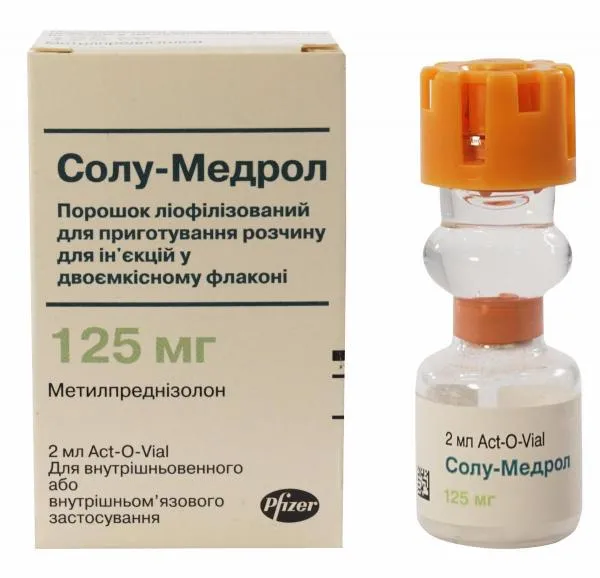
Table of Contents
INSTRUCTIONS FOR MEDICAL USE OF THE MEDICINAL PRODUCT Solu-Medrol (Solu-Medrol®)
Composition:
Active substance: methylprednisolone;
1 vial contains 40 mg or 125 mg or 500 mg or 1000 mg of methylprednisolone as methylprednisolone sodium succinate;
Excipients: for 125 mg, 500 mg or 1000 mg dosages – sodium dihydrogen phosphate monohydrate; anhydrous sodium hydrogen phosphate;
Excipients: for 40 mg dosage – sodium dihydrogen phosphate monohydrate; anhydrous sodium hydrogen phosphate; sucrose;
Solvent for 40 mg and 125 mg dosages: water for injections;
Solvent for 500 mg and 1000 mg dosages: benzyl alcohol (9 mg/mL), water for injections.
Pharmaceutical form.
Powder and solvent for solution for injection.
Main physicochemical properties:
Powder: lyophilisate of white to almost white color;
Solvent for 40 mg and 125 mg dosages: clear, colorless solution;
Solvent for 500 mg and 1000 mg dosages: clear, colorless liquid with a slight odor of benzyl alcohol.
Pharmacotherapeutic group. Corticosteroids for systemic use.
ATC Code: H02AB04.
Pharmacological Properties
This medicinal product is an injectable form of methylprednisolone (a synthetic glucocorticosteroid) intended for intramuscular and intravenous administration. This highly concentrated solution is particularly suitable for the treatment of pathological conditions requiring potent and rapid hormonal action. Methylprednisolone exerts a strong anti-inflammatory, immunosuppressive, and antiallergic effect.
Pharmacodynamics
Glucocorticoids penetrate the cell membrane by diffusion and form complexes with specific receptors in the cytoplasm. These complexes then enter the cell nucleus, bind to DNA (chromatin), and stimulate mRNA transcription and subsequent synthesis of various enzyme proteins, which in turn mediate the numerous effects of glucocorticoids after systemic administration. Glucocorticoids not only exert a significant influence on inflammatory and immune processes but also affect carbohydrate, protein, and fat metabolism. They also act on the cardiovascular system, skeletal muscles, and the central nervous system.
Effects on inflammatory and immune processes.
The anti-inflammatory, immunosuppressive, and antiallergic properties of glucocorticoids are utilized in most therapeutic indications. These properties lead to the following outcomes:
- reduction in the number of immunologically active cells around the inflammatory site;
- reduction in vasodilation;
- stabilization of lysosomal membranes;
- inhibition of phagocytosis;
- reduction in prostaglandin and related substance production.
A dose of methylprednisolone of 4 mg produces the same glucocorticosteroid (anti-inflammatory) effect as 20 mg of hydrocortisone. Methylprednisolone exhibits only a minimal mineralocorticoid effect (200 mg of methylprednisolone corresponds to 1 mg of desoxycorticosterone).
Effects on carbohydrate and protein metabolism.
Glucocorticoids exert a catabolic effect on protein metabolism. The released amino acids are converted in the liver via gluconeogenesis into glucose and glycogen. As a result, glucose uptake by peripheral tissues is reduced, which may lead to hyperglycemia and glucosuria, particularly in patients predisposed to diabetes mellitus.
Effects on fat metabolism.
Glucocorticoids exert a lipolytic effect, primarily affecting the extremities. They also exert a lipogenic effect, most evident in the chest, neck, and head areas. This leads to redistribution of fat deposits.
The maximum pharmacological effect of corticosteroids lags behind the achievement of their peak plasma concentrations, indicating that most of the effects of these drugs are likely due to modification of enzyme activity rather than direct action of the drugs.
Pharmacokinetics.
The pharmacokinetics of methylprednisolone are linear regardless of the route of administration.
Absorption
In vivo, cholinesterases rapidly hydrolyze methylprednisolone sodium succinate into free methylprednisolone. In men, methylprednisolone forms a weak dissociated bond with albumin and transcortin. Approximately 40–90% of the drug is protein-bound.
Intravenous infusion of the drug at a dose of 30 mg/kg body weight administered over 20 minutes, or at a dose of 1 g administered over 30–60 minutes, results in a peak plasma concentration of methylprednisolone of approximately 20 mg/mL about 15 minutes after administration. Approximately 25 minutes after an intravenous bolus injection of 40 mg, the peak methylprednisolone plasma concentration is 42–47 mg/100 mL. Approximately 120 minutes after an intramuscular injection of 40 mg, the peak plasma concentration of methylprednisolone is 34 mg/100 mL. The peak concentration after intramuscular injection is lower than after intravenous injection. However, after intramuscular injection, plasma concentrations are maintained over a longer period, resulting in equivalent systemic exposure via both routes of administration. The clinical significance of these minor differences is likely minimal when considering the mechanism of action of glucocorticoids. Clinical response is typically observed 4–6 hours after administration. In the treatment of bronchial asthma, favorable effects may be observed as early as 1–2 hours. The plasma half-life of methylprednisolone sodium succinate is 2.3–4 hours and is likely independent of the route of administration.
Methylprednisolone is a glucocorticoid with intermediate duration of action. Its biological half-life is 12–36 hours. The intracellular activity of glucocorticoids is clearly reflected by the distinct difference between the plasma half-life and the pharmacological half-life. Pharmacological activity persists even after the drug concentration in plasma is no longer detectable. The duration of anti-inflammatory activity of glucocorticoids approximately corresponds to the duration of suppression of the hypothalamic-pituitary-adrenal (HPA) axis. After intravenous administration of C14-labeled methylprednisolone, 75% of total radioactivity is excreted in urine within 96 hours, 9% in feces within 5 days, and 20% in bile.
Distribution
Methylprednisolone is widely distributed into tissues, crosses the blood-brain barrier, and is excreted into breast milk. The apparent volume of distribution is approximately 1.4 L/kg. Protein binding of methylprednisolone to plasma proteins in humans is approximately 77%.
Biotransformation
Hepatic metabolism of methylprednisolone is qualitatively similar to that of cortisol. Metabolites are primarily excreted in urine as glucuronides, sulfates, and unconjugated compounds.
In humans, methylprednisolone is metabolized in the liver to inactive metabolites, the main ones being 20α-hydroxymethylprednisolone and 20β-hydroxymethylprednisolone.
Hepatic metabolism occurs predominantly via the CYP3A4 enzyme (for a list of drug interactions mediated by CYP3A4 metabolism, see section "Interaction with other medicinal products and other forms of interaction").
Methylprednisolone, like many other CYP3A4 substrates, may also be a substrate for P-glycoprotein—a transporter protein of the ATP-binding cassette (ABC) transporter family—which influences its tissue distribution and interactions with other medicinal products.
Elimination
The mean half-life of total methylprednisolone ranges from 1.8 to 5.2 hours. Total clearance is approximately 5–6 mL/min/kg.
Special patient groups
Sex
After intravenous administration of a single dose, methylprednisolone clearance was higher in healthy women than in healthy men: 0.45 L/h/kg compared to 0.29 L/h/kg. However, no differences in pharmacodynamic parameters were observed.
Elderly patients
After intravenous administration of a single dose, methylprednisolone clearance in healthy elderly men (69–82 years) was lower than in younger men (24–37 years): 0.24 L/h/kg compared to 0.36 L/h/kg.
Children
Methylprednisolone clearance is slightly age-related. In younger patients, methylprednisolone metabolism generally occurs more rapidly. In a study of single intravenous dose administration in 14 patients with nephrotic syndrome, younger patients (< 13 years) showed higher clearance than older patients (> 13 years): 0.53 L/h/kg compared to 0.38 L/h/kg.
Renal impairment
In a study of single intravenous dose administration in 6 male patients with chronic renal insufficiency, the pharmacokinetics of methylprednisolone were unchanged compared to healthy control volunteers, with a mean clearance of 0.28 L/h/kg. Furthermore, no differences in pharmacodynamic parameters were observed in these patients with chronic renal insufficiency.
Hepatic impairment
In a study of single intravenous dose administration in 6 male patients with chronic hepatic insufficiency, the pharmacokinetics of methylprednisolone were similar to those in the control group of healthy volunteers, with a mean clearance of 0.29 L/h/kg.
Clinical characteristics.
Indications.
The use of glucocorticoids should be considered only as symptomatic treatment, except for certain endocrine disorders, when they are used as replacement therapy.
Anti-inflammatory treatment.
- Rheumatic diseases.
As adjunctive therapy for short-term use (to help the patient through an acute episode or exacerbation) in the following conditions:
- post-traumatic osteoarthritis;
- synovitis associated with osteoarthritis;
- rheumatoid arthritis, including juvenile rheumatoid arthritis (in some cases, maintenance therapy with low doses may be required);
- acute and subacute bursitis;
- epicondylitis;
- acute nonspecific tenosynovitis;
- acute gouty arthritis;
- psoriatic arthritis;
- ankylosing spondylitis.
- Collagenoses (systemic connective tissue diseases).
During exacerbations or as maintenance therapy in selected cases of the following conditions:
- systemic lupus erythematosus (and lupus nephritis);
- acute rheumatic carditis;
- systemic dermatomyositis (polymyositis);
- polyarteritis nodosa;
- Goodpasture's syndrome.
- Dermatological diseases:
- pemphigus;
- severe multiforme erythema (Stevens–Johnson syndrome);
- exfoliative dermatitis;
- bullous pemphigoid;
- severe seborrheic dermatitis;
- severe psoriasis;
- mycosis fungoides;
- urticaria.
- Allergic conditions.
Management of severe or incapacitating allergic conditions unresponsive to adequate conventional therapy, such as:
- bronchial asthma;
- contact dermatitis;
- atopic dermatitis;
- serum sickness;
- hypersensitivity reactions to drugs;
- urticaria;
- acute noninfectious laryngeal edema (epinephrine is the drug of first choice).
- Ophthalmological diseases.
Severe acute and chronic allergic and inflammatory processes involving the eye, including:
- ocular form of Herpes zoster;
- iritis, iridocyclitis;
- choroidoretinitis;
- diffuse posterior uveitis and chorioiditis;
- optic neuritis;
- sympathetic ophthalmia;
- inflammation of the middle ocular segment;
- allergic conjunctivitis;
- allergic corneal margin ulcers;
- keratitis.
- Gastrointestinal diseases.
Critical periods in the following conditions:
- ulcerative colitis (systemic therapy);
- regional enteritis (systemic therapy).
- Respiratory diseases:
- pulmonary sarcoidosis;
- berylliosis;
- fulminant or disseminated pulmonary tuberculosis when used concomitantly with appropriate antituberculous chemotherapy;
- Loeffler's syndrome unresponsive to other treatments;
- aspiration pneumonitis;
- moderate to severe Pneumocystis carinii pneumonia in AIDS patients (as adjunctive therapy during the first 72 hours of anti-Pneumocystis treatment);
- exacerbations of chronic obstructive pulmonary disease.
- Conditions associated with edema.
For induction of diuresis or remission of proteinuria in nephrotic syndrome, proteinuria without uremia.
Immunosuppressive treatment.
- Organ transplantation.
Treatment of hematological and oncological diseases.
- Hematological diseases:
- acquired (autoimmune) hemolytic anemia;
- idiopathic thrombocytopenic purpura in adults (intravenous administration only; intramuscular administration is contraindicated);
- secondary thrombocytopenia in adults;
- erythroblastopenia (erythrocytic anemia);
- congenital (erythroid) hypoplastic anemia;
- Oncological diseases.
Palliative treatment of conditions such as:
- leukemias and lymphomas in adults;
- acute leukemia in children;
- improvement of quality of life in patients with terminal-stage malignancy.
Others.
- Nervous system.
- Cerebral edema associated with primary or metastatic tumors, and/or as adjunctive therapy in surgical procedures or radiation therapy.
- Exacerbations of multiple sclerosis.
- Acute spinal cord injury. Treatment must be initiated within the first eight hours after injury.
- Tuberculous meningitis with subarachnoid space blockage or risk of blockage, when used concomitantly with appropriate antituberculous chemotherapy.
- Trichinellosis with involvement of the nervous system or myocardium.
- Prevention of nausea and vomiting associated with chemotherapy for malignant neoplasms.
Endocrine disorders.
- Primary or secondary adrenal insufficiency.
- Acute adrenal insufficiency.
In these indications, hydrocortisone or cortisone are the drugs of choice. Under certain circumstances, synthetic analogs may be used in combination with mineralocorticoids.
- Treatment of shock states: shock due to adrenal insufficiency or shock unresponsive to conventional therapy, when adrenal insufficiency is confirmed or suspected (hydrocortisone is generally the drug of choice). If mineralocorticoid effects are undesirable, methylprednisolone may be preferred.
- Prior to surgery and in cases of severe trauma or illness in patients with established adrenal insufficiency, or when adrenal reserve is questionable.
- Congenital adrenal hyperplasia.
- Nonsuppurative thyroiditis.
- Hypercalcemia associated with malignant neoplasms.
Contraindications.
Systemic fungal infections.
Hypersensitivity to methylprednisolone or to any of the excipients listed in the section "Composition".
Intrathecal administration.
Epidural administration.
Interaction with other medicinal products and other forms of interactions
- Methylprednisolone is a substrate of cytochrome P450 (CYP) and is primarily metabolized by the CYP3A4 enzyme. CYP3A4 is the major enzyme of the most abundant CYP subfamily in the liver of adult humans. It catalyzes 6β-hydroxylation of steroids, a key phase I metabolic step for both endogenous and synthetic corticosteroids. Many other compounds, including several drugs, are also substrates of CYP3A4 and have been shown to alter glucocorticoid metabolism by inducing (increasing activity) or inhibiting the CYP3A4 enzyme.
- CYP3A4 INHIBITORS: medicinal products that inhibit CYP3A4 activity generally reduce hepatic clearance and increase plasma concentrations of CYP3A4 substrates such as methylprednisolone. Therefore, to avoid steroid toxicity, methylprednisolone doses should be titrated.
- CYP3A4 INDUCERS: medicinal products that induce CYP3A4 activity usually increase hepatic clearance, leading to reduced plasma concentrations of CYP3A4 substrates. When used concomitantly, an increase in methylprednisolone dose may be required to achieve the desired therapeutic effect.
- CYP3A4 SUBSTRATES: the presence of another CYP3A4 substrate may affect the hepatic clearance of methylprednisolone, so dose adjustment may be necessary. The likelihood of adverse effects associated with each of these medicinal products may be increased when used concomitantly.
- EFFECTS NOT MEDIATED BY CYP3A4: other interactions and effects observed with methylprednisolone are described in the table below.
The table presents a list and description of the most common and/or clinically significant interactions or interaction outcomes between methylprednisolone and other medicinal products.
Important interactions/effects when methylprednisolone is used with other medicinal products or substances
| Drug class or type DRUG or SUBSTANCE |
Interaction/effect |
| Antibacterial agents
|
CYP3A4 INHIBITOR. In addition, methylprednisolone may increase the rate of acetylation and clearance of isoniazid. |
| Antibiotics, antituberculosis agents
|
CYP3A4 INDUCER |
| Oral anticoagulants |
The effect of methylprednisolone on oral anticoagulants is variable. Both enhancement and reduction of anticoagulant effects have been reported when corticosteroids are used concomitantly. Therefore, coagulation parameters should be monitored to maintain the desired anticoagulant effect. |
| Anticonvulsants
|
INDUCER (and SUBSTRATE) of CYP3A4 |
| Anticonvulsants
|
INDUCERS of CYP3A4 |
| Anticholinergic agents
BLOCKERS |
Corticosteroids may affect the action of anticholinergic agents.
|
| Anticholinesterase agents |
Steroids may reduce the effect of anticholinesterase agents in patients with myasthenia gravis. |
| Antidiabetic agents |
Since corticosteroids may increase blood glucose concentration, dosage adjustment of antidiabetic agents may be required. |
| Antiemetics
|
INHIBITORS (and SUBSTRATES) of CYP3A4 |
| Antifungal agents
|
INHIBITORS (and SUBSTRATES) of CYP3A4 |
| Antiviral agents
|
INHIBITORS (and SUBSTRATES) of CYP3A4
|
| Pharmacokinetic enhancers |
CYP3A4 INHIBITOR Pharmacokinetic enhancers inhibit CYP3A4 activity, leading to reduced hepatic clearance and increased plasma concentrations of corticosteroids. Dose adjustment of corticosteroids may be required (see section "Special precautions"). |
| Aromatase inhibitors
|
Adrenal suppression caused by aminoglutethimide may potentiate endocrine changes induced by long-term glucocorticoid therapy. |
| Calcium channel blockers
|
INHIBITOR (and SUBSTRATE) of CYP3A4 |
| Oral contraceptives
NORETHISTERONE |
INHIBITOR (and SUBSTRATE) of CYP3A4 |
|
CYP3A4 INHIBITOR |
| Immunosuppressants
|
INHIBITOR (and SUBSTRATE) of CYP3A4
|
| Immunosuppressants
|
SUBSTRATES of CYP3A4 |
| Macrolide antibiotics
|
INHIBITORS (and SUBSTRATES) of CYP3A4 |
| Macrolide antibiotics
|
CYP3A4 INHIBITOR |
| NSAIDs (nonsteroidal anti-inflammatory drugs)
|
|
| Potassium-depleting agents |
Patients receiving corticosteroids and potassium-depleting agents (e.g., diuretics) should be closely monitored for the development of hypokalemia. The use of glucocorticoids in combination with thiazide diuretics may increase the risk of glucose intolerance. The risk of hypokalemia is also increased when corticosteroids are used concomitantly with amphotericin B, xanthines, or beta2-mimetics. |
Incompatibility
To avoid compatibility and stability problems, sodium methylprednisolone succinate should be administered separately from other intravenous compounds. Medicinal products that are physically incompatible with sodium methylprednisolone succinate in solution include (the list is not exhaustive): sodium allopurinol, doxapram hydrochloride, tigecycline, diltiazem hydrochloride, calcium gluconate, vecuronium bromide, rocuronium bromide, cisatracurium besilate, glycopyrrolate, propofol.
DRUG INTERACTIONS
In the treatment of neoplastic diseases, such as leukemia and lymphoma, methylprednisolone is usually used in combination with alkylating agents, antimetabolites, and vinca alkaloids.
Special precautions for use.
Immunosuppressive effects/increased susceptibility to infections.
- Glucocorticoids may increase susceptibility to infections, mask certain signs of infection, and new infections may occur during their use. The use of corticosteroids may reduce the body's resistance and its ability to localize infection. Administration of corticosteroids as monotherapy or in combination with other immunosuppressive agents affecting cellular, humoral immunity or neutrophil function may be associated with infections caused by any pathogen, including viruses, bacteria, fungi, protozoa, and helminths, in any part of the body. These infections may be mild but can be severe and sometimes fatal. The frequency of infections increases with higher corticosteroid doses.
- Patients receiving immunosuppressive medicinal products are more susceptible to infections than healthy individuals. For example, chickenpox and measles may have a more severe course or even fatal outcomes in children or adults without immunity who are receiving corticosteroids.
- Administration of live or live attenuated vaccines is contraindicated in patients receiving immunosuppressive doses of corticosteroids. Inactivated or killed vaccines and biosynthetic vaccines may be administered to such patients; however, the response to these vaccines may be reduced or they may even prove ineffective. Immunization procedures may be performed in patients receiving non-immunosuppressive doses of corticosteroids.
- Patients receiving corticosteroid therapy should not be vaccinated against smallpox. Other immunization procedures should be avoided in patients receiving corticosteroid therapy, especially if corticosteroids are administered in high doses, due to possible neurological complications and altered immune response.
- In active tuberculosis, corticosteroid use should be limited to fulminant or disseminated tuberculosis and should be initiated simultaneously with appropriate antituberculosis therapy. If corticosteroids are indicated in patients with latent tuberculosis or tuberculin reactivity, careful monitoring is required as reactivation of the disease is possible. Patients on prolonged corticosteroid therapy should receive chemoprophylaxis.
- Kaposi's sarcoma has been reported in patients receiving corticosteroid therapy. Discontinuation of corticosteroid treatment may lead to clinical remission.
- The role of corticosteroids in septic shock is controversial. Early studies reported both beneficial and harmful effects. Later, it was hypothesized that adjunctive corticosteroid use may benefit patients with confirmed septic shock and adrenal insufficiency. However, routine use in septic shock is not recommended. One systematic review of short-term, high-dose corticosteroid use did not provide evidence supporting their use. However, meta-analyses and one review of published data suggest that longer courses (5–11 days) of low-dose corticosteroids may reduce mortality, particularly in patients with septic shock requiring vasopressor therapy.
Effects on the immune system.
- Allergic reactions may occur. Since skin and anaphylactic/anaphylactoid reactions are rare but possible in patients receiving parenteral corticosteroid therapy, appropriate safety measures should be taken before administration, especially if the patient has a history of allergy to any medicinal product.
Effects on the endocrine system.
- Patients undergoing unusual stress situations during corticosteroid therapy may require increased doses of fast-acting corticosteroids before, during, and after the stressful event.
- Prolonged use of pharmacological doses of glucocorticoids may lead to suppression of the hypothalamic-pituitary-adrenal system (secondary adrenal insufficiency). The degree and duration of adrenal insufficiency vary among patients and depend on the dose, frequency, timing, and duration of glucocorticoid therapy. This effect can be minimized by using an every-other-day dosing regimen.
- Additionally, acute adrenal insufficiency with fatal outcomes may occur after abrupt discontinuation of glucocorticoid therapy.
- Drug-induced secondary adrenal insufficiency can be minimized by gradual dose reduction. This type of relative insufficiency may persist for several months after therapy cessation; therefore, hormonal therapy should be reinstated in any stressful situation occurring during this period.
- Steroid withdrawal syndrome, unrelated at first glance to adrenal insufficiency, may also occur after abrupt discontinuation of glucocorticoid therapy. This syndrome includes symptoms such as anorexia, nausea, vomiting, lethargy, headache, fever, joint pain, skin desquamation, myalgia, weight loss, and/or arterial hypotension. These effects are believed to result from a sudden change in glucocorticoid concentration rather than low corticosteroid levels.
- Since glucocorticoids may cause or exacerbate Cushing's syndrome, their use should be avoided in patients with this syndrome.
- Corticosteroids have enhanced effects in patients with hypothyroidism.
Periodic thyrotoxic periodic paralysis (PTP) may occur in patients with hyperthyroidism and hypokalemia induced by methylprednisolone administration.
PTP should be suspected in patients receiving methylprednisolone who present signs or symptoms of muscle weakness, especially in patients with hyperthyroidism.
In suspected PTP, immediate monitoring of serum potassium levels and appropriate therapy to restore normal potassium levels are required.
Metabolic and nutritional disorders.
- Corticosteroids, including methylprednisolone, may increase blood glucose levels, worsen the condition of patients with diabetes mellitus, and increase the risk of developing diabetes in patients receiving prolonged corticosteroid therapy. Such patients should be treated under close medical supervision and for the shortest possible duration.
Psychiatric disorders.
- Psychiatric disorders may occur during corticosteroid therapy: from euphoria, insomnia, mood swings, personality changes, and severe depression to overt psychotic manifestations. Corticosteroids may also exacerbate existing emotional instability or psychotic tendencies.
- Potentially severe psychiatric adverse reactions may develop during systemic steroid use. Symptoms usually appear within days or weeks of starting therapy. Most reactions resolve after dose reduction or discontinuation, although specific treatment may be required. Psychological effects after discontinuation of corticosteroids have been reported; frequency is unknown. Patients and caregivers should be encouraged to seek medical help if psychological symptoms occur, particularly if depressive symptoms or suicidal thoughts are suspected. Patients/caregivers should be aware of possible psychiatric disorders that may develop during or immediately after dose reduction or discontinuation of systemic steroids.
Nervous system disorders.
- Corticosteroids should be used with caution in patients with epileptic disorders.
- Corticosteroids should be used with caution in patients with myasthenia gravis.
Although controlled clinical trials have demonstrated the efficacy of corticosteroids in accelerating recovery from acute episodes of multiple sclerosis, they do not show that corticosteroids affect the final outcome or natural course of the disease. However, studies indicate that relatively high doses of corticosteroids are required to achieve a significant effect.
- Serious medical events have been reported with intrathecal and epidural administration (see section "Adverse reactions").
- Cases of epidural lipomatosis have been reported in patients receiving corticosteroids, usually with prolonged high-dose use.
Eye disorders.
- Corticosteroids should be used with caution in patients with ocular herpes simplex due to the risk of corneal perforation.
- Prolonged use of corticosteroids may lead to posterior subcapsular cataracts and nuclear cataracts (especially in children), exophthalmos, or elevated intraocular pressure, which may cause glaucoma with possible optic nerve damage. Corticosteroids may also promote the development of secondary fungal or viral eye infections.
- Visual disturbances may occur with topical corticosteroids and systemic corticosteroids. If symptoms such as blurred vision or other visual disturbances occur, patients should be referred to an ophthalmologist to identify possible causes, including cataract, glaucoma, or rare conditions such as central serous chorioretinopathy, which has been reported with systemic or local corticosteroid use.
- Corticosteroid therapy has been associated with central serous chorioretinopathy, which may lead to retinal detachment.
Cardiac disorders.
- Adverse effects of glucocorticoids on the cardiovascular system, including dyslipidemia and arterial hypertension, may increase the susceptibility of patients receiving the drug and having other cardiovascular risk factors to additional cardiovascular effects with prolonged high-dose use. Therefore, corticosteroids should be used with caution in such patients. Changes in risk should be monitored, and additional cardiologic monitoring should be performed if necessary. Use of low doses and every-other-day regimens may reduce the frequency of complications.
- Cardiac arrhythmia, vascular collapse, and/or cardiac arrest have been reported after rapid intravenous administration of high doses of methylprednisolone sodium succinate (over 0.5 g in less than 10 minutes). Bradycardia has been reported during or after administration of high doses of methylprednisolone sodium succinate, which may not depend on the rate or duration of infusion.
Systemic corticosteroids should be used with caution and only if absolutely necessary in patients with congestive heart failure.
Vascular disorders.
- Cases of thrombosis, including venous thromboembolism, have been observed during corticosteroid use. Therefore, corticosteroids should be used with caution in patients with thromboembolic disorders or those predisposed to their development.
- Steroids should be used with caution in patients with arterial hypertension, as this further increases the risk of further elevation of blood pressure. Such patients should be treated under close medical supervision and for the shortest possible duration.
Gastrointestinal disorders.
- High doses of corticosteroids may cause acute pancreatitis.
- There is no confirmed role of corticosteroids per se in the development of peptic ulcers observed during therapy; however, glucocorticoid therapy may mask symptoms of peptic ulcer, and perforation or hemorrhage may occur without significant pain.
- Glucocorticoid therapy may mask peritonitis or other signs and symptoms of gastrointestinal disorders such as perforation, obstruction, or pancreatitis. The risk of gastrointestinal ulcer development increases when used in combination with NSAIDs.
- Corticosteroids should be used with caution in patients: with nonspecific ulcerative colitis if there is a risk of perforation, abscess, or other pyogenic infections; with diverticulitis, recent intestinal anastomoses, active or latent gastric or peptic ulcers.
Hepatobiliary system disorders.
- Effects on the hepatobiliary system: drug-induced liver injury, including acute hepatitis or elevated liver enzymes, may result from cyclic pulse intravenous administration of methylprednisolone (usually at initial doses ≥1 g/day). Rare cases of hepatotoxicity have been reported. Time to onset of symptoms may be several weeks or longer. In most cases, adverse events resolved after discontinuation of treatment. Therefore, appropriate patient monitoring is required.
- Enhanced glucocorticosteroid effects are observed in patients with cirrhosis.
Musculoskeletal and connective tissue disorders.
- Acute myopathy has been reported during high-dose corticosteroid use, most frequently in patients with neuromuscular transmission disorders (e.g., myasthenia gravis) or in patients receiving concomitant therapy with anticholinergic agents, particularly neuromuscular blocking agents (e.g., pancuronium). This acute myopathy is generalized, may affect ocular and respiratory muscles, and may lead to quadriparesis. Increased creatine kinase levels may occur. Clinical improvement or recovery after discontinuation of corticosteroids may take from several weeks to several years.
- Osteoporosis is a common but infrequently recognized adverse effect associated with prolonged high-dose glucocorticoid use.
Renal and urinary system disorders.
- Corticosteroids should be used with caution in patients with impaired renal function.
- Increased incidence of scleroderma renal crisis has been observed during corticosteroid use, including methylprednisolone; therefore, caution is required when administering to patients with systemic sclerosis.
Investigations.
- Moderate and high doses of hydrocortisone or cortisone may cause elevated blood pressure, salt and water retention, and increased potassium excretion. With synthetic derivatives, these effects are less likely except when used in high doses. Sodium restriction and potassium supplementation may be necessary. All corticosteroids increase calcium excretion.
- Corticosteroid therapy should be considered when interpreting certain biological tests (e.g., skin tests, thyroid hormone level analyses).
Injury, poisoning, and procedural complications.
- Based on results of a multicenter study, methylprednisolone sodium succinate should not be routinely used for traumatic brain injury treatment. Study results showed increased mortality at 2 weeks and 6 months after injury in patients receiving methylprednisolone sodium succinate compared to placebo (relative risk 1.18). A causal relationship with methylprednisolone sodium succinate treatment has not been established.
- Due to the high frequency of subcutaneous atrophy, injections into the deltoid muscle should be avoided.
Other.
- Since complications of glucocorticoid therapy depend on dose and duration of treatment, decisions regarding dose, frequency, and duration of administration (daily or every other day) should be made individually, considering risks and benefits.
- The lowest possible corticosteroid dose should be used for control, and dose reduction, when possible, should be gradual.
- Treatment duration should generally be as short as possible. Medical supervision is recommended during prolonged therapy (see also "Method of administration and dosage"). Discontinuation of long-term treatment should also occur under medical supervision (gradual discontinuation, adrenal function assessment). The most important symptoms of adrenal insufficiency are asthenia, orthostatic hypotension, and depression.
- Acetylsalicylic acid and nonsteroidal anti-inflammatory drugs should be used with caution in combination with corticosteroids.
- Exacerbation of pheochromocytoma, which may be fatal, has been reported after systemic corticosteroid use. Corticosteroids may be used in patients with suspected or confirmed pheochromocytoma only after appropriate benefit-risk assessment.
- Concomitant therapy with CYP3A inhibitors, including drugs containing cobicistat, is expected to increase the risk of systemic adverse effects. Such combinations should be avoided unless the benefit outweighs the increased risk of systemic adverse reactions to corticosteroids. In this case, patients should be monitored for systemic adverse reactions to corticosteroids (see section "Interaction with other medicinal products and other forms of interaction").
Tumor lysis syndrome (TLS) has been reported in post-marketing studies in patients with malignant neoplasms, including hematological malignancies and solid tumors, after administration of systemic corticosteroids alone or in combination with other chemotherapeutic agents. Patients at high risk of TLS, such as those with tumors with high proliferation rates, high tumor burden, and high sensitivity to cytotoxic agents, should be closely monitored and appropriate preventive measures applied.
For 40 mg and 125 mg strengths: this medicinal product contains less than 1 mmol (23 mg) of sodium per dose, i.e., essentially sodium-free.
For 500 mg and 1000 mg strengths: this medicinal product contains more than 1 mmol (23 mg) of sodium per dose. Caution is required when administering to patients on a sodium-restricted diet.
Children
Reconstituted solutions of Solu-Medrol (in 500 mg and 1000 mg powder with solvent for injection presentations) contain benzyl alcohol (9 mg benzyl alcohol per 1 ml of reconstituted solution). Reconstituted solutions of Solu-Medrol in Act-O-Vial vials do not contain benzyl alcohol.
Benzyl alcohol may cause allergic reactions. Intravenous administration of benzyl alcohol has been associated with serious adverse reactions and fatal "gasping syndrome" in neonates (see section "Children"). The minimal amount of benzyl alcohol that may cause toxicity is unknown. Benzyl alcohol should not be used for treatment of neonates (under 4 weeks of age) unless otherwise recommended by a physician. Benzyl alcohol should not be used for longer than 1 week due to increased risk of accumulation and toxicity in children under 3 years of age unless otherwise recommended by a physician. Large volumes of the drug should be used with caution and only if absolutely necessary, especially in pregnant women, breastfeeding women, or individuals with liver or kidney impairment, due to the risk of accumulation and toxicity (metabolic acidosis).
Growth and development of infants and children should be carefully monitored during prolonged corticosteroid use. In children receiving daily glucocorticoids for prolonged periods multiple times daily, growth retardation may occur; therefore, such treatment regimens should be limited to the most serious indications. Every-other-day glucocorticoid use usually prevents or minimizes this adverse effect.
Infants and children receiving prolonged corticosteroid treatment are at particular risk of developing increased intracranial pressure.
High doses of corticosteroids may cause pancreatitis in children.
Cases of transient myocardial hypertrophy have been reported in preterm infants receiving corticosteroid therapy for lung disorders.
Children should be treated under close medical supervision and for the shortest possible duration.
Use during pregnancy or breastfeeding.
Pregnancy.
Some animal studies have shown that corticosteroids administered during pregnancy in high doses may cause fetal developmental abnormalities. However, corticosteroids do not cause congenital anomalies when used in pregnant women. In the absence of adequate studies on the effect of the drug on the human reproductive system and fetal development, methylprednisolone sodium succinate should be used during pregnancy only after careful assessment of the benefit-risk ratio for mother and fetus. If prolonged corticosteroid therapy needs to be discontinued during pregnancy (as with other long-term treatments), it should be done gradually (see also "Method of administration and dosage"). However, in some cases (e.g., replacement therapy for adrenal insufficiency), continuation or even dose increase may be necessary.
Some corticosteroids readily cross the placental barrier. In one retrospective study, an increased frequency of low birth weight was observed in mothers receiving corticosteroids. In humans, the risk of low birth weight depends on drug dose. This risk can be minimized by using lower corticosteroid doses. Although adrenal insufficiency is rare in newborns exposed to corticosteroids in utero, careful monitoring and assessment of infants exposed to significant corticosteroid doses are required to detect signs of adrenal insufficiency.
Cataracts have been observed in infants whose mothers received prolonged corticosteroid therapy during pregnancy.
There is no information on the effect of corticosteroids on labor and delivery.
Benzyl alcohol may cross the placental barrier (see section "Special precautions for use"). This warning does not apply to formulations that do not contain benzyl alcohol.
Breastfeeding.
Corticosteroids pass into breast milk.
Corticosteroids present in breast milk may suppress growth and affect endogenous glucocorticoid production in breastfed infants. This medicinal product should be used during breastfeeding only after careful assessment of the benefit-risk ratio for mother and infant.
Fertility
In animal studies, corticosteroids have shown adverse effects on fertility.
Ability to affect reaction speed when driving or operating machinery.
Solu-Medrol has a negligible effect on the ability to drive or operate machinery. Undesirable effects such as dizziness, vertigo, visual disturbances, and fatigue may occur after corticosteroid administration. Patients experiencing such effects should not drive or operate machinery.
Dosage and Administration
The methylprednisolone sodium succinate solution can be administered by intravenous or intramuscular injection or by intravenous infusion. For initial emergency treatment, administration as an intravenous injection is preferred (see Table 1 for information on recommended doses).
In adult idiopathic thrombocytopenic purpura, the drug should be administered intravenously only (intramuscular administration is contraindicated).
Table 1
Recommended doses of methylprednisolone sodium succinate
| Indications |
Method of Administration and Dosage |
| Adjunctive therapy in life-threatening conditions |
The recommended dose is 30 mg/kg body weight administered intravenously over at least 30 minutes. This dose may be repeated in a hospital setting every 4–6 hours for up to 48 hours, depending on clinical necessity (see section "Special Instructions"). |
| PULSE THERAPY in cases of severe exacerbation and/or failure of standard therapy, including nonsteroidal anti-inflammatory drugs, gold salts, and penicillamine |
Rheumatoid arthritis:
Since high-dose corticosteroid therapy may have arrhythmogenic effects, this treatment should be restricted to hospital settings where electrocardiographic monitoring and defibrillation equipment are available. |
| Prevention of nausea and vomiting associated with chemotherapy for malignant diseases |
|
| Acute spinal cord injury |
Treatment must be initiated within the first 8 hours after injury. If treatment is started within 3 hours of injury: administer methylprednisolone 30 mg/kg body weight intravenously as a bolus over 15 minutes under continuous medical supervision. After the bolus injection, a 45-minute pause is made, followed by continuous infusion of the drug at a rate of 5.4 mg/kg/hour for 23 hours. If treatment is initiated between 3 and 8 hours after injury: administer methylprednisolone 30 mg/kg body weight intravenously as a bolus over 15 minutes under continuous medical supervision. After the bolus injection, a 45-minute pause is made, followed by continuous infusion of the drug at a rate of 5.4 mg/kg/hour for 47 hours. For the infusion pump, a different intravenous site should be selected than that used for the bolus injection. This bolus administration rate is permissible only for this indication under ECG monitoring and with defibrillation equipment immediately available. Rapid intravenous bolus administration of high-dose methylprednisolone (doses exceeding 500 mg within less than 10 minutes) may lead to arrhythmias, vascular collapse, and cardiac arrest. |
| For other indications |
The initial dose ranges from 10 to 500 mg depending on the patient's clinical condition and the nature of the disease. High doses may be required for short-term treatment of severe acute conditions such as bronchial asthma, serum sickness, transfusion-related urticarial reactions, and exacerbations of multiple sclerosis. Initial doses up to and including 250 mg should be administered intravenously over at least 5 minutes; doses exceeding 250 mg should be administered over at least 30 minutes. Subsequent doses may be given intravenously or intramuscularly at intervals depending on the patient's response and clinical status. Corticosteroid therapy is used as adjunctive therapy and does not replace conventional treatment. |
The dose should be reduced or discontinued gradually if the drug has been administered for more than several days. If spontaneous remission occurs in chronic disease, treatment should be discontinued. During prolonged therapy, routine laboratory tests should be performed periodically, including urine analysis, blood glucose determination two hours after meals, as well as monitoring of blood pressure and body weight, and chest X-ray. In patients with a history of peptic ulcers or pronounced dyspepsia, X-ray examination of the upper gastrointestinal tract is advisable. Medical supervision is also required in case of abrupt discontinuation of prolonged treatment. For intravenous (or intramuscular) injection, the solution should be prepared according to the instructions.
Instructions for use of the drug in a dual-chamber vial of the Act-O-Vial type.
- Press the plastic activator to allow the diluent to flow into the lower chamber.
- Gently shake to mix the solution.
- Remove the plastic cover covering the center of the stopper.
- Sterilize the exposed portion of the rubber stopper.
- Insert the needle (preferably 22G) vertically through the center of the stopper until the tip becomes visible. Invert the vial and withdraw the required dose of medication. If a thicker needle is used, it is important to avoid tilting the needle and to insert it perpendicularly into the center of the rubber stopper.
Instructions for use of the drug in a vial with diluent.
Under aseptic conditions, add the diluent to the vial containing sterile powder. Only the special diluent provided should be used.
To withdraw the drug from the vial, refer to point 5 of the "Instructions for use of the drug in a dual-chamber vial of the Act-O-Vial type" regarding the recommended needle size.
PREPARATION OF INFUSION SOLUTIONS.
First, prepare the reconstituted solution according to the instructions. Therapy may be initiated by administering methylprednisolone sodium succinate intravenously over at least 5 minutes (for doses up to and including 250 mg) and over at least 30 minutes (for doses exceeding 250 mg). Subsequent doses may be withdrawn and administered similarly. If necessary, the drug may be administered in diluted solutions by mixing the reconstituted preparation with 5% dextrose in water, normal saline, or 5% dextrose in 0.45% or 0.9% sodium chloride solution. For storage duration and conditions, see the section "Storage conditions".
Any unused portions of the medicinal product or waste materials should be disposed of in accordance with local regulations.
Elderly patients.
Treatment of elderly patients, especially long-term therapy, should be planned considering the possibility of more serious consequences of corticosteroid use in older age, including osteoporosis, diabetes mellitus, arterial hypertension, susceptibility to infections, and skin thinning (see section "Special precautions").
Children. The drug can be prescribed to children, including infants.
The dose for children should be determined on the same basis as for adults (see above) and adjusted according to the severity of the condition and clinical response. Treatment should be limited to the minimum dose necessary to achieve a favorable response and the shortest possible duration. If discontinuation of the drug is required after prolonged therapy, gradual dose reduction is recommended rather than abrupt discontinuation.
Whenever possible, treatment should be administered as a single alternate-day dose.
Some formulations of the drug contain benzyl alcohol (see section "Composition").
Benzyl alcohol may cause allergic reactions. Intravenous administration of benzyl alcohol has been associated with serious adverse reactions and fatal "gasping syndrome" in neonates. The minimal amount of benzyl alcohol that may cause toxicity is unknown. Benzyl alcohol should not be used for treatment of neonates (under 4 weeks of age) unless otherwise recommended by a physician. Benzyl alcohol should not be used for longer than 1 week due to the increased risk of accumulation in children under 3 years of age, unless otherwise recommended by a physician.
In children receiving prolonged daily therapy with divided doses of glucocorticoids, growth retardation may occur, and such treatment regimens should be restricted to the most severe indications.
Overdose.
Symptoms
There is no clinical syndrome of acute corticosteroid overdose. Reports of acute toxicity and/or fatal outcomes following corticosteroid overdose are rare. In case of overdose, there is no specific antidote; supportive and symptomatic treatment should be initiated. Chronic overdose causes characteristic symptoms of Cushing's syndrome.
Treatment
There is no specific antidote for overdose; symptomatic and supportive treatment should be initiated.
Methylprednisolone is removed by dialysis.
Adverse reactions.
Brief description of the safety profile
The following undesirable side effects are characteristic of sodium methylprednisolone succinate. Hypersensitivity reactions may occur at the beginning of therapy (see section "Special warnings and precautions for use"). Serious infections, including opportunistic infections, may also occur during corticosteroid therapy. Other adverse effects include: seizures, pathological and compression fractures of the spine, peptic ulcers with perforation or hemorrhage, tendon ruptures, psychiatric disorders or manifestations, Cushing's syndrome, steroid withdrawal syndrome, arterial hypertension, myopathy, glaucoma, subcapsular cataract, decreased glucose tolerance, rash, fluid retention, abdominal pain, nausea, headache, and dizziness.
When contraindicated routes of administration are used, specifically intrathecal and epidural administration, the following adverse effects have been reported: arachnoiditis, gastrointestinal/urinary bladder dysfunction, headache, meningitis, paraparesis/paraplegia, seizures, sensory disturbances. The frequency of these adverse effects is unknown.
Infections and infestations: infections, opportunistic infections, peritonitis. Peritonitis may be the primary sign or symptom of gastrointestinal disorders such as perforation, obstruction, or pancreatitis (see section "Special warnings and precautions for use").
Immune system disorders: hypersensitivity reactions (including anaphylactic and anaphylactoid reactions).
Endocrine disorders: Cushing's syndrome, hypothalamic-pituitary-adrenal (HPA) axis suppression, steroid withdrawal syndrome.
Metabolism and nutrition disorders: metabolic acidosis, lipomatosis, sodium retention, fluid retention, hypokalemic alkalosis, dyslipidemia, impaired glucose tolerance, increased insulin requirement or need for oral hypoglycemic agents in patients with diabetes mellitus, increased appetite (which may lead to weight gain).
Blood and lymphatic system disorders: leukocytosis.
Psychiatric disorders: affective disorders (including depression, euphoria, affective lability, drug dependence, suicidal thoughts), psychotic disorders (including mania, delusions, hallucinations, and schizophrenia), mental disturbances, confusion, anxiety, mood swings, inappropriate behavior, insomnia, irritability.
Nervous system disorders: epidural lipomatosis, increased intracranial pressure (with papilledema (benign intracranial hypertension)), seizures, amnesia, cognitive impairment, dizziness, headache.
Eye disorders: choroidoretinopathy, cataract, glaucoma (with potential optic nerve damage), exophthalmos, blurred vision (see section "Special warnings and precautions for use").
Ear and labyrinth disorders: vertigo.
Cardiac disorders: congestive heart failure (in susceptible patients), arrhythmia, myocardial rupture following myocardial infarction.
Cases of cardiac arrhythmia, vascular collapse, and/or cardiac arrest have been reported after rapid intravenous administration of high doses of sodium methylprednisolone succinate (more than 0.5 g within less than 10 minutes). Bradycardia has been reported during or after administration of high doses of sodium methylprednisolone succinate, which may be independent of the rate or duration of infusion. Tachycardia has also been reported after administration of high doses of glucocorticoids.
Vascular disorders: thrombotic events, arterial hypertension, arterial hypotension, flushing.
Respiratory, thoracic and mediastinal disorders: pulmonary thromboembolism, hiccups.
Gastrointestinal disorders: peptic ulcer (with risk of perforation and hemorrhage), intestinal perforation, gastrointestinal bleeding, pancreatitis, ulcerative esophagitis, esophagitis, abdominal distension, abdominal pain, diarrhea, dyspepsia, nausea, vomiting.
Hepatobiliary disorders: hepatitis (reported with intravenous administration), elevated liver enzymes in serum (e.g., ALT, AST).
Skin and subcutaneous tissue disorders: angioneurotic edema, hirsutism, petechiae, ecchymosis, skin atrophy, erythema, hyperhidrosis, striae, rash, pruritus, urticaria, acne, hypopigmentation of the skin. Repeated subcutaneous injections may lead to local skin atrophy at the injection site.
Musculoskeletal and connective tissue disorders: muscle weakness, myalgia, myopathy, muscle atrophy, osteoporosis, osteonecrosis, pathological fracture, neuropathic arthropathy, arthralgia, growth retardation.
Reproductive system and breast disorders: menstrual disorders.
General disorders and administration site conditions: peripheral edema, impaired wound healing, fatigue, malaise, injection site reactions.
Investigations: increased urinary calcium, decreased serum potassium, increased intraocular pressure, decreased carbohydrate tolerance, increased blood urea, increased alanine aminotransferase, increased aspartate aminotransferase, increased alkaline phosphatase in blood, suppression of skin test reactivity.
Injury, poisoning and procedural complications: spinal compression fractures, tendon rupture.
Reporting suspected adverse reactions.
Reporting suspected adverse reactions after medicine authorization is important. It allows continuous monitoring of the benefit-risk balance of the medicine. Healthcare professionals, pharmacists, as well as patients or their legal representatives should report all suspected adverse reactions and lack of efficacy via the Automated Pharmacovigilance Information System at the following link: https://aisf.dec.gov.ua.
Children
The frequency, type, and severity of adverse reactions in children are expected to be the same as in adults.
In children receiving long-term glucocorticoid therapy, growth retardation may occur (see section "Special warnings and precautions for use").
Shelf life.
For Solu-Medrol 40 mg and 125 mg – 2 years.
For Solu-Medrol 500 mg and 1000 mg – 5 years.
Storage conditions.
Keep out of reach and sight of children.
For Solu-Medrol 40 mg:
No special storage conditions required.
For Solu-Medrol 125 mg:
Store at a temperature not exceeding 25 °C.
For Solu-Medrol 500 mg and 1000 mg:
No special storage conditions required.
After reconstitution with solvent (for Solu-Medrol 40 mg):
Chemical and physical stability of the reconstituted product has been demonstrated for 48 hours at 2–8 °C. The product should be used immediately if stored at temperatures up to 25 °C.
After reconstitution with solvent (for Solu-Medrol 125 mg, 500 mg and 1000 mg):
Chemical and physical stability of the reconstituted product has been demonstrated for 12 hours at a temperature not exceeding 25 °C.
After reconstitution with solvent and subsequent dilution for infusion (for Solu-Medrol 40 mg):
Chemical and physical stability of the reconstituted and subsequently diluted product for infusion has been demonstrated for 24 hours at 2–8 °C. The product should be used within 3 hours if stored at 20–25 °C.
After reconstitution with solvent and subsequent dilution for infusion (for Solu-Medrol 125 mg, 500 mg and 1000 mg):
The prepared solution should be used within 3 hours after reconstitution if stored at 20–25 °C or within 24 hours after reconstitution if stored at 2–8 °C.
From a microbiological standpoint, the product should be used immediately unless the method of opening, reconstitution, and dilution precludes the risk of microbial contamination. If not used immediately, the user is responsible for the storage time and conditions during use.
Incompatibilities.
The compatibility and stability of solutions of sodium methylprednisolone succinate for intravenous administration and their mixtures with other intravenous medicinal products depend on the pH of the mixture, concentration, time, temperature, and the solubility of methylprednisolone itself. Therefore, to avoid compatibility and stability problems, it is recommended, whenever possible, to administer solutions of sodium methylprednisolone succinate separately from other medicinal products as an intravenous bolus injection or via an intravenous administration set, or using a "piggy-back" system.
Packaging.
40 mg powder and 1 ml solvent in an Act-O-Vial vial (dual chamber vial). One vial in a cardboard box.
125 mg powder and 2 ml solvent in an Act-O-Vial vial (dual chamber vial). One vial in a cardboard box.
500 mg powder in a vial and 7.8 ml solvent in a vial. Powder and solvent in a cardboard box.
1000 mg powder in a vial and 15.6 ml solvent in a vial. Powder and solvent in a cardboard box.
Prescription status. Prescription only.
Manufacturer.
Pfizer Manufacturing Belgium NV.
Manufacturer's address and place of business.
Reyksweg 12, Puurs-Sint-Amands, 2870, Belgium.